

Punggol English Tutor (Secondary 1) should help a student become the person asking the first useful question while reading. Families searching for Secondary 1 English tutor in Punggol, Sec 1 English tuition, comprehension, reading strategies, vocabulary, inference, annotation, writing or small-group English tuition often see students who read from the first line to the last but wait for a worksheet or tutor to tell them what to notice.
Secondary 1 is therefore a useful year to build a self-questioning reading system. The student learns to ask different questions before reading, during reading and after reading. These questions create purpose, detect confusion, track structure, test inference and turn reading into a more independent process.
This page owns one learning job: before-reading questions → during-reading questions → after-reading questions → answer from evidence → revise understanding. It complements other Sec 1 pages on annotation, inference and reading stamina. Here, the focus is the internal questions that guide attention.
Reading Without a Question Can Become Passive
A student may pronounce every word yet retain little.
Purpose changes attention.
Before Reading: Build a Prediction
Ask:
- What does the title suggest?
- What type of text is this?
- What do I already know?
- What might I need to find out?
Prediction Is Not Commitment
A prediction is a hypothesis to test.
The reader should change it when the text changes direction.
Before Reading: Set a Purpose
Possible purposes:
- find main idea;
- understand a process;
- track a character;
- compare viewpoints;
- collect evidence;
During Reading: What Is This Paragraph Doing?
Ask after each paragraph:
- introducing?
- explaining?
- giving an example?
- contrasting?
- showing consequence?
During Reading: What Changed?
This is useful when:
- tone shifts;
- viewpoint changes;
- new evidence appears;
- the argument turns.
During Reading: What Does This Refer To?
For pronouns and phrases such as:
- this;
- they;
- such behaviour;
- these changes.
Track the reference.
During Reading: What Do I Not Understand?
Specific uncertainty is useful.
Examples:
- I do not know this word.
- I lost who “they” refers to.
- I understand the example but not the point.
Do Not Say Only “I Don’t Understand”
Narrow the location and type of confusion.
During Reading: What Can I Infer?
Ask:
What does this clue suggest that the writer did not state directly?
During Reading: What Evidence Supports That?
Every inference should point back to a clue.
During Reading: Is There Another Interpretation?
This protects against overconfident guessing.
During Reading: Which Word Matters Most?
For tone or effect, identify the exact language carrying the meaning.
During Reading: Why Is This Example Here?
Examples usually have a job:
- illustrate;
- prove;
- clarify;
- contrast;
- humanise.
After Reading: What Is the Main Idea?
State it in one or two sentences without looking back immediately.
After Reading: How Was the Text Organised?
Possible structures:
- problem → solution;
- cause → effect;
- claim → evidence → counterclaim;
- chronological sequence.
After Reading: What Do I Still Not Know?
This generates a targeted reread rather than a full restart.
After Reading: Which Part Would I Need for a Summary?
Separate main points from:
- examples;
- repetition;
- decorative detail.
After Reading: What Could I Use in Writing?
Notice:
- useful vocabulary;
- sentence patterns;
- argument structures;
- examples;
- craft moves.
The Self-Questioning Card
| Stage | Question |
|---|---|
| Before | What am I reading for? |
| During | What is this paragraph doing? |
| During | What is unclear? |
| During | What does the evidence suggest? |
| After | What is the main idea? |
| After | What should I revisit? |
Questions Should Not Interrupt Every Sentence
Self-questioning should support reading, not destroy flow.
Use natural checkpoints such as paragraph endings or confusion points.
Question Density
Easy text may need fewer questions.
Difficult text may need more deliberate checks.
Self-Questioning and Annotation
Questions can guide what gets marked.
Instead of highlighting first, ask:
What would I need to return to?
Self-Questioning and Vocabulary
Ask:
- Can I infer this word from context?
- Does it block the main idea?
- Is it useful enough to record?
Self-Questioning and Inference
Use:
What clue? What interpretation? What alternative?
Self-Questioning and Comprehension Questions
Before answering:
What is the question asking me to do?
Self-Questioning and Summary
Ask:
- Is this a point or example?
- Does it answer the task?
- Can it combine with another point?
Self-Questioning and Writing Transfer
After reading a strong paragraph:
What did the writer do that I could reproduce on another topic?
Prompt Fading
Early, the tutor provides the questions.
Later, the student chooses the questions.
Eventually, self-questioning becomes silent and automatic.
Do Not Turn Self-Questioning Into a Script
The reader should choose questions that fit the text.
Not every paragraph needs the same checklist.
The Reading Question Ledger
| Reading problem | Self-question | Repair |
|---|---|---|
| loses main idea | what is paragraph job? | five-word margin note |
| guesses inference | what clue? | evidence first |
| unknown word | does it block meaning? | context then verify |
| rereads whole text | what exactly is unclear? | targeted reread |
Small-Group Self-Questioning Lab
Three students read the same text.
Each writes two questions they asked themselves.
Compare which questions produced useful understanding.
Do Not Let Peer Questions Replace Personal Questions
Students should generate their own first.
A 90-Minute Self-Questioning Lesson
- 10 min: before-reading purpose questions.
- 20 min: passage reading with paragraph checkpoints.
- 15 min: confusion/inference questions.
- 15 min: after-reading main idea and structure.
- 15 min: comprehension answers.
- 10 min: transfer one reading insight into writing.
- 5 min: update personal question card.
Worked Case: Student Reads but Remembers Little
The reader has no purpose.
Before-reading questions and paragraph-job checks are introduced.
Worked Case: Student Rereads Everything
The student cannot locate confusion.
The question becomes: “Which sentence did I stop understanding?”
Worked Case: Student Guesses Inference
The self-question “What clue?” becomes compulsory.
Worked Case: Student Highlights Too Much
Highlighting is delayed until the student can answer “Why would I need to return to this?”
What Parents Can Watch For
- The student starts reading with a purpose.
- Confusion becomes more specific.
- Rereading becomes targeted.
- Inference is tied to evidence.
- The child can explain the structure after reading.
What Not to Do
- Do not ask questions after every sentence.
- Do not turn the system into a rigid checklist.
- Do not highlight before knowing why the detail matters.
- Do not let the tutor own all questions.
A Twelve-Week Self-Questioning Build
Weeks 1–2: before-reading purpose.
Weeks 3–4: paragraph-job questions.
Weeks 5–6: confusion/reference questions.
Weeks 7–8: inference/evidence questions.
Weeks 9–10: after-reading structure and summary.
Weeks 11–12: silent independent self-questioning on unseen texts.
Frequently Asked Questions
What is self-questioning?
The reader asks purposeful questions before, during and after reading to guide attention and check understanding.
Does it slow reading?
Initially it can add deliberate pauses, but good self-questioning reduces wasted rereading and becomes more automatic over time.
What question is most useful for inference?
“What clue supports that?”
What is the independence goal?
A student who can notice confusion, choose a useful question and repair understanding without waiting for a tutor to intervene.
The Secondary 1 Reading Rule
Independent readers do not wait for the worksheet to tell them what matters. They learn to ask the questions that guide their own attention.
Historical Image Archive
The original image archive remains below as part of this page’s history.



Singapore English tuition with Tutor Yuet Ling. With Singapore school’s requirement for English as a First language, our primary aim in teaching English are highly focussed on tasking English student’s communication skills to be competent as well as to be an effective, accurate and efficient tool to absorb and relay information to others.
English is Singapore’s main language of communication and it is imperative that our student’s English Language skills are on parity with the requirements set forth by the Ministry of Education to study well in school. It is the main skill that will help students to perform consistently across their other subjects as their ability to understand and use English effectively will help them to comprehend what is taught in class and asked in tests.
English Tuition Centre with English tutor of 20 years in the business helping English students to improve their ability to communicate. An improvement of their linguistic competence in both the passive reading/listening and active speaking/writing process of the English Language are part of our course curriculum.
With that in mind, our English classes are geared to teach and train our students to be able to understand the media that they read or hear, and to have the ability to express and communicate their complex thoughts and ideas to others naturally. Any improvements in information absorption and dissemination will automatically translate to cognitive skills and ultimately, help students to do well in their studies.
English should be treated as our native language, to be the main Lingua franca for a cosmopolitan Singapore where over generations, English has been integrated well into our everyday life. As a first language, the focus of our tuition will be to task our Yishun students to learn the skills needed to communicate proficiently for both their studies in school as well as for their everyday life.
Local English Tutor for English tuition are the dependable, trustworthy tutor that delivers the results. Join our English tutorials and have our English Teacher get you on track. Small groups of 3.
increase general knowledge and all necessary skills needed for the PSLE
score maximum marks by understanding the marking scheme of the examination
in a safe, comfortable air con environment with properly equipped classes
by discerning tutors that can detect weaknesses, solve student’s problems during class
by qualified female tutors with experience in improving students for the crucial PSLE
Give us a call at +65 82226327 for more information on our Singapore English classes.
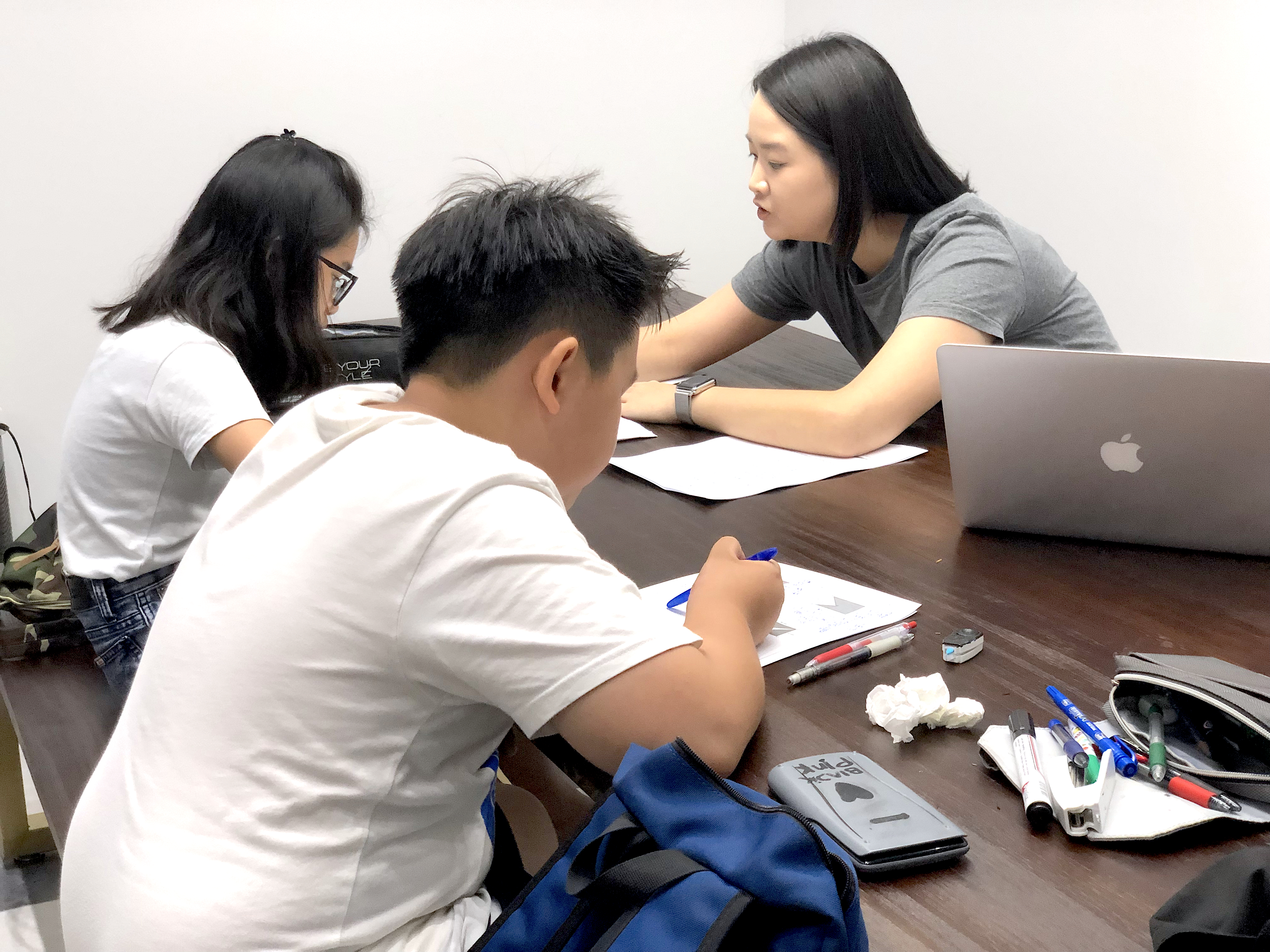














Pri3 Yishun The best Pri 3 English Tuition in Yishun with SEAB MOE PSLE syllabus English. Pri3 Yishun Primary English Tutor for Pri1 Pri2 Pri3 Pri4 Pri5 Pri6 PSLE English Paper 1 and Paper 2.
Call Yuet Ling +65 82226327 for our Pri3 Yishun English classes.


Learn English and make it useful.
Working closely with parents are part of our teaching culture to create the desired effect to get our English students positive changes in their studies. Our Yishun PSLE English tutors teach from scratch, making sure our English students master their language, and we do all the necessary practices from basic easy to complex advanced questions with our students, including past exam papers that helps them to understand and appreciate English as lingua franca in Singapore and use it to further their studies.
Class Culture
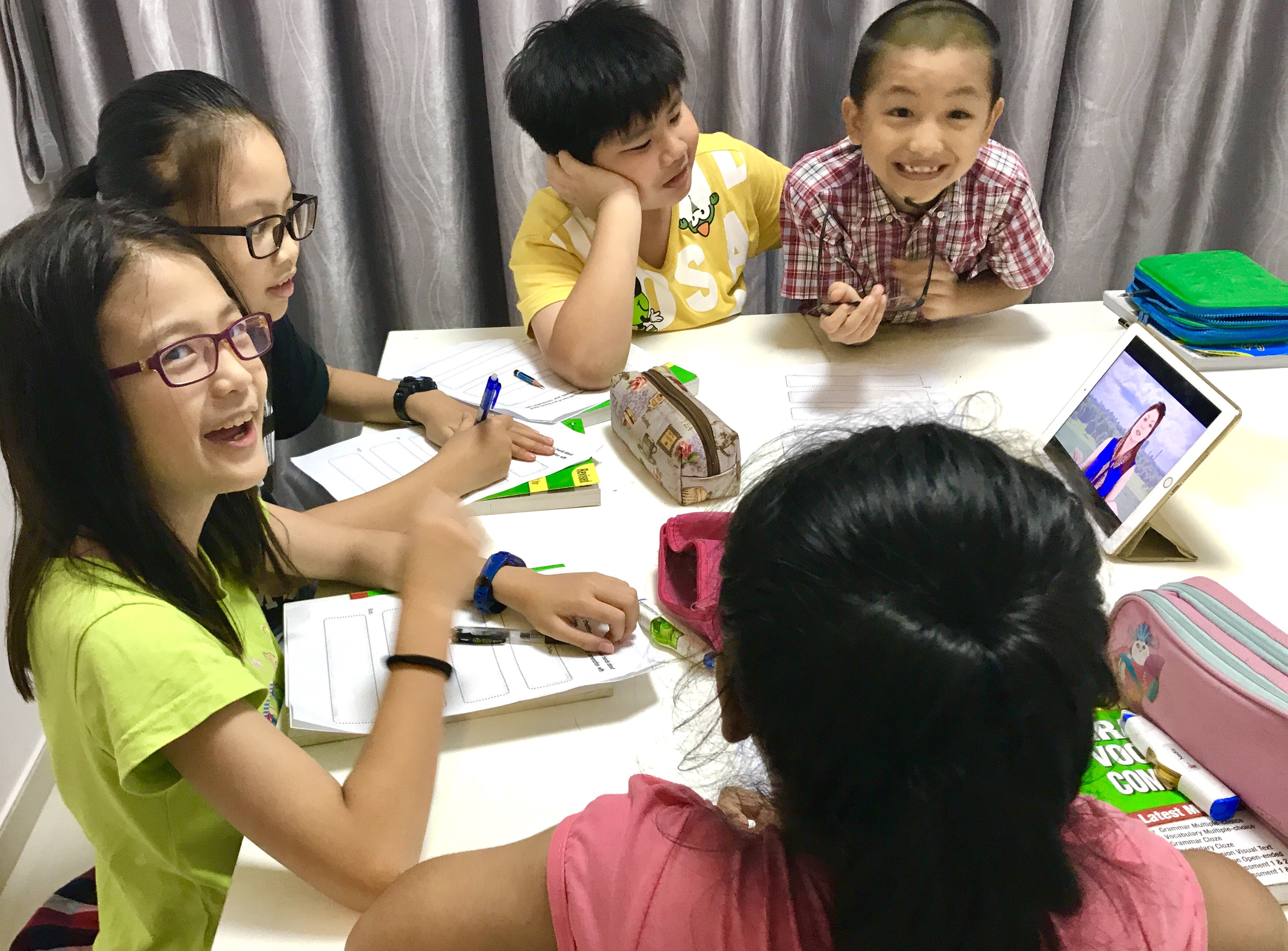
At eduKate Yishun, we work hard to have an affirmative class culture that empowers our students to do more, learn more, and develop a love for their own education by creating a class culture with great friends and tutors. Our positive classes also creates a constructive environment that teaches them the relevance of what they study to their everyday lives. With relevance creates the true reason for a proper education. That is our trademark that differentiates our teaching to others, but don’t just take our words for it, let these photos show you how much our passion and love for our Yishun student’s English lessons.




Continue through Secondary 1 English: Secondary 1–2 article index · Secondary English directory · English Hub · Diagnostics · Examinations · Yishun Tuition Hub · Library
Leave a Reply