

Punggol English Tuition (Secondary 1) should help a student turn reading into usable writing knowledge. Families searching for Secondary 1 English tuition in Punggol, Sec 1 English tutor, comprehension, vocabulary, grammar, writing, reading strategies or small-group English tuition often see students who can understand a passage but do not know what to extract from it for their own writing.
Secondary 1 is therefore a strong year for a reading-to-writing extraction loop. The student learns to notice one useful mechanism in a text, explain how it works, transform the mechanism into a new context, and use it independently without copying the original wording.
This page owns one learning job: notice → explain → abstract mechanism → transform → apply → verify independence. It complements other Secondary 1 pages on annotation, inference, sentence control and self-questioning. Here, the question is: what can this reading teach me to do in my own writing?
Do Not Read Only for Answers
A text can also teach:
- sentence patterns;
- paragraph structure;
- ways to introduce examples;
- methods of contrast;
- tone control;
- vocabulary in context;
- ways to end a paragraph.
Extract One Mechanism at a Time
Do not collect everything.
Choose one useful move.
Example:
The writer introduces a general claim, then narrows it with a specific example.
Name the Mechanism
Use simple labels:
- general → specific;
- claim → example;
- contrast → consequence;
- short impact sentence after long build-up;
- question → answer;
- cause → effect.
Explain Why It Works
Ask:
What does this move help the reader understand or feel?
Do Not Copy the Wording
The target is the pattern, not the sentence.
Source pattern:
Long explanation. Short conclusion.
Student applies the same pattern to a completely different topic.
Sentence Extraction
Notice:
- how clauses are joined;
- where punctuation creates emphasis;
- which verb carries precision;
- how a sentence opens.
Paragraph Extraction
Notice:
- topic sentence;
- example placement;
- explanation;
- link forward.
Vocabulary Extraction
For a useful word, capture:
- meaning;
- word family;
- collocation;
- register;
- fresh sentence.
Craft Extraction
Notice:
- contrast;
- repetition;
- imagery;
- sentence rhythm;
- viewpoint.
Then identify the transferable mechanism.
The Extraction Table
| Source move | Mechanism | Fresh application |
|---|---|---|
| specific example after claim | general → concrete | new factual paragraph |
| short final sentence | impact after build-up | new narrative scene |
| contrast marker | change direction clearly | new argument paragraph |
Transform Before Using
Change:
- topic;
- vocabulary;
- sentence content;
- context;
Keep only the underlying mechanism.
Reverse Engineering
Ask:
If I removed this sentence, what job would disappear?
This helps identify function.
Reading-to-Writing Vocabulary
Do not force every new word into writing.
Use only when:
- meaning is clear;
- collocation is known;
- register fits;
- the word improves precision.
Reading-to-Writing Grammar
When a sentence pattern is useful, rebuild it with new content.
Example mechanism:
Although X, Y.
Use the relationship, not the original sentence.
Reading-to-Writing Argument
Notice how a writer:
- states a claim;
- qualifies it;
- introduces evidence;
- answers an opposing view.
Reading-to-Writing Narrative
Notice how a writer:
- builds pressure;
- slows a turning point;
- uses dialogue;
- closes the scene.
One Model, Many Transfers
A strong model can produce:
- one sentence-pattern transfer;
- one paragraph-structure transfer;
- one vocabulary transfer;
- one craft transfer.
But train one at a time.
Do Not Over-Imitate
Too much imitation can produce unnatural writing.
Ask whether the mechanism suits the student’s purpose.
Mechanism Cards
Students can keep a small bank:
- contrast move;
- example move;
- ending move;
- sentence-combining move.
Cards should be short and reusable.
Retest on a Fresh Topic
After learning the mechanism from one text, use another topic.
If the student can transfer, the mechanism is becoming independent.
Delayed Transfer
Return to the mechanism later without showing the model.
Can the student retrieve it?
The Extraction Ledger
| Mechanism | Source | Fresh use | Delayed use |
|---|---|---|---|
| general→specific | article A | ✓ | ? |
| short impact ending | story B | ✓ | ✓ |
Small-Group Extraction Lab
Three students read the same paragraph.
Each extracts a different mechanism.
Then everyone applies one chosen mechanism independently.
Do Not Share the Fresh Sentence Before Everyone Tries
Protect independent transfer.
A 90-Minute Reading-to-Writing Lesson
- 10 min: read for meaning.
- 15 min: identify one useful mechanism.
- 15 min: explain its job.
- 20 min: transform into new context.
- 15 min: write fresh paragraph.
- 10 min: compare without copying.
- 5 min: add to mechanism bank.
Worked Case: Student Copies Model Phrases
The tutor removes the model after mechanism extraction and changes the topic.
Worked Case: Student Reads Well but Writing Stays Simple
Reading now ends with one extraction-and-transfer task.
Worked Case: Student Collects Too Many Techniques
The tutor limits each text to one transferable move.
Worked Case: Mechanism Appears Once Then Disappears
Delayed transfer is added.
What Parents Can Watch For
- The child can explain what a model writer did.
- Borrowed wording decreases.
- New sentence and paragraph patterns appear naturally.
- Vocabulary use becomes more contextual.
- Transfers survive on new topics.
What Not to Do
- Do not copy model sentences.
- Do not extract every technique from every text.
- Do not use a mechanism when it does not suit the purpose.
- Do not count imitation as transfer until wording and context change.
A Twelve-Week Reading-to-Writing Build
Weeks 1–2: sentence-pattern extraction.
Weeks 3–4: paragraph-job extraction.
Weeks 5–6: vocabulary/collocation transfer.
Weeks 7–8: argument and craft mechanisms.
Weeks 9–10: fresh-topic transfer.
Weeks 11–12: delayed independent transfer.
Frequently Asked Questions
Is imitation useful?
Yes, when students extract and transform the mechanism rather than copy the wording.
What should students extract from reading?
Useful sentence, paragraph, vocabulary and craft mechanisms that can be applied elsewhere.
How do we know transfer happened?
The student uses the mechanism successfully on a different topic without the original model in front of them.
What is the independence goal?
A student who can read strong writing and identify one useful move to add to their own toolbox.
The Secondary 1 Extraction Rule
Do not copy what the writer wrote. Learn what the writer did.
Historical Image Archive
The original image archive remains below as part of this page’s history.



Singapore English tuition with Tutor Yuet Ling. With Singapore school’s requirement for English as a First language, our primary aim in teaching English are highly focussed on tasking English student’s communication skills to be competent as well as to be an effective, accurate and efficient tool to absorb and relay information to others.
English is Singapore’s main language of communication and it is imperative that our student’s English Language skills are on parity with the requirements set forth by the Ministry of Education to study well in school. It is the main skill that will help students to perform consistently across their other subjects as their ability to understand and use English effectively will help them to comprehend what is taught in class and asked in tests.
English Tuition Centre with English tutor of 20 years in the business helping English students to improve their ability to communicate. An improvement of their linguistic competence in both the passive reading/listening and active speaking/writing process of the English Language are part of our course curriculum.
With that in mind, our English classes are geared to teach and train our students to be able to understand the media that they read or hear, and to have the ability to express and communicate their complex thoughts and ideas to others naturally. Any improvements in information absorption and dissemination will automatically translate to cognitive skills and ultimately, help students to do well in their studies.
English should be treated as our native language, to be the main Lingua franca for a cosmopolitan Singapore where over generations, English has been integrated well into our everyday life. As a first language, the focus of our tuition will be to task our Yishun students to learn the skills needed to communicate proficiently for both their studies in school as well as for their everyday life.
Local English Tutor for English tuition are the dependable, trustworthy tutor that delivers the results. Join our English tutorials and have our English Teacher get you on track. Small groups of 3.
increase general knowledge and all necessary skills needed for the PSLE
score maximum marks by understanding the marking scheme of the examination
in a safe, comfortable air con environment with properly equipped classes
by discerning tutors that can detect weaknesses, solve student’s problems during class
by qualified female tutors with experience in improving students for the crucial PSLE
Give us a call at +65 82226327 for more information on our Singapore English classes.
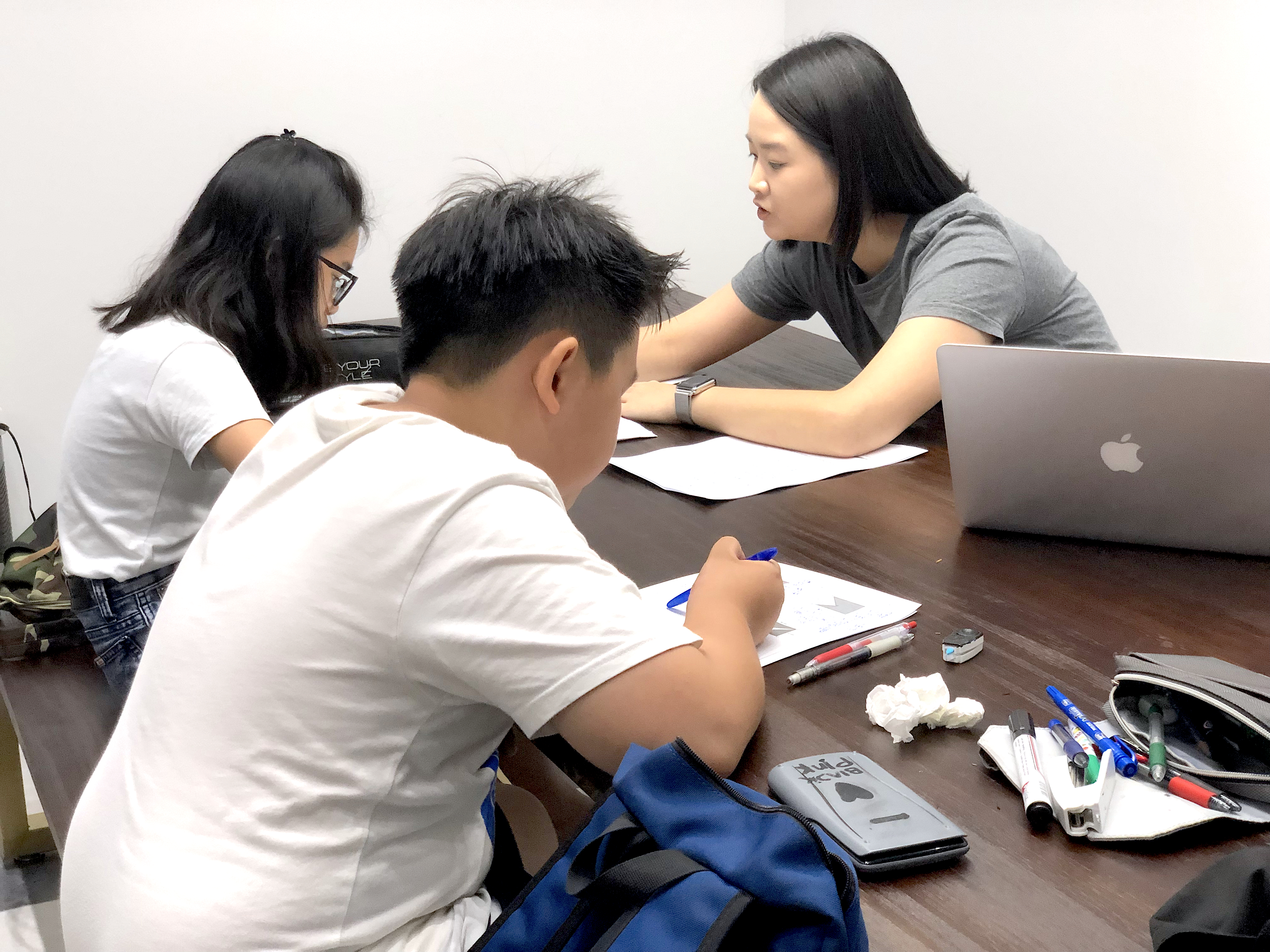













Pri3 Yishun The best Pri 3 English Tuition in Yishun with SEAB MOE PSLE syllabus English. Pri3 Yishun Primary English Tutor for Pri1 Pri2 Pri3 Pri4 Pri5 Pri6 PSLE English Paper 1 and Paper 2.
Call Yuet Ling +65 82226327 for our Pri3 Yishun English classes.


Learn English and make it useful.
Working closely with parents are part of our teaching culture to create the desired effect to get our English students positive changes in their studies. Our Yishun PSLE English tutors teach from scratch, making sure our English students master their language, and we do all the necessary practices from basic easy to complex advanced questions with our students, including past exam papers that helps them to understand and appreciate English as lingua franca in Singapore and use it to further their studies.
Class Culture
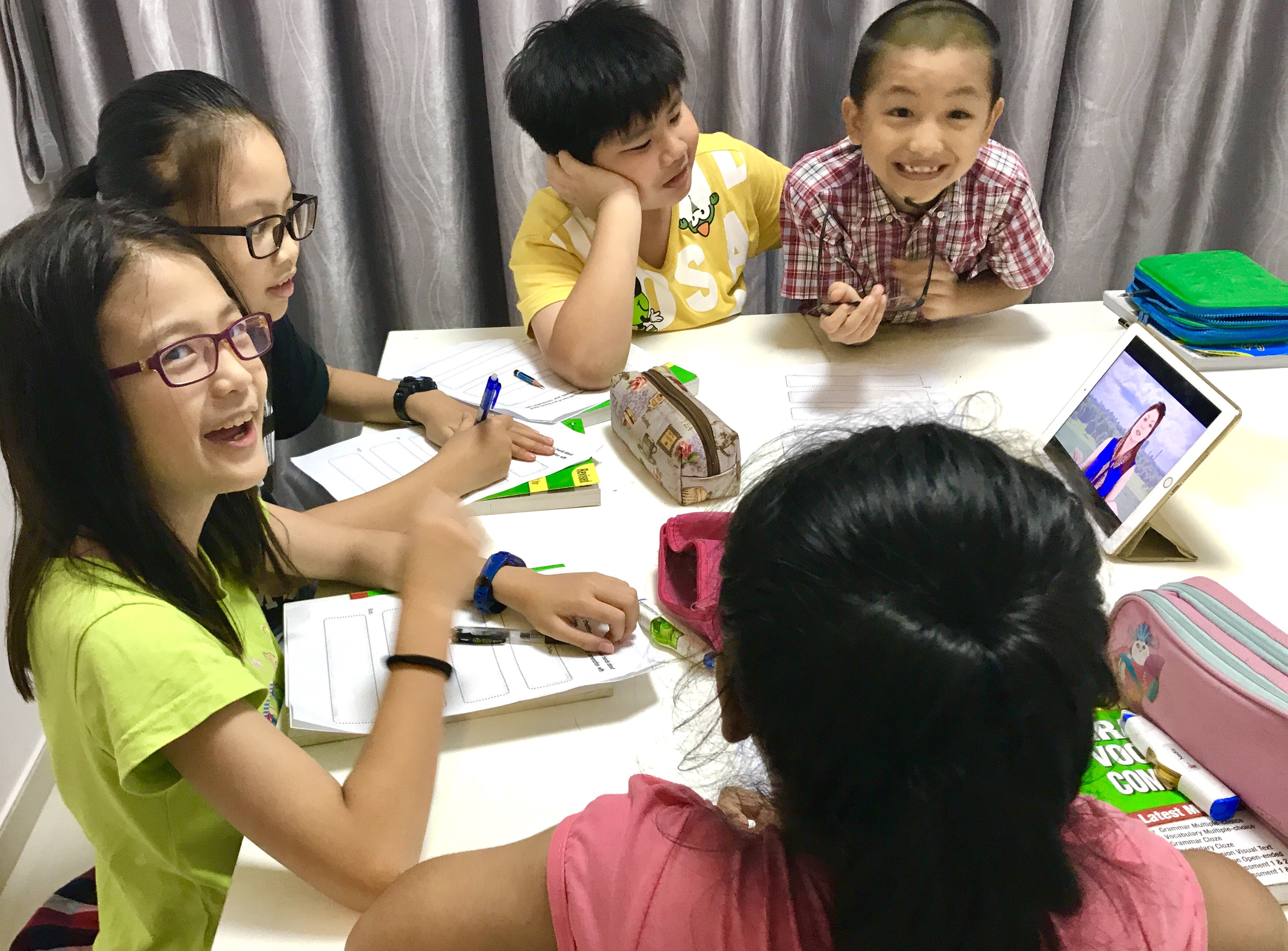
At eduKate Yishun, we work hard to have an affirmative class culture that empowers our students to do more, learn more, and develop a love for their own education by creating a class culture with great friends and tutors. Our positive classes also creates a constructive environment that teaches them the relevance of what they study to their everyday lives. With relevance creates the true reason for a proper education. That is our trademark that differentiates our teaching to others, but don’t just take our words for it, let these photos show you how much our passion and love for our Yishun student’s English lessons.




Continue through Secondary 1 English: Secondary 1–2 article index · Secondary English directory · English Hub · Diagnostics · Examinations · Yishun Tuition Hub · Library
Leave a Reply