

Punggol English Tutor (Secondary 2) should help a student paraphrase a sentence without quietly changing what it means. Families searching for Secondary 2 English tutor in Punggol, Sec 2 English tuition, paraphrasing, summary, comprehension, vocabulary, grammar, editing or small-group English tuition often see students replace words one by one with synonyms and produce sentences that sound different but no longer preserve the original scope, tone, logic or relationship between ideas.
Secondary 2 is therefore a strong year for sentence-level paraphrase fidelity. Students should learn to separate meaning from wording, rebuild syntax, preserve cause, contrast, condition and qualification, and then compare the new sentence against the source. A successful paraphrase is not merely different. It is faithfully different.
This page owns one learning job: understand → identify non-negotiable meaning → change structure/wording → compare scope and logic → repair drift. It complements other Sec 2 pages on lexical precision, summary compression and text architecture. Here, the focus is one sentence at a time.
Paraphrasing Is Not Synonym Replacement
Weak method:
replace each source word with a “similar” word.
This often causes meaning drift.
Start With the Idea
Before changing anything, answer:
- Who or what is the sentence about?
- What happened?
- Why, when or under what condition?
- How certain is the claim?
- What attitude or tone is present?
The Non-Negotiable Meaning Core
Identify what must survive:
- main claim;
- scope;
- cause/contrast/condition;
- time relationship;
- qualification;
- important tone.
Structure Change
Paraphrase can change syntax.
Source:
Because the roads were flooded, buses were delayed.
Paraphrase:
Flooding caused delays to bus services.
The relationship survives.
Word-Class Change
Source:
The committee decided to postpone the event.
Paraphrase:
The committee’s decision was to postpone the event.
Form changes; core meaning stays.
Active and Passive
Source:
The storm damaged several homes.
Paraphrase:
Several homes were damaged by the storm.
Focus changes slightly, but event meaning remains.
Preserve Scope
Source:
Some students may benefit from the programme.
Bad paraphrase:
Students benefit from the programme.
Some and may disappeared. The claim became stronger.
Preserve Logical Relationship
Do not change:
- because → although;
- if → when;
- may → will;
- some → all.
These are not cosmetic differences.
Preserve Time
Source:
After the meeting ended, the team released its statement.
A paraphrase must preserve which event happened first.
Preserve Tone
Source:
The proposal was cautiously welcomed.
Bad paraphrase:
The proposal was enthusiastically welcomed.
That changes attitude.
Collocation Still Matters
A dictionary synonym may be grammatically possible but unnatural.
Paraphrase should sound like normal English.
The Look-Away Method
- Read the source.
- State the idea mentally.
- Look away.
- Rebuild the sentence.
- Compare against source.
This reduces copying.
The Meaning Check
After paraphrasing, ask:
- Same main claim?
- Same certainty?
- Same cause/contrast/condition?
- Same time?
- Same key limitation?
Back-Translation Test
Can someone reading only the paraphrase recover the source idea accurately?
If not, revise.
Paraphrase for Summary
Summary adds another job: compression.
First preserve meaning; then remove unnecessary wording.
Paraphrase for Comprehension
When answers require own words, do not distort the evidence.
Use the smallest complete idea and rebuild it naturally.
Paraphrase for Writing
Students can paraphrase source ideas before integrating them into arguments.
Keep attribution and source meaning distinct from the student’s own judgement.
Do Not Paraphrase Technical Terms Needlessly
Some terms are already the most precise words available.
Changing them can reduce accuracy.
Sentence Combining
Two source sentences can sometimes become one paraphrase if their relationship is clear.
Sentence Splitting
A long source sentence can become two clearer sentences while preserving meaning.
The Paraphrase Error Ledger
| Error | Meaning change | Repair |
|---|---|---|
| qualifier dropped | claim stronger | restore scope |
| wrong synonym | tone changes | state exact meaning first |
| cause reversed | logic changes | map relationship |
| too close to source | copying | look-away rebuild |
Small-Group Fidelity Lab
Three students paraphrase the same sentence independently.
Compare:
- which version is most natural;
- which preserved scope;
- which altered tone;
- which stayed too close to the source.
One Meaning, Three Forms
Ask students to create three different accurate paraphrases.
This shows that wording can vary widely while meaning remains stable.
A 90-Minute Paraphrase-Fidelity Lesson
- 10 min: identify meaning core.
- 15 min: structure-change paraphrases.
- 15 min: scope/qualification checks.
- 15 min: cause/contrast/time checks.
- 15 min: summary-style compression.
- 15 min: fresh mixed paraphrase set.
- 5 min: update error ledger.
Worked Case: Paraphrase Sounds Advanced but Changes Meaning
The student chooses difficult synonyms without checking connotation.
The tutor returns to the exact intended meaning before wording.
Worked Case: Student Copies Too Closely
The student keeps the source sentence visible.
Look-away reconstruction is introduced.
Worked Case: Qualification Disappears
“May help some” becomes “helps”.
Scope words are marked as non-negotiable before rewriting.
Worked Case: Logic Reverses
Cause and result are confused during restructuring.
The relationship is mapped before paraphrase.
What Parents Can Watch For
- The child can explain the original idea before paraphrasing.
- Synonym swapping decreases.
- Qualifiers survive.
- Paraphrases sound natural and structurally different.
- Meaning drift becomes easier to detect.
What Not to Do
- Do not replace every word mechanically.
- Do not remove qualifiers.
- Do not change logical relationships.
- Do not force changes to already-precise technical terms.
A Twelve-Week Paraphrase-Fidelity Build
Weeks 1–2: meaning core.
Weeks 3–4: syntax changes.
Weeks 5–6: scope and qualification.
Weeks 7–8: logic/time/tone preservation.
Weeks 9–10: summary/comprehension transfer.
Weeks 11–12: timed fresh paraphrase and self-check.
Frequently Asked Questions
What makes a paraphrase accurate?
The wording and structure change while the source meaning, scope and relationships remain faithful.
Why is synonym replacement risky?
Near-synonyms can differ in connotation, strength, grammar and collocation.
How can students avoid copying?
Understand the sentence, look away, rebuild it, then compare.
What is the independence goal?
A student who can create a natural new sentence and then audit whether any meaning changed unintentionally.
The Secondary 2 Paraphrase Rule
Make the language new without making the idea different.
Historical Image Archive
The original image archive remains below as part of this page’s history.



Singapore English tuition with Tutor Yuet Ling. With Singapore school’s requirement for English as a First language, our primary aim in teaching English are highly focussed on tasking English student’s communication skills to be competent as well as to be an effective, accurate and efficient tool to absorb and relay information to others.
English is Singapore’s main language of communication and it is imperative that our student’s English Language skills are on parity with the requirements set forth by the Ministry of Education to study well in school. It is the main skill that will help students to perform consistently across their other subjects as their ability to understand and use English effectively will help them to comprehend what is taught in class and asked in tests.
English Tuition Centre with English tutor of 20 years in the business helping English students to improve their ability to communicate. An improvement of their linguistic competence in both the passive reading/listening and active speaking/writing process of the English Language are part of our course curriculum.
With that in mind, our English classes are geared to teach and train our students to be able to understand the media that they read or hear, and to have the ability to express and communicate their complex thoughts and ideas to others naturally. Any improvements in information absorption and dissemination will automatically translate to cognitive skills and ultimately, help students to do well in their studies.
English should be treated as our native language, to be the main Lingua franca for a cosmopolitan Singapore where over generations, English has been integrated well into our everyday life. As a first language, the focus of our tuition will be to task our Yishun students to learn the skills needed to communicate proficiently for both their studies in school as well as for their everyday life.
Local English Tutor for English tuition are the dependable, trustworthy tutor that delivers the results. Join our English tutorials and have our English Teacher get you on track. Small groups of 3.
increase general knowledge and all necessary skills needed for the PSLE
score maximum marks by understanding the marking scheme of the examination
in a safe, comfortable air con environment with properly equipped classes
by discerning tutors that can detect weaknesses, solve student’s problems during class
by qualified female tutors with experience in improving students for the crucial PSLE
Give us a call at +65 82226327 for more information on our Singapore English classes.











Pri3 Yishun The best Pri 3 English Tuition in Yishun with SEAB MOE PSLE syllabus English. Pri3 Yishun Primary English Tutor for Pri1 Pri2 Pri3 Pri4 Pri5 Pri6 PSLE English Paper 1 and Paper 2.
Call Yuet Ling +65 82226327 for our Pri3 Yishun English classes.


Learn English and make it useful.
Working closely with parents are part of our teaching culture to create the desired effect to get our English students positive changes in their studies. Our Yishun PSLE English tutors teach from scratch, making sure our English students master their language, and we do all the necessary practices from basic easy to complex advanced questions with our students, including past exam papers that helps them to understand and appreciate English as lingua franca in Singapore and use it to further their studies.
Class Culture
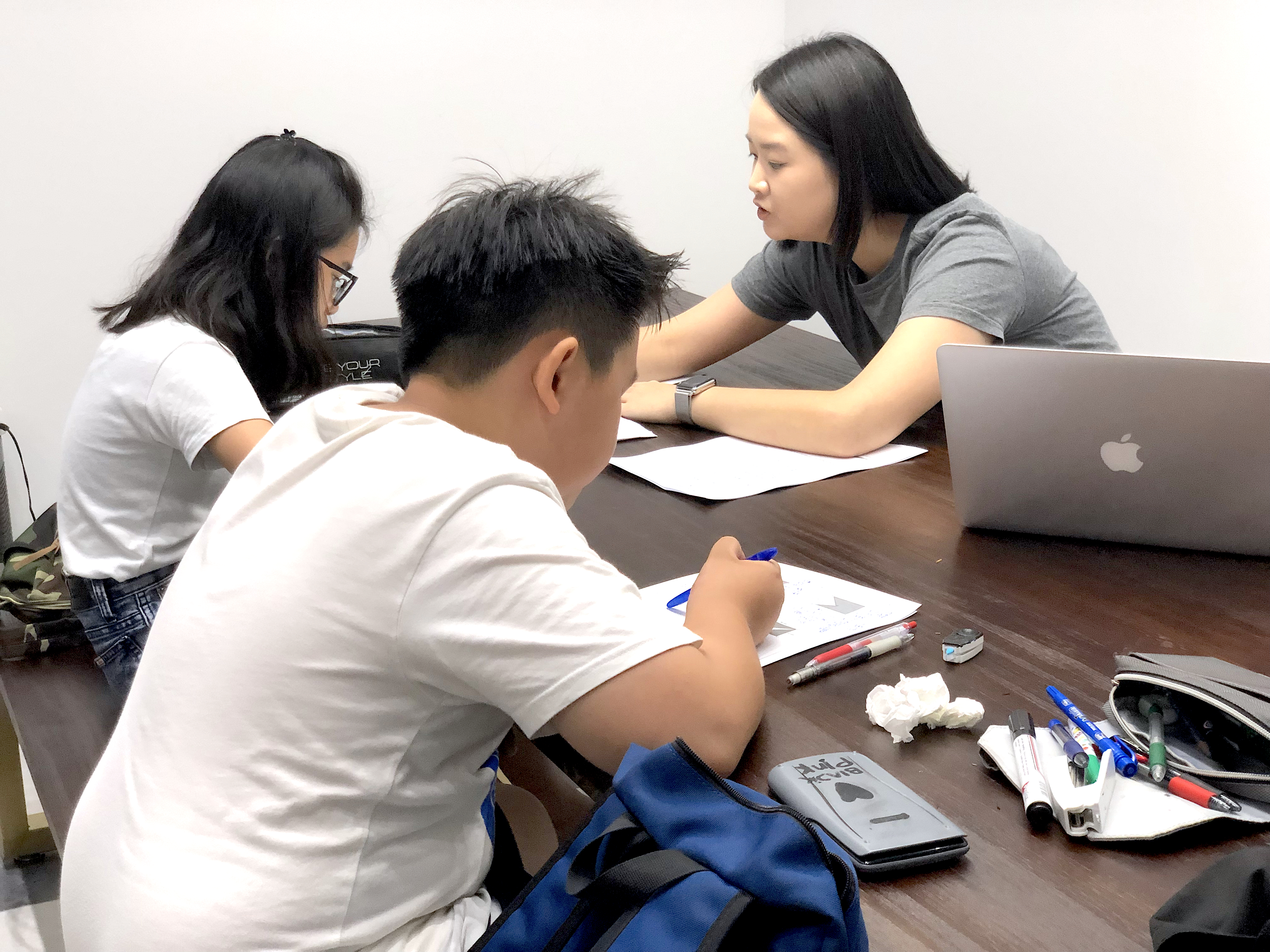
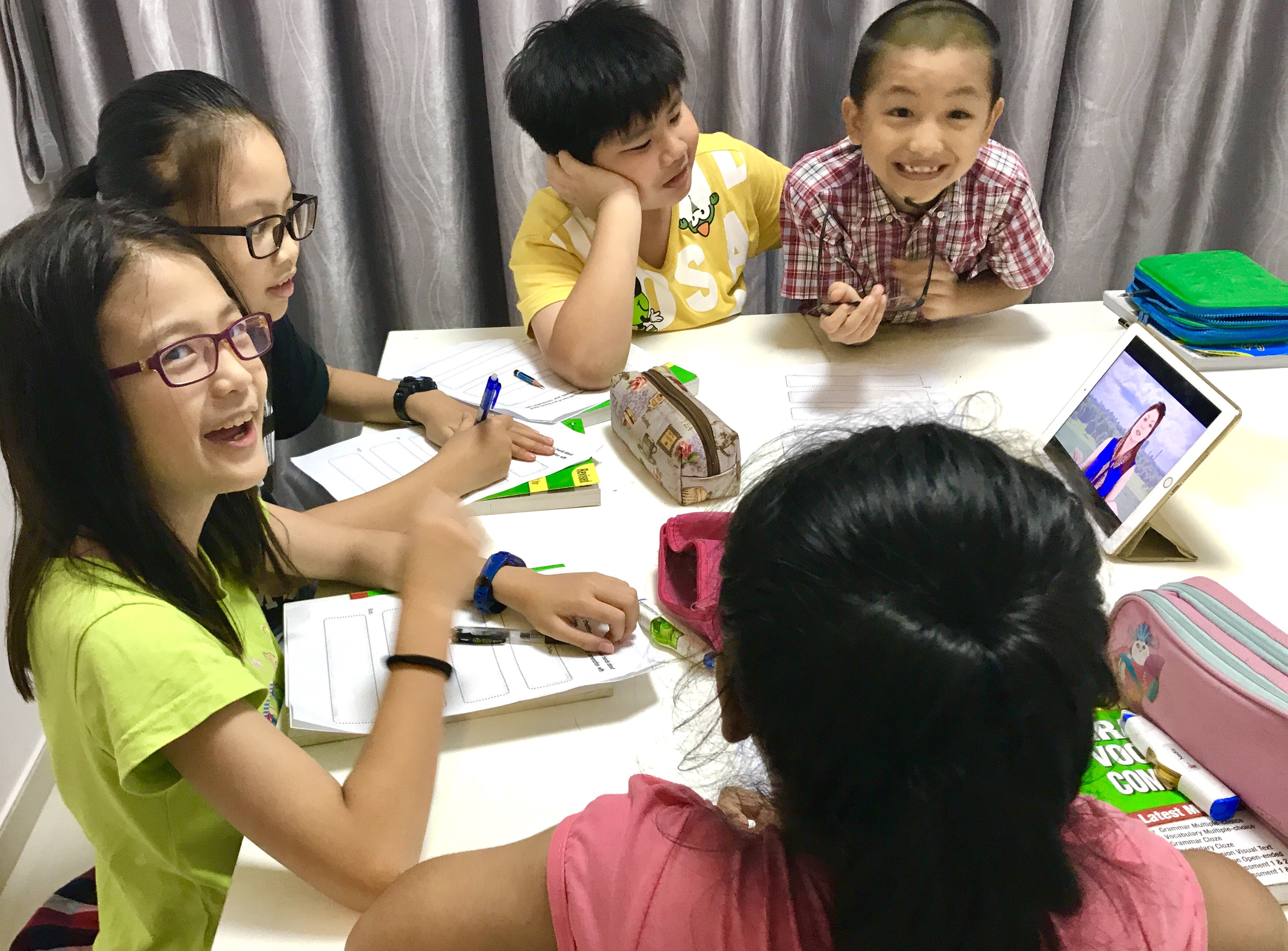
At eduKate Yishun, we work hard to have an affirmative class culture that empowers our students to do more, learn more, and develop a love for their own education by creating a class culture with great friends and tutors. Our positive classes also creates a constructive environment that teaches them the relevance of what they study to their everyday lives. With relevance creates the true reason for a proper education. That is our trademark that differentiates our teaching to others, but don’t just take our words for it, let these photos show you how much our passion and love for our Yishun student’s English lessons.




Continue through Secondary 2 English: Secondary 1–2 article index · Secondary English directory · English by area & school · Diagnostics · Examinations · Library
Leave a Reply