
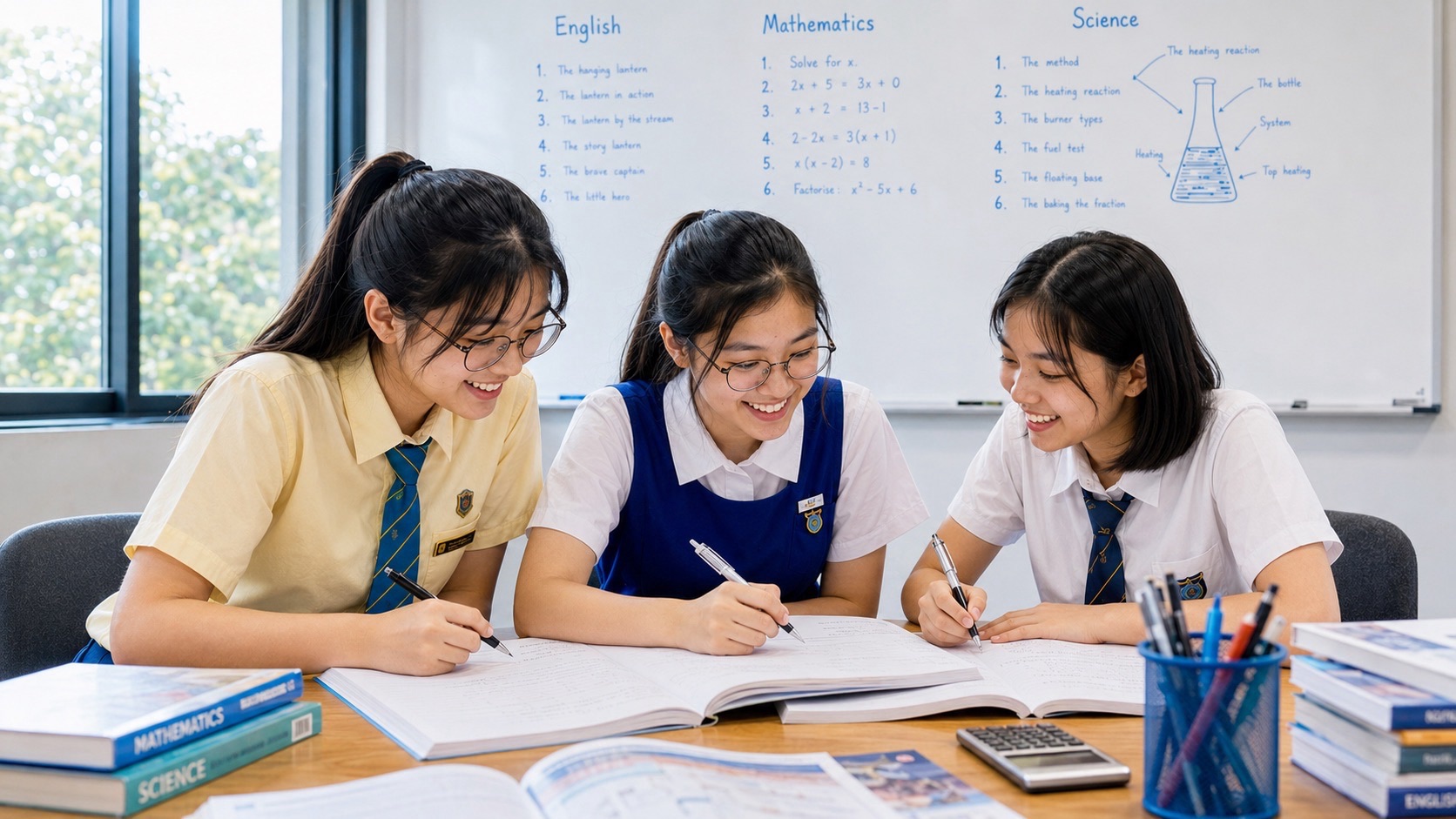
Yishun English Tuition (Secondary 1) should help a student move from short-answer writing into developed academic paragraphs. Families searching for Secondary 1 English tuition in Yishun, Sec 1 English tutor, paragraph writing, comprehension, grammar, vocabulary, situational writing, continuous writing or small-group English tuition often see students who can state a correct point but stop before explaining it, or give an example without showing why the example matters.
Secondary 1 is therefore the right year to build academic paragraph expansion. Students need a dependable way to move from one idea into a developed unit of reasoning: point → evidence or example → explanation → link. The aim is not to force every paragraph into a rigid formula. It is to teach the minimum reasoning moves that stop writing from becoming a list of undeveloped statements.
This page owns one learning job: state the point → support it → explain the support → connect it back to the task. It complements other Secondary 1 pages on sentence control, inference and annotation. Here, the focus is how a clear sentence grows into a useful paragraph.
A Correct Point Can Still Be Underdeveloped
Weak:
Reading is important because it improves vocabulary.
This may be true, but the paragraph has not yet explained the mechanism.
The Four Paragraph Jobs
- Point: what are you saying?
- Evidence/example: what supports it?
- Explanation: how does the support prove the point?
- Link: why does it matter to the question?
Point
A point should be specific enough to develop.
Weak:
Exercise is good.
Stronger:
Regular exercise can improve students’ ability to concentrate during lessons.
Evidence or Example
Support can come from:
- a passage detail;
- a concrete example;
- an observed situation;
- a relevant fact already known accurately.
Explanation
Ask:
Why does this example support my point?
This is the sentence many students skip.
Link
The link returns to:
- the question;
- the paragraph’s claim;
- the wider significance.
Do not repeat the exact topic sentence mechanically.
Paragraph Example
Point: Regular reading can improve vocabulary.
Example: A student who reads news, fiction and nonfiction meets the same useful words in several contexts.
Explanation: Repeated contextual exposure helps the student understand how words combine naturally rather than memorising isolated definitions.
Link: This makes the vocabulary more likely to appear accurately in later writing and oral responses.
Evidence in Comprehension Paragraphs
When answering longer comprehension questions, students can use:
answer → evidence → explanation.
Examples in Discursive Writing
An example should make the point more concrete.
Do not add an example that introduces a new unrelated topic.
Explanation Versus Repetition
Weak explanation:
This shows reading is important because reading is important.
Strong explanation names the mechanism.
Mechanism Questions
Use:
- How does this happen?
- Why does this lead to that?
- What changes because of this?
- Who is affected and how?
Paragraph Jobs Can Vary
A narrative paragraph may use:
event → reaction → consequence.
A factual paragraph may use:
main idea → explanation → example.
The principle is development, not one fixed template.
Paragraph Unity
Every sentence should support the paragraph’s job.
If one sentence begins a different argument, it may belong elsewhere.
Topic Sentences
A topic sentence can guide the reader, especially in factual or argumentative writing.
It should express the paragraph’s main claim, not merely announce the general topic.
Sentence Order
Logical order matters.
Useful progressions include:
- point → reason → example;
- cause → effect → implication;
- problem → example → solution;
- claim → evidence → explanation.
Linking Between Sentences
Use pronouns, repeated key terms and logical connectors carefully.
Do not begin every sentence with “Furthermore”.
Transitions Should Match Meaning
Ask whether the next sentence:
- adds;
- contrasts;
- explains;
- gives a result;
- gives an example.
Paragraph Length
There is no magic number of sentences.
A paragraph is complete when its job is complete.
Do Not Inflate Weak Paragraphs
Adding filler does not create development.
Development means adding reasoning, evidence or consequence.
Expand One Sentence at a Time
Start:
Public transport is useful.
Ask:
- Useful how?
- For whom?
- What example?
- Why does that matter?
Then build the paragraph.
Oral Rehearsal Before Writing
Ask the student to explain the point aloud first.
Capture:
- main point;
- reason;
- example;
- consequence.
Then write.
Paragraph X-Ray
Label sentences:
- P = point;
- E = evidence/example;
- X = explanation;
- L = link.
Missing jobs show where the paragraph is thin.
Paragraph Compression
Sometimes the paragraph has too much repetition.
Remove sentences that perform the same job without adding meaning.
Paragraph Expansion Ledger
| Pattern | Problem | Repair |
|---|---|---|
| point only | undeveloped | add mechanism/example |
| example only | unclear purpose | state point first |
| example + repetition | no explanation | add “why it matters” |
| too many ideas | paragraph drift | one paragraph job |
Small-Group Paragraph Workshop
Three students receive the same point.
Each develops it with a different example.
Then compare which explanation best connects support to point.
Peer Feedback Questions
- What is this paragraph’s main point?
- Which sentence supports it?
- Where is the explanation?
- Which sentence could be removed?
A 90-Minute Secondary 1 Paragraph Lesson
- 10 min: identify paragraph jobs in a model.
- 15 min: write precise points.
- 15 min: add evidence/examples.
- 15 min: explanation drills.
- 20 min: write fresh paragraphs.
- 10 min: paragraph X-ray and edit.
- 5 min: transfer to another topic.
Worked Case: One-Sentence Paragraphs
The student states correct ideas but moves on immediately.
The tutor requires one mechanism and one example before closing the paragraph.
Worked Case: Many Examples, No Point
The paragraph becomes a list.
The student states the governing point first and removes examples that do not support it.
Worked Case: Explanation Repeats Example
The tutor asks, “Why does this matter?” until a mechanism appears.
Worked Case: Paragraph Contains Three Topics
The paragraph is split according to separate jobs.
What Parents Can Watch For
- Paragraphs become longer for meaningful reasons.
- Examples are explained.
- Topic sentences become more specific.
- Irrelevant sentences decrease.
- The child can identify the job of each sentence.
What Not to Do
- Do not force a fixed number of sentences.
- Do not add filler for length.
- Do not use examples without explanation.
- Do not let one paragraph carry several unrelated points.
A Twelve-Week Academic-Paragraph Build
Weeks 1–2: precise points.
Weeks 3–4: examples/evidence.
Weeks 5–6: explanation mechanisms.
Weeks 7–8: linking and unity.
Weeks 9–10: paragraph X-rays and revision.
Weeks 11–12: timed fresh paragraphs across topics.
Frequently Asked Questions
How many sentences should a Secondary 1 paragraph have?
Enough to complete its job. Quality depends on development and unity, not a fixed number.
What is the most common missing step?
Explanation: students often give an example without explaining why it supports the point.
How can oral discussion help writing?
Speaking the reasoning first reduces planning load and reveals whether the point has enough development.
What is the independence goal?
A student who can look at a point and independently decide what support and explanation are needed to turn it into a complete paragraph.
The Secondary 1 Paragraph Rule
A paragraph is developed when the reader can see not only what you think, but why the support makes the point worth accepting.
Historical Image Archive
The original image archive remains below as part of this page’s history.



Singapore English tuition with Tutor Yuet Ling. With Singapore school’s requirement for English as a First language, our primary aim in teaching English are highly focussed on tasking English student’s communication skills to be competent as well as to be an effective, accurate and efficient tool to absorb and relay information to others.
English is Singapore’s main language of communication and it is imperative that our student’s English Language skills are on parity with the requirements set forth by the Ministry of Education to study well in school. It is the main skill that will help students to perform consistently across their other subjects as their ability to understand and use English effectively will help them to comprehend what is taught in class and asked in tests.
English Tuition Centre with English tutor of 20 years in the business helping English students to improve their ability to communicate. An improvement of their linguistic competence in both the passive reading/listening and active speaking/writing process of the English Language are part of our course curriculum.
With that in mind, our English classes are geared to teach and train our students to be able to understand the media that they read or hear, and to have the ability to express and communicate their complex thoughts and ideas to others naturally. Any improvements in information absorption and dissemination will automatically translate to cognitive skills and ultimately, help students to do well in their studies.
English should be treated as our native language, to be the main Lingua franca for a cosmopolitan Singapore where over generations, English has been integrated well into our everyday life. As a first language, the focus of our tuition will be to task our Yishun students to learn the skills needed to communicate proficiently for both their studies in school as well as for their everyday life.
Local English Tutor for English tuition are the dependable, trustworthy tutor that delivers the results. Join our English tutorials and have our English Teacher get you on track. Small groups of 3.
increase general knowledge and all necessary skills needed for the PSLE
score maximum marks by understanding the marking scheme of the examination
in a safe, comfortable air con environment with properly equipped classes
by discerning tutors that can detect weaknesses, solve student’s problems during class
by qualified female tutors with experience in improving students for the crucial PSLE
Give us a call at +65 82226327 for more information on our Singapore English classes.
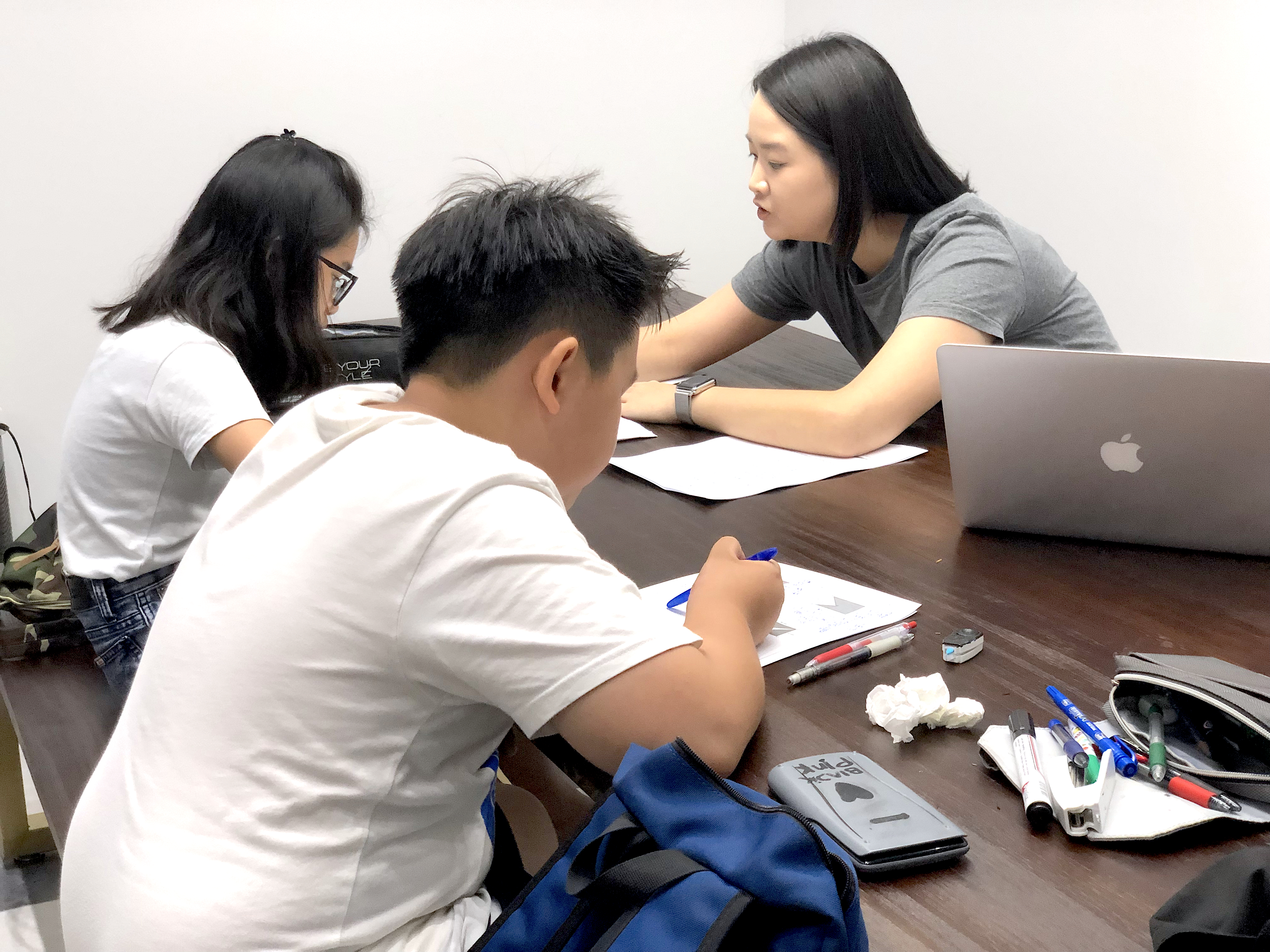














Pri3 Yishun The best Pri 3 English Tuition in Yishun with SEAB MOE PSLE syllabus English. Pri3 Yishun Primary English Tutor for Pri1 Pri2 Pri3 Pri4 Pri5 Pri6 PSLE English Paper 1 and Paper 2.
Call Yuet Ling +65 82226327 for our Pri3 Yishun English classes.


Learn English and make it useful.
Working closely with parents are part of our teaching culture to create the desired effect to get our English students positive changes in their studies. Our Yishun PSLE English tutors teach from scratch, making sure our English students master their language, and we do all the necessary practices from basic easy to complex advanced questions with our students, including past exam papers that helps them to understand and appreciate English as lingua franca in Singapore and use it to further their studies.
Class Culture
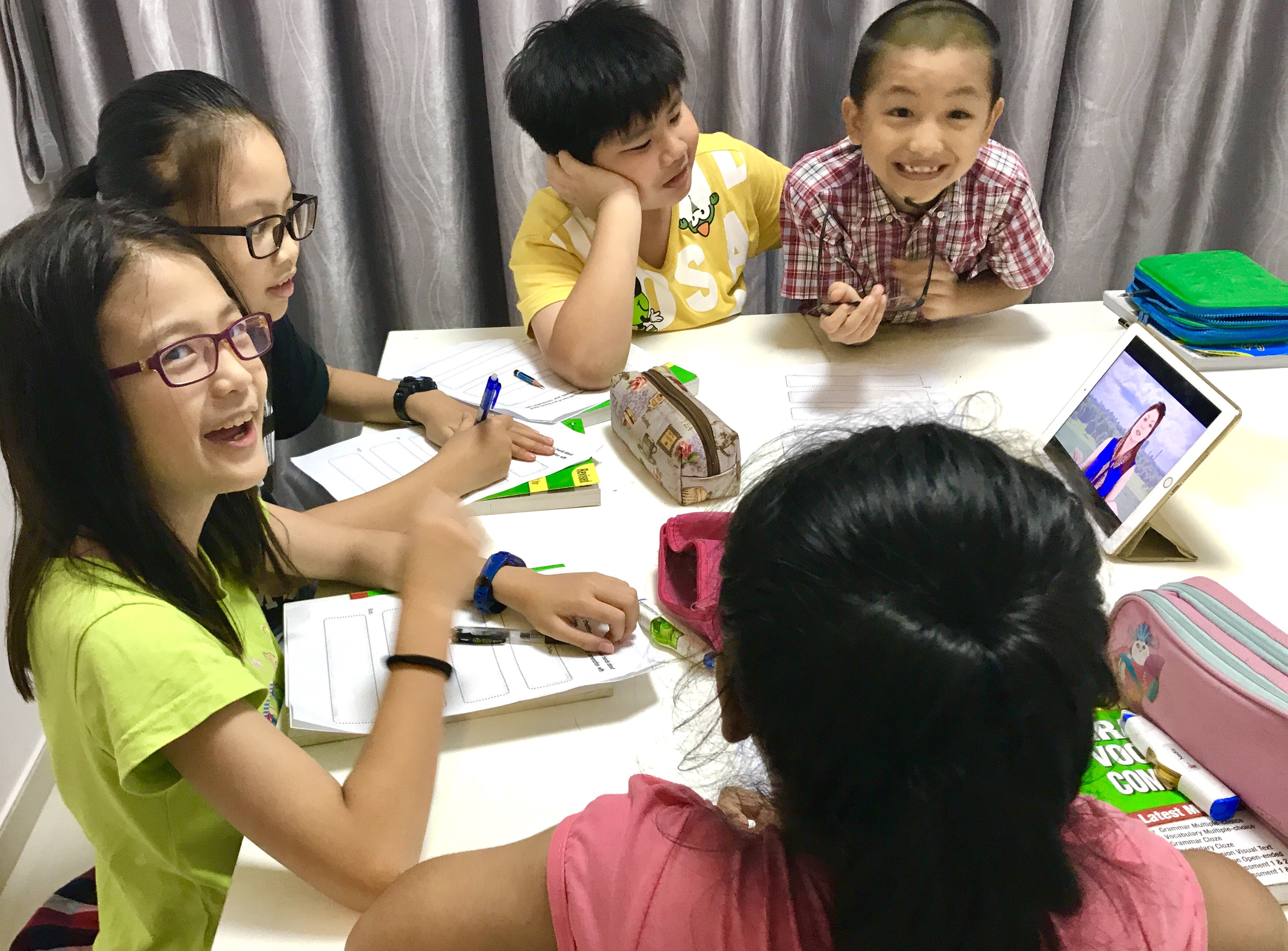
At eduKate Yishun, we work hard to have an affirmative class culture that empowers our students to do more, learn more, and develop a love for their own education by creating a class culture with great friends and tutors. Our positive classes also creates a constructive environment that teaches them the relevance of what they study to their everyday lives. With relevance creates the true reason for a proper education. That is our trademark that differentiates our teaching to others, but don’t just take our words for it, let these photos show you how much our passion and love for our Yishun student’s English lessons.




Continue through Secondary 1 English: Secondary 1–2 article index · Secondary English directory · English Hub · Diagnostics · Examinations · Yishun Tuition Hub · Library
Leave a Reply