

Yishun English Tuition (Secondary 2) should help a student use speech as a rehearsal space for better written reasoning. Families searching for Secondary 2 English tuition in Yishun, Sec 2 English tutor, oral communication, comprehension, summary, vocabulary, writing, editing or small-group English tuition often see students who can explain an idea clearly when talking to a tutor but become vague, repetitive or incomplete when the same reasoning has to be written.
Secondary 2 is therefore an ideal year to build oral-to-written reasoning rehearsal. Students can speak a point, test whether it makes sense, answer a challenge, sharpen the example and then convert the improved reasoning into concise written form. This reduces blank-page difficulty and makes thought visible before grammar and sentence control are added.
This page owns one learning job: say → test → refine → structure → write → self-edit. It complements other Secondary 2 pages on command decoding, text architecture and lexical precision. Here, the central question is: can the student turn a spoken explanation into a controlled written answer without losing the reasoning?
Speaking and Writing Use the Same Ideas Differently
Speech allows:
- pauses;
- self-correction;
- questions from the listener;
- informal phrasing.
Writing needs the reasoning to stand on the page without live support.
Use Speech to Find the Idea
Before writing, ask the student to explain:
What is your point?
If the spoken answer is unclear, writing will usually be unclear too.
Then Ask “Why?”
A point becomes reasoning when the student can explain:
- why it is true;
- how it works;
- what example supports it;
- why the example matters.
The Oral Reasoning Frame
position → reason → example → explanation → implication.
This can later become written structure.
Example
Question:
Should students have more time for independent reading?
Spoken rehearsal:
Yes, because independent reading exposes students to more vocabulary. For example, if they read different genres, they see words used in several contexts. That helps them understand how the words actually work, so they are more likely to use them accurately later.
The spoken answer already contains a usable paragraph architecture.
Convert Speech Into Keywords
Before writing, reduce the oral answer to:
reading → repeated context → vocabulary control → later use
Keywords prevent copying the spoken wording mechanically.
From Keywords to Written Paragraph
Now rebuild the idea in formal written language.
The student should not transcribe every spoken filler word.
Speech Reveals Missing Logic
If the tutor asks:
Why does that example prove your point?
and the student cannot answer, the reasoning is not ready for writing.
Use Follow-Up Questions as Stress Tests
Useful challenges include:
- Why?
- Can you give a specific example?
- What if the opposite happened?
- Who would be affected?
- Is that always true?
Do Not Let the Tutor Supply the Reasoning
The tutor can ask questions, but the student should construct the explanation.
Oral Rehearsal for Comprehension
Before writing an inference answer, ask the student to say:
The clue is… and this suggests…
Then write the concise answer.
Oral Rehearsal for Summary
Ask the student to explain the paragraph in one sentence before paraphrasing it.
This helps separate understanding from copying.
Oral Rehearsal for Situational Writing
Before drafting, have the student state aloud:
- role;
- audience;
- purpose;
- required action.
This anchors register.
Oral Rehearsal for Argumentative Writing
Ask the student to defend the point against one challenge.
If the point survives orally, it is more likely to become a strong paragraph.
Oral Rehearsal for Narrative Writing
Tell the turning point aloud.
Listen for:
- pressure;
- choice;
- consequence;
- change.
Then write the scene.
Register Shift
Spoken rehearsal may be informal.
Writing may need a more formal register.
Teach students to preserve the logic while changing the language level.
Example: Spoken to Written
Spoken:
It’s bad because people keep checking their phones and then they can’t focus.
Written:
Frequent phone checking can weaken concentration because repeated attention shifts interrupt sustained engagement with a task.
Meaning Must Survive the Register Shift
Do not replace simple spoken language with difficult vocabulary that changes the point.
Oral Compression
Ask the student to explain the idea in:
- 60 seconds;
- 30 seconds;
- one sentence.
Then write the one-sentence core before expanding.
Oral Expansion
Do the reverse.
Give one point and ask for:
- reason;
- example;
- consequence.
This helps thin writers generate development.
Self-Recording
Short recordings can reveal:
- repetition;
- vague words;
- unfinished reasoning;
- overlong explanations.
The student can listen once, note the main idea and rewrite it more clearly.
Do Not Turn Every Writing Task Into a Long Discussion
Oral rehearsal should reduce friction, not consume the whole lesson.
As the student improves, shorten the spoken stage.
Prompt Fading
Early:
What is your point? Why? Example? So what?
Later:
Explain your reasoning.
Eventually the student rehearses silently.
Silent Oral Rehearsal
The end goal is internal speech: the student can mentally state the point and reasoning before writing.
The Oral-to-Written Ladder
- full tutor-led discussion;
- student explanation with prompts;
- student explanation independently;
- keywords only;
- silent rehearsal;
- direct writing with self-check.
Language Precision
After the reasoning is sound, edit for:
- precise vocabulary;
- sentence boundaries;
- reference clarity;
- register;
- redundancy.
Do Not Edit Before the Idea Exists
Grammar correction cannot rescue missing reasoning.
The Oral-to-Written Ledger
| Stage | Current support | Next step |
|---|---|---|
| point | independent | maintain |
| example | needs prompt | self-question |
| explanation | tutor asks why | student asks internally |
| written transfer | too verbose | compression edit |
Small-Group Reasoning Rehearsal
In a three-student class:
- Student A explains.
- Student B asks one challenge question.
- Student C summarises the reasoning.
Then everyone writes independently.
Protect Individual Thinking
Students should prepare a point silently before discussion.
Otherwise the strongest speaker can supply the reasoning for the group.
Peer Challenge Rules
Questions should target reasoning, not personality.
Useful:
- What evidence supports that?
- Why does that example matter?
- Would this always be true?
A 90-Minute Oral-to-Written Lesson
- 10 min: silent position planning.
- 15 min: oral explanation.
- 10 min: challenge questions.
- 10 min: keyword compression.
- 20 min: written paragraph.
- 15 min: self-edit and compare with oral idea.
- 10 min: fresh independent transfer.
Worked Case: Student Talks Well but Writes Thin Answers
The tutor captures keywords from the student’s oral reasoning and uses them as a paragraph plan.
Worked Case: Student Writes Too Much
The oral explanation is clear, but the written version repeats itself.
The student compresses the reasoning into one point, one example and one explanation.
Worked Case: Student Freezes at the Blank Page
The tutor asks the student to explain the idea conversationally first.
Once the idea exists, writing begins from keywords.
Worked Case: Formal Writing Sounds Artificial
The student replaces simple spoken logic with memorised “advanced” phrases.
The tutor preserves the reasoning and upgrades register only where necessary.
What Parents Can Watch For
- The child can explain a point before writing it.
- Written reasoning becomes more complete.
- Repetition decreases.
- Register improves without becoming unnatural.
- The need for spoken rehearsal gradually reduces.
What Not to Do
- Do not transcribe speech word for word.
- Do not let the tutor provide the reasoning.
- Do not use difficult vocabulary to disguise weak logic.
- Do not keep oral rehearsal permanently dependent on prompts.
A Twelve-Week Oral-to-Written Build
Weeks 1–2: spoken point and reason.
Weeks 3–4: example and explanation.
Weeks 5–6: keyword compression.
Weeks 7–8: register shift and written transfer.
Weeks 9–10: prompt fading.
Weeks 11–12: silent rehearsal and independent writing.
Frequently Asked Questions
Why use speaking before writing?
Speech makes reasoning easier to inspect and refine before sentence-level writing demands are added.
Should students always discuss before writing?
No. The support should fade until the student can rehearse internally and write independently.
How does this help comprehension?
Saying the clue and interpretation aloud can expose unsupported inference before the answer is written.
What is the independence goal?
A student who can mentally rehearse a clear line of reasoning, write it concisely and self-edit it without live tutor prompts.
The Secondary 2 Rehearsal Rule
Say the idea clearly enough to test it, then write it tightly enough that the reader no longer needs you in the room.
Historical Image Archive
The original image archive remains below as part of this page’s history.



Singapore English tuition with Tutor Yuet Ling. With Singapore school’s requirement for English as a First language, our primary aim in teaching English are highly focussed on tasking English student’s communication skills to be competent as well as to be an effective, accurate and efficient tool to absorb and relay information to others.
English is Singapore’s main language of communication and it is imperative that our student’s English Language skills are on parity with the requirements set forth by the Ministry of Education to study well in school. It is the main skill that will help students to perform consistently across their other subjects as their ability to understand and use English effectively will help them to comprehend what is taught in class and asked in tests.
English Tuition Centre with English tutor of 20 years in the business helping English students to improve their ability to communicate. An improvement of their linguistic competence in both the passive reading/listening and active speaking/writing process of the English Language are part of our course curriculum.
With that in mind, our English classes are geared to teach and train our students to be able to understand the media that they read or hear, and to have the ability to express and communicate their complex thoughts and ideas to others naturally. Any improvements in information absorption and dissemination will automatically translate to cognitive skills and ultimately, help students to do well in their studies.
English should be treated as our native language, to be the main Lingua franca for a cosmopolitan Singapore where over generations, English has been integrated well into our everyday life. As a first language, the focus of our tuition will be to task our Yishun students to learn the skills needed to communicate proficiently for both their studies in school as well as for their everyday life.
Local English Tutor for English tuition are the dependable, trustworthy tutor that delivers the results. Join our English tutorials and have our English Teacher get you on track. Small groups of 3.
increase general knowledge and all necessary skills needed for the PSLE
score maximum marks by understanding the marking scheme of the examination
in a safe, comfortable air con environment with properly equipped classes
by discerning tutors that can detect weaknesses, solve student’s problems during class
by qualified female tutors with experience in improving students for the crucial PSLE
Give us a call at +65 82226327 for more information on our Singapore English classes.













Pri3 Yishun The best Pri 3 English Tuition in Yishun with SEAB MOE PSLE syllabus English. Pri3 Yishun Primary English Tutor for Pri1 Pri2 Pri3 Pri4 Pri5 Pri6 PSLE English Paper 1 and Paper 2.
Call Yuet Ling +65 82226327 for our Pri3 Yishun English classes.


Learn English and make it useful.
Working closely with parents are part of our teaching culture to create the desired effect to get our English students positive changes in their studies. Our Yishun PSLE English tutors teach from scratch, making sure our English students master their language, and we do all the necessary practices from basic easy to complex advanced questions with our students, including past exam papers that helps them to understand and appreciate English as lingua franca in Singapore and use it to further their studies.
Class Culture
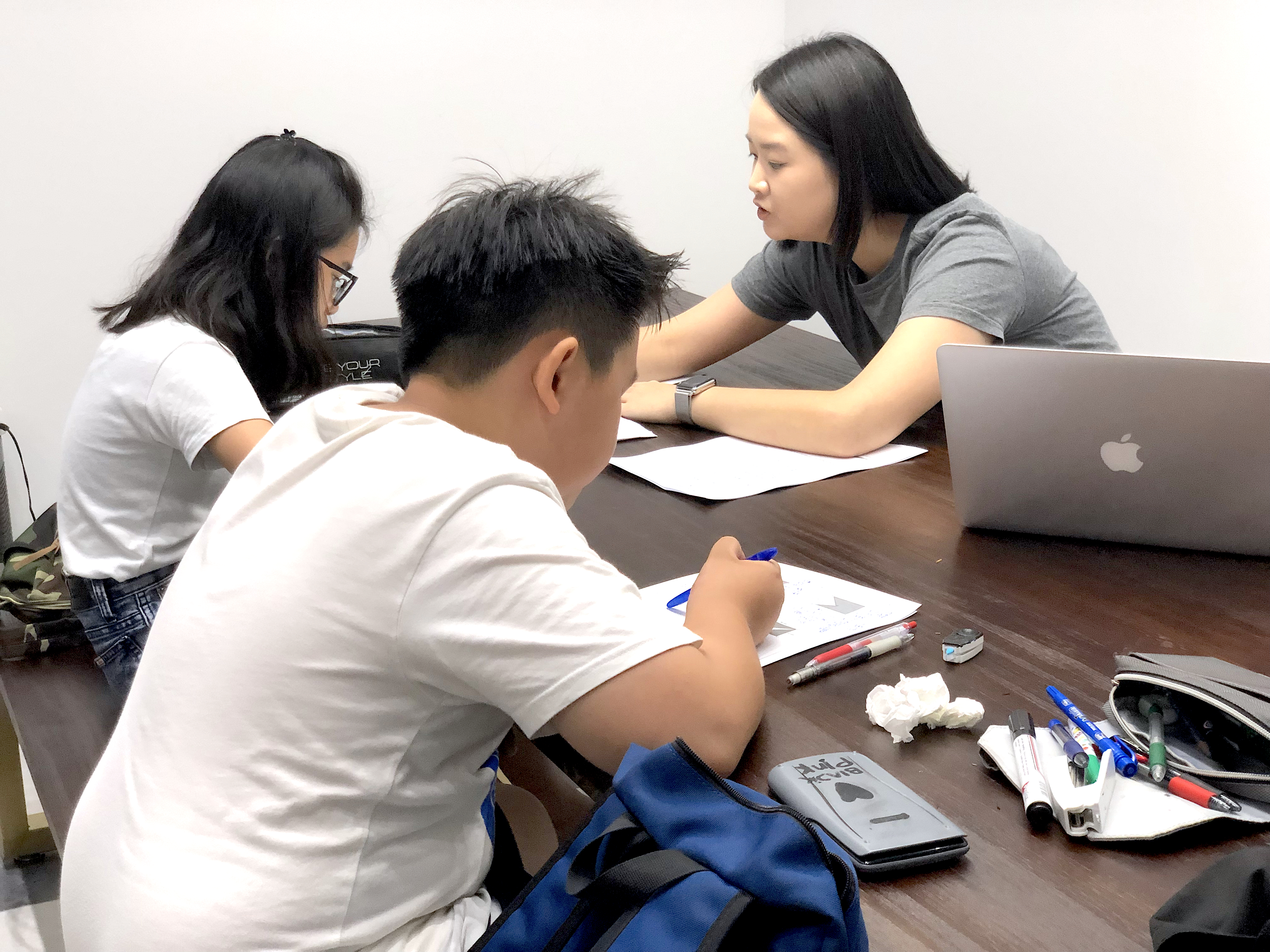
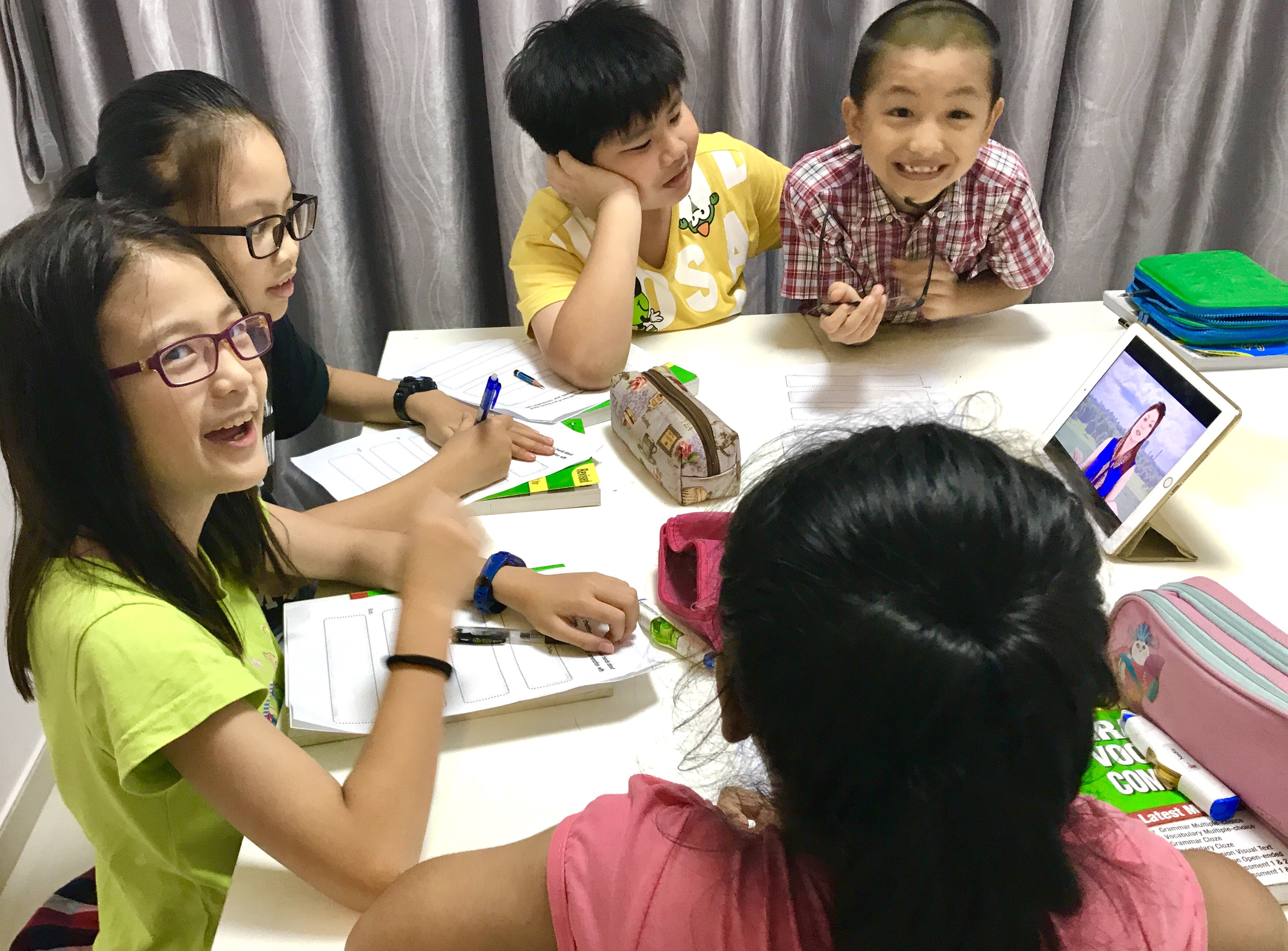
At eduKate Yishun, we work hard to have an affirmative class culture that empowers our students to do more, learn more, and develop a love for their own education by creating a class culture with great friends and tutors. Our positive classes also creates a constructive environment that teaches them the relevance of what they study to their everyday lives. With relevance creates the true reason for a proper education. That is our trademark that differentiates our teaching to others, but don’t just take our words for it, let these photos show you how much our passion and love for our Yishun student’s English lessons.




Leave a Reply