
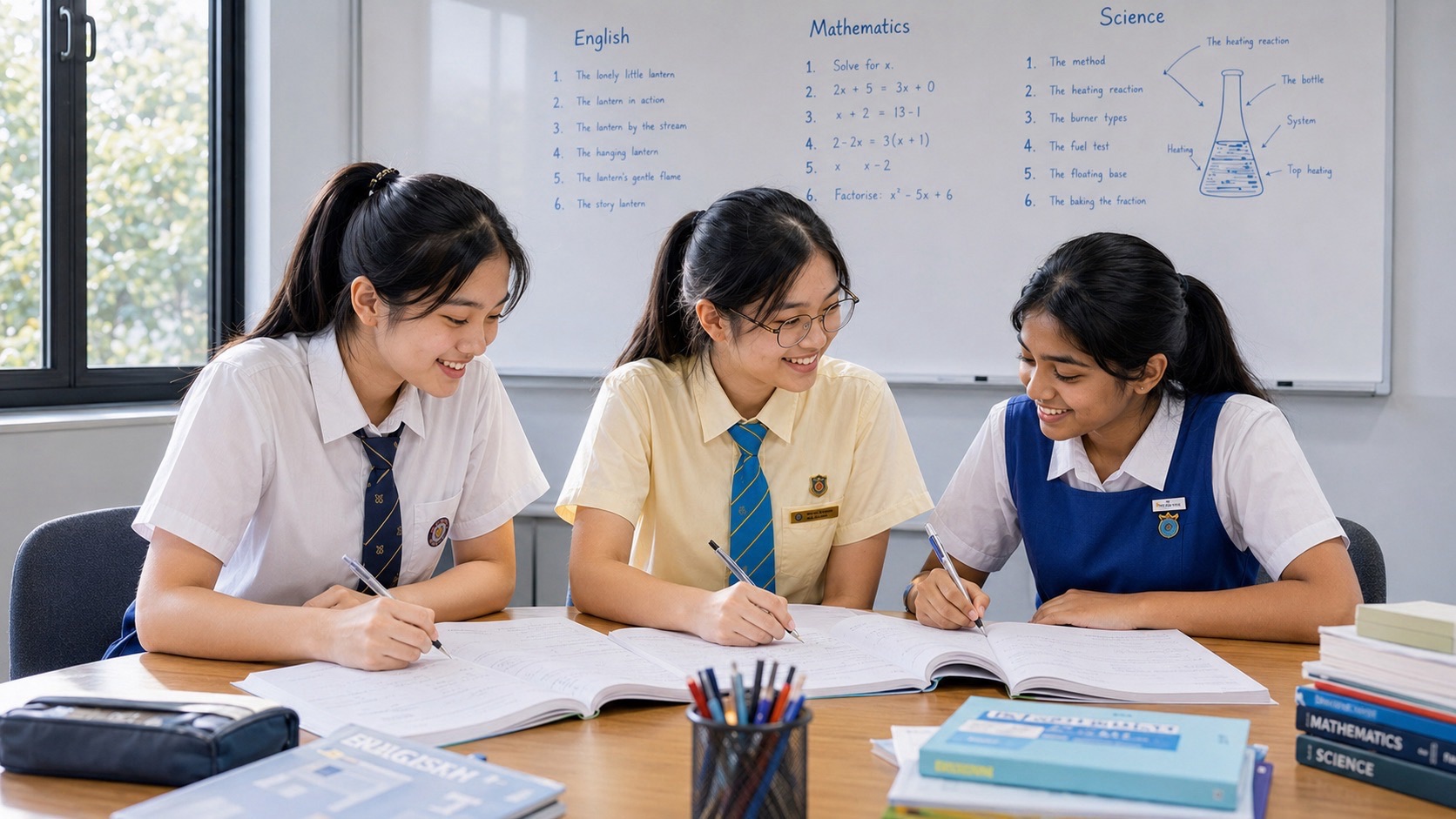
Sengkang Tuition Centre English Sec 1 Sengkang Tutor keeps its original 2019 title, but the learning job on this page is completely rebuilt for families searching for Secondary 1 English tuition in Sengkang, Sec 1 English tutor, lower-secondary comprehension, reading strategies, vocabulary, grammar, writing, oral communication, listening and school-transition support. Secondary 1 students often discover that a passage can be understood sentence by sentence and still become difficult by paragraph five. The problem is not always vocabulary. It is frequently the amount of information that must be held, connected, updated and retrieved while the text continues moving.
A strong Sec 1 English tuition programme should therefore teach a long-text working-memory system. Students need to chunk information, label paragraph jobs, track reference chains, keep one active question in mind, retrieve earlier information when a later paragraph depends on it, and release minor details that no longer matter. The objective is not to memorise every line. It is to maintain a stable mental model of the text while reading continues.
This page owns one specific learning job: chunk → label → connect → retrieve → update → answer. It complements other Secondary 1 pages in the estate on inference, annotation, feedback, sentence control, classroom-language navigation and reading-to-writing transfer. Here, the central question is simpler: how does a student keep enough of a long passage alive in working memory to understand what the whole text is doing?
Why Secondary 1 Reading Suddenly Feels Heavier
Primary-school passages often give pupils relatively short stretches of information before a question or obvious transition. Secondary texts may carry an idea across several paragraphs, introduce a counterpoint later, switch speakers, return to an earlier example, or delay the conclusion until the final section. The student has to keep several relationships active at once.
That creates a working-memory load. The reader is simultaneously decoding vocabulary, understanding sentences, remembering the previous paragraph, deciding which details matter, tracking references such as this change or they, and preparing to answer questions. When too many details are treated as equally important, the system becomes crowded.
Working Memory Is Not a Storage Warehouse
Students sometimes respond to difficult reading by trying to remember everything. That usually makes the problem worse. A better strategy is selective maintenance. The reader keeps the few ideas required for the current stage of the text and stores the rest externally through compact notes, paragraph labels or underlining.
The operating principle is:
Do not carry the whole passage. Carry the structure.
The Six-Part Long-Text Routine
- Chunk the passage into manageable meaning units.
- Label each paragraph with a short job.
- Connect the current paragraph to the previous one.
- Retrieve earlier information when the writer refers back.
- Update the mental model when new information changes the picture.
- Answer from the structure rather than from vague memory.
Step 1: Chunk the Text
A chunk is a unit that can be understood as one idea. Sometimes a paragraph is one chunk. Sometimes a long paragraph contains two or three distinct moves. The student should look for shifts in topic, speaker, time, cause, example or viewpoint.
Useful chunk signals include:
- new paragraph;
- contrast markers such as however;
- time shifts;
- new examples;
- changes in speaker;
- cause-and-effect transitions;
- questions followed by explanations.
Why Chunking Helps
Without chunking, a passage can feel like one continuous wall of words. With chunking, the reader thinks in larger meaningful units. Instead of remembering ten separate sentences, the student may remember: problem introduced, first cause, example, counterview, conclusion.
Step 2: Label Paragraph Jobs
At the end of each paragraph, write or think a five-word label. Good labels describe function, not merely topic.
Weak label:
Technology.
Stronger label:
Technology increases access to information.
Even stronger job label:
Introduces benefit: wider information access.
Common Paragraph Jobs
- introduces issue;
- defines term;
- explains cause;
- gives example;
- shows consequence;
- contrasts viewpoint;
- qualifies earlier claim;
- proposes solution;
- summarises or concludes.
Keep Labels Short
If the label becomes a rewritten paragraph, the note itself adds memory load. Five to seven words are usually enough. The purpose is to create a map that can be scanned quickly when the question sends the student back into the text.
Step 3: Connect Paragraphs
After labelling the current paragraph, ask:
What relationship does this paragraph have with the one before it?
Possible relationships include:
- adds another reason;
- contrasts;
- gives an example;
- explains the cause;
- shows a result;
- narrows the claim;
- returns to an earlier idea;
- changes viewpoint.
Relationship Arrows
A student can draw light arrows between paragraph labels:
problem → cause → example → limitation → response.
That chain is easier to hold than the full wording of five paragraphs.
Step 4: Retrieve When the Writer Refers Back
Long texts often use phrases such as:
- this problem;
- these findings;
- such behaviour;
- the earlier approach;
- they;
- this change.
These expressions require the reader to retrieve earlier meaning. If the student cannot identify the referent, the rest of the sentence may become unstable.
The Reference Search Boundary
Do not search the whole passage immediately. Search backwards in widening circles:
- previous sentence;
- previous two sentences;
- previous paragraph;
- earlier paragraph label if necessary.
This is faster and protects working memory.
Step 5: Update the Mental Model
Good readers change their understanding when the text changes. A passage may begin by praising a policy, then introduce serious limitations. The reader should not hold the first impression rigidly.
Ask:
What did this paragraph add, remove or change in my understanding?
Updating Prevents Early-Paragraph Bias
Students sometimes answer from the opening paragraph even when later paragraphs qualify it. Updating forces the reader to treat the text as a developing system rather than a set of isolated facts.
Step 6: Answer From the Map
When a question appears, first decide which part of the map is likely relevant. Then return to the exact lines. This two-stage process is more efficient than rereading the entire text from the top.
The Long-Text Map
| Paragraph | Job | Relationship |
|---|---|---|
| 1 | introduces problem | sets issue |
| 2 | explains first cause | answers why |
| 3 | gives concrete example | illustrates cause |
| 4 | raises limitation | qualifies earlier claim |
| 5 | proposes response | resolves tension |
The One-Line Memory Rule
After each paragraph, a student should be able to say one line:
This paragraph mainly…
If that sentence cannot be completed, the paragraph probably has not been processed deeply enough.
Reading Speed Should Change With Load
Long-text reading is not about maintaining one speed. Easy background information can be read quickly. Dense causal explanation, contrast, unfamiliar vocabulary and key turning points deserve slower attention.
Three-Speed Reading Inside Long Texts
- Scan for a name, date, repeated term or location.
- Skim to recover paragraph role.
- Close-read when the question depends on exact wording or inference.
Working Memory and Vocabulary
Unknown vocabulary consumes attention. The reader should decide whether the word is central.
Ask:
- Does the word repeat?
- Does it block the main sentence?
- Can I infer it from context?
- Can I continue safely without exact definition?
Use a Provisional Meaning
If the sentence can continue with a rough meaning, keep reading. Mark the word and verify later. This protects the main argument from being lost while the student wrestles with one term.
Working Memory and Inference
Inference may depend on clues distributed across several paragraphs. The student should not try to memorise every clue. Record or mentally group the relevant clues.
Use:
clue 1 + clue 2 → combined interpretation.
Distributed Evidence
Example:
- paragraph 2 shows the character avoiding eye contact;
- paragraph 4 shows short replies;
- paragraph 5 shows the character leaving early.
The combined pattern may support an inference of discomfort or reluctance more strongly than any one clue.
Working Memory and Writer’s Viewpoint
A long text may report several voices. Label them.
Possible tags:
- writer;
- researcher;
- critic;
- student;
- community member.
This prevents a quoted view from being mistaken for the writer’s own conclusion.
Speaker Tracking
When a viewpoint changes, mark:
Who is speaking now?
This one question prevents many comprehension errors.
Working Memory and Summary
Summary selection depends on hierarchy. Paragraph labels reveal which sections contain main points and which contain examples. This allows the student to select without repeatedly rereading the full passage.
Working Memory and Note-Making
Good notes reduce memory load. Bad notes recreate the passage.
Useful notes:
- short;
- hierarchical;
- relationship-based;
- easy to scan.
Bad Notes Increase Load
Copying whole sentences requires the student to reread the notes as if they were another passage. The notes should function as a map, not a second text.
The 20-Second Paragraph Reset
When a student realises meaning has been lost, do not restart from paragraph one immediately.
- Stop.
- Read the last paragraph label.
- Reread the current paragraph slowly.
- State the relationship.
- Continue.
Targeted Rereading
Reread only when there is a specific reason:
- unknown reference;
- lost causal chain;
- unclear viewpoint;
- question sends you back.
Do Not Reread for Comfort
Some students reread because the passage feels difficult, not because they know what information is missing. This consumes time without improving understanding.
Reading Stamina Versus Memory Control
A student can be physically able to read for thirty minutes and still lose the thread after three paragraphs. Stamina and working-memory control are related but different. This page focuses on maintaining the map.
Long Texts in School Assignments
The same system works for:
- textbook chapters;
- school handouts;
- articles;
- literary extracts;
- research passages.
The School-Text Navigation Routine
Before answering teacher questions:
- scan headings;
- predict structure;
- read one section;
- label the main idea;
- answer from the map.
Working Memory in Writing
The same issue appears in writing. Students forget the paragraph’s purpose while drafting. A one-line paragraph job keeps the writer from drifting.
Paragraph Job Before Drafting
Write:
This paragraph will explain why…
Then every sentence should serve that job.
Cross-Skill Transfer
When students learn to identify paragraph jobs in reading, they become more aware of paragraph jobs in their own writing. This is a high-value transfer because the same mental structure serves both comprehension and composition.
The Working-Memory Error Ledger
| Pattern | Visible symptom | Repair |
|---|---|---|
| paragraph overload | forgets earlier idea | five-word job label |
| reference loss | misreads “this/they” | backward search boundary |
| viewpoint mixing | attributes quote to writer | speaker tags |
| rereading loop | restarts whole passage | targeted reset |
| detail overload | notes too long | structure-only notes |
Small-Group Working-Memory Lab
Three students read the same passage but each is assigned a different diagnostic lens:
- Student A labels paragraph jobs.
- Student B tracks reference chains.
- Student C tracks viewpoint shifts.
Then everyone answers the same questions independently. The comparison reveals which structural cues each learner is missing.
Silent First Mapping
Students should map before discussion. Otherwise the strongest reader supplies the structure for everyone.
A 90-Minute Long-Text Lesson
- 10 min: preview headings and predict structure.
- 20 min: read first half with paragraph labels.
- 10 min: reference-chain check.
- 15 min: read second half and update mental model.
- 15 min: answer mixed comprehension questions.
- 10 min: targeted rereading drill.
- 5 min: summary of whole text in three lines.
- 5 min: update ledger.
Worked Case: Student Understands Every Sentence but Misses the Main Argument
The tutor stops asking sentence-level questions and requires a paragraph-job map. Once the student sees the five jobs, the argument becomes visible.
Worked Case: Student Forgets Paragraph 2 by Paragraph 5
The student writes one five-word label after each paragraph and keeps only the chain active.
Worked Case: Student Misreads “This Problem”
The backward search boundary is used. The referent is found in the previous paragraph rather than guessed from the current sentence.
Worked Case: Student Rereads the Entire Passage for Every Question
Questions are mapped to paragraph jobs first. Rereading becomes local and purposeful.
Worked Case: Notes Are Longer Than the Passage Map
The tutor limits notes to one job label and one key term per paragraph.
What Parents Can Watch For
- The student can summarise each paragraph briefly.
- Rereading becomes targeted rather than repetitive.
- Reference-word errors decrease.
- The student can explain how paragraphs connect.
- Longer passages feel less overwhelming.
- Notes become shorter and more useful.
What Not to Do
- Do not try to memorise every sentence.
- Do not copy long notes while reading.
- Do not restart from the beginning whenever confused.
- Do not ignore reference chains.
- Do not treat all paragraphs as equally important.
A Twelve-Week Working-Memory Build
Weeks 1–2: paragraph jobs and five-word labels.
Weeks 3–4: paragraph relationships.
Weeks 5–6: reference chains and speaker tracking.
Weeks 7–8: distributed evidence and inference.
Weeks 9–10: long-text summary and note-making.
Weeks 11–12: independent unseen long-text navigation under time.
Frequently Asked Questions
Why does my child understand short passages but struggle with longer ones?
The difficulty may be maintaining and updating the text’s structure across several paragraphs rather than basic decoding or vocabulary.
Should students take notes while reading?
Yes, if the notes are compact and structural. Long copied notes can increase rather than reduce memory load.
How can students stop rereading everything?
Use paragraph-job maps and targeted rereading. Return only to the section relevant to the question or confusion.
How does this help writing?
Students who recognise paragraph jobs in reading become better at assigning jobs to their own paragraphs.
What is the independence goal?
A student who can read a long unfamiliar text, maintain its structure, retrieve earlier information when needed and answer questions without repeatedly restarting the passage.
The Secondary 1 Working-Memory Rule
Do not carry every sentence in your head. Carry the map, and return to the exact words only when the question needs them.
Practice Extension: Reverse Outline Drill
After reading a six-paragraph article, cover the text and write only the six paragraph jobs from memory. Reopen the text and compare. The exercise shows whether the student remembered structure or only isolated details. On the second attempt, reduce each label to five words and explain how paragraph four changes the direction of the passage.
Practice Extension: Reference Relay
Choose ten pronouns or reference phrases from a passage. For each one, identify the exact noun, event or idea it points to and explain why the nearest alternative is wrong. This develops disciplined backward search and prevents students from treating pronouns as minor grammar details when they actually carry meaning across the text.
Practice Extension: Memory Compression
Read one paragraph, close the text and state the paragraph in twenty words, then ten words, then five words. The shortest version should preserve the paragraph’s job rather than every detail. This teaches students to compress meaning consciously instead of losing information accidentally when working memory becomes crowded.
Practice Extension: Viewpoint Ledger
For a passage with multiple speakers, create a two-column record: speaker and position. Add one sentence explaining how each new viewpoint changes the reader’s understanding. This is especially useful when a writer reports an opposing view before challenging it, because students often mistake the reported position for the writer’s own conclusion.
Practice Extension: Delayed Recall
Ten minutes after finishing a passage, without looking back, write the thesis and three most important paragraph jobs. Then check the text. Delayed recall reveals which structural features were actually encoded. The aim is not perfect memory; it is to see whether the mental model survived after attention moved elsewhere.
Practice Extension: Question-to-Map Matching
Before answering a comprehension set, match every question to the paragraph job most likely to contain the answer. Only then open the relevant section. This trains students to use structure as a navigation tool and reduces the habit of rereading the entire passage whenever a question feels unfamiliar.
Practice Extension: Long-Text Writing Transfer
After mapping a source text, ask the student to plan a new five-paragraph article using the same functional sequence but a different topic. For example, problem → cause → example → limitation → response can become a fresh writing architecture. The student must change all content while preserving only the organisational mechanism.
Practice Extension: Cognitive Load Reflection
At the end of the lesson, the student identifies the exact moment the passage became difficult: unknown vocabulary, lost reference, viewpoint change, too many details or uncertainty about paragraph purpose. Naming the load source is more useful than saying the passage was hard, because the next practice can target the actual mechanism.
Final Consolidation Task
Complete one fresh unseen long passage using only paragraph-job labels, reference checks and targeted rereading. At the end, explain which part of the map helped most, which detail could safely be released, and where a later paragraph forced an earlier interpretation to be updated. Record one rule to use in the next school text.
Deep Practice: Tracking What Must Stay Active
One reason long passages overwhelm students is that they keep the wrong information active. A name mentioned once, a decorative example or a minor date may occupy attention while the controlling idea disappears. A useful drill is to pause after every two paragraphs and divide information into three groups: keep active, store in note and release for now. The student then explains the choice. A main claim usually stays active. A useful paragraph label can be stored externally. A descriptive detail can often be released unless a later question makes it relevant.
This sorting process turns working memory into a managed workspace. The student is not trying to become a better memoriser of every word. The student is learning to decide what deserves mental space. Over time, this improves both comprehension speed and confidence because difficult texts stop feeling like a test of raw memory.
Deep Practice: Recovering After Meaning Is Lost
Students need a recovery routine because even strong readers sometimes lose the thread. The wrong response is often to panic and restart the entire passage. A better recovery sequence is: identify the last point that was clear, inspect the next transition, rebuild the missing relationship and continue. The tutor can deliberately insert a difficult paragraph and ask the student to notice the exact moment understanding breaks.
The student should be able to say, for example, “I understood the example, but I did not understand how paragraph four challenged paragraph three.” That diagnosis is far more useful than “I don’t get it.” Once the break is specific, the repair becomes specific too. This routine also transfers to school textbooks and research reading, where students need to repair comprehension without an adult immediately explaining the page.
Deep Practice: Structural Recall Without the Text
After a long passage has been read and mapped, close the text completely. Ask the student to reconstruct only the architecture: thesis, paragraph jobs, major turning point and conclusion. Do not reward the number of details remembered. Reward whether the structure is correct. Then reopen the text and compare the reconstructed map with the actual one.
This drill reveals whether the student encoded the passage as a system or merely followed it sentence by sentence while it was visible. A student who remembers many details but cannot state the controlling idea still needs structural compression. A student who remembers the architecture but forgets one minor example is often in a stronger position for comprehension because the example can be relocated quickly if a question demands it.
Deep Practice: Cross-Paragraph Inference
Many Secondary 1 students can infer from one sentence but struggle when evidence is distributed. To train this, select a passage where the writer reveals a character, attitude or problem gradually. The student records one clue from an early paragraph, one clue from the middle and one clue from the end. Only after collecting the three clues should the student write the inference.
The written answer should distinguish evidence from interpretation. For example: “The repeated avoidance of eye contact, brief answers and early departure together suggest that the character was uncomfortable and wanted the interaction to end.” This prevents the student from treating inference as a guess. It also trains working memory to preserve a small set of relevant clues across distance instead of holding the entire passage.
Deep Practice: Mapping Contrast and Qualification
Long argumentative or expository texts often become difficult when the writer qualifies an earlier claim. Students may remember the first strong statement and ignore later limits. A useful drill is to underline the first claim, circle the contrast marker and write the revised claim in the margin. The revised claim is what the reader should now carry forward.
For example, paragraph one may suggest that technology improves access to learning. Paragraph four may explain that access alone does not guarantee attention or understanding. The final mental model should therefore be “technology can improve access, but educational benefit depends on how that access is used.” This updating skill is essential because mature texts often develop by qualification rather than by simple accumulation.
Deep Practice: Building a Reader’s Working Dashboard
A compact dashboard can sit at the top of the page during training. It contains four boxes: main issue, current paragraph job, important reference and open question. The student updates only when necessary. The dashboard should never become a second essay. Its value is that it externalises the few pieces of information most likely to overload working memory.
As the student improves, the dashboard can be faded. First remove the open-question box, then the reference box, then require only paragraph jobs. Eventually the student maintains the structure mentally. This prompt-fading sequence ensures that the note system builds independence rather than permanent dependence on a complex annotation ritual.
Deep Practice: Long-Text Vocabulary Triage
Not every unknown word deserves immediate attention. Students should classify unfamiliar vocabulary as blocking, useful but non-blocking or ignorable for now. A blocking word prevents understanding of the main sentence or repeated concept and should be inferred or checked. A useful non-blocking word can be marked for later study. A minor decorative word can often be released.
This triage reduces the common habit of stopping every few lines to search definitions. It also teaches an important academic-reading principle: comprehension is hierarchical. The reader’s first responsibility is to understand the argument or narrative. Vocabulary study can then be layered on top without destroying the flow of reading.
Deep Practice: Using Questions to Protect Memory
Questions can reduce memory load by giving the reader a target. Before reading a section, the student predicts what question the section is likely to answer. During reading, the student keeps only that question active. After the section, the student answers it in one sentence and releases the rest. This technique converts passive reading into a sequence of small purposeful searches.
For a passage on urban transport, the questions might be: What problem is being described? What causes it? What solution is proposed? What limitation remains? Each answer becomes one line in the structural map. By the end, the reader has a coherent summary without trying to memorise every detail.
Deep Practice: Timed Long-Passage Navigation
Once the structural routines are stable, introduce time gradually. The goal is not to force speed before understanding. Begin with one paragraph under a generous time window, then two paragraphs, then a full passage. The student records where time is spent: reading, labelling, rereading, vocabulary, evidence search or answer writing.
If time loss comes from over-annotation, reduce the notes. If it comes from repeated whole-passage rereading, strengthen paragraph maps. If it comes from unknown vocabulary, practise triage. Timing becomes useful only when it reveals the process causing delay. This avoids telling a student simply to “read faster,” which rarely fixes the actual bottleneck.
Deep Practice: Independence Gate for Long-Text Reading
Before the skill moves to maintenance, use an unseen passage with no tutor prompts during the first attempt. The student should preview, chunk, label, track references, answer mixed questions and self-check. After completion, the student explains which structural choices were made and where uncertainty remained.
The independence gate is passed when the student can recover from confusion without restarting, locate evidence without reading the whole passage again, and state the text’s architecture accurately enough to answer. Perfection is not required. The target is a reliable process that works when the tutor is silent.
Parent Observation Guide for Long-Text Independence
At home, parents can ask the child to explain the job of each paragraph instead of testing isolated facts. Useful prompts include: “What changed in this section?”, “Which earlier idea does this sentence refer to?” and “Which paragraph would you revisit for this question?” The aim is to hear the child’s navigation process, not to provide the answer.
Teacher Feedback That Supports the System
Feedback is more useful when it names the structural failure precisely. Instead of “read carefully,” identify whether the student lost a reference chain, ignored a qualification, over-carried details or failed to update the thesis. Specific feedback can then produce a specific fresh retest.
Final Transfer Challenge
Use a non-fiction article, a narrative extract and a school textbook page in the same week. The student applies the same six-part routine to all three. This proves the method is not tied to one worksheet format and prepares the learner for the variety of Secondary 1 school reading.
Long-Text Independence at School
The final purpose of this system is not to produce beautifully annotated tuition passages. It is to help a student walk into a normal Secondary 1 classroom, open an unfamiliar article or textbook extract and know what to do without waiting for an adult to divide the page. That means the method must become lighter over time. Early lessons may use visible paragraph labels and reference arrows. Later lessons should ask the student to keep only one or two marks on the page and hold the rest mentally.
School transfer can be checked by asking the student to bring one real classroom text and explain how the same routine would apply. Which paragraph introduces the issue? Where does the explanation begin? Which detail is only an example? What earlier idea does “this development” refer to? If the student can answer these questions independently, the tuition method is beginning to live outside the tuition room.
What Mastery Looks Like
Mastery does not mean remembering every paragraph perfectly. It means that when a question appears, the student knows where to look and why. It means that when a pronoun is unclear, the student searches backward systematically. It means that when a later paragraph qualifies an earlier one, the mental model changes. It means that confusion triggers a targeted repair rather than a full restart.
Most importantly, mastery means the reader can distinguish between memory failure and structure failure. If a minor detail is forgotten, the map can guide retrieval. If the structure itself is unclear, the student knows to rebuild the paragraph relationships first. That distinction keeps long-text reading efficient and prevents unnecessary panic.
The Long-Text Independence Gate
Before moving this skill to maintenance, use one unseen passage from a different topic and genre. The student receives no live hints during the first attempt. After reading, the student must give the thesis, paragraph jobs, one important reference chain, one qualification and one cross-paragraph inference. Then the student answers a short set of questions and explains any rereading decisions. When this can be done reliably after delay, the system has become portable enough for normal school use.
Historical Image Archive
The original image archive remains below as part of this page’s history.
| Lesson feature | Weak version | Stronger small-group version |
| Comprehension | Everyone checks answers | Each student defends evidence and inference |
| Writing | Everyone copies a model | Plans are compared by paragraph purpose |
| Vocabulary | Everyone memorises a list | Students test natural usage and nuance |
| Grammar | Everyone completes drills | Students explain why structures work |
| Oral | Fastest student answers first | Thinking time + rotating first speaker |
| Feedback | Tutor corrects everything | Students predict, retry and transfer |
Individual commitment before discussion
The first rule of a productive small group is simple: every student thinks before anyone hears the group answer. This protects diagnostic value. If one confident student speaks first, others can borrow the reasoning and appear to understand.
Short silent attempts, written notes or individual planning create a baseline the tutor can actually observe.
Peer reasoning rather than peer copying
After individual commitment, students can compare routes. One student may choose the right evidence but explain it weakly; another may infer correctly from a different clue. Comparing these differences makes quality visible.
The tutor should ask which route is more precise and why, not simply announce which student is correct.
Comprehension as explainable thinking
Sec 1 comprehension should train command words, evidence, inference, reference and answer scope. In a group, students can point to evidence, challenge unsupported claims and compress overlong answers.
This is especially useful because many comprehension errors are reasoning errors rather than missing vocabulary.
Writing plans as visible architecture
Before drafting, students can present paragraph jobs rather than polished opening sentences. Peers can ask whether each paragraph actually serves the prompt and whether the ending completes the central idea.
The group helps expose drift early, before the student spends forty minutes writing the wrong route.
Vocabulary as choice
Vocabulary improves when students compare options. Which verb is more precise? Which adjective is too strong? Which phrase sounds natural in formal writing?
Discussion turns vocabulary from memorisation into selection and makes collocation easier to hear.
Grammar as explanation
Instead of only choosing the correct option, students should explain the relationship: agreement, time, reference, cause, contrast or sentence boundary.
Explaining grammar aloud reveals whether the student understands the rule or is relying on intuition alone.
Oral communication as a group strength
Small groups are naturally suited to oral development if turn-taking is deliberate. Students can state a point, another student can ask for an example, and a third can offer an alternative perspective.
The tutor can then teach relevance, support and recovery in a real conversational setting.
Listening inside the group
Peer discussion also trains listening. A student should be able to summarise another person’s point before disagreeing. This creates a norm of responding to meaning rather than waiting for a turn to speak.
That habit strengthens formal listening tasks and collaborative classroom learning.
Questioning as a tutor skill
A strong tutor does not answer every uncertainty immediately. Questions such as “Which line proves that?”, “What is this paragraph doing?” and “What would change if the audience changed?” make reasoning visible.
Over time, the tutor should ask fewer questions because students begin asking themselves the same ones.
Cold attempt, teach, retry, transfer
A powerful lesson loop is cold attempt → diagnosis → explanation → guided retry → peer comparison → fresh independent transfer. The cold attempt shows what the student can do unaided; the final transfer shows whether the lesson changed anything.
Without both ends of the loop, group participation can look impressive without proving individual learning.
How small groups protect shy students
Shy students often need thinking time, not pressure to speak faster. Silent preparation, predictable turn-taking and low-risk first responses can create a safer path into discussion.
Confidence grows when the student knows there will be space to formulate an idea before speaking.
How small groups challenge fast students
Fast students can also benefit when they are asked to justify, compress or revise rather than simply finish first. Explaining why an answer works often exposes gaps hidden by speed.
The group can therefore challenge both slower and faster learners without forcing them through identical support.
The tutor should fade from the centre
At the beginning, the tutor may control the discussion. Over time, students should challenge evidence, ask clarification questions and compare writing choices with less intervention.
A strong small group becomes increasingly self-regulating while the tutor maintains standards and diagnosis.
Small-group Sec 1 clinics
One student dominates
What it looks like: The same student answers first and frames the discussion. Why it happens: Speed is being mistaken for mastery. Repair: Use silent thinking time and rotate first-speaker roles. Transfer check: Run a new discussion where every student commits before hearing peers. A small group proves its value only when the repaired thinking survives the discussion and appears later in an individual response. The final transfer should therefore be completed alone, and the same mechanism should be revisited after a delay so peer support does not become another form of dependence.
Quiet student disappears
What it looks like: The student writes but rarely speaks. Why it happens: The group is rewarding spontaneity. Repair: Give predictable turns and allow notes before speaking. Transfer check: Ask the student to explain one answer first in the next task. A small group proves its value only when the repaired thinking survives the discussion and appears later in an individual response. The final transfer should therefore be completed alone, and the same mechanism should be revisited after a delay so peer support does not become another form of dependence.
Students copy the best answer
What it looks like: Everyone ends with identical wording. Why it happens: Comparison has become imitation. Repair: Require each student to explain their own evidence route before seeing models. Transfer check: Use a fresh question and compare different valid wording. A small group proves its value only when the repaired thinking survives the discussion and appears later in an individual response. The final transfer should therefore be completed alone, and the same mechanism should be revisited after a delay so peer support does not become another form of dependence.
Discussion becomes social chatter
What it looks like: Energy is high but reasoning is thin. Why it happens: The group lacks a clear intellectual task. Repair: Assign one role: evidence checker, scope checker or example challenger. Transfer check: Repeat on a new passage with rotated roles. A small group proves its value only when the repaired thinking survives the discussion and appears later in an individual response. The final transfer should therefore be completed alone, and the same mechanism should be revisited after a delay so peer support does not become another form of dependence.
Comprehension debate is opinion-based
What it looks like: Students say what feels right. Why it happens: Evidence norms are weak. Repair: Require line references and explain what each clue proves. Transfer check: Use a new inference question. A small group proves its value only when the repaired thinking survives the discussion and appears later in an individual response. The final transfer should therefore be completed alone, and the same mechanism should be revisited after a delay so peer support does not become another form of dependence.
Students over-answer together
What it looks like: The group adds more and more details. Why it happens: More is being treated as safer. Repair: Count the ideas required by the command and compress to exact scope. Transfer check: Answer a new question in the narrowest complete form. A small group proves its value only when the repaired thinking survives the discussion and appears later in an individual response. The final transfer should therefore be completed alone, and the same mechanism should be revisited after a delay so peer support does not become another form of dependence.
Writing plans become competitions
What it looks like: Students try to create the most dramatic story. Why it happens: Relevance is losing to novelty. Repair: Rank plans by prompt control, causality and ending, not excitement. Transfer check: Plan a new topic with a simple central conflict. A small group proves its value only when the repaired thinking survives the discussion and appears later in an individual response. The final transfer should therefore be completed alone, and the same mechanism should be revisited after a delay so peer support does not become another form of dependence.
Model essay becomes group copy
What it looks like: Students borrow the same phrases. Why it happens: The model was treated as surface language. Repair: Analyse one principle, then ban original wording. Transfer check: Write different sentences using the same principle. A small group proves its value only when the repaired thinking survives the discussion and appears later in an individual response. The final transfer should therefore be completed alone, and the same mechanism should be revisited after a delay so peer support does not become another form of dependence.
Vocabulary comparison becomes thesaurus hunting
What it looks like: Students choose the rarest word. Why it happens: Precision is confused with difficulty. Repair: Compare connotation, collocation and register. Transfer check: Use the simplest word that is most exact in a new sentence. A small group proves its value only when the repaired thinking survives the discussion and appears later in an individual response. The final transfer should therefore be completed alone, and the same mechanism should be revisited after a delay so peer support does not become another form of dependence.
Grammar explanation is vague
What it looks like: Students say an option ‘sounds right’. Why it happens: Implicit intuition has not become explicit knowledge. Repair: Name the grammatical relationship and compare a near-miss. Transfer check: Create a fresh example that tests the same rule. A small group proves its value only when the repaired thinking survives the discussion and appears later in an individual response. The final transfer should therefore be completed alone, and the same mechanism should be revisited after a delay so peer support does not become another form of dependence.
Peer correction becomes harsh
What it looks like: Students focus on who is wrong. Why it happens: Classroom culture is competitive. Repair: Comment on the reasoning, not the person, and require a constructive alternative. Transfer check: Use anonymous sample answers for the next comparison. A small group proves its value only when the repaired thinking survives the discussion and appears later in an individual response. The final transfer should therefore be completed alone, and the same mechanism should be revisited after a delay so peer support does not become another form of dependence.
Peer praise is generic
What it looks like: Students say ‘good answer’ without criteria. Why it happens: Quality is not visible. Repair: Name the specific strength: evidence, scope, tone, structure or vocabulary. Transfer check: Evaluate another answer using the same criterion. A small group proves its value only when the repaired thinking survives the discussion and appears later in an individual response. The final transfer should therefore be completed alone, and the same mechanism should be revisited after a delay so peer support does not become another form of dependence.
Oral turns are too short
What it looks like: Students state opinions and stop. Why it happens: There is no development routine. Repair: Add reason, example and implication; peers ask one follow-up. Transfer check: Use a new topic and rotate questioners. A small group proves its value only when the repaired thinking survives the discussion and appears later in an individual response. The final transfer should therefore be completed alone, and the same mechanism should be revisited after a delay so peer support does not become another form of dependence.
Oral turns become speeches
What it looks like: One student talks for too long. Why it happens: Interaction has disappeared. Repair: Use short turns where peers must respond, question or compare. Transfer check: Run a new topic with a two-turn limit before response. A small group proves its value only when the repaired thinking survives the discussion and appears later in an individual response. The final transfer should therefore be completed alone, and the same mechanism should be revisited after a delay so peer support does not become another form of dependence.
Students do not listen to each other
What it looks like: They prepare their own point while peers speak. Why it happens: Discussion is parallel monologue. Repair: Require each speaker to summarise the previous point first. Transfer check: Use a new issue and score listening accuracy. A small group proves its value only when the repaired thinking survives the discussion and appears later in an individual response. The final transfer should therefore be completed alone, and the same mechanism should be revisited after a delay so peer support does not become another form of dependence.
Tutor talks most of the lesson
What it looks like: Students receive explanations but rarely generate them. Why it happens: Instruction has replaced productive struggle. Repair: Delay explanation until students commit and compare. Transfer check: Measure how long students reason before tutor input on the next task. A small group proves its value only when the repaired thinking survives the discussion and appears later in an individual response. The final transfer should therefore be completed alone, and the same mechanism should be revisited after a delay so peer support does not become another form of dependence.
Tutor hints too quickly
What it looks like: Students wait for cues after small difficulty. Why it happens: Prompt dependence is forming. Repair: Use a wait period and ask for the first available step. Transfer check: Run a fresh task where the tutor stays silent longer. A small group proves its value only when the repaired thinking survives the discussion and appears later in an individual response. The final transfer should therefore be completed alone, and the same mechanism should be revisited after a delay so peer support does not become another form of dependence.
Fast student never revises
What it looks like: Correct first attempts create overconfidence. Why it happens: Speed hides weak metacognition. Repair: Require justification, compression or a second possible route. Transfer check: Use a harder fresh task where the first intuition may be wrong. A small group proves its value only when the repaired thinking survives the discussion and appears later in an individual response. The final transfer should therefore be completed alone, and the same mechanism should be revisited after a delay so peer support does not become another form of dependence.
Slow student runs out of class time
What it looks like: Most work happens after peers finish. Why it happens: The task is not chunked. Repair: Use smaller cold attempts and focused targets before whole tasks. Transfer check: Compare completion and accuracy on a new chunked exercise. A small group proves its value only when the repaired thinking survives the discussion and appears later in an individual response. The final transfer should therefore be completed alone, and the same mechanism should be revisited after a delay so peer support does not become another form of dependence.
Homework rescue consumes the session
What it looks like: School tasks fill all available time. Why it happens: Urgency replaces curriculum. Repair: Use one homework error as evidence, then move to a fresh repair task. Transfer check: Track whether the same error returns next week. A small group proves its value only when the repaired thinking survives the discussion and appears later in an individual response. The final transfer should therefore be completed alone, and the same mechanism should be revisited after a delay so peer support does not become another form of dependence.
Group success hides individual weakness
What it looks like: Discussion answers are strong but solo tests remain weak. Why it happens: Peer cues are doing too much work. Repair: Protect fresh individual transfer at the end. Transfer check: Compare group-stage and solo-stage performance. A small group proves its value only when the repaired thinking survives the discussion and appears later in an individual response. The final transfer should therefore be completed alone, and the same mechanism should be revisited after a delay so peer support does not become another form of dependence.
Students fear disagreeing
What it looks like: Everyone accepts the first plausible idea. Why it happens: Psychological safety is weak. Repair: Use language for constructive challenge: ‘What evidence supports that?’ Transfer check: Run a new discussion where disagreement is required once. A small group proves its value only when the repaired thinking survives the discussion and appears later in an individual response. The final transfer should therefore be completed alone, and the same mechanism should be revisited after a delay so peer support does not become another form of dependence.
Students disagree without revising
What it looks like: Debate ends with everyone keeping the original answer. Why it happens: The goal has become winning. Repair: Require a final written position after hearing peers. Transfer check: Use a new issue and note what changed. A small group proves its value only when the repaired thinking survives the discussion and appears later in an individual response. The final transfer should therefore be completed alone, and the same mechanism should be revisited after a delay so peer support does not become another form of dependence.
Feedback is forgotten
What it looks like: The same group issue returns next week. Why it happens: There is no delayed retrieval. Repair: Open the next lesson with one no-notes recall question. Transfer check: Apply the remembered rule to a new task. A small group proves its value only when the repaired thinking survives the discussion and appears later in an individual response. The final transfer should therefore be completed alone, and the same mechanism should be revisited after a delay so peer support does not become another form of dependence.
Roles become rigid
What it looks like: One student is always ‘the vocabulary person’. Why it happens: Strengths are becoming identities. Repair: Rotate roles deliberately so each student practises all processes. Transfer check: Use a new mixed task with different responsibilities. A small group proves its value only when the repaired thinking survives the discussion and appears later in an individual response. The final transfer should therefore be completed alone, and the same mechanism should be revisited after a delay so peer support does not become another form of dependence.
Group is lively but writing does not improve
What it looks like: Discussion stays oral. Why it happens: Transfer to production is missing. Repair: End discussions with an individual paragraph or answer. Transfer check: Compare the final written output with the initial cold attempt. A small group proves its value only when the repaired thinking survives the discussion and appears later in an individual response. The final transfer should therefore be completed alone, and the same mechanism should be revisited after a delay so peer support does not become another form of dependence.
Students depend on tutor approval
What it looks like: They look at the tutor after every answer. Why it happens: External validation remains central. Repair: Ask peers to evaluate by explicit criteria before tutor response. Transfer check: Run a new task where tutor feedback comes last. A small group proves its value only when the repaired thinking survives the discussion and appears later in an individual response. The final transfer should therefore be completed alone, and the same mechanism should be revisited after a delay so peer support does not become another form of dependence.
Same three students progress at different rates
What it looks like: One pace does not fit all. Why it happens: Group work is being mistaken for identical work. Repair: Keep a shared mechanism but vary complexity and feedback. Transfer check: Use the same skill with different text difficulty, then compare transfer. A small group proves its value only when the repaired thinking survives the discussion and appears later in an individual response. The final transfer should therefore be completed alone, and the same mechanism should be revisited after a delay so peer support does not become another form of dependence.
Student performs only inside this group
What it looks like: School transfer remains weak. Why it happens: Cues are context-specific. Repair: Use school-like timing, layout and silence for final transfer. Transfer check: Compare with a later school script. A small group proves its value only when the repaired thinking survives the discussion and appears later in an individual response. The final transfer should therefore be completed alone, and the same mechanism should be revisited after a delay so peer support does not become another form of dependence.
No one knows what was learned
What it looks like: The lesson felt productive but has no clear takeaway. Why it happens: Metacognitive closure is missing. Repair: Each student states one strategy and where it should work again. Transfer check: Begin the next lesson by retrieving those strategies. A small group proves its value only when the repaired thinking survives the discussion and appears later in an individual response. The final transfer should therefore be completed alone, and the same mechanism should be revisited after a delay so peer support does not become another form of dependence.
Small-group Sec 1 practice bank
Practice 1
Answer one inference question individually, then compare evidence routes. The tutor should then change the text, prompt or audience and ask each student to perform the underlying move independently. The group stage is useful for comparison; the fresh individual stage is what proves ownership.
Practice 2
Compress three different answers to exact scope. The tutor should then change the text, prompt or audience and ask each student to perform the underlying move independently. The group stage is useful for comparison; the fresh individual stage is what proves ownership.
Practice 3
Rank three topic sentences by clarity and explain why. The tutor should then change the text, prompt or audience and ask each student to perform the underlying move independently. The group stage is useful for comparison; the fresh individual stage is what proves ownership.
Practice 4
Compare two story plans by causality rather than excitement. The tutor should then change the text, prompt or audience and ask each student to perform the underlying move independently. The group stage is useful for comparison; the fresh individual stage is what proves ownership.
Practice 5
Give each student a different paragraph job and combine the plan. The tutor should then change the text, prompt or audience and ask each student to perform the underlying move independently. The group stage is useful for comparison; the fresh individual stage is what proves ownership.
Practice 6
Rank vocabulary choices by naturalness and register. The tutor should then change the text, prompt or audience and ask each student to perform the underlying move independently. The group stage is useful for comparison; the fresh individual stage is what proves ownership.
Practice 7
Explain one grammar answer and one tempting distractor. The tutor should then change the text, prompt or audience and ask each student to perform the underlying move independently. The group stage is useful for comparison; the fresh individual stage is what proves ownership.
Practice 8
Create a fresh sentence testing the same grammar relationship. The tutor should then change the text, prompt or audience and ask each student to perform the underlying move independently. The group stage is useful for comparison; the fresh individual stage is what proves ownership.
Practice 9
Give a one-minute oral response after silent planning. The tutor should then change the text, prompt or audience and ask each student to perform the underlying move independently. The group stage is useful for comparison; the fresh individual stage is what proves ownership.
Practice 10
Ask one peer follow-up that requires an example. The tutor should then change the text, prompt or audience and ask each student to perform the underlying move independently. The group stage is useful for comparison; the fresh individual stage is what proves ownership.
Practice 11
Summarise a peer point before disagreeing. The tutor should then change the text, prompt or audience and ask each student to perform the underlying move independently. The group stage is useful for comparison; the fresh individual stage is what proves ownership.
Practice 12
Offer one alternative perspective to a group claim. The tutor should then change the text, prompt or audience and ask each student to perform the underlying move independently. The group stage is useful for comparison; the fresh individual stage is what proves ownership.
Practice 13
Revise one answer after hearing peer reasoning. The tutor should then change the text, prompt or audience and ask each student to perform the underlying move independently. The group stage is useful for comparison; the fresh individual stage is what proves ownership.
Practice 14
Complete a fresh transfer question individually. The tutor should then change the text, prompt or audience and ask each student to perform the underlying move independently. The group stage is useful for comparison; the fresh individual stage is what proves ownership.
Practice 15
Recall one group correction at the start of the next lesson. The tutor should then change the text, prompt or audience and ask each student to perform the underlying move independently. The group stage is useful for comparison; the fresh individual stage is what proves ownership.
Practice 16
Apply that correction to a different text. The tutor should then change the text, prompt or audience and ask each student to perform the underlying move independently. The group stage is useful for comparison; the fresh individual stage is what proves ownership.
Practice 17
Self-evaluate one paragraph before tutor marking. The tutor should then change the text, prompt or audience and ask each student to perform the underlying move independently. The group stage is useful for comparison; the fresh individual stage is what proves ownership.
Practice 18
Rotate first-speaker roles across three tasks. The tutor should then change the text, prompt or audience and ask each student to perform the underlying move independently. The group stage is useful for comparison; the fresh individual stage is what proves ownership.
Practice 19
Complete one school-like timed task in silence. The tutor should then change the text, prompt or audience and ask each student to perform the underlying move independently. The group stage is useful for comparison; the fresh individual stage is what proves ownership.
Practice 20
State one strategy and where it should work again. The tutor should then change the text, prompt or audience and ask each student to perform the underlying move independently. The group stage is useful for comparison; the fresh individual stage is what proves ownership.
Frequently asked questions
What is the ideal small-group size?
There is no magic number, but every student’s thinking should remain visible and every student should receive individual feedback and speaking opportunities.
Is a group of three automatically better?
No. A very small group can still be passive. The benefit comes from individual attempts, peer reasoning, tutor diagnosis and fresh transfer.
What if one student is much stronger?
Use shared mechanisms with different complexity, rotate roles and require the stronger student to justify or revise rather than only finish first.
Can shy students benefit?
Yes when the group protects thinking time, predictable turns and low-risk speaking before spontaneous discussion.
Should students mark one another’s work?
Peer evaluation can help when criteria are explicit and the tutor protects accuracy and classroom culture.
How much homework should be done in tuition?
Enough to diagnose school difficulties, but not so much that the programme becomes permanent homework rescue.
How do we know the group is working?
Students should explain reasoning more clearly, revise after peer evidence and perform better on fresh individual tasks with fewer tutor prompts.
What is the final Sec 1 outcome?
A student who can think visibly in a group but also carry the same English routines into independent school work.
The Sec 1 small-group destination
A productive small group should gradually need less tutor orchestration. Students learn to ask for evidence, compare wording, challenge scope and revise their own work while the tutor preserves standards and diagnosis.
For families arriving through the legacy search Sengkang Tuition Centre English Sec 1 Sengkang Tutor, the useful standard is not whether the class feels busy. It is whether group reasoning is producing stronger independent English after the discussion ends.
Historical image archive



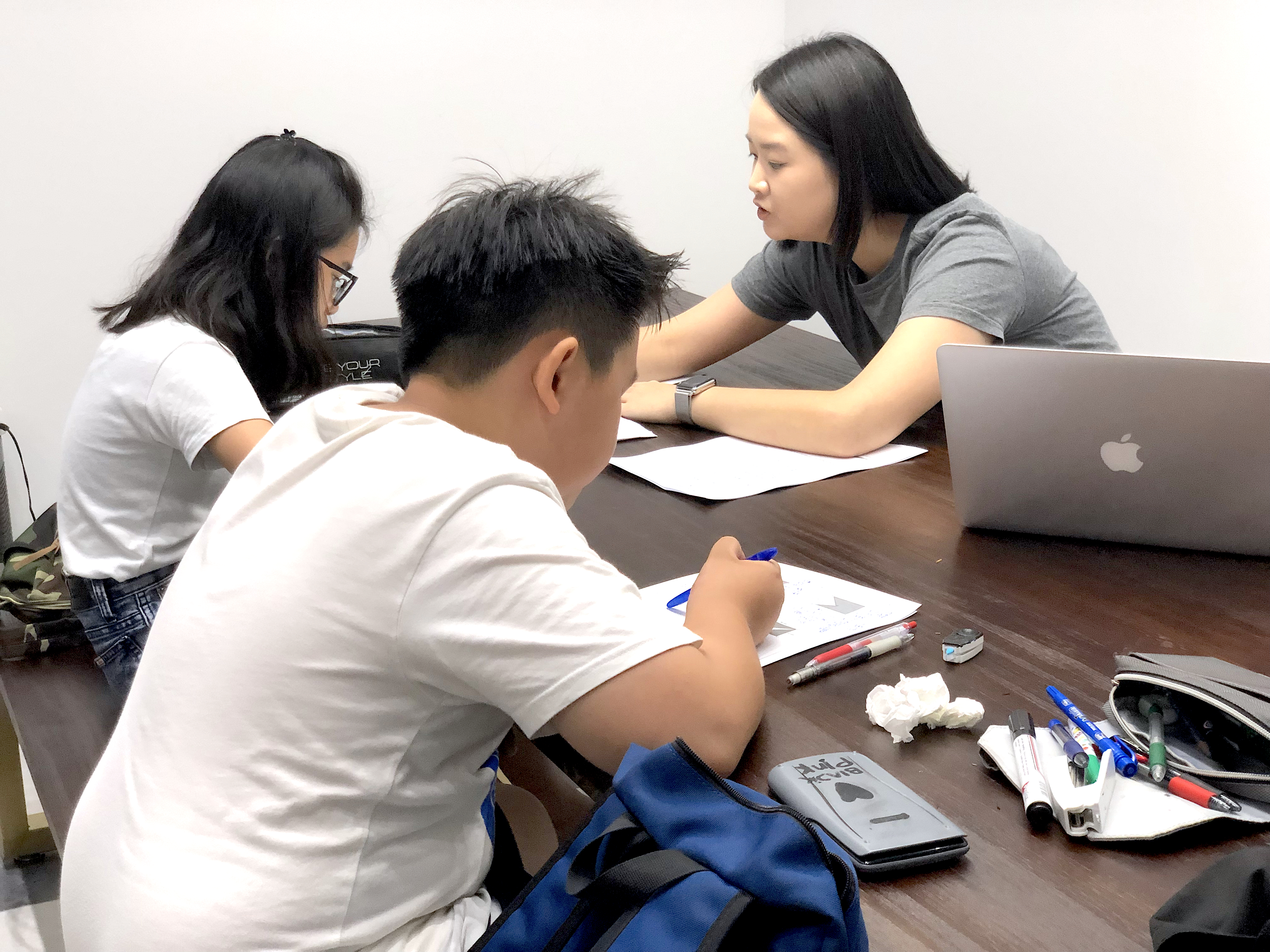













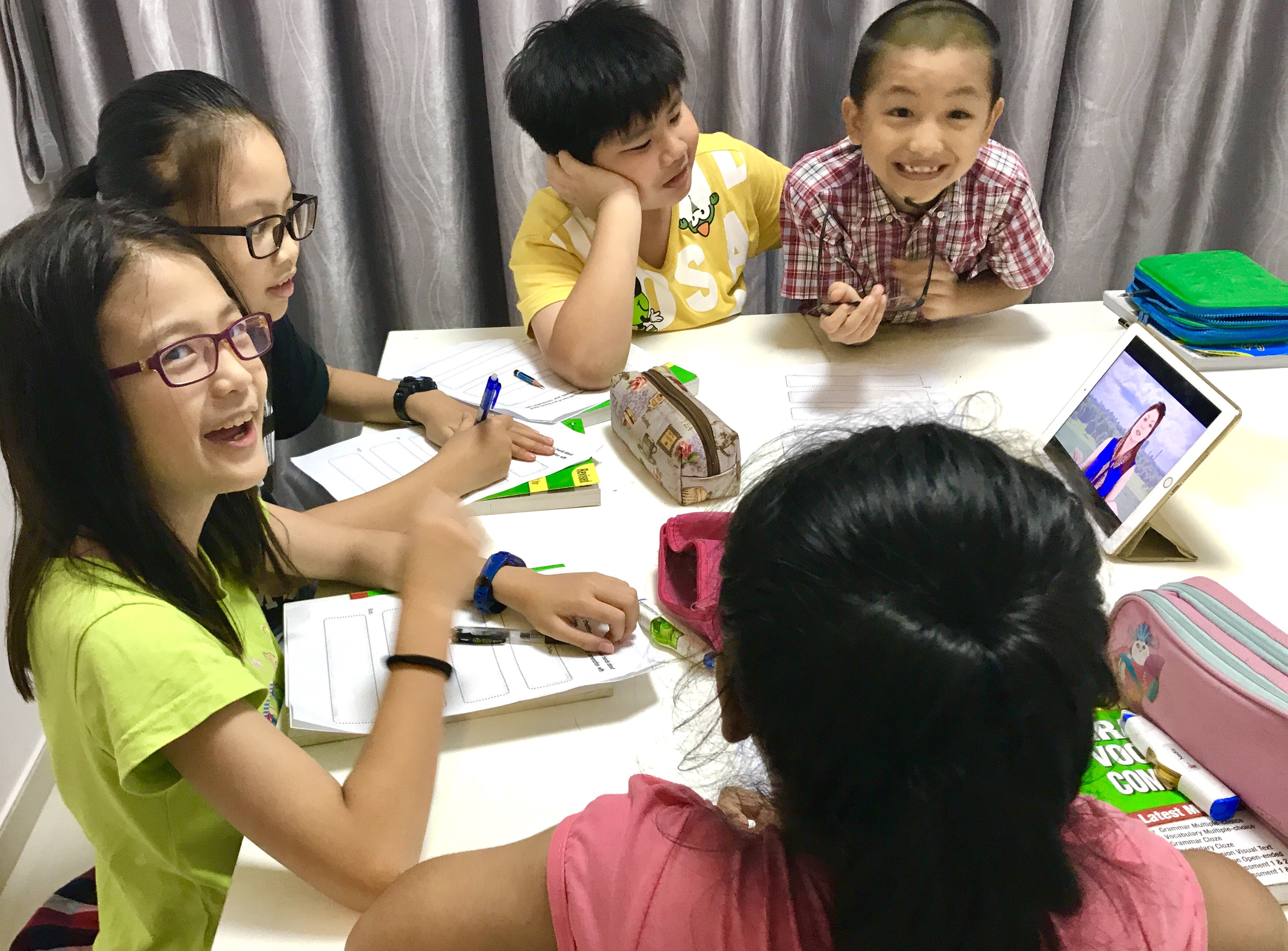


Continue through Secondary 1 English: Secondary 1–2 article index · Secondary English directory · English Hub · Diagnostics · Examinations · Yishun Tuition Hub · Library
Leave a Reply