

Ownership note: this retained eduKateYishun Secondary 3 Sengkang English URL is a duplicate historical search route, not the current owner. Present-day Sengkang year-level tuition belongs with eduKateSengkang Secondary 3 English; specialist English depth belongs with the SETC English Atlas. Preserve this page only for its distinct learning material and archive continuity.
Parents searching for a Secondary 3 English tutor in Sengkang often want help with essay writing, comprehension, vocabulary, situational writing and oral communication. These areas may look like five separate problems, yet they frequently share one cause: the student has an idea but cannot shape it into a paragraph that another person can follow and trust. Effective Sengkang Secondary 3 English tuition should make that shaping process visible.
Current searches for MOE-aligned English lessons, composition writing, comprehension skills, critical thinking, grammar and exam preparation point to sensible concerns. However, a useful lesson does more than supply model essays or impressive phrases. It teaches the learner to state a defensible claim, give a relevant reason, select concrete evidence, explain the connection and choose vocabulary that fits the exact meaning.
This guide is built around that reader job: moving from a promising thought to a controlled paragraph. It connects paragraph architecture with precise vocabulary and collocation, counterpoints, comprehension inference, audience and register, oral elaboration and timed drafting. Two original worked examples and twelve practice tasks show the process. There is no magic sentence starter that writes the paragraph while the student enjoys a biscuit; there is a sequence of decisions that can be taught, practised and checked.
Secondary 3 is the year ideas must become accountable
At Secondary 3, a student is expected to handle more complex viewpoints and make increasingly independent language choices. A topic can produce several reasonable positions. A passage can imply more than it states. A situational task can include many details, only some of which belong in the final response. The learner must decide what matters, organise it for a reader and express it with enough precision to avoid distortion.
The Ministry of Education’s current Secondary G2/G3 English Language syllabus treats listening, reading, viewing, speaking, writing and representing as connected modes used for purposeful communication. That connection matters. A student who cannot explain aloud why an example supports a point will probably struggle to write the explanation. A student who reads without noticing relationships between ideas will often produce paragraphs that resemble a queue in which nobody knows what they are waiting for.
Assessment arrangements also depend on the student’s subject level, cohort and school. According to SEAB, students graduating in 2027 will be the first cohort under the Singapore-Cambridge Secondary Education Certificate. A Secondary 3 student in 2026 should therefore use the applicable syllabus and the instructions provided by the school, especially when old worksheets still carry earlier labels. The language work in this guide remains useful because clarity, relevance, inference and audience awareness travel across formats.
The first diagnostic question is not “Why is the English weak?” but “Where does the idea stop developing?” Some learners misunderstand the prompt. Others choose a sensible point but cannot support it. Some provide evidence and assume the reader will make the connection. Others know what they mean but select a word whose usual partners make the sentence sound unnatural. Locating the first broken decision gives the next lesson a clear purpose.
A paragraph is a small argument with visible joints
A strong paragraph normally performs four core jobs. It advances a claim, gives a reason, supplies evidence or an example, and explains why that material proves the claim. A final sentence may then link the point to the larger judgement. The labels are less important than the movement. The reader should be able to see where the paragraph is going, what supports it and how the support earns its place.
The claim should be narrow enough to defend. “Technology affects education” is true but loose. “Shared digital notes can improve revision when students must verify and explain each contribution” identifies a mechanism and a condition. The reason might be that explanation exposes gaps in understanding. The evidence could describe a group finding conflicting definitions and resolving them with a textbook. The explanation must state how that act improves learning.
Students often confuse example with explanation. An example answers “What might this look like?” An explanation answers “How does this example support my point?” If a student writes that a council installed sheltered bicycle racks, the detail does not automatically prove that more residents will cycle. The missing sentence may explain that protection from rain reduces a practical barrier to leaving a bicycle at the station. Evidence is a witness; explanation conducts the interview.
Paragraph architecture also helps revision. Instead of declaring that a paragraph is “not good,” mark each sentence by function. If there are three examples and no explanation, the repair is clear. If the evidence is interesting but unrelated, replace it. If the claim is too broad, qualify it. This method changes feedback from a verdict into an instruction the learner can act on immediately.
Choose words for accuracy before decoration
Vocabulary precision begins with differences in meaning, not the length of the word. “Effective,” “efficient,” “helpful” and “successful” are not interchangeable decorations. A revision method can be effective because it improves recall, efficient because it uses little time, helpful because it supports a learner, and successful because it achieves a stated result. The sentence should tell the writer which distinction is needed.
Collocation matters too. English words keep familiar company. We “draw a conclusion,” “raise a concern,” “meet a requirement” and “pose a risk.” A student may know the dictionary meaning of a word yet pair it awkwardly. Keeping a vocabulary notebook with the target word, a short meaning, two common partners, one original sentence and a contrast word is more useful than copying an isolated definition fifteen times.
Precision also controls intensity. “The delay inconvenienced residents” is different from “The delay devastated residents.” Unless the evidence supports severe harm, the second verb inflates the claim and weakens credibility. Likewise, “may contribute to” is not timid when the relationship is uncertain; it is accurate. Careful qualification shows control because the writer refuses to pretend that evidence proves more than it does.
A practical vocabulary check asks three questions. Does the word mean what I intend here? Does it commonly combine with the neighbouring words? Is its strength justified by the evidence? Reading the sentence aloud often exposes trouble. If the phrase sounds as though three formal words have arrived wearing one oversized coat, simplify it until the meaning can breathe.
Worked example 1: build one defensible paragraph
Consider the prompt: “Should schools create a short device-free period during the day?” A student begins with: “Phones are bad and students cannot focus.” The sentence has a position, but it is absolute and unsupported. A better planning claim is: “A brief device-free period can improve sustained attention when schools also provide purposeful activities and clear exceptions.” The qualification prevents the argument from treating every device use as harmful.
The reason is that frequent checking interrupts a continuous task. A suitable example might describe students using twenty quiet minutes to read, sketch, rehearse or talk without notifications. The explanation must then identify the mechanism: fewer interruptions allow attention to remain on one chosen activity long enough for deeper engagement. A counterpoint should acknowledge that students may need devices for accessibility or urgent communication.
A brief device-free period can strengthen sustained attention by protecting one part of the day from avoidable interruptions. For example, students could spend twenty minutes reading, drawing, rehearsing or discussing a problem while notifications are paused. Remaining with one activity gives them time to move beyond the first easy response and notice details that rapid checking can displace. Some students may require devices for accessibility or urgent contact, so the policy should include stated exceptions rather than impose a careless ban. With those safeguards, the period becomes a focused routine instead of a punishment for owning a phone.
Every sentence earns its position. The first names the benefit and its cause. The second makes the routine observable. The third explains how the example supports the claim. The fourth introduces a credible limit, and the fifth returns to a qualified judgement. Vocabulary remains exact: “protecting,” “interruptions,” “accessibility,” “exceptions” and “safeguards” do real work. None was chosen merely because it looks pleased with itself.
Use sentence roles to create movement
Coherence is not produced by scattering “moreover” and “furthermore” over a page. It comes from an intelligible relationship between sentences. One sentence may define a problem; the next gives an example; the third explains a consequence; the fourth qualifies the conclusion. Connectors help when they name that relationship, but they cannot rescue ideas placed in an arbitrary order.
Useful transitions include reference words and repeated key terms. If one sentence introduces “shared responsibility,” the next can begin, “This responsibility becomes visible when…” A pronoun should have an unmistakable noun to refer to. “This shows that…” is weak when the reader cannot tell whether “this” means the survey, the example, the policy or the writer’s growing impatience.
Vary sentence length for thought, not performance. A longer sentence can connect a condition and a result. A short sentence can emphasise a limit. Excessive length often hides missing logic, while a string of tiny sentences can make a developed argument sound like notes pinned to a refrigerator. Read for rhythm after the reasoning is secure, then combine or divide sentences to help the reader process the idea.
A counterpoint should improve the original position
A counterpoint is not a cardboard opponent built only to fall over. It should represent a concern a reasonable reader might hold. If the topic is community volunteering, the counterpoint could question whether compulsory service produces shallow participation. The writer can concede that risk, distinguish poorly designed programmes from guided choices, and refine the position to support structured options rather than blanket compulsion.
The amount of space should match the paragraph’s purpose. In one body paragraph, two sentences may be enough: one for the objection and one for the response. A long detour can make the reader forget the claim. A dismissive phrase such as “Some people foolishly think…” damages tone and wastes the opportunity to demonstrate judgement. Respectful language strengthens authority.
Counterpoints also sharpen vocabulary. The writer must distinguish “inconvenient” from “inaccessible,” “optional” from “unstructured,” and “consistent” from “inflexible.” These are not tiny semantic games. The chosen word decides what problem is being answered. A precise concession often reveals a more durable thesis than the first enthusiastic version.
Worked example 2: adapt the same thinking to a real audience
Imagine a situational writing task. The student council wants to propose a monthly repair corner where volunteers help peers mend simple items such as loose bag straps or damaged folders. The writer must email the teacher adviser, explain the purpose, propose how the activity would run, address safety and request approval for a trial. The task does not need an essay thesis, but it still needs ordered reasoning.
Dear Ms Tan, the student council would like to propose a supervised repair corner during one lunch period next month. The trial would help students extend the use of simple belongings while learning practical care. Volunteers would handle only low-risk tasks such as securing a loose folder ring or sewing a detached button; electrical items and sharp-tool repairs would be excluded. A teacher-approved checklist and a sign-in table could keep the activity orderly. May we meet you briefly to review the safety plan and seek approval for the trial?
The response addresses an adult adviser with a courteous, direct register. Its details are selected for the purpose rather than copied indiscriminately from imagined notes. “Supervised,” “low-risk,” “excluded,” “checklist” and “approval” form a precise lexical set around safety and responsibility. The final request tells the recipient what action is needed. Audience awareness is therefore part of paragraph architecture: it changes both the order and the language.
Before writing, reduce the task to four lines: recipient, purpose, required content and requested action. Then arrange the required points in the order the recipient would find useful. A proposal usually moves from purpose to plan, safeguards and request. A complaint may move from event to impact, attempted remedy and desired resolution. Organisation should serve the reader, not merely preserve the order of bullet points.
Comprehension inference uses the same bridge
In an inference question, the claim is the answer, the textual clue is the evidence, and the explanation is the bridge between them. Suppose a passage says that Mira rereads a short message, places her packed bag beside the door and checks the clock whenever a lift stops. A supported inference is that she is anxiously waiting to leave or for someone to arrive. The clues support anticipation; they do not prove the identity of the person.
Students sometimes copy a clue without answering the question. Others give a plausible feeling but no support. Train a two-part response: state the inference, then connect it to the most diagnostic detail. “Mira appears impatient or anxious because she repeatedly checks both the time and sounds outside after preparing to leave.” The answer interprets the pattern instead of decorating it with an invented backstory.
Vocabulary precision matters here as much as in composition. “Curious,” “suspicious,” “uneasy” and “impatient” name different states. Select the mildest word that accounts for all relevant evidence. If two interpretations remain possible, qualify the answer with “suggests,” “appears” or “probably.” A calibrated verb protects the response from claiming certainty the text does not supply.
Close reading can feed writing practice. After answering an inference question, ask how the author created the impression without naming it. The learner may notice repeated actions, sentence pace or a revealing object. The learner can then create a new three-sentence scene using the same principle. This transfer develops both comprehension and craft while discouraging memorised phrases.
Oral elaboration is paragraph planning with a pulse
A brief spoken answer often stops after a position and one reason. Teach four beats: view, reason, example and qualification. For a prompt about whether neighbourhood events matter, a student might say they can build familiarity, explain that repeated contact lowers the barrier to asking for help, describe a shared clean-up, and add that activities should offer different roles so participation is accessible.
The student need not sound like a printed essay. Spoken language benefits from signposts such as “One reason is…,” “A clear example would be…” and “That said…”. The aim is organised thought with natural delivery. Record a sixty-second answer, transcribe only the key points and mark where explanation stops. Then repeat the response with one better example or one sharper qualification.
Oral rehearsal can precede writing. Give the learner thirty seconds to explain the paragraph’s point to an imaginary sceptical classmate. If the explanation cannot be spoken simply, the planned paragraph may still be foggy. Once the reasoning is clear, transfer the sequence to writing and refine the register. Speaking becomes a diagnostic tool rather than a performance saved for the week before an assessment.
Build timed independence without rewarding panic
Timing should compress an established process, not replace one. Begin with an untimed paragraph whose sentence roles are labelled. Next, allow twelve minutes for a plan and paragraph. Then reduce the planning support and move towards the timing expected by the school. Track whether the claim remains focused, the evidence relevant and the explanation complete as speed increases.
A compact planning grid can contain five boxes: answer, reason, evidence, explanation and counterpoint. Use keywords rather than full sentences. Two minutes spent choosing the route can prevent ten minutes of elegant wandering. During drafting, each sentence should answer the next reader question: What is your point? Why? What shows it? How does that prove it? Is there an important limit?
Reserve a short check for meaning before surface polish. Underline the claim, circle the evidence and draw an arrow to the explanation. Check one collocation, one pronoun reference and one overstatement. Only then correct punctuation or spelling patterns that often recur. A beautifully punctuated paragraph that answers the wrong question is still travelling on the wrong bus.
An error log should record decisions, not only marks. Useful entries include “claim broader than prompt,” “example lacks mechanism,” “verb too strong for evidence,” “pronoun has two possible nouns,” “request unclear” and “inference includes invented detail.” Before the next timed task, choose two errors to monitor. The log becomes valuable when it predicts the next repair rather than archives disappointment.
A practice cycle for paragraph control
A weekly cycle can start with a short article, image or school issue. On day one, write three possible claims and qualify the strongest. On day two, collect evidence and explain the mechanism. On day three, study five useful words with collocations and contrast words. On day four, speak the paragraph, then draft it under a modest time limit. On day five, revise one reasoning target and one language target before attempting a fresh prompt.
Feedback should be small enough to use. “Your example is relevant; add the causal step between the example and the claimed benefit” gives a next action. “Improve elaboration” names the destination without supplying a road. After receiving feedback, the learner should rewrite the affected two or three sentences and then transfer the skill to another topic. Correction becomes rehearsal for independence.
Parents can support this process with neutral questions: “Which sentence is your claim?” “What exactly does the example prove?” “Is that word too strong?” “Who will read this?” Avoid supplying the whole paragraph. A short pause while the student retrieves the next move is productive. The goal is for those questions to become the learner’s internal checking voice.
Readers who want to place this paragraph work inside a broader learning route can explore the English Tuition Learning Hub. Level-specific pathways also appear in the Secondary English directory, where families can connect reading, writing, speaking and assessment needs with the student’s present stage.
Diagnose five familiar paragraph profiles
The “list-maker” produces three related points but develops none. The page may contain benefits such as confidence, teamwork and responsibility, each followed by another benefit. Repair it by choosing the strongest point and asking for a mechanism: what changes, for whom, and through which action? One developed reason generally teaches more than a rapid inventory because the learner must show relationships instead of displaying topic vocabulary.
The “storyteller” gives a lively example that drifts away from the claim. Do not remove narrative detail automatically; test every detail against the paragraph’s purpose. Keep the moment that demonstrates the claimed effect, cut decorative events and add the sentence that interprets the example. If the paragraph argues that responsibility grows through ownership, the important detail is the learner making and correcting a decision, not the colour of the noticeboard.
The “thesaurus climber” replaces ordinary words until the sentence becomes technically dressed and practically immobile. Ask the student to paraphrase the sentence aloud in simple language. Restore the precise terms one at a time, checking meaning and collocation. A useful upgrade might replace “bad” with “disruptive” because it names an effect. Replacing “use” with “operationalise” merely because the second word has more syllables rarely improves a Secondary 3 paragraph.
The “mind-reader” leaves the main reasoning unstated because the connection feels obvious to the writer. Cover the claim and ask what the evidence proves on its own. Then uncover the claim and write the missing link using “because,” “therefore” or “which means” as temporary scaffolds. Remove the scaffold if a cleaner sentence emerges. The exercise teaches that a reader cannot be expected to complete the writer’s private chain of thought.
The “speed sprinter” finishes early but loses boundaries, qualifications and audience control. Slow only the fragile stage. The learner may plan for two extra minutes, draft at normal pace and spend the final check on one known error. Measure whether the repaired feature survives, not merely whether the page is complete. Once quality holds, reduce support gradually. Timed independence grows when accuracy travels with speed, rather than waving goodbye from the starting line.
Use these profiles as temporary descriptions of work, never labels for a learner. The same student may be a list-maker on an unfamiliar social issue and a confident explainer when discussing sport. Collect two samples before deciding what to teach, then retest with a new topic after the repair. This protects instruction from chasing one accidental mistake. Keep the evidence beside the next practice plan. It also helps the student see progress in observable terms: the new paragraph now contains a narrower claim, a relevant example and an explicit connection. Specific evidence of improvement is far more useful than being told to become a “better writer,” a destination so broad that even the signpost looks worried.
Twelve practice tasks with answers and rationales
Task 1: narrow a broad claim
Task: Improve “Public spaces are good for teenagers.” Answer: “Well-designed public spaces can support teenagers’ independence when they offer safe seating, useful activities and reasonable access.” Rationale: The revision names the benefit and the conditions, creating a claim that can be supported instead of a vague statement of approval.
Task 2: select evidence that fits
Task: Which detail best supports the claim that a peer-reading programme can build confidence: the library has blue chairs; a reluctant reader later volunteers to introduce a book; or the sessions occur on Thursdays? Answer: The learner volunteering to introduce a book. Rationale: The changed behaviour is direct evidence of greater confidence, while colour and timing do not demonstrate the claimed effect.
Task 3: supply the missing explanation
Task: Extend this evidence: “Students compare two reports of the same event and notice different details.” Answer: “The comparison shows that selection influences interpretation, so students learn to question what a source includes, omits and emphasises.” Rationale: The added sentence identifies the learning mechanism rather than assuming the example explains itself.
Task 4: repair a collocation
Task: Correct “The committee did a strong concern about safety.” Answer: “The committee raised a serious concern about safety.” Rationale: English commonly pairs “raise” with “concern,” while “serious” accurately describes its importance. Knowing a word’s usual partners makes vocabulary usable.
Task 5: calibrate intensity
Task: A one-day timetable change caused some students to wait ten extra minutes. Replace “The change devastated the entire school.” Answer: “The change caused temporary inconvenience for some students.” Rationale: The evidence supports inconvenience, not devastation or an effect on every person. Accurate scale improves credibility.
Task 6: order sentence functions
Task: Arrange these functions into a coherent paragraph: explanation, claim, evidence, link. Answer: Claim, evidence, explanation, link. Rationale: The reader first needs the point, then material that supports it, the reasoning connection and a return to the larger argument. Variations are possible, but the relationship must remain clear.
Task 7: answer a fair counterpoint
Task: Respond to the objection that student-led events may exclude shy participants. Answer: “That risk is real if every role requires public speaking; offering planning, design, logistics and welcome roles lets students contribute in different ways.” Rationale: The response concedes the concern, identifies when it occurs and proposes a condition that refines the original idea.
Task 8: draw a supported inference
Task: Ken folds the same permission form twice, unfolds it and waits outside the staffroom without knocking. What is a supported inference? Answer: Ken is probably hesitant or nervous about approaching the teacher. Rationale: Repeatedly handling the form and delaying at the door signal unease; the details do not reveal exactly what outcome he fears.
Task 9: choose an appropriate register
Task: Improve this request to a teacher adviser: “Hey, approve our event fast.” Answer: “Could you please review our proposal and let us know whether we may proceed with the trial?” Rationale: The revision is courteous, states the action clearly and suits a formal school relationship without becoming stiff or flattering.
Task 10: clarify a reference word
Task: Repair “The mentor discussed the survey with the student after it became confusing.” Answer: “After the survey results became confusing, the mentor discussed them with the student.” Rationale: The original “it” could refer to the survey, discussion or student. Naming the confusing element removes ambiguity.
Task 11: elaborate an oral answer
Task: Extend “Yes, hobbies are important” with a reason, example and qualification. Answer: “Hobbies matter because they give people a purposeful way to recover from academic pressure. For example, practising a musical instrument can shift attention while still building patience. However, the hobby should not crowd out sleep or essential responsibilities.” Rationale: The answer develops a clear chain and avoids claiming that every hobby is automatically beneficial.
Task 12: make a timed plan
Task: In five keywords or short phrases, plan a paragraph supporting neighbourhood study corners. Answer: Quiet shared place; students with crowded homes; example of reserved tables; fewer interruptions support concentration; access rules prevent monopolising. Rationale: The plan contains a claim, affected group, example, mechanism and limit without spending drafting time on complete sentences.
Frequently asked questions
Should a Secondary 3 student memorise paragraph templates?
A simple sequence can help the learner remember sentence jobs, but it should not become a rigid script. Different prompts require different amounts of evidence, explanation and qualification. Teach the purpose of each move so the student can adapt the structure while keeping the reasoning visible.
How many advanced words should appear in one paragraph?
There is no useful quota. One exact word is better than several impressive but awkward choices. Check meaning, collocation and intensity. Vocabulary should make the thought more precise or economical; if it only makes the sentence harder to understand, it has not earned the chair.
Can comprehension practice improve composition?
Yes, when the transfer is made explicit. Identifying an author’s claim, evidence, tone and implied meaning gives a learner models of how texts guide readers. After close reading, ask the student to apply one observed technique in an original paragraph rather than copy the source’s wording.
What should be corrected first in a weak paragraph?
Correct the earliest decision that causes later failure. If the claim does not answer the prompt, polishing punctuation will not rescue the paragraph. Once meaning and relevance are sound, address one recurring language target such as sentence boundaries, pronoun reference or collocation.
How can families judge whether practice is transferring?
Use an unfamiliar prompt and reduce support gradually. A skill is transferring when the learner can identify the needed move, perform it under appropriate time and explain the choice without being led through every step. Compare decisions across attempts rather than relying on one score.
Teaching Guide
Begin with a short diagnostic paragraph and label each sentence by function. Choose one reasoning target—perhaps evidence-to-explanation—and one language target, such as precise verbs or collocation. Model the move, complete a shared example, then ask the student to produce an independent paragraph on a new topic. Finish with a two-minute reflection naming what changed and what still needs attention.
Revisit the same target through reading, speaking and writing. An inference question can supply evidence practice; a sixty-second oral response can reveal missing elaboration; a situational email can test register. Keep examples original, age-appropriate and connected to real decisions. The aim is a learner who can turn an idea into a paragraph whose claim, support, explanation and language remain clear even when the prompt changes.



Singapore English tuition with Tutor Yuet Ling. With Singapore school’s requirement for English as a First language, our primary aim in teaching English are highly focussed on tasking English student’s communication skills to be competent as well as to be an effective, accurate and efficient tool to absorb and relay information to others.
English is Singapore’s main language of communication and it is imperative that our student’s English Language skills are on parity with the requirements set forth by the Ministry of Education to study well in school. It is the main skill that will help students to perform consistently across their other subjects as their ability to understand and use English effectively will help them to comprehend what is taught in class and asked in tests.
English Tuition Centre with English tutor of 20 years in the business helping English students to improve their ability to communicate. An improvement of their linguistic competence in both the passive reading/listening and active speaking/writing process of the English Language are part of our course curriculum.
With that in mind, our English classes are geared to teach and train our students to be able to understand the media that they read or hear, and to have the ability to express and communicate their complex thoughts and ideas to others naturally. Any improvements in information absorption and dissemination will automatically translate to cognitive skills and ultimately, help students to do well in their studies.
English should be treated as our native language, to be the main Lingua franca for a cosmopolitan Singapore where over generations, English has been integrated well into our everyday life. As a first language, the focus of our tuition will be to task our Yishun students to learn the skills needed to communicate proficiently for both their studies in school as well as for their everyday life.
Local English Tutor for English tuition are the dependable, trustworthy tutor that delivers the results. Join our English tutorials and have our English Teacher get you on track. Small groups of 3.
increase general knowledge and all necessary skills needed for the PSLE
score maximum marks by understanding the marking scheme of the examination
in a safe, comfortable air con environment with properly equipped classes
by discerning tutors that can detect weaknesses, solve student’s problems during class
by qualified female tutors with experience in improving students for the crucial PSLE
For current Sengkang Secondary 3 English tuition information, use eduKateSengkang Secondary 3 English. For specialist English learning and examination resources, use the SETC English Atlas. This historical Yishun page does not supply a current contact number or class offer.














Pri3 Yishun The best Pri 3 English Tuition in Yishun with SEAB MOE PSLE syllabus English. Pri3 Yishun Primary English Tutor for Pri1 Pri2 Pri3 Pri4 Pri5 Pri6 PSLE English Paper 1 and Paper 2.
For current Sengkang Secondary 3 English tuition information, use eduKateSengkang Secondary 3 English. For specialist English learning and examination resources, use the SETC English Atlas. This historical Yishun page does not supply a current contact number or class offer.


Learn English and make it useful.
Working closely with parents are part of our teaching culture to create the desired effect to get our English students positive changes in their studies. Our Yishun PSLE English tutors teach from scratch, making sure our English students master their language, and we do all the necessary practices from basic easy to complex advanced questions with our students, including past exam papers that helps them to understand and appreciate English as lingua franca in Singapore and use it to further their studies.
Class Culture
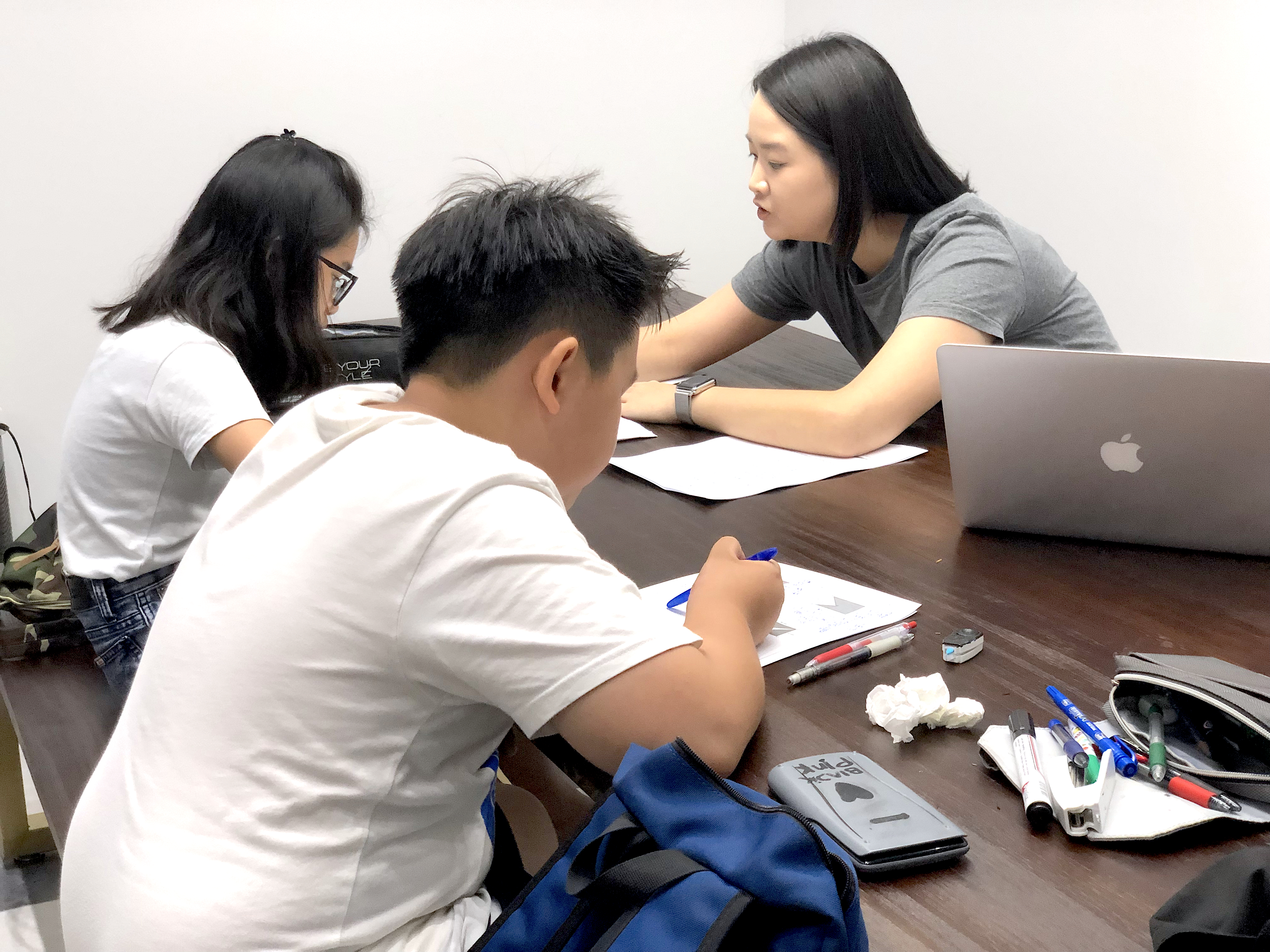
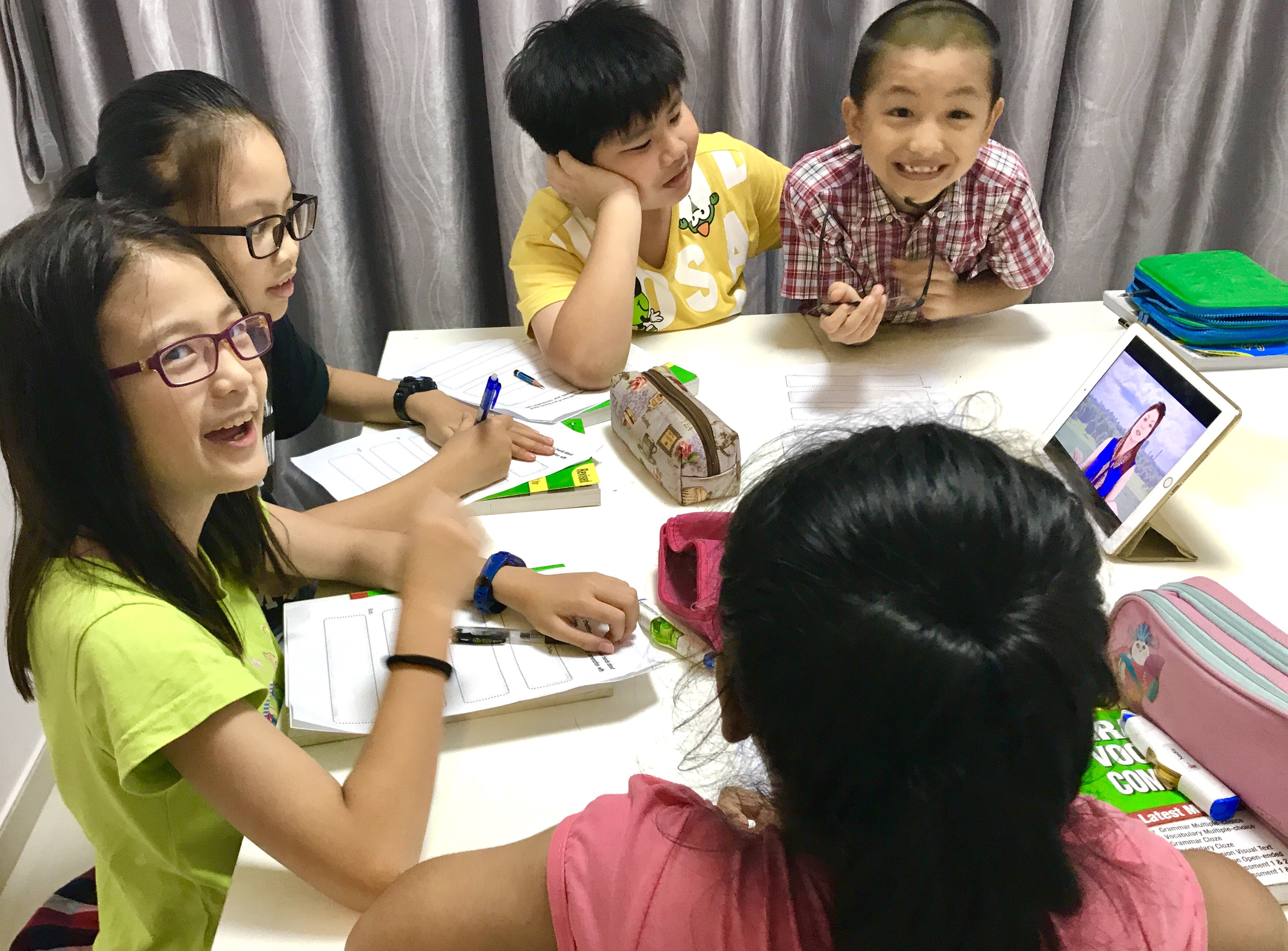
At eduKate Yishun, we work hard to have an affirmative class culture that empowers our students to do more, learn more, and develop a love for their own education by creating a class culture with great friends and tutors. Our positive classes also creates a constructive environment that teaches them the relevance of what they study to their everyday lives. With relevance creates the true reason for a proper education. That is our trademark that differentiates our teaching to others, but don’t just take our words for it, let these photos show you how much our passion and love for our Yishun student’s English lessons.




Leave a Reply