

Families searching for a Sengkang English Tuition Centre Sec 2 Sengkang Tutor, Secondary 2 English tuition Sengkang, Sec 2 English tutor, comprehension, writing, summary, grammar, vocabulary, oral communication and G3 English support are often entering a year that can look deceptively calm. Secondary 2 is not usually treated as a final examination year, yet it is the year when familiar skills need to become portable. A student who performs well only when the question type is labelled, the model is visible or the tutor gives the first cue is not yet ready for the stronger independence demanded in upper secondary.
Strong Secondary 2 English tuition in Sengkang should therefore convert school feedback into an independent revision system. The tutor should use marked scripts, homework and fresh tasks to identify recurring error families, then help the student build a small set of revision routines: how to recognise a question type, select evidence, explain language effect, paraphrase meaning, develop a paragraph, edit personal grammar risks, retrieve vocabulary and retest old corrections without waiting for the tutor to restart the process.
This rebuilt guide owns the Secondary 2 Feedback-to-Independent-Revision System. It explains how to consolidate Secondary 1 foundations, remove labels, mix skills carefully, translate teacher comments into revision actions, build summary and analytical paragraph control, deepen oral/listening skills, use small groups without hiding personal gaps, and produce clear evidence that the student is ready for Secondary 3’s stronger reasoning and examination-shaped work.
Secondary 2 should consolidate before it accelerates
Secondary 1 introduced the new operating system: longer texts, purpose, evidence, inference, audience and greater independence. Secondary 2 should make those processes more stable and less dependent on familiar task formats.
The year should therefore deepen transfer rather than simply increase worksheet difficulty.
Use school feedback as a revision trigger
A marked script should change the next revision decision. The student should know what the comment means, what action it implies and what fresh task will confirm the repair.
Correction becomes useful when it creates a different next performance.
Build a feedback translation table
Teacher comment → likely mechanism → student action → fresh retest.
Example: “Need more explanation” → paragraph analysis weak → add one sentence explaining what the example proves → apply to a new paragraph on a different topic.
Do not let teacher comments remain vague
“Expression”, “be precise”, “elaborate”, “answer the question” and “develop” are too broad to revise from directly.
The tutor should turn each one into observable behaviour.
Use first-wrong-decision analysis
A weak answer may contain several visible problems. Find the earliest decision that caused the rest.
If the student misread the question command, sentence polishing is not the first repair.
Build recurring error families
Question scope, evidence, inference, reference, language effect, vocabulary, grammar, paragraph development, examples, summary selection, time and checking.
Patterns deserve priority; isolated odd errors may not.
Use four transfer states
Secure: works independently on varied fresh work. Developing: works inconsistently. Prompt-dependent: needs the skill named or hinted. Pressure-sensitive: works untimed but degrades in mixed or timed tasks.
This creates a clearer revision map than “weak Paper 2”.
Build a Keep–Repair–Mix card
Keep: secure skills needing retrieval. Repair: recurring mechanisms still failing. Mix: skills ready to be interleaved so the student must recognise them independently.
The card should remain short enough to use weekly.
Reading should move from structure to navigation
Secondary 1 teaches text purpose and paragraph function. Secondary 2 should use those tools quickly.
The student should know where to look and why rather than reread the whole text randomly.
Map paragraph functions quickly
Introduces issue, gives cause, provides example, changes viewpoint, shows consequence, evaluates, concludes.
The map should take minutes, not become another assignment.
Worked paragraph-map example
Paragraph 1 introduces concerns about school-device use. Paragraph 2 explains benefits. Paragraph 3 presents distraction risks. Paragraph 4 gives a school policy example. Paragraph 5 argues that rules should depend on purpose.
This map already prepares the student for comparison and purpose questions.
Question scope should survive rewording
“Why does the writer include…?”, “What purpose does this example serve?” and “How does this detail support the writer’s point?” may all require related reasoning.
Students should identify the underlying job beneath surface wording.
Use command families
Cause/purpose. Evidence. Inference. Effect. Comparison. Selection. Summary.
Group related commands so recognition becomes faster.
Worked scope example
Question: “What purpose does the writer’s description of the empty playground serve?” A weak answer retells the description. A stronger answer explains what the detail helps the writer show—perhaps the scale of a change, a contrast with the past or the consequence of a policy.
Evidence selection should become ranked
At Secondary 2, finding one relevant clue is not always enough. Students should compare candidate evidence and choose the strongest.
Use Direct / Relevant / Sufficient.
Worked evidence example
“Before presenting, Hana rewrote her opening twice, checked the microphone and arrived early.” Rewriting and repeated checking are stronger evidence of nervousness or intense concern than simply arriving early.
Inference should survive unfamiliar contexts
Students often infer well on familiar narratives but overreach on unfamiliar articles or commentaries.
The method should remain clue → meaning → smallest defensible claim.
Worked inference example
“Marcus turned the marked essay face down when classmates approached.” Supported: he may not want them to see or discuss it. Unsupported: he failed.
Use the evidence receipt
Ask which words pay for each part of the inference.
If an important detail has no receipt, reduce or qualify it.
Reference tracking should extend beyond pronouns
This, that, such, the change, these concerns and similar phrases may refer to whole earlier propositions.
Students should identify the complete idea when necessary.
Language effect should become contextual
Students should move beyond “creates imagery” and “emphasises”.
Use key word → association → image/tone → contextual effect → relation to purpose.
Worked language-effect example
“Rumours spread like wildfire.” Wildfire suggests rapid, difficult-to-control spread. It makes the rumours feel dangerous and capable of reaching many people before they can be corrected.
Ask why this word matters here
The same word can create different effects in different contexts.
Context turns feature spotting into analysis.
Vocabulary should deepen through nuance
Compare concerned, anxious, alarmed and panicked. The difference in intensity matters.
Secondary 2 vocabulary should become more precise, not merely more sophisticated.
Build vocabulary networks
Meaning, contrast, collocation, word family and original use.
Worked vocabulary entry
Convincing: persuasive or believable; contrast unconvincing; collocation convincing argument; verb convince. Note that conviction may carry different meanings and should not be assumed interchangeable.
Use productive retrieval
After several days, ask the student to recall the word, use it in a new sentence and distinguish it from a near-synonym.
This makes vocabulary usable in writing and oral.
Grammar should move into mixed editing
Once individual rules are understood, remove chapter labels. Ask the student to identify what relationship is wrong.
Mixed editing builds recognition rather than routine response.
Use personal grammar families
Agreement, tense, word form, pronouns, connectors, prepositions, fragments, run-ons.
Track only recurring risks from real work.
Worked agreement example
“Each of the students were given a form.” Standard English requires “was given” because Each is the grammatical head.
Word-form awareness should strengthen
Decide → decision → decisive. Persuade → persuasion → persuasive. Analyse → analysis → analytical.
Ask what grammatical role the sentence needs.
Connector choice should follow logic
Although = contrast. Because = cause. Therefore = result. Moreover = addition. However = contrast or qualification.
The student should explain the relationship, not choose by sound.
Grammar must transfer into authentic writing
After mixed editing, inspect one real paragraph.
A rule is not secure if it disappears under writing load.
Writing should deepen paragraph reasoning
Secondary 2 students should move beyond topic sentence + example. Add explanation and analysis.
A paragraph should answer “what?”, “why?” and “so what?”.
Use Point → Explain → Example → Analyse
Worked paragraph example
Point: regular reading can improve vocabulary. Explanation: repeated exposure shows how words behave in varied contexts. Example: a student may first meet reluctant in a story and later encounter it in an article. Analysis: repeated contextual exposure strengthens both meaning and appropriate use.
Teach example versus analysis
The example is the concrete case. Analysis explains why the case supports the point.
Students often stop one sentence too early.
Use “What does this prove?”
After every important example, ask the question.
This habit becomes crucial in upper-secondary writing.
Build early counterpoint
Students should recognise that strong writing can acknowledge limits.
“Technology can make learning more accessible, but access does not guarantee thoughtful use.”
Qualification is not weakness
A claim becomes more defensible when the student states the conditions under which it is true.
Precision strengthens argument.
Situational writing should become more audience-sensitive
Use role, audience, purpose, required information and desired response.
Secondary 2 students should adapt content and tone to different relationships.
Use a content matrix under varied scenarios
Recommendation, feedback, report, invitation, request, speech.
The student should see how information order changes with purpose.
Worked audience comparison
A recommendation to a friend may begin directly with personal relevance. A recommendation to a teacher should foreground purpose and reasons more formally.
Both can remain natural.
Continuous writing should build stronger routes
For narrative: situation → disruption → response → consequence → decision → resolution.
For discursive writing: position → reason → example → analysis → second dimension → qualification.
Use paragraph plans before full essays
A ten-minute planning workshop can reveal weak reasoning more efficiently than a rushed full essay.
Full essays remain useful for integration, but not every lesson.
Narrative causality should become deliberate
One event should create the next consequence or decision.
A series of unrelated dramatic scenes is not strong narrative control.
Develop turning points selectively
Slow down discoveries, conflicts or decisions.
Move through routine transitions efficiently.
Worked scene expansion
Flat: “I realised the bag was missing.” Developed: “I checked the space beneath the desk, then the hook behind my chair. The red bag was gone. I remembered the canteen bench and felt my stomach tighten.”
Reflection should be specific to the conflict
“I learned to be careful” could fit almost any story.
“I realised that avoiding the truth made the problem more difficult for everyone” grows from a specific causal chain.
Summary skills should become explicit
Secondary 2 is an excellent year to practise selection, grouping, paraphrase and compression before final-year pressure.
Summary is both a reading and writing discipline.
Use Select → Group → Paraphrase → Compress
First identify relevant points. Group overlaps. Paraphrase meaning naturally. Remove repetition and examples that are not needed.
Then check length.
Selection comes before paraphrase
Students sometimes rewrite irrelevant points beautifully.
Scope must be controlled first.
Paraphrase meaning, not individual words
Original: “The new arrangement allowed students to spend less time waiting.” Alternative: “Students could access the service more quickly under the new system.”
Natural meaning is more important than synonym replacement.
Use compression drills
Reduce a paragraph while preserving its main line.
This improves summary and general writing economy.
Oral discussion should deepen
Use position → reason → example → qualification.
Worked oral response
Prompt: Should schools require community service? “Community service can help students understand needs beyond school because they work with different groups. However, the activity should have a meaningful purpose rather than becoming a box-ticking requirement.”
Use follow-up variation
What if students are already very busy? What kinds of service are meaningful? Should participation be compulsory?
Flexible answers reveal ownership.
Listening should include speaker purpose
Ask not only what was said, but why the speaker said it or what attitude is implied.
This builds analytical listening.
Teach listening recovery
Mark uncertainty and return attention to current audio.
One missed detail should not cause a cascade.
Independent revision should become student-managed
Secondary 2 students should increasingly manage their own English routine.
Parents can support schedule and wellbeing but should not remain permanent editors.
Use a weekly revision system
Read: one longer text. Retrieve: vocabulary and one grammar risk. Write: one paragraph or plan. Repair: one old error. Discuss: one oral topic.
Keep the routine sustainable.
Build an error ledger the student can own
Task → first wrong decision → mechanism → next-time cue → fresh retest.
The student should increasingly write the cue, not merely copy the tutor’s wording.
Use school scripts as transfer evidence
Do repaired skills appear in school when the tutor is absent?
This is stronger evidence than tuition worksheet success.
Look for disappearing error families
Progress is visible when repeated scope errors, vague language-effect answers, grammar shifts or weak paragraph analysis become less frequent.
Marks may fluctuate while the underlying system improves.
Fresh retests should change the surface
New passage, topic or sentence vocabulary; same mechanism.
This tests recognition rather than memory.
Use delayed retests
Return several days later without the model.
Delayed success shows durability.
Interleave only after understanding
Mixed practice is valuable when component methods exist.
Do not mix several individually confusing skills and call the resulting failure “exam practice”.
Use mini-mocks for mixed transfer
A 20- to 30-minute block can combine grammar, vocabulary, comprehension and a writing plan.
The student must decide which process to use.
Introduce modest timing
Time one passage section, one summary-selection task or one writing plan.
Measure where time expands.
Do not turn Secondary 2 into final-year pressure too early
The purpose of timing now is awareness and efficiency, not panic.
Capacity still matters more than constant full-paper practice.
Use no-hint blocks
Fifteen to twenty minutes of independent work can reveal whether the student can start, continue and recover without reassurance.
Review help requests afterwards.
Track prompt level
Full model → strong hint → small cue → independent.
Secondary 2 should show clear prompt reduction from Secondary 1.
Current pathway context
Students who later take G3 English under the Singapore-Cambridge Secondary Education Certificate will encounter the K300 subject code from 2027, with 1184 listed by SEAB as the reference code for 2026 and earlier. For a Secondary 2 learner, the important preparation is not memorising a code. It is building the reading, writing, listening, speaking and independent-revision capabilities that later assessment expects.
Small groups should make mixed transfer visible
Three students may complete the same mixed task and reveal different first failures.
One fails to recognise the question type, one has weak evidence and one writes the answer poorly.
Attempt first, compare second
Independent evidence should come before peer discussion.
Shared answers can otherwise hide prompt dependence.
Peer comparison should focus on criteria
Which evidence is more direct? Which paragraph analyses the example? Which summary point is actually within scope?
Compare the work, not the student.
Case Clinic 1: The student understands every rule when it is labelled
In a grammar workbook, the student performs well because the page title says “subject–verb agreement”. In a mixed editing passage, the same error is missed. The repair is recognition. Mix three or four familiar grammar families, ask the student to diagnose the relationship before correcting it, and later remove the family list. The next retest should use different vocabulary and sentence length. Secondary 3 readiness depends on recognising what kind of problem is present without being told.
Case Clinic 2: Summary points are accurate but outside scope
The student finds many true details but includes points that do not answer the summary focus. The tutor highlights the exact scope words and asks the student to label each candidate point “inside”, “borderline” or “outside”. Only after selection is secure should paraphrase begin. This separates a reading-selection problem from a language problem and prevents time being wasted rewriting material that never belonged in the answer.
Case Clinic 3: Teacher writes “analyse” beside every example
The student supplies relevant examples but assumes relevance is self-evident. The tutor asks one question after every example: “What does this prove about your claim?” The student writes the analytical bridge explicitly. On later paragraphs, the tutor removes the prompt. If the example-analysis connection appears independently on a new topic, the repair has transferred.
Case Clinic 4: Language-effect answers are formulaic
The student writes “creates a vivid image” regardless of the word. Choose one key word and ask for its exact association, then the image or tone, then its effect in context. Compare two possible words the writer could have chosen. The student sees that effect comes from the specific language, not from inserting a memorised phrase. The later retest should use a different device and context.
Case Clinic 5: Vocabulary is strong in tests but absent from writing
The student recognises sophisticated words in multiple choice but writes with a narrow active vocabulary. Choose six useful words from current reading, practise collocations, use them orally, then require two in a short paragraph where they genuinely fit. Retrieve again after several days. Productive vocabulary grows through repeated use, not notebook size.
Case Clinic 6: Writing sounds mature but the argument is thin
The student uses fluent sentences and advanced vocabulary but paragraphs contain claims followed by examples with no analysis. The tutor strips the paragraph to its logical skeleton: claim, explanation, example, analysis. Once the missing function is visible, the student rewrites the paragraph in simpler language first. Only after the reasoning is secure should stylistic precision return. This prevents language sophistication from hiding conceptual weakness.
Case Clinic 7: The student keeps changing revision methods
After every test, a new technique is added: new notes, new highlighting, new checklist, new app. The system becomes too large to use. The tutor reduces revision to a small loop: retrieve, attempt, diagnose, repair, fresh retest, delayed retest. Tools are kept only if they support one of those jobs. The student learns that consistency in a simple process can outperform constant strategy switching.
Case Clinic 8: Homework is correct but takes far too long
The student rereads whole passages, rewrites notes and checks every sentence repeatedly. Diagnose where time is actually spent. If the bottleneck is task recognition, use command families. If it is evidence selection, use paragraph maps. If it is reassurance, use no-hint blocks and uncertainty marks. Time improves by making decisions more efficient, not by telling the student to hurry.
Case Clinic 9: Strong Sec 2 marks but poor Sec 3 readiness
The student performs well on familiar school formats yet depends heavily on teacher cues and model structures. Use an unfamiliar mixed task without labels. If performance drops sharply, the issue is transfer rather than knowledge. The repair cycle should emphasise variation, interleaving and prompt fading. Readiness means the student can recognise and execute the process under new wording, not merely reproduce familiar school routines.
Case Clinic 10: The student cannot explain their own correction
A teacher has corrected a sentence or paragraph and the student copies it neatly. Ask why the correction is better. If the student cannot explain the mechanism, close the script and use a fresh example. The student should be able to articulate the next-time cue in plain language. This turns correction from an external product into an internal rule the student can retrieve later.
Deep Transfer Clinic 11: Summary paraphrase becomes synonym swapping
The student replaces individual words but preserves awkward sentence structure, sometimes changing meaning. The tutor asks the student to state the idea orally without looking at the passage, then write that meaning in a new sentence. Compare the result with the original to ensure the content is preserved. The student learns that paraphrase begins from understanding a proposition, not from searching a thesaurus. Later practice should use different sentence structures so the skill becomes flexible.
Deep Transfer Clinic 12: The student overuses connectors
An essay contains “moreover”, “furthermore”, “however” and “therefore” in nearly every sentence, yet the logic remains unclear. Remove the connectors and ask the student to explain the actual relationship between the ideas. Add back only the connector that accurately names that relationship. The lesson is that coherence comes from idea structure first. Connectors signal logic; they cannot manufacture logic that the paragraph does not contain.
Deep Transfer Clinic 13: Oral discussion is fluent but shallow
The student speaks confidently and gives many examples, but the examples are loosely connected to the point. Require position → reason → example → what the example shows → qualification. A one-minute response may become slightly slower but much more analytical. Follow-up questions should target the reasoning, not merely ask for another example. This prepares the student for upper-secondary discussion where flexible, supported judgement matters more than speed alone.
Deep Transfer Clinic 14: The student revises only what the teacher marked
The student treats every unmarked sentence as correct. Teach a personal self-audit after teacher feedback: identify the error family, scan the rest of the work for the same risk, repair any additional instances and create one fresh sentence or paragraph. This turns one teacher mark into broader learning. Over time, the student should notice the error family before submission rather than waiting for external correction.
Deep Transfer Clinic 15: The student forgets earlier units
English learning has become chapter-based: once a unit ends, its methods disappear. Add weekly interleaved retrieval of older vocabulary, one grammar relationship, one comprehension move and one writing cue. The retrieval is short but cumulative. If an older skill fails, it returns to the Repair column. This makes the revision system spiral rather than linear and prevents Secondary 3 from becoming a frantic review of everything once learned and then forgotten.
Deep Transfer Clinic 16: The student knows what went wrong but not what to practise
A student can say “my inference was too broad” yet then completes another full paper, hoping the problem will disappear. Convert diagnosis into a practice design: five short inference items with varied surfaces, immediate evidence checks, one mixed comprehension set and a delayed retest three days later. The volume is smaller than a full paper but the learning signal is stronger. Independent revision improves when the student can match the practice format to the mechanism rather than defaulting to more pages.
Deep Transfer Clinic 17: The student’s error ledger becomes another notebook
The ledger grows until it contains dozens of old mistakes that are never reviewed. Archive entries once the student has passed two fresh retests at increasing intervals. Keep only active recurring errors visible. At the start of each week, retrieve two active cues and one archived cue. The ledger becomes a dynamic control panel rather than permanent storage. This also teaches the student that successful revision should make old errors disappear from active attention.
Practice Lab: 20 Secondary 2 transfer tasks
- Map five paragraphs by function.
- Group ten question stems into command families.
- Rank three evidence clues.
- Write one restrained inference.
- Track one proposition reference.
- Explain one language effect contextually.
- Build one vocabulary network.
- Retrieve five words after several days.
- Use two collocations in original sentences.
- Correct one mixed grammar relationship.
- Choose one word form by grammatical role.
- Explain one connector relationship.
- Find the same grammar risk in authentic writing.
- Write one Point–Explain–Example–Analyse paragraph.
- Add one qualification to a claim.
- Build one situational-writing content matrix.
- Select summary points within scope.
- Paraphrase one summary proposition.
- Complete one mixed mini-mock.
- Run one no-hint Independence Test.
Six-week consolidation cycle
Week 1: school-script audit and command recognition. Week 2: evidence, inference and reference. Week 3: language effect, vocabulary and mixed grammar. Week 4: paragraph reasoning and situational writing. Week 5: summary, oral/listening and timed mixed work. Week 6: delayed retest and Secondary 3 Readiness Test.
A 90-minute Secondary 2 lesson rhythm
10 minutes: retrieval and error cues. 20 minutes: mixed reading/comprehension. 20 minutes: vocabulary/language. 25 minutes: paragraph/writing/oral transfer. 10 minutes: no-hint or timed block. 5 minutes: ledger update.
What strong Secondary 2 progress looks like
The student recognises familiar skills without labels, navigates passages more efficiently, selects stronger evidence, explains language effect more specifically, paraphrases naturally, writes paragraphs with analysis and manages routine English revision with less prompting.
The system becomes ready for upper-secondary reasoning because transfer no longer depends on the tutor naming every step.
Parent/student checkpoints
- Can teacher feedback be translated into specific actions?
- Can skills be recognised without labels?
- Is paragraph navigation efficient?
- Is question scope controlled?
- Is evidence ranked?
- Is inference restrained?
- Is language effect contextual?
- Is vocabulary productive?
- Does grammar transfer?
- Are examples analysed?
- Can counterpoint be used sensibly?
- Is summary selection improving?
- Are oral responses flexible?
- Is revision increasingly self-managed?
- Are tutor prompts reducing?
Frequently asked questions
Why is Secondary 2 important if major examinations are later?
It is the year to consolidate and transfer skills before upper-secondary content and examination pressure increase.
How should Sec 2 differ from Sec 1?
Sec 1 builds the new system. Sec 2 removes labels, mixes familiar skills, deepens reasoning and increases independent revision.
How should marked school scripts be used?
Identify recurring error families, translate comments into actions, repair one mechanism at a time and confirm it on fresh and delayed tasks.
Should Sec 2 students do full examination papers?
Occasional mixed or full papers can be useful, but targeted component work and mini-mocks are often better for diagnosis and development at this stage.
How can writing improve?
Develop paragraph reasoning, examples with analysis, audience awareness, counterpoint, precise language and grammar transfer.
What shows Secondary 3 readiness?
The student can recognise and apply skills on mixed fresh tasks, explain examples analytically, manage routine work independently and use corrections without continuous prompting.
Teaching Guide
Teach Secondary 2 as a feedback-to-independent-revision year. Use school scripts as evidence, but do not let tuition become correction-only. Every important comment should be converted into a specific student action and followed by fresh transfer.
Remove labels gradually. Mix skills only after they are understood. Use delayed retests to confirm durability. Deepen paragraph reasoning, vocabulary nuance, grammar transfer and summary control while preserving wider reading and oral discussion.
Fade prompts deliberately. The tutor’s question should become the student’s self-question: What is the task? Which evidence is strongest? What does the example prove? Which risk should I check? What should I retest next?
The destination is a Secondary 2 student who can use school feedback to revise independently and enter Secondary 3 with a portable English system rather than a collection of corrected papers.
Build a year-end Secondary 3 Readiness Test
Use an unseen text, mixed comprehension and language items, one summary-selection task, one writing task and an oral prompt with no hints during the first attempt.
Include several old error families without announcing them. Record which repairs survive independently and use the remaining dependencies as the opening Secondary 3 map.
A final Secondary 2 readiness checklist
- Feedback translated into actions.
- Text structure navigated efficiently.
- Question scope recognised under variation.
- Evidence ranked.
- Inference evidence-bound.
- Reference tracked.
- Language effect contextualised.
- Vocabulary productive.
- Grammar mixed and transferable.
- Paragraph reasoning visible.
- Examples analysed.
- Summary process emerging.
- Oral/listening active.
- Revision self-managed.
- Prompt dependence falling.
That is the useful purpose of a Sengkang English Tuition Centre for Secondary 2: turn marked feedback into a repeatable independent revision system so the learner reaches Secondary 3 with stronger reasoning, better transfer and far less dependence on someone else naming the next step.
Historical eduKate photo archive
The original 2019 image sequence is preserved below.



Singapore English tuition with Tutor Yuet Ling. With Singapore school’s requirement for English as a First language, our primary aim in teaching English are highly focussed on tasking English student’s communication skills to be competent as well as to be an effective, accurate and efficient tool to absorb and relay information to others.
English is Singapore’s main language of communication and it is imperative that our student’s English Language skills are on parity with the requirements set forth by the Ministry of Education to study well in school. It is the main skill that will help students to perform consistently across their other subjects as their ability to understand and use English effectively will help them to comprehend what is taught in class and asked in tests.
English Tuition Centre with English tutor of 20 years in the business helping English students to improve their ability to communicate. An improvement of their linguistic competence in both the passive reading/listening and active speaking/writing process of the English Language are part of our course curriculum.
With that in mind, our English classes are geared to teach and train our students to be able to understand the media that they read or hear, and to have the ability to express and communicate their complex thoughts and ideas to others naturally. Any improvements in information absorption and dissemination will automatically translate to cognitive skills and ultimately, help students to do well in their studies.
English should be treated as our native language, to be the main Lingua franca for a cosmopolitan Singapore where over generations, English has been integrated well into our everyday life. As a first language, the focus of our tuition will be to task our Yishun students to learn the skills needed to communicate proficiently for both their studies in school as well as for their everyday life.
Local English Tutor for English tuition are the dependable, trustworthy tutor that delivers the results. Join our English tutorials and have our English Teacher get you on track. Small groups of 3.
increase general knowledge and all necessary skills needed for the PSLE
score maximum marks by understanding the marking scheme of the examination
in a safe, comfortable air con environment with properly equipped classes
by discerning tutors that can detect weaknesses, solve student’s problems during class
by qualified female tutors with experience in improving students for the crucial PSLE
Give us a call at +65 82226327 for more information on our Singapore English classes.













Pri3 Yishun The best Pri 3 English Tuition in Yishun with SEAB MOE PSLE syllabus English. Pri3 Yishun Primary English Tutor for Pri1 Pri2 Pri3 Pri4 Pri5 Pri6 PSLE English Paper 1 and Paper 2.
Call Yuet Ling +65 82226327 for our Pri3 Yishun English classes.


Learn English and make it useful.
Working closely with parents are part of our teaching culture to create the desired effect to get our English students positive changes in their studies. Our Yishun PSLE English tutors teach from scratch, making sure our English students master their language, and we do all the necessary practices from basic easy to complex advanced questions with our students, including past exam papers that helps them to understand and appreciate English as lingua franca in Singapore and use it to further their studies.
Class Culture
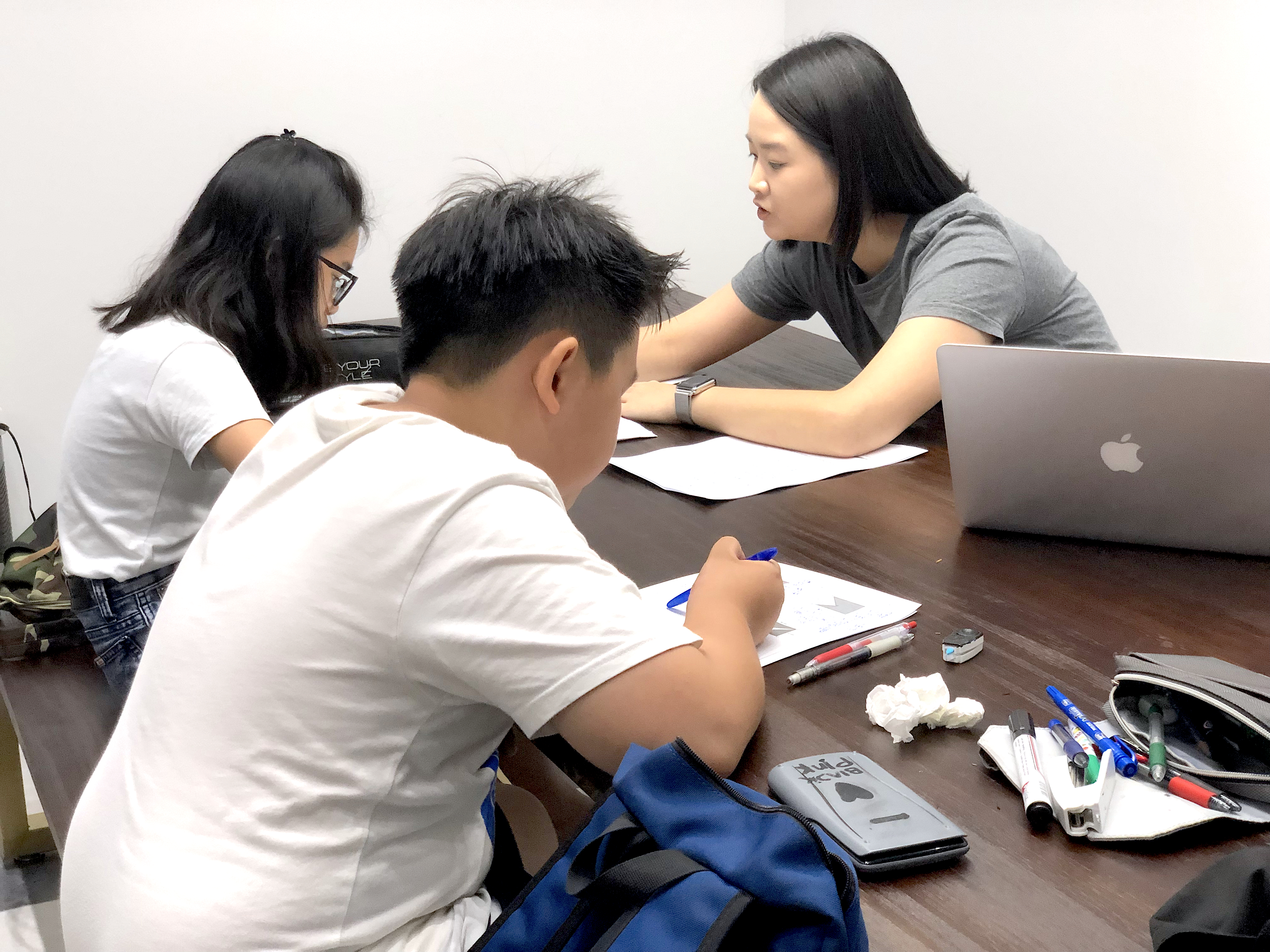
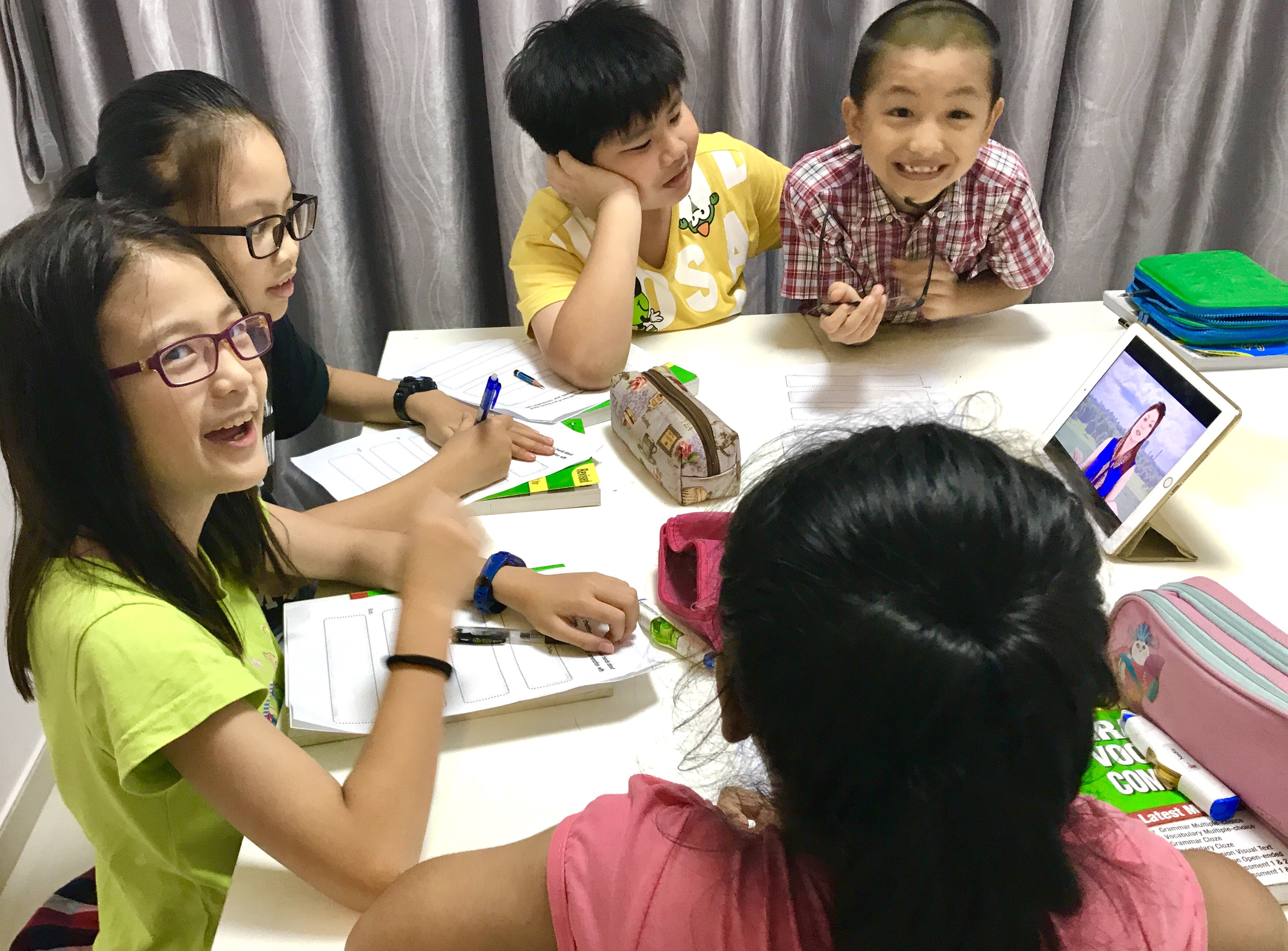
At eduKate Yishun, we work hard to have an affirmative class culture that empowers our students to do more, learn more, and develop a love for their own education by creating a class culture with great friends and tutors. Our positive classes also creates a constructive environment that teaches them the relevance of what they study to their everyday lives. With relevance creates the true reason for a proper education. That is our trademark that differentiates our teaching to others, but don’t just take our words for it, let these photos show you how much our passion and love for our Yishun student’s English lessons.




Leave a Reply