

Ownership note: this retained eduKateYishun URL is a historical Sengkang Secondary 1 English search route. Present-day Sengkang tuition and learner-runtime decisions belong with eduKateSengkang; deeper English language and examination depth belongs with the SETC English Atlas. Keep this page for its specific learning method, not as a competing Sengkang or English-specialist owner.
Families looking for Secondary 1 English tuition in Sengkang often notice the same transition: the reading passages become longer, the questions expect more explanation, and a student who managed Primary English by remembering familiar formats can suddenly feel unsure. A useful Sec 1 English tutor should teach the learner how to annotate a text, locate evidence, explain an inference, organise a paragraph and edit independently. These are connected habits, not separate bags of tricks.
Current searches for lower-secondary English tuition commonly mention comprehension, composition, situational writing, grammar, vocabulary, oral communication and MOE-aligned practice. Those labels describe important territory, but they do not yet tell a student what to do on Tuesday evening with a six-paragraph article and three questions. This guide supplies a workable answer: build an evidence notebook that records what the text says, what the reader infers and which words justify that inference.
This article is for a Secondary 1 learner, parent or teacher who wants a calm bridge from guided primary work to more independent English study. It includes an annotation system, paragraph and editing routines, audience-and-register decisions, concise oral practice, two original worked examples, exactly twelve practice tasks with answers, and a study-file method. The cheerful ambition is simple: fewer fluorescent stripes across whole pages, more purposeful marks that help the brain find its way home.
What changes at Secondary 1
Secondary 1 does not require a student to abandon everything learned in primary school. Clear sentences, careful reading and relevant answers still matter. The change is one of scale and independence. Texts can carry several viewpoints, meanings may be implied across sentences, and a response often needs a reason rather than a copied phrase. Students also meet a wider range of informational, literary, visual and multimodal material.
MOE’s 2020 Secondary G2/G3 English syllabus for students in local schools frames English through listening, viewing, reading, speaking, representing and writing. It treats communication as purposeful and shaped by audience, context and culture. That integrated view is useful here. An annotation made during reading can support a comprehension answer, become evidence in a written paragraph, and provide the starting point for a concise spoken response.
Secondary 1 is not a national examination year, and school assessments differ. Students should follow their school’s current instructions and subject level. Later national assessment is therefore a direction marker rather than a template to impose prematurely. The 2027 Singapore-Cambridge Secondary Education Certificate marks a system transition, while the student beginning Secondary 1 still needs age-appropriate instruction in meaning, language use and communication.
The most useful initial diagnosis is concrete. Collect one recent comprehension response, one short piece of writing, one editing exercise and notes from a spoken task. Replace broad labels such as “weak English” with observable descriptions: overlooks contrast words, quotes without explaining, begins paragraphs without a controlling idea, changes tense unnecessarily, uses the same register for a friend and a teacher, or gives oral answers that circle the question without landing.
For a wider view of the learning pathway, families can use the English Tuition and Learning Hub and the Secondary English directory. These pages connect Secondary 1 work to earlier foundations and later stages. A student should know where the lesson sits without being sent on an expedition through dozens of almost identical browser tabs.
Annotate for a decision, not for decoration
Annotation is useful only when each mark has a job. Underlining everything merely converts black print into colourful black print. Before reading, inspect the title, source, layout and question stems. Ask what kind of meaning the task may require: a sequence, a reason, a change in attitude, a contrast, a writer’s choice or a link between visual and verbal information.
Use five modest symbols. Put a box around a central claim or turning point. Underline a precise word or short phrase that may become evidence. Draw an arrow when one event causes another. Write “C” beside a meaningful contrast and “?” beside a genuine uncertainty. Limit marks to information that changes understanding. A clean margin is not laziness; sometimes the paragraph simply does what it says on the tin.
After each paragraph, write a margin note of no more than seven words. “Mira distrusts the shortcut” is more useful than “This paragraph is about Mira.” A strong note names the subject and the new idea. At the end of the text, read only the margin notes. If they recreate the passage’s movement, the annotation has captured structure. If they form a pile of disconnected nouns, revise them.
Questions should guide the second reading. A question about why a character hesitates calls for words showing thought, movement or tension. A question about a writer’s attitude may depend on adjectives, comparison, selection of detail or contrast. A summary requires repeated categories and main points, not every example. The student returns to the text with a target rather than rereading in hope that an answer will wave.
Build an evidence notebook
An evidence notebook is a slim record of solved reading problems. Give each page four columns: question, evidence, inference and bridge. The question identifies the thinking job. Evidence records the smallest sufficient textual clue. Inference states what the clue suggests. The bridge explains why that clue supports the inference. This fourth column prevents the common leap from quotation to conclusion.
Suppose a text says, “Nadia folded the application twice, slipped it beneath her workbook and volunteered to wash the cups.” Asked why Nadia avoids discussing the application, a student may infer that she feels anxious or reluctant. The evidence is not simply that she washes cups. The bridge is that she hides the form and immediately chooses an unrelated chore, actions that delay the conversation.
Add an error label after marking: wrong location, copied without inference, plausible but unsupported, incomplete bridge, ignored question word, or imprecise vocabulary. These labels turn corrections into data. If “plausible but unsupported” appears four times, the next lesson should not be another random worksheet. It should practise returning from an attractive guess to an exact signal in the text.
Keep the notebook selective. Two well-analysed questions from a passage can teach more than ten answers copied into neat rows. Revisit one old entry weekly and improve either the inference or bridge. Over time, the notebook becomes a personal catalogue of how writers imply impatience, affection, doubt, relief, power, distance and change without naming those ideas directly.
Worked example 1: from annotation to inference
Original passage: “At the lift lobby, Joel checked the handwritten map again. The block numbers were smudged where his thumb had worried the paper. When the volunteer leader called, he answered brightly, ‘Nearly there!’ Then he let two lifts leave without him and studied the directory for a third time.”
Question: What does the passage suggest about Joel’s feelings, and how does the writer show this? A weak response says, “Joel is lost because he checks the map.” That identifies the practical problem but misses the tension between what Joel says and does. Another weak response calls him dishonest. The text does not establish an intention to deceive for gain.
Purposeful annotation: underline “thumb had worried the paper”; mark “C” between “answered brightly” and “let two lifts leave”; box “for a third time”. The margin note could read, “Joel masks uncertainty and delays.” Each mark earns its place: repeated handling implies nervousness, the bright reply contrasts with hesitation, and repeated checking shows that he lacks confidence.
Model answer: Joel feels uncertain and embarrassed about being unable to find the correct block. The paper is smudged where he has repeatedly handled it, while his cheerful claim that he is “nearly there” contrasts with allowing two lifts to leave and checking the directory again. His confident words therefore conceal hesitation.
The answer uses a claim, selected evidence and a bridge. It does not quote the whole passage. It also distinguishes two related feelings: uncertainty comes from not knowing the way, while embarrassment explains the performance of confidence. A student need not force two emotions into every answer, but when the text supports the distinction, precise language improves the explanation.
Turn reading evidence into paragraph cohesion
A paragraph is cohesive when its sentences work on one central idea and the links between them are clear. Begin with a controlling sentence that answers the question or states the paragraph’s job. Follow with relevant evidence, explain its importance, and connect the explanation back to the point. This is a reasoning sequence rather than a set number of sentences.
Use noun chains to maintain focus. If the first sentence introduces “the proposed reading corner”, later sentences can refer to “the space”, “this quiet area” or “the proposal” when the reference remains clear. Pronouns help, but too many “it”, “this” and “they” can make the reader solve a small detective story. Repeat the key noun when clarity requires it.
Connectors should name real relationships. “Because” introduces cause, “therefore” signals consequence, “however” marks contrast, and “for example” introduces illustration. A connector cannot manufacture logic. “The library is quiet. Furthermore, the chairs are blue” is grammatical but unlikely to advance a meaningful claim unless chair colour somehow matters to the question.
Use the margin test after drafting. Write a three-word label beside each sentence: claim, evidence, explanation, example, counterpoint or link. If a paragraph has four examples and no explanation, develop the reasoning. If a sentence needs the label “interesting extra”, remove or relocate it. Cohesion improves when every sentence knows why it was invited.
Audience and register begin with four notes
Before any situational or functional writing, record four notes: role, reader, purpose and response. Who are you in this task? Who will read the message? What should the message achieve? What should the reader know, feel or do afterwards? These answers control the information selected, its order and the appropriate register.
Register is not a contest to use the longest word. It appears in greetings, requests, modal verbs, sentence length, directness and degree of shared knowledge. “Send the form today” may be suitable between teammates with an urgent shared deadline. “Could you return the signed form by Thursday?” is a clearer, more courteous request to a parent or teacher.
Develop stimulus details for the reader instead of copying them. If a poster says that a workshop uses household packaging, a message to students might explain that familiar materials make participation easy. A proposal to a teacher might explain how collection and cleaning will be managed. The fact remains stable; its relevance changes with audience and purpose.
Do not invent impressive extras. If the task does not mention prizes, expert guests, guaranteed outcomes or free equipment, do not add them. Strong writing develops supplied information through consequence, benefit, comparison or practical explanation. Imagination is valuable, but in a source-based task it must operate within the evidence fence.
Worked example 2: one note for two readers
Situation: A class has created a lunchtime “quiet table” where students can read, sketch or complete a small puzzle without conversation. The trial will run on Tuesdays for four weeks. Students must write first to the teacher overseeing the canteen and then to classmates who may wish to participate.
Message to the teacher: “Dear Ms Lim, our class would like permission to trial a quiet activity table in the canteen on four Tuesdays. Two student volunteers would arrange books, paper and puzzles, while a sign would explain that conversation should take place elsewhere. Could we discuss a suitable table and a simple clean-up check before announcing the trial?”
The message foregrounds permission, supervision, space and clean-up because these affect the teacher’s decision. Its request is specific and leaves room for discussion. It does not promise that every student will become calmer or that canteen noise will vanish. A practical proposal earns trust by recognising what must be managed.
Message to classmates: “Would you enjoy a quieter lunch break once a week? On Tuesdays, one canteen table will offer books, sketch paper and small puzzles for anyone who wants a conversation-free activity. Join for five minutes or the whole break, and leave the materials ready for the next person. Look for the blue Quiet Table sign.”
The class message opens with a reader benefit, explains the choice and gives a visible action. The tone is friendly but not chaotic. Comparing the versions teaches an important rule: suitable writing is not created by swapping “Dear Ms Lim” for “Hi everyone”. The writer must reorder and develop information according to the reader’s questions.
Edit in separate passes
Editing improves when the student stops trying to inspect everything at once. Use four passes: task, paragraph, sentence and word. The task pass checks whether the response answers the question, covers required points and suits the audience. The paragraph pass checks order, controlling ideas and relevance. Make large changes before polishing tiny ones.
The sentence pass checks boundaries, subject-verb agreement, tense, pronoun reference and logical connectors. Read one sentence at a time and locate its main subject and verb. If two complete sentences are joined only by a comma, separate or connect them properly. If a pronoun could refer to two nouns, replace it with the intended noun.
The word pass checks spelling, prepositions, collocation, repetition and register. Students should keep an individual watchlist drawn from their real errors: “advice” versus “advise”, “every day” versus “everyday”, “discuss” without “about”, or “although” without an unnecessary “but”. Five personal targets are more useful than a decorative catalogue of fifty rules.
Complete editing by reading aloud softly or using a finger to pace the sentence. The ear often catches a missing word or strange repetition. Then stop. Endless tinkering can replace a correct verb with a less accurate one. Editing needs a finish line: meaning secure, task complete, grammar checked, vocabulary precise and presentation readable.
Make oral answers concise and supported
Oral practice benefits from the same evidence habits as reading and writing. Use a three-part shape: answer, detail, significance. First answer the exact question. Next give a relevant observation, example or experience. Finally explain why it matters. This shape keeps a response purposeful without making it sound memorised.
For a visual prompt, separate observation from interpretation. “Two students are sharing one tray of seedlings” is observable. “They may be learning cooperation” is an interpretation. Connect them: “The shared tray suggests that the activity encourages cooperation because both students must coordinate how they plant and label the seedlings.” This protects the answer from unsupported certainty.
Record a forty-five-second response and annotate the transcript. Box the direct answer, underline supporting detail and circle repeated filler. If the box does not appear until the sixth sentence, move the conclusion forward. If the response contains opinions without examples, add one concrete detail. Improvement becomes visible rather than dependent on whether the recording merely “sounds okay”.
Concise does not mean abrupt. A complete answer can acknowledge complexity: “I would support the activity if participation remains optional, because…” It can also qualify evidence: “The image suggests…” or “In my experience…” Such phrases show control. They distinguish observation, inference and personal judgement, just as the evidence notebook does on paper.
Organise a study file that can teach you back
A study file should support retrieval, not store paper indefinitely. Divide it into four sections: current models, evidence notebook, error patterns and timed attempts. Keep only examples that the student can explain. A perfect model answer with no annotation is less useful than a corrected paragraph showing why three changes improved meaning.
Give each marked task a next-use note. “Next time, underline the contrast before answering,” “check whether every pronoun has one clear noun,” or “state the request in the opening” tells the student what to retrieve. “Be more careful” feels sensible but has no visible action. A useful note can be applied during the next attempt without requiring a motivational speech.
Once a week, choose one old task and redo only the weak part without looking at the correction. Then compare. Once a month, review the error labels and count patterns. If a category disappears across several tasks, retire it from the active checklist. This keeps the system responsive; students should not continue checking yesterday’s problem while today’s one is having a party.
File names matter for digital work. Use date, skill and version: “2026-09-18-inference-v2” is more useful than “english final FINAL new”. Keep the prompt with the response and teacher feedback. Good organisation reduces search time and makes progress auditable. It also prepares the student to bring focused evidence to a teacher or tutor.
A weekly routine for independent growth
A balanced week can use four short sessions. Session one annotates a fresh passage and completes two evidence-notebook entries. Session two turns one reading insight into a cohesive paragraph. Session three edits a short response using the four passes. Session four records an oral answer and reviews the week’s error labels. Each session has a visible product.
Begin untimed while the routine is new. Accuracy and reasoning should stabilise before speed becomes the main pressure. Then add modest time limits and record completion quality. Timing should reveal whether the process is automatic enough, not teach the student to abandon it. A hurried wrong inference is not a faster version of success.
Teachers and tutors can model one decision aloud: “The question asks why, so I need a cause. This contrast suggests disappointment because…” The student then completes the next decision with a prompt, and a third independently. Reduce support deliberately. The goal is not a beautifully guided worksheet; it is the student’s ability to recreate the reasoning when no adult is beside the desk.
Parents can ask process questions rather than supplying language: Which words are your evidence? What does the contrast change? What job does this paragraph perform? Which editing pass found that error? These questions keep ownership with the learner. Support is strongest when it helps the student see the next move without quietly doing the move for them.
Twelve practice tasks with answers and reasons
Task 1: Select the useful annotation
Read: “Mei kept the unopened envelope beside her plate throughout dinner, answering every question except the one about school.” Choose the most useful annotation for a question about her mood: (A) underline “dinner”; (B) box “envelope”; (C) mark the contrast between keeping the envelope visible and avoiding the school question. Answer: C. Reason: the contrast links her behaviour to avoidance and possible worry; the isolated nouns do not explain the mood.
Task 2: Write a seven-word margin note
For the same sentence, write a note of no more than seven words. Answer: “Mei displays the problem but avoids it.” Reason: the note names the subject and captures the tension between the visible envelope and her refusal to discuss school. “Mei has an envelope at dinner” merely repeats surface information.
Task 3: Complete the evidence bridge
Claim: Amir is determined to repair the bicycle himself. Evidence: after the chain slips again, he “wipes his hands, reopens the manual and kneels beside the wheel”. Complete the bridge. Answer: Instead of abandoning the repair after another failure, Amir cleans up only enough to begin again and deliberately returns to the instructions. Reason: the bridge interprets the sequence of actions as persistence.
Task 4: Remove the unsupported inference
Text: “The coach checked the darkening sky and shortened the final drill.” Which claim is unsupported: (A) the coach notices changing conditions; (B) the coach adapts the session; (C) the coach has received an official storm warning? Answer: C. Reason: nothing states that an official warning arrived. The sky and shortened drill support observation and adaptation only.
Task 5: Repair paragraph focus
A paragraph argues that a class noticeboard improves access to reliable updates. Which sentence should be removed? “A weekly schedule can be displayed.” “Changes can be dated clearly.” “The noticeboard frame is a cheerful shade of orange.” “Students can check one shared source.” Answer: remove the frame-colour sentence. Reason: colour does not support access or reliability unless the writer establishes a relevant visibility problem.
Task 6: Choose the logical connector
Complete: “The first survey included only twelve students; ___, its result should be treated as an initial indication rather than a final conclusion.” Choose therefore, meanwhile or for example. Answer: therefore. Reason: the limited sample causes the need for caution. “Meanwhile” signals simultaneous events, while “for example” introduces an illustration.
Task 7: Clarify pronoun reference
Revise: “When Hana gave Priya the file, she said the labels were unclear.” Answer: “When Hana gave Priya the file, Hana explained that its labels were unclear.” Reason: the revision identifies the speaker and connects “its” to the file. If Priya was the speaker, name Priya instead; the original sentence does not allow the reader to know.
Task 8: Adjust register
Change a message to a teacher: “Hey, send me the room number quick.” Answer: “Hello Mr Wong, could you confirm the room number before tomorrow’s session, please?” Reason: the revision supplies context, uses a courteous modal request and removes the abrupt command. It remains clear instead of becoming grandly ceremonial.
Task 9: Develop a supplied detail
A reading club poster says participants may bring any book they are currently reading. Develop this detail for an invitation to hesitant classmates. Answer: “You can bring a book you already enjoy, so joining does not require buying or finishing a special title first.” Reason: the development explains ease of entry without inventing a gift, discount or guaranteed benefit.
Task 10: Correct the sentence boundary
Edit: “The queue reached the staircase, several students could not enter the hall safely.” Answer: “The queue reached the staircase, so several students could not enter the hall safely.” Reason: the original joins two complete clauses with only a comma. “So” also makes the cause-and-effect relationship explicit. A full stop would be grammatical but would leave the relation less direct.
Task 11: Shape a concise oral answer
Question: Should students help design shared school spaces? Give an answer, detail and significance in three sentences. Answer: “Yes, students should contribute ideas because they use these spaces daily. For example, they may notice that bag storage blocks a study area’s walkway. Their observations can help adults make practical decisions, although safety and budget still require staff oversight.” Reason: the response answers immediately, supports the view and adds a sensible qualification.
Task 12: Choose the next-use note
A marked answer contains a reasonable inference but no quoted or paraphrased clue. Choose the better note: “Try harder next time” or “Before explaining, underline the smallest phrase that supports the inference.” Answer: the second note. Reason: it names an observable action the student can repeat. The first expresses dissatisfaction but offers no method for improving the next response.
Use feedback as the next instruction
Feedback is strongest when it identifies the next decision a student should make. “Good” gives encouragement but cannot be repeated as a method; “weak explanation” names a problem but leaves the repair hidden. A more useful comment says, “After quoting the contrast, explain what changed and why that change reveals disappointment.” The learner can apply that instruction to another passage. Positive feedback can be equally precise: “Your margin note captured the turning point, so you found the evidence quickly.”
Use a correction cycle of notice, repair, compare and transfer. First the student identifies the error category. Next, the student repairs only the affected part without copying a model. Then the original and revision are compared, with one sentence explaining the improvement. Finally, the same skill is tested in fresh material. A corrected answer proves that the student can follow help; a successful transfer shows that the student has learned from it. Store both versions in the study file so progress remains visible.
Frequently asked questions
Should a Secondary 1 student annotate every text?
No. Annotation is a tool for demanding reading, learning and review. A student may read an easy text fluently without marking it. When annotation is useful, keep it selective and connected to a purpose. Marking fewer decisive clues develops judgement better than covering every line.
How long should evidence-notebook entries be?
One concise row is often enough: question, small evidence, inference and bridge. The notebook is not a second copy of the passage. Its value lies in making reasoning visible. Longer reflection is useful only when the error or language choice genuinely requires it.
Does good comprehension require advanced vocabulary?
Precise vocabulary helps a student distinguish attitudes and explain relationships, but rare words do not replace evidence. Begin with accurate, usable terms such as reluctant, relieved, dismissive, cautious and conflicted. Learn each word through context, collocation and contrast, then use it only when the passage supports it.
Should students practise national examination papers in Secondary 1?
Later assessment can clarify long-term direction, but practice should match the learner’s present stage and school programme. Secondary 1 students need secure reading, language and communication habits before repeated exposure to senior formats. Teachers can borrow appropriate reasoning demands without pretending that every early task is a graduation examination.
How can a parent help without rewriting the answer?
Ask the student to point to evidence, name the paragraph’s job, explain one editing change or state the intended reader response. If the learner cannot answer, return to the relevant routine. Questions preserve ownership; supplying polished sentences may improve one page while hiding the skill that still needs teaching.
What should families look for in Secondary 1 English support?
Look for diagnosis based on actual work, explicit modelling of reading and writing decisions, age-appropriate practice, feedback the learner can apply, and planned removal of support. Families can ask how annotation leads to answers, how recurring errors are tracked, and how students show they can transfer a method to unfamiliar material.
Teaching Guide
Teach this system in a gradual release. First model a short passage aloud, naming why each mark is made and completing one evidence-notebook row. Next annotate a second paragraph jointly while the student proposes the evidence and bridge. Then give an unfamiliar paragraph for independent work. Check the reasoning, not the amount of ink.
Connect modes deliberately. Use one annotated idea for a comprehension answer, expand it into a cohesive paragraph, reshape it for a stated audience, then speak it in forty-five seconds. This reuse shows that English is a communication system. It also reduces unnecessary worksheet volume while increasing depth, transfer and opportunities for useful feedback.
Track one or two active errors at a time. Record the student’s baseline, give a precise strategy, practise it in varied contexts, and retest without prompting. Promote the strategy to the personal checklist only when the learner can explain and apply it. Retire items that remain secure, because a checklist should evolve rather than become a museum.
End each lesson with a next-use note and a small retrieval plan. The student should leave knowing which clue to notice, which question to ask and where the new work belongs in the study file. That combination of evidence, organisation and independence is the real Secondary 1 transition: the learner can approach an unfamiliar text with a method and begin.



Singapore English tuition with Tutor Yuet Ling. With Singapore school’s requirement for English as a First language, our primary aim in teaching English are highly focussed on tasking English student’s communication skills to be competent as well as to be an effective, accurate and efficient tool to absorb and relay information to others.
English is Singapore’s main language of communication and it is imperative that our student’s English Language skills are on parity with the requirements set forth by the Ministry of Education to study well in school. It is the main skill that will help students to perform consistently across their other subjects as their ability to understand and use English effectively will help them to comprehend what is taught in class and asked in tests.
English Tuition Centre with English tutor of 20 years in the business helping English students to improve their ability to communicate. An improvement of their linguistic competence in both the passive reading/listening and active speaking/writing process of the English Language are part of our course curriculum.
With that in mind, our English classes are geared to teach and train our students to be able to understand the media that they read or hear, and to have the ability to express and communicate their complex thoughts and ideas to others naturally. Any improvements in information absorption and dissemination will automatically translate to cognitive skills and ultimately, help students to do well in their studies.
English should be treated as our native language, to be the main Lingua franca for a cosmopolitan Singapore where over generations, English has been integrated well into our everyday life. As a first language, the focus of our tuition will be to task our Yishun students to learn the skills needed to communicate proficiently for both their studies in school as well as for their everyday life.
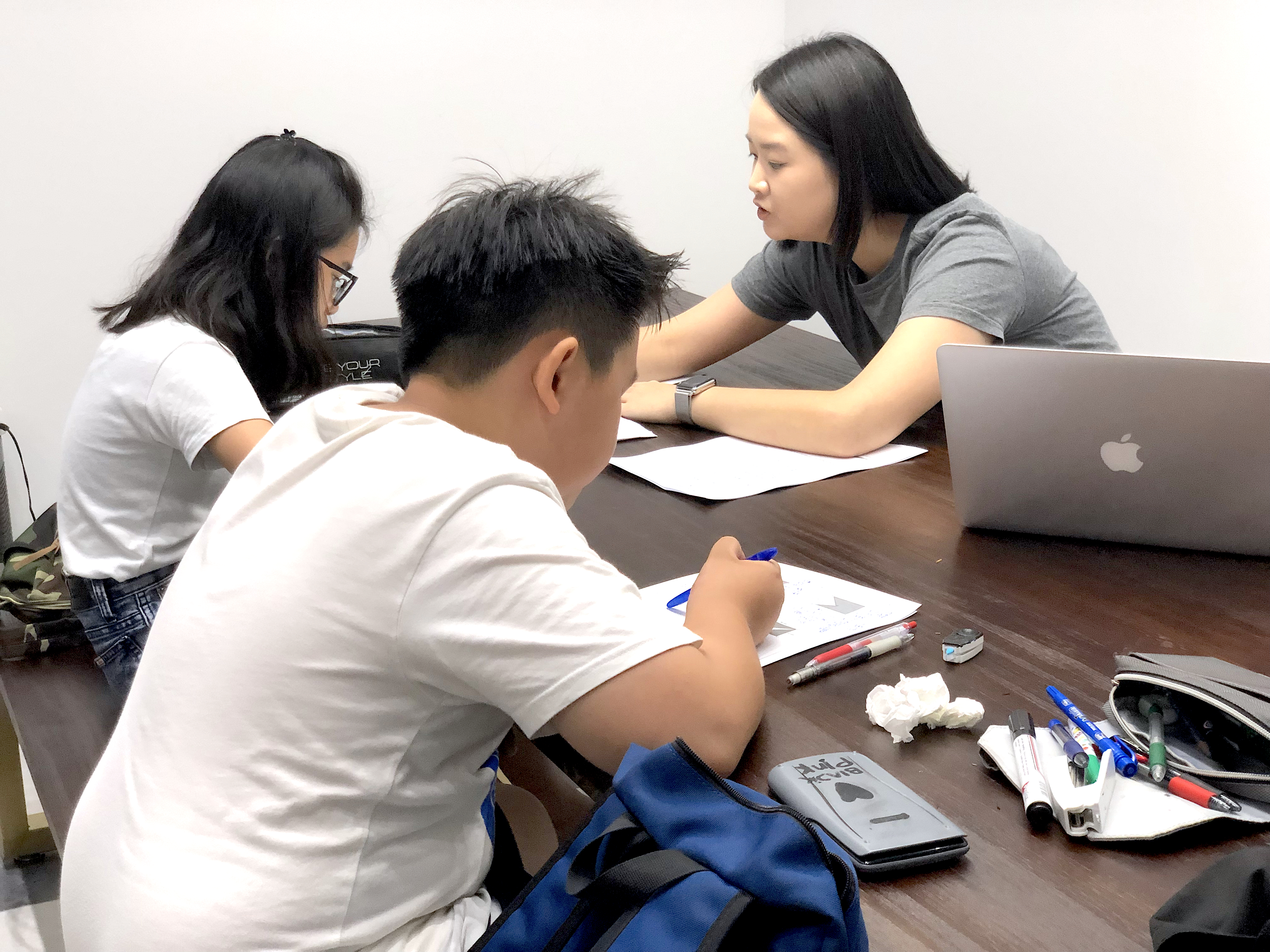
Local English Tutor for English tuition are the dependable, trustworthy tutor that delivers the results. Join our English tutorials and have our English Teacher get you on track. Small groups of 3.
increase general knowledge and all necessary skills needed for the PSLE
score maximum marks by understanding the marking scheme of the examination
in a safe, comfortable air con environment with properly equipped classes
by discerning tutors that can detect weaknesses, solve student’s problems during class
by qualified female tutors with experience in improving students for the crucial PSLE
For current Sengkang Secondary 1 English tuition information, use eduKateSengkang. For specialist English learning and examination resources, use the SETC English Atlas. This historical Yishun page does not supply a current contact number or class offer.














Pri3 Yishun The best Pri 3 English Tuition in Yishun with SEAB MOE PSLE syllabus English. Pri3 Yishun Primary English Tutor for Pri1 Pri2 Pri3 Pri4 Pri5 Pri6 PSLE English Paper 1 and Paper 2.
For current Sengkang Secondary 1 English tuition information, use eduKateSengkang. For specialist English learning and examination resources, use the SETC English Atlas. This historical Yishun page does not supply a current contact number or class offer.


Learn English and make it useful.
Working closely with parents are part of our teaching culture to create the desired effect to get our English students positive changes in their studies. Our Yishun PSLE English tutors teach from scratch, making sure our English students master their language, and we do all the necessary practices from basic easy to complex advanced questions with our students, including past exam papers that helps them to understand and appreciate English as lingua franca in Singapore and use it to further their studies.
Class Culture
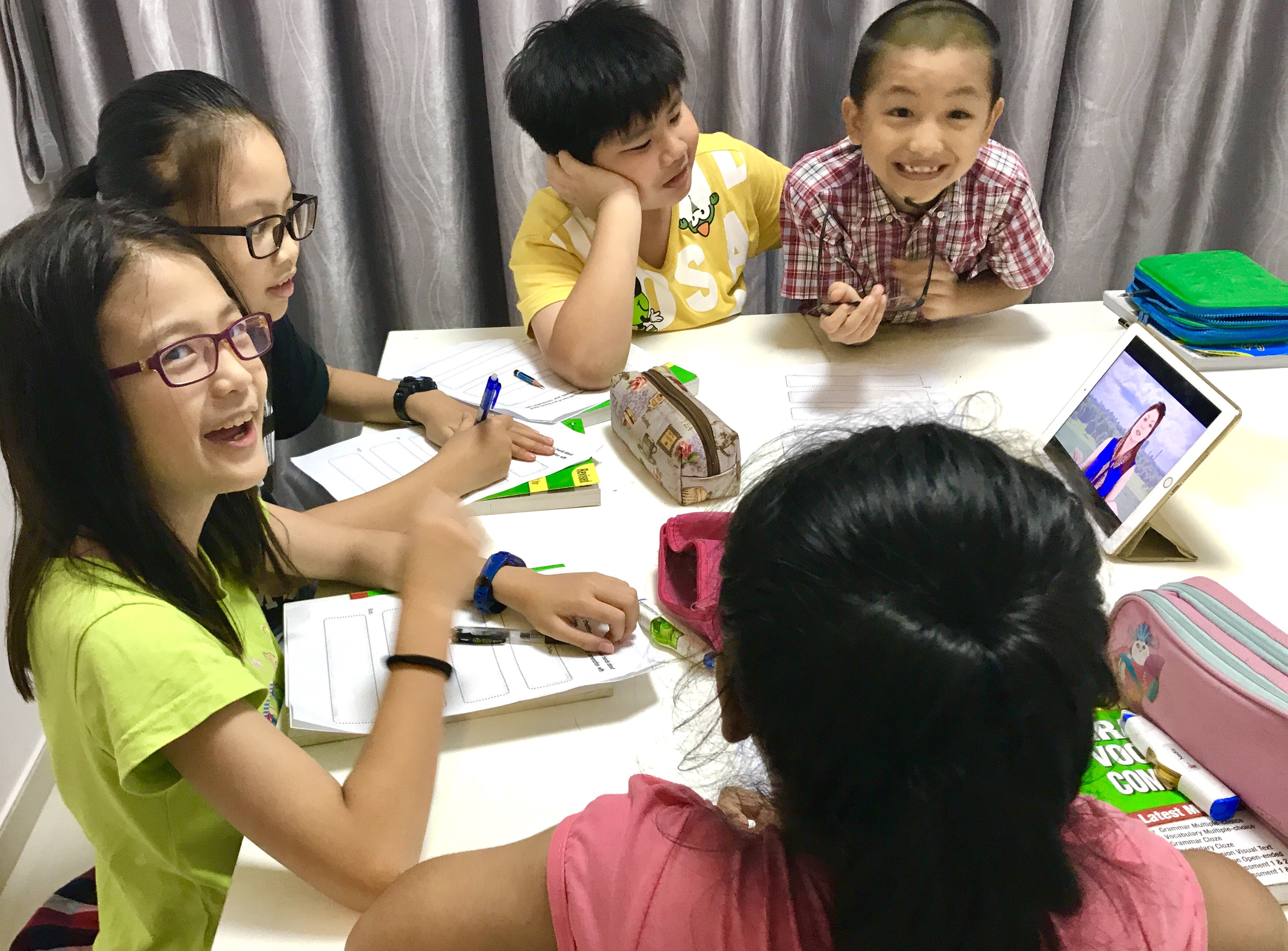
At eduKate Yishun, we work hard to have an affirmative class culture that empowers our students to do more, learn more, and develop a love for their own education by creating a class culture with great friends and tutors. Our positive classes also creates a constructive environment that teaches them the relevance of what they study to their everyday lives. With relevance creates the true reason for a proper education. That is our trademark that differentiates our teaching to others, but don’t just take our words for it, let these photos show you how much our passion and love for our Yishun student’s English lessons.




Continue through Secondary 1 English: Secondary 1–2 article index · Secondary English directory · English Hub · Diagnostics · Examinations · Yishun Tuition Hub · Library
Leave a Reply