

Yishun English tuition for Integrated Programme students should make difficult reading, clear writing and independent thinking teachable. Our small-group IP English approach focuses on comprehension, Language Arts, literary analysis, argumentative writing, vocabulary, grammar and oral communication, with the student’s actual school tasks guiding the work. The starting question is practical: which language decision is preventing this learner from showing what they understand?
An IP English tutor should do more than supply impressive phrases or another model essay. A student may read widely yet struggle to explain a quotation, speak confidently yet lose the direction of an argument, or understand feedback yet repeat the same mistake next week. These are different problems. This guide shows how to identify them, what focused tuition can contribute, and how parents can judge whether support is producing more independent performance.
For families comparing Yishun English tuition, small-group English classes and school-specific IP English support, the useful comparison is the quality of diagnosis and feedback. We connect reading comprehension, composition, critical response and discussion rather than treating them as unrelated worksheets. Current class arrangements, suitability, fees and availability should be confirmed through eduKateYishun; this guide does not promise a particular school result or imply affiliation with an IP school.
Find your starting point in fifty seconds
A falling mark: begin with the diagnostic map, then compare the original and revised answers in the teaching demonstration. Look for the first error, not the largest stack of corrections.
A strong reader with weak written answers: go to evidence and explanation. Enjoying a story and answering an analytical question are related but different activities.
An essay that sounds fluent but says little: use the argument clinic. Replace broad approval or disapproval with a claim, a mechanism and a meaningful limitation.
A child who relies on help: read the small-group lesson example and the independence review. Observe what happens when the prompt disappears.
A family deciding whether tuition is needed: start with the suitability discussion and consultation preparation. A clear decision may be to proceed, wait, change the learning target or use another form of support. This legacy guide does not establish a current class, fee, tutor assignment or vacancy; for present-day service decisions use the Yishun Tuition Centre Hub and confirm current arrangements separately.
Begin with the real school task, not the label
The MOE Integrated Programme overview describes a six-year pathway with school-specific programmes. That is the reason to obtain the student’s assignment instructions before selecting tuition material. A course name alone is not an assessment plan.
SAP and IP also describe different things. SAP concerns a school’s bilingual and bicultural educational emphasis; it is not a separate English paper format. For example, Catholic High’s SAP flagship explanation refers to students in both IP and SP. We should not turn the familiar expression “IP/SAP English” into an invented universal syllabus.
Bring the actual task sheet. Does it ask for narrative writing, an analytical paragraph, a comparison, a speech, a response to a source, or an extended argument? What does its rubric reward? Which text types have been taught? Is the assessment individual, collaborative, timed or prepared? These questions let the tutor distinguish a missing general skill from a mismatch with this particular task.
School alignment does not mean completing assessed work for the student. We can teach quotation analysis using a different passage, practise argument structure on a fresh issue, and rehearse a speaking process without scripting the student’s assessed presentation. The learner must remain the author of submitted work. Tuition should strengthen the capability that the school is assessing, not replace the assessment with adult production.
A diagnostic map that leads to a next step
Begin with two recent pieces of work and one unfamiliar task. A marked paper shows what went wrong; a fresh attempt shows how it happens. Watch the first minute carefully. Does the learner read the whole question, search for a memorised format, highlight everything, or start writing before deciding what the answer must establish?
Separate six possible difficulties. A reading difficulty concerns what the text actually says. An inference difficulty concerns what the evidence can support. A selection difficulty concerns which detail matters. An organisation difficulty concerns the order of ideas. A language difficulty concerns whether the sentence communicates accurately. A performance difficulty concerns whether the student can do these things with less time or assistance.
Consider an answer that claims a character is angry. The learner may have misread “reluctant” as a synonym for furious. That is vocabulary. Alternatively, they may understand reluctance but infer anger without enough evidence. That is interpretation. Or they may have a valid inference but omit the line that supports it. That is answer construction. Giving all three students more emotion words would miss two of the problems.
A useful diagnosis ends with an action: “Explain how the quoted verb supports the claim,” or “Check what the pronoun refers to before paraphrasing.” It should not end with a label such as weak, careless or not analytical. Labels can describe disappointment. They cannot tell a student what to do at the next desk, with the next passage, after the tutor has stopped talking.
What the first learning conversation should establish
Ask the student which part of English feels hardest and which part feels enjoyable. The answer is evidence, not a final diagnosis. A pupil may dislike comprehension because every correction seems mysterious, while enjoying discussion because the ideas arrive before spelling and punctuation become concerns. Preserve that usable strength.
Next, ask the learner to explain one teacher comment. “Develop this” is often repeated without a shared meaning. Does the student think development means adding length, giving another example, describing more detail, or explaining a causal link? Translate the comment into one visible revision and test it immediately.
Agree on a starting priority small enough to recognise. For two lessons, the focus might be the sentence after a quotation. For another learner, it might be defining the exact issue before planning an essay. Keep a baseline sample and date the next independent attempt. Parents then have something more useful than the statement that a lesson went well: they can see whether a specific decision changed.
Three learners, three different repairs
The following students are fictional teaching cases, not testimonials. Mira reads novels willingly and can recount every event, but her literature responses retell the plot. Daniel speaks confidently about social issues, yet his essays jump from one opinion to another. Hana understands the tutor’s examples but hesitates whenever she must begin alone.
Mira’s work needs an interpretive question. Instead of asking what happened after the door closed, ask why the writer ends the paragraph there. She highlights a detail, states its effect, and explains how that effect shapes the reader’s understanding. Her practice is not another chapter summary. It is a short movement from event to meaning.
Daniel needs a dependency between sentences. He writes his paragraph claim at the top, then tests every subsequent sentence against it. A sentence can explain the claim, illustrate it, qualify it or connect it to the question. A sentence that does none of these may belong elsewhere. His repair concerns argumentative organisation, not a shortage of impressive vocabulary.
Hana needs a supported beginning that can gradually become her own. At first, she uses three questions: What is the task? Which evidence matters? What must my answer establish? Later the tutor removes one question, then the written card. The fresh task changes, so success cannot be attributed only to remembering yesterday’s answer.
A small group can discuss one text while these repairs differ. Mira practises interpretation, Daniel practises explanation order, and Hana practises entry into the task. The shared text creates useful discussion, but each learner still produces an independent answer. Group teaching is not the same as giving everyone identical help.
A reading demonstration: the sentence after the quotation
Original teaching passage: The committee had already thanked the volunteers when Rafi appeared at the back of the hall. His shirt was damp, and a length of blue ribbon clung to his sleeve. “Everything is ready outside,” he said. The chairperson glanced at the programme, where every speaker’s name had been printed in careful gold letters. There was no space left on the page. “Good,” she replied, turning towards the photographer. Rafi folded the spare ribbon into a small square. When the applause began, he stood beside the open door so that the guests could pass.
Question: How does the writer suggest that Rafi’s contribution has been overlooked? Explain two details. This is an original practice question, not an official examination item or marking scheme.
A weak answer says, “Rafi is sad because nobody likes him. The gold letters show that he is poor.” Neither claim is securely established. The text does not tell us that nobody likes Rafi or that he is poor. The learner has replaced close reading with a possible story about unfairness.
A stronger answer explains that the committee has finished thanking volunteers before Rafi returns, although his report indicates that he has been preparing the outside area. This contrast suggests that his work continues while public recognition happens elsewhere. The answer then notes the chairperson’s brief reply and immediate turn towards the photographer, suggesting that she gives little attention to his effort.
Notice what the stronger version does not do. It does not need the words juxtaposition, marginalisation or socioeconomic inequality. Such terms may be useful in suitable contexts, but they cannot substitute for the actual relationship between detail and interpretation. Clear explanation is already analytical.
Now examine the gold lettering. It may suggest the care given to formal recognition, especially beside the absence of space on the programme. That is a more defensible reading than treating gold as proof of personal wealth. The important lesson is not that one interpretation must always win. It is that an interpretation earns its place by explaining the wording without inventing missing facts.
For independent transfer, replace the passage with a situation where a quiet contributor is deliberately recognised. Ask the same question about recognition, but reverse the conclusion. The student must read the new evidence rather than reuse the earlier complaint about unfairness. A familiar skill should remain available even when the answer changes direction.
Answer scope: enough, but not everything
A comprehension answer has a boundary. “What does Rafi do?” calls for an action. “What does his action suggest?” calls for interpretation. “How does the writer suggest this?” calls for attention to the way the text creates meaning. These questions can use the same passage while requiring different responses.
Before drafting, restate the task in ordinary language. For the demonstration above: “I need two details and an explanation of how each shows that his contribution receives little attention.” That restatement becomes a check against irrelevant content. A paragraph about the importance of appreciating volunteers may be thoughtful, but it does not answer how the writer presents this moment.
Do not solve over-answering by imposing arbitrary shortness. Some answers need development. Instead, remove sentences that repeat the same interpretation, describe unrelated events, or provide a moral not requested by the question. Precision is the relationship between the task and the response, not a competition to use the fewest words.
During feedback, ask the student to identify one useful sentence and one unnecessary sentence before the tutor does. This makes selection part of the learner’s work. Eventually, the student should notice an answer drifting while writing it, rather than discovering the drift only when a mark appears beside it.
From a fluent paragraph to a useful paragraph
First attempt: School projects are very good because they teach students many things. They help students learn teamwork and teamwork is very important in life. Students can work together and become better people. Therefore, all projects are useful and schools should have more projects.
The grammar is mostly readable, but the reasoning keeps circling the same claim. “Many things”, “important in life” and “better people” are broad expressions without an explained mechanism. The final claim also expands from some benefits to all projects, which the paragraph has not established.
Revised attempt: A well-designed group project can teach students to coordinate work that no member could complete alone. When one student gathers evidence and another checks whether that evidence answers the question, each contribution depends on the other being clear and timely. This creates a reason to explain decisions rather than merely divide slides. However, the benefit weakens when one pupil produces the whole presentation while the rest copy it. Projects therefore need individual checkpoints as well as a shared outcome.
The revision has a narrower claim, an example of dependence between roles, and a limitation that affects the recommendation. It is not longer merely to look sophisticated. Each additional sentence does a job that the earlier paragraph lacked.
Ask the learner to revise a different paragraph about class discussions. They should not copy the project example. They should preserve the reasoning pattern: specify the benefit, explain how it could arise, identify a condition that might prevent it, and make a proportionate judgement. This is how a model teaches thinking without becoming a script.
Vocabulary that changes a decision
Build a usable vocabulary notebook around distinctions rather than decorative lists. In the demonstration, overlooked differs from rejected. A contribution can be overlooked through inattention without being deliberately refused. Reluctant differs from unwilling: reluctance suggests hesitation or resistance, while the precise context determines whether the person eventually acts.
For each useful word, record a plain meaning, a natural phrase, a contrasting word and a sentence drawn from a new situation. For “tentative”, a suitable phrase is “a tentative suggestion”. A learner could write, “Her suggestion remained tentative because the group had not checked the cost.” The sentence connects the word to an actual reason.
Then test the boundary. Is a decision still tentative after it has been confirmed and implemented? Usually that description would no longer fit. Boundary questions prevent a word from becoming an impressive label attached indiscriminately to any sentence.
Use vocabulary in both reading and writing. Ask why “dismissed” would create a stronger impression than “overlooked” in a passage. Then ask the student to choose between them in their own account. The word is valuable when it helps the learner express a distinction that matters. Rarity alone is not a standard of good English.
A sentence clinic for errors that obscure meaning
Sentence work should be specific. Consider: “Although the proposal reduced noise. Students complained.” The first unit begins a dependent relationship but stops before completing it. A repair is, “Although the proposal reduced noise, some students complained that it restricted discussion.” The revision completes the contrast and explains the complaint.
Next consider: “The teachers spoke to the students after they changed the rules.” Who changed the rules? The teachers or the students? A clearer version names the actor: “After changing the rules, the teachers explained the reasons to the students.” Another meaning would require another revision. Grammar cannot be corrected responsibly without first deciding what the writer intends.
A third example is an overloaded claim: “The plan was useful and it saved time and students liked it because it was useful.” Split the jobs. “The plan reduced the time spent distributing materials. Students could therefore begin the activity sooner.” Now the reader can follow the proposed cause and consequence.
For homework, select one recurring pattern from the student’s own writing. Practise three short examples, then use the pattern in a fresh paragraph. Correcting twenty unrelated errors may produce an impressive page of red ink while leaving the learner unsure what to remember. A small, recognisable target offers a clearer route into self-editing.
Argument is a judgement with reasons, not a loud opinion
Take the question, “Should every school activity be compulsory?” Begin by defining the issue. “Every” is a demanding word. Classroom lessons, emergency drills, clubs, competitions and optional enrichment have different purposes. An answer that discusses only sports cannot justify a claim about all activities.
A workable position might be: “Activities that protect safety or provide an essential shared learning experience can reasonably be compulsory, but optional enrichment should allow meaningful choice.” This is not indecision. It distinguishes cases according to an explicit criterion.
Build one paragraph around that criterion. Explain why a shared safety routine requires everyone to know their role; then contrast it with a specialised club whose value depends partly on interest and voluntary commitment. The comparison helps the reader see why a single rule may not suit both situations.
Now introduce a serious objection: choice might lead students to avoid experiences that would benefit them. A thoughtful response can accept the concern and propose limited sampling before longer-term choice. The answer has changed in response to the objection. That is stronger than writing “some people disagree” and immediately dismissing them.
During tuition, we can debate the criterion before drafting. Ask which new example would challenge the position. If the learner cannot imagine any case that would matter, the claim may be a slogan rather than a judgement. The aim is not to train students to argue endlessly. It is to help them explain why their conclusion deserves a reader’s consideration.
Discussion that makes thinking audible
A useful oral contribution has direction. Start with a position, support it with a reason, give an example, and explain why the example matters. The sequence is a temporary support, not a requirement to sound like a four-part machine in every conversation.
For the compulsory-activities question, a learner might say: “I would require a short introductory experience, but not permanent membership of every activity. A student may discover an interest only after trying it. However, continuing without interest can reduce participation to attendance. A trial followed by informed choice respects both discovery and commitment.”
Follow-up questions should test thought rather than trap the speaker. What counts as a fair trial? Who decides when an activity is essential? Would the same approach suit a safety drill? The learner practises adjusting a claim instead of defending the first sentence at any cost.
Listeners also need work. Before responding, summarise the previous speaker’s point accurately. “You are not opposing all requirements; you are distinguishing essential participation from long-term choice.” This simple act reduces arguments against positions nobody actually expressed. It also gives quieter students a legitimate way to enter discussion through careful listening rather than immediate performance.
What a small-group lesson can look like
The following ninety-minute sequence is an illustrative teaching design, not a statement of the current timetable. Begin with ten minutes of individual reading and a short answer. No discussion comes first; otherwise a confident speaker may supply an interpretation that conceals another student’s difficulty.
Use the next fifteen minutes to compare selected answers anonymously. Identify one shared issue, such as unsupported inference. The tutor models a repair using a separate sentence, keeping the original task available for the student to revise. The model should expose the decision, not simply announce a better answer.
Allow twenty minutes for guided practice and twenty for fresh independent application. Different students may receive different prompts. One gets a question about evidence; another receives only a reminder to reread the command word; a third attempts an extension about an alternative interpretation.
Use fifteen minutes for short discussion, oral explanation or paragraph transfer. Finish with ten minutes of review: what changed, what remains uncertain, and what will be attempted independently before the next lesson? These intervals are adjustable. Their purpose is to protect a meaningful balance between teaching, student effort and checking.
A lesson is not successful merely because every answer is corrected by the end. The decisive question is whether the final unfamiliar task shows less dependence than the first. Sometimes it will reveal that another explanation is needed. That is useful information, not a reason to hide the student’s uncertainty behind polished notes.
Small groups still require careful matching
A small class does not automatically create appropriate teaching. Learners need reasonably compatible tasks, pace and support needs. A Year 1 pupil rebuilding sentence meaning and a Year 4 pupil evaluating competing arguments may both need English support, but the same main lesson is unlikely to serve them equally well.
Matching does not require identical marks. Two students with different scores may share a useful learning target, such as explaining language effects. Conversely, two students with the same mark may need different kinds of intervention. Read actual work before assuming that numerical similarity means instructional compatibility.
Parents should ask how independent writing time is protected, how feedback is differentiated and what happens when one learner finishes quickly. A suitable answer describes actions rather than simply praising small classes. Extension might require a stronger counterargument or a second interpretation. Additional support might narrow the passage or provide a sentence starter temporarily. Neither route should depend on a student copying a neighbour’s completed response.
A manageable four-week home practice example
In the first week, choose a short unfamiliar text and practise accurate paraphrase. The student writes its main idea in two sentences and identifies one word that controls the meaning. A parent can ask what the word contributes without correcting the entire response. Keep the original attempt for comparison.
In the second week, focus on evidence. The learner answers one interpretive question, selects a short quotation and explains its relevance. Add a tempting but unsupported interpretation and ask the student to reject it. This gives them practice recognising the boundary of a claim, not only producing one.
In the third week, move into a paragraph on a related issue. A passage about volunteering might lead to a paragraph about recognising quiet contributions. The writing should use a new example. The connection lies in the intellectual question, not in copying the passage’s language.
In the fourth week, use a different text and remove the earlier prompts. Ask the learner to complete the task, review it and identify the most valuable revision. Compare this attempt with the baseline. Do not infer progress solely from increased length; examine interpretation, explanation and independence.
This example can fit several short sessions rather than a daily marathon. Adjust the amount to school demands and the learner’s response. A plan that crowds out schoolwork, rest and ordinary reading needs revision. The aim is a routine the student can sustain and increasingly manage, not a household organised around endless correction.
Feedback should tell the learner where to act
Compare “Be more analytical” with “After your quotation, explain what the contrast reveals about the character’s priority.” The second instruction names a place in the response and a decision to make. It can be attempted, inspected and eventually remembered.
Useful feedback also identifies what should stay. “Keep your interpretation of the final action; replace the unsupported claim in the opening sentence.” Without that distinction, a student may discard a strong idea while chasing an adult’s preferred wording. Revision should refine the student’s thinking, not erase it.
Limit the active targets. A paragraph may contain vocabulary, punctuation, organisation and interpretation problems, but the tutor should decide which one prevents the others from being addressed. Repair the meaning first when it is wrong. Once meaning is secure, improve its expression.
Ask for a brief explanation of the revision. “I removed this sentence because it claimed more than the evidence showed.” That explanation is a stronger sign of understanding than silently copying a corrected version. It also prepares the learner to make a similar choice when the tutor’s annotation is no longer present.
Add time pressure without abandoning the method
Separate a knowledge problem from a pacing problem. A student who cannot explain a passage with generous time needs a different intervention from one who can explain it but spends too long polishing the first answer. Use a short untimed task before treating speed as the main issue.
When the process is stable, practise a bounded section. Decide what must be finished, when to move on and which personal error deserves a final check. Use the school’s actual time allowance when rehearsing an assessment. Do not borrow timings from another programme merely because its paper looks similar.
After practice, examine where time went. Was the learner rereading without a purpose, searching for a sophisticated word, rewriting an introduction repeatedly or refusing to leave one difficult item? A precise observation leads to a useful adjustment. “Write faster” usually does not.
The goal is not to remove planning and checking. It is to make them proportionate. A short answer may require only a mental statement of its purpose; an essay needs a visible outline. Different tasks deserve different investments of time.
What an independence review should measure
Keep four pieces of evidence: a first attempt, a revised attempt, a new task using the same skill, and a later task completed without the original prompt. These pieces answer different questions. Revision shows whether feedback can be used. Fresh application shows whether the principle travels. Later independent work shows whether the learner can retrieve and select it again.
Record support honestly. “Independent” should not describe an answer produced after the tutor selected the evidence and dictated the structure. A light question can be valuable, but it remains assistance. Progress may first appear as needing a smaller cue rather than immediately producing a perfect response.
Also examine the learner’s self-diagnosis. Can they identify why an answer is weak? Can they name the next revision without saying “make it better”? A student who notices unsupported generalisation is gaining control even while some language errors remain.
No single sample proves a permanent transformation. Compare several tasks with similar demands, and note changes in difficulty. A higher score on a much easier passage is not the same evidence as stronger reasoning on comparable work. The learning recovery review guide provides a wider route for organising these observations.
A parent conversation that does not become a second lesson
Ask the child to explain one useful decision from the week. “How did you decide which evidence belonged in the answer?” invites thinking. “Why did you lose these marks again?” may produce an argument about effort before either person understands the problem.
Keep the conversation anchored to a small piece of work. Read the original sentence and the revision. Ask what changed and why. The parent does not need to become an examiner; they need to see whether the student can describe the learning accurately.
When communicating with the tutor, share an observation rather than a diagnosis. “She can explain the passage aloud but takes a long time to begin writing” is useful. “She has no confidence” may be true in some situations, but it leaves too many possible causes. Specific examples help adults coordinate support without creating competing instructions.
Protect ordinary reading and conversation. Not every book needs a worksheet and not every family discussion needs correction. A learner should have occasions to enjoy language without having each sentence measured. Structured practice has a place; it need not occupy the whole relationship between a child and English.
Digital help without surrendering authorship
A dictionary, a search tool or an AI assistant can support practice, but the student should remain responsible for the interpretation and the final writing. Use the school’s rules for assessed work. Keep private student information, marked papers containing personal details and confidential school material out of public tools unless the relevant permissions and safeguards are clear.
A useful practice request asks a tool to identify possible ambiguity in a sentence, after the learner has attempted a revision. A less useful request asks it to replace the whole essay and then treats the polished output as evidence of the student’s progress. The second approach removes the very decision-making that tuition is intended to develop.
Require verification for claims and quotations. A confident-looking answer is not a source. The learner should locate the original publication, check what it actually supports and distinguish an illustration from real evidence. In writing practice, a plainly labelled invented scenario can be useful. Presenting that scenario as a reported event is not acceptable.
When tuition is useful, and when a lighter route may be enough
Support may be useful when a student repeatedly misinterprets texts, cannot turn spoken understanding into written analysis, loses the direction of extended writing or depends on substantial prompting. A clear pattern across several pieces of work is more informative than one disappointing result.
A student who is already reading thoughtfully, managing school tasks and using feedback independently may not need additional weekly tuition. A focused consultation, selected practice or a short period of support may be sufficient. The responsible decision is based on the learner’s needs and total workload, not on the fear that every classmate must be doing more.
The service should also have a review point. Agree on what improvement would look like and what would lead to a different plan. Persistent difficulty may require closer coordination with the school or a different kind of support; it should not automatically lead to more of the same worksheets. Academic tutoring can address teachable language skills without pretending to diagnose every possible reason a learner is struggling.
Questions parents often ask
Will an IP student benefit from ordinary comprehension practice?
Sometimes, when the selected task repairs a relevant skill such as reference tracking, paraphrase or evidence selection. However, a convenient worksheet should not become the entire programme. Its purpose must connect to the student’s actual English or Language Arts demands. The tutor should explain what the practice is transferring into.
Must a strong answer use literary terminology?
Use a term when it helps identify a meaningful choice in the text. Naming repetition, contrast or imagery can be useful, but the answer must still explain what is repeated, contrasted or imagined and why it matters here. A correct label with no explanation remains incomplete. Clear ordinary language is preferable to an impressive term used inaccurately.
Should students memorise model essays?
Models are useful for studying decisions: how a claim is narrowed, how evidence is introduced, how a paragraph changes direction, or how a conclusion follows from the argument. Reproducing a whole essay on a different question can conceal a serious mismatch. Ask the learner to adapt the underlying decision using a fresh issue and different evidence.
How can a quiet learner participate in a group?
Provide individual thinking time before discussion, invite a short prepared contribution and allow the learner to build on a specific earlier point. Participation should not be measured only by speed or volume. A concise clarification supported by careful reading can contribute more than a long unsupported opinion. The tutor should make those different forms of contribution visible.
How quickly should parents expect a change?
There is no responsible universal timetable. A narrow misunderstanding may be repaired quickly; a repeated habit across reading and writing needs further practice and review. Look for a change in the target decision, reduced prompting and stronger performance on comparable unfamiliar work. Do not treat a promised grade jump as a substitute for a credible learning plan.
What should a useful progress update contain?
It should name the current target, show one piece of work, explain the support used and state the next test of independence. For example: “The student now selects relevant evidence without help; the next focus is explaining the link in a fresh passage.” This is more useful than a broad statement that the learner is doing well or must work harder.
Prepare for a focused consultation
Bring a recent marked English or Language Arts task, its instructions and rubric, and one piece the student completed with little help. Tell us the year level, actual programme, current area of difficulty and upcoming school demands. Remove unnecessary personal information when sharing documents digitally.
A useful consultation should leave the family with a clear starting point: what is secure, what is preventing progress, and what kind of support is proportionate. This legacy page does not establish a current venue, lesson mode, tutor match, group arrangement, fee or available session. For present-day tuition-service decisions use the Yishun Tuition Centre Hub and confirm current arrangements separately. No historical caption or older article should be used as a substitute for current arrangements.
For the learning sequence, continue to Year 1 reading and writing foundations, Year 2 comparison and synthesis, Year 3 argument and evaluation, or Year 4 independent assessment preparation. The existing English Tuition and Learning Hub remains the broader starting point.
The outcome worth building is a student who can approach unfamiliar language, decide what it means, justify an interpretation and communicate a considered response. Tuition succeeds when more of those decisions belong to the learner. Better English is not merely something a student receives in a lesson; it becomes something the student knows how to keep developing.
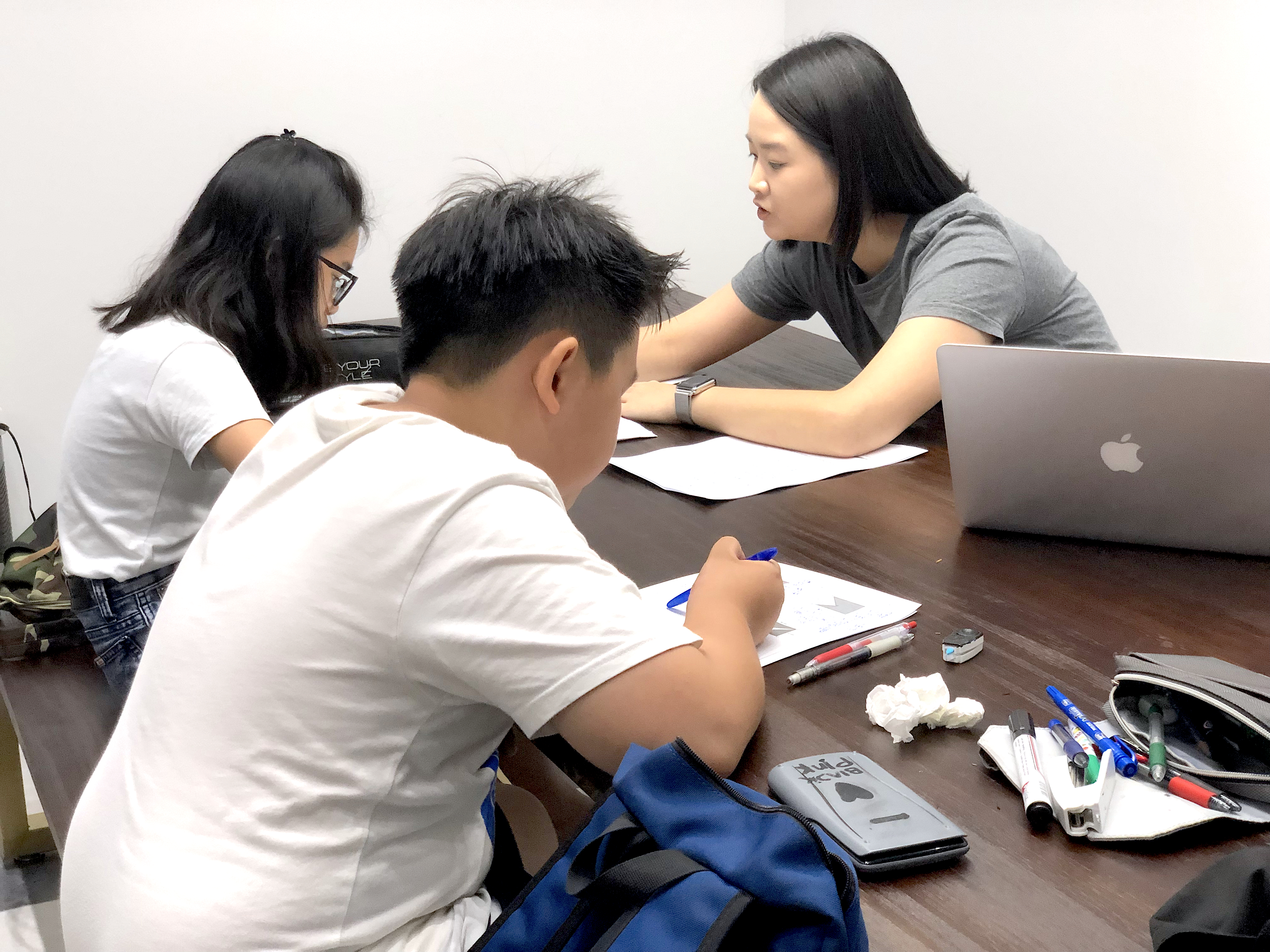
Existing photo archive
The following retained photographs and captions are archival. They do not establish current class sizes, locations, schedules or outcomes.




















Leave a Reply