

How to read this 2019 title: the URL/title “Yishun English Tuition Centre (Small Group Tutorials)” is retained for archive and search continuity. The rewritten page now owns the small-group tutorial method across Primary, Secondary and IP English; it should not be read as proof of a current physical branch, timetable, fee or class opening. Use the Yishun Tuition & Learning Guide for current information and the English Hub for curriculum routes.
Families searching for Yishun English Tuition Centre (Small Group Tutorials), English tuition Yishun, small-group English tuition Singapore, primary English tuition, secondary English tuition, IP English tutorials, writing, comprehension, grammar, vocabulary, oral communication and examination preparation are usually comparing class size, materials and schedules. A more useful question is how a small-group tutorial actually changes what the tutor can see, teach and transfer.
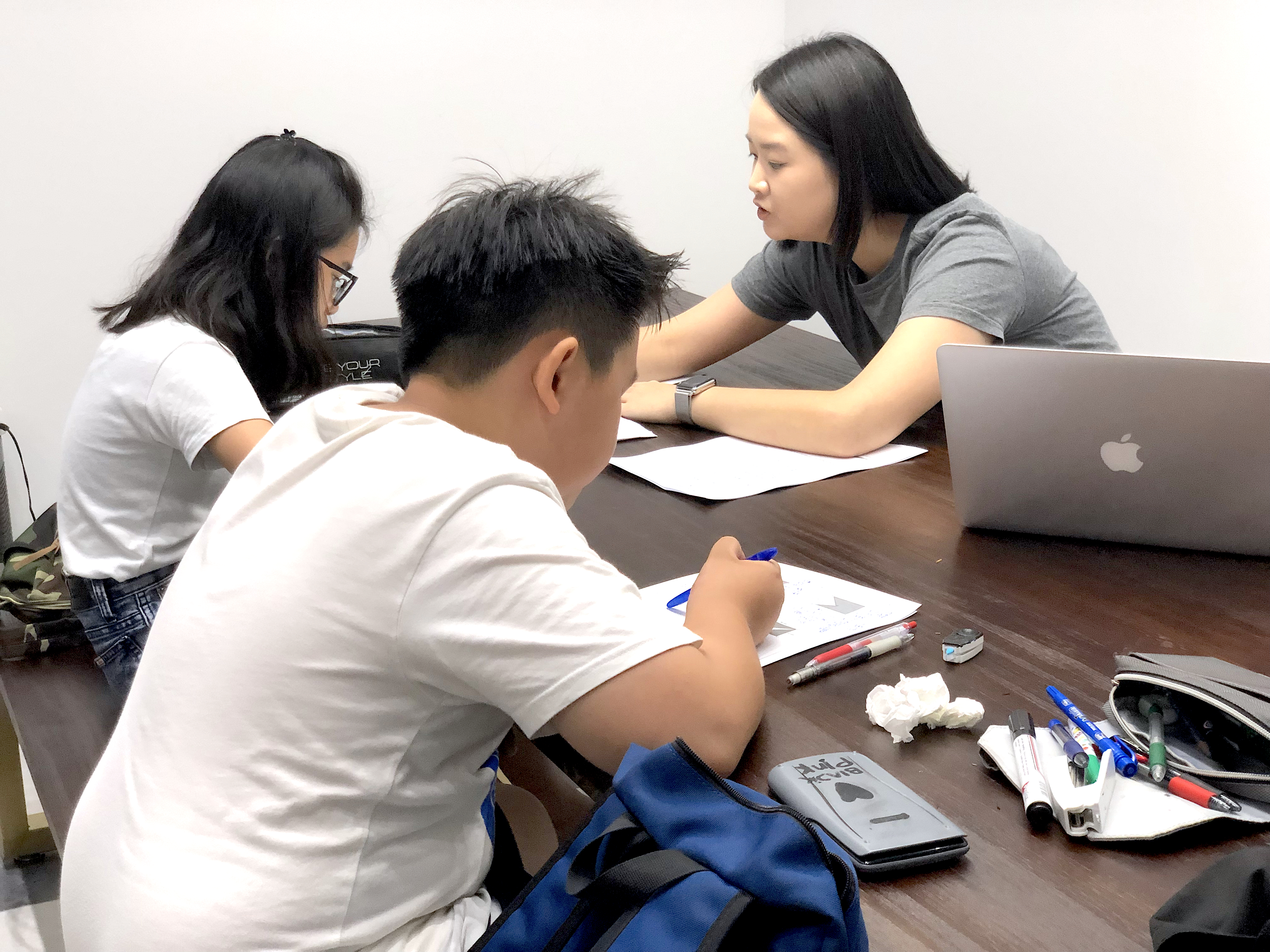
A strong Yishun English tuition centre using small-group tutorials should make reasoning visible. In a group of around three, every learner can read, explain, write, speak and revise during the lesson. One student may misunderstand question scope, another may select weak evidence, and another may know the method but fail to retrieve it under pressure. The tutor’s job is to diagnose those differences while preserving a shared learning conversation.
This page keeps its exact 2019 title, URL and full embedded-image sequence while replacing the legacy body with a current small-group tutorial engine. Its owner job is distinct from the Primary-only progression page and level-specific articles: this article explains the tutorial method itself across Primary, Secondary and IP learners—cold attempts, diagnosis, modelling, guided practice, prompt fading, transfer, retrieval, individual error maps, peer reasoning, timing and independent performance.
50-Second Router: What Kind of English Problem Is in the Room?

If a learner does not know the concept, teach it. If the learner knows it after a reminder but fails on new work, train transfer. If untimed work is strong and timed work collapses, train performance. If the answer is almost correct but vague, diagnose expression. If the student does not begin without help, diagnose task-management dependence.
A tutorial becomes efficient when it identifies the kind of problem before selecting the exercise.
Small Group Does Not Mean Small Lecture

A three-student class should not reproduce a large-class lecture with fewer chairs. Students should spend substantial time performing: reading, planning, explaining, revising and responding.
The tutor’s talk should shrink as the students’ visible decision-making grows.
Begin With a Cold Attempt
Before explaining a method, give a short unfamiliar task. The tutor watches what the student does without support.

A cold attempt reveals whether the first failure is task reading, evidence, reasoning, language, transfer or performance.
Diagnose the First Unstable Decision
A wrong final answer may be caused by a much earlier decision. The student may misread a qualifier, choose irrelevant evidence or skip planning.

The strongest tutorial feedback identifies the first unstable step because later corrections often depend on it.
Name the Learning Job Precisely
“Comprehension is weak” is too broad. “The student chooses evidence before identifying what the question asks” is teachable.

“Writing is weak” is broad. “The paragraph moves from claim to example without explaining the mechanism” is teachable.
Model Hidden Thinking
A tutor should not only show a correct answer. The tutor should reveal the sequence that produced it: what was noticed first, what was ignored, why one choice was better and what check confirmed the result.
This makes expertise visible enough for students to imitate and later internalise.
Keep Modelling Narrow
One model should usually teach one high-value mechanism. If the target is inference, focus on clue, bridge and conclusion. If the target is paragraph development, focus on claim, mechanism and support.
Narrow modelling reduces cognitive overload and makes transfer easier to test.

Guided Practice Should Preserve Student Thinking
Good guidance asks questions that direct attention without giving the answer. “What does the task require?” is stronger than “Look at paragraph three.”
The tutor should use the smallest prompt that allows the learner to continue productively.

Use a Prompt Hierarchy
- Open prompt — “What is your first job?”
- Category cue — “Check the scope.”
- Location cue — “Which sentence carries the reason?”
- Explicit model — tutor demonstrates the step.
The goal is to move students upward toward independence, not to keep supplying the same level of help forever.
Prompt Fading Is a Quality Metric

A method is not truly independent if it appears only after the tutor names it.
Track whether the student moves from modelled to guided to prompted to independent performance across weeks.
Require Immediate Retry

After feedback, the learner should produce the corrected answer, sentence or plan.
Listening to the tutor is not evidence of learning. The student must execute the repair.
Then Change the Surface

Use a fresh topic, passage or sentence that requires the same underlying method.
If performance collapses when the surface changes, the learner may have copied the original example rather than learned the mechanism.
Delay the Next Retrieval
Bring the method back after days or weeks without announcing it.

Delayed retrieval shows whether the skill is available beyond short-term memory.
Interleave Old and New Learning
Once individual skills are stable, mix them. A comprehension set can contain literal, inferential, language-effect and reference questions. Grammar work can mix several patterns.

The student must choose the method. Method selection is part of mastery.
Use an Error Taxonomy Across the Centre
- Knowledge — rule, word or concept is not known.
- Task — instruction, scope or purpose is misunderstood.
- Evidence — support is missing, excessive or irrelevant.
- Reasoning — conclusion does not follow from evidence.
- Expression — idea is correct but unclear or incomplete.
- Transfer — method is known but not recognised.
- Performance — time, fatigue or anxiety disrupts execution.

A shared taxonomy makes feedback precise while individual error maps remain personal.
Knowledge Errors Need Direct Teaching
If the student genuinely does not know the concept, teach it clearly, provide examples and check understanding.
Not every problem needs a discovery activity. Direct explanation is useful when knowledge is absent.

Task Errors Need Task-Reading Routines
Students should paraphrase the instruction, identify the target and state the required answer relationship before beginning.
This applies to Primary comprehension, Secondary writing prompts and advanced IP analytical tasks in age-appropriate forms.

Evidence Errors Need Selection Practice
Present several plausible pieces of support and ask which directly proves the response.
Students learn that evidence quality depends on relevance and explanatory power, not length.

Reasoning Errors Need Visible Bridges
Ask what the evidence actually shows before allowing the conclusion.
This same bridge improves inference, argumentative writing, literary analysis and oral discussion.
Expression Errors Need Rewrite Practice

Sometimes the reasoning is correct and the sentence is vague. Preserve the thinking and improve the expression.
Comparing two versions teaches precision without reteaching the whole concept.
Transfer Errors Need Variation

Change context, wording, genre or topic and reduce prompts.
The learner needs to recognise when the method applies rather than wait for the tutor to name it.
Performance Errors Need Simulation

If untimed work is strong, use micro-timing, section timing, stop rules and stamina practice.
The tutor should know whether the problem is speed, overchecking, emotional disruption or weak retrieval under pressure.
Small Groups Should Use Silent Think Time
Before anyone answers aloud, all students write or mark an individual response.

This protects independent evidence and prevents the fastest speaker from becoming the class answer source.
Rotate Roles
- Answerer — presents the response.
- Evidence checker — tests support.
- Reasoning checker — tests the bridge.
- Expression editor — improves clarity.
- Planner — explains the structure before writing.

Roles rotate so every learner develops the whole process.
Peer Comparison Should Be Narrow
Compare one feature at a time: which thesis is clearer, which evidence is more precise, which sentence expresses the intended relationship better.

Narrow comparison builds judgment without asking students to mark entire assignments they are not qualified to assess.
Keep Individual Error Maps
Shared discussion must not erase personal targets. One student may need inference, another sentence boundaries, another timed planning.
The tutor should be able to explain each learner’s current weak link even when the class is studying the same text.

Use Micro-Conferences
While two students work independently, the tutor can spend several minutes with the third on one high-value issue.
Rotating micro-conferences provide personal attention without fragmenting the lesson into unrelated one-to-one sessions.

Use Personalised Retrieval
At the start of class, each learner can receive one old item selected from the personal error map.
This keeps corrections alive across time and gives the tutor clean evidence of retention.

Use Individual Exit Tasks
End with a fresh short task completed alone.
The exit task answers the most important question: can the student use the lesson’s method without the group or tutor carrying the process?
Different Homework Can Follow the Same Lesson

One learner may need inference practice, another paragraph revision and another editing retrieval.
The personalised layer should remain purposeful and small rather than multiplying workload simply because differentiation is possible.
Primary Tutorials Need Developmental Scaffolding

Younger students require shorter tasks, more oral rehearsal and more concrete prompts.
The same tutorial engine still applies: observe, diagnose, model, guide, fade, transfer and retrieve.
Secondary Tutorials Need More Independent Method Selection
Older students should increasingly recognise scope, evidence, paragraph structure and language risks without labels.

Timing, stamina and recovery become more important as assessments become longer and higher stakes.
IP Tutorials Need More Open-Ended Judgment
Integrated Programme students may face school-specific English or Language Arts tasks that require close reading, analytical writing, argument and discussion.

Because IP curricula vary by school, tuition should use the student’s actual assignments and rubrics while building transferable reasoning rather than assuming one standard paper.
MOE Context for IP
MOE describes the Integrated Programme as a six-year pathway offering broader learning experiences, with students bypassing the O-Level examination and progressing toward qualifications that vary by school.

That wider structure makes independent reading, interpretation, writing and discussion especially valuable for IP tutorials.
Reading Tutorials Should Map Before Answering
Students can identify paragraph jobs, argument movement, reference and evidence before answering detailed questions.
The complexity changes by level, but structure helps readers reduce confusion across longer texts.

Writing Tutorials Should Separate Decisions
Do not always write a full essay. Some tutorials should isolate task analysis, thesis selection, paragraph development, evidence, revision or sentence control.
Component practice allows deeper feedback and more efficient correction.

Vocabulary Tutorials Should Use Live Texts
Select useful vocabulary from what students are already reading.
Discuss meaning, collocation, connotation and original use so vocabulary becomes productive.

Grammar Tutorials Should Use Authentic Sentences
The student’s own writing reveals whether grammar knowledge transfers into real communication.
Correct one recurring pattern, produce a fresh sentence and retrieve the same rule later inside mixed work.
Oral Tutorials Should Train Flexible Reasoning

Students should explain ideas, respond to follow-up and engage with another person’s point.
The tutor should reduce dependence on memorised scripts as students mature.
Listening Tutorials Should Train Recovery

Students need to follow main ideas and relevant details while recovering quickly after missing information.
Recovery becomes increasingly important as listening tasks become longer or more complex.
Timing Should Be Introduced for a Reason

Time a process only when accuracy is sufficiently stable.
Micro-timing can diagnose slow planning, over-copying or inefficient checking before full simulation is necessary.
Teach Stop Rules
When an older student is stuck, a stop rule protects the rest of the task.

The exact timing depends on level and assessment, but the general skill is knowing when continued effort on one item becomes unproductive.
Use School Work as External Transfer Evidence
Marked school assignments reveal whether methods taught in tuition survive a different context.

School and tuition should form one feedback loop rather than two disconnected workloads.
Use Monthly Error Reviews
Which errors have declined? Which remain? Which stable skills can move to maintenance?

A tutorial programme should change when the evidence changes.
Use Monthly Prompt Reviews
Which methods now appear independently? Which still need cues?
Prompt reduction often reveals real growth before a headline grade changes.
Use Success Analysis
When a student performs strongly, identify the decisions that protected the result.
Success becomes reproducible when the learner can name why it worked.

Build Compact Portfolios
Keep representative reading, writing and revision samples rather than every worksheet.
Portfolios make changes in reasoning, expression and independence visible over time.

A 90-Minute Small-Group Tutorial
- 10 minutes — individual retrieval.
- 15 minutes — cold task and diagnosis.
- 20 minutes — shared explicit teaching.
- 20 minutes — guided application with rotating roles.
- 20 minutes — individual transfer or writing.
- 5 minutes — exit task and error-map update.
The exact proportions change by age, but the logic remains: teach toward independent performance.
A Twelve-Week Tutorial Cycle

- Weeks 1–2 — diagnose and select priorities.
- Weeks 3–4 — teach the hidden mechanism.
- Weeks 5–6 — vary context and fade prompts.
- Weeks 7–8 — retrieve after delays and interleave.
- Weeks 9–10 — add age-appropriate complexity or timing.
- Weeks 11–12 — unseen transfer and next-cycle review.
The next cycle begins from whatever still fails independently.
Parent Updates Should Be Specific

A useful update states what is stable, what repeats, what prompt level remains and what the next priority is.
“Doing well” is less useful than “evidence selection is now independent; explanation remains vague under time”.
Students Should Know Their Current Target

A learner should increasingly be able to explain the active target without the tutor speaking first.
This self-diagnosis is a key sign that feedback has become self-management.
Protect Strong Skills
Stable skills should move into maintenance rather than consuming full lesson time forever.

This keeps the tutorial focused and prevents strong students from being bored by unnecessary repetition.
Protect Sustainable Workload
Homework should answer a learning question and remain compatible with school commitments and adequate rest.

More pages do not automatically produce more learning.
Questions Families Often Ask About Yishun English Tuition Centre Small Group Tutorials
Why small groups? Small groups allow high visibility, active participation and personal error maps while preserving useful peer reasoning.

Can primary, secondary and IP tutorials use the same method? The core tutorial engine can remain similar, but complexity, scaffolding, timing and text demands must change with age and school context.
How do we know tuition is working? Repeated errors decline, prompts reduce, methods transfer to unfamiliar work and the student can explain personal strengths and risks.
Should every learner receive identical homework? No. A small targeted individual task can follow shared teaching when error patterns differ.
What is the long-term goal? A student who increasingly carries the reading, writing, checking and recovery process without tutor direction.
Small-Group Centre Checklist
- Every learner makes an independent first attempt.
- The first unstable decision is diagnosed precisely.
- Tutors model hidden thinking.
- Corrections require retry.
- Fresh tasks test transfer.
- Old learning is retrieved after delays.
- Prompts are intentionally faded.
- Individual error maps remain separate.
- Peer comparison is narrow and purposeful.
- Independent performance occupies meaningful lesson time.
The Deeper Tutorial Goal: Make the Tutor Less Necessary
The most valuable outcome of Yishun English Tuition Centre (Small Group Tutorials) is not that students become excellent at working beside a tutor. It is that the tutorial process gradually moves inside the learner.
The student begins asking the tutor’s old questions independently: What is the task? What evidence matters? What relationship am I explaining? What error do I usually make? What is my next action if I am stuck?
For families comparing English tuition in Yishun, ask how the centre diagnoses, models, fades prompts, tests transfer and retrieves old learning. A strong small-group tutorial should leave every learner carrying more of the English process each month.

Worked Tutorial Case: Same Wrong Answer, Different Causes
Three students can miss the same comprehension question for different reasons. One may misread the question, another may choose weak evidence and a third may understand the passage but express the answer vaguely.
A small group allows these differences to become visible. The tutor can compare the mechanisms openly, then give each learner a fresh individual task that targets the actual weak link rather than the shared final score.
Worked Tutorial Case: Same Essay Topic, Different Planning Problems
One student may generate too many ideas, another may have only one weak point and a third may understand the topic but organise paragraphs badly.
The tutor can compare plans before any full writing begins. Shared discussion sharpens judgment, but each student revises a personal plan and later writes independently.
Worked Tutorial Case: Grammar Knowledge Without Transfer
A learner may explain a grammar rule correctly after the tutor names it and still miss the same issue in authentic writing.
The tutorial should switch from explanation to recognition and retrieval. Use mixed sentences, fresh writing and delayed practice so the student learns when to activate the rule without being told.
Worked Tutorial Case: Strong Untimed Work, Weak Timed Work
If a student performs strongly in ordinary lessons but drops sharply under time, the tutor should not automatically reteach the content.
Measure where the process breaks: planning, reading scope, evidence selection, drafting or checking. Then time that micro-process directly before returning to a full task.
Quality Assurance: Error Recurrence
Track whether the same error actually becomes less frequent across new work. If nothing changes after several lessons, the intervention should change.
The tutor may need more varied examples, stronger retrieval, a clearer model or less prompting. Repeating the same worksheet is not evidence-based teaching.
Quality Assurance: Prompt Reduction
A student should gradually move from explicit tutor modelling to guided questioning, then to one short cue, then to independent activation.
Prompt level often reveals progress more clearly than one test mark because it shows how much of the process the learner now carries alone.
Quality Assurance: Transfer
Change topic, text type, wording or timing and observe whether the method survives.
Transfer is confirmed when the student recognises the same underlying problem despite a different surface. That is what school assessments eventually require.
Quality Assurance: Retrieval
Bring old skills back after days or weeks without announcing them.
If the student can reconstruct the method, the learning is becoming durable. If not, the tutor knows the skill was understood temporarily but not yet stored strongly enough.
Use Portfolios Instead of Memory
Keep a small set of representative cold attempts, revised work and later transfer tasks.
Portfolios make prompt reduction, error decline and reasoning growth visible to the tutor, student and parent without creating an enormous archive.
Use Student Self-Diagnosis
Ask the learner to name the current risk before the tutor comments. A younger student may say, “I forget full stops.” An older student may say, “I choose evidence before checking scope.”
Accurate self-diagnosis is a major sign that correction has become self-management.
Use Parent Communication That Explains Mechanisms
Parents should hear what has changed, what still repeats and what the next teaching job is.
“Writing is improving” is vague. “Paragraph explanation now appears independently; sentence boundaries still become unstable under speed” is actionable.
Protect Skills That Are Already Strong
When a skill remains stable across fresh tasks, move it into maintenance rather than reteaching it at full intensity forever.
This prevents strong learners from wasting time and frees the tutorial to address the next real constraint.
Protect Sustainable Workload
Homework should answer a learning question: retrieval, transfer, revision, timing or wider reading.
A large volume of assisted work can create pages without creating independent evidence. The tutorial should value diagnostic usefulness over raw quantity.
Use Wider Reading Across Levels
Primary students need stories and age-appropriate factual texts; secondary and IP students benefit from broader articles, essays, speeches and reviews.
Wider reading builds vocabulary, background knowledge and familiarity with different forms. Not every text needs a worksheet.
Use Discussion Without Letting It Replace Writing
Discussion is valuable because it makes reasoning audible. But the final test is whether the student can produce the answer or paragraph alone.
Every shared explanation should eventually end in individual output.
Use Writing Without Letting It Replace Thinking
A full essay can hide the fact that the real weakness is one planning decision.
Some tutorials should stop at the thesis, paragraph plan or evidence map. Isolating the decision allows deeper correction and faster transfer.
Use Reading Without Letting It Become Answer Hunting
Students should build a model of the text before chasing question lines.
Paragraph jobs, argument movement, reference and tone provide structure that later makes evidence selection more efficient.
Use Vocabulary Without Chasing Rarity
Useful vocabulary increases precision. Rare vocabulary used unnaturally reduces clarity.
Tutors should teach meaning, collocation, connotation and degree so students choose words that fit rather than words that merely sound advanced.
Use Grammar as Sentence Engineering
Grammar is most powerful when students understand the relationship being expressed: time, cause, contrast, reference, agreement or condition.
This perspective helps rules transfer from drills into authentic writing.
Use Oral as Reasoning Practice
Oral responses reveal whether a student can form a position, explain it, support it and adapt to another angle.
This same reasoning supports writing and discussion. Oral should therefore remain part of English development beyond formal oral-exam preparation.
Use Listening as Attention Training
Listening tasks train students to track main ideas, transitions, corrections and relevant detail.
Recovery after a missed item is equally important: the learner must rejoin the current message instead of losing several later points.
A Monthly Tutorial Review
At month end, the tutor can review four things for each learner: current errors, prompt level, transfer evidence and the next priority.
The review should be short enough to influence the actual lesson plan. Administration is useful only when it changes teaching.
A Term-End Tutorial Review
At term end, compare representative work from the start and end of the period. What can the student now do independently that previously required tutor support?
This question captures the deeper value of tuition: not just more difficult work, but more student-owned performance.
A Cross-Level Handover
When a student moves from P6 to Secondary 1 or from lower secondary into upper secondary, the tutor should preserve the known error map and stable methods.
A new school level should add complexity, not erase useful learning history.
The Final Small-Group Tutorial Standard
A strong small-group tutorial should produce fewer repeated errors, fewer tutor prompts and stronger transfer to school work.
The class may remain small, but the most important change happens inside the learner: the student increasingly knows how to identify the task, select a method, check the result and recover when uncertain.
The Final Tutorial Independence Audit
Near the end of a cycle, give the student unfamiliar work without announcing the method. The exact task depends on level, but the questions are the same: can the learner identify what kind of problem is present, choose a reasonable strategy, make a serious attempt, check a personal risk and ask a precise question only after genuine effort?
This audit separates guided competence from independent competence. A learner who succeeds only after the tutor says “scope”, “evidence” or “plan first” has not yet fully internalised the routine. A learner who activates the process independently is carrying the tutorial inside.
The Tutor Should Know What to Stop Teaching Intensively
Good tuition is selective in both directions. It identifies what deserves more attention and what has become stable enough for lighter maintenance. This prevents the programme from treating every old weakness as permanently active.
For example, if sentence boundaries remain accurate across several pieces of unfamiliar writing, they can move to periodic retrieval while paragraph development becomes the new priority. Students see that improvement changes the programme, which makes progress tangible.
The Student Should Know the Current Weak Link
At the start of class, the learner should increasingly be able to state one current target without the tutor speaking first. “I am checking evidence before I answer.” “I am explaining examples instead of just giving them.” “I am watching tense when I write quickly.”
This simple habit turns feedback into self-management. The tutor can correct the student’s diagnosis if necessary, but the learner is no longer passive in the improvement process.
The Parent Should Be Able to See the Tutorial Logic
A useful parent update should make the tutorial architecture visible: what was diagnosed, what method was taught, whether the prompt reduced, whether the error declined and what will be tested next.
This is more informative than a list of worksheets completed. It shows that small-group tuition is a learning system with evidence, not simply extra practice time.
The Final Tutorial Principle
The strongest Yishun small-group tutorial should become quieter over time. Students should spend more time reading, reasoning, writing, checking and recovering on their own while the tutor intervenes where the evidence shows a genuine need.
That reduction in tutor dependence is not less teaching. It is the result of successful teaching. The learner has internalised enough of the process to carry it into schoolwork, assessments and unfamiliar tasks without waiting for external direction.
A Final Worked Example: When the Tutor Says Less
At the beginning of a teaching cycle, a student may need the tutor to model how to read the task, identify the evidence and build the response. Several weeks later, the same learner may only need one short cue. Eventually, the student should recognise the task and begin independently. The visible reduction in tutor language is one of the clearest signs that the method has transferred.
The same pattern appears in writing. A student may first need a full planning conversation, then a checklist, then a one-word reminder, then nothing. The goal is not to remove support quickly; it is to remove support exactly when the learner can carry the decision without it.
The Final Centre Quality Check
Before calling a tutorial cycle complete, the centre should be able to answer five questions: What was the first unstable decision? What method repaired it? Did the repeated error decline? Did the prompt reduce? Did the method transfer to unfamiliar work? If any answer remains unclear, the cycle is not finished.
This discipline protects the centre from confusing activity with progress. More worksheets, more essays and more marked pages are useful only when they change the student’s independent performance.
The Durable Outcome of Small-Group Tutorials
The long-term outcome is a learner who can enter unfamiliar English work, identify the job, choose a method, attempt it, check personal risks and recover when uncertainty appears. The exact English task may change from Primary to Secondary to IP, but the operating habit remains recognisable.
That is what a strong Yishun English Tuition Centre (Small Group Tutorials) should leave behind: visible reasoning, precise diagnosis, personal transfer and steadily decreasing dependence on tutor direction.
For families, the closing test is whether the student can use the same English method away from the tuition table. If the learner can recognise the task, explain the reasoning, revise the response and recover after difficulty without waiting for a tutor cue, the small-group process has become genuine independence. The centre should be able to show this change with cold attempts, revised work, prompt history and fresh transfer tasks rather than relying only on impressions or completed pages. That evidence is what makes small-group tutorials durable rather than merely intensive. That is durable progress. That is durable progress. That is durable progress. That is durable progress. That is durable progress. That is durable progress. That is durable progress. That is durable progress. That is durable progress. That is durable progress. That is durable progress. That is durable progress. That is durable progress.
Leave a Reply