

Punggol English tuition for IP Year 2 should help students connect ideas across texts rather than produce two separate summaries. Critical reading, comparative writing, comprehension, Language Arts, vocabulary and early argumentation become more useful when a learner can identify a shared issue, explain a meaningful difference and support a considered conclusion. This guide develops those decisions through original passages, worked comparisons and practical revision tasks.
Year 2 IP English tuition should also address the student who reads each passage accurately but becomes uncertain when asked to compare, synthesise or evaluate. The difficulty may not be a shortage of knowledge. It may be that the learner has never been shown how to organise several sources around one question. We teach the movement from individual understanding to a connected response without turning every paragraph into a rigid formula.
For Punggol families considering small-group English classes, Secondary 2 English support or IP English and Language Arts preparation, this article offers a concrete way to inspect the learning. It belongs to the eduKateYishun English learning library. The examples are teaching material, not claims about a particular school’s assessment, and present lesson arrangements should be confirmed directly rather than inferred from historical photographs.
Choose a route in fifty seconds
Two passages become two disconnected summaries: begin with the comparison question and the worked comparative paragraph. Look for the relationship between ideas.
The student overstates what a source proves: use the original source pack and the evidence limits. Keep observation, opinion and proposal separate.
Literary comparison feels mysterious: read the paired literary scenes and their analysis. Compare a common question, not random technique names.
Writing sounds repetitive: go to paragraph organisation, sentence control and the revision checklist.
The family wants a study plan: begin with the four-week teaching route and the Year 3 readiness check. Select one weakness rather than attempting every exercise at once.
Match the method to the actual task
The MOE description of IP notes that programmes differ across schools. Use the student’s actual instructions and rubric to decide which comparison, writing or reading skill needs attention. A familiar course label does not supply the task requirements.
IP and SAP are not interchangeable labels for one English syllabus. The distinction is explained in Catholic High’s account of its SAP programme and in our IP English consultation guide. For teaching purposes, the assignment in front of the learner remains the most useful starting point.
A comparative literature response, a summary of several sources and an argumentative essay do not ask the same thing. The first may examine how writers present an experience. The second may ask for a concise account of relevant ideas. The third may require the student’s own reasoned position. Teach the difference before providing a paragraph framework.
Ask what the finished response must establish. “Explain how both writers present change” gives a different organising question from “Which proposal is more practical?” Students can reuse careful reading and evidence selection across both tasks, but they should not reuse the same conclusion or structure without checking the purpose.
Where Year 2 work can become unstable
Use a pair of short texts and ask the learner to summarise each in one sentence. If either summary is inaccurate, begin there. Comparative writing cannot repair a misread source. If both summaries are accurate, ask for one important agreement and one important difference.
Some students list surface features: both texts mention students; one is longer; one uses a quotation. These observations may be true but not relevant to the question. They need help choosing a basis for comparison. Others identify a meaningful difference but cannot explain why it matters. Their next target is significance.
Another pattern is treating every difference as disagreement. Two writers may support the same goal while addressing different obstacles. A source concerned with quiet study and another concerned with access may be complementary rather than directly opposed. Teach the learner to identify the claim each writer is actually making.
Finally, inspect the student’s own writing. Does one paragraph discuss the first source and the next discuss the second, without a relationship being drawn? That structure can become a pair of summaries rather than a comparison. The repair is to organise around a shared question or criterion, not simply add the word “however” between unrelated paragraphs.
Original source pack: How should a school library serve its users?
All three sources below are fictional teaching texts. The people, committee and figures are invented for practice. They should not be cited as research about real schools or libraries.
Source A: a student committee proposal. The library should allow quiet group discussion at three designated tables during lunch. Students working on shared projects need somewhere to compare evidence without competing with canteen noise. In an informal poll of forty students who volunteered to respond, twenty-six supported the idea. We suggest a four-week trial, with groups booking a table and returning it to silent study use after lunch. The proposal does not call for discussion throughout the whole library. Its purpose is to create a small, supervised area where collaboration can happen without excluding individual readers.
Source B: a response from a regular library user. The proposed tables stand near the only power points used by students studying alone. Even quiet discussion may make concentration harder for someone completing a reading task. I do not object to group work, but the location matters. A separate room would be preferable, provided it is available and accessible. A trial should record the experience of students who stop using the area as well as those who book it. Otherwise, the library may count successful group bookings while overlooking the individual readers who have quietly moved elsewhere.
Source C: a staff planning note. The separate room suggested by students is used for small lessons on two lunch periods each week. It cannot be promised as a permanent group-work room. The library could test movable dividers around two tables on the remaining days. Any trial would need a clear noise expectation, a way for users to report problems and a review of whether the arrangement serves both group and individual study. No decision has been made about continuing the arrangement beyond the trial.
Read the sources first without deciding which person is correct. Identify each writer’s proposal or concern. The immediate job is accurate representation. A judgement can be formed only after the positions and practical constraints are understood.
Map claims, reasons and conditions
Source A proposes a limited discussion area. Its main reason is that project groups need a suitable place to compare evidence. Its conditions include designated tables, booking and a trial period. A summary that says “Source A wants a noisy library” misrepresents the proposal before comparison even begins.
Source B raises a concern about location and displaced users. It explicitly does not reject group work in principle. The writer’s objection concerns the effect on individual study and the way success might be measured. This distinction matters because it leaves room for a revised arrangement.
Source C adds an implementation constraint: the separate room is not always available. It also proposes another option, movable dividers on selected days. The source is not proof that the option will work. It is a planning note about what could be tested.
A useful reading grid has four headings: main claim, reason, condition and unresolved question. Write brief notes rather than copying sentences. The grid helps the learner see that a source can support a goal while qualifying its implementation. It also prevents a suggestion from being transformed accidentally into an established result.
Compare the same thing in both sources
A meaningful comparison needs a common basis. For Sources A and B, one basis is the purpose of the library. Both value a place that supports learning, but they emphasise different users and possible costs. Another basis is the design of a trial. Both accept testing an arrangement, but Source B asks for attention to people who might leave rather than participate.
Do not compare Source A’s survey with Source B’s writing style unless the question asks about evidence or presentation. A comparison of unrelated features produces a sentence that sounds balanced while explaining little. The student should be able to state the common question in a few words: who benefits, what could go wrong, or how should success be judged?
Use precise relational verbs. The sources may agree, differ, qualify, extend or challenge one another. “Contradicts” is too strong when one source merely adds a condition. “Supports” is too strong when two writers mention the same topic but reach different conclusions.
A useful practice sentence is: “Both sources support learning in the library, but Source A prioritises a controlled opportunity for group work, whereas Source B asks how that opportunity can avoid displacing individual readers.” The difference is located inside a shared concern, not presented as a contest between good and bad people.
A comparative paragraph with a clear purpose
Weak attempt: Source A talks about the library and Source B also talks about the library. Source A has a poll and Source B has an opinion. They are different because Source A likes group work but Source B dislikes it. Therefore, they have different perspectives.
The paragraph contains surface observations and one inaccurate claim. Source B explicitly does not oppose group work. The final sentence repeats the existence of a difference without explaining its significance.
Revised paragraph: Both writers want the library to support students’ learning, but they judge the proposed discussion area from different positions. Source A sees designated tables as a way for project groups to work without relying on the canteen. Source B accepts that purpose but questions whether the chosen location would push individual readers away from a useful study area. The disagreement is therefore mainly about how to share limited space, not whether collaboration has value. A trial would need to examine both the groups who use the tables and the readers whose access changes.
The revised version begins with a shared issue, represents each source accurately and explains why the difference matters. Its final sentence follows from the comparison rather than merely announcing that views differ.
For independent practice, compare Sources B and C on the separate-room suggestion. The learner should notice that Source C adds a scheduling constraint to Source B’s preferred option. This is qualification through practical information, not necessarily a rejection of the underlying concern.
Synthesis builds an answer across sources
Synthesis is not copying the best sentence from each source into one paragraph. It means bringing relevant ideas together to answer a question that crosses the texts. For this pack, ask: “What conditions would make a library discussion trial worth attempting?”
A useful answer draws the purpose from Source A, the concern about individual readers from Source B and the implementation constraints from Source C. It might conclude that the trial needs a bounded space, suitable timing, clear expectations and feedback from affected non-participants as well as participants.
Notice that no source alone supplies the whole answer in that form. The response combines ideas while keeping their origins and limits clear. It should not claim that movable dividers have been shown to solve the problem, because Source C only proposes testing them.
Organise notes by issue rather than by source. Under “access”, place Source A’s group-work need beside Source B’s concern about power points and displacement. Under “feasibility”, place the room schedule from Source C. This arrangement makes connections visible before writing begins.
A useful self-check is to remove one source mentally. Would the answer lose an important condition or distinction? If not, the source may have been mentioned decoratively rather than used. Synthesis should change the response, not merely increase the number of source names in it.
A summary must preserve the important relationships
For an original exercise, summarise the main conditions and concerns in the source pack in no more than eighty words. This is a practice limit, not an official examination requirement. Do not add a personal recommendation unless the task asks for one.
One possible response is: “Students propose a limited trial of group discussion tables. A regular user warns that the location may disrupt individual study and that feedback should include displaced readers. A separate room is not consistently available, so staff suggest testing dividers on selected days, with noise expectations and a review of effects on both groups and individuals.”
The summary preserves the limited trial, the concern about displaced users, the unavailable room and the conditional alternative. It removes illustrative detail such as the canteen comparison because the task focuses on conditions and concerns.
A poor summary might say, “Students voted to make the library a discussion area, but staff rejected the plan.” That version changes an informal voluntary poll into a decision and a planning constraint into a rejection. Shortness has been achieved by distorting meaning.
When revising, ask which relationships survived: proposal versus decision, concern versus opposition, and trial versus proven solution. Those distinctions are often more important than retaining every noun from the original sentences.
Evidence can be useful without proving everything
The informal poll in Source A gives information about forty volunteers. Twenty-six supported the idea. It does not establish the views of every student, because the respondents selected themselves and the pack provides no evidence that they represent the whole school.
That limitation does not make the poll worthless. It may show that some students are interested in trying the arrangement. A proportionate claim is, “The poll suggests support among the students who chose to respond.” A disproportionate claim is, “The poll proves the school wants discussion tables.”
Source B’s experience is also relevant without being universal. A regular user may notice a problem with the location that the committee overlooked. However, the response does not measure how many students would be affected. The right question is what the evidence helps us see and what remains uncertain.
Teach students to avoid the all-or-nothing choice between “reliable” and “biased”. Sources can be informative about one aspect and limited in another. Good evaluation identifies that boundary. It does not reward automatic suspicion of every personal account or automatic trust in every number.
Tone and wording shape the reader’s response
Compare “create a small, supervised area” with “turn the library into a talking space”. Both might refer to the same proposed change, but they direct attention differently. The first stresses boundaries and management. The second may make the change sound broader and less controlled.
A language analysis should identify that difference and connect it to purpose. Do not simply write, “The word supervised is persuasive.” Explain that it anticipates concern about disorder and presents the proposal as manageable. The effect depends on the issue readers may worry about.
Source B’s phrase “quietly moved elsewhere” is also significant. It suggests that a negative effect might remain unnoticed if the trial records only bookings. The wording draws attention to an absence that ordinary participation counts would miss. This is more precise than saying the phrase creates imagery.
For a writing task, ask the student to rewrite a headline for three purposes: a neutral report, a supportive proposal and a cautious response. The underlying facts must remain unchanged. The exercise makes tone a matter of selection and emphasis rather than permission to exaggerate or invent evidence.
Words for relationships between ideas
Build a working vocabulary that helps the learner describe reasoning. “Qualify” means limit or refine a claim, not simply disagree. “Corroborate” means provide supporting evidence, not repeat an opinion. “Feasible” concerns whether something can be carried out under relevant conditions; it is not identical to desirable.
Use the source pack to test each distinction. Source C qualifies the separate-room suggestion by showing that the room has competing uses. It does not corroborate the claim that dividers will solve the problem, because no results are given. A plan can be desirable for group work yet difficult to implement every day.
Add “tentative”, “representative”, “displaced”, “proportionate” and “criterion” only when their meaning is useful. A criterion is a standard used to judge something. In this case, noise, access and scheduling could be criteria for reviewing the trial.
For each word, create a correct sentence and a near-miss sentence. Explain the error in the near-miss. This requires the learner to control meaning rather than merely recognise a definition. In subsequent writing, reward accurate use of a small vocabulary before asking for more advanced terminology.
Make comparison grammatically clear
A comparative sentence must keep its parts parallel enough for the reader to follow. “Source A supports discussion, whereas Source B the location” is incomplete. A clear revision is, “Source A supports designated discussion tables, whereas Source B questions their location.” Each clause now has a subject, a verb and a clear object.
Another problem is a dangling reference: “This is different because they do not agree.” What is different, and who are they? Name the relationship: “The writers differ over how the trial should account for individual readers.” Precision often means replacing a vague pronoun with the actual issue.
Avoid placing contradictory claims in neighbouring sentences without explaining the distinction. “Source B opposes the plan. Source B supports group work.” The relationship becomes clearer as: “Source B accepts the value of group work but questions whether the proposed location protects individual study.”
Practise the connectors while respecting their meanings. “Similarly” signals a relevant likeness; “however” signals a contrast or qualification; “therefore” signals a conclusion. None of them creates the relationship by itself. Ask the learner to explain the connection in plain language before choosing the connector.
Paired literary scenes: leaving a familiar place
The following two micro-scenes are original teaching texts. They present a similar event through different details and attitudes.
Scene A. Ben closed the gate and tested the latch twice. The garden behind it had belonged to his family for as long as he could remember. A new key waited in his pocket, bright enough to look unfinished. He kept his hand around the old one until his sister called from the van. Then he placed it beneath the flowerpot, exactly where their father always left it.
Scene B. Imani reached the new flat before the movers. She opened every window, letting the empty rooms fill with traffic and distant conversation. Her mother began to apologise for the smaller balcony, but Imani was already measuring the wall with her footsteps. “The bookshelf could go here,” she said. On the floor, the unopened boxes looked less like baggage than possibilities.
Ask a common question: how do the writers present the experience of moving? Do not begin by listing that both scenes have family members or that one has a garden. Those features become useful only when connected to an interpretation of the experience.
Compare attitude through selected detail
Ben’s repeated checking of the latch and his continued hold on the old key suggest reluctance to detach from the familiar place. The new key appears “unfinished”, a description that can imply his lack of emotional connection to the new home. Returning the old key to its customary place preserves a family habit at the moment of departure.
Imani, by contrast, acts on the new space immediately. Opening windows and measuring a wall suggest an active readiness to inhabit it. The final comparison of boxes with “possibilities” presents the move through future use rather than loss. Her mother’s apology introduces a potential disadvantage, but Imani’s response directs attention elsewhere.
A comparative claim might be: “Both scenes connect moving to family experience, but Ben’s actions preserve continuity with the home he is leaving, while Imani’s actions begin creating a relationship with the new space.” The explanation should then select details from each scene to develop that distinction.
Do not overstate the contrast as “Ben hates moving and Imani has no attachment to her old home”. Neither claim is established. Ben may feel mixed emotions, and Scene B says little about Imani’s previous home. Literary comparison should preserve complexity rather than force characters into opposite labels for the convenience of a paragraph.
Point of view changes what the reader can know
The scenes give access to some actions and perceptions, but they do not provide a complete record of every character’s thoughts. A reader should distinguish what is narrated from what is inferred. Ben’s hand around the key supports an interpretation; it does not quote a statement that he refuses to move.
For a writing exercise, retell Scene B from the mother’s perspective. She may notice the smaller balcony, the cost of the move or her child’s energetic response. The writer must decide what this narrator can observe and what she cannot know without being told.
Then compare the original and rewritten versions. Which details become central? Does the new version change the tone? Does it reveal a concern that the first scene leaves in the background? These questions show how viewpoint is a selection of access and attention, not merely a switch from “she” to “I”.
This exercise also strengthens reading discipline. A learner who has tried controlling a narrator’s knowledge is better positioned to ask whether a text establishes a motive or leaves it uncertain. Writing becomes a way to test an interpretive principle from the other side.
Build paragraphs around ideas, not source order
A long response can become repetitive when each paragraph retells a source from beginning to end. Instead, choose the main questions the response needs to answer. For the library issue, those might concern purpose, access and implementation. For the literary scenes, they might concern attachment, action and the presentation of the future.
Write a one-sentence job for each paragraph before drafting. “Explain why the writers differ over measuring success” is a useful job. “Write about Source B” is too broad. The first gives a standard for selecting evidence; the second encourages a summary of everything the source contains.
Paragraphs also need a relationship with one another. A discussion of purpose can establish why a change is desirable; a discussion of access can identify who may lose out; a discussion of implementation can show how the plan might respond to that concern. The order creates an argument rather than a list.
After drafting, read only the first and last sentence of each paragraph. Can the response’s direction still be followed? If not, revise the paragraph jobs before polishing individual phrases. Clear organisation makes the reader’s task easier without reducing the complexity of the ideas.
Move from comparison to a reasoned position
A comparison can inform an argument, but the writer must take responsibility for the conclusion. For the library proposal, a student might support a limited trial while insisting on feedback from both participating groups and affected individual users. That position uses the sources without surrendering judgement to any one writer.
Explain the criterion behind the position. A school library arrangement should be judged by how well it supports different legitimate study needs within its practical limits. This criterion makes it possible to weigh a benefit against a cost rather than simply count the number of supportive sources.
A counterargument should be substantial. Someone may say that any discussion damages the library’s quiet function. A response could accept the importance of quiet while distinguishing a bounded trial from a permanent change throughout the building. The argument would then need evidence from the trial before recommending continuation.
Avoid false balance. Considering more than one view does not require pretending every claim is equally strong. It requires representing a view fairly, identifying its evidence and explaining why a conclusion follows. The student should be able to say what additional information would change that conclusion.
A source notebook should preserve provenance
When using real reading material beyond these invented exercises, record where a claim came from. Keep the author or organisation, publication date, title and a route back to the original source. Note whether the text reports research, describes an experience, advances an opinion or announces a proposal.
Separate a quotation from a paraphrase. A quotation uses the original words and needs accurate attribution. A paraphrase restates the idea in new language without changing its meaning. The student’s own inference should be marked as their reasoning rather than quietly attributed to the source.
Also record limits. A survey may concern one group, an example may come from another country, and an older report may not describe the current situation. These details need not make an essay cumbersome. They help the student select examples that actually fit the claim being made.
Do not keep a notebook of impressive statistics without context. An unexplained number is difficult to use responsibly. A smaller collection of well-understood examples is more valuable than a long list that cannot be checked or adapted. Follow school rules on permitted assistance and acknowledge sources in the format the task requires.
Discussion as a test of fair representation
Before giving an opinion, ask the learner to state the strongest concern in another person’s view. For the library proposal: “The concern is not that students should never collaborate; it is that the trial may overlook readers whose study space becomes less usable.” This prevents the discussion from attacking an exaggerated version of the objection.
Then invite a response with a reason and a condition. “I would support testing the tables, provided the review includes students who avoid the area during the trial.” The answer becomes more precise because it has listened to the concern rather than merely repeated a preference.
A useful small-group routine gives each student a different responsibility: summarise a claim, identify a limitation or propose a condition for a decision. Rotate the roles so one learner does not always speak while another always takes notes. Begin with individual preparation to keep the discussion from concealing differences in understanding.
The final task should be individual writing on a new issue. Group discussion has served its purpose when it improves the student’s independent reasoning, not when everyone reproduces the same sentence from the strongest speaker.
A revision checklist for connected writing
Read the question again before editing the paragraph. Identify the common basis of comparison. Check that both sources are represented accurately and that the selected evidence addresses that basis. A sentence about one writer’s tone cannot automatically be matched with an unrelated sentence about another writer’s evidence.
Next, inspect the relationship words. Are the sources contradicting one another, or is one adding a condition? Is a conclusion actually supported, or has “therefore” been used to hide a leap? Replace vague statements such as “they have different perspectives” with the actual difference.
Then check scope. Words such as all, always, proves and completely may exceed the evidence. Do not remove them mechanically; ask whether the source justifies their strength. A precise qualification can improve an argument rather than weaken it.
Finally, inspect sentence boundaries, pronouns and repeated wording. Read a difficult sentence aloud and identify its subject and main verb. If the reader must guess who believes or proposes something, name the actor. Editing is successful when the response becomes easier to follow while keeping its important distinctions intact.
A four-week teaching route
Week 1: accurate representation. Use two short sources on a shared issue. The student identifies each main claim, supporting reason and condition. Correction focuses on misrepresentation before style. A suitable end task asks the learner to distinguish a proposal from a result in an unfamiliar text.
Week 2: meaningful comparison. Select one common basis and write a short comparison. Require evidence from both texts and an explanation of significance. Change the source pair for the independent task so the student cannot simply reuse the first contrast.
Week 3: synthesis and writing. Use three sources to answer a question that crosses them. Organise notes by issue. Produce a concise summary and then a separate recommendation, keeping source reporting and personal judgement distinct. Compare the two products to see how purpose changes selection.
Week 4: independent transfer. Present a fresh source pack with fewer prompts. Ask the learner to plan, write and review. Include an oral question that tests whether they can represent an opposing view fairly. Compare this work with the first week and note any assistance still required.
The route is adjustable. A learner who misreads sources needs more work in the first stage. A learner already comparing accurately may need deeper attention to evidence limits or literary method. Progress is not measured by how quickly the calendar boxes are filled; it is measured by the quality of the decisions the learner can now make.
Three independent transfer exercises
Exercise 1: change the issue. Write two short views about a proposed school exhibition. One writer wants every class to contribute; the other supports the exhibition but worries about workload. Identify whether the disagreement concerns the event’s value, its scale or its timing. A strong answer will not assume that raising a concern means opposing the entire idea.
Exercise 2: change the evidence. Imagine a voluntary poll supports an idea, but attendance at a small trial is low. List at least two possible explanations before reaching a conclusion. Students may like the idea but be unavailable at the chosen time; the poll may also have attracted unusually enthusiastic respondents. State what further information would distinguish the explanations.
Exercise 3: change the literary direction. Write two scenes about receiving help. In one, the character feels relieved; in the other, the character feels embarrassed despite appreciating the offer. Compare the selected actions and dialogue. Do not simply insert the emotion words. Give the reader evidence through which the feelings can be inferred.
For each exercise, the learner should explain one choice in the final response. The explanation might concern a qualification, a quotation or the order of ideas. This brief reflection helps reveal whether the work was constructed deliberately or produced by imitating a familiar template.
What readiness for Year 3 can look like
A useful readiness check asks whether the student can represent two views accurately, compare them on a relevant basis, distinguish evidence from assertion and write a connected paragraph without extensive prompting. These capabilities provide a firmer foundation for more demanding argument than simply introducing harder topics earlier.
Use comparable unfamiliar work to inspect progress. An improved score on an easier passage is not the same evidence as stronger reasoning on a similar challenge. Record whether the student selected the evidence, planned the relationship and completed the revision independently.
The next stage should develop the student’s judgement: how strong is this reason, what would challenge it, and under which conditions does the conclusion hold? Continue to the Year 3 argument and evaluation guide when comparison and synthesis are becoming dependable. Return to the Year 1 close-reading guide for a targeted repair rather than treating a foundation gap as a reason to restart everything.
Questions from Year 2 families
Is comparison just finding similarities and differences?
That is the starting point, but a useful answer chooses differences relevant to the question and explains their significance. Both sources mentioning a library is less useful than explaining how they judge its purpose or users differently. The basis of comparison gives the paragraph direction. Without it, the answer may become a collection of unrelated observations.
Can a personal account be useful evidence?
Yes, for what it can reasonably establish. A personal account may reveal an experience or practical concern that deserves attention. It does not automatically show how common that experience is. Teach the learner to use the account proportionately rather than either dismiss it as mere opinion or generalise it to everyone.
Should a student use many quotations?
Use enough evidence to support the response, but select rather than accumulate. A short, well-explained quotation can be more useful than several long extracts. The student’s own reasoning must connect the wording to the claim. Follow the particular task’s instructions about quotation and paraphrase rather than imposing one rule on every assignment.
How can parents help with writing without doing it?
Ask the learner to state the paragraph’s job and explain how one detail supports it. Point out a place where the meaning is unclear and let the student attempt a revision. Avoid supplying every improved sentence. The aim is to make the learner’s reasoning visible and to help them recognise a decision they can later make alone.
Does every IP Year 2 learner need tuition?
No. A student who is managing school tasks, reading thoughtfully and using feedback independently may need only selected practice or occasional guidance. Additional support becomes useful when a recurring difficulty is identifiable and a clear intervention can address it. Suitability should consider school demands, existing workload and the learner’s response to the proposed teaching.
Keep the learning connected
For diagnosis and a discussion of support, use the small-group IP English consultation guide. For related reading, return to the Secondary English directory or the main English Tuition and Learning Hub. Confirm current class arrangements directly through the site rather than using archival captions as present service information.
The Year 2 goal is a student who can hold more than one idea accurately, find a meaningful relationship and communicate what follows. That capability matters beyond any one comparative paragraph. It gives the learner a way to listen fairly, read critically and revise a judgement when new information changes the picture.
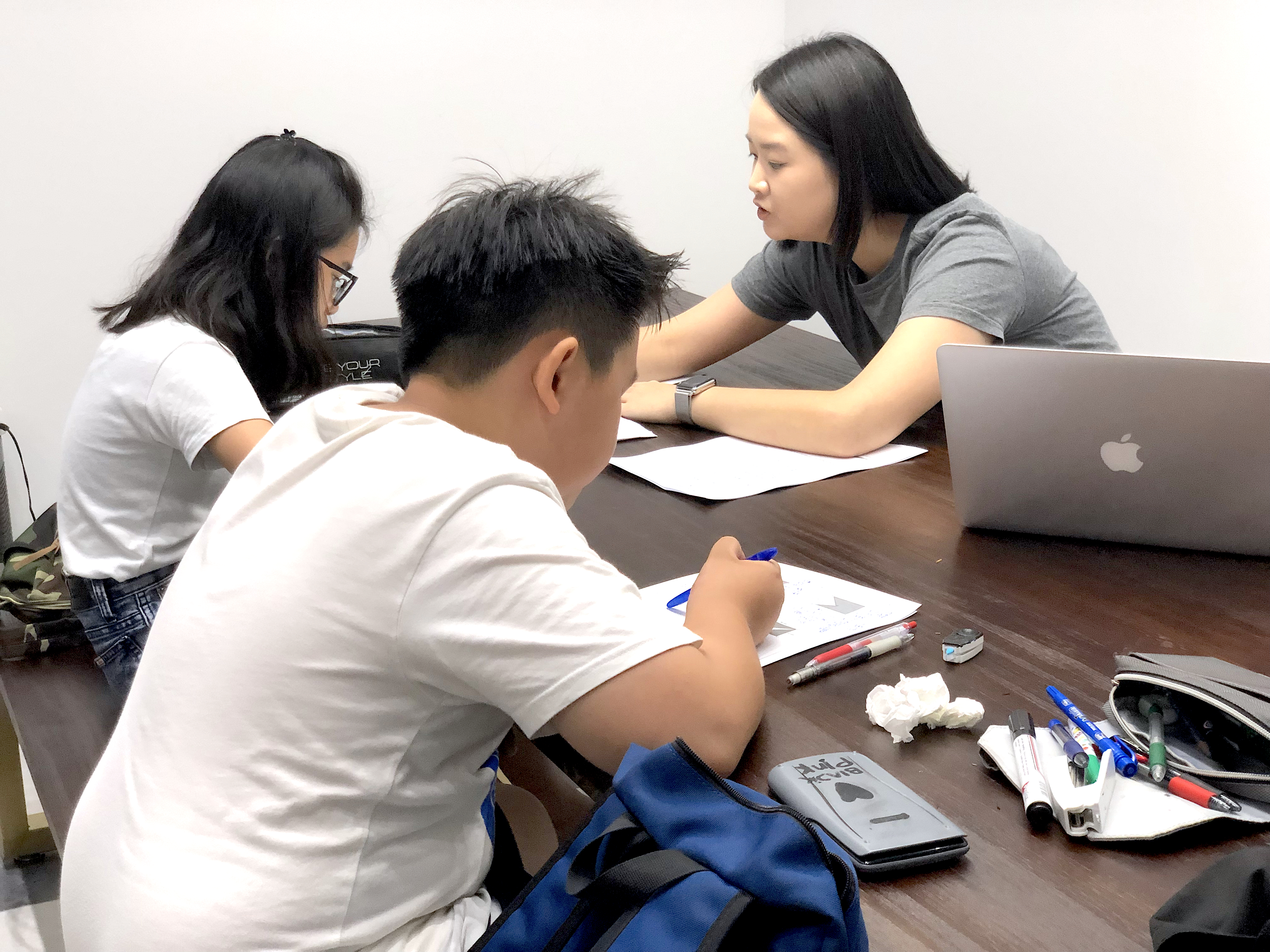
Existing photo archive
The following retained photographs and captions are archival. They do not establish current class sizes, locations, schedules or outcomes.




















Leave a Reply