

Punggol English Tuition Centre (Secondary 2) should help a student edit by making decisions, not by hunting randomly for errors. Families searching for Secondary 2 English tuition in Punggol, Sec 2 English tutor, grammar, editing, comprehension, summary, writing, vocabulary or small-group English tuition often see students who can correct a sentence after the tutor points to the error but struggle to detect, classify and repair the same problem independently inside mixed writing.
Secondary 2 is therefore the right year to build an editing decision hierarchy. The student learns to detect a possible problem, classify the error family, repair the sentence, explain why the repair works and then prove the correction on fresh work. This turns editing from “something looks wrong” into a repeatable reasoning process.
This page owns one learning job: detect → classify → repair → explain → retest. It complements other Secondary 2 pages on command decoding, lexical precision and text architecture. Here, the focus is mixed-language self-correction.
Editing Is Not Proofreading Alone
Proofreading may catch surface slips.
Editing asks deeper questions:
- Is the sentence complete?
- Does the grammar match the meaning?
- Is the reference clear?
- Does the word form fit?
- Is the register appropriate?
The Editing Hierarchy
- Meaning: does the sentence say what is intended?
- Structure: is the sentence complete and correctly joined?
- Grammar: tense, agreement, reference, forms.
- Word choice: precision and collocation.
- Mechanics: punctuation, spelling, capitals.
Higher-level errors often matter more than surface polish.
Detect
Students need cues that something may be wrong.
Useful detection signals:
- sentence sounds unfinished;
- verb timeline changes;
- pronoun has two possible referents;
- word form looks wrong after a linking verb;
- two complete thoughts are joined only by a comma.
Classify
Do not stop at “grammar mistake”.
Name the family:
- tense;
- agreement;
- pronoun reference;
- fragment;
- run-on;
- word form;
- article/preposition;
- collocation.
Repair
Fix the specific mechanism.
Example:
Error family: pronoun reference.
Repair: repeat the noun because two possible antecedents exist.
Explain
Ask:
Why is the new version correct?
If the student cannot explain, the repair may be accidental.
Retest
Use a new sentence or paragraph requiring the same decision.
Correction without fresh transfer is weak evidence.
Sentence Boundary Errors
Common families:
- fragment;
- run-on;
- comma splice;
- overloaded sentence.
Boundary Test
Ask:
- How many complete thoughts are here?
- How are they joined?
- Would splitting improve clarity?
Tense Errors
Use the timeline.
Mark:
- main time frame;
- flashback;
- general truth;
- reported event.
Subject-Verb Agreement
Find the true subject.
Ignore interrupting phrases.
Then check the verb.
Pronoun Reference
Ask:
Who or what exactly does this pronoun refer to?
If the answer is ambiguous, revise.
Word Forms
Use sentence position:
- noun;
- verb;
- adjective;
- adverb.
Then select from the word family.
Collocation
A sentence may be grammatically possible but unnatural.
Example:
powerful rain → heavy rain
Editing includes natural word partnerships.
Articles and Prepositions
These often require phrase-level knowledge.
Record recurring personal patterns rather than memorising random corrections.
Mixed Editing Is Essential
A worksheet labelled “Tenses” tells the student what to look for.
Mixed editing removes that cue.
Recognition Is Part of Editing
The student must decide:
What kind of problem is this?
The Personal Risk List
Each student should know the three most common editing families.
Examples:
- tense;
- run-ons;
- pronouns.
Use these in final checking.
Do Not Check Everything Equally
Priority editing is more realistic under time.
The Editing Ledger
| Error family | Original error | Repair rule | Fresh proof |
|---|---|---|---|
| Tense | shifted to present | timeline pass | new recount ✓ |
| Pronoun | unclear “he” | name antecedent | new paragraph ? |
Keep Errors Active Until Proven Stable
One correction does not retire the family.
Use fresh and delayed retests.
Editing in Real Writing
After isolated repair, move into:
- paragraph writing;
- situational writing;
- continuous writing;
- mixed comprehension answers.
Editing Under Time
Once the hierarchy is stable, use short timed editing blocks.
The student should detect personal risks quickly.
Do Not Edit Every Sentence While Drafting
Constant interruption can damage idea flow.
Use a separate editing pass for deeper checks.
Self-Explanation
Require:
I changed ___ because ___.
This strengthens rule awareness.
Error Comparison
Show two sentences with different errors.
Ask which one has:
- meaning problem;
- structure problem;
- surface problem.
Editing Decision Trees
For sentence boundaries:
Complete thought? → yes/no → second complete thought? → yes/no → choose full stop / conjunction / subordination.
Do Not Overcomplicate the Tree
Keep it short enough to use under time.
Small-Group Editing Lab
Three students receive the same mixed paragraph.
Each marks suspected errors independently.
Then compare:
- what was detected;
- how it was classified;
- which repair is clearest.
Peer Explanation Before Tutor Answer
Students explain the grammar rule first.
The tutor confirms or refines.
A 90-Minute Editing-Hierarchy Lesson
- 10 min: retrieve personal risk families.
- 15 min: detect mixed errors.
- 15 min: classify.
- 20 min: repair and explain.
- 15 min: apply to own paragraph.
- 10 min: fresh retest.
- 5 min: update ledger.
Worked Case: Student Knows Correction After Tutor Points It Out
The detection stage is weak.
The tutor stops highlighting the exact error and instead marks the line only.
Worked Case: Student Fixes Sentence but Cannot Explain Why
The repair may be intuitive.
Self-explanation is added before the skill is counted as stable.
Worked Case: Grammar Is Strong in Exercises but Weak in Writing
The method moves into paragraph editing and delayed transfer.
Worked Case: Final Check Is Random
The student rereads without priorities.
A personal three-risk list replaces general checking.
What Parents Can Watch For
- The student detects more errors independently.
- “Grammar mistake” becomes a specific category.
- Repairs can be explained.
- Corrections transfer into fresh writing.
- Final checking becomes targeted.
What Not to Do
- Do not point to every exact error immediately.
- Do not call all language mistakes “careless”.
- Do not treat correction as complete without fresh proof.
- Do not use only single-category worksheets.
A Twelve-Week Editing-Hierarchy Build
Weeks 1–2: detection and broad categories.
Weeks 3–4: sentence boundaries.
Weeks 5–6: tense/agreement/reference.
Weeks 7–8: word form and collocation.
Weeks 9–10: mixed editing in own writing.
Weeks 11–12: timed independent editing and delayed proof.
Frequently Asked Questions
Why can students correct errors only after the tutor points them out?
The detection stage may be weaker than the grammar knowledge itself.
Why classify errors?
Classification links the visible error to a repeatable repair rule.
What makes a correction stable?
The student can detect and repair the same error family on fresh work without being told where it is.
What is the independence goal?
A student who can run a short, evidence-based editing process without random guessing or full tutor dependence.
The Secondary 2 Editing Rule
Do not merely fix the sentence. Know what broke, why the repair works, and whether you can catch it next time.
Historical Image Archive
The original image archive remains below as part of this page’s history.



Singapore English tuition with Tutor Yuet Ling. With Singapore school’s requirement for English as a First language, our primary aim in teaching English are highly focussed on tasking English student’s communication skills to be competent as well as to be an effective, accurate and efficient tool to absorb and relay information to others.
English is Singapore’s main language of communication and it is imperative that our student’s English Language skills are on parity with the requirements set forth by the Ministry of Education to study well in school. It is the main skill that will help students to perform consistently across their other subjects as their ability to understand and use English effectively will help them to comprehend what is taught in class and asked in tests.
English Tuition Centre with English tutor of 20 years in the business helping English students to improve their ability to communicate. An improvement of their linguistic competence in both the passive reading/listening and active speaking/writing process of the English Language are part of our course curriculum.
With that in mind, our English classes are geared to teach and train our students to be able to understand the media that they read or hear, and to have the ability to express and communicate their complex thoughts and ideas to others naturally. Any improvements in information absorption and dissemination will automatically translate to cognitive skills and ultimately, help students to do well in their studies.
English should be treated as our native language, to be the main Lingua franca for a cosmopolitan Singapore where over generations, English has been integrated well into our everyday life. As a first language, the focus of our tuition will be to task our Yishun students to learn the skills needed to communicate proficiently for both their studies in school as well as for their everyday life.
Local English Tutor for English tuition are the dependable, trustworthy tutor that delivers the results. Join our English tutorials and have our English Teacher get you on track. Small groups of 3.
increase general knowledge and all necessary skills needed for the PSLE
score maximum marks by understanding the marking scheme of the examination
in a safe, comfortable air con environment with properly equipped classes
by discerning tutors that can detect weaknesses, solve student’s problems during class
by qualified female tutors with experience in improving students for the crucial PSLE
Give us a call at +65 82226327 for more information on our Singapore English classes.
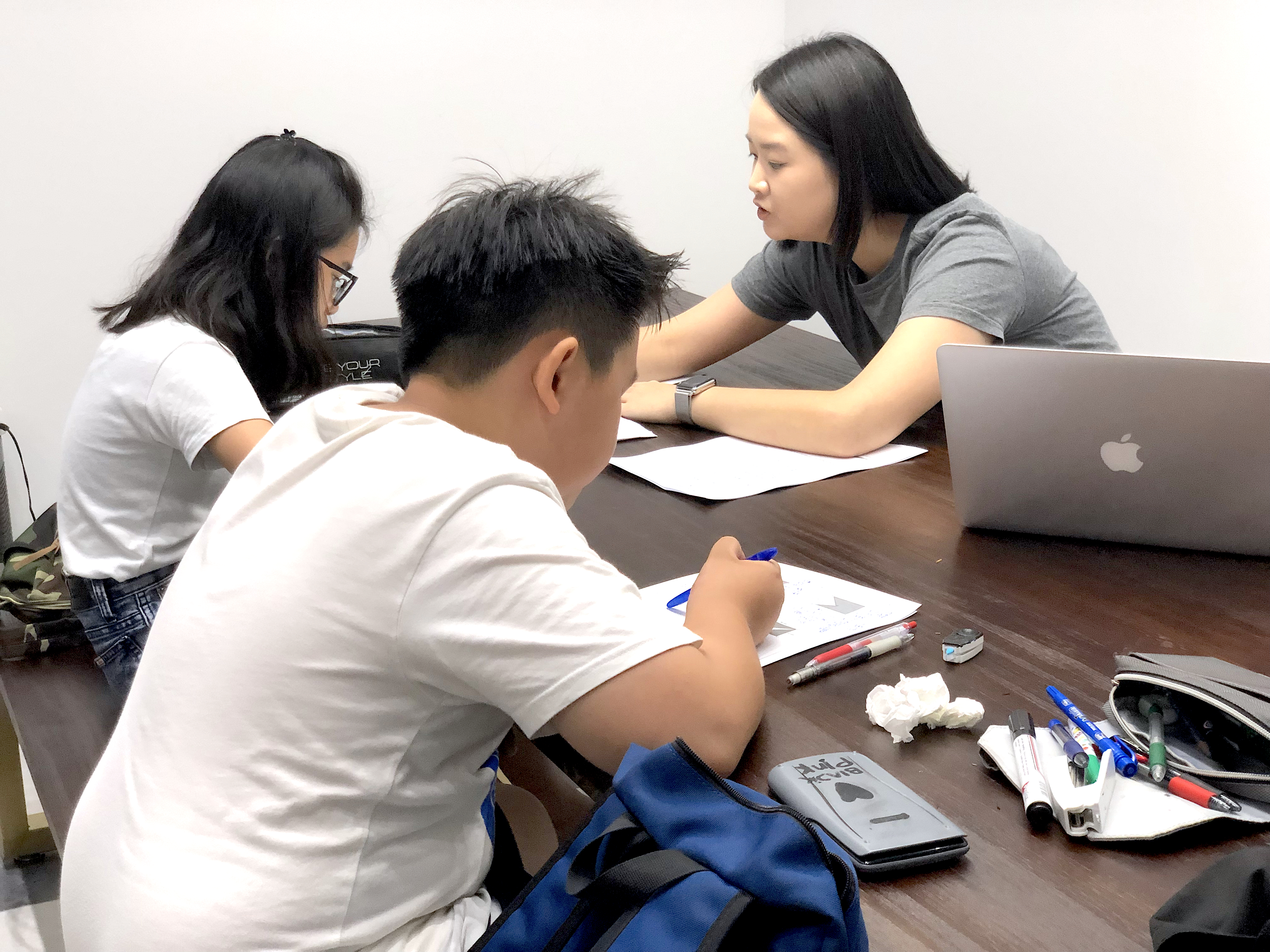














Pri3 Yishun The best Pri 3 English Tuition in Yishun with SEAB MOE PSLE syllabus English. Pri3 Yishun Primary English Tutor for Pri1 Pri2 Pri3 Pri4 Pri5 Pri6 PSLE English Paper 1 and Paper 2.
Call Yuet Ling +65 82226327 for our Pri3 Yishun English classes.


Learn English and make it useful.
Working closely with parents are part of our teaching culture to create the desired effect to get our English students positive changes in their studies. Our Yishun PSLE English tutors teach from scratch, making sure our English students master their language, and we do all the necessary practices from basic easy to complex advanced questions with our students, including past exam papers that helps them to understand and appreciate English as lingua franca in Singapore and use it to further their studies.
Class Culture
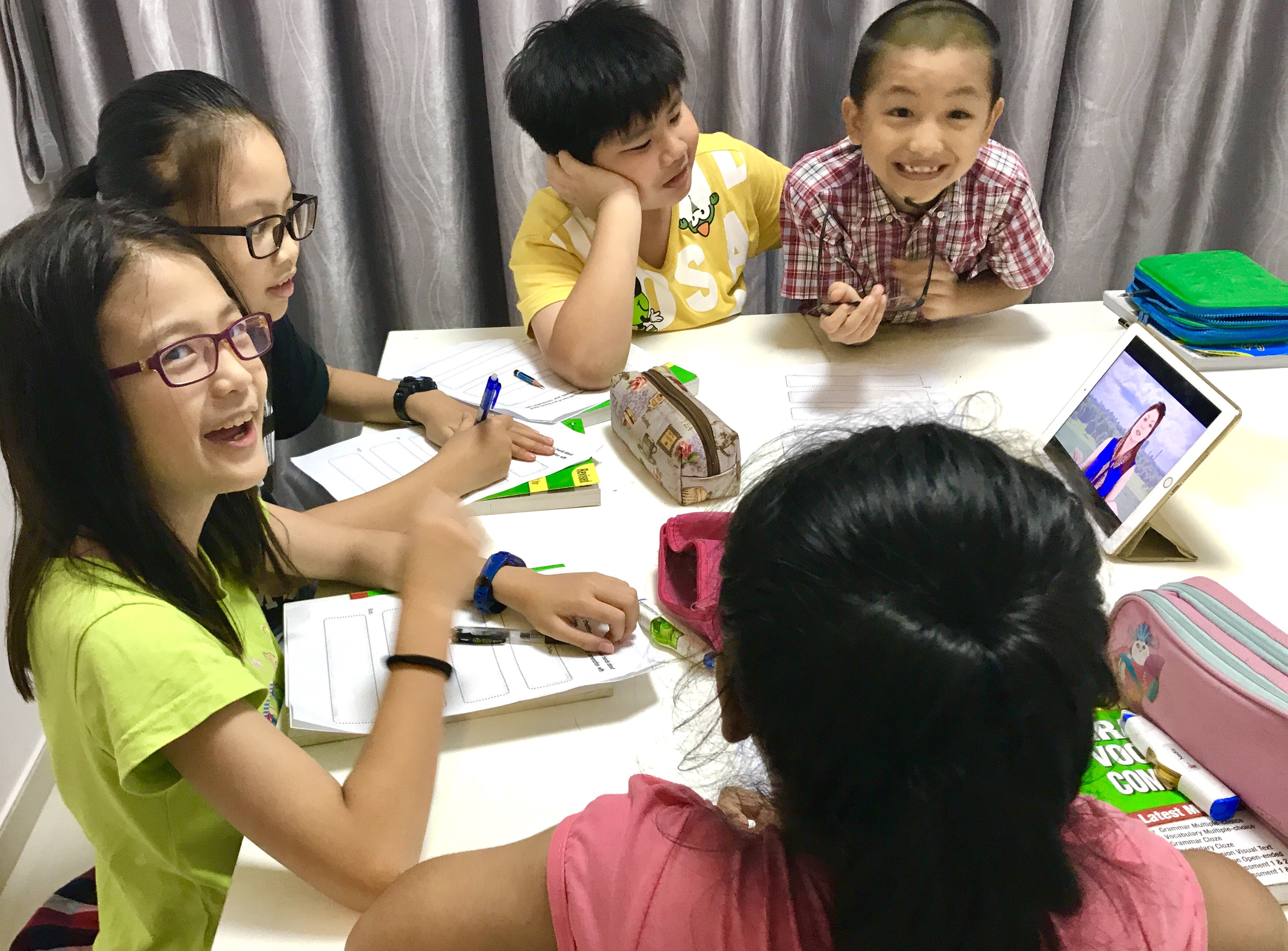
At eduKate Yishun, we work hard to have an affirmative class culture that empowers our students to do more, learn more, and develop a love for their own education by creating a class culture with great friends and tutors. Our positive classes also creates a constructive environment that teaches them the relevance of what they study to their everyday lives. With relevance creates the true reason for a proper education. That is our trademark that differentiates our teaching to others, but don’t just take our words for it, let these photos show you how much our passion and love for our Yishun student’s English lessons.




Continue through Secondary 2 English: Secondary 1–2 article index · Secondary English directory · English by area & school · Diagnostics · Examinations · Library
Leave a Reply