

Families searching for a Tampines English tuition centre or a Secondary 3 English tutor are usually facing a change in the kind of thinking school now expects. The familiar concerns—composition writing, comprehension, oral communication, grammar and exam preparation—still matter, but they begin to work together more tightly. A student must form a defensible view, select evidence, adapt language for an audience and keep doing all three when the clock is moving.
Useful Secondary 3 English tuition in Tampines therefore goes beyond collecting model essays or memorising impressive phrases. It builds a repeatable process for argumentative and discursive writing, situational writing, comprehension inference, summary, spoken discussion and timed independence. The aim is not to make every answer sound identical. It is to help a teenager think clearly enough to make good language decisions without an adult whispering from the wings.
This guide is for students and parents comparing small-group English tuition, secondary English classes and MOE-aligned support. It explains what the upper-secondary transition looks like, how to diagnose a weak answer, and how to practise with feedback that produces a better second attempt. There are worked examples, twelve practice tasks with answers, and a practical weekly plan. No magic vocabulary crate arrives by forklift; the quieter machinery is reasoning, evidence, control and revision.
Why Secondary 3 English feels different
In lower secondary, a student may succeed by understanding a passage, organising a straightforward response and writing accurately. Secondary 3 raises the demand. Prompts become more debatable, sources more layered and audiences more specific. A question may look familiar while rewarding a more qualified answer. “Technology improves friendship” cannot be handled by listing three gadgets. The writer must decide what improves means, distinguish contact from closeness, and consider when the claim does or does not hold.
The workload also becomes integrated. A student who reads critically gains ideas and evidence for writing. A student who can explain why a quotation supports an inference usually speaks more persuasively. A student who plans for purpose and audience in situational writing becomes more precise in oral discussion. These are not separate islands joined only by an examination timetable; they are different uses of the same language system.
Singapore’s Ministry of Education describes English learning through receiving and producing meaning across listening, reading, viewing, speaking, writing and representing. SEAB states that the Singapore-Cambridge Secondary Education Certificate will be implemented in 2027 under Full Subject-Based Banding. Schools and cohorts may have particular assessment arrangements, so students should use their current school instructions and the applicable official syllabus as the final authority. The stable lesson is broader: English rewards purposeful communication, not decorative guessing.
A sound starting point is an evidence-based diagnostic. Collect one recent continuous-writing piece, one situational task, one comprehension paper and, if possible, a short recorded spoken response. Mark patterns rather than personalities. “Needs better English” is too foggy to teach. “Claims are clear but explanations stop after one sentence,” “quotes are copied without inference,” or “the response ignores the audience’s concern” each suggests a precise next move.
Families can place this work in the wider pathway through the English Tuition and Learning Hub and the Secondary English directory. Those pages help connect a Secondary 3 intervention to earlier foundations and later demands instead of treating one term’s marks as the whole story.
Build an argument before polishing the sentences
An argument is not a loud opinion wearing a tie. It is a conclusion supported by reasons and evidence, with attention to alternatives. Before drafting, define the key terms in the question. For “Young people benefit more from competition than cooperation. Discuss,” ask what counts as a benefit, which young people, what forms of competition and cooperation, and over what period. These questions prevent a student from answering a simpler prompt that was never set.
Next, form a provisional position. A useful thesis can be qualified: “Competition can sharpen effort when goals and rules are fair, but cooperation offers the wider benefit because it develops shared problem-solving and allows different strengths to contribute.” This thesis gives the essay a direction without pretending the world contains no exceptions. A thesis that says “There are advantages and disadvantages” announces only that the writer has spotted two sides of a road.
Plan each body paragraph as a reasoning chain: claim, explanation, evidence, analysis and link. The evidence may be a plausible observed example, a well-understood public case or a carefully described scenario. It should not be an invented statistic. Analysis answers the crucial question, “So what?” If a student writes that group projects divide work, the paragraph must explain how division permits specialisation, why specialisation can improve quality, and when poor coordination might cancel the benefit.
Counterargument strengthens a position when it is treated fairly. State the strongest reasonable objection, concede what is valid, then show its limit or the condition under which the main position still stands. Avoid the cardboard opponent: “Some people think teamwork is always useless.” Few thoughtful people believe that. A better move is, “Competition can create urgency and reveal individual standards; however, when rewards depend only on rank, students may hide strategies that would improve everyone’s learning.”
Worked example 1: from broad claim to reasoned paragraph
Prompt: “Schools should give students more choice in what they learn. Do you agree?” A weak paragraph might say: “I agree because choice is good. Students will be happier and study harder. For example, they can choose subjects they like. Therefore, schools should give choice.” The position is visible, but every important word remains untested. Why would choice alter effort? How much choice? What happens to essential knowledge?
Improved reasoning: “Schools should widen choice within a protected core. When students select some modules, they can connect learning with an existing curiosity, which makes sustained practice more meaningful. A student interested in urban design, for example, might choose a project combining geography, data and persuasive presentation; the work still demands research and communication, but the student has a reason to persist through difficulty. Complete freedom would be unwise because adolescents cannot foresee every future need. A common core in language, mathematics, science and civic understanding preserves access, while limited choice develops ownership.”
Notice the architecture. The first sentence answers and qualifies. The second explains a mechanism between choice and effort. The example demonstrates that mechanism rather than merely decorating the paragraph. The final two sentences address a serious limitation and refine the proposal. The vocabulary is mostly ordinary. Precision comes from relationships between ideas, not from squeezing “multifaceted paradigm” into a seat where it will complain throughout the journey.
Discursive writing: explore without drifting
Discursive writing examines a topic from several credible angles. It may be less overtly persuasive than an argumentative essay, but it still requires control. Decide on a governing question, then arrange perspectives so that each adds something new. For a topic such as “The value of boredom,” a writer could explore creativity, rest, digital habits and unequal access to leisure. Four paragraphs saying boredom has advantages and disadvantages would merely rotate the same chair.
Use transitions to show intellectual movement. “A more immediate concern,” “This benefit depends on,” “Viewed from a parent’s perspective,” and “The same silence can feel different when” tell the reader why the next paragraph belongs. Avoid mechanical counters unless the task genuinely needs a list. The reader should sense development: definition, tension, example, complication and a considered ending.
A discursive conclusion should not suddenly become a campaign poster. It can weigh the perspectives and state what the discussion reveals. For boredom, the conclusion might distinguish unplanned mental space from enforced idleness. That distinction is more useful than declaring boredom either wonderful or terrible. Mature writing often advances by separating two things that casual conversation bundles together.
Situational writing begins with the situation
Situational writing tests whether language choices fit purpose, audience and context. Before drafting, annotate the task in four columns: role, audience, purpose and required content. Then mark the desired action. Are you asking a principal to approve a student initiative, inviting residents to an event, or reporting a problem so that action can be taken? A response can contain every content point and still feel ineffective if the reader cannot tell what should happen next.
Select and develop information rather than transferring it blindly. If a visual gives three benefits of a recycling campaign, connect each relevant benefit to the audience’s concern. A school leader may care about feasibility, supervision and learning value. Students may care about convenience and participation. The same fact needs different emphasis. Register follows the relationship: respectful and direct does not mean stiff, and friendly does not mean “Hey guys” in every universe.
Structure for the reader’s convenience. Open with context and purpose. Group related details, make requests explicit, and end with the next step. Check names, dates and conditions against the stimulus. Do not invent attractive extras. If the prompt does not promise free transport, the writer may not summon a cheerful bus out of grammatical confidence.
Worked example 2: adapting one fact for a real audience
Situation: The student council proposes a weekly device-free lunch. Survey notes say that many students want more face-to-face conversation, but some need phones to contact family. The writer must email the year head to seek approval for a four-week trial.
Weak transfer: “Many students want face-to-face conversation. Some need phones to contact family. We hope you approve.” The facts have arrived, but they have not been put to work. The year head still needs evidence of thought, a safeguard and a manageable request.
Purposeful version: “A four-week trial would let us test whether a device-free lunch encourages more conversation without imposing a permanent rule. Students who must contact family could use a designated area after informing their form teacher, while posters and table games would make participation easier. The council can collect brief feedback after each Friday and submit a review before any extension is considered. May we meet next week to discuss supervision and approval?”
The revision converts a general wish into a limited proposal, addresses the main objection and defines follow-up. Its tone is courteous because it respects the reader’s responsibilities, not because it is stuffed with ceremonial phrases. Effective situational writing is practical empathy: the writer anticipates what this reader needs in order to understand, trust and act.
Comprehension answers need an evidence chain
Comprehension improves when students separate three stages: locate, interpret and express. First identify the relevant line or pattern. Then decide what it implies in context. Finally phrase the answer at the level demanded by the question. Copying the source may satisfy locate but not interpret. Jumping to a personal opinion skips both. The answer should be traceable to the text without being trapped inside its wording.
For an inference, use the private working frame: evidence says X; this suggests Y because Z. Suppose a character checks the departure board three times, folds and unfolds a ticket, and refuses coffee. The inference “She is anxious about missing the train” is supported by repeated checking and restless behaviour. “She hates coffee” seizes one detail but ignores the pattern.
For language-effect questions, name the image or association and connect it to the writer’s purpose. If rain “drummed against the roof,” do more than label personification. Explain that “drummed” suggests a repeated, insistent sound, making the storm feel close and difficult to ignore. Technique labels are useful only when they open an explanation; otherwise they are name tags at an empty conference.
Summary requires selection and compression. Draw a boundary around the required section, identify distinct relevant points, remove examples and repetition, then combine ideas accurately in your own language. Count according to the current task instructions. Do not compress so fiercely that relationships disappear. “Cost, time, fear, help” is shorter than a sentence but not yet a summary anyone can responsibly interpret.
Oral discussion is organised thinking aloud
A strong spoken response has shape without sounding memorised. Use position, reason, example and reflection. Answer promptly, develop one idea, ground it in a specific example, then consider a condition or implication. If asked whether public spaces should include more areas for teenagers, a student can discuss belonging, safe informal activity and shared responsibility rather than naming malls until the examiner requires a map.
Listening matters. Respond to the exact question and build on follow-up prompts instead of replaying a prepared speech. If a question asks about the student’s community, a global speech on urbanisation may be impressive but misplaced. Pause briefly, choose one main point and signpost it: “The most important change would be…” or “I agree to an extent, because…”
Fluency is not speed. A measured pace, clear sentence endings and purposeful emphasis help meaning. Replace fillers by allowing a short pause. Record a ninety-second response, transcribe thirty seconds and mark repeated words, unfinished sentences and vague nouns such as “things.” Then redo the same question once. The comparison makes improvement audible and keeps practice specific.
Turn feedback into a repair system
Feedback works when it changes the next performance. After a writing task, choose one reasoning target and one language target. A reasoning target might be “analyse how the example proves the claim.” A language target might be “control sentence boundaries.” Ask the student to revise a paragraph immediately, explain the change, and apply the same move in a new short paragraph later that week.
Keep an error log with four fields: original attempt, corrected version, reason and transfer example. Group entries by pattern—tense control, pronoun reference, comma splice, vague evidence—not by date alone. Review a small number before the next task. The point is not to build a museum of mistakes. It is to notice which repair strategies are becoming independent.
Measure progress through products and behaviours. Can the student plan in eight minutes, identify evidence without prompting, draft a precise thesis, leave time to edit and explain a revision? Marks matter, but these behaviours reveal whether improvement is durable. A single high score may reflect a friendly topic. A reliable process travels to unfamiliar ones.
A practical weekly rhythm for timed independence
A manageable week alternates depth and retrieval. Day one: read one substantial article or commentary and record the claim, evidence, assumption and a question. Day two: plan two essay prompts without drafting. Day three: complete one comprehension set and correct it from evidence. Day four: write one situational section or body paragraph, then revise it. Day five: record an oral response. At the weekend, complete a timed task appropriate to the school’s current requirements.
Short practices should feed the longer task. If the week’s reasoning focus is qualification, the reading notes should identify limits, the essay plans should include conditions, the comprehension correction should distinguish certainty from possibility, and the oral response should use “to an extent” accurately. Repetition of a thinking move across modes is more powerful than five unrelated worksheet piles.
Timing should be introduced progressively. First achieve the process with guidance. Then remove a prompt, set a generous limit, and finally approach assessment timing. Record planning, drafting and checking time separately. A student who always runs out may not “write slowly”; the real delay may be a twenty-minute opening paragraph or repeated erasing because no position was chosen.
Twelve practice tasks with answers and rationales
Task 1—define the debate. For “Convenience has made people less capable,” identify two terms that need definition. Answer: Define convenience as tools or services that reduce effort or time, and capable as able to perform necessary tasks or solve problems independently. Rationale: The definitions prevent the essay from treating every helpful tool as harmful or every traditional task as essential.
Task 2—write a qualified thesis. Respond to “Schools should ban homework.” Answer: “Schools should reduce repetitive homework rather than ban it, because brief, purposeful practice can strengthen recall while excessive tasks crowd out rest and independent interests.” Rationale: The thesis answers directly, sets a boundary and previews two reasons. It creates an argument rather than a yes-or-no sticker.
Task 3—complete the reasoning chain. Claim: volunteering can develop responsibility. Add explanation and example. Answer: “A volunteer is accountable to people beyond a teacher who awards marks. For example, a student helping at a reading programme must arrive prepared because a younger child is waiting; repeated responsibility makes reliability a lived habit rather than a slogan.” Rationale: The example demonstrates the mechanism between duty and growth.
Task 4—answer a counterargument. Main position: public transport should be prioritised. Objection: cars offer flexibility. Answer: “Cars do offer door-to-door flexibility, especially for people carrying equipment or supporting relatives. However, investing first in frequent, connected public transport reduces congestion for essential car journeys while serving many more travellers.” Rationale: The concession is fair, and the response reframes priority rather than denying usefulness.
Task 5—organise a discursive sequence. Arrange these angles on online anonymity: protection, accountability, participation, harassment. Answer: Begin with how anonymity enables vulnerable participation, move to protection from retaliation, then examine weakened accountability and the risk of harassment, before weighing design safeguards. Rationale: The order moves from benefit to complication and allows a nuanced conclusion.
Task 6—adapt register. Ask a year head to approve a student-led repair café. Answer: “We would appreciate approval to run a four-week repair-café trial on Wednesdays. Student volunteers will work under a teacher’s supervision, accept only low-risk items and record participation for review.” Rationale: The request is courteous, specific and attentive to feasibility; it avoids both casual chatter and empty formality.
Task 7—select a relevant detail. A poster lists free refreshments, a guest speaker and reusable-material workshops. Residents worry about waste. Which detail deserves development? Answer: Develop the reusable-material workshops because they directly address waste and give residents an action they can repeat. Rationale: Relevance depends on purpose and audience, not on which detail sounds most festive.
Task 8—make an inference. “Ravi placed the unopened envelope beneath two textbooks. When his sister entered, he began discussing dinner.” What is suggested? Answer: Ravi is avoiding the envelope or concealing concern about it. Rationale: Hiding it and changing the subject form a pattern of avoidance. The text does not prove what the envelope contains, so the answer should not invent a result.
Task 9—explain language effect. “The rumour crept through the corridor.” Answer: “Crept” presents the rumour as moving quietly and almost secretly from person to person, creating unease because its spread is difficult to observe or stop. Rationale: The answer interprets the verb’s associations and links them to atmosphere instead of merely naming personification.
Task 10—compress for summary. Source idea: “Because buses arrived unpredictably, workers left home far earlier than necessary and sometimes still reached work late.” Answer: “Unreliable buses caused workers to waste time and risk lateness.” Rationale: The version preserves cause and two consequences while removing narrative detail.
Task 11—build an oral response. Question: should teenagers have a regular role in neighbourhood planning? Answer: “Yes, especially on facilities they use. Teenagers notice practical issues, such as whether study corners feel safe after dark, that adults may overlook. Their role should be consultative rather than absolute, because planners must balance access, cost and other residents’ needs.” Rationale: The response gives a position, specific example and qualification.
Task 12—edit a sentence. Original: “The campaign was successful, it attracted many volunteers however the instructions was unclear.” Answer: “The campaign attracted many volunteers; however, its instructions were unclear.” Rationale: The revision removes a comma splice, punctuates the transition, fixes subject–verb agreement and replaces the vague adjective successful with observable evidence.
How parents can support without taking over
Language control should make the thinking easier to see
Grammar practice is most useful when it solves a communication problem. Sentence boundaries help a reader separate claims. Pronoun reference shows who or what is being discussed. Tense control places events accurately. Modals such as may, should and must express different degrees of certainty or obligation. Teach the form, then ask what meaning changes when the form changes. “Schools may provide lockers” is a possibility; “Schools must provide lockers” is a requirement and needs a stronger justification.
Sentence variety should follow thought. A short sentence can deliver emphasis after a developed explanation. A complex sentence can show cause, condition or contrast. Combining “The programme is inexpensive” and “It requires many volunteers” as “Although the programme is inexpensive, it requires many volunteers” makes the relationship explicit. Randomly alternating long and short sentences is not variety; it is furniture rearrangement. The student should be able to explain why a sentence shape suits the idea.
Editing works better in passes. First check content: did the response answer the task and develop each point? Next check organisation: does every paragraph have a job and follow logically? Then check sentences for boundaries, agreement, tense and reference. Finally check spelling, punctuation and presentation. Trying to inspect everything at once encourages the eye to glide over familiar mistakes. A short personal checklist, built from the error log, keeps attention on patterns that actually recur.
Use assessment evidence to choose the next lesson
After a timed paper, sort losses into knowledge, interpretation, process and expression. A knowledge gap appears when the student lacks the vocabulary or context needed to understand an idea. An interpretation gap appears when relevant words are found but their implication is missed. A process gap appears when the student misreads an instruction, spends too long on one section or leaves no checking time. An expression gap appears when sound thinking is obscured by vague or inaccurate language. Each category calls for different practice.
Do not reteach an entire component because of one mark. If three inference answers fail for the same reason, model the evidence chain and practise five short items. If the thesis is strong but body paragraphs wander, use paragraph maps. If situational content is complete but the reader’s concern is ignored, practise adapting one fact for three audiences. Narrow repair produces clearer evidence of whether teaching worked.
A useful review conference asks the student to predict the problem before seeing comments. “Which answer felt least secure?” and “Where did your plan change?” develop self-monitoring. Compare the prediction with the script, agree on one priority and set a near transfer task. For example, after revising an inference about anxiety, answer a new inference about reluctance. Transfer confirms that the student learned a method rather than memorised yesterday’s wording.
Keep records modest enough to use. A one-page tracker can list task, focus, first attempt, revision evidence and next step. Review it every few weeks with samples. Improvement may appear as a cleaner plan, more precise quotation use or fewer prompts before it appears in a total score. Those gains deserve notice because they are the gears that eventually move the larger result.
Ask process questions rather than conducting an interrogation about marks. “Which feedback point are you applying this week?” “What changed between draft one and draft two?” and “Which question took too long?” invite useful reflection. If every conversation begins with the score, students learn to hide uncertainty precisely when adults need accurate information.
Protect time for reading beyond worksheets. Encourage a mix of reports, commentary, profiles and well-crafted fiction. Ask the student to summarise the central claim, identify one convincing detail and challenge one assumption. Reading should expand knowledge as well as vocabulary; an essay writer needs something to think with. A synonym list cannot supply a view of the world.
When comparing support, look for diagnosis, explicit modelling, guided practice, substantive feedback and chances to redo work. Ask how a tutor distinguishes a reasoning gap from a language-control gap and how progress is recorded. Avoid treating promises, rankings or a dramatic stack of worksheets as evidence. Suitable teaching is visible in the decisions a student gradually learns to make alone.
Frequently asked questions
Should a Secondary 3 student memorise model essays?
Models are useful for studying structure, development and language choices. Memorising whole pieces is brittle because prompts change and borrowed material may not answer the actual question. A better method is to annotate why each paragraph works, close the model, then apply the principle to a different topic.
How can vocabulary improve without sounding forced?
Learn words in meaningful clusters and record typical partners, tone and context. Practise using a new word in two accurate sentences, then decide whether an ordinary alternative is clearer. Precision beats rarity. “A tentative agreement” is useful; “an ebullient agreement” is not rescued by the number of syllables.
What if comprehension answers are always almost correct?
Identify where the evidence chain breaks. The student may locate the right lines but give a vague inference, understand the idea but omit a required comparison, or lose precision while paraphrasing. Correct one type at a time and require the student to point to the textual trigger for every answer.
How often should full essays be written?
Frequency should match the student’s needs and school workload. Full timed pieces matter, but plans, introductions, paragraphs and revisions allow more focused repetitions. One essay carefully diagnosed and repaired can teach more than three rushed scripts that receive only a number.
Can oral practice be done at home?
Yes. Discuss one image, headline or community issue for two minutes. Ask one follow-up question and record the response occasionally. Keep the focus narrow: development, evidence, clarity or pace. Do not correct every sentence mid-flow; note one pattern and invite a second attempt.
When should timed work begin?
Begin after the student understands the process, then shorten the time gradually. Timing confusion is not mastery. Track planning, writing and checking separately so the intervention targets the real bottleneck. School instructions and the applicable official assessment guidance should determine exact task conditions.
Teaching Guide
Teach this article as a six-part cycle: diagnose, model, practise, receive feedback, revise and transfer. Begin with one authentic recent script and name the smallest high-leverage gap. Model the thinking aloud on a fresh example. Let the student complete a parallel task with prompts, then remove one prompt on the next attempt. Keep worked examples for comparison, not copying.
Across a term, rotate the primary focus while revisiting earlier skills. Weeks one and two can establish thesis and paragraph reasoning; weeks three and four can connect audience to situational choices; weeks five and six can strengthen comprehension evidence; weeks seven and eight can develop oral discussion and timed integration. Every week should include reading, a short written product, correction and one transfer task.
Use the twelve tasks as retrieval checks. Ask for the answer first, then the rationale. If a student gives the correct sentence but cannot explain the decision, vary the context and test again. End each lesson with a written commitment: “In my next task I will…” At Secondary 3, the best sign of progress is not dependence on increasingly elaborate reminders. It is a learner who can choose, justify, check and improve.
Teachers should retain dated samples and revisit an earlier prompt after several weeks. Compare the evidence chain, audience awareness, sentence control and use of checking time, not merely the totals. When progress stalls, reduce the task and restore a successful cycle before increasing complexity. Independence grows through many visible decisions made correctly, discussed honestly and repeated under gradually less support.



Singapore English tuition with Tutor Yuet Ling. With Singapore school’s requirement for English as a First language, our primary aim in teaching English are highly focussed on tasking English student’s communication skills to be competent as well as to be an effective, accurate and efficient tool to absorb and relay information to others.
English is Singapore’s main language of communication and it is imperative that our student’s English Language skills are on parity with the requirements set forth by the Ministry of Education to study well in school. It is the main skill that will help students to perform consistently across their other subjects as their ability to understand and use English effectively will help them to comprehend what is taught in class and asked in tests.
English Tuition Centre with English tutor of 20 years in the business helping English students to improve their ability to communicate. An improvement of their linguistic competence in both the passive reading/listening and active speaking/writing process of the English Language are part of our course curriculum.
With that in mind, our English classes are geared to teach and train our students to be able to understand the media that they read or hear, and to have the ability to express and communicate their complex thoughts and ideas to others naturally. Any improvements in information absorption and dissemination will automatically translate to cognitive skills and ultimately, help students to do well in their studies.
English should be treated as our native language, to be the main Lingua franca for a cosmopolitan Singapore where over generations, English has been integrated well into our everyday life. As a first language, the focus of our tuition will be to task our Yishun students to learn the skills needed to communicate proficiently for both their studies in school as well as for their everyday life.
Local English Tutor for English tuition are the dependable, trustworthy tutor that delivers the results. Join our English tutorials and have our English Teacher get you on track. Small groups of 3.
increase general knowledge and all necessary skills needed for the PSLE
score maximum marks by understanding the marking scheme of the examination
in a safe, comfortable air con environment with properly equipped classes
by discerning tutors that can detect weaknesses, solve student’s problems during class
by qualified female tutors with experience in improving students for the crucial PSLE
Give us a call at +65 82226327 for more information on our Singapore English classes.














Pri3 Yishun The best Pri 3 English Tuition in Yishun with SEAB MOE PSLE syllabus English. Pri3 Yishun Primary English Tutor for Pri1 Pri2 Pri3 Pri4 Pri5 Pri6 PSLE English Paper 1 and Paper 2.
Call Yuet Ling +65 82226327 for our Pri3 Yishun English classes.


Learn English and make it useful.
Working closely with parents are part of our teaching culture to create the desired effect to get our English students positive changes in their studies. Our Yishun PSLE English tutors teach from scratch, making sure our English students master their language, and we do all the necessary practices from basic easy to complex advanced questions with our students, including past exam papers that helps them to understand and appreciate English as lingua franca in Singapore and use it to further their studies.
Class Culture
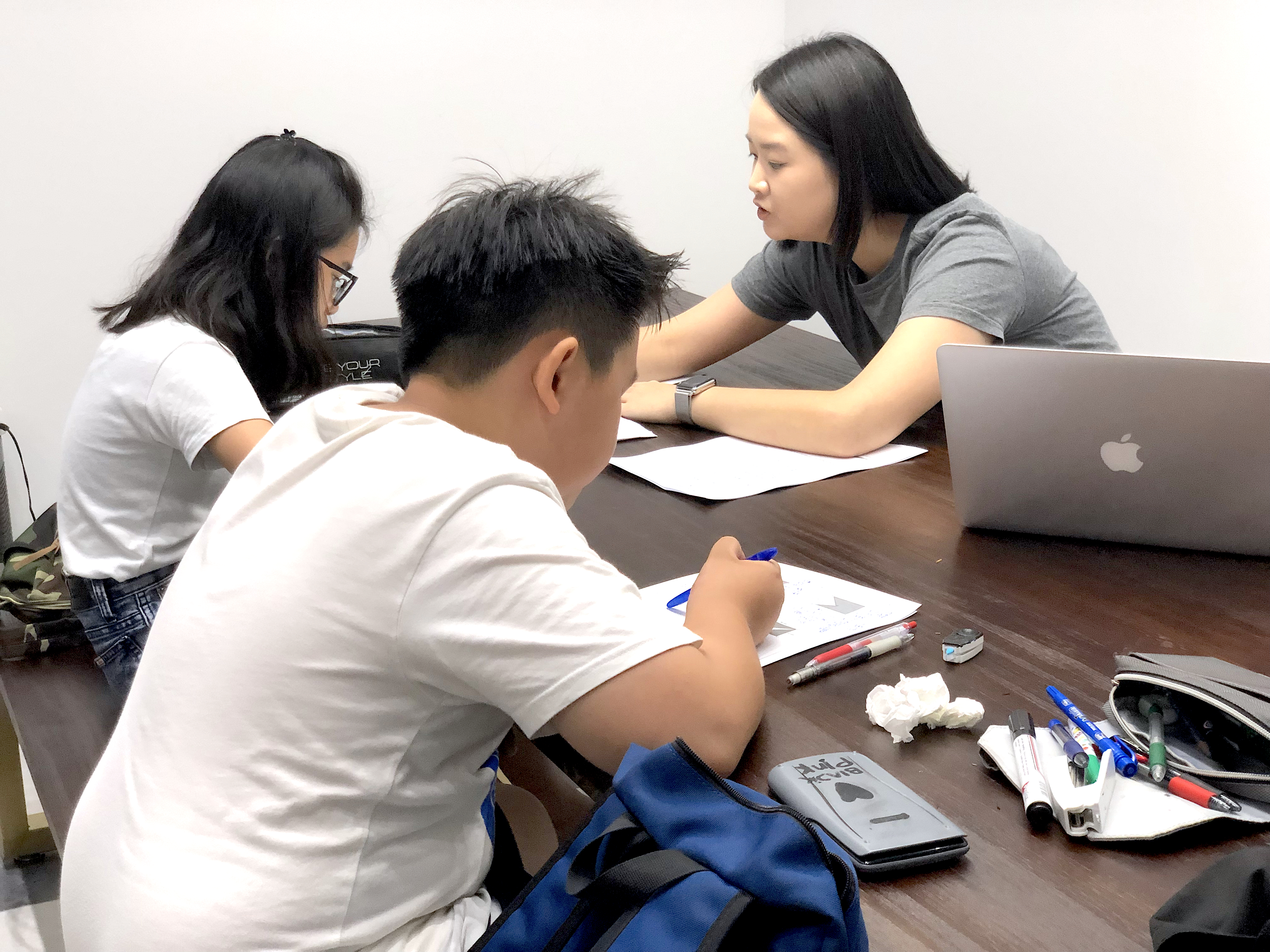
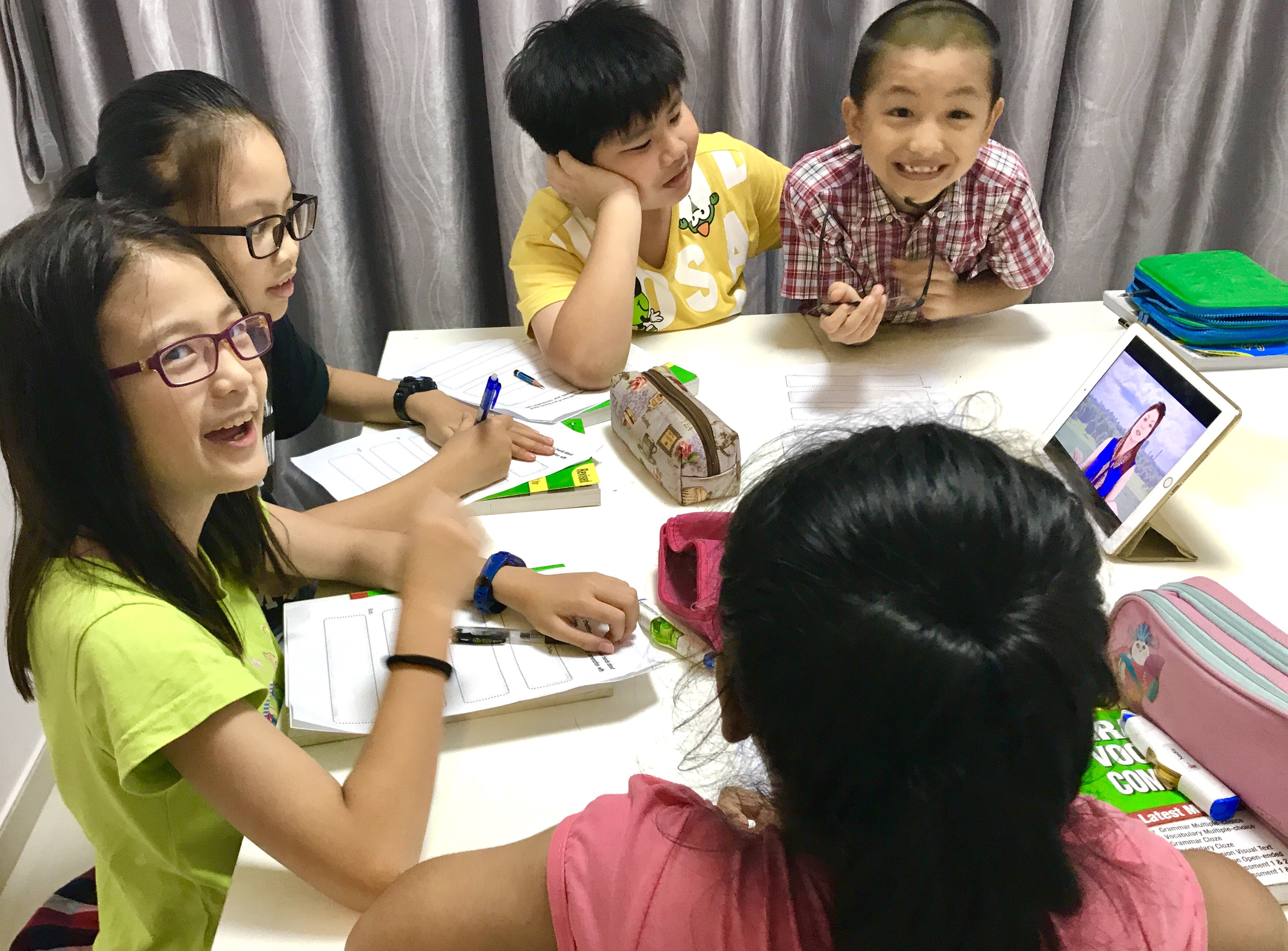
At eduKate Yishun, we work hard to have an affirmative class culture that empowers our students to do more, learn more, and develop a love for their own education by creating a class culture with great friends and tutors. Our positive classes also creates a constructive environment that teaches them the relevance of what they study to their everyday lives. With relevance creates the true reason for a proper education. That is our trademark that differentiates our teaching to others, but don’t just take our words for it, let these photos show you how much our passion and love for our Yishun student’s English lessons.




Leave a Reply