

A Sec 4 English tutor in Tampines should do more than hand over another thick comprehension packet. For a student sitting the 2026 GCE O-Level English Language examination, useful Tampines Secondary 4 English tuition should make Paper 2 comprehension and summary less mysterious: read the question precisely, locate defensible evidence, infer without inventing, explain language effects and compress ideas accurately. Those are teachable decisions, and each one can be practised until it survives a timed paper.
Parents comparing Secondary 4 English tuition in Tampines will often see familiar terms such as O-Level English, comprehension skills, summary writing, editing, exam strategies, critical thinking and personalised feedback. The terms matter only when they describe visible work. A strong lesson shows the learner where an answer first went wrong, why a tempting phrase did not answer the question, and how to build a shorter, clearer response from the passage rather than from hopeful guesswork.
This guide focuses on that work. It gives Secondary 4 students a practical system for literal questions, inference, language effect, evidence selection, summary compression, editing and timed checking. It is suitable for 2026 candidates following English Language syllabus 1184 and also useful as general preparation for later cohorts, with one important caution: from 2027, Singapore moves to the Singapore–Cambridge Secondary Education Certificate. A 2027 G3 English candidate should follow the current K300 syllabus and the instructions supplied by the school, not assume that every 2026 label or detail carries over unchanged.
The real Paper 2 problem is decision quality
Many students describe comprehension as if it were a weather system: some days the answers arrive, and some days the clouds refuse to cooperate. Yet most lost marks come from observable decisions. A student may answer the topic rather than the exact question, lift a line that contains the right noun but the wrong relationship, infer beyond what the text permits, or explain what a phrase means without explaining its effect. Summary errors are equally traceable: duplicated points, missing agents, distorted cause and effect, or elegant rewriting that quietly changes the idea.
The first improvement is to separate question types. A literal question asks for information stated in the text, though the wording may be different. An inference question asks for a conclusion supported by clues. A language-effect question asks what particular wording makes the reader understand, imagine or feel. An evidence question asks the student to select the part of the text that proves a claim. A summary asks for a set of relevant ideas within a word limit, not a miniature essay about the topic.
The second improvement is to make every answer pass two tests. The question test asks whether the response addresses the requested person, time, reason, change or effect. The text test asks whether the response is supported without adding an attractive but unproven story. A sentence can be grammatically beautiful and still fail both tests. Conversely, a simple sentence that is exact, complete and supported can be very strong.
For the 2026 cohort, the official 1184 syllabus describes Paper 2 as a 1 hour 50 minute, 50-mark paper worth 35 per cent of the subject. It includes visual material, narrative material, non-narrative material and summary work. The summary response is limited to no more than 80 words, excluding the opening supplied in the question. These are syllabus facts, not a prediction of any particular passage or topic. Students should still use the current examination paper instructions and their school’s guidance.
Begin with a question map, not a highlighter festival
Before searching the passage, translate the question into a small map. Circle the command, box the subject, underline the boundary and note the expected form. In “Why did Mara refuse the second offer after the meeting?”, the command is why, the subject is Mara, the action is refusing, and the boundary is after the meeting. A line about her hesitation before the meeting may be related, but it does not yet answer this question.
Question maps stop a common error: keyword magnetism. The eye sees “offer” in the passage and lands on the first nearby sentence. The brain then declares victory before checking the time, actor or relationship. Instead, predict the grammar of the answer. “Why” usually needs a reason. “How did the situation change?” needs a before-and-after contrast. “What does this reveal about him?” needs a supported quality or state. “Explain the effect of the word” needs both meaning in context and the impression created.
Literal answers still require precision
Literal does not mean careless lifting. A literal answer may require a pronoun to be resolved, a sequence to be untangled or two separated details to be combined. Suppose a passage says, “The volunteers stacked the unopened boxes near the door. At noon, Priya moved them upstairs because the corridor had to be cleared.” If asked why the boxes were moved upstairs, “because they were near the door” identifies the earlier location, not the stated reason. The reason is that the corridor had to be cleared.
Check the answer’s nouns. If the question asks what the committee changed, “it was revised” is risky because the object has vanished. Check the verbs as well. “Considered cancelling” is not the same as “cancelled”; “had expected” is not the same as “discovered”; “allowed” is not the same as “encouraged”. Much comprehension accuracy lives in these quiet distinctions.
Paraphrase only when it improves fit. A student does not earn a bonus for replacing every ordinary word with a grand cousin from the thesaurus. “The path was blocked by fallen branches” can become “fallen branches obstructed the path”. It should not become “botanical debris annihilated pedestrian mobility”. The latter is memorable, certainly, but not for the reason the student hopes.
Inference means the smallest conclusion that explains the clues
An inference is not a free invitation to imagine. It is a conclusion that accounts for evidence already present. The safest method has three moves: identify the clue, state what it suggests, and keep the conclusion no larger than the support. If a character checks the clock three times, packs before the announcement and stands beside the exit, the reader may infer that the character is eager or anxious to leave. The text does not prove that there is a family emergency at home.
When two clues point in different directions, preserve the tension. A manager may speak confidently while repeatedly smoothing a creased note. “She was calm” ignores the physical clue; “she was terrified” may overstate it. “She tried to appear confident although her repeated gesture suggested nervousness” explains both. Good inference often lives in the word although.
Worked example 1: from clue to defensible inference
Original passage: “When the results appeared on the noticeboard, Joel remained at the edge of the crowd. He congratulated two classmates, then folded his timetable into a precise square. Only after the corridor emptied did he walk towards the list.”
Question: What does Joel’s behaviour suggest about how he felt before looking at the results? Support your answer with two details.
A weak answer says, “Joel was sad because he failed.” Nothing states that he failed, and he has not yet looked at the list. Another weak answer copies, “He remained at the edge and folded his timetable.” Those are clues, but the inference is missing.
A defensible answer is: “Joel seemed anxious and reluctant to face the result. He stayed away from the crowd and delayed approaching the list until the corridor was empty; his careful folding of the timetable also suggests that he was controlling his nervous energy.” The answer names the feeling, uses two relevant details and does not invent the result. Notice that “seemed” or “suggests” suits an inference better than pretending to know his mind with certainty.
The transferable lesson is not “folding paper always means anxiety”. It is that a cluster of delay, distance and controlled repetitive action can support that conclusion in this context. In a different passage, folding a map carefully might simply show preparation. Evidence gains meaning from its neighbours.
Language effect: explain the picture and the pressure
Students often answer a language-effect question with a dictionary meaning. If rain “hammered” the roof, saying “hammered means hit” begins the job but does not finish it. The verb suggests repeated, forceful impacts, making the storm seem violent and the people beneath the roof feel exposed. The answer should connect the chosen wording to the scene, character or reader’s impression.
A practical frame is word picture → quality → local effect. First, say what the word makes us picture. Second, identify the quality carried by that picture: speed, weight, fragility, disorder, secrecy, persistence. Third, connect it to the precise moment. For “the queue snaked around the building”, the winding image shows the line extending in curves, emphasising its great length and the scale of demand.
Avoid generic endings such as “This makes the reader want to read on.” Almost any sentence could be forced into that coat, and it fits none of them well. Explain the local effect instead: urgency increases, a place feels oppressive, a movement appears cautious, or a contrast becomes comic. Precision is more convincing than drama.
Evidence selection: choose proof, not merely proximity
When asked to quote or identify evidence, select the smallest complete unit that proves the claim. Too little may remove the action or qualification; too much buries the proof. If the claim is that Lina concealed her disappointment, “smiled” is incomplete because smiling could show happiness. “She fixed a smile in place before turning back to the team” carries control and concealment.
Test evidence by reversing the question: if a sceptical reader saw only this phrase, would it support the stated conclusion? A line may mention the right character yet prove something else. The sentence “Arun thanked the driver and checked the map again” supports politeness and uncertainty about direction, but not necessarily fear of travelling.
Summary is controlled compression, not decorative paraphrase
A summary question rewards relevant ideas expressed economically and accurately. The student’s first task is therefore not writing. It is building an idea inventory. Read the summary focus, mark the start and end boundaries, and collect possible points in note form. Give each point a short label such as “shared tools”, “reduced travel” or “faster repairs”. Labels reveal duplicates that long copied sentences can hide.
Distinguish an idea from its example. “Residents shared equipment, such as drills, ladders and pressure washers” usually contains one main point: equipment was shared. If the question asks for benefits, the examples may be unnecessary. Likewise, a colourful anecdote may illustrate an idea without adding another point. Summary space is expensive; examples should pay rent or leave.
Preserve logical relationships. “Because the new route avoided the flooded bridge, deliveries arrived earlier” contains cause and result. Writing “The bridge was flooded and deliveries arrived early” weakens or distorts the link. Keep agents too. “Warnings were ignored” may not answer who ignored them when the identity matters. Compression removes surplus wording, not essential logic.
Paraphrase at the level of meaning. Replace a phrase only when the replacement has the same scope. “Some residents” cannot become “the community”; “could reduce” cannot become “eliminated”; “temporarily” cannot disappear if duration matters. Students sometimes make a summary sound more decisive than the passage. That is not improvement. It is a small factual coup.
Worked example 2: compressing without losing the logic
Original passage: “The neighbourhood repair library allowed residents to borrow tools that many needed only once or twice a year. Volunteers also demonstrated how to use unfamiliar equipment safely. Because broken household items could often be repaired nearby, families made fewer trips to distant service centres. The organisers recorded common faults and used the information to stock the parts most frequently requested. Monthly workshops became informal meeting points, helping newcomers get to know long-term residents.”
Task: Summarise the benefits of the repair library.
First list the ideas: residents borrow occasionally needed tools; learn safe use; repair items nearby; reduce travel; organisers identify frequent faults; stock useful parts; workshops connect neighbours. Next combine compatible ideas without fusing unrelated ones.
Model summary: “Residents could borrow seldom-used tools and learn to operate unfamiliar equipment safely. Nearby repairs reduced journeys to distant service centres. Fault records helped organisers stock commonly needed parts, while monthly workshops enabled newer and established residents to meet.”
The model is 36 words. It preserves all seven benefits and their agents. “Seldom-used” compresses “needed only once or twice a year”; “reduced journeys” keeps the causal benefit; and the final clause retains both groups of residents. Shorter is not automatically better, but every word here performs a clear job.
A reliable summary workflow
Step 1: rewrite the focus as a test. If the question asks for problems and solutions, label every candidate P or S. A background detail that is neither does not enter merely because it sounds important.
Step 2: harvest ideas in notes. Use brief phrases and line references. Do not paraphrase beautifully yet. That consumes time before the student knows whether the idea will survive selection.
Step 3: remove duplicates and examples. Ask whether two notes express the same underlying point. Keep the broader accurate version unless the example supplies a distinct benefit, cause or method.
Step 4: group compatible points. Shared subject, cause or result can often be combined. Do not create a false relationship merely to save three words.
Step 5: draft from the notes. Looking back at full passage sentences invites unnecessary copying. Drafting from accurate labels encourages natural compression.
Step 6: count and audit. Stay within the official limit, check that the supplied opening is treated according to the question instructions, and verify pronouns, comparisons, negatives, quantities and logical links. Remove padding before removing meaning.
Editing supports comprehension precision
Editing sits in Paper 1 under the 2026 syllabus, but the skill belongs in this training plan because grammatical control protects meaning everywhere. A student who overlooks subject–verb agreement, tense sequence, reference or connector errors may also misread those relationships in a comprehension passage. Editing is close reading with a screwdriver.
Use a two-pass edit. The first pass checks sentence structure: subject, finite verb, agreement, tense and completeness. The second checks relationships: pronoun reference, articles, prepositions, comparison, number and connectors. Reading only for what a sentence intends to say is dangerous because the brain politely repairs the error. Reading for one grammatical system at a time makes the fault visible.
Consider: “Each of the volunteers were given a map, which they used it during the survey.” The first error is agreement: each takes was. The second is a duplicated object: either “which they used” or “and they used it”, not both. Naming the broken relationship is more useful than memorising the corrected sentence.
Timed checking needs an order of operations
A timed paper is not merely an untimed paper performed nervously. The student needs a repeatable order. Record actual timings during full practices, then adjust with the teacher rather than adopting a universal minute-by-minute promise. The goal is to protect enough time for every section and a final accuracy pass while respecting the student’s reading speed and school strategy.
During the paper, mark uncertain answers with a small symbol and move on when further staring produces no new evidence. On return, reread the question boundary before rereading the whole passage. Often the problem is not hidden information but a forgotten word such as after, two, mainly or surprised.
Use a final checking ladder. First, unanswered items. Second, multi-part questions and required evidence. Third, summary word count and meaning. Fourth, pronoun clarity and grammar in short answers. Fifth, copied quotations and line references where applicable. This order protects large omissions before polishing commas. A beautifully punctuated blank still earns its traditional number of marks.
Twelve practice tasks with answers and rationales
Practice task 1: question boundary
Text: “Before the gates opened, Meilin worried that the rain would deter visitors. By noon, every sheltered table was occupied, and she asked the team to bring out extra chairs.” Question: Why did Meilin request more chairs?
Answer: She requested them because all the sheltered tables were occupied and more seating was needed for the visitors. Rationale: The question concerns the noon decision, not her earlier worry. Rain is background, while the occupied tables create the immediate need.
Practice task 2: literal sequence
Text: “Ravi drafted the notice on Monday. The committee returned it with two corrections on Tuesday, but he posted the unrevised version by mistake.” Question: What mistake did Ravi make?
Answer: He posted the original notice without making the committee’s two corrections. Rationale: “He posted a notice” is incomplete. The error lies in choosing the unrevised version after corrections had been requested.
Practice task 3: restrained inference
Text: “Nadia read the message twice, placed her phone face down and asked whether anyone wanted tea.” Question: What can be inferred about Nadia’s response to the message?
Answer: The message unsettled her, and she appeared to avoid discussing it by redirecting attention to making tea. Rationale: Re-reading and turning the phone over support discomfort or concern. The text does not reveal the message’s content, so grief, anger or bad news would be inventions.
Practice task 4: mixed clues
Text: “Amir announced that the demonstration would be simple. As he connected the final cable, however, he checked the instruction card beneath the table.” Question: What contrast is shown?
Answer: Amir presented himself as confident, but his hidden check of the instructions suggests uncertainty. Rationale: The answer preserves both the public claim and private behaviour. Calling him completely incompetent would exceed the evidence.
Practice task 5: language effect
Text: “At closing time, the last customers trickled out of the market.” Question: What is the effect of “trickled”?
Answer: “Trickled” presents the customers leaving slowly in a thin, irregular flow, showing the market emptying gradually rather than everyone departing together. Rationale: The answer explains the movement pictured and its effect on the scene.
Practice task 6: precise evidence
Text: “Although the path narrowed, Suri continued talking cheerfully. When loose stones slid beneath her shoes, she stopped, tested each step and asked the others to keep their distance.” Question: Quote the phrase that best shows Suri became cautious.
Answer: “tested each step”. Rationale: This compact phrase directly shows deliberate checking. “Asked the others to keep their distance” also reflects concern, but the selected phrase most clearly proves her own cautious movement.
Practice task 7: separate point from example
Text: “The centre lent families equipment that was costly to buy for occasional use, including carpet cleaners, power drills and folding trolleys.” Task: State the summary point without unnecessary examples.
Answer: Families could borrow expensive equipment needed only occasionally. Rationale: The three objects illustrate one benefit; listing them consumes words without creating three separate points.
Practice task 8: preserve cause and result
Text: “Since the sensors reported leaks immediately, technicians repaired small faults before they damaged the stored materials.” Task: Compress the sentence while preserving its logic.
Answer: Immediate leak alerts enabled technicians to fix faults before stored materials were damaged. Rationale: The compression retains the alert, the technicians’ action and the prevention of damage. “Sensors and technicians protected materials” would blur the mechanism.
Practice task 9: avoid inflated scope
Text: “Several shopkeepers reported that morning deliveries became more reliable during the three-month trial.” Task: Which summary is accurate: A, “All deliveries were permanently reliable,” or B, “Some shopkeepers found morning deliveries more reliable during the trial”?
Answer: B. Rationale: It preserves “several”, the morning-delivery boundary and the temporary trial period. A converts a limited report into a universal permanent result.
Practice task 10: agreement and reference
Sentence: “Neither of the proposals address the safety issue, and this were why the panel rejected it.” Task: Correct the sentence.
Answer: “Neither of the proposals addresses the safety issue, and this was why the panel rejected both.” Rationale: “Neither” takes the singular verb “addresses”; “this” takes “was”; and “both” clearly refers to the two proposals, whereas “it” has no single secure antecedent.
Practice task 11: connector logic
Sentence: “The first test produced inconsistent readings. Therefore, the researchers recalibrated the instrument and repeated the test.” Question: Why is “therefore” appropriate?
Answer: It signals that recalibration and repetition were consequences of the inconsistent readings. Rationale: “However” would suggest contrast, while “meanwhile” would suggest simultaneous events. The relationship here is cause and response.
Practice task 12: timed checking decision
A student has four minutes left. One two-part question is blank, the summary contains 79 words but one pronoun is unclear, and three completed short answers have unchecked spelling. What should the student check first?
Answer: Attempt the blank two-part question first, then repair the unclear summary pronoun, and use remaining time for short-answer spelling. Rationale: The blank risks losing all available credit. The pronoun may distort a summary idea, while isolated spelling checks generally come after missing content and meaning.
Turn marking into a repair plan
A score reports an outcome; a repair note identifies the next action. For every lost mark, record the question type, the first wrong decision and a replacement habit. “Inference wrong” is too broad. “Named a feeling before collecting two clues” is teachable. The replacement might be: underline two clues, write a cautious trait, then test whether both clues fit.
Group errors into a small set: boundary, evidence, inference, language effect, summary selection, summary distortion, grammar and time. After several papers, patterns appear. A student may believe comprehension is generally weak when the real leak is narrower: correct ideas are repeatedly written without the required evidence, or good summaries lose points through broadened quantities.
Retest the same skill on fresh material. Correcting an answer while looking at the teacher’s annotation proves recognition, not independent transfer. Two days later, give a new paragraph with the same hidden demand. If the student now uses the replacement habit unaided, the repair is becoming reliable. If not, shrink the step and practise again.
A weekly training rhythm for Secondary 4
One useful week has three layers. The first is untimed accuracy: a short passage, question maps and complete explanations. The second is constrained practice: one question family or summary segment under a sensible limit. The third is integrated performance: a larger section or full paper using the student’s current timing plan. Accuracy builds the method; constraint builds fluency; integration tests whether the method survives pressure.
Do not fill every session with full papers. Full papers are excellent tests but expensive teachers. When a student repeats the same inference error eight times in one sitting, the paper has supplied eight receipts for one unrepaired purchase. Pause, isolate the decision, model it, practise it on small examples and then return to examination scale.
Vocabulary work should remain contextual. Collect words and phrases that altered interpretation: concession markers, degrees of certainty, evaluative verbs and words carrying tone. Record the sentence, meaning, local effect and a new sentence. The aim is not to decorate answers with rare vocabulary but to notice distinctions such as reluctant, resigned, evasive and indifferent.
For families planning support, the most useful evidence is the learner’s actual work: recent school papers, teacher comments, summary drafts and a few timed attempts. A tutor can then distinguish a knowledge gap from an execution gap. This article does not promise a grade, a timetable or a particular service arrangement. It offers a transparent framework for asking whether practice is diagnosing and repairing the right thing.
Frequently asked questions
Should a student read the questions or passage first?
Either route can work if it produces accurate reading. Previewing questions helps some students notice boundaries; reading the passage first helps others preserve overall meaning. Test both on comparable practices and keep the method that gives better evidence selection without damaging understanding. Do not turn a preference into a law.
Must every answer be paraphrased?
No. The required response depends on the question. Some answers need the student’s own explanation; others may ask for a quotation or a detail. Even when paraphrasing is appropriate, accuracy matters more than replacing every word. Preserve technical terms, degrees, agents and relationships that cannot be safely changed.
How can a student improve inference quickly?
Practise the small sequence repeatedly: clue, second clue, restrained conclusion. Compare an unsupported answer with a defensible one and identify the exact added assumption. Speed grows from a stable process. Guessing faster is not the upgrade.
What should be cut first when a summary is too long?
Cut examples, repeated ideas, empty framing and wordy phrases before removing a relevant point. Then combine clauses with shared subjects or causes. Recheck the resulting sentence for scope and logic; a shorter distortion is still a distortion.
Is editing separate from comprehension?
It is examined in a different paper component for the 2026 1184 syllabus, but the underlying attention to grammar and relationships strengthens comprehension answers and summaries. Treat editing as a companion precision skill, not as a substitute for reading practice.
Should 2027 candidates use this 2026 guide?
They can use the reading, evidence, inference, compression and checking methods, which are broadly transferable. They should not assume the 2026 paper code or every format detail applies. From 2027, candidates move into the SEC framework; G3 English uses K300. Check the current official syllabus and school instructions.
Continue through the English learning routes
For broader language learning, visit the English Tuition and Learning Hub. To compare level-specific routes and related upper-secondary guides, use the Secondary English Directory. These pages provide the next navigation step without changing the focus of this article: precise comprehension and summary decisions for a Secondary 4 learner.
Teaching Guide
Begin by selecting one recent error that represents a repeated decision, not merely a careless slip. Ask the learner to reconstruct what happened: what the question requested, what evidence was chosen, what conclusion was written and where the answer first moved away from the text. Keep the conversation curious. The purpose is to make thinking visible, not to stage a tiny courtroom drama over one mark.
Model the replacement on a short fresh example. Think aloud only long enough to show the checkpoints, then ask the student to perform the same sequence on another item without prompts. If support is needed, reduce it gradually: full model, labelled prompts, question only. Record whether the method transfers after a delay and under a modest time constraint.
For summary teaching, inspect the idea list before inspecting the prose. A polished paragraph cannot rescue poor selection. Ask the learner to justify each point against the focus, label duplicates, preserve cause and scope, then draft. For editing, require the learner to name the grammatical relationship being repaired. For timing, use observed practice data rather than a borrowed schedule that may not fit.
End with one independent task and one sentence of reflection: “The next time I see this question type, I will…” That sentence turns feedback into an action cue. Across weeks, the cues should become shorter because the habits are becoming automatic. The finished learner is not the one who has memorised the most tricks; it is the one who can read a new text, make defensible decisions and check them calmly.



Singapore English tuition with Tutor Yuet Ling. With Singapore school’s requirement for English as a First language, our primary aim in teaching English are highly focussed on tasking English student’s communication skills to be competent as well as to be an effective, accurate and efficient tool to absorb and relay information to others.
English is Singapore’s main language of communication and it is imperative that our student’s English Language skills are on parity with the requirements set forth by the Ministry of Education to study well in school. It is the main skill that will help students to perform consistently across their other subjects as their ability to understand and use English effectively will help them to comprehend what is taught in class and asked in tests.
English Tuition Centre with English tutor of 20 years in the business helping English students to improve their ability to communicate. An improvement of their linguistic competence in both the passive reading/listening and active speaking/writing process of the English Language are part of our course curriculum.
With that in mind, our English classes are geared to teach and train our students to be able to understand the media that they read or hear, and to have the ability to express and communicate their complex thoughts and ideas to others naturally. Any improvements in information absorption and dissemination will automatically translate to cognitive skills and ultimately, help students to do well in their studies.
English should be treated as our native language, to be the main Lingua franca for a cosmopolitan Singapore where over generations, English has been integrated well into our everyday life. As a first language, the focus of our tuition will be to task our Yishun students to learn the skills needed to communicate proficiently for both their studies in school as well as for their everyday life.
Local English Tutor for English tuition are the dependable, trustworthy tutor that delivers the results. Join our English tutorials and have our English Teacher get you on track. Small groups of 3.
increase general knowledge and all necessary skills needed for the PSLE
score maximum marks by understanding the marking scheme of the examination
in a safe, comfortable air con environment with properly equipped classes
by discerning tutors that can detect weaknesses, solve student’s problems during class
by qualified female tutors with experience in improving students for the crucial PSLE
Give us a call at +65 82226327 for more information on our Singapore English classes.
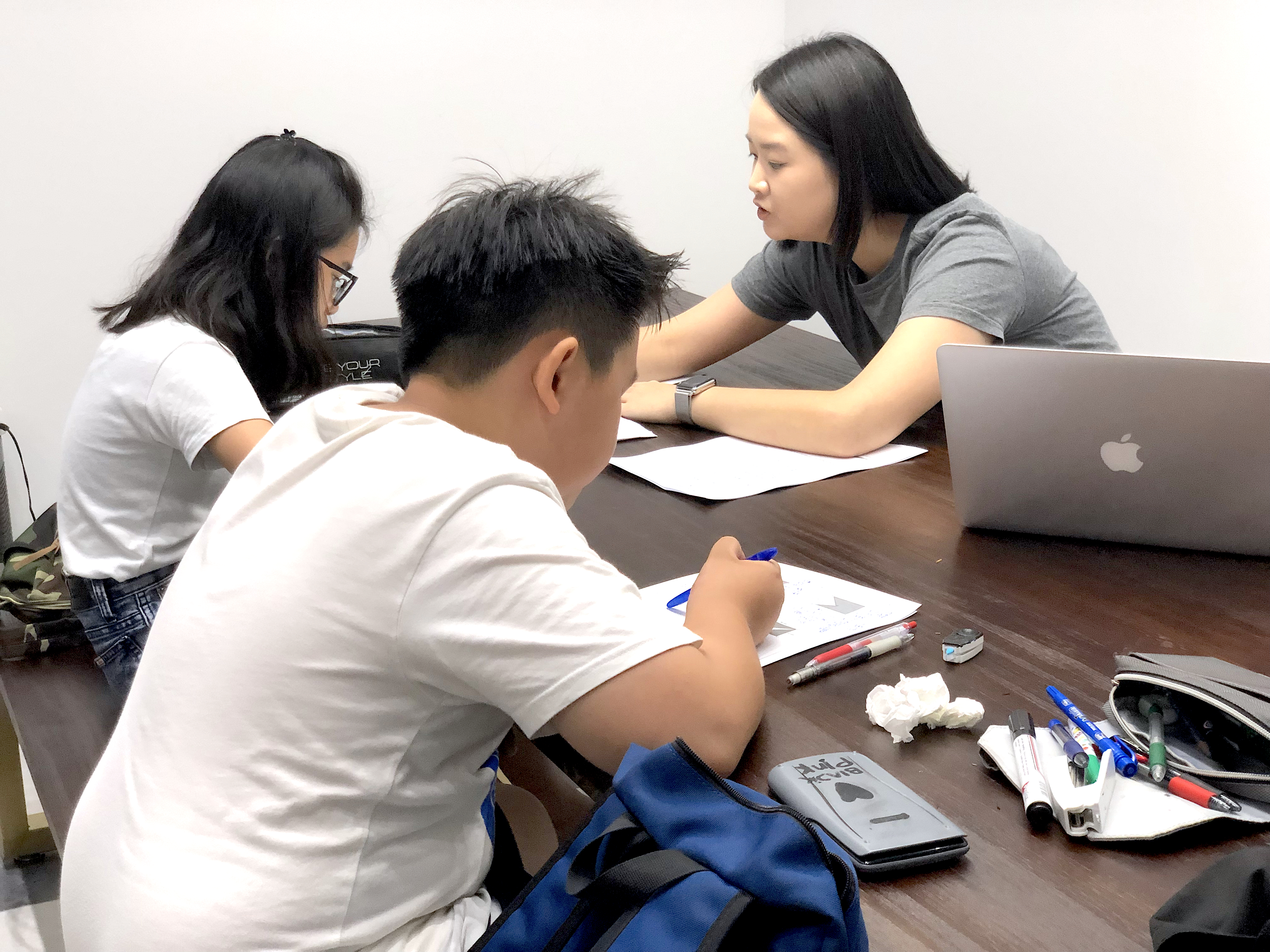











Pri3 Yishun The best Pri 3 English Tuition in Yishun with SEAB MOE PSLE syllabus English. Pri3 Yishun Primary English Tutor for Pri1 Pri2 Pri3 Pri4 Pri5 Pri6 PSLE English Paper 1 and Paper 2.
Call Yuet Ling +65 82226327 for our Pri3 Yishun English classes.


Learn English and make it useful.
Working closely with parents are part of our teaching culture to create the desired effect to get our English students positive changes in their studies. Our Yishun PSLE English tutors teach from scratch, making sure our English students master their language, and we do all the necessary practices from basic easy to complex advanced questions with our students, including past exam papers that helps them to understand and appreciate English as lingua franca in Singapore and use it to further their studies.
Class Culture
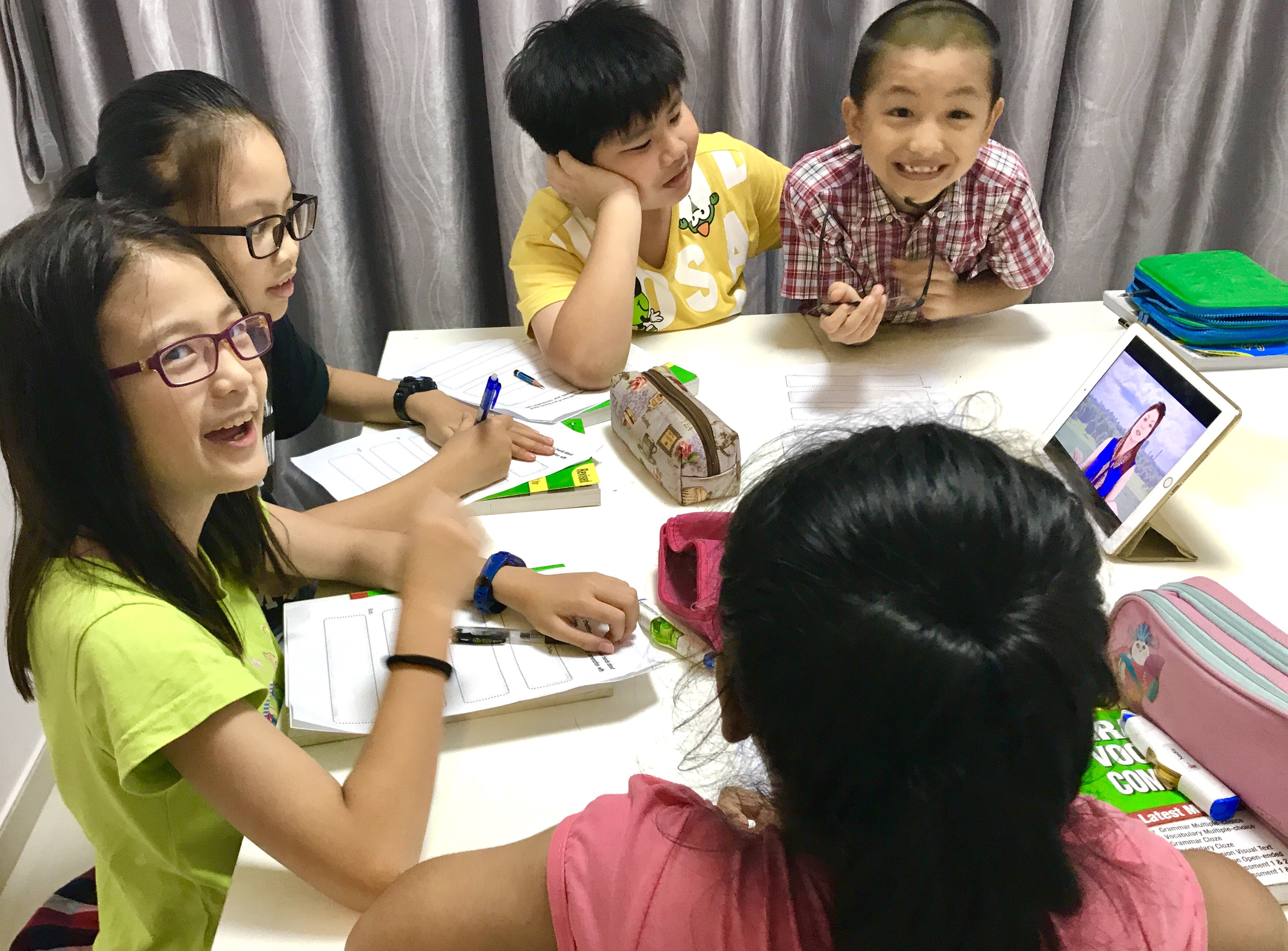
At eduKate Yishun, we work hard to have an affirmative class culture that empowers our students to do more, learn more, and develop a love for their own education by creating a class culture with great friends and tutors. Our positive classes also creates a constructive environment that teaches them the relevance of what they study to their everyday lives. With relevance creates the true reason for a proper education. That is our trademark that differentiates our teaching to others, but don’t just take our words for it, let these photos show you how much our passion and love for our Yishun student’s English lessons.




Leave a Reply