

Families searching for a Secondary 2 English tutor in Tampines often mention comprehension, vocabulary, grammar and composition as separate worries. The more useful question is how these skills travel together. A student may understand a passage during discussion yet write a thin answer, learn ten new words yet use none naturally, or collect quotations without explaining what they prove. Effective Secondary 2 English tuition should close those transfer gaps.
This guide focuses on reading-to-writing transfer for lower-secondary students: vocabulary in context, inference, evidence use, paragraph cohesion, sentence control and the move towards independent work. These are common concerns when parents compare Tampines English tuition, small-group English classes or MOE-aligned support. They also belong to ordinary school learning, so the student’s current teacher, texts and assessment instructions remain the immediate reference.
The aim is not premature drilling for an upper-secondary examination. Secondary 2 is a building year in which a student can learn to notice how a good text works, borrow its principles without copying its sentences, and revise with reasons. Two original worked examples and twelve practice tasks show the process. The happy surprise is that reading and writing are not rival departments; they have been sharing the same stationery cupboard all along.
Secondary 2 is where language skills begin to travel
At this stage, texts become longer, viewpoints less obvious and writing tasks more demanding. A reader must connect clues across sentences, distinguish a writer’s statement from an implication, and judge why a detail has been placed where it is. A writer must organise several ideas, maintain a suitable tone and guide a reader through a paragraph. The skills are connected because both activities depend on relationships: cause and effect, contrast, sequence, example, qualification and conclusion.
The Ministry of Education’s current secondary English syllabus treats reading, viewing, writing, representing, grammar and vocabulary as connected areas of language learning. It expects progression towards longer and more complex texts and communication shaped by purpose, audience, context and culture. Students may be taking English at different subject levels, and schools may organise Secondary 2 assessment differently. This article therefore teaches durable decisions rather than claiming one universal paper.
Transfer means using something learned in one setting when the surface changes. A student sees how a writer establishes contrast in a magazine article, then uses a similar logical move in an explanatory paragraph. Another infers a character’s embarrassment from evasive speech, then writes dialogue that reveals discomfort without announcing it. Neither student copies wording. Each carries a principle from reading into purposeful production.
Families can explore the English Tuition and Learning Hub for broader language guidance, then use the Secondary English directory to follow level-specific routes. Together, these pages position Secondary 2 between earlier foundations and later independence. They also help prevent a familiar mistake: choosing isolated worksheets when the real difficulty is moving knowledge from one task to another.
Diagnose the transfer gap, not the child
“Weak in English” is too broad to guide a lesson. Collect a recent reading response, a longer writing task and a short piece completed without help. Look for the point at which meaning becomes less controlled. Does the student misread the passage, choose the wrong evidence, fail to explain relevant evidence, or know the idea but lose it inside an unstable sentence? Each pattern needs a different repair.
A simple diagnostic uses four columns: source clue, inferred meaning, written explanation and language control. Suppose a passage says that Arun checked the arrival board three times although the train number had not changed. The student may correctly infer anxiety but write only, “He checked three times.” The reading clue was found, yet the inference did not reach the answer. The intervention should practise the bridge between observation and interpretation.
Writing samples reveal reverse gaps. A composition may have energetic events but little control over time, cause or emphasis. Ask the student to underline every sentence that helps the reader understand why the central change matters. If only two sentences survive, the difficulty is not simply “lack of vocabulary”. It may be weak selection and paragraph purpose. More adjectives would give the confusion a brighter jacket, not a clearer route.
Vocabulary in context is a network, not a trophy shelf
Vocabulary matters, but a word is useful only when the student knows its meaning, connotation, grammar, partners and suitable context. Consider reluctant. It usually describes a person who is unwilling or hesitant: “She was reluctant to interrupt.” It does not mean unable, and it does not naturally describe every unpleasant situation. Learning the word with to plus a verb and with examples of restrained hesitation makes later use more reliable.
Use a four-part vocabulary note: the sentence, a meaning in that sentence, a common collocation and an original sentence. For tentative, a student might record “a tentative agreement”, meaning provisional rather than confident; collocations include “tentative plan” and “tentative step”; an original sentence could be, “The committee made a tentative booking while waiting for permission.” This builds usable knowledge rather than a decorative synonym list.
When transferring vocabulary into writing, choose accuracy before rarity. Replace a vague word only if the new word improves the claim. “The rain was bad” might become “The persistent rain delayed repairs,” because persistent describes duration and the sentence supplies an effect. “The rain was malevolent” gives weather a villain’s moustache unless personification is genuinely intended.
Inference is a claim supported by clues
An inference combines textual evidence with reasonable background knowledge. It is neither a copied line nor a free invention. Teach the student to complete three moves: notice, interpret and justify. “The speaker folds the receipt into smaller and smaller squares” is the observation. “She is tense while waiting for a decision” is the interpretation. The repetitive, unnecessary movement justifies that reading.
Several inferences may be possible, but not equally supported. The folded receipt could suggest boredom, yet surrounding details may favour anxiety. Students should test an inference against the whole passage: does it fit the character’s words, actions, setting and later response? A good answer is cautious enough for the evidence. “This suggests” is often more defensible than “This proves beyond doubt.”
Writing benefits from the same principle. Instead of telling the reader, “Mei was nervous,” the writer can select details that invite a controlled inference: she reads the first line twice, answers a simple question too quickly, and keeps one hand on the unopened envelope. The details must converge. Random trembling, thunder and a conveniently shattered mirror produce noise rather than meaning.
A useful practice loop begins with a short passage. The student labels explicit information, implied meaning and strongest supporting phrase. Then the student writes two new sentences that would imply the same feeling in a different situation. Finally, the student explains why those details work. This last explanation converts intuition into a strategy that can be recalled.
Worked example 1: reading a clue and writing its logic
Original passage: “Nadia arrived ten minutes before the community interview. She placed her notes beside the chair, then moved them to her lap when footsteps approached. When the door opened, she smiled and asked whether the panel would prefer her to begin with the survey findings or the residents’ comments.”
Question: What does the passage suggest about Nadia’s preparation? Support your answer. A thin response says, “She was prepared because she had notes.” That is plausible but incomplete. Notes alone do not show whether she can use them. A stronger answer says, “Nadia appears thoroughly prepared but slightly tense. She arrives early and brings organised sources, while moving the notes when she hears footsteps suggests nervous anticipation. Her question about two possible starting points shows that she has planned the interview’s content and can adapt it to the panel.”
The answer separates two related ideas: preparation and tension. It selects three clues and explains the function of each. It does not paste the passage or claim that Nadia will certainly succeed. The writer’s task is now to transfer this logic into a new scene: establish a quality through converging details, then allow a small complication to make the character believable.
Transferred writing: “Jon had checked the bicycle lights the night before, packed the repair kit and saved the route offline. At the gate, however, he tightened the same strap twice before pressing the call button.” The first list establishes practical readiness. The repeated adjustment introduces unease. The paragraph does not announce either trait, yet the evidence lets the reader infer both.
A student can imitate the structure without copying the content: two or three details point towards a main quality; one contrasting detail complicates it; a final action moves the situation forward. This is legitimate transfer. The reading example becomes a design principle, while the setting, character, language and purpose remain original.
Evidence must be selected, framed and explained
Students sometimes treat evidence as a parcel that can be dropped into an answer unopened. A quotation needs framing: what claim does it support, which part matters, and how does that wording create meaning? The compact structure is claim, evidence, explanation. For a longer paragraph, add qualification or link. Each stage should be visible enough that another reader can follow the reasoning.
Select the smallest sufficient evidence. If one phrase answers the question, copying four lines creates more work and may blur the point. For the Nadia example, “asked whether the panel would prefer” shows adaptation more precisely than repeating the entire final sentence. Paraphrase is useful when the idea matters more than exact wording; quotation is useful when a particular word, image or tone carries the inference.
Avoid circular explanation. “The phrase ‘hesitated at the gate’ shows hesitation” only changes the font. Explain what hesitation reveals in context: perhaps conflict between curiosity and fear, or uncertainty about belonging. Also avoid importing a biography that the passage never provides. Evidence supports a bounded claim, not a television series about the character’s childhood.
In informative or persuasive writing, evidence may be an observed example, a source detail supplied by the task, or a reasoned scenario. Do not invent statistics to make a paragraph look official. Instead, make the mechanism clear. If claiming that shaded walkways encourage walking, explain that protection from intense sun or rain makes short journeys more comfortable and predictable. The causal link does more work than a fictional percentage.
Paragraph cohesion gives the reader a route
A coherent paragraph has one governing job. Its sentences may define, explain, exemplify, contrast or qualify, but each serves the central idea. Before drafting, write a plain topic sentence. Then ask what the reader needs next. If the claim is “Shared gardens can strengthen neighbourhood trust,” the next sentence should explain how repeated low-stakes encounters create familiarity, not leap to the price of tomatoes.
Cohesion operates through reference, repetition with variation, connectors and logical sequence. Pronouns must point clearly. Key words may be repeated when precision matters, while related words avoid monotony. Connectors should name the relationship: however signals contrast, therefore a conclusion, and for example illustration. Sprinkling “moreover” between unrelated ideas does not make them relatives.
Use a “given-to-new” pattern. Begin a sentence with something the reader already recognises, then add new information. “The shared garden creates regular encounters. These brief meetings allow neighbours to exchange small favours. Such exchanges gradually build confidence that help will be returned.” Each sentence picks up a known element and moves the idea forward. The paragraph feels connected because information travels hand to hand.
Worked example 2: rebuilding a paragraph from a source
Source notes: A school library extended one weekday session. Some students used the quiet tables before activities; others attended peer reading sessions. Staff noticed that the room became crowded near the entrance, and several students did not know where to ask for help. The school is considering a six-week trial with signs and a rotating student guide.
Weak paragraph: “The library should stay open because students like it. It is quiet and there are peer sessions. It gets crowded. Signs are good. The trial should happen.” Every sentence touches the topic, but the logic is loose. Evidence is listed without interpretation, and the crowding problem appears as an unexplained obstacle rather than a condition the proposal can address.
Improved paragraph: “The school should run the six-week extended-library trial because the existing session meets two clear student needs: quiet study before activities and peer support for reading. However, the crowd near the entrance shows that access alone is not enough. Clear zone signs and a rotating student guide would help visitors locate tables, sessions and assistance without adding a permanent arrangement before the idea has been tested. At the end of six weeks, attendance patterns and brief user feedback could show whether the session should continue.”
The revised paragraph converts source facts into a decision. The opening claim states the recommendation and groups the two benefits. However introduces a genuine limitation. The next sentence connects each proposed measure to the observed problem, while the final sentence defines what the trial can learn. No unsupported claim is needed; the reasoning makes the paragraph persuasive.
The transfer lesson is portable. When reading, notice how facts form categories, problems create conditions and solutions answer specific causes. When writing, reproduce those relationships with new material. A source is not a quarry from which impressive phrases are stolen. It is a map of ideas that the student must redraw for a fresh purpose and audience.
Sentence control protects the idea
Sentence variety is valuable only when the underlying structure is sound. Begin with a complete core: subject and finite verb, plus any necessary object or complement. Then attach subordinate information deliberately. “Because the rain intensified” is not complete by itself. “Because the rain intensified, the organisers moved the workshop indoors” makes the relationship and main action clear.
Control reference carefully. In “When Farah spoke to Elaine, she was upset,” the pronoun could refer to either person. Name the person or rewrite the cause: “Farah lowered her voice when she noticed that Elaine was upset.” This is not fussy polishing. Ambiguous reference changes meaning, and meaning is the first duty of grammar.
Place modifiers beside what they modify. “Walking through the corridor, the poster caught Ravi’s attention” makes the poster appear unusually mobile. “Walking through the corridor, Ravi noticed the poster” restores the correct walker. Read the sentence literally; humour is a good alarm system when grammar accidentally gives furniture an active social life.
Combine short sentences when the relationship is clear. “The room was crowded. Lina stayed. She needed the reference book” can become, “Although the room was crowded, Lina stayed because she needed the reference book.” Do not combine everything. A short sentence can emphasise a turning point. Rhythm should serve meaning, not demonstrate that the student owns several conjunctions.
A repeatable reading-to-writing lesson
A productive lesson can follow six stages. First, read a short, worthwhile text for overall meaning. Second, identify one craft feature: contextual vocabulary, evidence, transition, sentence pattern or implied character trait. Third, explain how the feature works. Fourth, imitate the principle in a different context. Fifth, receive feedback on one or two priorities. Sixth, revise and state what changed.
Keep the transfer target narrow. A student who studies inference, paragraph cohesion, register and five grammar rules at once may complete plenty of activity without learning which decision improved the work. One lesson might focus on evidence-to-inference links. The reading answer, model paragraph and revision should all rehearse that link in different forms.
Feedback should name the next action. “Good” provides warmth but little direction; “Your claim is clear, and the quoted phrase is relevant; add one sentence explaining how ‘hovered’ suggests uncertainty rather than movement alone” tells the student what to do. Likewise, “improve vocabulary” is vague, while “replace the general verb with one that shows hesitant movement” connects vocabulary to meaning.
Revision must require thinking. Copying a teacher’s correction produces a clean page but limited transfer. Ask the student to diagnose the weakness, choose a repair and compare versions. A brief revision note—“I split the sentence because the pronoun had two possible referents”—turns an edit into retrievable knowledge. Over time, those notes become a personal manual.
Twelve practice tasks with answers and rationales
Practice task 1: infer from converging details
Task: Read: “When the results page loaded, Dev turned the tablet face down. He congratulated Mira, asked about her score and began stacking cups that were already neatly arranged.” What is Dev probably feeling? Use two clues. Answer: Dev is probably disappointed or uneasy about his own result while trying to remain polite. Turning the tablet down avoids displaying it, and unnecessarily stacking neat cups suggests restless distraction. Rationale: The answer joins two behavioural clues and avoids claiming a precise score that the text never gives.
Practice task 2: use contextual vocabulary
Task: In “The committee gave a tentative approval, subject to a safety review,” explain tentative and use it in a new sentence. Answer: It means provisional or not yet final. “We made a tentative plan to cycle on Saturday, depending on the weather.” Rationale: “Subject to” signals a condition, and the new sentence preserves the idea of a plan that may change.
Practice task 3: choose precise evidence
Task: From the Nadia passage, select the shortest phrase showing adaptability. Answer: “would prefer her to begin”. Rationale: The phrase shows that Nadia offers the panel a choice about sequence. Quoting the whole sentence would be accurate but less selective.
Practice task 4: explain rather than repeat
Task: Improve this explanation: “The words ‘paused outside’ show that he paused.” Answer: “His pause outside suggests that he is uncertain about entering, because he delays at the threshold instead of continuing directly inside.” Rationale: The revision interprets the action in relation to the setting; it does not merely echo the quoted verb.
Practice task 5: build a cohesive sequence
Task: Order these ideas: (A) trust makes future cooperation easier; (B) neighbours exchange small favours; (C) regular shared activities create familiar encounters. Answer: C, B, A. Rationale: The sequence moves from repeated contact to exchange, then to the longer-term effect. It forms a causal chain rather than a list.
Practice task 6: repair pronoun ambiguity
Task: Rewrite: “Siti told Mei that she should present first because she was calm.” Answer: “Because Mei remained calm, Siti asked her to present first.” Rationale: Naming Mei removes both uncertain pronouns and makes the reason for Siti’s request explicit.
Practice task 7: transfer an inference into description
Task: Write one sentence implying impatience without using impatient, annoyed or angry. Answer: “Marcus refreshed the delivery page, counted to ten and refreshed it again before the circle had finished spinning.” Rationale: Repeated checking and premature action allow the reader to infer impatience through behaviour.
Practice task 8: make a source-based claim
Task: Using the library notes, write a claim that acknowledges a limitation. Answer: “The extended session appears useful for quiet study and peer reading, although clearer guidance is needed to prevent confusion near the entrance.” Rationale: The sentence groups the benefits and incorporates the observed problem without rejecting the entire proposal.
Practice task 9: select a logical connector
Task: Complete: “The club attracted many new members. ______, attendance fell when meetings moved to Friday evenings.” Answer: “However”. Rationale: The second sentence contrasts initial interest with later participation. “Therefore” would falsely present the drop as a result of attracting members.
Practice task 10: control a complex sentence
Task: Combine: “The path was longer. It was shaded. We chose it during the hottest part of the afternoon.” Answer: “Although the path was longer, we chose it during the hottest part of the afternoon because it was shaded.” Rationale: Although marks the disadvantage, while because gives the deciding reason.
Practice task 11: distinguish claim from speculation
Task: A hike leader checks two weather reports, shortens the route and asks everyone to carry extra water. Which is better supported: (A) the leader enjoys controlling the group, or (B) the leader is responding cautiously to changing conditions? Answer: B. Rationale: Consulting forecasts and adjusting both route and supplies show risk management. A desire for control is possible but not established.
Practice task 12: revise for transfer
Task: Revise: “The clean-up was successful. Many people came. It helped the park. It was good for the community.” Answer: “The clean-up brought residents together to clear litter and reopen the overgrown path, improving the park while showing that a shared, visible task can strengthen community participation.” Rationale: The revision replaces vague evaluation with actions, effects and a reasoned link between the event and community value.
How to review the twelve tasks
Do not score only right or wrong. Ask the student to name the cue and the decision. For inference tasks, underline evidence and circle the interpretation. For cohesion tasks, draw arrows between repeated ideas and label the relationship. For sentence tasks, box the main clause before examining added information. This makes the invisible process visible.
A weekly plan for growing independence
One practical week can be modest. On day one, read a short article or narrative extract and record the main idea, one inference and three contextual words. On day two, turn one relationship from the text into a paragraph plan. On day three, draft the paragraph. On day four, revise evidence, cohesion and one sentence-control target. On day five, complete a fresh ten-minute transfer task without notes.
Maintain a small transfer log with four prompts: what I noticed, what it did, where I tried it, and what I changed. An entry might read, “The writer used a contrast after describing the benefit; it prevented an exaggerated claim; I added a limitation to my library paragraph; I then linked the limitation to a safeguard.” Such notes are far more valuable than a list saying “comprehension, composition, grammar”.
Independence should be released gradually. At first, model the reasoning aloud. Next, provide a prompt card. Then remove one prompt and ask the student to explain the process. Finally, use an unseen text and a new writing purpose. Help is not withdrawn as a surprise; it is reduced when evidence shows that the student can carry the next part.
Parents can support this without becoming nightly markers. Ask, “Which phrase changed your interpretation?” or “What job does this sentence perform?” Praise an effective decision rather than only the finished grade. If school feedback identifies a priority, use that language consistently. A home conversation should make the student more observant, not turn dinner into a tribunal for misplaced commas.
What productive support should look like
Whether support happens at school, at home or with a tutor, the work should connect diagnosis, modelling, practice, feedback and independent transfer. Ask to see before-and-after writing and the reason for each important revision. A polished worksheet is less informative than evidence that the student can explain why a clue supports an inference or why a paragraph needed reordering.
Look for calibrated difficulty. Material should be challenging enough to require thought but not so dense that every sentence needs rescue. A strong lesson may use a short passage deeply rather than race through five. The important measure is not the height of the worksheet pile; it is the quality of decisions the student can make on an unfamiliar task.
Progress is rarely a straight weekly line. Vocabulary may improve before sentence control, or comprehension explanations before sustained writing. Compare work over several attempts. If a pattern persists, narrow the target and speak with the school teacher. Additional professional assessment may be appropriate when language difficulties are broad, persistent or affecting daily functioning; tuition should not pretend to diagnose them.
Frequently asked questions
Should a Secondary 2 student begin O-Level papers now?
Not automatically. Secondary 2 students need strong reading, writing, grammar, vocabulary, speaking and listening foundations at the level and pace set by their school. Selected future-style material may be useful when a teacher chooses it for a clear purpose, but premature paper drilling can hide foundational gaps. Follow current school guidance and treat later examination documents as pathway context, not as a universal Secondary 2 paper.
How many vocabulary words should be learned each week?
A fixed large number is less useful than deep, repeated use. A manageable set learned with context, collocation, word family and original sentences can be revisited in reading and writing. Track whether the student recognises the word, explains it in context and uses it naturally later. Twenty forgotten definitions are not superior to six words that have joined the student’s working language.
Why can my child discuss a passage but not answer in writing?
The missing step may be evidence selection, explanation, sentence formulation or all three. Ask the student to say the answer, point to the clue, complete “this suggests…because…”, and only then write. Compare spoken and written versions to locate where meaning is lost. The remedy should practise that bridge rather than assign unrelated comprehension pages.
Are model essays helpful?
They can be, if the student studies decisions rather than memorising sentences. Identify how the model opens a paragraph, introduces evidence, manages reference or qualifies a claim. Then apply the principle to a different topic. Copying polished phrases may create awkward writing when the context changes; analysing structure supports transfer.
How should errors be corrected?
Prioritise patterns that affect meaning or recur. Mark enough information for the student to diagnose and repair the sentence, then require a short explanation or another example. Correcting every surface slip at once can overwhelm attention. Some final proofreading still matters, but instruction should help the writer recognise why the error occurred and how to prevent it.
What shows genuine progress?
Look for increasingly accurate decisions on unfamiliar material: a relevant clue chosen without prompting, an inference explained, vocabulary used with natural partners, paragraphs that develop one purpose, and revisions that solve identified problems. Marks are one form of evidence, but drafts, verbal explanations and independent transfer show how the improvement was produced.
Teaching Guide
Teach this article as a sequence, not a single marathon. Begin with one recent school sample and identify the narrowest transfer gap. Select the relevant section and one worked example. Model the reasoning, complete two practice tasks together, and ask the student to apply the same principle to fresh material. Keep the original and revised versions so progress can be inspected.
For a four-week cycle, use contextual vocabulary and inference first, evidence and cohesion second, sentence control third, and an integrated unseen task fourth. Revisit earlier targets each week. End every lesson with an explanation: what changed, why it improved meaning and where the same decision could be used again. That final act turns today’s correction into tomorrow’s independent choice.
The central principle is simple: read like a writer and write like a careful reader. Notice relationships, test interpretations against evidence, choose words for their actual work and guide another person through the idea. Secondary 2 gives students valuable time to make these habits dependable before upper-secondary demands intensify. Used well, that time builds not just a cleaner answer, but a learner who can see and repair the machinery of meaning.



Singapore English tuition with Tutor Yuet Ling. With Singapore school’s requirement for English as a First language, our primary aim in teaching English are highly focussed on tasking English student’s communication skills to be competent as well as to be an effective, accurate and efficient tool to absorb and relay information to others.
English is Singapore’s main language of communication and it is imperative that our student’s English Language skills are on parity with the requirements set forth by the Ministry of Education to study well in school. It is the main skill that will help students to perform consistently across their other subjects as their ability to understand and use English effectively will help them to comprehend what is taught in class and asked in tests.
English Tuition Centre with English tutor of 20 years in the business helping English students to improve their ability to communicate. An improvement of their linguistic competence in both the passive reading/listening and active speaking/writing process of the English Language are part of our course curriculum.
With that in mind, our English classes are geared to teach and train our students to be able to understand the media that they read or hear, and to have the ability to express and communicate their complex thoughts and ideas to others naturally. Any improvements in information absorption and dissemination will automatically translate to cognitive skills and ultimately, help students to do well in their studies.
English should be treated as our native language, to be the main Lingua franca for a cosmopolitan Singapore where over generations, English has been integrated well into our everyday life. As a first language, the focus of our tuition will be to task our Yishun students to learn the skills needed to communicate proficiently for both their studies in school as well as for their everyday life.
Local English Tutor for English tuition are the dependable, trustworthy tutor that delivers the results. Join our English tutorials and have our English Teacher get you on track. Small groups of 3.
increase general knowledge and all necessary skills needed for the PSLE
score maximum marks by understanding the marking scheme of the examination
in a safe, comfortable air con environment with properly equipped classes
by discerning tutors that can detect weaknesses, solve student’s problems during class
by qualified female tutors with experience in improving students for the crucial PSLE
Give us a call at +65 82226327 for more information on our Singapore English classes.














Pri3 Yishun The best Pri 3 English Tuition in Yishun with SEAB MOE PSLE syllabus English. Pri3 Yishun Primary English Tutor for Pri1 Pri2 Pri3 Pri4 Pri5 Pri6 PSLE English Paper 1 and Paper 2.
Call Yuet Ling +65 82226327 for our Pri3 Yishun English classes.


Learn English and make it useful.
Working closely with parents are part of our teaching culture to create the desired effect to get our English students positive changes in their studies. Our Yishun PSLE English tutors teach from scratch, making sure our English students master their language, and we do all the necessary practices from basic easy to complex advanced questions with our students, including past exam papers that helps them to understand and appreciate English as lingua franca in Singapore and use it to further their studies.
Class Culture
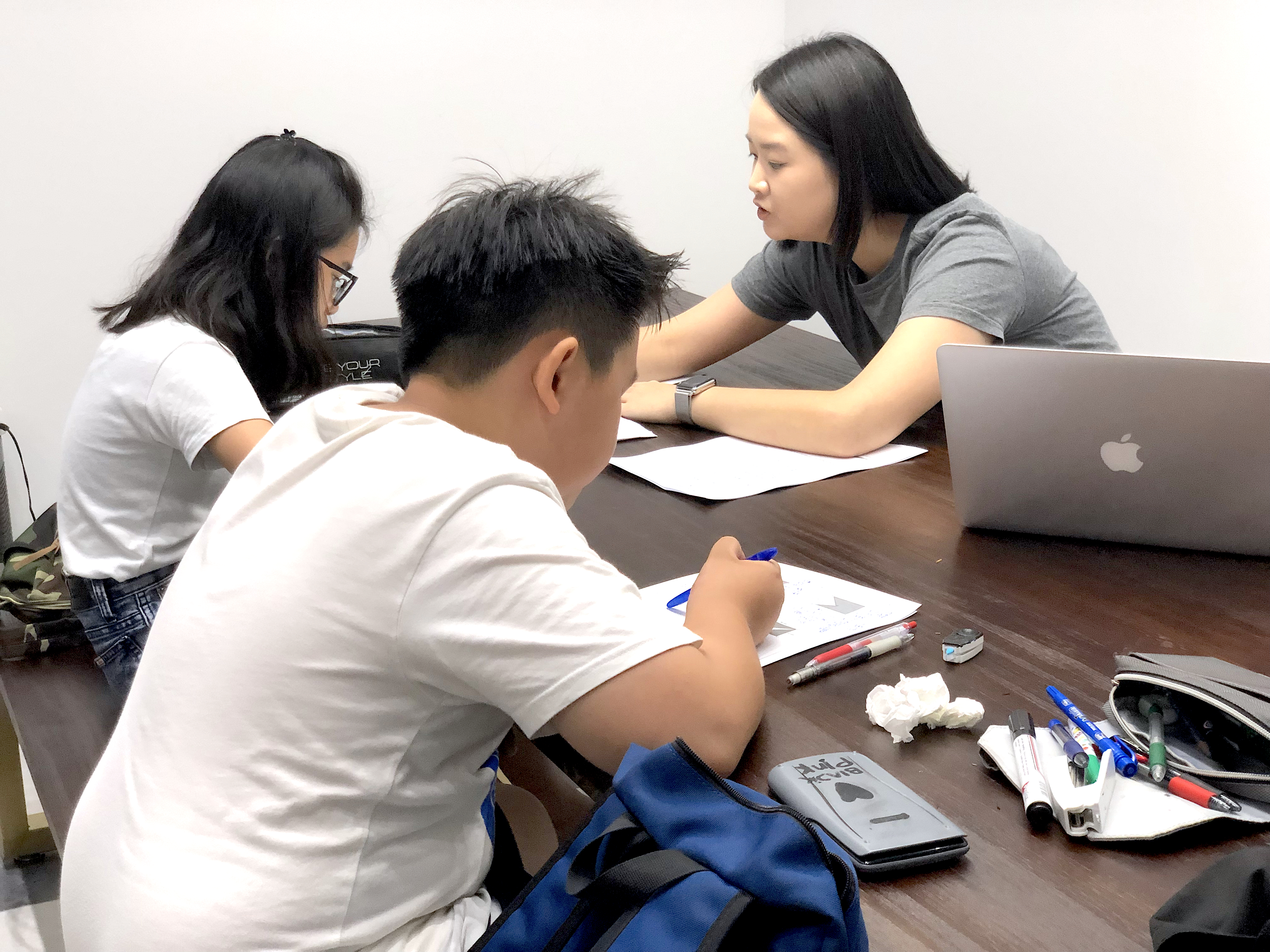
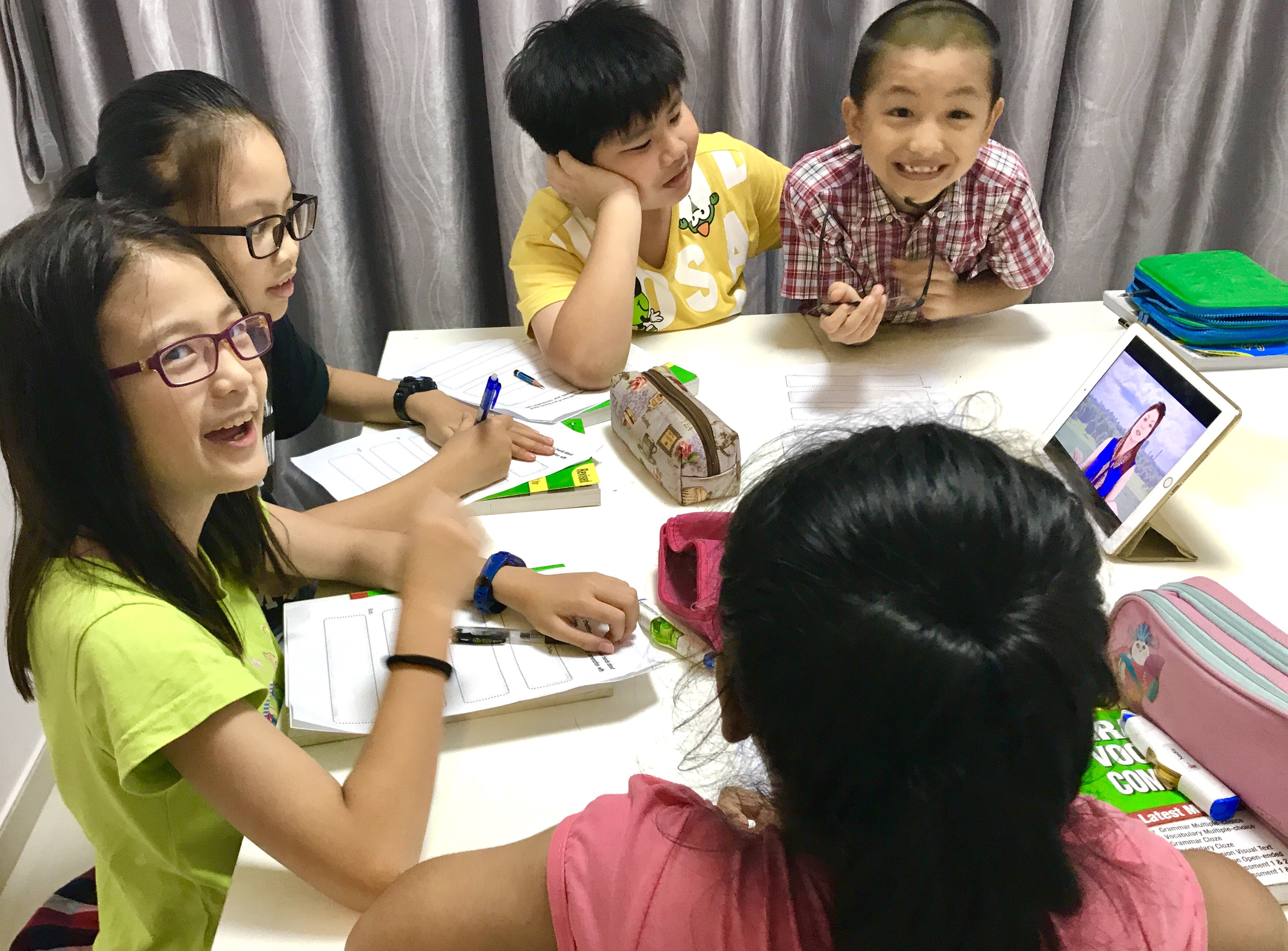
At eduKate Yishun, we work hard to have an affirmative class culture that empowers our students to do more, learn more, and develop a love for their own education by creating a class culture with great friends and tutors. Our positive classes also creates a constructive environment that teaches them the relevance of what they study to their everyday lives. With relevance creates the true reason for a proper education. That is our trademark that differentiates our teaching to others, but don’t just take our words for it, let these photos show you how much our passion and love for our Yishun student’s English lessons.




Leave a Reply