

Ownership note: this retained eduKateYishun Secondary 2 Sengkang English URL is a duplicate historical search route, not the current owner. Present-day Sengkang year-level tuition belongs with eduKateSengkang Secondary 2 English; specialist English depth belongs with the SETC English Atlas. Preserve this page only for its distinct learning material and archive continuity.
Families looking for a Secondary 2 English tutor in Sengkang often describe the same puzzle: a student understands lessons, completes English homework and still repeats familiar mistakes in comprehension, grammar, vocabulary, composition writing or oral discussion. More worksheets can make the pile taller without making the next answer better. Useful Secondary 2 English tuition begins by identifying the recurring pattern, correcting it deliberately and checking whether the student can apply the repair alone.
This guide explains a practical revision-control system for lower-secondary English. It balances reading comprehension, grammar and editing, vocabulary, continuous and situational writing, listening, viewing and speaking. The aim is not premature national-examination drilling. It is to help a thirteen- or fourteen-year-old organise school feedback, turn errors into short correction cycles, plan a sustainable weekly review and arrive at upper secondary with dependable habits.
Parents comparing Sengkang English tuition, small-group Secondary English classes or an MOE-aligned English tutor will find two worked examples, twelve practice tasks with answers, a weekly plan and a clear way to measure independence. Search terms such as exam preparation, comprehension skills, essay writing, vocabulary building and grammar practice name important areas; the greater advantage comes from linking them. English improves when reading supplies ideas, grammar clarifies meaning, vocabulary sharpens choices, writing tests organisation and oral practice makes thinking audible.
Secondary 2 is the year to make revision visible
Secondary 2 sits in a useful position. Students have experienced the jump from primary school, yet there is still time to repair habits before upper-secondary work becomes more demanding. Many difficulties are not mysterious gaps in intelligence. They are unmanaged loops: the student receives a marked task, reads the score, copies a correction, closes the file and meets the same problem three weeks later wearing a different hat.
A revision-control system changes that sequence. Every significant error is classified, repaired, explained and retested. “Wrong” becomes information. A comprehension answer may fail because the evidence was missed, the question word was ignored or the idea was expressed too vaguely. A paragraph may be weak because the event lacks development, the point has no example or several sentences run together. Different causes need different repairs.
The Ministry of Education’s English Language Syllabus 2020 connects receptive work in listening, reading and viewing with purposeful speaking, writing and representation, while grammar and vocabulary support the whole. That broad design favours balanced practice rather than a diet of one component. Schools decide their own Secondary 2 assessment details, so current school instructions and teachers remain the authority for task formats, weightings and deadlines. The routines here deliberately train transferable language control rather than promise one universal paper.
Families can connect this practical work to the wider English Tuition and Learning Hub and the Secondary English directory. Those routes help a reader see what belongs to Secondary 2, what was inherited from earlier years and what should be ready before the next stage.
Start with evidence, not a label
“Careless,” “weak in English” and “not exam-smart” sound like diagnoses but do not tell a student what to do on Tuesday afternoon. Begin with a small evidence set: one recent reading-comprehension task, one substantial piece of writing, one grammar or editing exercise and one short spoken response. Add the teacher’s comments and the student’s own account of where time or confidence disappeared.
Read for patterns. Mark an error as a knowledge gap, a decision error, an expression problem or a checking failure. If a student cannot explain what a pronoun refers to, the gap may be grammatical knowledge. If the student knows the rule but rushes past the antecedent, it is a decision or checking issue. If the idea is correct but the sentence makes two possible meanings, expression is the target.
Then choose only one or two high-value priorities for the next fortnight. Trying to repair inference, tense, spelling, introductions, vocabulary, oral fluency and handwriting at once produces a timetable that looks industrious and teaches very little. A suitable pair might be “answer inference questions with an evidence chain” and “control sentence boundaries.” The first strengthens reading; the second improves every extended answer.
Create a simple baseline that the student can repeat. This may be a six-question passage, a 250-word narrative scene, a one-minute discussion response and a ten-sentence edit. Record accuracy, time, type of prompt needed and the student’s explanation of corrections. Retest with different content after practice. Improvement on the original item proves memory; improvement on a fresh item suggests transfer.
Use a four-step correction cycle
The cycle is short enough to use after ordinary schoolwork: notice, repair, explain and retest. First, notice the exact point where meaning or method failed. Circle the word in the question that was overlooked, underline the unsupported claim or bracket the sentence that runs on. A vague red cross tells the learner that the answer lost marks; a located failure shows where thinking should restart.
Second, repair the smallest meaningful unit. Rewrite one answer, one sentence or one paragraph before attempting an entire paper. Third, explain the repair aloud or in one written line: “I changed were to was because the subject is the singular noun collection.” Explanation checks that the student owns the rule rather than copied a model with excellent handwriting and no forwarding address.
Fourth, retest after a delay with a new item that requires the same move. If the error was unsupported inference, use another passage. If it was a comma splice, present three new sentences, including one that is already correct. Delayed retrieval matters because the learner must reconstruct the decision without the correction sitting beside it like an overly helpful passenger.
Keep the cycle proportionate. Not every miss deserves a dossier. One-off spelling slips can be corrected quickly. Repeated errors, misunderstood concepts and decisions that affect several components belong in the log. A ten-minute correction that changes later work is more valuable than an hour spent recopying a page that the student already understands.
Build an error log that leads somewhere
Use five columns: task, original attempt, error type, corrected version and next test. Add a sixth column for the rule or reasoning in the student’s own words. Organise entries by pattern rather than date alone. Useful categories include question interpretation, evidence selection, inference, vocabulary in context, sentence boundaries, agreement, tense, reference, paragraph development, audience and spoken organisation.
An entry should be specific. “Comprehension wrong” is a fog bank. “Copied the phrase closed the gate softly but did not infer that Hana wanted to avoid attention” identifies evidence and the missing interpretation. “Grammar mistake” is equally unhelpful; “plural verb used because the nearby noun distracted me from the singular subject” reveals what the student must check.
Review the log before, not only after, practice. Select three current traps and turn them into a pre-task checklist. For writing: “Does every paragraph change the situation? Have I checked sentence endings? Can the reader tell who each pronoun names?” For comprehension: “What is the question asking me to do? Which line supports my answer? Have I explained rather than copied?”
Retire an entry when the student succeeds on three varied occasions without prompting. This prevents the log becoming a museum of ancient disasters. If an error returns under time pressure, restore it without drama. Learning is not a courtroom where an old mistake proves bad character; it is maintenance, and occasionally a loose screw introduces itself again.
Worked example 1: repairing an inference answer
Passage: “Mei placed the permission form beneath her notebook. When her friends discussed the camp, she asked whether the canteen had changed its menu. At dismissal, she waited until the classroom was empty before taking the form out again.” Question: What do Mei’s actions suggest about how she feels about the camp?
First attempt: “She put the form under her notebook and took it out later.” This accurately copies actions but does not answer how she feels. The failure is not lack of evidence; it is a missing inferential bridge. The student has found the stepping stones and then elected to remain on the riverbank.
Repair: “Mei seems uneasy about the camp and reluctant to discuss it openly. She hides the form, changes the subject when friends mention the camp and examines it only after they leave.” The answer states a cautious inference and combines three clues. It avoids claiming a cause—such as fear of heights or family disagreement—that the passage never supplies.
Explain and retest: The student’s rule is, “For an inference, I name the likely feeling or motive and prove it with a pattern of behaviour.” Two days later, use a new paragraph in which a character repeatedly checks a clock, packs early and stands near a door. If the student independently infers impatience or eagerness and cites the cluster, the repair has begun to transfer.
Reading comprehension: separate locating from explaining
Strong comprehension begins by identifying the job in the question. “According to the passage” usually asks for stated information. “What does this suggest?” calls for inference. “Why is the phrase effective?” requires meaning and effect in context. “How are the two views different?” demands a comparison. Underline the command and key reference before searching the text.
For direct questions, answer only what is asked and preserve the passage’s relationships. For inference, use the private frame: evidence says X; therefore Y is likely because Z. For language effect, identify the association created by the particular word and connect it to mood, character or purpose. Naming “metaphor” without interpreting the image is like identifying a screwdriver and leaving the screw untouched.
Vocabulary-in-context work should begin with the surrounding sentence, not a memorised dictionary line. Substitute a possible meaning and check tone, grammar and logic. If reserved describes a person’s manner, “booked in advance” is grammatically adventurous but contextually doomed. Record useful word families and collocations: reluctant, reluctance, reluctantly; reluctant to admit; initially reluctant.
When reviewing a passage, ask the student to justify each correction with a line or language clue. Then remove the original text and ask for the strategy. This two-way recall—text to answer, answer back to evidence—reduces guessing. It also reveals whether a correct response came from reasoning or from an inspired encounter with option C.
Grammar and editing: teach meaning through form
Grammar is not a bag of rules kept separately from communication. Sentence boundaries tell the reader where one complete thought ends. Agreement helps the reader track the subject. Tense locates events and relationships in time. Pronouns maintain reference. Connectors show cause, contrast, condition and sequence. When correcting a form, ask what confusion it caused or prevented.
Use a three-level routine. At word level, check form and agreement. At sentence level, locate the subject, finite verb and boundary. At paragraph level, check reference and time sequence. Consider: “The collection of photographs were stored carefully, it reminds the family of journeys they took.” The nearby plural nouns tempt were, the comma joins two complete clauses, and it could refer awkwardly to the collection or storage.
A controlled revision is: “The collection of photographs was stored carefully because it reminded the family of journeys they had taken.” The singular head noun collection governs was; because states the relationship; it now refers clearly; and the past perfect places the journeys before the remembering. The student should explain each decision, not merely admire the polished sentence from a respectful distance.
Editing practice works best in mixed sets. Include genuine errors and correct sentences so students must decide whether intervention is needed. Otherwise they learn that every line contains exactly one mistake and begin vandalising healthy grammar. After a set, ask the learner to write two original sentences using the repaired pattern.
Vocabulary should improve precision, not decoration
A Secondary 2 vocabulary plan needs depth as well as breadth. Learn a word’s core meaning, connotation, grammatical behaviour, common partners and contrast with nearby words. Concerned, anxious, alarmed and uneasy overlap, but differ in intensity and situation. A writer who knows the difference can shape a character; a writer who collects them as interchangeable “good words” may produce a very alarmed sandwich.
Build vocabulary from reading. Each week, select six to eight high-utility words from articles, stories or school texts. Record the source sentence, an inferred meaning, a checked definition, two collocations, a word-family member and an original sentence tied to a plausible context. Revisit the words through retrieval rather than repeatedly highlighting them until the page resembles a small sunrise.
Require transfer across modes. Use one target word in a comprehension explanation, one in a narrative paragraph and one in an oral response where it fits naturally. Ask the student why that word is more precise than the first alternative. If a simpler word is better, keep it. Mature vocabulary control includes the confidence not to use a magnificent word that has arrived at the wrong party.
Writing revision: improve one decision at a time
For continuous writing, diagnose the stage that breaks. A student may generate no usable idea, start without a controlling direction, create a sequence with no tension, rush development or leave no time to edit. “Write more” will not fix every stage. Practise idea generation with prompt questions, structure with short plans, development through selected scenes and control through paragraph-level editing.
Narrative writing improves when events alter a character’s knowledge, choice or relationship. Description should serve that movement. Rather than spend eighty words cataloguing rain, show how wet steps erase footprints the character hoped to follow. Reflective and expository tasks need equally clear development: point, explanation, specific example and connection to the controlling idea.
Situational writing begins with role, audience, purpose and required information. Select details for the reader and make the desired response clear. If a student asks a teacher to approve a class project, the message should explain benefit, feasibility and safeguards, not simply reproduce every colourful bullet from a stimulus. Accuracy includes names, dates and conditions; imagination cannot kindly donate facts.
Revision should be focused. First revise for ideas and organisation, then sentences and words, then surface accuracy. Trying to check everything in one hurried reread usually catches a heroic spelling error while an entire missing reason strolls past. Ask the student to mark one paragraph’s purpose in the margin. If it has no distinct job, combine, replace or remove it.
Worked example 2: turning feedback into a stronger paragraph
Prompt: Write about a time when a small decision had an unexpected result. First attempt: “I decided to take another route home. It was a bad choice because it rained and I got wet. I ran to a shop. A woman there needed help with her bags, so I helped her. She thanked me and I felt happy.”
The sequence is complete but thin. The small decision does lead to a result, yet the result feels attached rather than caused. Feedback should choose a manageable target: develop the turning point through observation and choice. A language target may be to replace repeated sentence openings. The student does not need to rewrite the universe; one improved scene can reveal the method.
Revised paragraph: “The shortcut delivered me beneath a leaking awning just as the rain thickened. Beside me, an elderly woman tried to balance two grocery bags while searching for her phone. One bag tilted; oranges rolled towards the drain. I could have chased my bus, already growling at the junction, but I trapped the nearest orange with my shoe and gathered the rest. By the time we had packed them again, the bus had gone. The woman laughed, offered me her spare umbrella and pointed out a sheltered path that reached my block faster than the main road.”
The revision makes the choice visible, creates a causal chain and gives the unexpected result a concrete form. Details are selective: awning, oranges, bus and umbrella all affect action. A retest uses a different prompt and asks the student to build another 150-word turning point with stimulus, choice, consequence and changed understanding. Transfer, not admiration of one fine paragraph, is the goal.
Oral practice makes revision audible
Oral work should not wait for the week before an assessment. Once a week, record a sixty- to ninety-second response to an age-appropriate question. Use a simple structure: answer, reason, example and reflection. “Should schools provide more quiet spaces?” invites a view, an explanation of who benefits, a concrete school scenario and a qualification about shared space or supervision.
Listen for idea structure before accent or performance sparkle. Did the student answer promptly? Can a listener follow the reason? Is the example specific? Does the ending complete the thought? Then choose one delivery focus—pace, sentence endings, filler words or emphasis. Too many instructions turn a conversation into a cockpit alarm.
Transcribe twenty seconds of the response. Spoken language need not resemble an essay, but the transcript exposes vague words, repeated connectors and unfinished sentences. Replace one “thing” with a precise noun, combine one repetitive pair, then record the response again without reading a script. The second version should sound clearer, not embalmed.
Listening and viewing also belong in the cycle. After a short news report, documentary segment or school-approved video, ask for the central claim, two supporting details, one speaker choice and one unanswered question. This trains selection and critical attention while supplying ideas for writing and discussion.
A balanced weekly review plan
A workable week does not require English every waking hour. Monday: review three active error-log entries and complete a ten-minute retest. Tuesday: read a substantial text, summarise its main idea and collect vocabulary. Wednesday: revise one paragraph from schoolwork. Thursday: complete a short comprehension or grammar set and explain corrections. Friday: record an oral response. At the weekend, complete one longer school-aligned task.
Give each week a shared focus. If the focus is evidence, reading practice should locate support, writing should develop examples and oral work should justify a view. If the focus is sentence boundaries, grammar practice identifies clauses, writing edits boundaries and oral transcription notices where thoughts actually end. A common thread creates reinforcement without making every activity identical.
Plan review before new work. Ten minutes retrieving a previous repair often produces more durable learning than ten additional questions completed with the same error. Alternate guided, supported and independent attempts. In the guided attempt, the teacher models questions. In the supported attempt, the student uses a checklist. In the independent attempt, the checklist disappears until self-review.
Measure independence, not worksheet mileage
Track four indicators: accuracy, time, prompting and explanation. A student who reaches the correct answer only after three hints is progressing differently from one who works independently. A student who can correct an error but cannot explain why may be copying a pattern. A student who is slower but accurate may need gradual timing practice, not a new lesson on the concept.
Use fresh retests. Keep the skill constant while changing topic, wording and surface features. For example, retest pronoun reference in a narrative, an informational paragraph and a situational email. Retest inference with mood, motive and relationship. Variation prevents the learner from mistaking the memory of one answer for control of a method.
Every four weeks, compare a small portfolio with the baseline. Look for fewer repeated errors, stronger explanations, faster planning and less reliance on prompts. Ask the student to select one improvement and one next priority. This conversation builds accurate self-knowledge: neither “I am terrible at English” nor “I know it already,” but “I can infer from behaviour; I still need to explain language effect precisely.”
Marks provide useful evidence but not the entire dashboard. Topics vary, school tasks differ and one score can be noisy. Process indicators show whether the student is becoming more reliable. The long-term target is a learner who notices confusion, selects a strategy, checks the result and knows when to ask for help.
Preparing calmly for upper secondary
Upper-secondary preparation at Secondary 2 should strengthen foundations, not imitate an assessment the student has not yet been taught. Build reading stamina with varied age-appropriate texts. Practise identifying claims, evidence, tone and perspective. Develop paragraphs that explain rather than list. Consolidate sentence boundaries, agreement, tense and reference. Expand vocabulary through context and retrieval.
Teach planning as a decision tool. Before writing, the student should be able to state the task, intended reader, main direction and job of each paragraph. Before answering comprehension, identify question type and evidence. Before speaking, select one position and example. These small acts reduce cognitive clutter when material becomes more complex.
Increase independence by fading support. Model a strategy, practise together, allow a checklist, then remove it. Do not remove every scaffold simultaneously. A student learning paragraph development may still use a grammar checklist; later, both processes can be integrated. Gradual release is not lowering expectations. It is how responsibility changes hands without dropping the tray.
Near year-end, assemble a one-page personal operating guide: three reliable reading strategies, three writing checks, current grammar traps, active vocabulary habits and a recovery plan for being stuck. This document should use the student’s language. It becomes a bridge into the next year and a reminder that progress consists of methods they can carry.
Twelve practice tasks with answers and rationales
Task 1—classify the error. A student answers “Why did Arun leave early?” with “Arun left at four.” Is this locating, inference, expression or checking? Answer: It is primarily question interpretation: the response gives when, not why. Rationale: Naming the cause directs the repair: circle the command word and locate evidence for motive or reason rather than recopying time.
Task 2—build an inference. “Lina reread the message, typed three replies and deleted each one.” What is suggested? Answer: Lina is uncertain or anxious about how to respond. Rationale: Repeated drafting and deletion form a pattern of hesitation. The evidence does not reveal the message’s topic, so a good answer avoids inventing it.
Task 3—explain language effect. In “The last minutes crawled towards dismissal,” explain crawled. Answer: The verb makes time seem painfully slow, reflecting the observer’s impatience or discomfort. Rationale: The response interprets the association of slow movement and links it to perspective instead of merely naming personification.
Task 4—choose vocabulary in context. Complete: “Although Amir was ___ to speak first, he raised his hand after hearing his partner’s encouragement.” Choose reluctant, reckless or remote. Answer: Reluctant. Rationale: It means unwilling or hesitant and fits the contrast created by although; the other words do not match the behaviour.
Task 5—repair agreement. Correct: “The pile of borrowed books were blocking the doorway.” Answer: “The pile of borrowed books was blocking the doorway.” Rationale: The head of the subject is singular pile; the nearby plural books does not control the verb.
Task 6—repair a boundary. Correct: “The rehearsal ended late, everyone hurried towards the station.” Answer: “The rehearsal ended late, so everyone hurried towards the station.” Rationale: The original joins two complete clauses with only a comma. The coordinating conjunction creates a grammatical boundary and states consequence.
Task 7—clarify reference. Correct: “Sara told Aisha that her draft needed a new ending.” Answer: “Sara told Aisha, ‘Your draft needs a new ending.’” Rationale: Direct speech removes uncertainty about whose draft is being discussed. Repeating the owner’s name would also work where direct speech is unsuitable.
Task 8—develop a narrative choice. Add a consequence to: “Jared noticed a wallet beneath the empty bench but heard his bus approaching.” Answer: “He carried the wallet to the interchange office; while he completed the report, the bus left, but the staff member found a medical appointment card that allowed them to contact its owner.” Rationale: The consequence grows from the decision and reveals its cost and value.
Task 9—adapt for audience. Ask a form teacher to approve a class book-swap trial. Answer: “May we run a two-week book-swap trial during recess? Two class representatives will record loans and return unclaimed books, allowing us to test participation before proposing a longer programme.” Rationale: The request is respectful, specific and attentive to supervision and reversibility.
Task 10—compress an idea. Shorten: “Because the path was poorly lit after sunset, residents avoided it and nearby shops received fewer evening visitors.” Answer: “Poor lighting discouraged residents and reduced evening trade.” Rationale: The revision preserves cause and two consequences while removing repeated setting details.
Task 11—organise an oral response. Should students help design school events? Answer: “Yes, because students understand what encourages their peers to participate. For example, they may suggest shorter activity stations that fit recess. Teachers should retain responsibility for safety and budget, so student involvement works best as structured consultation.” Rationale: The response contains a view, reason, example and qualification.
Task 12—plan a retest. A student correctly fixes a tense error immediately after help. What happens next? Answer: Retest the same tense relationship after a delay in a different paragraph, first with a checklist and later without one. Rationale: Immediate correction shows understanding in context; delayed, varied, unsupported success provides stronger evidence of transfer.
Frequently asked questions
Should a Secondary 2 student complete full papers every week? Not automatically. Full tasks reveal stamina and integration, but targeted practice is better for repairing a specific pattern. Combine short correction cycles with periodic longer, school-aligned work. Volume should serve a diagnosed purpose.
Can vocabulary lists help? Yes, when words are learned with context, collocation, word family, retrieval and use. A long list copied once is storage, not mastery. Six deeply learned, repeatedly used words may contribute more than fifty briefly decorated entries.
What if writing takes too long? Measure planning, drafting and checking separately. The delay may come from indecision, overlong openings, sentence-level correction during drafting or weak keyboard and handwriting fluency. Diagnose the stage before telling the student simply to hurry.
How can parents help without rewriting work? Ask the student to identify the task, explain one correction and plan the retest. Praise a useful strategy or independent check. If support turns into supplying sentences, the final product may improve while the writer remains unchanged.
When is a repair secure? When the learner applies it accurately in varied new work after a delay and without prompting, then explains the decision. One successful correction is encouraging; several independent transfers show that the habit is becoming reliable.
Teaching Guide
Teach this system in narrow cycles. Select evidence, name one high-value pattern, model the decision, guide a repair and schedule a varied retest. Keep balanced contact with reading, grammar, vocabulary, writing, listening, viewing and speaking, but do not assign every component as heavy homework in the same week. A shared focus can travel across modes.
Use prompts that reveal reasoning: “Which word in the question controls your answer?”, “What evidence supports that inference?”, “What changed between these sentences?”, and “How will we test this next week?” Fade prompts deliberately. Record not only accuracy but time, explanation and degree of help.
Preserve the student’s ownership. A tutor may model, question and demonstrate; the student must make the later decision. End each cycle with a fresh application and a brief reflection: what worked, what remains active and when it will be tested again. Secondary 2 revision becomes powerful when corrections stop being endings and become instructions for the next attempt.



Singapore English tuition with Tutor Yuet Ling. With Singapore school’s requirement for English as a First language, our primary aim in teaching English are highly focussed on tasking English student’s communication skills to be competent as well as to be an effective, accurate and efficient tool to absorb and relay information to others.
English is Singapore’s main language of communication and it is imperative that our student’s English Language skills are on parity with the requirements set forth by the Ministry of Education to study well in school. It is the main skill that will help students to perform consistently across their other subjects as their ability to understand and use English effectively will help them to comprehend what is taught in class and asked in tests.
English Tuition Centre with English tutor of 20 years in the business helping English students to improve their ability to communicate. An improvement of their linguistic competence in both the passive reading/listening and active speaking/writing process of the English Language are part of our course curriculum.
With that in mind, our English classes are geared to teach and train our students to be able to understand the media that they read or hear, and to have the ability to express and communicate their complex thoughts and ideas to others naturally. Any improvements in information absorption and dissemination will automatically translate to cognitive skills and ultimately, help students to do well in their studies.
English should be treated as our native language, to be the main Lingua franca for a cosmopolitan Singapore where over generations, English has been integrated well into our everyday life. As a first language, the focus of our tuition will be to task our Yishun students to learn the skills needed to communicate proficiently for both their studies in school as well as for their everyday life.
Local English Tutor for English tuition are the dependable, trustworthy tutor that delivers the results. Join our English tutorials and have our English Teacher get you on track. Small groups of 3.
increase general knowledge and all necessary skills needed for the PSLE
score maximum marks by understanding the marking scheme of the examination
in a safe, comfortable air con environment with properly equipped classes
by discerning tutors that can detect weaknesses, solve student’s problems during class
by qualified female tutors with experience in improving students for the crucial PSLE
For current Sengkang Secondary 2 English tuition information, use eduKateSengkang Secondary 2 English. For specialist English learning and examination resources, use the SETC English Atlas. This historical Yishun page does not supply a current contact number or class offer.














Pri3 Yishun The best Pri 3 English Tuition in Yishun with SEAB MOE PSLE syllabus English. Pri3 Yishun Primary English Tutor for Pri1 Pri2 Pri3 Pri4 Pri5 Pri6 PSLE English Paper 1 and Paper 2.
For current Sengkang Secondary 2 English tuition information, use eduKateSengkang Secondary 2 English. For specialist English learning and examination resources, use the SETC English Atlas. This historical Yishun page does not supply a current contact number or class offer.


Learn English and make it useful.
Working closely with parents are part of our teaching culture to create the desired effect to get our English students positive changes in their studies. Our Yishun PSLE English tutors teach from scratch, making sure our English students master their language, and we do all the necessary practices from basic easy to complex advanced questions with our students, including past exam papers that helps them to understand and appreciate English as lingua franca in Singapore and use it to further their studies.
Class Culture
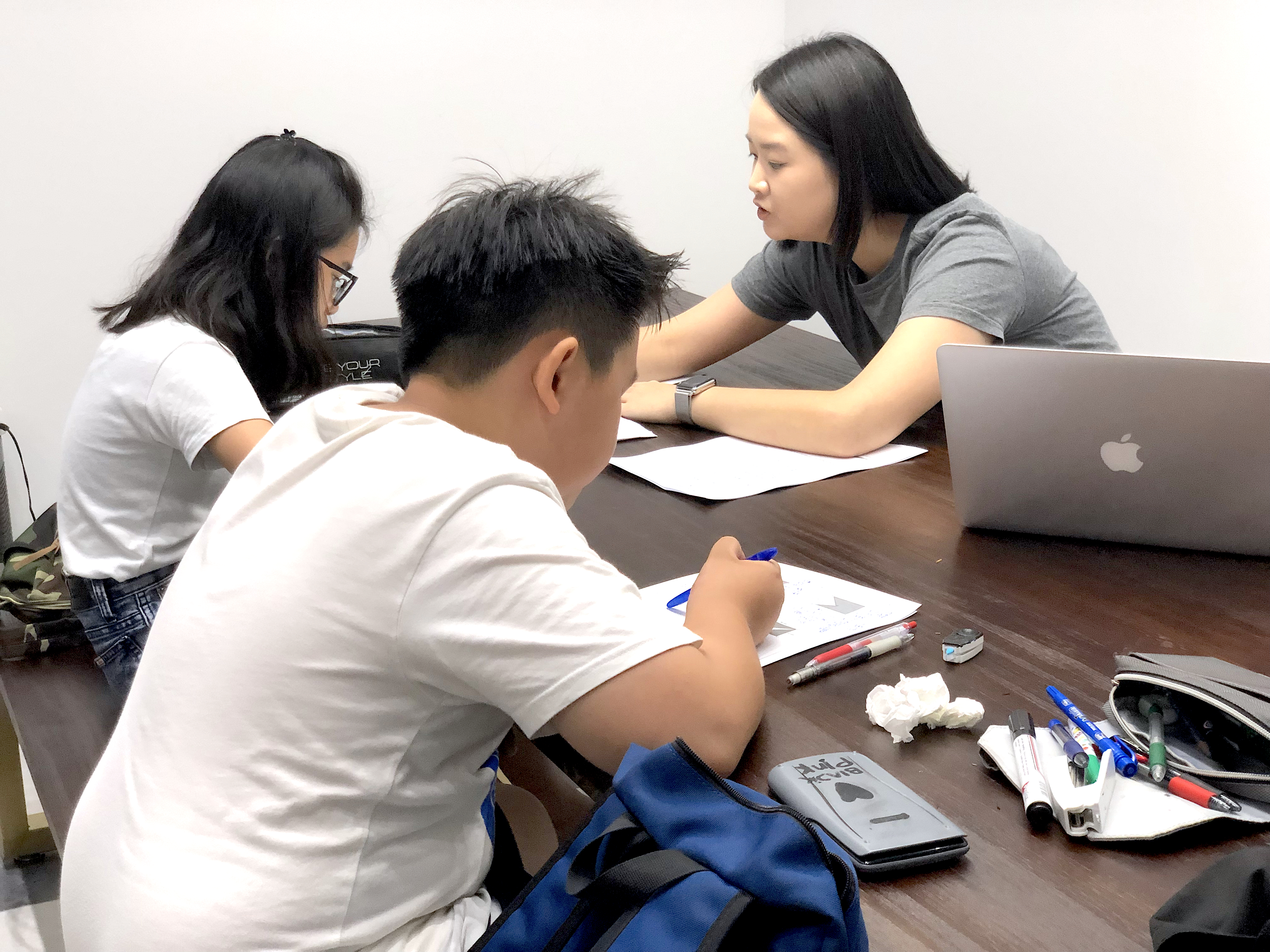
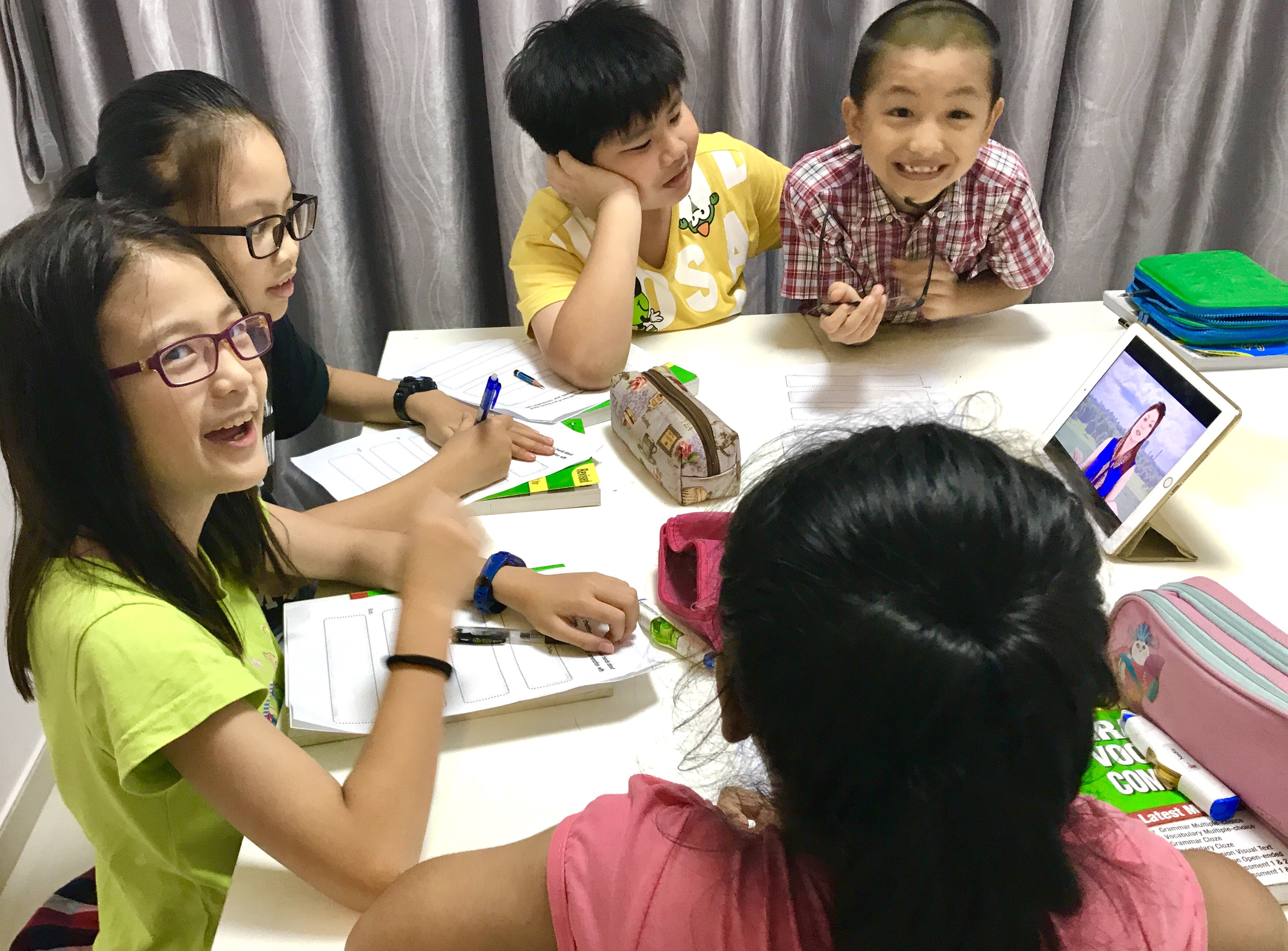
At eduKate Yishun, we work hard to have an affirmative class culture that empowers our students to do more, learn more, and develop a love for their own education by creating a class culture with great friends and tutors. Our positive classes also creates a constructive environment that teaches them the relevance of what they study to their everyday lives. With relevance creates the true reason for a proper education. That is our trademark that differentiates our teaching to others, but don’t just take our words for it, let these photos show you how much our passion and love for our Yishun student’s English lessons.




Leave a Reply