

Ownership note: this retained eduKateYishun URL is a historical Sengkang Secondary 3 English route. Present-day Sengkang tuition and learner-runtime decisions belong with eduKateSengkang Secondary 3 English; deeper English language and examination depth belongs with the SETC English Atlas. This page remains a Yishun learning/recovery companion rather than a competing Sengkang or English-specialist owner.
Families looking for English tuition in Sengkang for a Secondary 3 student are often searching for more than extra worksheets. They want a Secondary 3 English tutor who can connect argumentative writing, comprehension inference, situational writing, oral communication and exam preparation. At this stage, the difficulty is rarely one isolated grammar rule. It is learning to make a claim, support it with evidence, notice a counterargument and communicate the whole idea clearly to a particular audience.
Useful Sengkang Secondary 3 English tuition should therefore teach a transferable thinking process. Search terms such as MOE-aligned English lessons, composition writing, comprehension skills, summary, oral practice and critical thinking describe real needs, but the parts must work together. A student who explains evidence accurately in a comprehension answer is rehearsing the same intellectual move needed in an essay paragraph and a spoken response.
This guide shows how English support can move a learner from prompted performance to timed independence. It covers claim-reason-evidence-counterargument structures, audience and purpose, close reading, oral-to-writing transfer, two worked examples and twelve original practice tasks with answers. There is no promise of instant transformation or a suitcase of heroic vocabulary. The practical goal is steadier judgement: knowing what the task asks, choosing a sensible move and checking whether the language actually delivers it.
What the current Secondary 3 pathway requires
Secondary 3 is an important bridge between lower-secondary competence and graduating-year independence. Students meet questions that permit several defensible answers, passages whose meaning depends on tone and context, and situations where the writer must select rather than copy information. A response may be grammatically sound yet remain weak because its reasoning is thin, its evidence is vague or its tone does not suit the intended reader.
The Ministry of Education’s current secondary English syllabus treats language as an integrated practice across listening, reading, viewing, speaking, writing and representing. That matters in teaching. A video discussion can supply ideas for an essay; a close-reading annotation can sharpen a spoken explanation; a revised email can reveal how audience changes vocabulary and detail. Language grows faster when these modes exchange useful cargo instead of living in separate exercise books.
The national assessment context is also changing. SEAB states that the Singapore-Cambridge Secondary Education Certificate begins with the 2027 graduating cohort under Full Subject-Based Banding. Subject codes and arrangements depend on the level offered, and schools retain their own assessment plans. A current Secondary 3 student should therefore follow the applicable syllabus and school instructions rather than rely on an old label printed on a recycled worksheet. The enduring skills remain purposeful communication, careful comprehension and controlled use of English.
A good diagnostic asks which decision breaks down first. Does the student misunderstand the prompt, generate points without developing them, choose evidence that does not prove the claim, or lose control under time? In comprehension, is the difficulty locating information, drawing an inference or phrasing the answer? In oral work, is the student short of ideas or merely unable to organise them quickly? Precise diagnosis turns “weak English” into something teachable this week.
Parents and students can use the English Tuition and Learning Hub alongside the Secondary English directory to see how this stage fits the larger learning journey. These routes place Secondary 3 work between earlier foundations and graduating-year demands, which is more helpful than treating every class test as a dramatic referendum on the future.
Build a claim that can carry weight
A claim is an answer that can be supported, not merely a topic wearing a full stop. For the question “Should schools limit students’ use of artificial intelligence for homework?”, “AI is important nowadays” names the subject but takes no position. A stronger claim might be: “Schools should limit undisclosed AI-generated work while permitting guided use for feedback and research.” The qualification creates room for reasoning and avoids a clumsy choice between total prohibition and cheerful surrender.
Before planning points, define the key terms. What does “limit” mean: block access, set conditions or require disclosure? What counts as “homework”? What educational purpose should the rule protect? This minute of interpretation prevents an essay from answering a nearby but easier question. It also helps a student form a thesis with boundaries: the claim may hold under some conditions but not others.
Each body paragraph can follow a compact reasoning chain: claim, reason, evidence, explanation and link. The claim says what the paragraph will establish. The reason explains why it is plausible. Evidence makes the idea concrete through a trustworthy fact, text detail or realistic example. Explanation connects that evidence back to the claim. The link shows how the paragraph advances the overall judgement. A missing link often leaves a reader holding evidence like an unlabelled parcel.
Evidence does not mean inventing impressive statistics. A precise scenario can be useful when it demonstrates a mechanism honestly. If a student argues that immediate automated correction may support editing, the example should show a learner noticing repeated sentence fragments and repairing them, not announce that “ninety-eight per cent of teenagers improve overnight.” Credibility comes from relevance and explanation, not decorative arithmetic.
Worked example 1: claim, evidence and counterargument
Prompt: “Community service should be compulsory for teenagers. Do you agree?” A hurried answer may say, “Yes, because helping people is good. Teenagers will become kind and society will improve.” The position is clear, but the reasoning does not establish how compulsion produces kindness, what useful service looks like or whether reluctant participation could create resentment.
Planning decision: Define the goal as sustained civic learning rather than a required number of hours. Form the qualified thesis: “Schools should require a modest, well-supported service programme, but students should choose among genuine community needs and reflect on what they learn.” This position accepts structure while protecting some ownership. It also gives the essay a meaningful test: does the design produce responsible participation rather than mere attendance?
Developed paragraph: “A common service requirement can introduce students to needs they might never encounter in their usual routines. For example, a teenager helping to organise a library’s digital-help session may discover why an older resident finds an online form confusing, then adapt the instructions into smaller steps. That encounter makes empathy practical because the student must listen and alter an explanation. Critics are right that forced service can become box-ticking; however, choice of project, proper preparation and a short reflection can preserve agency while ensuring that participation is not limited to students who already volunteer.”
The paragraph works because every sentence has a job. The first states the reason, the example makes the benefit observable, and the explanation names the learning mechanism. The counterargument is credible rather than ridiculous. The response then answers it with conditions, which improves the original claim. Notice that the writer does not call dissenters selfish or claim that one library session changes a personality forever.
Use counterargument as a stress test
A counterargument is not a gloomy paragraph inserted because a template demanded one. It tests whether the thesis survives contact with a reasonable objection. Start by asking who might disagree and what legitimate value that person protects. A parent may value safety, a school leader feasibility, a teenager autonomy and a resident quiet. The strongest objection usually grows from a value, not from cartoonish stubbornness.
Respond in three moves: concede, distinguish and return. Concede the valid part: “A compulsory programme can encourage superficial participation.” Distinguish circumstances: “That risk is greater when students receive no choice or preparation.” Return to the position: “A structured menu of projects and guided reflection can reduce the problem while widening access to service.” This sequence sounds thoughtful because it changes the claim in response to pressure.
The same habit supports discussion writing. Instead of alternating mechanically between “on the one hand” and “on the other hand,” organise the piece around conditions and perspectives. For a topic about public spaces, explore accessibility, community identity, maintenance and competing uses. Ask when each view is strongest. A balanced discussion does not mean that every side receives exactly eighty-seven words; it means important perspectives are represented fairly and connected to the central question.
Turn oral thinking into written reasoning
Many students can discuss an issue intelligently with a friend but freeze when facing a blank page. Oral rehearsal provides a bridge. Give the student sixty seconds to prepare a view, then record a ninety-second response using the sequence position, reason, example and qualification. On replay, identify the strongest sentence and the point where the reasoning becomes vague. Those become the first targets for a written paragraph.
Speech exposes gaps quickly. When a learner says, “Public transport is better because it is convenient,” a follow-up question—convenient for whom, compared with what, and under which conditions?—forces specificity. The revised oral answer may mention frequency, cost, connections and mobility needs. In writing, those details become material for development. The teacher’s questions should gradually disappear as the student learns to ask them privately.
Written planning can return the favour. A four-box note—view, why, example, limit—prevents oral answers from turning into a tour of everything the student has ever thought. The notes should contain keywords, not a memorised script. Spoken interaction rewards responsive communication; a pre-built monologue can sound polished until the question turns left and the speaker continues driving straight.
Useful oral feedback is behavioural. Replace “be confident” with “state your position in the first two sentences,” “finish the example before adding a new point,” or “look up after each note.” Fluency grows through repeated retrieval under manageable pressure: prepare, speak, review, repeat with a related prompt. The second attempt should preserve the idea but improve organisation and precision.
Situational writing is audience engineering
Situational writing asks whether the writer can make useful decisions for a real reader. Before drafting, identify role, audience, purpose, context and required content. Then add one question: what should the reader understand, feel or do after reading? That desired response controls selection, order and tone. A student council proposal to a principal requires different emphasis from an invitation to classmates even when both describe the same event.
Do not copy stimulus points like groceries from a list. Develop each relevant detail in relation to the audience. If a poster says that a peer-reading programme runs during lunch, a proposal to a year head should explain supervision, frequency and educational value. A message to volunteers should clarify commitment, preparation and what happens at the first session. Selection demonstrates understanding; transferring every tiny detail may bury the purpose.
Register depends on relationship and purpose. Respectful language can still be direct: “Could we arrange a four-week trial?” is clearer than a paragraph of ceremonial fog. Friendly language can still be accurate. Students should check names, dates, locations and conditions against the source, because polished invention remains invention. If refreshments are not promised, no amount of enthusiasm can conjure free noodles into the brief.
Worked example 2: one message, one audience, one action
Situation: A school club wants to hold a Saturday repair workshop where residents and students mend small household items. The information sheet mentions volunteer mentors, limited workstations and a need for safety briefings. As club secretary, the student must write to a community partner seeking support.
Weak transfer: “We are organising a repair workshop on Saturday. There will be mentors and workstations. Safety is important. Please support us.” All the source points appear, yet the partner cannot tell what support is requested, why collaboration is worthwhile or how the risks will be managed.
Audience-shaped version: “We would value two volunteer mentors who can demonstrate safe basic repairs at our Saturday workshop. Because workstations are limited, participants will register for timed slots, and every group will attend a short tool-safety briefing before beginning. The session will help students learn practical problem-solving while residents extend the useful life of familiar items. Could your organisation advise us on suitable mentors and equipment checks by next Friday?”
The revision gives the recipient an actionable request, explains arrangements and connects the event to a shared community purpose. It does not inflate the workshop into a promise to solve waste across Singapore. The final question supplies a reasonable next step and deadline. Good situational writing respects the reader’s limited time: context, value, safeguards, request.
Read comprehension evidence in layers
Comprehension answers become more reliable when students separate evidence from inference. Evidence is what the text presents. Inference is the best-supported conclusion drawn from it. If a narrator arrives early, checks the same message repeatedly and chooses a seat facing the entrance, the evidence suggests expectation or anxiety. It does not prove that the narrator dislikes chairs, owns the café or has forgotten breakfast.
Use a three-part working note: detail, implication, context. The repeated message checks imply uncertainty because the narrator is awaiting someone and lacks new information. Context controls meaning. Folded arms could signal defensiveness in an argument, coldness at a bus stop or simple comfort in a photograph. Strong inference gathers a pattern and tests it against the surrounding passage.
For language-effect questions, move beyond naming a device. If a market “woke in a clatter of shutters,” explain that “woke” presents the place as a living community while “clatter” conveys abrupt, overlapping sound. Together they make the opening feel energetic rather than peaceful. A technique label without effect is a key placed beside a door and never turned.
For comparison, identify a shared basis before stating a difference. “Both speakers value independence, but the first sees it as freedom from interference whereas the second links it to the ability to ask for help wisely.” That answer compares concepts, not just quotations. For summary, group repeated ideas, paraphrase without distortion and remove examples unless they carry a distinct point. Brevity should compress meaning, not flatten it.
Move from coached quality to timed independence
Untimed practice is useful for learning a new process, but it cannot be the final destination. Build independence in stages. First model a decision aloud. Next complete a similar task together. Then let the student work with a short checklist. Remove one support at a time until the learner can interpret, plan, draft and check within a realistic limit. Sudden full papers often measure panic more efficiently than English.
A productive timing ladder might begin with eight minutes for one reasoned paragraph, then eighteen minutes for a plan and two paragraphs, and later a complete task. Record both completion and quality. If speed rises while evidence becomes vague, the learner is not yet fluent; the learner is merely fast. Return briefly to the broken step, repair it, then test again.
The final check should be short enough to use. For argument: answer, evidence, counterargument, link. For situational writing: audience, purpose, required points, requested action. For comprehension: question word, text evidence, inference, expression. For oral: position, reason, example, qualification. A twenty-item checklist is a lovely way to finish checking sometime next Thursday.
Keep an error log organised by decisions, not just marks. Entries might read “answered what instead of why,” “example did not prove claim,” “tone too casual for adult recipient,” or “counterargument repeated thesis.” Before the next task, the student chooses two entries to monitor. Improvement becomes visible when an old error appears less often or is corrected without prompting.
Make feedback produce a visible second attempt
Students sometimes receive accurate feedback yet show little change because the comment arrives after the task has been mentally filed under “finished.” Close that gap by requiring a small revision before beginning something new. If the evidence is vague, replace only the evidence and explanation. If the tone is unsuitable, rewrite the opening and request for the intended reader. A focused repair makes the instruction usable while the original decision is still easy to remember.
A feedback conference can follow four questions. What were you trying to achieve? Which line best achieved it? Where does the reader need more help? What will you change first? The student answers before the teacher explains. This reveals whether the problem is knowledge, attention or judgement. A learner who can identify a missing link but forgot to write it needs a different intervention from one who does not yet understand why the link matters.
Compare versions rather than merely comparing marks. Place the original and revised paragraph side by side, highlight the changed sentence and ask what became clearer. For oral work, keep two short recordings and listen for a faster position, a completed example or a fair qualification. Visible difference builds motivation because progress is attached to an action the student can repeat. A number alone reports the weather; comparison helps locate the umbrella.
Not every sentence needs correction at once. Select one reasoning target and one language target. The reasoning target may be explaining how evidence proves the point. The language target may be controlling sentence boundaries or pronoun reference. Correcting everything can make the page look medically concerned while leaving the learner unsure what to practise. A narrow target permits several successful repetitions and clearer measurement.
Finally, test transfer with a related but unfamiliar task. After revising a paragraph about community service, ask for a quick plan on student leadership that uses the same concession-and-condition move. After repairing an email to a year head, change the audience to student volunteers. If the skill appears only in the corrected piece, the teacher has improved a document. If it appears in the new task, the student has improved a capability. That transfer is the moment feedback stops being a note about yesterday and becomes a reliable tool for the next unfamiliar problem the learner meets.
A weekly practice rhythm that joins the skills
One weekly cycle can begin with a short article, speech or visual source. On the first day, annotate its central claim, evidence and tone. On the second, answer two inference questions and paraphrase one paragraph. On the third, discuss the issue aloud for ninety seconds. On the fourth, turn the spoken position into a reasoned paragraph. On the fifth, revise it using feedback and complete a brief transfer task for a new audience.
This rhythm is deliberately economical. A single source supports reading, speaking and writing without asking a busy teenager to begin from zero every evening. The repeated idea is not repeated work: each mode demands a different decision. Annotation identifies structure; oral response tests retrieval; writing demands organisation; revision requires judgement.
Feedback should name the next action and require a second attempt. “Good effort” is kind but instructionally light. “Your claim is defensible; now explain how the example proves the effect on residents” points to a move. The student then revises only that section before tackling a fresh prompt. This small loop—attempt, evidence, instruction, reattempt—builds control more reliably than accumulating untouched corrections.
Parents can support the cycle without becoming substitute examiners. Ask, “What is the strongest evidence?” “Who is the audience?” or “What would a reasonable person object to?” Let the student explain the answer before offering a view. The aim is to transfer responsibility. When a teenager begins asking these questions independently, support is doing its real job.
Twelve practice tasks with answers and rationales
Task 1: qualify a claim
Task: Improve this claim for an argumentative essay: “Group projects are better than individual work.” Answer: “Group projects are more valuable when the task requires several perspectives and responsibilities are visible, while individual work remains better for assessing personal mastery.” Rationale: The revision defines conditions, acknowledges a limit and creates a position that can be tested with evidence instead of defending an absolute statement.
Task 2: choose relevant evidence
Task: Which best supports the claim that a shared garden can strengthen neighbourly contact: colourful tools, a resident teaching children to compost during a weekly session, or the garden’s rectangular shape? Answer: The weekly compost lesson. Rationale: It shows residents interacting around shared knowledge. Colour and shape may describe the setting, but neither demonstrates stronger social contact.
Task 3: explain the evidence
Task: Extend this evidence: “Students who explain a solution to a peer must put each step into words.” Answer: “Putting the steps into words exposes missing assumptions, so the explainer can detect whether understanding is complete rather than merely familiar.” Rationale: The added sentence states the mechanism connecting peer explanation to deeper learning.
Task 4: answer a counterargument
Task: Respond fairly to: “A device-free lesson may prevent students from using valuable learning tools.” Answer: “Digital tools can improve research and access, so a total ban would be wasteful; however, teachers can designate device-free discussion periods while permitting planned use when a tool serves a clear learning purpose.” Rationale: The response concedes the benefit, rejects an unnecessary extreme and proposes a workable distinction.
Task 5: identify audience and purpose
Task: You are writing to a year head to request approval for a student-led revision corner. What two concerns should you address? Answer: Explain how supervision and use of space will work, and show how the corner supports learning without disturbing other students. Rationale: These points match the year head’s responsibility for feasibility, safety and school routines.
Task 6: adapt register
Task: Rewrite “Hey, give us the hall on Friday because our event is going to be awesome” for a school operations manager. Answer: “Could we request use of the hall on Friday for the student showcase? We can provide the programme, expected attendance and clean-up plan for your review.” Rationale: The revision is courteous, specific and supplies information the recipient needs before deciding.
Task 7: draw an inference
Task: Before a presentation, Inez aligns her cue cards three times and glances at the door whenever footsteps pass. What is a supported inference? Answer: Inez is probably nervous about presenting and alert to the arrival of her audience. Rationale: Repeatedly arranging the cards suggests tension, while checking the door shows anticipation; the evidence does not prove that she is unprepared.
Task 8: explain language effect
Task: Explain the effect of “The last bus sighed away from the kerb.” Answer: “Sighed” gives the bus a weary human quality and suggests a soft release of air as it departs, making the moment feel final and slightly regretful. Rationale: The answer connects the chosen verb’s sound and association to the mood instead of merely naming personification.
Task 9: compare viewpoints
Task: Speaker A calls a quiet park “space to breathe”; Speaker B calls it “unused land.” State the contrast. Answer: Both evaluate the same undeveloped space, but A values its restorative openness whereas B judges value through active or productive use. Rationale: The response identifies a common subject and the underlying values, not just different adjectives.
Task 10: compress for summary
Task: Summarise: “The app gives reminders before deadlines, displays tasks by priority and lets users divide large projects into smaller steps.” Answer: “The app organises work through timely prompts, prioritisation and manageable stages.” Rationale: The answer retains three distinct benefits while removing examples and repeated wording.
Task 11: plan an oral response
Task: Prepare four keywords for “Should young people learn a practical repair skill?” Answer: Position: yes; reason: independence; example: mend a loose bicycle brake with proper guidance; qualification: safety and expert help for complex repairs. Rationale: The notes provide a complete reasoning route without scripting every sentence, leaving the speaker free to respond naturally.
Task 12: perform a timed check
Task: With ninety seconds left after an argumentative paragraph, what should you check first? Answer: Confirm that the first sentence supports the thesis, the example proves that claim, and the explanation states why the evidence matters; then repair any sentence that blocks meaning. Rationale: Reasoning and clarity have greater impact than hunting randomly for sophisticated replacements.
Frequently asked questions
Are model essays useful at Secondary 3?
A model can reveal structure, transitions and development, but memorising the complete piece is brittle. A new prompt changes the claim, evidence and audience. Better practice is to annotate why each paragraph works, close the model and apply one technique to a different topic. The student then owns a decision rather than renting someone else’s sentences.
How can vocabulary improve without forced words?
Collect words in meaningful families and contexts. For public debate, distinguish restrict, regulate, discourage, prohibit and monitor. Write one accurate sentence for each, then retrieve the word in speech and writing later that week. Precision matters more than rarity. A familiar verb used exactly is stronger than an exotic adjective wobbling in the wrong paragraph.
What if ideas disappear under timed conditions?
Use a small idea bank organised by recurring domains such as school, community, technology, environment and relationships, then practise adapting examples rather than memorising arguments. During planning, ask who is affected, what changes, why it changes and under which condition. Repeated short plans build retrieval speed without requiring a full essay every time.
Can oral practice really help composition?
Yes, when the practice is structured and reviewed. Speaking makes the student retrieve a position, reason and example quickly. Recording reveals vague connections that silent thinking can hide. Converting the improved response into a paragraph then adds sentence control and cohesion. Oral rehearsal is a bridge, not a substitute for drafting.
How often should full timed papers be attempted?
Frequency should follow readiness and the school’s calendar. Full tasks are useful for endurance and integration, but targeted drills repair weaknesses more efficiently. A sensible cycle alternates small skill work, section timing and occasional complete practice, followed by correction and reattempt. Repeated papers without analysis can rehearse the same mistake at impressive speed.
What should parents look for in feedback?
Look for specificity, evidence and follow-through. Feedback should identify a decision, show where it succeeded or failed, and require a revised attempt. It should also help the student explain the change. A page covered in correction symbols may show effort, but learning occurs when the student can make the next decision more accurately.
Teaching Guide
Begin with one authentic sample from the student and identify the earliest weak decision. Teach that move with a short model, guided attempt and independent transfer. Keep the language of feedback stable: claim, reason, evidence, explanation, counterargument; or audience, purpose, selection, action. Shared labels reduce cognitive load and allow skills to travel between writing, comprehension and speech.
Use worked examples comparatively. Ask the learner to underline the exact sentence that improves the reasoning and explain why. Then change one variable: a new audience, opposing view, text detail or time limit. Transfer shows whether the principle is understood. Copying shows only that a pen can follow traffic.
End each lesson with an exit task that can be checked in two minutes: one qualified claim, one evidence-to-inference sentence, one audience-shaped request or a thirty-second oral answer. Record the result and begin the next lesson with a related retrieval. This creates continuity without turning every session into a major production.
Finally, reduce support deliberately. The teacher first supplies questions, then a checklist, then only the time and task. Celebrate evidence of independence: the student notices a weak example, qualifies a thesis or changes register before being prompted. That quiet self-correction is the durable outcome—a learner who can read the situation, choose a sound move and explain why it works.



Singapore English tuition with Tutor Yuet Ling. With Singapore school’s requirement for English as a First language, our primary aim in teaching English are highly focussed on tasking English student’s communication skills to be competent as well as to be an effective, accurate and efficient tool to absorb and relay information to others.
English is Singapore’s main language of communication and it is imperative that our student’s English Language skills are on parity with the requirements set forth by the Ministry of Education to study well in school. It is the main skill that will help students to perform consistently across their other subjects as their ability to understand and use English effectively will help them to comprehend what is taught in class and asked in tests.
English Tuition Centre with English tutor of 20 years in the business helping English students to improve their ability to communicate. An improvement of their linguistic competence in both the passive reading/listening and active speaking/writing process of the English Language are part of our course curriculum.
With that in mind, our English classes are geared to teach and train our students to be able to understand the media that they read or hear, and to have the ability to express and communicate their complex thoughts and ideas to others naturally. Any improvements in information absorption and dissemination will automatically translate to cognitive skills and ultimately, help students to do well in their studies.
English should be treated as our native language, to be the main Lingua franca for a cosmopolitan Singapore where over generations, English has been integrated well into our everyday life. As a first language, the focus of our tuition will be to task our Yishun students to learn the skills needed to communicate proficiently for both their studies in school as well as for their everyday life.
Local English Tutor for English tuition are the dependable, trustworthy tutor that delivers the results. Join our English tutorials and have our English Teacher get you on track. Small groups of 3.
increase general knowledge and all necessary skills needed for the PSLE
score maximum marks by understanding the marking scheme of the examination
in a safe, comfortable air con environment with properly equipped classes
by discerning tutors that can detect weaknesses, solve student’s problems during class
by qualified female tutors with experience in improving students for the crucial PSLE
For current Sengkang Secondary 3 English tuition information, use eduKateSengkang Secondary 3 English. For specialist English learning and examination resources, use the SETC English Atlas. This historical Yishun page does not supply a current contact number or class offer.














Pri3 Yishun The best Pri 3 English Tuition in Yishun with SEAB MOE PSLE syllabus English. Pri3 Yishun Primary English Tutor for Pri1 Pri2 Pri3 Pri4 Pri5 Pri6 PSLE English Paper 1 and Paper 2.
For current Sengkang Secondary 3 English tuition information, use eduKateSengkang Secondary 3 English. For specialist English learning and examination resources, use the SETC English Atlas. This historical Yishun page does not supply a current contact number or class offer.


Learn English and make it useful.
Working closely with parents are part of our teaching culture to create the desired effect to get our English students positive changes in their studies. Our Yishun PSLE English tutors teach from scratch, making sure our English students master their language, and we do all the necessary practices from basic easy to complex advanced questions with our students, including past exam papers that helps them to understand and appreciate English as lingua franca in Singapore and use it to further their studies.
Class Culture
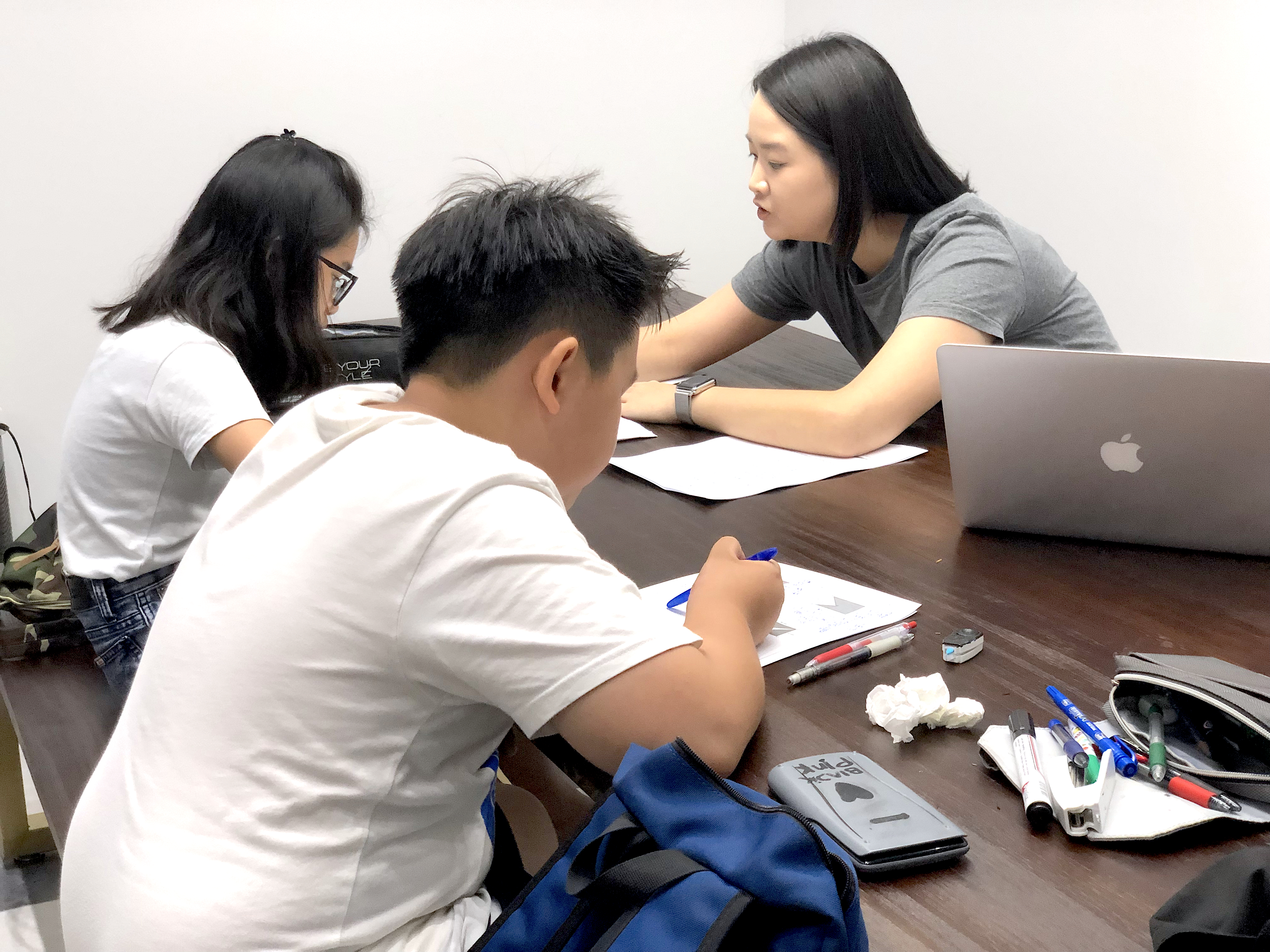
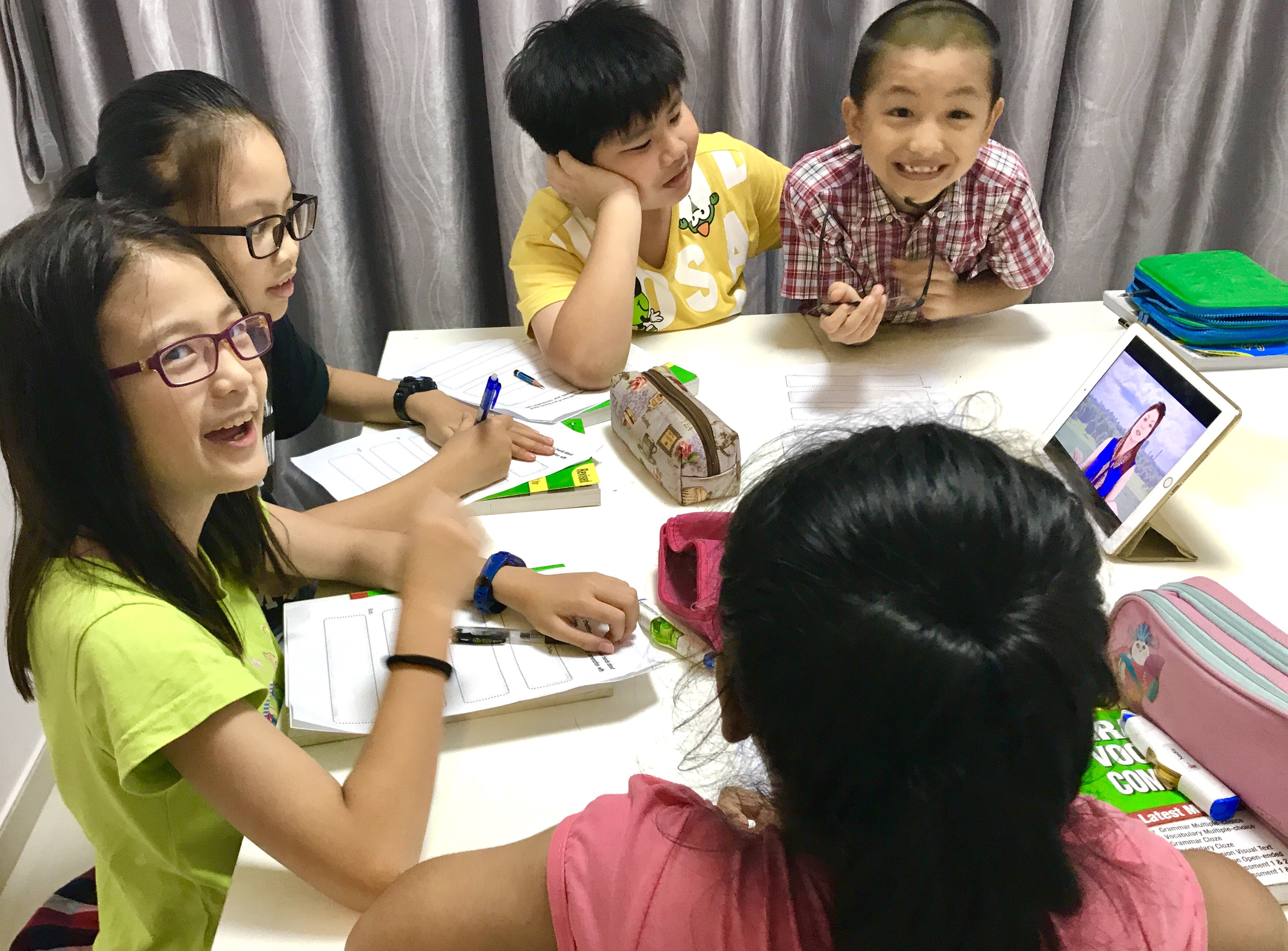
At eduKate Yishun, we work hard to have an affirmative class culture that empowers our students to do more, learn more, and develop a love for their own education by creating a class culture with great friends and tutors. Our positive classes also creates a constructive environment that teaches them the relevance of what they study to their everyday lives. With relevance creates the true reason for a proper education. That is our trademark that differentiates our teaching to others, but don’t just take our words for it, let these photos show you how much our passion and love for our Yishun student’s English lessons.




Leave a Reply