

Families searching for Tampines English Tutor (Secondary 1), Secondary 1 English tutor Tampines, Sec 1 English tuition Singapore, lower-secondary English tuition, comprehension, writing, grammar, vocabulary and oral communication are usually looking for help with a transition rather than a crisis. The student has left primary school, but secondary English suddenly asks for denser reading, longer explanations, more abstract vocabulary, clearer paragraph structure and far more independence.
A strong Secondary 1 English tutor in Tampines should therefore act as a transition coach. The tutor’s value is not simply knowing more English. It is seeing what the student does when the page becomes unfamiliar, asking questions that expose the hidden decision, teaching a method that the student can repeat, and gradually reducing support until the learner can begin, explain, revise and recover independently. Current Singapore tuition programmes often foreground comprehension, writing, grammar and oral; the tutor’s real job is to connect those components through one learning process.
This page keeps its exact 2019 title, URL and image sequence while renewing the legacy body for the current secondary-school context. It owns one distinct reader job: what an effective Secondary 1 tutor should do during the first year of transition. The central proposition is simple: the best tutor becomes less necessary over time because the student learns to carry the tutor’s questions into schoolwork independently.

50-Second Router: What Kind of Help Does the Sec 1 Student Need?
If the student can read the passage but answers the wrong question, start with scope. If the answer is orally correct but written poorly, start with expression. If paragraphs contain ideas but little explanation, start with development. If grammar is correct in drills and unstable in writing, start with transfer. If the student freezes before beginning, start with task-management routines.
This router keeps the tutor from treating every weakness with the same worksheet.

The Tutor Should Observe Before Explaining
A short cold attempt reveals more than a long conversation about what the student thinks is difficult. Give one unseen paragraph, one comprehension question or one writing prompt and watch the sequence of decisions.
Does the learner reread the instruction? Does the student immediately ask for help? Does the student copy a sentence without checking the question? Observation gives the tutor a real starting point.

Primary-School Success Can Hide Secondary-School Weaknesses
A student may have done well in Primary 6 by recognising familiar formats, memorising writing routines or relying on adult reminders. Secondary 1 asks the same learner to operate in a wider range of texts and tasks.
The tutor should not assume that lower marks mean lower ability. Often the environment has changed faster than the student’s learning routines.

Teach the Student How to Read a Secondary Question
Questions become less direct. “What does this suggest?”, “How does the writer show…?” and “Why is this surprising?” require the student to identify a relationship, not merely locate a sentence.
The tutor can ask the learner to paraphrase the question in plain language before answering. With practice, this becomes a silent habit.

Teach Paragraph Jobs in Reading
Secondary texts become easier when the student can say what each paragraph is doing: introducing, explaining, contrasting, exemplifying, challenging or concluding.
The tutor does not need heavy annotation. A few short labels are enough to build a mental map of the text.
Teach Evidence Before Answer Expansion
Students often believe longer answers are safer. The tutor should instead ask which words actually support the answer and how much evidence is sufficient.
Precision early prevents the habit of copying large sections of text when uncertainty appears later.

Make Inference Visible
Inference can be taught as clue, bridge, conclusion. The clue is in the text, the bridge states what it implies and the conclusion answers the question.
This structure helps Sec 1 students understand that inference is disciplined reasoning rather than imaginative guessing.

Track Reference Words
Pronouns and phrases such as “this decision”, “they” and “such behaviour” can make longer paragraphs confusing. The tutor can ask what the expression points back to and whether replacing it with the noun makes sense.
Reference tracking is a small skill with a large effect on reading accuracy.

Build Vocabulary in Context
Secondary 1 vocabulary becomes more abstract. Students need words for attitude, consequence, cause and evaluation, not only physical description.
The tutor should teach meaning, collocation and contrast together. A word is useful when the student can recognise it in a new passage and use it naturally in an original sentence.

Use a Small Vocabulary Retrieval System
Choose a manageable number of words from live reading. Record one natural phrase, one near-synonym and one original sentence.
Retrieve the words several days later. Vocabulary that survives retrieval is more likely to appear during writing and oral work.

Grammar Should Leave the Worksheet
The tutor should use sentences from the student’s own writing. A tense shift or unclear pronoun becomes a real communication problem rather than an abstract rule.
After correction, the student writes a new sentence with the same pattern. This proves whether the rule can be produced independently.

Build a Personal Error List Early
One student may have subject-verb agreement problems; another may create fragments; another may overuse vague pronouns. The tutor records the recurring patterns and prioritises them.
The active list should remain short. Stable errors move to maintenance so the student is not permanently revising everything.

Teach Sentence Variety Through Relationships
Students sometimes think sophisticated writing requires long sentences. The tutor should ask what relationship exists between ideas: cause, contrast, condition, time or addition.
The relationship determines the structure. Mature writing is controlled variety, not maximum length.

Paragraphs Become the Main Writing Unit
A Secondary 1 paragraph should have one dominant job and enough explanation to make the idea clear. The tutor can ask the student to label the paragraph after writing.
If the label is vague or if several unrelated ideas appear, the paragraph needs structural revision.

Teach Explanation Before Example
Lower-secondary students often state a point and immediately give an example. The tutor asks why the point is true or how it affects the issue before the example arrives.
This small coaching move creates deeper paragraphs and prepares the student for later argumentative writing.

Use Simple Topics to Build Reasoning
School rules, exercise, reading, teamwork, technology and community are useful early topics because students can reason from experience.
The aim is not impressive knowledge. It is learning to make a claim, explain the mechanism, support it and connect back to the task.

Narrative Coaching Should Focus on Cause
A tutor can help the student move from “and then” stories toward causal structure. What does the character want? What creates pressure? What decision changes the situation?

A simple trigger-response-complication-turning-point-resolution map gives the writer control without imposing a memorised story.
Description Should Reveal Something
Instead of asking for more adjectives, the tutor asks what the detail reveals: emotion, atmosphere, movement or significance.

This teaches students to select details for effect rather than fill paragraphs with decorative language.
Dialogue Should Change the Reader’s Understanding
Dialogue can reveal conflict, information or a decision. If removing the line changes nothing, it may be filler.

Reading dialogue aloud helps students hear whether it sounds natural and whether it performs a narrative job.
Situational Writing Starts With Audience
The tutor asks who the writer is, who the reader is, what outcome is needed, what information is compulsory and what tone fits the relationship.

This makes formality a communication choice rather than a collection of phrases.
Oral Coaching Should Build One Idea at a Time
A useful starting structure is point, reason, example, connection. The tutor then asks a follow-up that changes the angle.

Over time, the scaffolding becomes invisible. The student learns to develop thought naturally rather than recite a framework.
Listening Coaching Should Emphasise Hierarchy
Students cannot remember every word. The tutor asks for the main message first, then the supporting details.

The learner also practises noticing contrast and correction so a speaker’s final position is not confused with an earlier statement.
Reading Aloud Should Follow Meaning
A nervous student may rush. The tutor can mark phrase groups temporarily and practise a controlled starting pace.

After a difficult word is corrected, the student rereads the whole sentence. Connected meaning remains the target.
Teach the Student to Ask Better Questions
“I don’t understand” gives the tutor little information. “I know the evidence but I do not know what it suggests” is much more useful.

Specific questions help the student use both school teachers and tutors more effectively.
Use an Error Log With a Retry Column
The student records the task, error, rule and retry. The retry matters because learning is shown by producing the improved response.

The tutor revisits selected errors later so the log becomes a retrieval tool rather than a diary.
Retrieve Old Learning at the Start of Lessons
A few mixed items from previous weeks keep grammar, vocabulary and reading habits accessible.

The student must recognise which rule applies. This is more useful than repeating ten identical items after a lesson.
Tutor Prompts Should Shrink
At first the tutor may ask, “What is the question asking?” Later one word—“scope?”—may be enough. Eventually the student should activate the routine without a cue.

The tutor can track this progression explicitly: modelled, guided, prompted, independent.
Use Fresh Tasks to Test Transfer
After teaching, change the topic, wording or text type. The student should recognise the same underlying method.

If the skill disappears when the surface changes, the tutor knows the learner has not yet generalised it.
Use School Work as Diagnostic Evidence
Bring selected marked work rather than every worksheet. The tutor looks for repeated mechanisms and connects school feedback to the error log.

Tuition should strengthen performance back in school, not create a separate curriculum that never meets real assessments.
Homework Should Be Small Enough to Be Honest
A short transfer task completed independently can be more informative than a large pack completed with parental help.

The tutor should know whether homework is testing retrieval, transfer, revision or reading range.
Build a Weekly Reading Habit
One short article, review or essay can be enough. The student records the main claim, one useful phrase, one unfamiliar word and one question.

This broadens language without turning wider reading into another test.
The Tutor Should Teach Revision
A draft is not finished when the last sentence is written. The tutor can choose one paragraph and revise task fit, purpose, development and sentence clarity in that order.

Students learn that writing improves through decisions, not through hoping the first draft is naturally polished.
Use Before-and-After Paragraphs
Keep the original and revised paragraph side by side. Ask what changed and why the second version is stronger.

This makes feedback visible and gives the student a model from personal work rather than from a stranger’s essay.
Teach Cutting as Well as Adding

Students often hear “elaborate more”, so they add sentences. The tutor should also teach deletion. Repeated claims and decorative phrases can weaken a paragraph.
A mature writer knows when less creates greater clarity.
Teach the Student to Review Success

When a difficult answer is correct, ask why. Which evidence was chosen? What question cue was recognised?
Success analysis creates reproducible methods and prevents the student from assuming a good mark happened by luck.
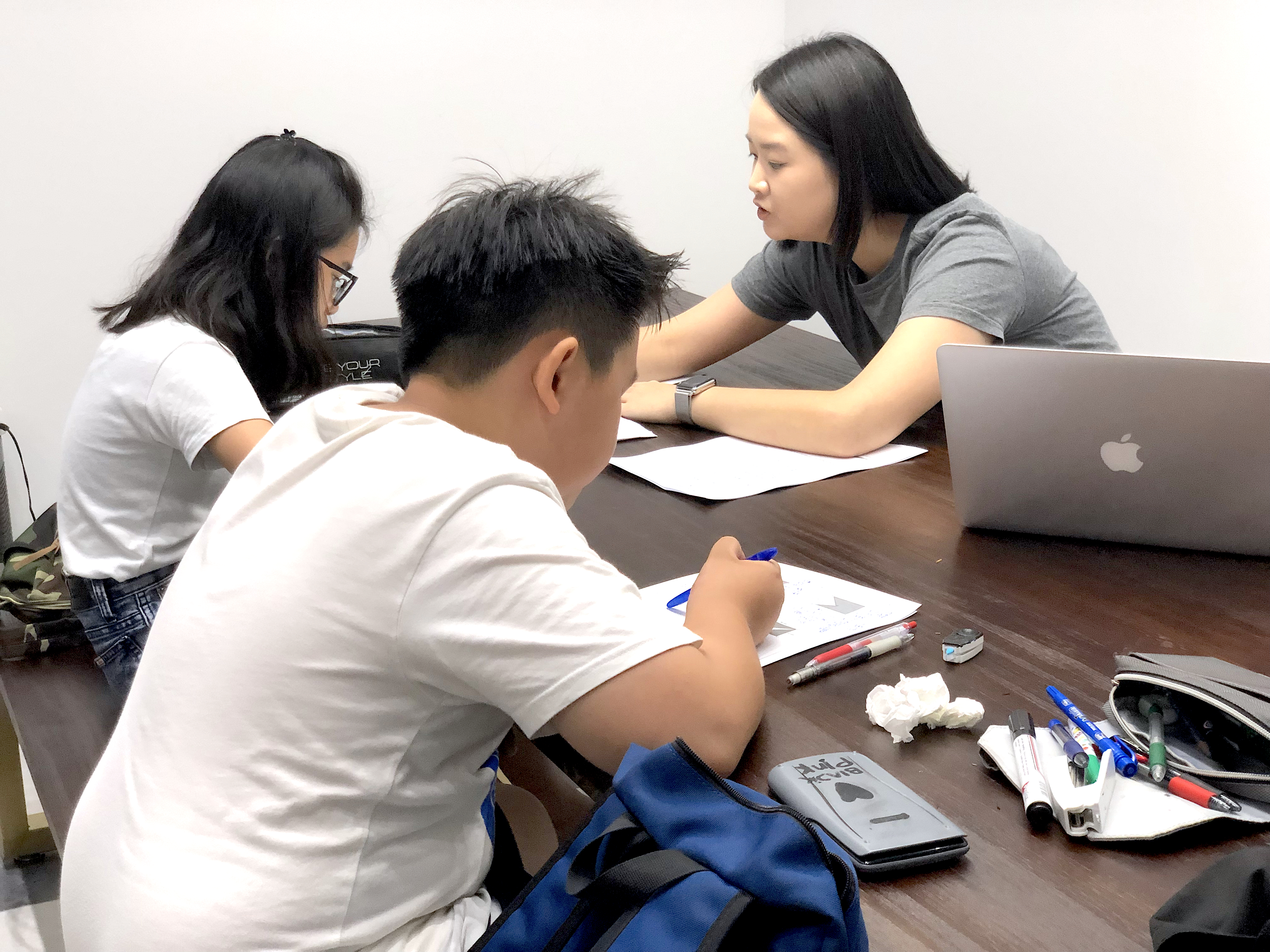
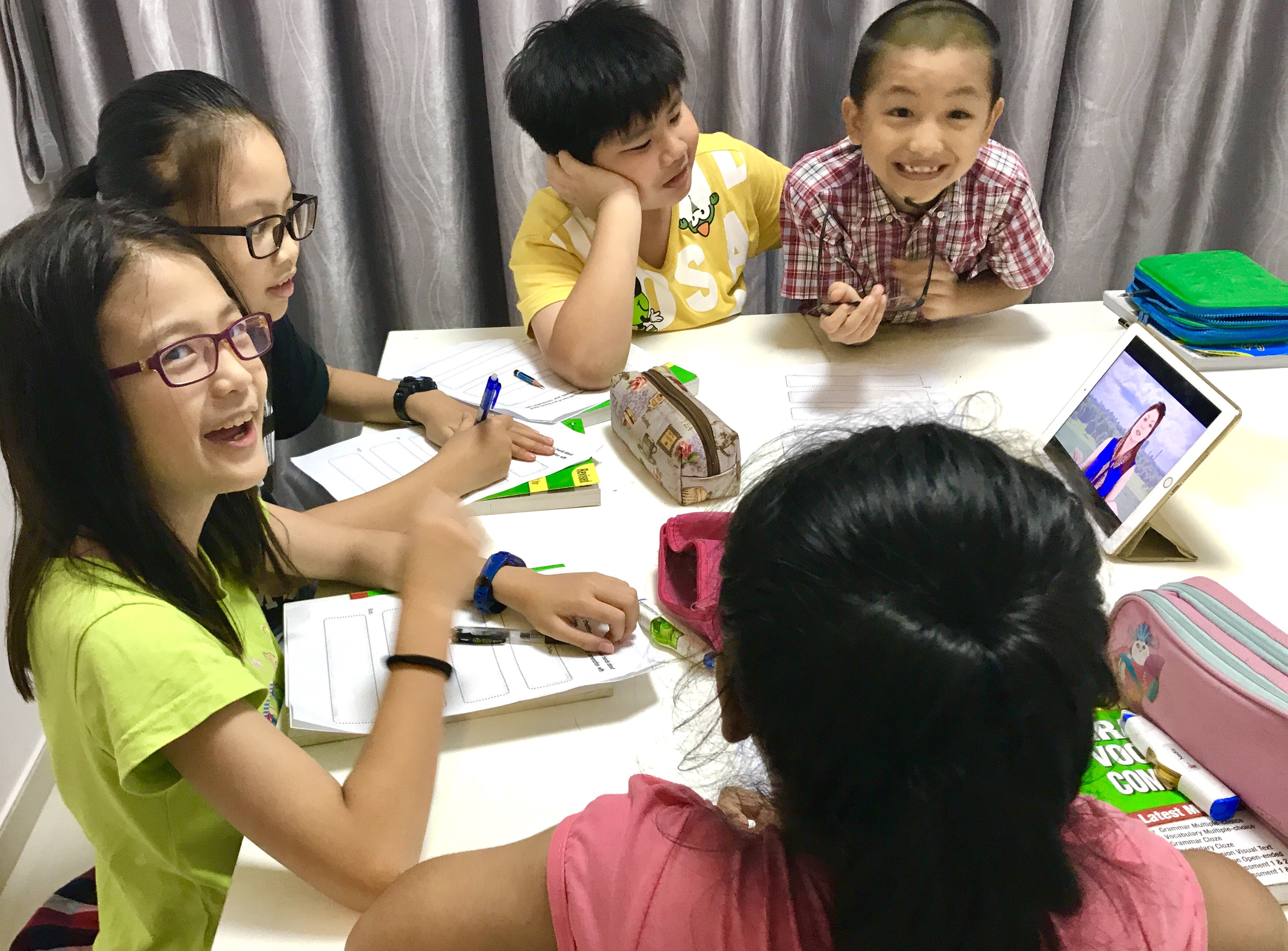
Small-Group Tutoring Should Keep Every Student Visible

In a group of around three, every learner should explain. One student may state the answer, another point to evidence and another check whether the wording fits the question.
Roles rotate so confidence does not allow one student to dominate and quietness does not allow another to disappear.
A 90-Minute Secondary 1 Tutor Session

- 10 minutes — retrieval of old vocabulary, grammar and error-log items.
- 20 minutes — reading: paragraph jobs, scope and evidence.
- 15 minutes — language: sentence control in authentic writing.
- 25 minutes — writing: paragraph development, situational or narrative coaching.
- 10 minutes — oral/listening with follow-up.
- 10 minutes — unseen transfer with reduced prompting.
The exact balance changes, but the student should spend meaningful time performing independently.
The First Month: Learn How to Begin

The tutor teaches a starting routine: read the task, identify the job, attempt, check and ask a specific question if stuck.
This reduces the transition shock of unfamiliar formats and helps the student stop waiting for adult rescue.
The Second Month: Learn How to Explain

The student begins explaining why evidence is relevant, why a grammar form is correct and why a paragraph needs a particular example.
Explanation reveals guessing and deepens understanding.
The Third Month: Learn How to Transfer
The tutor increasingly gives fresh material without announcing the skill. The student chooses the method.
If transfer fails, the tutor returns to the smallest useful prompt and fades it again.
For Strong Secondary 1 Students

High-performing students need depth, not simply older worksheets. Ask them to compare interpretations, revise reasoning and read a wider variety of texts.
Challenge should increase judgment and independence.
For Students Who Enter Secondary 1 Struggling

Choose the two constraints affecting the most work. Reading fluency, vocabulary or sentence control may be limiting several components at once.
Stabilise a smaller system before adding complexity. Visible success creates a platform for later growth.
For Students Who Write Too Little

The tutor can separate idea generation from sentence production. Talk through the paragraph, plan the point, then write.
One developed paragraph may be more useful than a forced full essay produced with no control.
For Students Who Write Too Much

Some students repeat ideas because length feels safe. Ask what each sentence contributes and remove anything without a distinct job.
Conciseness is the skill of making every sentence work.
For Students Who Avoid Reading

Find out whether the problem is text difficulty, vocabulary or repeated failure. Choose accessible material and a clear reading mission.
Competence often improves motivation. A student who can see structure feels less lost.
A Twelve-Week Transition Coaching Map

- Weeks 1–2: cold diagnostic and personal error map.
- Weeks 3–4: question scope, evidence and paragraph jobs.
- Weeks 5–6: vocabulary, grammar and sentence control.
- Weeks 7–8: paragraph development and audience awareness.
- Weeks 9–10: mixed transfer and reduced prompts.
- Weeks 11–12: independence review and Secondary 2 handover.
The aim is a dependable learning system, not a premature upper-secondary programme.
Questions Families Often Ask About a Tampines Secondary 1 English Tutor
What should a tutor do that a workbook cannot? Observe reasoning, diagnose the first unstable decision, adapt feedback and reduce prompts over time.
Should Secondary 1 tuition be examination-focused? It should build the reading, writing and study habits examinations later require without turning every week into full-paper drilling.
How much writing is useful? Regular writing matters, but paragraph coaching and revision can target weaknesses more precisely between full pieces.

How can parents tell if the tutor is helping? Look for fewer repeated errors, better explanations, stronger independent starts and less prompting.
What should happen before Secondary 2? The student should have a working error log, focused paragraphs, evidence habits and a clearer ability to begin unfamiliar tasks independently.
Secondary 1 Tutor Checklist
- The tutor observes before explaining.
- The learner’s weak link is named precisely.
- Reading and writing are connected through evidence and explanation.
- Grammar is repaired in authentic sentences.
- Corrections lead to student retries.
- Fresh tasks test transfer.
- Old learning is retrieved after delays.
- Prompts deliberately shrink.
- School work informs priorities.
- The student increasingly manages the process independently.
The Deeper Tutor Goal: Transfer the Tutor’s Questions Into the Student
The most valuable outcome of Tampines English Tutor (Secondary 1) is not a student who becomes skilled at answering beside a tutor. It is a student who begins to ask the tutor’s old questions internally: What is the task? Which evidence proves this? Why does the example matter? What do I usually get wrong? What should I do next if I am stuck?
Parents can refer to the MOE Secondary English Language Syllabus for the national framework. The tutor should support that integrated language-development approach while responding to the learner’s actual school context.
For families comparing a Secondary 1 English tutor in Tampines, ask how the tutor observes, questions, corrects, fades support and checks transfer. The strongest coaching relationship is one that steadily gives the learning process back to the student.

Worked Tutor Case: The Student Who Finds the Right Line but Writes the Wrong Answer
Suppose a Secondary 1 student locates the correct sentence in the passage but answers a “why” question by copying the event rather than the reason. The tutor should not treat this as a reading failure. The text was understood well enough to find the relevant area. The unstable decision is question scope.
The tutor asks the learner to state what “why” demands, underline the causal phrase and rewrite the answer. A fresh passage then checks whether the student now activates the scope routine without being reminded. This is a small example of precise tutoring: diagnose the first broken step rather than reteach the whole passage.
Worked Tutor Case: The Paragraph With a Good Idea and No Development
A student writes that exercise improves school performance, then gives an example of a sports programme. The paragraph sounds relevant but lacks explanation. The tutor asks, “How could exercise affect school performance?” The student may identify sleep, concentration or stress regulation. Now the paragraph has a mechanism.
The tutor then asks the learner to revise only that paragraph. A week later, a different topic tests whether explanation appears before the example. This makes feedback portable rather than topic-bound.
Worked Tutor Case: The Student Who Says “It Sounds Right”
Many Secondary 1 grammar choices are made by sound. Language intuition can be useful, but it becomes unreliable in longer sentences. If the student chooses a verb form correctly but cannot explain the subject, time clue or sentence relationship, the tutor should make the structure visible.
The learner then creates a fresh sentence with the same rule. Original production is the best test of whether the answer was understood or guessed.
Worked Tutor Case: The Student Who Freezes Before Writing
Blank-page difficulty often comes from trying to solve every writing decision at once. The tutor separates them. First state the paragraph’s job. Then say the main point aloud. Next explain why the point is true. Only then choose an example and write.
As the student becomes more fluent, the tutor removes these prompts. The long-term goal is not permanent scaffolding but an internal planning sequence the learner can use alone.
Use Mini-Conferences Instead of Constant Interruption
Stopping a student after every sentence can damage writing flow and create dependence. A better approach is to let the learner complete a short section, then hold a focused two-minute conference on one high-value issue.
The tutor might ask whether the paragraph has one clear job, whether the example is explained, or whether tense remains consistent. The student revises, then continues. Feedback becomes concentrated and memorable.
Teach the Student to Read Teacher Comments as Data
School comments such as “vague”, “develop”, “answer the question” or “awkward” should be translated into mechanisms. The tutor asks what the comment means in this exact sentence or paragraph.
Over time, the student learns to interpret feedback without waiting for the tutor. A marked paper becomes a source of learning rather than a score that is quickly filed away.
Build a Secondary 1 Writing Portfolio
Keep one early paragraph, one revised paragraph, one situational response, one narrative extract and one later independent piece. The portfolio should be small enough to review regularly.
At the end of a term, compare paragraph focus, sentence control, vocabulary precision and the amount of tutor prompting required. Students often see progress more clearly when old and new work sit side by side.
Build a Secondary 1 Reading Portfolio
Save a few difficult comprehension questions with the first answer and the revised answer. Include one inference, one reference question, one vocabulary-in-context question and one writer-choice item.
The student can see how answers become more precise. This is especially useful when school marks fluctuate because different papers vary in difficulty.
Teach Digital Reading Discipline
Secondary students increasingly read on screens. Scrolling can encourage skimming, tab-switching and loss of position. The tutor should occasionally use digital text while preserving the same reading habits: identify headings, paragraph jobs, evidence and transitions.
The student learns that good reading is not tied to paper. The operating system should travel across formats.
Teach Discussion as Preparation for Writing
Before writing on an issue, the student can explain one position orally, hear a challenge and revise the claim. This lowers the language load and exposes weak reasoning quickly.
When the student later writes, the argument is already more organised. Oral and written English begin supporting one another.
Teach Listening as Part of Discussion
A student should be able to summarise another person’s point before responding. This simple routine discourages superficial disagreement and strengthens comprehension.
It also prepares the learner for group work, presentations and later oral tasks where communication depends on listening as well as speaking.
Use Monthly Prompt Reviews
Once a month, the tutor can review which prompts are still needed. Does the student still need “scope?” before comprehension? Does paragraph planning still require a question? Does editing still need an error code?
If a prompt has become unnecessary, remove it. This makes independence a deliberate teaching outcome rather than something assumed to happen automatically.
Use Student-Led Error Reviews
Ask the learner to choose the two most important errors from the last month and explain the prevention routine. The tutor confirms or refines the diagnosis.
Students begin to notice patterns across school and tuition. Self-diagnosis is one of the strongest signs that the transition to secondary learning is working.
Build the Secondary 2 Handover Early
Near year end, the tutor should identify what is stable, what still repeats and what Secondary 2 will demand next. A short handover might say: paragraph unity is stable, inference explanation remains thin, vocabulary retrieval is improving and sentence editing still needs a checklist.
The student should understand the handover too. The next year begins with direction instead of a generic reset.
The Final Tutor Quality Test
Give the student an unfamiliar passage and a short writing task without announcing the method. Observe whether the learner can identify the task, choose evidence, organise a paragraph, check personal errors and recover from uncertainty with limited help.
If these behaviours appear, the tutor has succeeded in transferring the process. The student is no longer merely good at being tutored; the student is learning how to operate independently in secondary English.
A Final Secondary 1 Coaching Protocol
At the end of a substantial task, the tutor can ask the student to complete four sentences: “The task wanted me to…”, “My first mistake was…”, “The method that fixed it was…”, and “Next time I will notice…”. This turns a correction into a future instruction.
The protocol is useful because it compresses the lesson into language the student can retrieve later. A child who can say “I answered what happened instead of why; next time I will identify the question relationship before choosing evidence” is beginning to own the correction rather than merely remember that the tutor changed an answer.
How the Tutor Should Respond to Improvement
When a weakness becomes stable, the tutor should reduce practice rather than continuing at full intensity forever. The skill can move into spaced maintenance while lesson time shifts to the next constraint. This keeps tuition efficient and shows the student that progress changes the programme.
Students also learn that strength must be maintained but does not need to dominate attention. This creates a healthier relationship with revision: protect what works, repair what does not, and avoid treating every English skill as equally urgent every week.
How the Tutor Should Respond to Repeated Failure
If the same error persists after several lessons, repeating the same explanation is weak teaching. The tutor should ask whether the diagnosis was wrong, whether the examples were too similar, whether retrieval intervals were too long, or whether the student still depends on prompts.
Changing the intervention is part of tutoring. Perhaps the student needs simpler examples, more varied transfer, oral rehearsal before writing, or a more concrete checking routine. The tutor’s method should adapt when the student’s evidence says the current method is not enough.
The Secondary 1 Independence Standard
By the end of the first secondary year, the student should increasingly be able to open an unfamiliar task, identify what kind of work it requires, attempt a method, check the result and ask a specific question if still uncertain. This does not mean the student never needs help. It means help begins later and is more precise.
That shift is the clearest sign of a successful coaching relationship. The tutor’s visible support becomes smaller because the student’s internal support system has grown larger.
The Parent Check for a Secondary 1 Tutor
Parents can ask the tutor four concrete questions after a term. Which error has clearly reduced? Which method now appears without a reminder? Which school task still exposes weakness? What is the next priority and why? These questions make tutoring accountable without requiring a complicated report.
The strongest answer should include evidence from the student’s own work. “Comprehension scope is now stable across three unseen passages, but paragraph explanation remains thin.” “Sentence fragments have declined, but pronoun reference still needs active checking.” This is more useful than a broad statement that the child is doing better.
The Final Secondary 1 Tutor Standard
A Secondary 1 tutor should leave the student with a smaller gap between school and independent work. The learner should read longer texts with more structure, explain evidence more clearly, build paragraphs with a distinct purpose, recognise personal language errors and need less adult prompting to begin.
That is the transition worth building. Secondary 1 is not successful because the student has touched Secondary 2 material early. It is successful because the student has learned how secondary English works and has begun carrying the tutor’s old questions—scope, evidence, purpose, explanation and checking—into unfamiliar work independently.
One final measure matters: when the tutor is silent, does the student still know how to begin? If the learner can read the task, identify the job, choose evidence, build a response, check personal risks and ask a specific question only after genuine effort, the transition has worked. The tutor has not simply helped the student complete English work; the tutor has helped the student build an internal operating system for the years ahead.
For families, that is the clearest quality signal: the student gradually needs less rescuing, gives more precise explanations, uses corrections on fresh work and can describe personal weaknesses without waiting for an adult to diagnose them. A Secondary 1 tutor has succeeded when the child enters Secondary 2 with stronger English and, just as importantly, a stronger method for learning English.
That learning method is the durable foundation the secondary years can keep building on.
Ready for Secondary 2.
Continue through Secondary 1 English: Secondary 1–2 article index · Secondary English directory · English Hub · Diagnostics · Examinations · Yishun Tuition Hub · Library
Leave a Reply