

English Enrichment Yishun Pri 6 is an evergreen guide for families searching for Primary 6 English enrichment in Yishun, Primary 6 English tuition, PSLE English tuition, a P6 English tutor, composition writing, situational writing, reading comprehension, vocabulary, grammar, oral communication, listening comprehension and PSLE English preparation. Primary 6 is a real examination year, but it is still a year in a child’s life. The best preparation respects both facts.
Strong PSLE English preparation in Yishun should make performance more reliable: clearer question reading, stronger evidence selection, more controlled writing, better vocabulary retrieval, sharper editing, purposeful oral responses and calmer time management. It should also protect student well-being, learning confidence, self-regulation, recovery after mistakes and a sense of identity larger than one examination. These aims do not have to compete. A well-designed system reduces avoidable uncertainty so the pupil can spend energy on the work itself.
SEAB lists English Language among the subjects examined in the 2026 PSLE. In a July 2026 media reply, SEAB stated that English Paper 1 gives pupils one hour and ten minutes for Situational Writing and Continuous Writing, with Continuous Writing requiring at least 150 words; pupils are credited for relevant, well-developed responses and have room for originality and personal voice. Families should always use current official information from the 2026 PSLE formats page and the SEAB PSLE portal. This historical eduKateYishun page keeps its original title and URL and does not claim a current school affiliation or fixed class schedule.
The PSLE is important; it is not the whole child
Primary 6 families are allowed to care about results. The examination influences the next school placement and it is reasonable to prepare seriously. The problem begins when seriousness becomes totalisation: every evening, conversation and mistake starts to feel like a judgement about the child’s future.
A more useful frame separates person from performance. The child is the person. The paper is one performance under particular conditions. The result contains information about what happened in that performance. It may reveal genuine strengths and gaps. It still does not describe the whole person.
This distinction is not sentimental. It improves correction. When a pupil can examine an error without defending identity, the error becomes easier to classify and repair.
A final-year English system should reduce noise
By Primary 6, most pupils have encountered all the major English components many times. The problem is often not lack of exposure but uneven control. More material can therefore produce diminishing returns unless it is organised around evidence.
A useful revision system asks four questions: What failed? Why did it fail? What repair changes the method? Can the repair survive a new task? This turns practice into a closed loop. Papers are not trophies to collect; they are diagnostic instruments.
The child should know the current priorities. Three precise weaknesses are easier to act on than the instruction to “improve English”.
Start with a component map, then locate the bottleneck
English performance is connected. Writing can suffer because vocabulary retrieval is weak. Comprehension can suffer because sentence structure is misunderstood. Oral can suffer because the pupil has ideas but cannot organise them quickly. Listening can suffer because attention is spent trying to remember every word instead of following structure.
- Paper 1 / writing: task fulfilment, planning, paragraph development, vocabulary, sentence control, editing and time allocation.
- Language use and comprehension: grammar, vocabulary, cloze, reference, inference, evidence, synthesis and precise expression.
- Listening: attention, structure, key details, changes of view and disciplined checking.
- Oral: observation, response, explanation, examples, interaction and flexible thinking.
The exact official format should always be checked against current SEAB materials. The diagnostic principle stays the same: identify the operation that loses control first.
Timed practice is useful only when it teaches timing
A full timed paper can reveal whether the pupil can integrate skills under pressure. Doing many timed papers without studying the timing pattern can simply repeat the same failure faster.
After a timed task, reconstruct the clock. Where did time go? Did the pupil spend too long on planning, reread the whole passage repeatedly, hesitate over a small grammar item, or leave too little time for checking? Timing problems are often decision problems in disguise.
Use shorter timed units to repair the specific behaviour: a ten-minute planning drill, a comprehension cluster, an editing passage, an oral response or a final-check routine. Then return to a full paper to see whether the change survives.
Paper 1: plan enough to think, not enough to write twice
For writing, the pupil needs a route before drafting. In Situational Writing, that means audience, purpose, required content and tone. In Continuous Writing, it means the chosen angle, central event or idea, paragraph movement and an ending that grows from what came before.
Planning should be concise. The child should be able to look at the notes and explain the route in under a minute. If the plan contains polished sentences for every paragraph, it is consuming the time it was meant to protect.
The most useful writing question is not “How can I make this impressive?” but “What does this piece need the reader to understand, feel or do?” Purpose simplifies choice.
Continuous Writing: control beats decoration
A strong composition does not need to sound like an adult novel. It needs relevance, development, coherence and language control. Pupils should use detail because the detail changes the reader’s understanding of character, setting, pressure or consequence.
Teach stories as causal systems. A choice produces a consequence. A misunderstanding changes a relationship. An object appears early and matters later. A character knows only what has been seen or told. Time passes consistently. The ending resolves the central pressure rather than arriving from nowhere.
Originality can be quiet. A familiar situation observed precisely often produces better writing than an implausible disaster decorated with memorised phrases.
Situational Writing: usefulness is the standard
Situational Writing is a communication task. The pupil should identify who is writing, to whom, for what purpose and with which required information. The response succeeds when the intended reader can understand and act.
Tone is therefore functional. A request can be courteous and direct. A complaint can be firm without hostility. An invitation can be warm without becoming vague. Pupils should be able to explain why the chosen wording suits the relationship and purpose.
Before submission, check content coverage first. Beautiful language cannot replace a missing required point.
Comprehension: answer the question, not the topic
Many marks are lost because the pupil knows the passage but answers a nearby question. Teach command words as operations. “Why” asks for cause or reason. “How does the writer show” asks for textual choice and effect. “What does this suggest” asks for a supported inference.
The child should underline or mentally identify the focus before searching the text. Then choose the narrowest evidence that proves the answer. Long quotations can hide uncertainty.
A strong response often has a simple shape: claim + evidence relationship. The relationship is the part that turns copied text into comprehension.
Inference: no reward for dramatic guessing
Under exam pressure, some pupils believe an inference must be clever. It only needs to be justified. If the passage says a character repeatedly checks the clock and packs the same item twice, anxiety or uncertainty may be supported. A claim that the character is planning to run away may be possible but unsupported.
Train a boundary question: “What is the strongest thing I can say without going beyond the evidence?” This produces disciplined confidence.
Vocabulary: retrieve what you own
Primary 6 revision can become obsessed with long word lists. The useful vocabulary is the vocabulary available during reading, writing and oral response. Build retrieval through spaced use.
For each high-value word, know the meaning, a contrast, a common collocation and one personally generated example. Then meet the word again in a different task. A word that survives variation is becoming part of the learner’s active system.
Do not force sophisticated vocabulary into every sentence. Precision remains the higher standard.
Grammar and editing: build a personal error profile
By Primary 6, pupils should know many grammar rules. What matters now is whether they can detect violations while attention is divided. Generic editing practice should therefore be paired with a personal error profile from actual work.
One child may repeatedly shift tense. Another may lose subject–verb agreement in long sentences. Another may create fragments after trying to vary sentence openings. The final checking routine should prioritise the errors that genuinely recur.
As control improves, remove items from the checklist. A mature system becomes lighter because fewer problems require conscious attention.
Oral communication: prepare ideas, not scripts
Oral confidence is more robust when it rests on flexible reasoning. Teach pupils to observe carefully, take a position, explain why, give an example and respond to a follow-up. Memorised introductions can support early practice but should not become a cage.
A useful practice move is to answer the same prompt from two reasonable perspectives. This develops flexibility. The pupil learns that a good answer is not one secret sentence hidden in the examiner’s mind; it is a coherent, relevant response that can be supported.
Listening is part of the same social skill. A strong candidate responds to the actual question and notices when the conversation changes direction.
Listening comprehension: track structure, not every word
Trying to remember everything creates unnecessary load. Teach pupils to follow speaker, setting, purpose, key detail, contrast and change. Signal words such as however, first, finally, because, although help reveal structure.
When reviewing mistakes, ask what relationship was missed. Was the wrong option mentioned but rejected? Did the speaker change opinion? Was the detail attached to a different person? This turns listening review into analysis rather than memory blame.
Confidence in Primary 6 should become calibration
The most useful confidence is accurate. The pupil knows which components are stable, which remain fragile and what to do when a question feels unfamiliar. This is different from feeling certain all the time.
Build confidence from receipts. Keep examples of repaired errors, improved timings, stronger paragraphs and comprehension answers that used evidence correctly. When anxiety says “I cannot do English,” the learner has a more precise record: “This used to fail; now I have a method.”
eduKateYishun’s Knowing Yourself Without Reducing Yourself to a Label develops the wider principle. Examination data should refine a model of the learner, not freeze the learner into a category.
A bad paper is a repair event
A disappointing practice result close to PSLE can feel alarming. The instinct is to add more. Instead, reconstruct first.
- How many marks came from task misreading?
- How many from missing knowledge or vocabulary?
- How many from weak evidence or explanation?
- How many from grammar and editing errors the pupil could have caught?
- How many from incomplete work or poor time allocation?
- Which mistake pattern has appeared before?
- Which one repair would recover the largest cluster of marks?
Then retest the repaired skill in a fresh context. Recovery is complete only when the new attempt changes.
Revision should have seasons
Not every week in Primary 6 needs the same intensity. Early revision can emphasise repair and skill development. Later phases can increase integration and timing. Immediately before major examinations, the programme should protect clarity: known routines, targeted review, enough rest from constant evaluation, and no frantic introduction of dozens of new techniques.
The purpose of a revision plan is to manage load across time. A plan that treats every day as an emergency has failed as a plan.
A sample Primary 6 English week
- Day 1: comprehension set; classify every error by operation.
- Day 2: one writing plan and two developed paragraphs; revise structure before grammar.
- Day 3: vocabulary retrieval and grammar from the personal error ledger.
- Day 4: oral practice plus a short listening task.
- Day 5: mixed timed work that forces method selection.
- Weekend: one substantial reading session, correction of marked school work and genuine downtime from scoring.
This is a model, not a command. CCA, school homework, other subjects and the child’s current state matter. The system should be adapted, not worshipped.
Protect ordinary life during an examination year
Primary 6 can become so exam-centred that the year seems to have no other texture. Yet children still need relationships, humour, food, movement, hobbies, family conversation and moments that are not preparation.
This is not wasted time. A person cannot live permanently as a candidate. The eduKateYishun Well Being branch keeps this wider frame visible: school belongs inside life, not the other way around.
When ordinary life is protected, adults can still insist on disciplined study. The message becomes: “This work matters, and so do you.”
Parents: replace ambient pressure with useful information
Children can feel pressure even when adults say little because they notice faces, comparisons, schedules and the emotional temperature around results. Parents do not need to pretend the PSLE is unimportant. They can make the pressure more useful by making expectations concrete.
Ask what the plan is for the week. Ask what one recent paper revealed. Ask which correction is being retested. Avoid turning every meal into a progress meeting. Keep feedback about behaviour and method rather than identity.
If the child is overloaded, changing the environment can be a legitimate intervention: reduce duplicated work, coordinate tuition and school demands, or protect a period of recovery. eduKateYishun’s Care, Responsibility and the Conditions Around a Person develops this principle beyond academics.
Worked exam-repair lab: the unfinished composition
Suppose a pupil repeatedly produces a strong opening but rushes the final third. Telling the child to “write faster” is too vague. Reconstruct the process.
Observation
The pupil spends twelve minutes generating an elaborate plan and another fifteen minutes on the opening because the opening has been heavily practised.
Diagnosis
The bottleneck is allocation, not imagination. The child is over-investing in familiar work and borrowing time from the part that requires completion.
Repair
Limit the plan to a compact route. Practise writing middles and endings separately. Use checkpoints so the pupil knows when to move on. Keep the final checking routine short and personal.
Verification
Use a new topic under timed conditions. If the pupil now finishes with comparable language quality, the repair worked. If not, observe again.
Worked comprehension lab: from copied line to explained answer
Suppose the passage says, “Nadia folded the letter carefully, placed it beneath the book and returned to the table twice without opening it.” The question asks what this suggests about Nadia.
A weak answer copies the action. A stronger answer identifies the implication: she appears hesitant or uneasy about reading the letter. The evidence is the repeated return combined with avoidance. The child should be able to explain that relationship.
Then change the passage. Transfer is the final test. The learner must recognise implied emotion through different behaviour.
The final weeks: reduce novelty, protect known methods
Close to the PSLE, pupils often receive last-minute tips from many directions. Some may be useful, but novelty has a cost. A technique introduced late can destabilise a method that was already working.
Review proven routines. Revisit personal error patterns. Use selected timed work. Clarify logistics. Keep reading and language active without turning every evening into a mock examination. The final phase should feel increasingly controlled.
Examination day: the goal is usable thinking
A pupil cannot control the exact questions. The pupil can control the first read, time allocation, evidence checking, paragraph route, final review and recovery after a difficult item.
If one question feels strange, the paper is not over. Mark the uncertainty, use the best available method and continue. Recovery inside the paper is a skill. A candidate who can regain control after disruption protects more marks than one who needs every item to feel comfortable.
After the PSLE, the child remains
The examination ends. The person continues. Whatever the result, Primary 6 should ideally leave behind capabilities that survive the paper: reading closely, expressing a view, building an argument, telling a coherent story, checking work, asking for evidence and recovering after mistakes.
Those are not consolation prizes. They are the durable part of English education.
Frequently asked questions
How many full English papers should a Primary 6 pupil do?
There is no universal number. Full papers are useful when they reveal integration and timing. Their value depends on the quality of review and repair afterwards. Repeating papers without changing the failure pattern adds volume, not necessarily learning.
Should pupils memorise model compositions?
Models can be studied for structure, detail, transitions and language choices. Memorising entire stories creates transfer risk because the examination topic may require a different route. Teach reusable principles rather than one fixed script.
What should we do when marks fluctuate?
Look for component-level patterns across several pieces of work. A single result can be affected by topic, timing and normal variation. Repeated error categories are more informative than one headline score.
How can tuition support well-being without lowering expectations?
By making expectations clearer, diagnosing accurately, reducing duplicated practice, treating correction as information and building routines that make independent success more likely. High standards and humane conditions can reinforce one another.
Teaching Guide | Primary 6 English as calm examination control
Teach the final year as a system. Use real attempts. Classify errors. Repair the earliest high-leverage weakness. Retest. Integrate. Add time pressure only when the underlying method is sufficiently stable. Keep feedback hierarchical so the pupil knows what matters next.
Protect the person while training the candidate. The child should be able to say, “This paper matters, I know how to prepare, and one difficult result does not erase everything else I am.” That is not softness. It is a durable operating position under pressure.
The best Primary 6 English enrichment finishes by needing less of itself. The pupil enters the examination with clearer methods, a shorter error list, more reliable timing and the ability to continue thinking when the paper becomes uncomfortable.
Explore the eduKateYishun Well Being library · Return to The Library
Historical classroom image archive
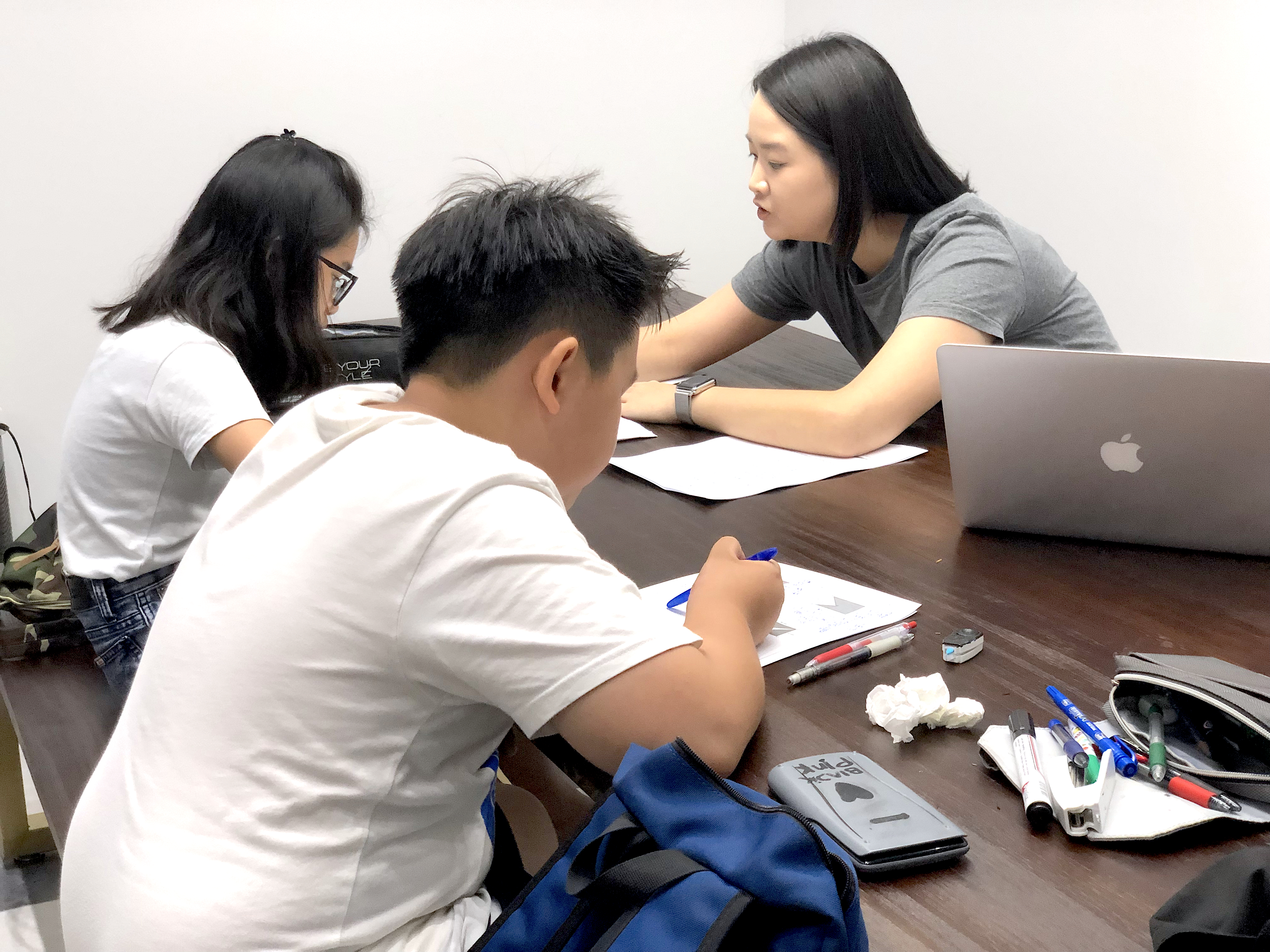
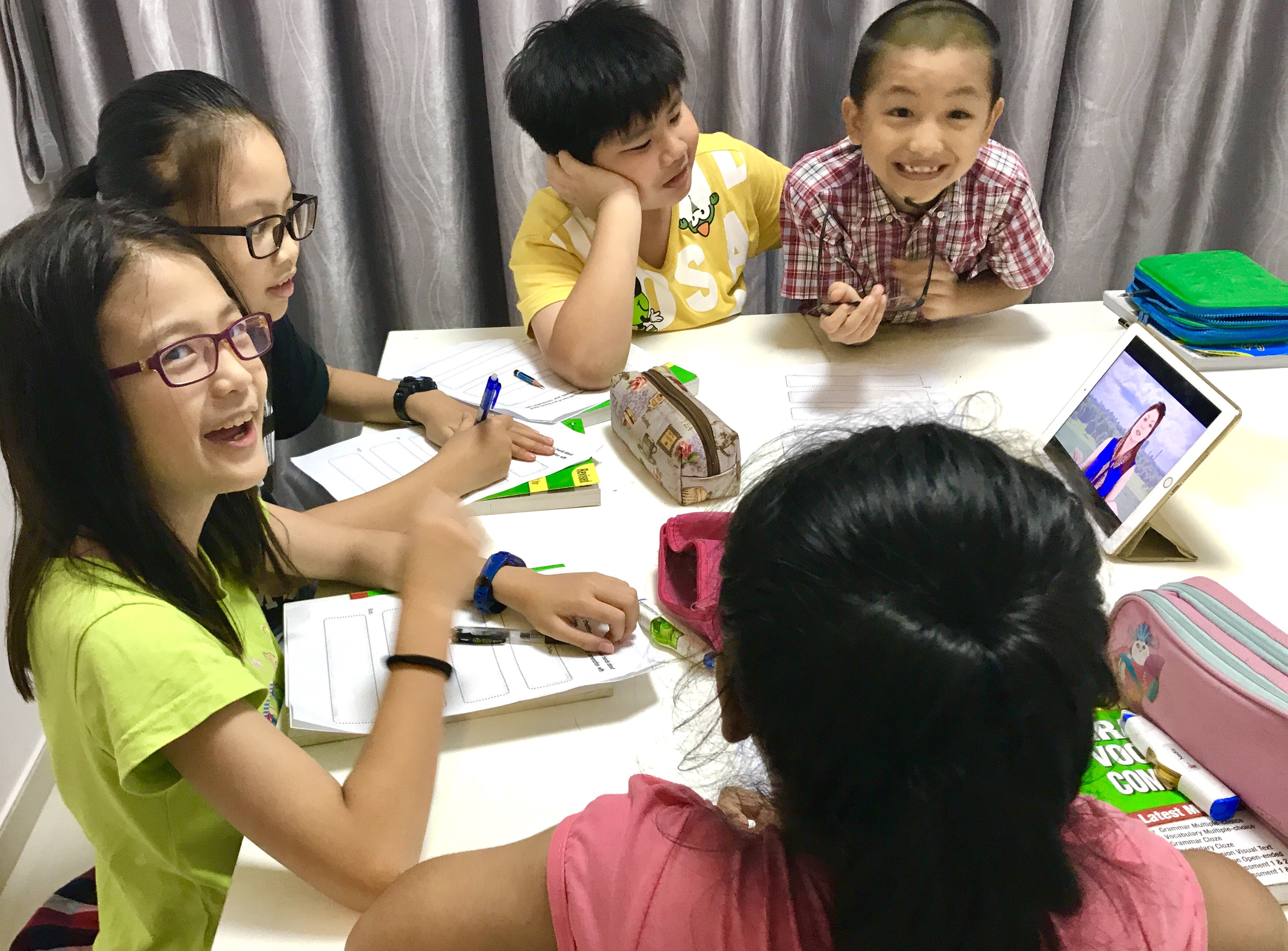
The original page’s embedded classroom images are preserved below in their original sequence as part of the eduKateYishun archive.

















Leave a Reply