
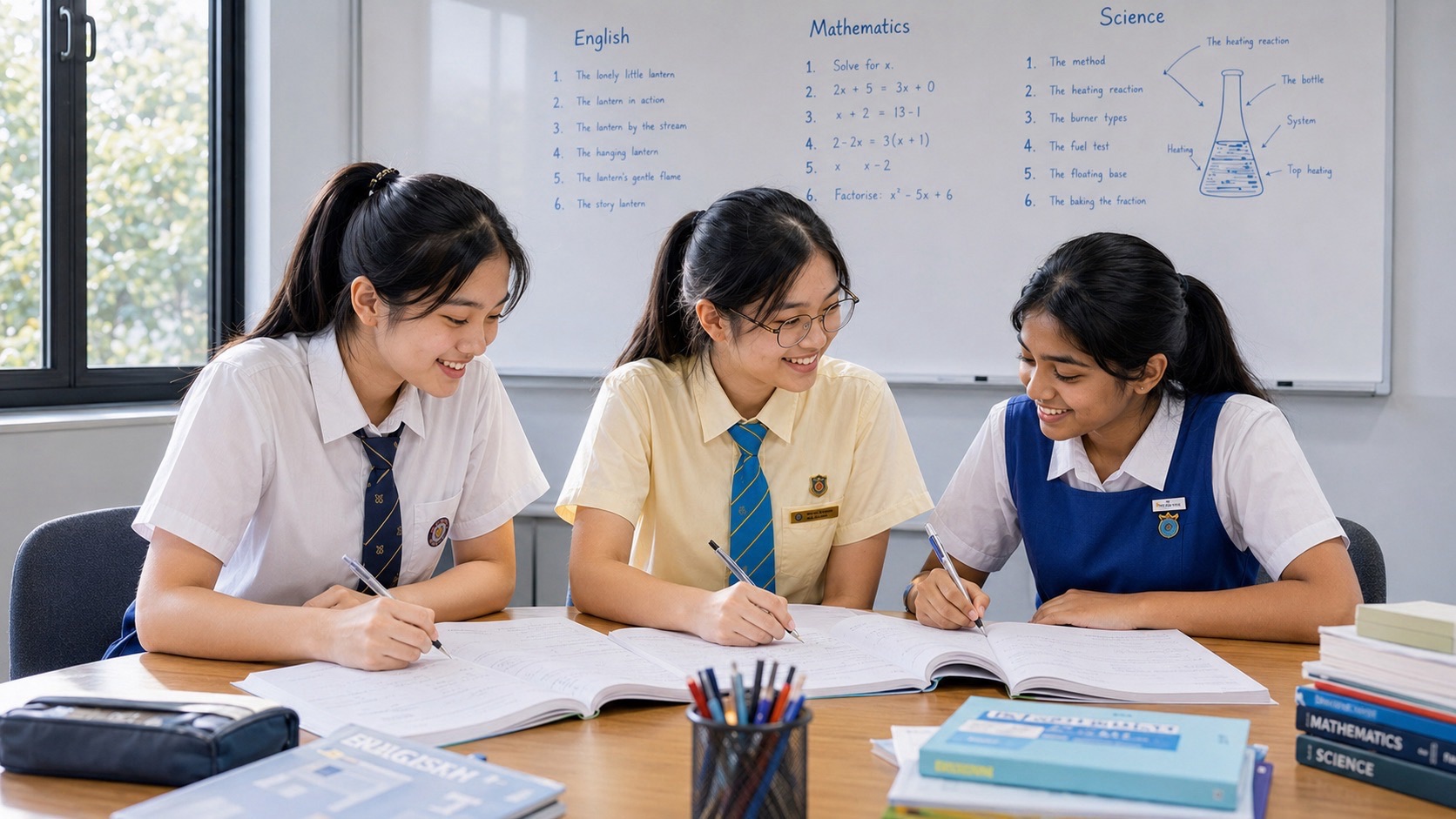
Well Being Foundation · YI-WB-060. Sometimes the person needs to learn something new. Sometimes the conditions around the person need to change. Good education requires enough care to tell the difference.
For families searching learning support, how to help a child study, learning support programme, accessible learning, special educational needs support, classroom environment, child cannot focus on homework or why a student performs differently across settings, the central question is not automatically “What is wrong with the learner?” It is: what is the learner being asked to do, under what conditions, with what access, and what changes when those conditions change?
A learner does not perform in a vacuum. Instructions, noise, schedules, relationships, technology, language, physical access, classroom norms, family routines, assessment conditions and institutional expectations all shape what becomes visible. At eduKateYishun, care begins by inspecting that meeting point before locating the entire difficulty inside the person.
Quick answer: when should we change the environment instead of changing the learner?
Change the environment when an avoidable condition is blocking the intended capability. Teach the learner when the capability itself is missing. Preserve legitimate support. Do not lower the target silently.
- State the exact capability or task being assessed.
- List the conditions under which the difficulty appears.
- Identify barriers that are not part of the intended skill.
- Change one relevant condition where practical and compare performance.
- Keep the learning target stable while access changes.
- Record what support was actually used.
- Teach the missing skill where the difficulty remains.
- Review whether support can fade, must remain, or needs specialist input.
This is not an argument against responsibility
Conditions matter, but they do not erase agency. Students still make choices. Adults still set boundaries. Work still has requirements. A person may need to practise, plan, apologise, persist or change behaviour.
The point is accuracy. Responsibility is most useful when the expectation is clear, access is reasonable, the task measures what it claims to measure, and the person is not being judged mainly on an avoidable obstacle.
A student who forgets homework repeatedly may still need a better system. But if the homework instructions are scattered across three platforms, deadlines change without clear notice and the learner is expected to reconstruct the task from multiple messages, part of the problem belongs to the environment. Both can be true at once.
The seven conditions around a learner
| Condition | What to inspect | Typical hidden effect |
|---|---|---|
| Instructional | What was explained, modelled, assumed or omitted? | A learner is judged on a prerequisite that was never made secure. |
| Physical | Noise, visibility, seating, movement, temperature, fatigue and access to materials. | Attention or performance changes because the setting is unnecessarily demanding. |
| Social | Trust, group dynamics, ridicule, status and ease of asking for help. | A learner withholds questions or participation despite understanding. |
| Temporal | Timing, transitions, deadlines, sleep, commuting and competing demands. | Performance degrades because the task arrives in an overloaded window. |
| Technological | Device, interface, notifications, file formats, accessibility and tool complexity. | The medium becomes harder than the learning target. |
| Linguistic | Vocabulary, instructions, sentence complexity and language proficiency. | The learner cannot demonstrate subject understanding because wording blocks access. |
| Institutional | Rules, assessment design, participation norms and available support routes. | A system quietly rewards one way of demonstrating capability. |
The first discipline: define the intended capability
Before changing anything, ask what the task is actually meant to show. If the target is scientific reasoning, tiny text and dense formatting should not become the main obstacle. If the target is reading fluency, however, having an adult read every sentence aloud may change the task itself.
This distinction is the heart of fair support. An adaptation can preserve the target or replace it. Those are different actions and must not be confused.
The related Sengkang owner, Accessible Learning Tasks Without Silent Target Changes, develops this target–barrier distinction in operational detail.
Access is not the same as lowering standards
The phrase “support” sometimes triggers fear that standards are being reduced. That can happen if an adaptation removes the skill the task is meant to assess. It does not follow that every access change lowers the target.
Increasing font size does not lower a scientific reasoning standard. Providing a quieter seat does not make algebra easier. Allowing a student to type may preserve the writing task when handwriting mechanics are not the target. Giving a formula sheet, however, changes the task if recall of the formula is itself being assessed.
The judgement depends on the intended capability, not on whether the support looks generous.
Universal Design for Learning as a design lens
CAST’s Universal Design for Learning Guidelines 3.0 provide one widely used framework for anticipating learner variability. The 2024 update emphasises multiple means of engagement, representation and action/expression, learner agency and the removal of exclusionary barriers.
Yishun does not use UDL as a slogan that every task should become easier or every learner should receive the same support. The useful principle is earlier and more precise: design so that unnecessary barriers do not decide who gets to participate, and keep the intended learning goal visible while making access choices.
Illustrative case 1: the student who “cannot focus”
Illustrative case. Adrian is described as unable to focus on homework. The family notices that he leaves his seat repeatedly during thirty-minute worksheet blocks.
A closer look shows something more specific. Adrian completes short, clearly bounded tasks with few problems. The difficulty appears when several pages are assigned at once, instructions are mixed between school notes and a messaging app, and he does not know how much work remains.
The intervention changes. Instead of treating “focus” as a fixed personal weakness, the family makes the work visible: one task at a time, a clear finish point and the materials prepared before starting. If Adrian still cannot engage even when the task is clear and bounded, the interpretation updates again.
The point is not that every attention problem is environmental. It is that “cannot focus” is too broad to guide action without looking at the task and conditions.
Illustrative case 2: the child who performs differently at home and school
Illustrative case. Mira explains Science clearly at home but rarely answers in class. Adults first conclude that she lacks confidence.
Observation reveals that she contributes readily in pairs, writes strong explanations and becomes quiet mainly during fast whole-class questioning. Several explanations are possible: processing time, fear of public error, classroom status, speaking demands, or ordinary preference.
A useful next step might be written thinking time before oral response, smaller-group contribution or a predictable question routine. The goal is not to protect Mira forever from speaking. It is to identify what the current performance actually shows before deciding which capability needs teaching.
Illustrative case 3: “careless” Mathematics working
Illustrative case. Ben repeatedly loses marks because intermediate values are copied wrongly. His work is cramped, several calculations share the same line and corrections are written over earlier figures.
The first label is “careless”. The environmental and representational conditions suggest another route: require one calculation per line, label intermediate values and provide enough writing space. The Mathematics target remains unchanged.
If the error rate drops, the writing layout was part of the mechanism. If errors remain, the next investigation moves deeper into number transcription, checking or conceptual understanding.
Illustrative case 4: the learner who “does not understand instructions”
Illustrative case. Aisha frequently begins tasks incorrectly. Teachers describe her as not listening.
A review shows that long instructions are delivered once while materials are being handed out. Aisha often starts correctly when the same instructions are written in a short sequence.
That comparison does not prove a diagnosis. It tells us that instruction format matters. The school can preserve responsibility—Aisha still has to complete the task—while making the expectation more inspectable.
A condition-change test
A simple educational comparison can reveal whether a difficulty is stable across conditions:
- Does the difficulty remain when instructions are clearer?
- Does it remain when irrelevant visual clutter is reduced?
- Does it remain when the learner has enough time to understand the task?
- Does it remain when a legitimate alternative response format is available?
- Does it remain with another teacher, group or setting?
- Does it remain after prerequisite teaching?
- What does not change across the comparisons?
These comparisons do not identify cause by themselves. They narrow the field. They tell us which explanations remain plausible and which ones have weakened.
The capability–condition matrix
| Observed pattern | Possible interpretation | Next check |
|---|---|---|
| Difficulty in every setting | Capability may genuinely be unstable. | Teach/reteach the prerequisite and retest on fresh work. |
| Difficulty only under heavy time pressure | Fluency, processing load or pacing may matter. | Compare untimed accuracy with timed performance. |
| Difficulty only with dense language | Language may be blocking subject knowledge. | Simplify wording without simplifying the underlying concept. |
| Difficulty only in public participation | Social/communication conditions may matter. | Compare written, pair and whole-group demonstration. |
| Difficulty disappears with one prompt | Capability may be fragile rather than absent. | Fade the prompt and retest after delay. |
| Difficulty disappears only when answer content is supplied | Support may be replacing the target. | Redesign support to preserve the intended thinking. |
Opportunity to demonstrate matters
Assessment is only useful when the learner had a meaningful opportunity to demonstrate the intended skill. A poor result can reflect weak capability, but it can also reflect unclear instructions, inaccessible presentation, missing prerequisites, fatigue, unfamiliar interface or other conditions.
This does not mean every disappointing result should be dismissed. It means interpretation should be conditional. A result becomes stronger evidence when the task, support and access conditions are known.
The Sengkang Capability Profile Without Labelling the Child is the federation’s technical route for recording task, conditions, support, observation and uncertainty without turning one result into identity.
Care means noticing without taking over
Care can become over-helping. An adult may remove every difficult step, answer too quickly or organise the learner so completely that the learner has no chance to own the process.
The correct response is not to choose between “help” and “independence” as though they were opposites. The better sequence is support that makes the intended capability possible, followed by observation of what the learner can increasingly carry.
Change the environment where it is unnecessarily obstructive. Teach the learner where capability is genuinely missing. Preserve legitimate access. Fade only what has become unnecessary. Keep the route back to help open.
Support should leave an evidence trail
A strong support system can answer: What was the task? What support was used? What changed after the support? What could the learner do independently? What happened later?
This does not require a bureaucratic file for every piece of homework. It requires enough memory to avoid the common error of saying “the child can do it now” when the successful attempt depended on heavy prompting.
The wider Learning Practice and Review and How We Know Learning Has Really Held routes provide the federation’s evidence loop for fresh and delayed performance.
The social environment can be an access condition
A classroom may technically allow participation while socially punishing it. A student may know that asking a question attracts ridicule. A friendship group may treat disagreement as disloyalty. A family may say that mistakes are acceptable while discussing marks as though they are the main measure of worth.
These conditions are less visible than desk height or font size, but they still affect what a person is willing to attempt in public.
When relationships are central, use Friendship and Belonging Without Having to Perform.
Safe and supportive school environments
CDC guidance on safe and supportive school environments treats school connectedness, safety and supportive conditions as important parts of student experience. Its student autonomy and empowerment guidance likewise emphasises meaningful student participation and agency.
These resources are population-level educational guidance. They do not tell us what one student needs without observing the actual context. Their value here is conceptual: participation and learning are shaped by conditions, not only by private willpower.
The temporal environment: when the week becomes the problem
Students live inside schedules. School, CCA, tuition, commuting, meals, family obligations, homework and sleep compete for the same finite day.
A child who appears unmotivated at 10.30 pm may not need a motivational speech. A Secondary student who has three late evenings and an early morning may show poorer retrieval despite understanding the material. A family that adds one more useful programme can still make the whole week less workable.
The question becomes: what is the actual load, and is the system asking for performance in a window where the learner has little remaining capacity?
A weekly load audit
| Check | Question |
|---|---|
| Sleep | Is the schedule borrowing from sleep to preserve every activity? |
| Transitions | How much time is lost moving between school, tuition, CCA and home? |
| Open tasks | How many unfinished obligations remain mentally active at once? |
| Recovery | Is there any low-demand time after concentrated work? |
| Priority | Are all tasks treated as equally urgent? |
| Buffer | Can one delay be absorbed without the whole week collapsing? |
The technological environment: tools can become barriers
Digital systems can improve access and also add friction. A school task may require a particular device, browser, account, file format and sequence of uploads. Notifications can fracture attention. Small screens can make diagrams hard to inspect. A tool intended to help may demand enough navigation that the learner’s energy is spent on the interface.
The correct response is not “technology is bad”. It is to separate the learning target from the interface. If the goal is to write an explanation, the submission system should not become the main test unless digital workflow is itself part of the objective.
The language environment: subject knowledge can be hidden by wording
A learner may understand a scientific or mathematical relationship but fail to access it through dense instructions. In another case, precise language may itself be the target.
This is why subject and language owners must communicate. English depth belongs to SETC | How English Works; specialist Mathematics belongs to Bukit Timah Tutor Mathematics; public Science knowledge belongs to Singapore Science World. Yishun’s job is to help decide whether the observed difficulty belongs in the person, the condition, the subject or the interaction between them.
Learning support does not mean diagnosing from an article
Families searching learning support programme, dyslexia support, ADHD school support or special educational needs often need current, qualified information that goes beyond a general educational article. A web page cannot diagnose a child or determine eligibility for a particular school support process.
Yishun can still improve the first conversation: describe the actual difficulty, record where it appears, preserve the learner’s perspective, note what changes under different conditions, and bring concrete examples to the appropriate school or professional route.
That is better preparation for qualified help than arriving with only a total label.
When parents talk to the school
A useful school conversation starts with observations rather than accusations. “We notice that she completes written Science explanations but rarely answers orally in whole-class discussion.” “He starts homework more reliably when the instructions are written in steps.” “The problem appears mainly after late CCA days.”
These statements make collaboration possible. The parent can then ask what the school observes, what supports already exist, what the intended capability is, and how the next change will be reviewed.
The goal is not to make the school accept the family’s theory. It is to improve the shared model of what is happening.
When the learner should still be asked to adapt
Some barriers cannot or should not be removed. Examinations have timing. Group work requires coordination. School systems have common procedures. Adult life contains inconvenience and ambiguity.
The presence of a difficult condition does not automatically mean it must disappear. The question is whether the condition is legitimate, whether the learner has appropriate access, and whether adapting to it is part of the intended capability.
A student may therefore need both environmental support and deliberate practice. The two are not opposites.
A four-way response model
| Finding | Best next move |
|---|---|
| Environment is the main unnecessary barrier | Change the condition and retest. |
| Capability is clearly missing across reasonable conditions | Teach or repair the capability. |
| Both matter | Change access and teach the skill in parallel. |
| Evidence is still ambiguous | Gather a better sample before escalating the intervention. |
The release principle: help should not become invisible dependence
A support system should know what can fade and what should remain. Some instructional prompts are temporary scaffolds. Some accommodations are legitimate access conditions and should not be removed merely to prove independence.
The question is not “Can we remove all help?” It is “Which support is teaching, which support is access, which support is now unnecessary, and what can the learner carry without task-specific prompting?”
This distinction protects both dignity and standards.
What progress looks like
Progress may look like a cleaner match between person, task and environment. The learner can explain what support is useful. Adults stop changing three things at once. Difficulties become more specific. Unnecessary barriers are removed. Missing capabilities are taught. Evidence improves because the task is measuring what everyone thought it was measuring.
The quiet success is not that every difficulty disappears. It is that the system becomes more accurate about where the difficulty lives.
Frequently asked questions
How do I know if the problem is the child or the environment?
Avoid that binary. Often both contribute. Define the task, change one relevant condition where practical, compare performance and see what remains difficult.
Does giving support lower standards?
Not necessarily. A support lowers the target only when it removes or replaces the skill being assessed. Many access changes preserve the same learning demand.
What is an accessible learning task?
A task in which unnecessary barriers are reduced while the intended learning target remains clear. The exact design depends on what the task is meant to measure.
Should accommodations always be faded?
No. Temporary instructional scaffolds may fade; legitimate access arrangements may remain. The distinction depends on purpose and applicable professional or institutional guidance.
What if my child performs much better at home than at school?
Compare the conditions: pace, group size, noise, language, support, familiarity, social pressure and response format. The difference is information, not proof of one cause.
What if my child cannot focus on homework?
Inspect task clarity, duration, workload, fatigue, environment, device distractions and whether the first step is visible. If the difficulty remains across reasonable conditions or causes broader concern, seek appropriate qualified support.
Should parents ask the school for learning support?
If the difficulty is persistent or materially affects access to learning, a school conversation can be appropriate. Bring specific observations and ask what the school has observed and what current support routes apply.
Is Universal Design for Learning the same as special education?
No. UDL is a design framework for anticipating learner variability and reducing exclusionary barriers. Individual special educational needs and formal support arrangements require their own qualified and institutional processes.
Can a difficult environment cause low marks?
It can contribute, but low marks have many possible causes. Treat the environment as one hypothesis to test rather than a complete explanation.
When should professional help be involved?
When the difficulty is persistent, significant, safety-related, or beyond ordinary educational support, use an appropriate qualified professional or official route. This article cannot assess an individual need remotely.
The Florence Nightingale lens
Florence Nightingale is a secondary cultural reference in the Yishun manifesto. Here she is used as an interpretive lens for observation, evidence, organisation and environmental conditions—not as a claim that educational difficulty is illness and not as clinical authority for an individual learner.
The useful structural question is simple: instead of asking only “How should this person cope better?”, ask “What around the person is shaping this outcome, and which of those conditions can reasonably be changed?”
Continue through Well Being and the learner-support route
Use Knowing Yourself Without Reducing Yourself to a Label when a condition has become a global self-judgement. Use Friendship or Belonging when the social environment is central. Use the Sengkang Accessible Learning Tasks and Capability Profile routes for operational learning evidence. Return to the Well Being hub for the wider branch.
Sources and limits
- CAST Universal Design for Learning Guidelines 3.0.
- CDC: Safe and Supportive School Environments.
- CDC: Student Autonomy and Empowerment.
These frameworks support inspecting access, participation, learner variability and environment before assigning the entire difficulty to the person. They do not determine an individual learner’s diagnosis, eligibility or professional support needs. Those require the appropriate school, authority or qualified professional context.
Care and conditions depth handbook | Part I
1. Start by inspecting the task
Before concluding that a learner lacks effort or ability, inspect what the task actually asks. Ambiguous instructions, hidden prerequisites, poor examples or conflicting requirements can create failure that looks personal.
A useful care response separates the person from the design. Rewrite the task clearly, identify the first required action and see whether performance changes.
The test is practical: change one condition and observe what happens on a comparable task. If performance changes meaningfully, the environment belongs in the explanation. If it does not, revise the model rather than protecting the intervention.
2. Access is part of responsibility
A resource can exist and still be functionally inaccessible because of language, timing, device limits, cost, location or unclear navigation.
Adults and institutions should ask whether the learner can actually use the support being offered. ‘The information was available’ is weaker than ‘the learner could reasonably access and understand it’.
The test is practical: change one condition and observe what happens on a comparable task. If performance changes meaningfully, the environment belongs in the explanation. If it does not, revise the model rather than protecting the intervention.
3. Time is an environmental condition
A task that is manageable in isolation may become impossible inside a crowded week.
Look at the whole schedule before describing incomplete work as a character issue. Changing deadlines, sequencing or workload can sometimes solve a problem more honestly than demanding more intensity.
The test is practical: change one condition and observe what happens on a comparable task. If performance changes meaningfully, the environment belongs in the explanation. If it does not, revise the model rather than protecting the intervention.
4. Instructions can create unnecessary load
Long, nested directions can consume attention before the learner reaches the subject knowledge being assessed.
Where the goal is not instruction-following itself, simplify wording and make sequence visible. Better design can reveal whether the academic capability was present all along.
The test is practical: change one condition and observe what happens on a comparable task. If performance changes meaningfully, the environment belongs in the explanation. If it does not, revise the model rather than protecting the intervention.
5. Examples shape what learners think counts
A single model can accidentally teach a narrow surface pattern instead of the underlying relationship.
Use varied examples when transfer matters, and explain what stays the same. Poor example design can make later variation look like a learner deficit.
The test is practical: change one condition and observe what happens on a comparable task. If performance changes meaningfully, the environment belongs in the explanation. If it does not, revise the model rather than protecting the intervention.
6. The environment can contain competing signals
Noise, interruptions, unclear routines and multiple adult instructions can make a straightforward task harder to organise.
Improving conditions is not pampering. It is testing whether the barrier belongs to the person or to the system around the person.
The test is practical: change one condition and observe what happens on a comparable task. If performance changes meaningfully, the environment belongs in the explanation. If it does not, revise the model rather than protecting the intervention.
7. Adult consistency matters
A learner can receive one expectation from school, another from tuition and a third from home.
Where possible, clarify the job and reduce contradictory instructions. Coordination can remove friction without requiring the learner to mediate between adults.
The test is practical: change one condition and observe what happens on a comparable task. If performance changes meaningfully, the environment belongs in the explanation. If it does not, revise the model rather than protecting the intervention.
8. Feedback quality is a condition
A mark or vague comment can leave the learner knowing that performance was weak without knowing what action would change it.
Care includes making feedback usable: specific enough to guide the next task, bounded enough to avoid overload, and revisable if later evidence disagrees.
The test is practical: change one condition and observe what happens on a comparable task. If performance changes meaningfully, the environment belongs in the explanation. If it does not, revise the model rather than protecting the intervention.
9. Materials can create or remove friction
Missing tools, broken links, inaccessible files or poorly organised notes can turn simple work into repeated setup costs.
A practical intervention may be organisational rather than instructional. Reduce avoidable friction before concluding that the learner cannot manage the content.
The test is practical: change one condition and observe what happens on a comparable task. If performance changes meaningfully, the environment belongs in the explanation. If it does not, revise the model rather than protecting the intervention.
10. Language can hide the real task
A learner may understand the concept but misread a qualifier, unfamiliar term or dense sentence.
If language is not the target being assessed, clarify it and see whether the underlying capability appears. If language is the target, teach it explicitly rather than treating confusion as a general weakness.
The test is practical: change one condition and observe what happens on a comparable task. If performance changes meaningfully, the environment belongs in the explanation. If it does not, revise the model rather than protecting the intervention.
11. Expectations should be visible
Learners perform better when they know what a successful response requires.
Rubrics, examples and concise criteria can make standards legible. Hidden standards make feedback feel arbitrary and increase dependence on guessing what the adult wants.
The test is practical: change one condition and observe what happens on a comparable task. If performance changes meaningfully, the environment belongs in the explanation. If it does not, revise the model rather than protecting the intervention.
12. Sequencing matters
Later tasks often depend on earlier knowledge, but curricula and homework can move forward even when a dependency is unstable.
Careful sequencing does not mean lowering the ceiling. It means building the bridge required to reach it.
The test is practical: change one condition and observe what happens on a comparable task. If performance changes meaningfully, the environment belongs in the explanation. If it does not, revise the model rather than protecting the intervention.
13. Choice can reduce unnecessary resistance
Some tasks allow meaningful choice in topic, order, format or example without changing the learning goal.
Choice should serve agency, not disguise the same compulsory task. When genuine, it can help reveal whether the barrier was the content or the way the task was imposed.
The test is practical: change one condition and observe what happens on a comparable task. If performance changes meaningfully, the environment belongs in the explanation. If it does not, revise the model rather than protecting the intervention.
14. Breaks can be part of task design
Long work periods are not automatically more serious than shorter focused periods.
A planned pause can protect accuracy and attention. The relevant question is whether the work after the pause improves, not whether the learner looked continuously busy.
The test is practical: change one condition and observe what happens on a comparable task. If performance changes meaningfully, the environment belongs in the explanation. If it does not, revise the model rather than protecting the intervention.
15. Responsibility is shared but not erased
Changing the environment does not mean nobody is accountable. Learners still make choices; adults and institutions also design conditions.
A mature model can hold both: what the learner can reasonably do next and what the system should change because the barrier is unnecessary.
The test is practical: change one condition and observe what happens on a comparable task. If performance changes meaningfully, the environment belongs in the explanation. If it does not, revise the model rather than protecting the intervention.
16. Care asks what should change first
When something is not working, the default should not be ‘how do we fix the learner?’
Ask whether the task, explanation, timing, tools, environment, support or expectation could be changed more directly. Sometimes the most responsible intervention is outside the person.
The test is practical: change one condition and observe what happens on a comparable task. If performance changes meaningfully, the environment belongs in the explanation. If it does not, revise the model rather than protecting the intervention.
Care and conditions depth handbook | Part II
17. The first weak link may be outside the learner
A repeated failure can originate in unclear instructions, missing materials, poor timing or a mismatch between the task and the stated goal.
Before adding practice, ask which part of the environment changed when performance improved or declined. The answer can prevent unnecessary remediation.
Use a simple experimental discipline: change one condition, keep the task comparable, and observe what happens. Improvement supports including the environment in the explanation; no change is also useful evidence and should lead to a revised model.
18. A good system makes the next action visible
People lose time when every task begins with deciding where to find the file, what to do first or which version is current.
Care can be architectural: organise the pathway so that the learner spends attention on learning rather than navigation.
Use a simple experimental discipline: change one condition, keep the task comparable, and observe what happens. Improvement supports including the environment in the explanation; no change is also useful evidence and should lead to a revised model.
19. Too many reminders can become part of the problem
Repeated adult prompting may keep a routine functioning while preventing anyone from seeing whether the learner can run it independently.
Reduce prompts gradually and record what still happens. Support should reveal capability, not permanently hide its absence.
Use a simple experimental discipline: change one condition, keep the task comparable, and observe what happens. Improvement supports including the environment in the explanation; no change is also useful evidence and should lead to a revised model.
20. A deadline should match the real job
Some tasks need urgency; others gain little from artificial pressure.
When speed is not the learning target, unnecessary time pressure can distort what the work shows. Use timing deliberately rather than as a universal signal of seriousness.
Use a simple experimental discipline: change one condition, keep the task comparable, and observe what happens. Improvement supports including the environment in the explanation; no change is also useful evidence and should lead to a revised model.
21. Workload has interactions, not just totals
Five reasonable tasks can become unreasonable when they all peak on the same evening.
Look at clustering, transitions and setup costs. The problem may be coordination across tasks rather than any single assignment.
Use a simple experimental discipline: change one condition, keep the task comparable, and observe what happens. Improvement supports including the environment in the explanation; no change is also useful evidence and should lead to a revised model.
22. A timetable is an environmental tool
Schedules can reduce decision friction, but they can also become unrealistic scripts that fail on ordinary days.
Build around actual constraints and revise from execution. A timetable that looks perfect but cannot survive Tuesday is not a useful system.
Use a simple experimental discipline: change one condition, keep the task comparable, and observe what happens. Improvement supports including the environment in the explanation; no change is also useful evidence and should lead to a revised model.
23. Physical space can support or obstruct work
Lighting, seating, shared space, device placement and material access affect how easily a task begins and continues.
The goal is not a perfect study room. It is reducing avoidable friction with the resources actually available.
Use a simple experimental discipline: change one condition, keep the task comparable, and observe what happens. Improvement supports including the environment in the explanation; no change is also useful evidence and should lead to a revised model.
24. Digital environments need design
Notifications, multiple platforms, lost passwords and unclear file structures can consume attention.
Simplify where possible: one naming convention, clear folders, limited alerts during work and a known place for current materials.
Use a simple experimental discipline: change one condition, keep the task comparable, and observe what happens. Improvement supports including the environment in the explanation; no change is also useful evidence and should lead to a revised model.
25. Transitions deserve attention
Moving from school to homework, one subject to another or leisure to study can create more friction than the task itself.
A short transition routine can reduce repeated negotiation. The useful routine is the smallest one that reliably gets the learner into the next task.
Use a simple experimental discipline: change one condition, keep the task comparable, and observe what happens. Improvement supports including the environment in the explanation; no change is also useful evidence and should lead to a revised model.
26. The first instruction can determine the whole task
If the opening step is ambiguous, a learner may delay, guess or seek help even when later content is manageable.
Make the first action concrete. Then observe whether the learner can continue. This is a cleaner test than explaining the whole task in advance.
Use a simple experimental discipline: change one condition, keep the task comparable, and observe what happens. Improvement supports including the environment in the explanation; no change is also useful evidence and should lead to a revised model.
27. Support should be layered
Not every learner needs the same level of explanation, prompting or structure.
Offer the least support that makes productive action possible, then add only when evidence requires it. Layering protects agency and makes dependence visible.
Use a simple experimental discipline: change one condition, keep the task comparable, and observe what happens. Improvement supports including the environment in the explanation; no change is also useful evidence and should lead to a revised model.
28. Removal of support is also a test
A scaffold can be useful today and unnecessary later.
Fade temporary support deliberately. If performance remains stable, release it. If performance collapses, the scaffold was still carrying part of the task.
Use a simple experimental discipline: change one condition, keep the task comparable, and observe what happens. Improvement supports including the environment in the explanation; no change is also useful evidence and should lead to a revised model.
29. Legitimate tools do not need to disappear
Some supports are simply good tools: reference sheets, checklists, dictionaries, calculators where permitted, or clear templates.
Independence does not mean performing without all resources. It means using appropriate resources intelligently rather than relying on avoidable adult direction.
Use a simple experimental discipline: change one condition, keep the task comparable, and observe what happens. Improvement supports including the environment in the explanation; no change is also useful evidence and should lead to a revised model.
30. Instructions should separate goal from method
Sometimes adults prescribe both what must be achieved and exactly how it must be done, even when multiple methods would satisfy the goal.
Where method choice is not the learning target, allow alternatives. Choice can reveal existing capability that rigid process hides.
Use a simple experimental discipline: change one condition, keep the task comparable, and observe what happens. Improvement supports including the environment in the explanation; no change is also useful evidence and should lead to a revised model.
31. Correction should not destroy ownership
An adult can improve a piece of work so thoroughly that the learner becomes a spectator.
Correct selectively. Ask the learner to make the consequential change. The goal is a better future decision, not the most polished current page.
Use a simple experimental discipline: change one condition, keep the task comparable, and observe what happens. Improvement supports including the environment in the explanation; no change is also useful evidence and should lead to a revised model.
32. The environment can reward the wrong behaviour
If speed receives praise regardless of accuracy, or perfect neatness receives more attention than reasoning, learners adapt to the signal.
Inspect what adults actually reward. Conditions include incentives, not only furniture and schedules.
Use a simple experimental discipline: change one condition, keep the task comparable, and observe what happens. Improvement supports including the environment in the explanation; no change is also useful evidence and should lead to a revised model.
33. Fear of being wrong can be produced by the setting
A classroom or home environment that responds harshly to mistakes can make learners hide uncertainty.
A safer educational response treats errors as information while preserving accountability. The aim is honest evidence, not a room without standards.
Use a simple experimental discipline: change one condition, keep the task comparable, and observe what happens. Improvement supports including the environment in the explanation; no change is also useful evidence and should lead to a revised model.
34. Public correction changes the task
Being corrected in front of peers adds social exposure to the academic problem.
When public response is not necessary, quieter feedback can help reveal whether the learner’s difficulty was conceptual or partly shaped by the setting.
Use a simple experimental discipline: change one condition, keep the task comparable, and observe what happens. Improvement supports including the environment in the explanation; no change is also useful evidence and should lead to a revised model.
35. Comparison can distort self-assessment
Constant ranking against siblings or classmates can make learners focus on status rather than the next useful skill.
Use comparison when the system genuinely requires it, but keep personal progress and task-specific evidence visible as separate information.
Use a simple experimental discipline: change one condition, keep the task comparable, and observe what happens. Improvement supports including the environment in the explanation; no change is also useful evidence and should lead to a revised model.
36. Adults can disagree without making the learner choose sides
Parents, teachers and tutors may hold different explanations of a problem.
Bring the evidence together and identify which claim each person is making. The learner should not have to manage adult disagreement as another learning task.
Use a simple experimental discipline: change one condition, keep the task comparable, and observe what happens. Improvement supports including the environment in the explanation; no change is also useful evidence and should lead to a revised model.
37. A change should have a review point
Environmental interventions can remain forever because they once helped.
State what the change is meant to improve and when it will be reviewed. Useful conditions can remain; unnecessary ones should not become permanent ritual.
Use a simple experimental discipline: change one condition, keep the task comparable, and observe what happens. Improvement supports including the environment in the explanation; no change is also useful evidence and should lead to a revised model.
38. Care includes saying no to unnecessary complexity
New apps, programmes, trackers and systems can create more management than learning.
Add a tool only if it solves a named problem. Simpler systems are often easier to maintain and easier to evaluate.
Use a simple experimental discipline: change one condition, keep the task comparable, and observe what happens. Improvement supports including the environment in the explanation; no change is also useful evidence and should lead to a revised model.
39. The learner can help design the environment
Young people often know which parts of a routine create friction, even if they cannot solve them alone.
Ask what gets in the way and what change they think would help. Test the proposal rather than assuming adults always see the system more accurately.
Use a simple experimental discipline: change one condition, keep the task comparable, and observe what happens. Improvement supports including the environment in the explanation; no change is also useful evidence and should lead to a revised model.
40. Environment and responsibility can change together
A clearer task may make learner responsibility easier to see.
After removing avoidable barriers, ask what action is now reasonably expected. Fair support does not remove accountability; it makes accountability more precise.
Use a simple experimental discipline: change one condition, keep the task comparable, and observe what happens. Improvement supports including the environment in the explanation; no change is also useful evidence and should lead to a revised model.
41. Good care protects dignity
A learner should not have to perform incapacity in order to receive a reasonable adjustment to conditions.
Discuss the task and barrier with respect. Support works better when it does not make the person’s difficulty their public identity.
Use a simple experimental discipline: change one condition, keep the task comparable, and observe what happens. Improvement supports including the environment in the explanation; no change is also useful evidence and should lead to a revised model.
42. The final question is whether the system helps participation
An intervention is useful when it helps the learner enter, understand, practise, transfer or complete meaningful work with an appropriate level of support.
If the system becomes the centre of attention while learning recedes, simplify. Conditions exist to support participation, not to become a second curriculum.
Use a simple experimental discipline: change one condition, keep the task comparable, and observe what happens. Improvement supports including the environment in the explanation; no change is also useful evidence and should lead to a revised model.
Worked cases | when the system is part of the problem
Case 1: The homework file nobody can find
A student repeatedly begins late because worksheets are scattered across several platforms. The family first assumes poor organisation. A single current-work folder and consistent naming convention removes most of the delay. The improvement shows that navigation was part of the problem.
The case is illustrative. The principle is to change the smallest relevant condition first, protect what already works, and review whether the learner’s independent participation improves.
Case 2: The learner who needs every instruction repeated
The original directions contain several nested steps. When the adult rewrites them as three numbered actions, the learner proceeds independently. The next test is whether similarly structured instructions remain manageable without adult rewriting.
The case is illustrative. The principle is to change the smallest relevant condition first, protect what already works, and review whether the learner’s independent participation improves.
Case 3: The overloaded Tuesday
No individual assignment is extreme, but tuition, CCA, school homework and a project deadline converge. The responsible response is to renegotiate sequence and priority rather than interpret incomplete work as lack of commitment.
The case is illustrative. The principle is to change the smallest relevant condition first, protect what already works, and review whether the learner’s independent participation improves.
Case 4: The noisy shared room
A learner struggles with reading in a busy common space but completes the same work reliably in a quieter period. The family cannot create a private room, so they change timing and use simple noise reduction. The solution is environmental and realistic.
The case is illustrative. The principle is to change the smallest relevant condition first, protect what already works, and review whether the learner’s independent participation improves.
Case 5: The tutor who prompts every line
Homework is accurate during tuition but weak when done alone. Prompt fading reveals which decisions the learner owns and which are still externally supplied. The teaching plan then targets the missing decisions rather than adding more guided pages.
The case is illustrative. The principle is to change the smallest relevant condition first, protect what already works, and review whether the learner’s independent participation improves.
Case 6: The school-home mismatch
Parents see strong homework while school reports difficulty starting independent tasks. The difference is evidence that assistance, cues or environment matter. Adults compare conditions before concluding that either setting is wrong.
The case is illustrative. The principle is to change the smallest relevant condition first, protect what already works, and review whether the learner’s independent participation improves.
Case 7: The beautiful but unusable timetable
A detailed colour-coded plan is never followed. Instead of blaming discipline, the learner and parent rebuild it around real travel, meals and task duration. A smaller schedule survives the week.
The case is illustrative. The principle is to change the smallest relevant condition first, protect what already works, and review whether the learner’s independent participation improves.
Case 8: The unclear rubric
A student repeatedly loses marks because ‘analysis’ is expected but never operationally explained. An example comparison and explicit criterion make the standard visible. Later work can then show whether the learner can execute it.
The case is illustrative. The principle is to change the smallest relevant condition first, protect what already works, and review whether the learner’s independent participation improves.
Case 9: The family with too many study apps
Each tool solved a small problem, but together they create duplicate reminders and scattered notes. The family chooses one calendar, one current-task list and one archive. Complexity falls without reducing academic expectations.
The case is illustrative. The principle is to change the smallest relevant condition first, protect what already works, and review whether the learner’s independent participation improves.
Case 10: The learner who works better after choosing order
The required tasks remain the same, but the student chooses whether to begin with English or Mathematics. The small choice reduces negotiation and reveals that sequencing, not total workload, was creating part of the friction.
The case is illustrative. The principle is to change the smallest relevant condition first, protect what already works, and review whether the learner’s independent participation improves.
A conditions audit
- Task: Is the goal clear and the first action visible?
- Sequence: Are prerequisites and steps in a workable order?
- Time: Does the workload fit the real week?
- Access: Can the learner actually reach and use the materials?
- Language: Is wording creating difficulty unrelated to the target?
- Tools: Which resources reduce legitimate friction?
- Prompts: Which supports are temporary and ready to fade?
- Environment: What noise, interruption or setup cost matters?
- Adults: Are instructions and expectations coordinated?
- Review: What evidence will tell us to keep, revise or remove the change?
Questions families and educators ask
Does changing the environment lower standards?
Not necessarily. It can make the target clearer by removing barriers unrelated to the skill being assessed. Standards and conditions are different design decisions.
Treat the answer as a testable design principle rather than a judgement about a person. Conditions should be evaluated by whether they improve access to meaningful, appropriately demanding work.
How do we know whether the problem is the learner or the environment?
Avoid the binary. Change one relevant condition and compare performance on a similar task. Many outcomes are interactions between capability and context.
Treat the answer as a testable design principle rather than a judgement about a person. Conditions should be evaluated by whether they improve access to meaningful, appropriately demanding work.
Should parents remove every distraction?
No environment can be perfectly controlled. Reduce avoidable friction where it matters and help the learner build workable routines for ordinary conditions.
Treat the answer as a testable design principle rather than a judgement about a person. Conditions should be evaluated by whether they improve access to meaningful, appropriately demanding work.
Is a quiet room always necessary?
No. People differ and households have constraints. The practical question is which conditions support the task sufficiently with available resources.
Treat the answer as a testable design principle rather than a judgement about a person. Conditions should be evaluated by whether they improve access to meaningful, appropriately demanding work.
Can too much support reduce independence?
Yes, especially when prompts remain after they are no longer needed. Fade temporary supports and test fresh performance.
Treat the answer as a testable design principle rather than a judgement about a person. Conditions should be evaluated by whether they improve access to meaningful, appropriately demanding work.
Are checklists a form of dependence?
They can be legitimate tools. The question is whether the checklist is appropriate to the task and whether the learner can use it independently.
Treat the answer as a testable design principle rather than a judgement about a person. Conditions should be evaluated by whether they improve access to meaningful, appropriately demanding work.
What if school and home expect different methods?
Clarify whether the method itself is assessed. Where it is not, discuss whether multiple valid methods can coexist. Where it is required, make that requirement explicit.
Treat the answer as a testable design principle rather than a judgement about a person. Conditions should be evaluated by whether they improve access to meaningful, appropriately demanding work.
How often should routines be changed?
Only when evidence shows a meaningful problem or condition has changed. Constant redesign creates its own friction.
Treat the answer as a testable design principle rather than a judgement about a person. Conditions should be evaluated by whether they improve access to meaningful, appropriately demanding work.
What if the learner rejects every environmental change?
Test one small change and involve the learner in choosing it. Resistance can contain information about ownership, fit or an inaccurate adult explanation.
Treat the answer as a testable design principle rather than a judgement about a person. Conditions should be evaluated by whether they improve access to meaningful, appropriately demanding work.
When should we stop adjusting conditions?
When the current environment is workable enough for meaningful participation and further adjustments add complexity without improving the task.
Treat the answer as a testable design principle rather than a judgement about a person. Conditions should be evaluated by whether they improve access to meaningful, appropriately demanding work.
Reflection 1: The first weak link may be outside the learner
Imagine the same learner and the same academic goal under two different conditions. Which features changed the amount of unnecessary friction, and which features changed the learning target itself? Keeping those categories separate makes support more precise.
Now write one condition you would preserve, one you would change and one you would leave uncertain until more evidence appears. Care becomes practical when it can make a bounded change and then allow the result to revise the explanation.
Reflection 2: A good system makes the next action visible
Imagine the same learner and the same academic goal under two different conditions. Which features changed the amount of unnecessary friction, and which features changed the learning target itself? Keeping those categories separate makes support more precise.
Now write one condition you would preserve, one you would change and one you would leave uncertain until more evidence appears. Care becomes practical when it can make a bounded change and then allow the result to revise the explanation.
Reflection 3: Too many reminders can become part of the problem
Imagine the same learner and the same academic goal under two different conditions. Which features changed the amount of unnecessary friction, and which features changed the learning target itself? Keeping those categories separate makes support more precise.
Now write one condition you would preserve, one you would change and one you would leave uncertain until more evidence appears. Care becomes practical when it can make a bounded change and then allow the result to revise the explanation.
Reflection 4: A deadline should match the real job
Imagine the same learner and the same academic goal under two different conditions. Which features changed the amount of unnecessary friction, and which features changed the learning target itself? Keeping those categories separate makes support more precise.
Now write one condition you would preserve, one you would change and one you would leave uncertain until more evidence appears. Care becomes practical when it can make a bounded change and then allow the result to revise the explanation.
Reflection 5: Workload has interactions, not just totals
Imagine the same learner and the same academic goal under two different conditions. Which features changed the amount of unnecessary friction, and which features changed the learning target itself? Keeping those categories separate makes support more precise.
Now write one condition you would preserve, one you would change and one you would leave uncertain until more evidence appears. Care becomes practical when it can make a bounded change and then allow the result to revise the explanation.
Reflection 6: A timetable is an environmental tool
Imagine the same learner and the same academic goal under two different conditions. Which features changed the amount of unnecessary friction, and which features changed the learning target itself? Keeping those categories separate makes support more precise.
Now write one condition you would preserve, one you would change and one you would leave uncertain until more evidence appears. Care becomes practical when it can make a bounded change and then allow the result to revise the explanation.
Reflection 7: Physical space can support or obstruct work
Imagine the same learner and the same academic goal under two different conditions. Which features changed the amount of unnecessary friction, and which features changed the learning target itself? Keeping those categories separate makes support more precise.
Now write one condition you would preserve, one you would change and one you would leave uncertain until more evidence appears. Care becomes practical when it can make a bounded change and then allow the result to revise the explanation.
Reflection 8: Digital environments need design
Imagine the same learner and the same academic goal under two different conditions. Which features changed the amount of unnecessary friction, and which features changed the learning target itself? Keeping those categories separate makes support more precise.
Now write one condition you would preserve, one you would change and one you would leave uncertain until more evidence appears. Care becomes practical when it can make a bounded change and then allow the result to revise the explanation.
Reflection 9: Transitions deserve attention
Imagine the same learner and the same academic goal under two different conditions. Which features changed the amount of unnecessary friction, and which features changed the learning target itself? Keeping those categories separate makes support more precise.
Now write one condition you would preserve, one you would change and one you would leave uncertain until more evidence appears. Care becomes practical when it can make a bounded change and then allow the result to revise the explanation.
Reflection 10: The first instruction can determine the whole task
Imagine the same learner and the same academic goal under two different conditions. Which features changed the amount of unnecessary friction, and which features changed the learning target itself? Keeping those categories separate makes support more precise.
Now write one condition you would preserve, one you would change and one you would leave uncertain until more evidence appears. Care becomes practical when it can make a bounded change and then allow the result to revise the explanation.
Reflection 11: Support should be layered
Imagine the same learner and the same academic goal under two different conditions. Which features changed the amount of unnecessary friction, and which features changed the learning target itself? Keeping those categories separate makes support more precise.
Now write one condition you would preserve, one you would change and one you would leave uncertain until more evidence appears. Care becomes practical when it can make a bounded change and then allow the result to revise the explanation.
Reflection 12: Removal of support is also a test
Imagine the same learner and the same academic goal under two different conditions. Which features changed the amount of unnecessary friction, and which features changed the learning target itself? Keeping those categories separate makes support more precise.
Now write one condition you would preserve, one you would change and one you would leave uncertain until more evidence appears. Care becomes practical when it can make a bounded change and then allow the result to revise the explanation.
Reflection 13: Legitimate tools do not need to disappear
Imagine the same learner and the same academic goal under two different conditions. Which features changed the amount of unnecessary friction, and which features changed the learning target itself? Keeping those categories separate makes support more precise.
Now write one condition you would preserve, one you would change and one you would leave uncertain until more evidence appears. Care becomes practical when it can make a bounded change and then allow the result to revise the explanation.
Reflection 14: Instructions should separate goal from method
Imagine the same learner and the same academic goal under two different conditions. Which features changed the amount of unnecessary friction, and which features changed the learning target itself? Keeping those categories separate makes support more precise.
Now write one condition you would preserve, one you would change and one you would leave uncertain until more evidence appears. Care becomes practical when it can make a bounded change and then allow the result to revise the explanation.
Reflection 15: Correction should not destroy ownership
Imagine the same learner and the same academic goal under two different conditions. Which features changed the amount of unnecessary friction, and which features changed the learning target itself? Keeping those categories separate makes support more precise.
Now write one condition you would preserve, one you would change and one you would leave uncertain until more evidence appears. Care becomes practical when it can make a bounded change and then allow the result to revise the explanation.
Reflection 16: The environment can reward the wrong behaviour
Imagine the same learner and the same academic goal under two different conditions. Which features changed the amount of unnecessary friction, and which features changed the learning target itself? Keeping those categories separate makes support more precise.
Now write one condition you would preserve, one you would change and one you would leave uncertain until more evidence appears. Care becomes practical when it can make a bounded change and then allow the result to revise the explanation.
Reflection 17: Fear of being wrong can be produced by the setting
Imagine the same learner and the same academic goal under two different conditions. Which features changed the amount of unnecessary friction, and which features changed the learning target itself? Keeping those categories separate makes support more precise.
Now write one condition you would preserve, one you would change and one you would leave uncertain until more evidence appears. Care becomes practical when it can make a bounded change and then allow the result to revise the explanation.
Reflection 18: Public correction changes the task
Imagine the same learner and the same academic goal under two different conditions. Which features changed the amount of unnecessary friction, and which features changed the learning target itself? Keeping those categories separate makes support more precise.
Now write one condition you would preserve, one you would change and one you would leave uncertain until more evidence appears. Care becomes practical when it can make a bounded change and then allow the result to revise the explanation.
Reflection 19: Comparison can distort self-assessment
Imagine the same learner and the same academic goal under two different conditions. Which features changed the amount of unnecessary friction, and which features changed the learning target itself? Keeping those categories separate makes support more precise.
Now write one condition you would preserve, one you would change and one you would leave uncertain until more evidence appears. Care becomes practical when it can make a bounded change and then allow the result to revise the explanation.
Reflection 20: Adults can disagree without making the learner choose sides
Imagine the same learner and the same academic goal under two different conditions. Which features changed the amount of unnecessary friction, and which features changed the learning target itself? Keeping those categories separate makes support more precise.
Now write one condition you would preserve, one you would change and one you would leave uncertain until more evidence appears. Care becomes practical when it can make a bounded change and then allow the result to revise the explanation.
Reflection 21: A change should have a review point
Imagine the same learner and the same academic goal under two different conditions. Which features changed the amount of unnecessary friction, and which features changed the learning target itself? Keeping those categories separate makes support more precise.
Now write one condition you would preserve, one you would change and one you would leave uncertain until more evidence appears. Care becomes practical when it can make a bounded change and then allow the result to revise the explanation.
Reflection 22: Care includes saying no to unnecessary complexity
Imagine the same learner and the same academic goal under two different conditions. Which features changed the amount of unnecessary friction, and which features changed the learning target itself? Keeping those categories separate makes support more precise.
Now write one condition you would preserve, one you would change and one you would leave uncertain until more evidence appears. Care becomes practical when it can make a bounded change and then allow the result to revise the explanation.
Reflection 23: The learner can help design the environment
Imagine the same learner and the same academic goal under two different conditions. Which features changed the amount of unnecessary friction, and which features changed the learning target itself? Keeping those categories separate makes support more precise.
Now write one condition you would preserve, one you would change and one you would leave uncertain until more evidence appears. Care becomes practical when it can make a bounded change and then allow the result to revise the explanation.
Closing note | care is partly the design of conditions
Care does not mean removing every difficulty. Learning requires challenge, responsibility and encounters with things that do not work immediately. Care means asking whether the difficulty belongs to the learning goal or is an avoidable product of the environment. When the environment is the problem, changing it can be the most rigorous response.