

Yishun English Tutor for Secondary Schools is a guide for families looking for Secondary English tuition in Yishun, a Yishun English tutor, small-group English tuition, English comprehension, essay writing, situational writing, vocabulary, grammar, oral communication and examination preparation. The visible search may be for tuition, but the underlying need is often more exact: a teenager is trying to manage harder texts, more demanding writing, school pressure and a growing expectation to work independently at the same time.
Good Secondary English tuition should make that transition more intelligible. A tutor should not merely add homework or supply better model answers. The work is to locate where reading, reasoning, expression or self-management becomes unstable, teach the missing operation, test it in a new context and then give control back to the student. That is how academic support can strengthen learning confidence, student well-being and academic resilience without confusing comfort with low standards.
For Secondary 1 to Secondary 4 students, English sits at an unusual intersection. It is an examination subject, a medium for learning other subjects and a daily instrument for relationships, ideas and identity. A student who learns to read accurately, write clearly, speak thoughtfully and recover from mistakes is developing more than paper technique. The student is building a language system that can carry both school and ordinary life.
The wider eduKateYishun Well Being route begins from a simple premise: a young person does not have to fail before belonging, curiosity, relationships, play and ordinary life become important. The same principle belongs in tutoring. We can take examinations seriously without making the examination the measure of the whole person.
The tutor’s first job is to reduce unnecessary uncertainty
Secondary English can feel vague because students often receive large instructions: “improve comprehension”, “write better”, “use stronger vocabulary”, “be more analytical”. Those sentences point in the right direction but they do not tell a teenager what to do at 7.30 p.m. with a passage, a blank page and a deadline.
A useful tutor converts vague demands into observable decisions. Which sentence answers the question? What evidence is narrow enough? What does the quotation prove? What is this paragraph trying to establish? Which example is doing real work? Where does the sentence lose its subject? What should be checked first when five minutes remain?
When the next move becomes visible, effort becomes more intelligent. Anxiety often grows in spaces where the learner cannot see how action connects to outcome. Clarity does not remove difficulty, but it gives difficulty edges.
Marks are evidence, not a description of the teenager
A result tells us something about performance under a particular set of conditions. It may reveal a stable gap. It may reveal weak timing, incomplete preparation, a misunderstanding of task demand, careless editing, an unusually hard paper or a skill that has not yet transferred. The number matters because it is evidence. It becomes unhelpful when it is asked to answer a different question: “What kind of person am I?”
This distinction protects both rigour and well-being. If a score is dismissed, we lose information. If it becomes identity, we lose room to change. The better question is: what sequence produced this result, and which part of that sequence can be improved?
eduKateYishun’s wider diagnostic approach is described in Don’t Get Me Wrong: observation should precede interpretation. In tutoring, that means looking at real work before deciding what the student “is”.
A Secondary English profile is usually jagged
Students are rarely uniformly strong or weak. One may read accurately but write slowly. Another may speak fluently but produce thin written arguments. A third may have good ideas and unstable grammar. A fourth may understand passages but misread question commands. A fifth may perform well in untimed work and collapse under time pressure.
This jaggedness is normal. English is a network of related capabilities, not one ladder. A tutoring plan becomes more efficient when it distinguishes the parts.
- task interpretation and command words;
- literal reading and reference tracking;
- evidence selection;
- inference and justification;
- language effect and writer’s choices;
- summary and compression;
- idea generation and planning;
- paragraph development;
- argument, qualification and counterargument;
- narrative structure and description;
- sentence control, grammar and editing;
- vocabulary precision and register;
- oral reasoning and listening;
- timing, checking and self-monitoring.
A low overall score may hide several stable strengths. Those strengths matter because they are the platforms from which repair can begin.
Secondary 1: protect the transition before small gaps multiply
Secondary 1 is often the first moment when familiar English begins to feel less familiar. Texts are denser, ideas become more abstract, teachers expect greater independence and the student is managing a new school environment at the same time. A child can be capable and still feel temporarily disorganised.
The tutor should make the new expectations explicit. Show what a supported inference looks like. Demonstrate how to plan a paragraph around a claim rather than a topic. Explain why one quotation is stronger than another. Build a checking routine small enough to use. Help the student learn the rhythm of secondary work before assuming that every rough edge is a deficit.
Well-being at this stage often means preserving a sense of competence while the operating environment changes. The student needs evidence that new difficulty is navigable.
Secondary 2: turn methods into habits
By Secondary 2, the novelty has faded. This makes the year deceptively important. Weak routines can become normal; good routines can become automatic. The tutoring goal is consolidation with transfer.
A student who can answer an inference question only when the tutor says “look for the clue” has learned something, but not enough. A student who can identify the relevant clue independently, limit the conclusion and express it precisely is beginning to own the method.
This is the year to reduce prompts, mix question types and make students choose the strategy. Habit is not mindless repetition. It is reliable access to a method when the method is needed.
Secondary 3: complexity rises, so precision matters more
Secondary 3 introduces a stronger analytical demand. Writing must carry more developed ideas; comprehension requires more exact justification; vocabulary and register matter more; time pressure starts to resemble the final examination environment.
Students sometimes respond by making everything more complicated. Essays become crowded with ornate phrases, comprehension answers become longer, and introductions become ambitious. The tutor should teach the opposite lesson: sophistication is precision under complexity.
A concise claim with a clear mechanism can be stronger than a grand claim with weak support. A short quotation can be better than half a paragraph. One well-developed example can be better than three examples that merely sit beside the point.
Secondary 4: build control, not panic
In the final year, the temptation is to turn every week into an emergency. That can increase volume while reducing learning. A calmer strategy identifies the highest-leverage weaknesses, keeps already-strong components alive and increases timed integration gradually.
For 2026 school candidates, SEAB continues to list the GCE O-Level English Language syllabus 1184. From 2027, SEAB lists English under the Singapore-Cambridge Secondary Education Certificate at G1, G2 and G3 subject levels. Families should use current official school and SEAB information for the exact cohort and subject level. The durable preparation remains familiar: reading accurately, writing for purpose, editing language, listening, speaking and managing time.
Official references: 2026 GCE O-Level syllabuses and 2027 SEC syllabuses for school candidates.
A tutoring lesson should have a visible learning job
Students feel the difference between being busy and learning, even when they cannot always name it. A strong lesson has a visible purpose. By the end, the student should be able to state what changed.
A simple lesson architecture is:
- Retrieve. Bring back a relevant skill without notes.
- Model. Make one decision process visible.
- Practise. Apply it with guidance, then with less guidance.
- Vary. Change the wording, genre or context.
- Review. Classify the error rather than merely mark it.
- Release. End with an independent attempt or a clear next action.
The sequence does not need to be rigid. Its purpose is to prevent tuition from becoming a long correction session in which the tutor does most of the thinking.
Comprehension: the student must know what the answer is proving
Weak comprehension often looks like a reading problem when it is actually a response-construction problem. The student may understand the passage but select evidence too broadly, infer too far, paraphrase inaccurately or answer a nearby question.
Teach a short chain: demand → evidence → relationship → answer. What operation does the question require? Which part of the text contains the decisive clue? What relationship does the clue establish? How can the answer state that relationship without adding speculation?
The tutor should ask the student to defend the answer. “Why this line?” is often more educational than “What is the answer?” because it reveals the route.
Inference without invention
An inference is not permission to be imaginative. It is a controlled step beyond what is explicitly stated. A useful test is whether another careful reader could trace the conclusion back to the evidence.
Students can rank claims on a certainty scale: stated, strongly supported, possible, speculative. Examination answers should usually live in the first two zones. This develops calibration, a form of intellectual self-control that is useful far beyond English.
Writing: start with the decision the paragraph must make
Many students plan essays as topic lists. “Technology”, “school”, “family”, “social media” are subject areas, not arguments. A better plan gives each paragraph a job: establish a benefit, explain a risk, distinguish conditions, answer an objection, show a consequence.
Once the claim is clear, examples become evidence rather than decoration. The student can ask: what does this example demonstrate, and what would the paragraph lose without it?
This matters for well-being because a blank page becomes less personal. The problem is no longer “I have nothing to say.” It becomes “I have not yet chosen the claim this paragraph will prove.” That is a solvable problem.
Revision should happen from large decisions to small ones
- Does the response answer the actual task?
- Is the overall route coherent?
- Does each paragraph have a distinct job?
- Are ideas developed through explanation, evidence and consequence?
- Are sentences clear and relationships explicit?
- Are vocabulary and register appropriate?
- What grammar, punctuation or spelling errors remain?
Students who begin revision with spelling may spend precious time polishing a paragraph that should have been reorganised. Order matters.
Vocabulary: replace display with exactness
Secondary students sometimes believe mature writing requires rare words. Mature writing requires accurate words. “Significant” may fit where “important” is vague; “resentful” may fit where “angry” is too broad. But a rare word used badly is not sophistication.
Teach vocabulary through meaning families, contrasts, collocations and repeated use. Ask why one word fits the situation better. Ask what it implies. Ask whether it belongs in formal writing, speech, narrative or all three.
A growing vocabulary should make thought finer, not merely make sentences longer.
Grammar: repair recurring patterns, not everything at once
A teenager with ten corrected errors on every paragraph can feel that English is a field of hidden traps. Error classification creates order. Track the patterns that actually recur: agreement, tense consistency, sentence boundaries, pronoun reference, punctuation, article use, prepositions or awkward modification.
Choose one or two high-frequency patterns and train detection. The learner edits real sentences, explains the rule and later finds the same error inside mixed work. Once that pattern stabilises, move on.
This creates a shrinking error ledger. Progress becomes visible because the student can see which mistakes no longer require external correction.
Oral communication: confidence should be built from substance
Telling a nervous student to “speak with confidence” can be frustrating because confidence is an outcome, not an instruction. Give the student a reliable structure instead: position, reason, example, qualification.
Then practise responsive moves. Agree and add. Disagree and explain. Ask for clarification. Reframe the issue. Connect another speaker’s example to the main question. These moves produce conversational control.
A student can remain naturally quiet and still become an excellent speaker. The target is not extroversion. It is presence: the ability to enter, contribute and respond without disappearing or dominating.
Listening: find the structure, not every word
Secondary listening improves when students stop treating speech as a stream to memorise. Teach them to track structure: who is speaking, what position is being taken, what reason supports it, what example illustrates it, where the speaker qualifies or changes direction.
Signal words help, but tone and sequence also matter. After a listening task, review wrong options by identifying the missed relationship. That converts mistakes into information about attention.
Small-group tuition should make thinking more visible
A small group is valuable only when the group changes the learning. Students can compare interpretations, hear alternative paragraph routes, explain errors and notice that different people struggle at different points.
One useful routine is “answer, reason, revise”. Student A gives an answer. Student B identifies the strongest evidence. Student C names one possible weakness or alternative interpretation. Student A then revises. The group becomes a laboratory for thought rather than an audience for the tutor.
The tutor’s job is to keep comparison from becoming ranking. We compare methods and evidence, not worth.
Well-being in tutoring is not the absence of challenge
Students need challenge. Without it, there is no reason for strategy to develop. The useful distinction is between productive difficulty and unstructured overwhelm. Productive difficulty has a reachable next move and informative feedback. Overwhelm feels large, opaque and endless.
A tutor can protect productive difficulty by setting a task just beyond current independence, allowing enough time for thought, giving the smallest useful hint and then returning the problem. If the tutor rescues too early, the student learns dependence. If the tutor withholds structure completely, the student may learn avoidance.
Support is calibrated when it helps the learner cross a boundary and then disappears.
Belonging protects the right to be unfinished
Teenagers are highly aware of how they appear to other people. A classroom where every uncertain answer carries social risk can make students strategically silent. They may know enough to learn from discussion but say nothing because the cost of being visibly wrong feels too high.
A serious learning culture treats unfinished thinking as normal. The tutor can ask, “What part are you sure about?” or “Which two possibilities are you choosing between?” These questions let the student enter without pretending certainty.
Belonging is not indiscriminate praise. It is the assurance that intellectual participation does not depend on already being correct.
Curiosity gives English somewhere to go after the exam
Examination preparation narrows attention for good reasons. But a student who experiences English only as a paper can lose the larger reason the language matters. Keep one route open to the world: an article, a novel, a podcast, a speech, a documentary transcript, a review, a long-form interview.
Ask the teenager to bring one piece of language that did something interesting. Perhaps a sentence changed pace. Perhaps an argument conceded a point cleverly. Perhaps a headline distorted nuance. Perhaps a speaker used a story to make data memorable.
That habit converts real-world language into an informal curriculum.
Three tutoring pathways
1. Repair: when the student is behind
Repair begins with the earliest high-leverage break. Do not restart the entire English syllabus because one component is weak. Use marked work and cold tasks to find whether the problem begins in understanding, retrieval, reasoning, expression, timing or checking.
The Student Diagnostics route supports this kind of investigation. Repair should be narrow enough that the student can tell what changed.
2. Stabilise: when the student is capable but inconsistent
Inconsistency often comes from fragile routines. The method works when prompted but is not retrieved under pressure. Use spaced mixed practice, delayed retesting and short timed sections. Track the conditions under which performance changes.
Stability is not perfection. It is a smaller swing between the student’s best day and ordinary day.
3. Extend: when the student is already strong
Extension should increase independence, depth and range. Give less scaffolding. Use more ambiguous texts. Ask for sharper qualification. Invite comparison across genres. Let the student choose a question worth investigating and present a reasoned position.
Strong students need difficulty too, but difficulty should enlarge judgment rather than merely enlarge workload.
A practical weekly rhythm for Secondary English
- One focused reading session where the student explains evidence and inference.
- One writing session that includes planning and revision, not only drafting.
- Short vocabulary retrieval spread across several days.
- A targeted grammar/editing routine based on the student’s actual error profile.
- One spoken response or discussion that requires reasons and examples.
- One piece of reading chosen partly for interest rather than assessment.
- A brief review of mistakes translated into the next week’s practice.
The exact schedule should fit school, CCA, family life and rest. A plan that ignores the rest of a teenager’s week is not rigorous; it is poorly engineered.
Parents: what useful support sounds like
Parents often see the consequences of school pressure before they see the academic mechanism. A teenager delays work, becomes irritable, says “English is pointless” or refuses to discuss a result. The instinct may be to correct the attitude immediately. Sometimes a better opening is to locate the friction.
- “Which part takes the longest?”
- “What did the teacher say was missing?”
- “Is the problem knowing what to write, or getting it into sentences?”
- “Which question type keeps going wrong?”
- “What would make tonight’s work more manageable?”
These questions do not remove responsibility. They convert a large emotional statement into information that can support action.
Parents can also protect the teenager from constant academic surveillance. Not every meal needs to become a review meeting. Not every hobby needs to justify itself as enrichment. Ordinary life is part of what students later write, speak and think about.
What improvement looks like before an A appears
- The student can explain the question demand before answering.
- Evidence becomes narrower and more purposeful.
- Plans contain claims rather than topic labels.
- Paragraphs develop instead of restating themselves.
- The student catches one recurring language error independently.
- Oral answers become structured without sounding memorised.
- Timed work becomes more complete with fewer late-stage collapses.
- Corrections reappear correctly in a different task.
- The student asks for the kind of help needed rather than saying only “I don’t understand”.
These changes are important because they indicate that control is moving from tutor to learner. Results become more reliable when the underlying system becomes more reliable.
Frequently asked questions
How is a Yishun English tutor different from giving more school practice?
The difference should be diagnosis and feedback. School practice reveals performance; tutoring should identify the operation that needs work, model it, provide targeted practice and verify transfer. More pages are useful only when they train the right process.
Should Secondary 1 students start examination techniques immediately?
They should learn sound reading, writing and checking habits early, but there is no need to turn the entire first year into final-exam rehearsal. The priority is a strong transition into secondary expectations and increasing independence.
Is Secondary 3 too late to repair English foundations?
No. It is late enough that repair should be focused and evidence-led, but there is still meaningful time to improve before the final year. Start with the highest-leverage gap rather than attempting to “redo English”.
Should strong students still have English tuition?
Only if the tuition is doing a useful job. Extension can develop analytical reading, argument, writing craft, oral reasoning and independence. If the student is already thriving and the tuition merely adds repetitive work, the value should be reconsidered.
How much should parents focus on grades?
Grades matter because they inform decisions and reveal performance. They are most useful when treated as evidence. Pair the result with an analysis of where marks were lost and what the next attempt will change.
What if a teenager refuses help?
First distinguish refusal of learning from refusal of a particular form of help. Some students resist because support feels controlling, repetitive or disconnected from the actual difficulty. Give the student a role in identifying the problem and choosing the next target. Agency can improve participation.
How do we know when tutoring has worked?
The student needs fewer prompts, transfers methods across tasks, self-corrects more reliably and can recover from a difficult paper without losing the learning routine. Effective support should eventually make itself less necessary.
Teaching Guide | Yishun English Tutor for Secondary Schools
Teach the decision process, not only the finished answer. When modelling, speak the invisible questions aloud: what is the command word, what evidence is decisive, what assumption am I making, why is this example relevant, where could this sentence be misread? Students cannot copy judgment they have never seen.
Keep a live diagnostic record. It should be small enough to use: current strengths, one or two high-leverage weaknesses, recurring errors, recent transfer evidence and the support level still needed. Do not let the document grow into a catalogue of imperfections.
Alternate supported success with independent strain. Students need both. Too much scaffolding produces apparent fluency that disappears alone; too little produces repeated failure without information. The art is to withdraw help at the rate the learner can replace it with a method.
When a student is upset by a result, do not rush to motivational language. First reconstruct the paper. Which components moved? Which error type repeated? What was preparation like? Was the student able to finish? Evidence can restore agency because it replaces a global story with a repairable sequence.
Build a culture where precise disagreement is welcomed. English improves when students can challenge an interpretation, defend a reading and change their mind after better evidence appears. This is academic training and relationship training at the same time.
Finish units with transfer, not celebration alone. Put the skill in an unfamiliar passage, prompt or discussion and see what survives. A method that works only beside its original worksheet has not yet become portable.
Current eduKateYishun routes
- Well Being — a direct route through belonging, curiosity, relationships, play and ordinary life.
- Student Diagnostics — locate a learning problem before choosing an intervention.
- Recovery & Transformation — rebuild when the present learning state no longer works.
- Recovery Atlas — connect diagnosis, repair, verification and return.
- Don’t Get Me Wrong — keep observations separate from labels and assumptions.
The purpose of tutoring is return
A tutor enters because something can be made clearer, stronger or more possible. The best outcome is not permanent dependence on the tutor’s judgment. It is the gradual return of judgment to the student.
The teenager learns to read the task, locate the evidence, plan the response, check the language, notice the error, ask the precise question and decide what to practise next. Confidence becomes quieter because it no longer has to be announced. It is visible in the quality of the next move.
That is how Secondary English tuition can belong inside a wellness website without becoming vague. The standards remain high. The work remains exact. The difference is that learning is organised around capability, agency and a person who remains larger than any one result.
Classroom archive
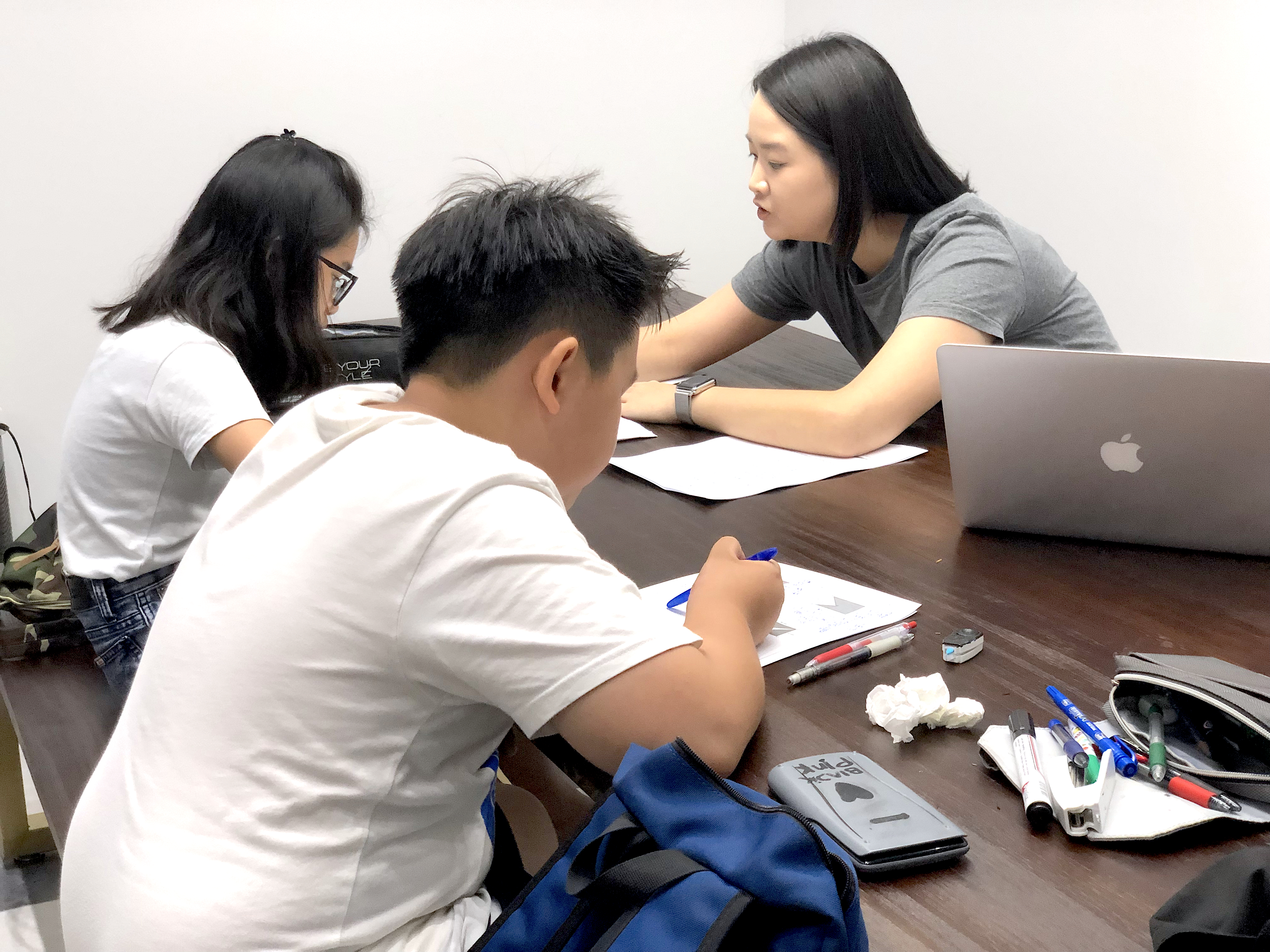
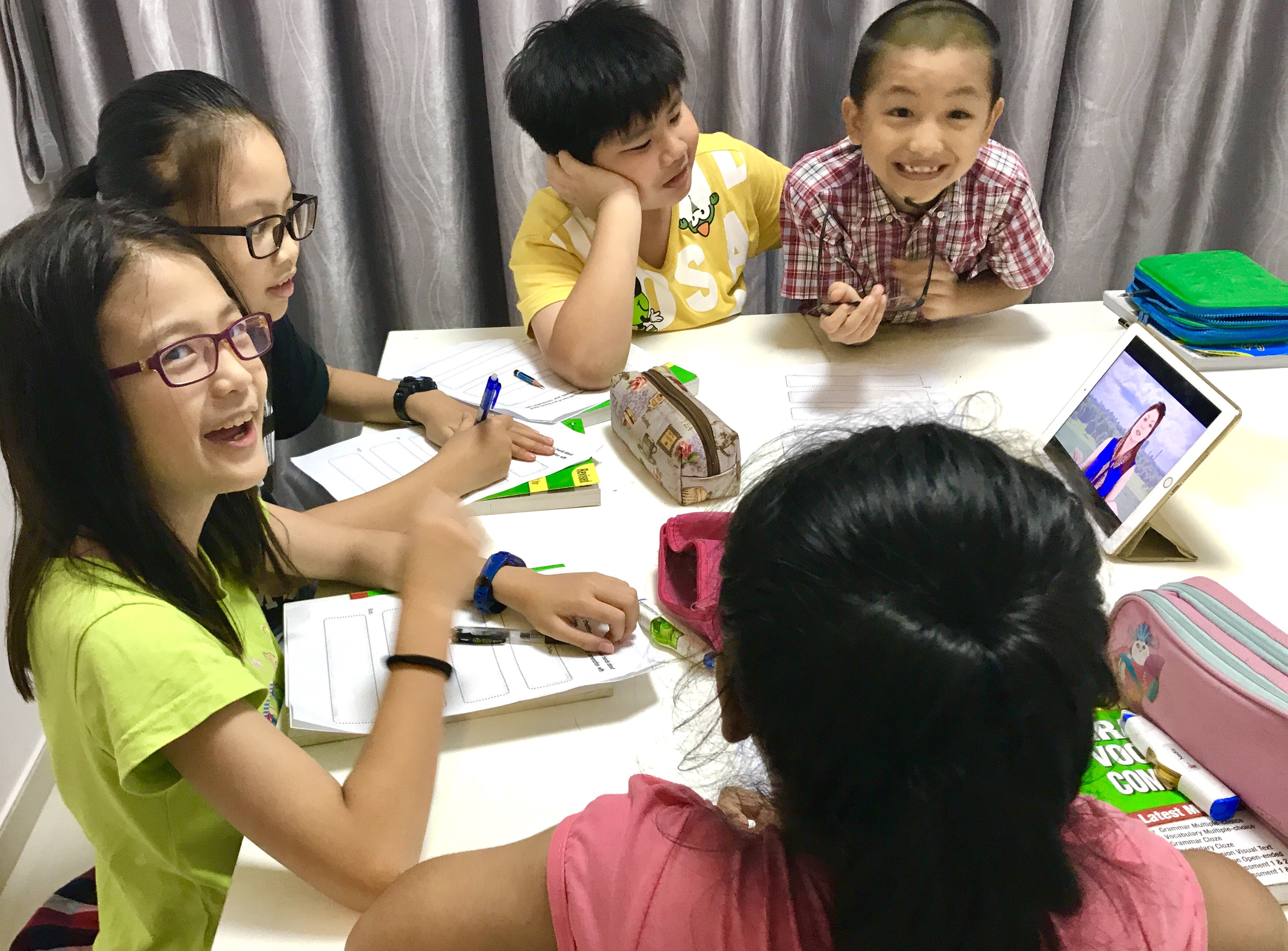
The photographs below are retained from the historical article as part of eduKateYishun’s classroom record.



















Leave a Reply