

Secondary School Yishun English Tutor is a guide for families searching for Secondary English tuition in Yishun, a Yishun English tutor, English comprehension help, composition and essay writing, vocabulary, grammar, oral communication, listening and examination preparation. It begins from a less obvious premise: language learning works better when a teenager can participate without having to earn the right to belong by being immediately correct.
Secondary English tuition is usually discussed in terms of marks, papers and techniques. Those matter. Yet English is also where students explain themselves, interpret other people, disagree, apologise, persuade, ask for help, tell stories and decide what a text means. The quality of this language system affects both school performance and student well-being. A learner who has more precise words and more reliable structures has more ways to think and more ways to stay connected.
A thoughtful tutor therefore does two jobs at once. The first is academic: improve reading, writing, speaking, listening and language control. The second is environmental: create conditions where questions can be asked, uncertainty can be examined and correction can occur without turning every error into a verdict. This is not softness. It is one way rigorous learning remains available when the work becomes difficult.
The wider eduKateYishun Well Being route includes belonging, curiosity, relationships, play and ordinary life. This article places those ideas inside Secondary English and asks what they look like when a student is reading a difficult passage, writing under pressure, speaking in a group or recovering from a poor result.
Belonging is an academic condition
A student who expects ridicule does not take the same intellectual risks as a student who expects a serious response. The first may avoid questions, keep answers short, copy familiar structures and conceal confusion. The second can expose an unfinished idea, receive information and revise.
That difference is not sentimental. It changes the amount of evidence available to a tutor. When students hide uncertainty, teaching becomes guesswork. When they can show where thinking is incomplete, the tutor can locate the actual break.
Belonging in a learning space means that participation is not conditional on already knowing. Standards remain. Corrections remain. The distinction is that error is treated as information about the work rather than a ranking of the person.
A teenager does not need a new personality to become better at English
Some students are naturally quick to speak. Others think before they answer. Some enjoy debate; others prefer writing. An English programme should expand capability without demanding personality theatre.
A quiet learner can become an excellent oral communicator by learning how to structure a point, use a concrete example, listen carefully and respond directly. A lively learner can improve by learning to pause, qualify and leave room for another voice. The goal is not for everyone to sound alike. It is for each student to gain greater control over how language is used.
This matters because advice such as “be more confident” often asks for the appearance of confidence before the student possesses the mechanism that would create it. Better teaching supplies the mechanism first.
Confidence should be built from evidence
Reliable learning confidence is specific. “I know how to find the line that supports my inference” is more useful than “I am good at comprehension”. “I can plan three distinct paragraph claims” is more useful than “I am a strong writer”.
Specific confidence survives bad days more easily because it points back to a method. A disappointing mark may challenge a global identity, but it does not erase a procedure the learner can reconstruct.
Tutors can make this evidence visible. Compare an early paragraph with a revised one. Count how often a recurring grammar error now appears. Ask the student to solve a familiar question type without prompts. Retest the same operation in a different text a week later. Progress becomes something the learner can inspect.
Language gives finer names to experience
Vocabulary is often taught because examinations reward precision. There is another reason. Finer vocabulary gives students more precise ways to describe what is happening.
“Stressed” can sometimes mean rushed, worried, overloaded, uncertain, disappointed, embarrassed, resentful or physically tired. “Bad” can mean unfair, ineffective, inaccurate, unkind, risky or simply unpleasant. These distinctions matter in writing, but they also matter in relationships because a person can respond better to something that has been named accurately.
English tuition need not become counselling to support this. The academic work is enough: compare meanings, examine connotations, discuss tone, notice how characters interpret events, and ask whether a word fits the evidence. Emotional literacy can grow naturally through serious language study.
Reading teaches us to separate evidence from assumption
Comprehension is one of the best places to practise a habit that supports both academic reasoning and relationships: distinguish what is present from what has been inferred.
A passage may show that a character avoids eye contact, answers briefly and leaves early. Those details are evidence. The reader may infer discomfort, anger, embarrassment or distraction, but the strength of each interpretation depends on surrounding clues. Good reading resists the urge to turn the first plausible story into certainty.
The same discipline is useful in ordinary life. A friend replies late; a teacher sounds brief; a parent looks tired. Language study cannot solve those situations, but it can train a mental habit: observation first, explanation second.
eduKateYishun develops this principle more fully in Don’t Get Me Wrong | The eduKateYishun Manifesto. For English students, the lesson is practical: a claim should be no stronger than its evidence.
The evidence ladder
- What is explicitly stated?
- What can be directly observed in the wording?
- What interpretation is strongly supported?
- What remains only possible?
- What would require evidence that is not present?
Students who use this ladder become better at inference questions because they learn calibration rather than guesswork.
Writing teaches us to make thought inspectable
A vague idea can feel convincing inside the mind because all its missing connections are silently supplied by the thinker. Writing exposes those missing connections. The reader can only follow what has been made visible.
This is why paragraph development matters. A claim needs explanation. An example needs a reason for being there. A consequence needs a chain. A qualification needs a boundary. Good writing is not merely polished language; it is thought arranged so another person can inspect the route.
For teenagers, that can be a powerful form of agency. The student learns that unclear thinking can be revised rather than hidden. A paragraph is not a personality test. It is a constructed object.
A paragraph conversation
Instead of marking a paragraph only with symbols, ask the student four questions: What is the paragraph trying to prove? Which sentence does most of that work? What evidence or example supports it? Where might a reader still ask “why?”
The student’s answers reveal whether the problem lies in ideas, organisation or language. Correction becomes a conversation with the structure of the writing.
Grammar can increase freedom
Grammar is sometimes experienced as restriction: rules that tell students what not to do. Once basic control improves, grammar becomes the opposite. It gives more ways to represent relationships.
A student can place the cause first or the consequence first. Concede before disagreeing. Delay a key clause for emphasis. Use a short sentence after a long one to change pace. Make a condition explicit. Clarify who did what to whom.
The richer the structural control, the less the student has to rely on memorised sentence frames. Accuracy creates room for choice.
Listening is not passive
Listening asks the brain to hold language while building a model of another person’s meaning. Strong listeners track position, reason, detail, qualification and change. They also notice when something is unclear enough to require a question.
In tutoring, listening can be practised through short discussions where the student must summarise another speaker before adding a view. This creates a useful pause between hearing and reacting.
The exercise can be demanding. It reveals whether a student actually followed the point or merely waited for a turn to speak.
Disagreement is a language skill
Secondary students encounter more argumentative writing and more complex discussion. They need language for disagreement that is neither timid nor aggressive.
- “I agree with the concern, but I think the cause may be different.”
- “That example supports the point in this case, although it may not apply generally.”
- “I read the evidence differently because…”
- “Could you clarify what you mean by…?”
- “A possible limitation is…”
These structures matter because mature thought often involves partial agreement. Students who know only total agreement or total rejection may also write simplistic arguments. Language for nuance supports nuance in thinking.
Oral communication is a place to practise presence
Presence means more than eye contact and projection. It means the student is mentally in contact with the question and the people in the room. The response is not a memorised speech dropped onto any topic.
A useful oral sequence is: answer the actual prompt, give a reason, ground it in an example, then widen or qualify the point. After that, respond to what someone else has said. This produces substance before performance.
Tutors should allow thinking time. A two-second pause is not a failure of fluency. Students can learn to use pauses deliberately rather than filling every gap with repeated phrases.
Creative writing gives difficult ideas a fictional distance
Stories allow students to explore conflict, embarrassment, loyalty, disappointment, ambition and repair without describing their own lives directly. That distance can make complex ideas easier to examine.
A character can make the wrong choice and face a consequence. Another character can misunderstand the motive. A friendship can survive a disagreement or fail because nobody clarifies what happened. These are story mechanics, but they are also models of human interaction.
The tutor’s job is not to extract a moral from every story. It is to help the student make cause, choice and consequence believable. Meaning can emerge from what the character does.
An ordinary-life story prompt
A student borrows something small without asking because returning it seems easy. Before it can be returned, another person is blamed for its disappearance. The story does not need a villain or a dramatic accident. The pressure comes from responsibility, silence and the growing cost of correcting the misunderstanding.
This prompt can train narrative tension, dialogue, viewpoint, emotional vocabulary and ethical complexity without turning the composition into a lecture.
Curiosity keeps English from shrinking to a paper
When school pressure rises, students can begin to ask of every text: “Will this be tested?” The question is understandable. But a language system fed only by examinable material becomes narrow.
Curiosity does not require an elaborate enrichment programme. It can be one article a week, one self-chosen book, one good interview, one documentary, one long-form essay or one question followed beyond the first answer.
The student can collect sentences that do something interesting. How did the writer make the opening move? Where did the argument turn? Which detail made a person vivid? Why did a phrase sound fair, sarcastic, restrained or forceful?
This makes reading active without making it another worksheet.
Play reduces the cost of alternatives
Language improves through variation. Play creates a low-cost space for variation: rewrite a headline three ways; explain a difficult idea to a five-year-old, a classmate and a principal; tell the same event as comedy and suspense; ban the most obvious adjective; make a six-word summary.
These exercises are not substitutes for examination practice. They train flexibility. A student who can generate alternatives is less likely to freeze when the familiar template does not fit.
Ordinary life gives English content
Teenagers sometimes say they have “nothing to write about” because they imagine writing requires extraordinary experiences. It does not. The corridor after school, a late bus, a family disagreement over dinner, helping at a shop, a CCA rehearsal, waiting outside a clinic or losing a favourite object can all carry observation and meaning.
Encourage students to notice details without immediately converting them into compositions. Language grows from lived attention. Not everything needs to become productive output.
When a student struggles, locate the friction instead of enlarging the label
“Weak in English” is too broad to guide teaching. The student may be facing a retrieval friction, a reading friction, a translation friction between ideas and sentences, a planning friction, a timing friction or an emotional friction created by repeated failure.
The Student Diagnostics route exists for cases where the pattern needs to be located more carefully. The sequence is practical: observe, test an explanation, apply a targeted repair, verify the result and revise the explanation if the evidence disagrees.
Example: the student avoids essay writing
Avoidance may come from poor planning, slow handwriting, weak vocabulary, perfectionism at the opening sentence, fear of teacher judgment or simply not knowing how to turn a topic into paragraph claims. The behaviour is the starting evidence, not the final explanation.
A five-minute planning task can test one hypothesis. A short paragraph written from an existing plan can test another. Small diagnostic tasks reduce the amount of speculation.
Example: the student says “I don’t understand the passage”
Ask the student to retell the literal situation first. If the retelling is accurate, the difficulty may lie in question interpretation or inference rather than reading. If reference words and sequence are already confused, the repair begins earlier.
The smaller the located problem, the more credible the next step becomes.
Recovery should end in return
A student who has fallen behind may need intensive support for a period. Recovery is successful when ordinary learning becomes possible again. The student can attend class, attempt homework, understand feedback and recover from mistakes without every task becoming a rescue operation.
The wider Recovery & Transformation route is built around this idea. Repair is not a permanent identity. It is a phase with an exit.
Tutors should therefore reduce support as skills stabilise. Remove prompts one at a time. Delay help. Ask the student to choose the method. Let a manageable error survive long enough to be noticed and corrected. Release is part of teaching.
A three-lane view of Secondary English support
Lane 1 — Catch up
For students behind, protect the minimum viable learning system first. Repair the highest-leverage gaps in reading, sentence control, paragraph construction or task interpretation. Keep workloads realistic enough that practice is actually completed and reviewed.
Lane 2 — Keep up
For students who understand but fluctuate, focus on routine, retrieval and timing. Make the same method appear across different texts and weeks. Stability grows when the learner can reproduce good decisions without the exact original cues.
Lane 3 — Move ahead
For students already secure, increase ambiguity, independence and range. Use harder texts, more open prompts, sharper comparison and self-directed reading. Extension should widen judgment rather than simply increase volume.
Students can move between lanes. The lane describes the current learning need, not the person.
What parents can protect at home
- A distinction between a bad result and a bad week, a bad method or a bad identity.
- Time that is not continuously evaluated.
- Reading that is allowed to be enjoyable rather than always “useful”.
- Conversations where the teenager can finish an explanation before advice arrives.
- Sleep, meals, movement and ordinary routines that make concentration possible.
- A practical review after mistakes: what happened, what can change, what is the next action?
- Permission to have interests that will never appear on an examination paper.
Parents do not need to solve every academic problem. Often the most useful contribution is to keep the conditions around the student workable while the learning problem is being repaired.
A tutor’s language matters
Compare “You are careless” with “Three of the lost marks came from skipping the final check.” The second statement is more precise and more actionable. Compare “You have no ideas” with “Your plan has topics but no paragraph claims yet.” Again, the second statement identifies a task.
Language used by adults becomes part of the student’s internal language. Precise feedback can teach self-diagnosis. Global labels can teach helplessness.
This is one reason the tutor should describe the work carefully. Words are not merely the vehicle of English tuition; they are also part of its environment.
A practical 90-minute lesson for language and well-being
- Arrival and retrieval — 10 minutes. One short task from previous learning, completed without notes.
- Close reading — 20 minutes. A passage or paragraph where students justify interpretations from evidence.
- Explicit teaching — 15 minutes. One mechanism made visible: paragraph development, sentence relationship, inference or vocabulary precision.
- Application — 25 minutes. Guided attempt followed by an independent variation.
- Conversation — 10 minutes. Students compare choices, disagree or refine.
- Reflection — 10 minutes. What became easier? What still requires support? What is the next independent move?
The lesson should feel serious without feeling crowded. Space is part of design. Students need moments in which thinking can occur before the next instruction arrives.
Frequently asked questions
Is well-being relevant to Secondary English tuition?
Yes, when the term is used concretely. Belonging affects participation; confidence affects willingness to attempt; curiosity affects reading range; relationships affect discussion; ordinary routines affect attention. None of these replaces explicit English teaching. They influence whether the teaching can be used.
Does this mean tutors should avoid correcting students?
No. Correction is essential. The question is whether the correction identifies the work precisely and improves the next attempt. High standards and respectful treatment are compatible.
What if a student is naturally shy?
Do not treat shyness as a defect. Teach oral structure, listening and responsive moves. Give preparation time, small-group practice and increasingly independent opportunities. The aim is capable communication, not personality conversion.
Can vocabulary learning support emotional literacy?
Yes. Nuanced emotion and relationship words help students read characters, write more precisely and describe experience. The work remains language education: meaning, usage, connotation and evidence.
How can parents encourage reading without constant conflict?
Offer range, model reading where possible and start from genuine interests. Avoid turning every book into a test. A teenager is more likely to build a reading life when some reading remains theirs.
When should a student receive diagnostic help?
When difficulties persist across tasks, when practice volume is high but improvement is low, or when the cause of a recurring problem is unclear. Diagnostics are useful because they reduce unnecessary intervention.
When should tutoring stop?
When the original learning job has been completed and the student can sustain the relevant routines independently. Continued tuition should have a new clear purpose, not continue by inertia.
Teaching Guide | Secondary School Yishun English Tutor
Begin every intervention with a description that another teacher could verify. “Avoids starting essays for ten minutes” is more useful than “unmotivated”. “Uses evidence but does not connect it to the inference” is more useful than “weak comprehension”. Precise descriptions create testable teaching decisions.
Build lesson culture before asking for vulnerability. Students will not expose confusion simply because adults say the room is safe. Safety is learned through repeated responses: questions are taken seriously, mistakes are corrected without humiliation, and strong students are not allowed to dominate every exchange.
Use texts as shared objects. Difficult conversations are easier when students can point to wording and evidence rather than defend themselves personally. Literature, articles and fictional scenarios allow complex social ideas to be examined with useful distance.
Do not force personal disclosure as proof of engagement. Students can learn emotional vocabulary through characters, arguments and invented scenes. A wellness-oriented English classroom respects privacy.
Teach disagreement deliberately. Require reasons. Ask students to paraphrase an opposing view fairly before responding. Reward revision of position when better evidence appears. These are English skills and civic habits without becoming political instruction.
Track independence explicitly. Which prompts were needed last month but not this month? Which error can the student now detect? Which skill transferred across genre? Release is evidence that teaching has worked.
Current routes through eduKateYishun
- Well Being — belonging, curiosity, relationships, play and ordinary life.
- Student Diagnostics — evidence before intervention.
- Recovery & Transformation — rebuild when the present state no longer works.
- Recovery Atlas — a structured route from problem to return.
- Don’t Get Me Wrong — observation before interpretation.
The larger lesson
Secondary English is not only about producing acceptable answers. It is about becoming more capable with language under increasingly complex conditions. A teenager learns to distinguish evidence from assumption, organise thought, qualify a claim, hear another person accurately, revise a sentence and recover when the first attempt fails.
Those capabilities improve examination performance when they are taught well. They also make ordinary life more intelligible. That is the wellness connection: not a layer of slogans placed on top of tuition, but a learning environment in which academic precision increases agency, relationships become more articulate and the student remains larger than the assessment.
Teach the language. Protect the learner. Return the capability.
Classroom archive
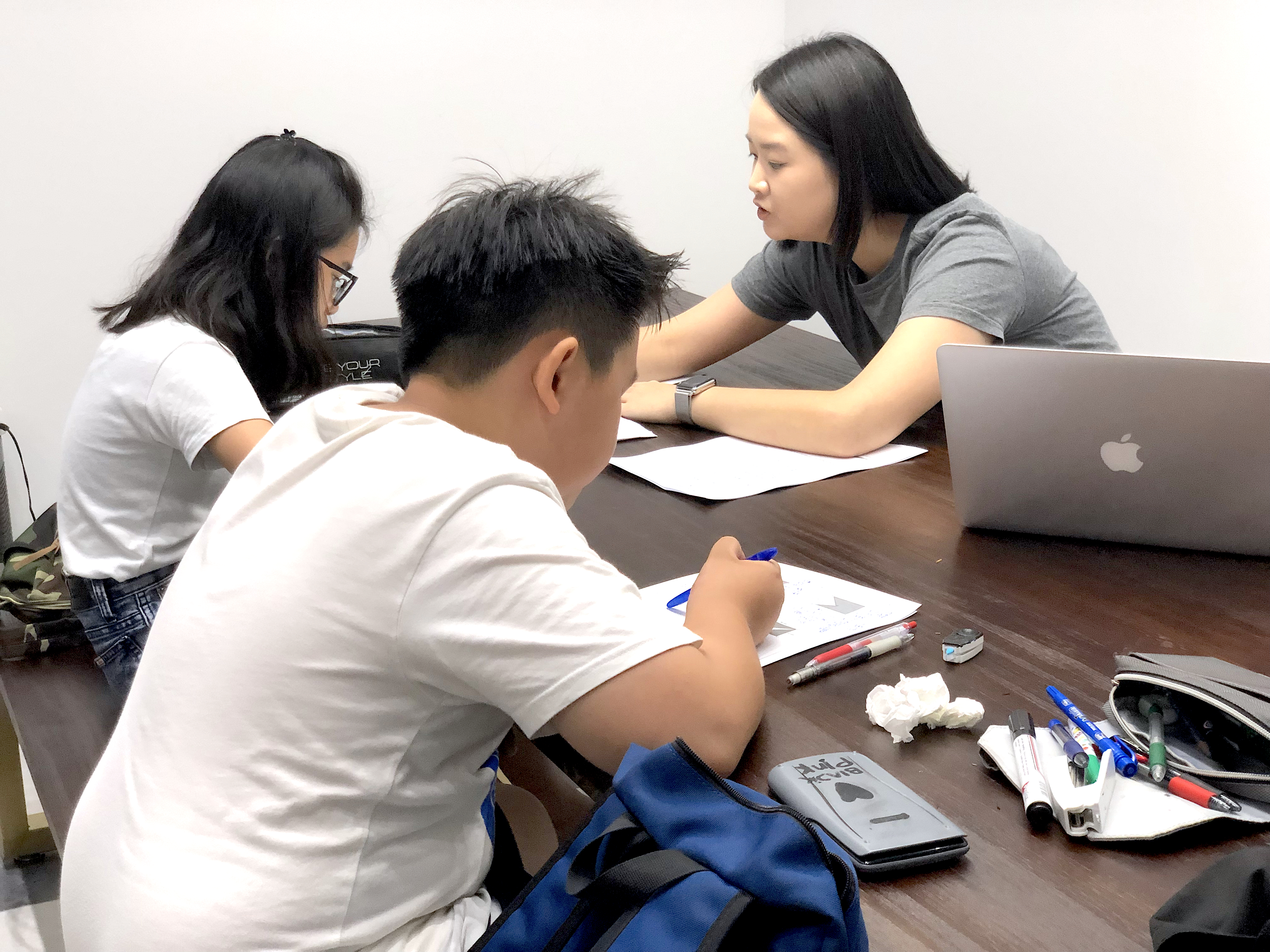
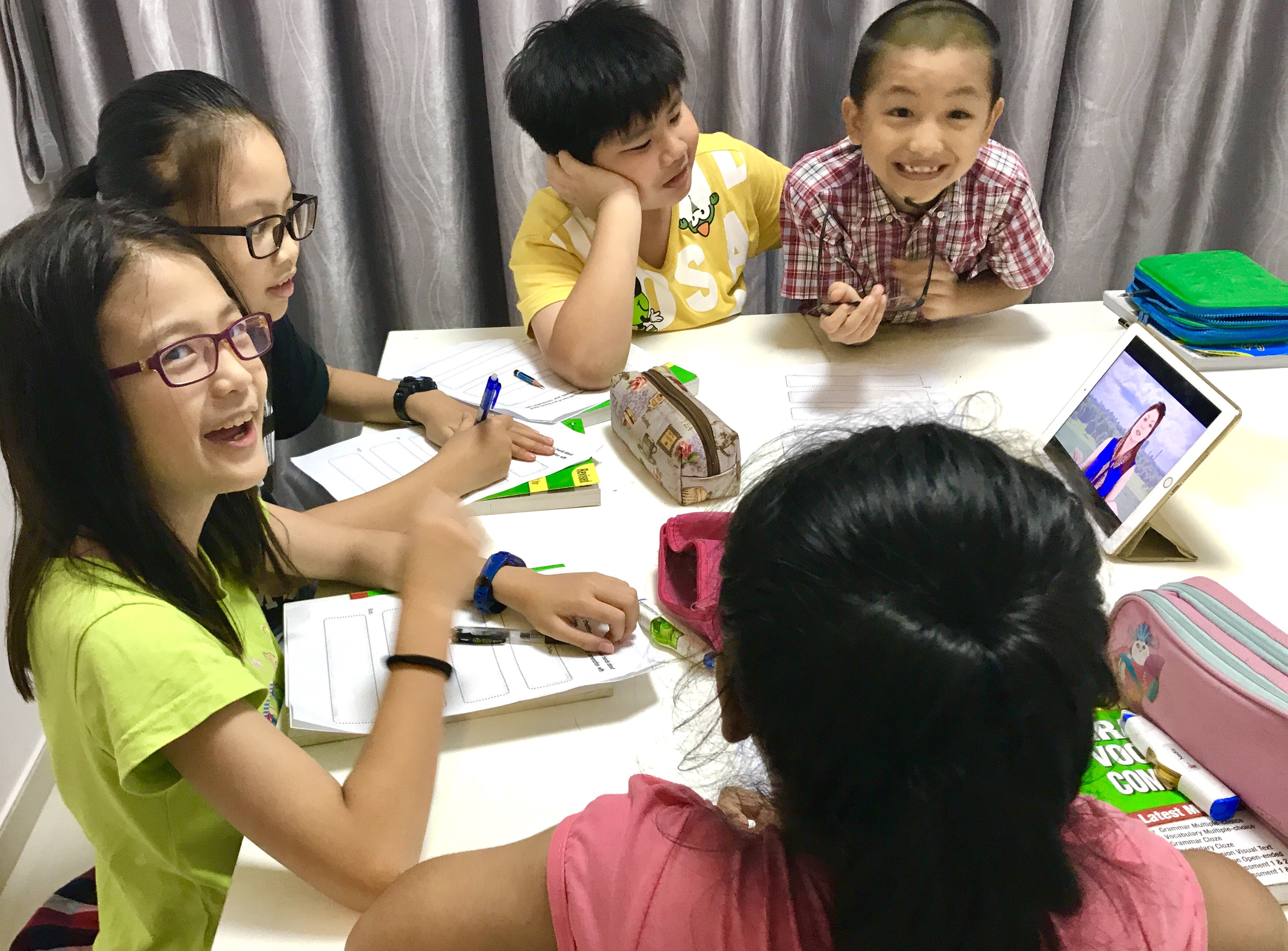
The photographs below are retained from the historical article as part of eduKateYishun’s classroom record.



















Leave a Reply