
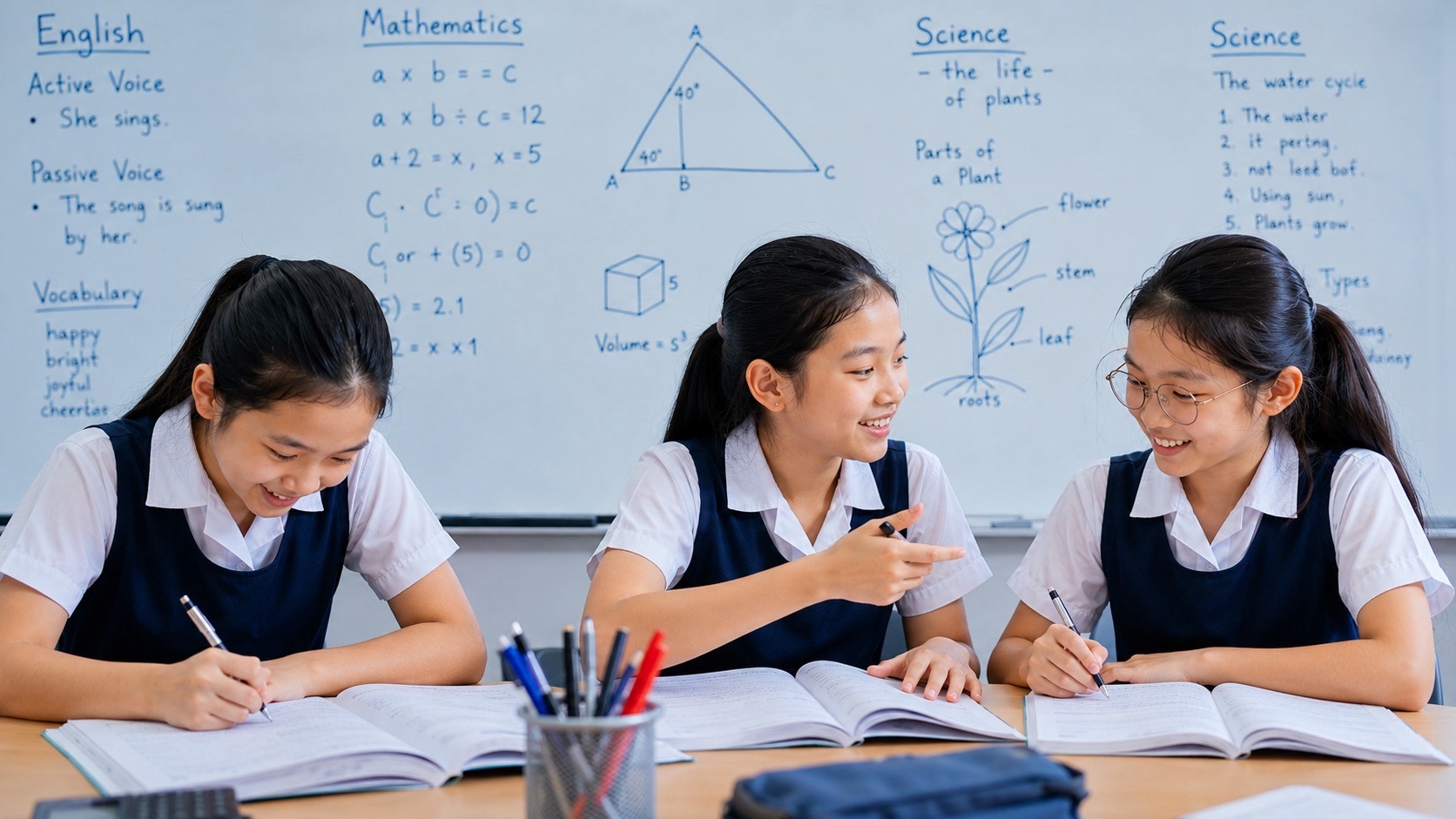
English Tuition for Punggol Primary is a historical-title page preserved on eduKateYishun. It does not represent a current Punggol centre location. Its present role inside eduKateYishun is to examine the handover from parent-managed learning to student-managed learning across the Primary years.
Young children need adult structure. Over time, that structure should become increasingly internal. The useful ideas here are self-directed learning, parent scaffolding, tuition dependency, routines, tuition for confidence, diagnostic first tuition and learning continuity.
The goal is not sudden independence. It is gradual transfer of responsibility: the child increasingly knows how to start, check, ask for help and finish without every decision being made by an adult.
Primary students need scaffolding
A younger child may genuinely need help organising materials, understanding instructions and remembering routines.
Support is appropriate when it helps the learner perform a decision they cannot yet manage alone.
Scaffolding should have an exit route
Every recurring support should eventually answer: what will the child do instead when this prompt is removed?
A checklist can become memory; a parent reminder can become a routine; tutor modelling can become self-checking.
The handover should happen in small steps
Do not move from full parent control to complete independence overnight.
Transfer one responsibility at a time: packing materials, starting homework, checking one error pattern, planning a short revision block.
Worked handover lab
A parent reminds a child every evening to begin reading.
The next stage is a fixed reading cue and a visible weekly routine. The parent checks later rather than initiating every session.
Eventually the child owns the start.
Tuition should not become the new parent
A tutor can accidentally replace home prompting with tuition prompting.
Require independent first attempts and let the child explain what they think before help arrives.
Confidence grows with ownership
A child who can begin and complete a familiar routine independently receives direct evidence of capability.
That evidence is stronger than being told repeatedly to be more responsible.
A practical responsibility ladder
- adult models the routine
- child performs with reminders
- child uses a checklist
- child initiates independently
- adult reviews only when needed
- child adjusts the routine after feedback
Parents can preserve relationship space
When every interaction becomes a reminder, family life can feel like continuous school management.
Clear routines reduce the number of prompts and leave more room for ordinary conversation.
Frequently asked questions
When should children become independent?
Gradually, as they demonstrate reliable routines. Independence is a process, not an age switch.
What if removing reminders causes failure?
Restore a smaller scaffold, then fade it more slowly. The goal is transferred control, not abandonment.
How does tuition support independence?
By requiring attempts, self-checking, explanation and responsibility for the next step rather than supplying every decision.
Teaching Guide | Transfer the controls slowly
Support the child enough to succeed, then remove one prompt at a time and watch what remains stable.
The goal is a learner who carries more of the learning system internally each year.
Explore the eduKateYishun Well Being library · Open the Recovery Atlas · Return to The Library
Historical classroom image archive
The original page’s embedded classroom images are preserved below in their original sequence as part of the eduKateYishun archive.





















Leave a Reply