
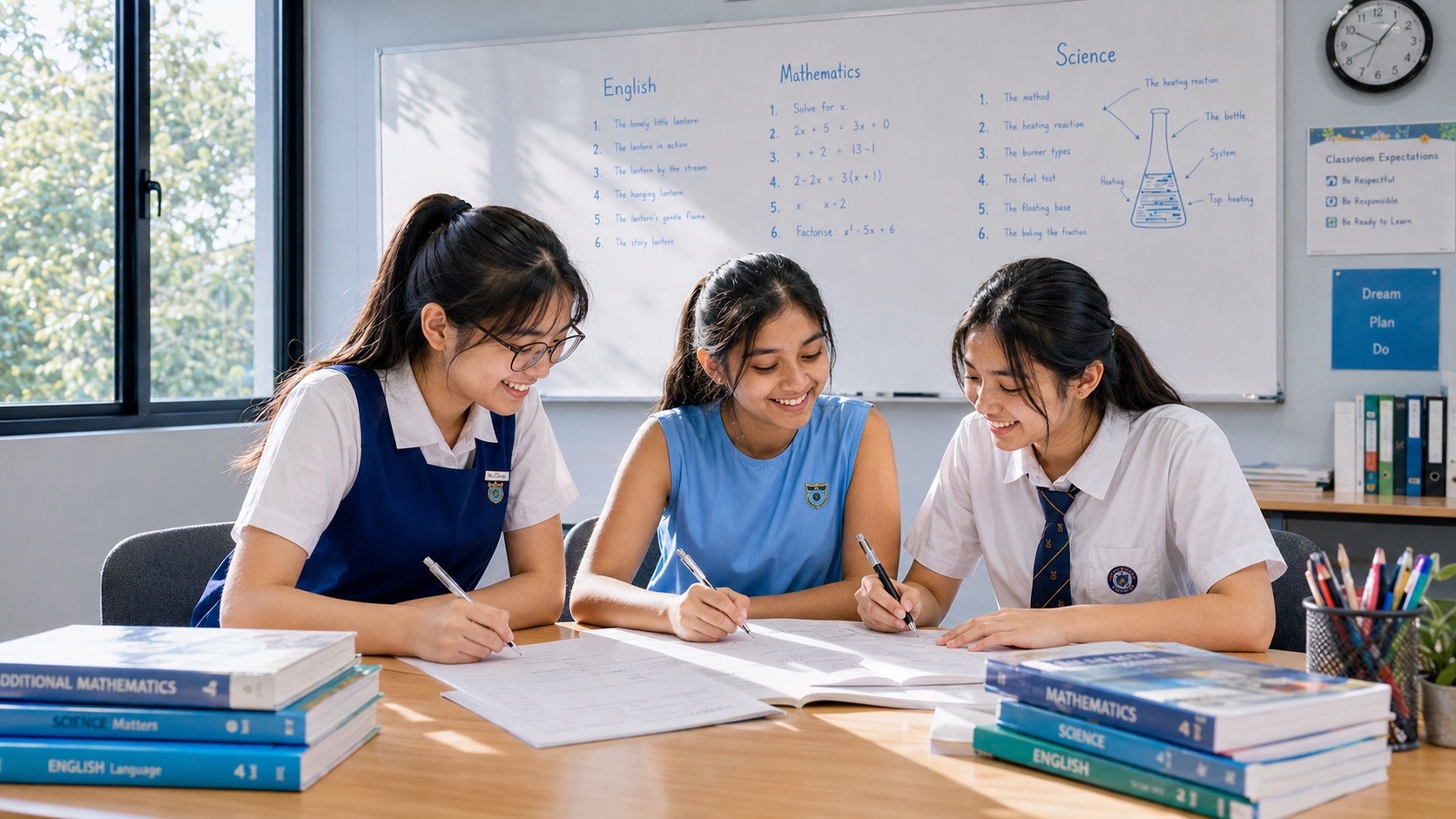
Secondary 2 G3 Higher Tamil Language is an advanced Tamil learning option for students who are ready to develop more demanding reading, writing, interpretation and communication skills. Families should check that the subject offered is Higher Tamil, often shortened to HTL, because ordinary G3 Tamil and Higher Tamil are separate courses. Yishun Secondary School’s Tamil outlines list Secondary 2 G3 and Secondary 2 G3 HTL separately. The practical question for parents is whether their child can understand increasingly substantial Tamil texts, explain ideas with evidence and sustain the work with suitable support.
Secondary 2 is a time to strengthen these foundations and make informed decisions about continuing the subject. Families need the school or language centre’s current learning outline, assessment information and continuation guidance. There is no single national Secondary 2 Higher Tamil examination schedule or percentage that this guide can promise will secure admission or continuation everywhere. The examples below show how to practise deeper understanding without turning every activity into a race for difficult vocabulary. They are original learning exercises, with English explanations to help parents discuss the thinking even when their own Tamil is less confident.
- Confirm the exact course: Higher Tamil, ordinary G3 Tamil and Literature in Tamil have different purposes.
- Practise accurate understanding, supported inference, thoughtful writing and responsive conversation.
- Use the school’s current requirements for assessments, textbooks, eligibility and continuation.
- Check lesson location, travel, attendance and workload before accepting an external arrangement.
- Judge progress through corrected work and growing independence, alongside results.
- Discuss future choices using the rules for the child’s own cohort.
Find the section you need
Choose a reading route, open the chapter index, or continue through the full guide at your own pace.
Chapter index
Understand the course · Chapters 1–4
Read and interpret · Chapters 5–10
- Reading practice: identify the problem and its limits
- Inference practice: explain a character without overclaiming
- Compare viewpoints before deciding whether you agree
- Vocabulary: choose the word that preserves the meaning
- Sentence control: make the relationship between ideas clear
- Summarising: retain the central message and useful qualifications
Write and communicate · Chapters 11–14
Practise and manage workload · Chapters 15–17
Plan future pathways · Chapters 18–20
Higher Tamil is commonly written as உயர்தமிழ். The word “Higher” identifies the course; it does not describe a student’s worth, cultural belonging or ability in every subject. A child may love Tamil and find one particular writing demand difficult. Another may earn strong language marks while needing encouragement to read voluntarily. These are useful details for planning support.
G3 describes a subject level under Full Subject-Based Banding, rather than a permanent label for the whole child. Ask about the actual Tamil course on the timetable. “My child takes G3 subjects” does not establish whether the Tamil entry is ordinary Tamil or Higher Tamil.
The distinction also matters when buying books. Bendemeer Secondary School’s 2026 Secondary 2 booklist identifies Higher Tamil at G3 and lists Higher Tamil Thamizharuvi books separately from ordinary G3 Tamil. Follow your own school’s edition and purchase instructions. A familiar series name on a cover is insufficient to confirm that a borrowed book is the required version.
Higher Tamil can include engagement with stories, poems and cultural material, but that does not make it identical to the separate subject Literature in Tamil. Equally, “ordinary” is used here only to distinguish the course names. Ordinary Tamil offers meaningful language learning and deserves careful work.
The Higher Tamil outline linked by Yishun Secondary illustrates reading, summarising, correspondence, grammar, literary appreciation, listening and viewing. Its reading themes include relationships, the environment, technology and society. The linked filename refers to 2025, so families should obtain their current class instructions before using its term sequence as a study timetable.
A useful home learning map connects these activities. Reading supplies ideas and examples of language. Discussion tests understanding. Writing requires the student to select, organise and express ideas. Feedback then shows whether the meaning reached the reader accurately. A vocabulary exercise becomes more valuable when the learner later uses the words appropriately in a conversation or paragraph.
The sections below are suggested ways to practise that cycle. They are not a prescribed national sequence, a list of guaranteed examination questions or substitutes for the teacher’s assigned texts. Choose an activity that addresses a visible difficulty in current work.
CHAPTER 3 OF 20 · Understand the course
3. Entry and continuation: separate the different decisions
MOE’s announced change allows Secondary 1 entrants from 2026 to offer HMTL with PSLE MTL AL1/AL2 or HMTL Distinction/Merit, regardless of their overall PSLE score. This is not a national Secondary 2 percentage cutoff.
For an example of a later decision, Dunman Secondary’s published FAQ describes considering eligible G3 MTL learners at the end of Secondary 1 through academic performance, MTL results and teacher recommendation. This illustrates that school’s approach; parents should ask their own school about entry, continuation and available support.
Bring evidence to the conversation. A recent composition, a comprehension answer and the teacher’s comments usually reveal more than a claim that the child is “good at languages”. Ask which demands are already secure, which need development and what improvement would make the next decision clearer.
If the child is already taking Higher Tamil, separate temporary difficulty from a persistent mismatch. A weak result after misunderstanding instructions calls for a different response from months of inaccessible reading despite help. Ask about a review point, the work to attempt before that review and the options if the current arrangement remains unsuitable. Obtain advice before changing enrolment or stopping lessons.
Higher-level work benefits from precision. A student should distinguish what a text states, what its details reasonably suggest and what remains unknown. This prevents an imaginative answer from becoming an unsupported answer. Thoughtfulness includes recognising the limits of the available evidence.
Consider a character who arrives early, rearranges some chairs and leaves without speaking. The actions may suggest helpfulness. They do not establish that the character always puts others first or has never wanted praise. A strong explanation names the action, connects it to a reasonable interpretation and avoids extending the claim beyond the passage.
Precision also means answering the particular question. “What happened?” requires an event. “Why did it happen?” requires a reason. “How does this detail affect your impression?” requires interpretation. Copying the same sentence for all three questions misses the difference, even when the copied sentence is accurate.
Parents can ask three simple follow-up questions: Where is the evidence? How does it support your idea? What would you need to know before making a stronger claim? These questions invite explanation without supplying the answer.
CHAPTER 5 OF 20 · Read and interpret
5. Reading practice: identify the problem and its limits
The following short Tamil passage is original and fictional. It describes an invented school situation, not a report about any named school.
எங்கள் பள்ளி நூலகத்தில் இருக்கைகள் குறைவாக உள்ளன. இடைவேளையில் சில மாணவர்கள் நின்றுகொண்டே படிக்கிறார்கள். கூடுதல் நாற்காலிகளை வைக்குமாறு மாணவர் மன்றம் பள்ளி நிர்வாகத்தைக் கேட்டுக்கொண்டது. ஆனால், நாற்காலிகளை வைப்பதற்கு முன் நடைபாதையில் போதிய இடம் உள்ளதா என்பதைச் சரிபார்க்க வேண்டும்.
The meaning is: Our school library has too few seats. During recess, some students read while standing. The student council asked the school administration to add chairs. However, before placing the chairs, it is necessary to check whether there is enough space in the walkway.
Question 1: What difficulty do some students face?
They have to read while standing because there are too few seats. This answer connects the observed difficulty to the stated cause. “The library is bad” is less useful because it replaces the specific issue with a broad judgement.
Question 2: Why should the walkway be checked?
The proposed chairs could reduce the space available for movement. The passage explicitly asks for a space check; the explanation about movement is a reasonable inference. It does not say an accident has already happened. A response should preserve that difference.
Question 3: Does the passage show that the administration rejected the request?
No. It reports a request and a consideration before implementation. It gives no final decision. A student who writes that the administration “does not care about readers” has invented a motive and an outcome.
Extend the exercise by asking for a balanced recommendation: identify suitable positions for additional chairs, retain a clear walkway and review whether the change helps. The recommendation is the learner’s proposal, not information found in the passage. Naming that distinction is part of careful reading.
CHAPTER 6 OF 20 · Read and interpret
6. Inference practice: explain a character without overclaiming
This second original fictional passage introduces a student called Meena.
மீனா தன் கட்டுரையை வகுப்பில் வாசிக்கத் தயங்கினாள். அவள் எழுதிய கடைசி பத்தியை மீண்டும் படித்தாள். தோழி தலையசைத்து ஊக்கமளித்ததும், மீனா மெதுவாக எழுந்தாள். முதலில் அவளது குரல் மெல்லியதாக இருந்தது. சிறிது நேரத்திற்குப் பிறகு, அவள் தெளிவாக வாசிக்கத் தொடங்கினாள்.
The meaning is: Meena hesitated to read her composition in class. She reread the last paragraph she had written. After her friend encouraged her with a nod, Meena slowly stood up. At first, her voice was soft. After a short while, she began to read clearly.
A reasonable inference is that Meena becomes more comfortable as she reads. The change from hesitation and a soft voice to clear reading supports that interpretation. “Meena is a confident person in every situation” extends beyond the evidence.
The friend’s nod may have encouraged her to begin. However, the passage does not establish that encouragement alone caused every improvement. Meena also rereads her work and gains experience while speaking. A thoughtful explanation can recognise more than one contribution without turning possibility into certainty.
For a question about change, organise the answer around a contrast within the passage: her behaviour at first, her behaviour later and what that difference suggests. For a question about the friend, focus on the nod and its place immediately before Meena stands.
Students can try a brief Tamil response, then check whether every claim can be traced to a detail. Parents who do not read Tamil confidently can ask the child to explain that connection in English. The purpose of this discussion is to check reasoning; the final language task still needs practice in Tamil.
CHAPTER 7 OF 20 · Read and interpret
7. Compare viewpoints before deciding whether you agree
These two original statements describe a fictional proposal to open a school library after lessons.
கருத்து ஒன்று: பள்ளி முடிந்த பிறகும் நூலகம் திறந்திருந்தால், மாணவர்கள் அமைதியாகப் படிக்கலாம்.
கருத்து இரண்டு: நூலகத்தைத் திறப்பதற்கு முன், அதைப் பயன்படுத்த விரும்பும் மாணவர்களின் எண்ணிக்கையை அறிய வேண்டும்.
The first says that students could study quietly if the library remained open after school. The second says that the number of students wanting to use it should be established before opening it.
The statements have different priorities: a possible benefit and the need to establish demand. They are not necessarily contradictory. Someone can support quiet study space while wanting evidence before committing resources.
A useful comparison identifies both positions accurately, explains the relationship between them and suggests what further information would help. In this case, a short interest survey and a limited trial could inform the decision. The survey would show stated interest; actual attendance during a trial would show use. Those are related measures, but they are not interchangeable.
When writing a response, avoid turning the second speaker into an enemy of reading. Address the concern actually expressed. This habit improves argument: students learn to answer another person’s strongest relevant point instead of dismissing an exaggerated version of it.
CHAPTER 8 OF 20 · Read and interpret
8. Vocabulary: choose the word that preserves the meaning
Vocabulary work should increase control over meaning. A longer word is useful when it says something more accurately; it is less useful when the learner cannot explain why it belongs in the sentence.
Compare சில மாணவர்கள், meaning “some students”, with அனைத்து மாணவர்களும், meaning “all students”. Changing one to the other changes the size of the claim. In the library passage, “some students read while standing” does not allow an answer saying that every student stands.
Similarly, a text can describe a proposal, a decision or a completed action. These stages need different language. Recommending additional chairs is not the same as approving their purchase or installing them.
Build a small vocabulary record around use: the Tamil word or phrase, its meaning in the passage, a new sentence and a note about any limit. Review it by asking the learner to create a fresh example without looking at the original. Copying a definition repeatedly does not show whether the word can be used appropriately.
When a dictionary offers several meanings, return to the surrounding sentence. Check who is acting, what happened and what interpretation fits the paragraph. Translation should help understanding rather than replace attention to context.
CHAPTER 9 OF 20 · Read and interpret
9. Sentence control: make the relationship between ideas clear
Grammar becomes easier to discuss when a change has an observable effect. Begin with a sentence that communicates one clear event, then add a reason, contrast or consequence that genuinely belongs with it.
மழை பெய்தது. எனவே, வெளிப்புற நிகழ்ச்சி ஒத்திவைக்கப்பட்டது.
This means: It rained. Therefore, the outdoor event was postponed. The connection identifies a consequence in this invented example. Replacing “therefore” with “however” would imply a contrast that the two statements do not naturally establish.
During revision, ask whether every action has a clear subject and whether the time sequence remains consistent. If a paragraph moves from what happened yesterday to a general opinion, make the change clear. Do not alter tense merely to make adjacent sentences look alike.
Keep grammar practice manageable. Select one recurring error from marked work, rewrite two affected sentences and then use the same structure in a new context. The learner should be able to explain what was corrected. A copied correction without understanding is unlikely to guide the next independent paragraph.
CHAPTER 10 OF 20 · Read and interpret
10. Summarising: retain the central message and useful qualifications
A summary should preserve the source’s essential meaning while removing details that the task does not require. Begin by identifying the question or purpose. A summary of the library problem needs different information from a summary of the suggested response.
For the first reading exercise, a suitable English planning version is: The library needs more seats, but extra chairs should be placed only after checking the available walkway space. This retains both the need and the condition. Students can then express the same meaning naturally in Tamil.
A weaker version says only that the library needs chairs. It omits the qualification. Another weak version adds that the administration has approved a renovation; that outcome never appears in the passage.
When the school sets a word limit, follow its counting instructions. Before counting, check the content. A response can meet a limit and still misrepresent the source. Revise for accurate selection first, clear sentence structure next and the required length after that. Keep names, examples or descriptions only when they contribute to the requested focus.
CHAPTER 11 OF 20 · Write and communicate
11. Argument writing: develop a position that can survive questions
Consider this original practice question: Should a school try a quiet reading period before afternoon activities? This is an invented discussion task, not an announced examination topic.
A practical position might support a short trial while allowing adjustments for different timetables. Develop the reasoning in stages. Explain the intended benefit, show how the proposal could operate, address a reasonable difficulty and state how success would be reviewed.
For example, a quiet period could give students a predictable opportunity to read material they choose. However, a plan may interfere with travel or scheduled activities if applied carelessly. The response could propose a limited trial on suitable days, with feedback from students and teachers. That is more persuasive than claiming that every student will immediately enjoy reading.
An original sentence for acknowledging a concern is:
இந்தத் திட்டம் பயனுள்ளதாக இருக்கலாம். இருப்பினும், மாணவர்களின் அன்றாட அட்டவணையையும் கருத்தில் கொள்ள வேண்டும்.
The meaning is: This plan may be useful. Nevertheless, students’ daily schedules should also be considered. The wording leaves room for uncertainty and identifies a relevant consideration.
A strong paragraph does not need a quotation or a dramatic statistic. It needs a claim the reader can understand, reasoning that connects the claim to the proposal and an example that makes the reasoning concrete. If the student uses invented numbers to explore a scenario, label them as hypothetical. Never present invented survey results as evidence.
Check the conclusion against the argument. A conditional case for a trial should lead to a conditional recommendation, not a sudden demand that the programme become compulsory everywhere. Consistency helps the reader trust the writer’s judgement.
CHAPTER 12 OF 20 · Write and communicate
12. Narrative writing: let decisions change the story
A story becomes engaging when a character faces a meaningful choice and the outcome follows from what the character does. Description can establish mood, but description alone does not provide that movement.
Use Meena’s reading experience as a starting point for an original continuation. Perhaps she notices another student avoiding a presentation and decides whether to offer help. The central question is what she has learned from her own hesitation and how that learning affects her behaviour.
Plan three moments: the new difficulty, the decision and the consequence. Include a small action that reveals the change. Meena might ask whether the classmate wants to practise privately rather than announcing the person’s fear to everyone. That choice can show consideration without the narrator repeatedly calling her considerate.
Keep the scale believable. A class presentation does not need to end with a national award to matter. A clearer sentence, a repaired misunderstanding or the willingness to try again can provide a satisfying outcome when the story has established why it matters to the character.
During revision, remove details that distract from the central experience. Check that dialogue sounds appropriate for the relationship and that each pronoun has an identifiable referent. The reader should understand who speaks and why the next action follows.
CHAPTER 13 OF 20 · Write and communicate
13. Formal communication: match the language to the reader
Writing to a teacher or an administrator requires a clear purpose, enough relevant information and a respectful request. These qualities matter more than decorating every sentence with elaborate expressions.
Here is an original request based on the fictional library situation:
பள்ளி நூலகத்தில் கூடுதல் நாற்காலிகளை வைக்குமாறு கேட்டுக்கொள்கிறேன். நடைபாதையில் போதிய இடம் இருப்பதை உறுதிசெய்த பிறகு, பொருத்தமான இடங்களில் அவற்றை வைக்கலாம்.
The meaning is: I request that additional chairs be placed in the school library. After ensuring that there is enough space in the walkway, they could be placed in suitable locations.
This is the body of a practice request, not a complete prescribed email format. Add the opening, closing and other elements required by the school’s task. Check who the writer represents: “I request” suits an individual; a representative writing for a group must express that relationship accurately.
Compare the information a friend would need with the information a decision maker would need. An administrator may require the problem, the proposed action and relevant constraints. Informality can suit a personal message, but unclear purpose is unhelpful in either setting.
CHAPTER 14 OF 20 · Write and communicate
14. Listening and speaking: respond to the actual point
In conversation, good preparation includes listening for the other person’s meaning. A memorised speech may sound polished while failing to answer the question. Practise giving a short response, explaining it and then adapting to a follow-up.
Using the fictional library proposal, one person can ask whether more chairs would solve the problem. The learner might answer that additional seating could help, provided enough movement space remains. A follow-up could ask what to do if space is limited. The learner must now consider another arrangement rather than repeat the first answer.
For listening practice, use a short teacher-approved recording or a clearly introduced passage read aloud. First identify the main point. On a second listening, collect reasons and qualifications. Distinguish the speaker’s opinion from an event being reported. Do not assume that the loudest or most emotional sentence is automatically the central message.
Brief private recordings can support self-review if the learner is comfortable making them. Listen for clarity, relevance and whether the thought reaches a conclusion. Re-record a short segment after choosing one improvement. Follow school rules for any submitted recording, and avoid including other people’s voices or personal information without permission.
These are practice methods. The school’s actual oral, listening or viewing tasks may use different formats and instructions.
CHAPTER 15 OF 20 · Practise and manage workload
15. Understand the school’s assessment before planning revision
Request the current assessment notice rather than reconstructing a timetable from another school’s website. Record the assessed skills, task types, duration, permitted materials and how each component contributes to the school result. If the notice is unclear, ask the teacher before practising under assumed conditions.
After a marked task, sort errors by their cause. An answer may fail because the learner misunderstood the passage, overlooked the question, made an unsupported inference or expressed a sound idea unclearly. Each requires a different next step.
For misunderstanding, return to the sentence and surrounding context. For an unsupported inference, identify the missing evidence. For poor expression, practise rewriting the idea in simpler accurate Tamil before adding complexity. For time management, examine where time was spent and use the actual school format for the next practice.
Ask the child to explain one correction a few days later. If the reasoning is still clear, the feedback has begun to become usable knowledge. If the learner can only reproduce the teacher’s wording, another example may be needed. Do not interpret every lost mark as a vocabulary problem.
CHAPTER 16 OF 20 · Practise and manage workload
16. A manageable weekly learning routine
A useful routine creates repeated contact with Tamil while leaving enough attention for other subjects and activities. Start from assigned schoolwork, then add a small amount of focused practice where it serves a clear purpose.
- Read a short section carefully and identify its main point.
- Choose a few expressions whose meaning or use is uncertain.
- Discuss one question that requires evidence or explanation.
- Write or revise one paragraph using the week’s learning.
- Review one earlier correction without looking at the answer first.
The amount should reflect the learner’s current workload. A rushed hour of copying may provide less useful information than a short paragraph that the student understands, revises and can explain. Keep a small record of what becomes easier and what still needs teacher help.
Parents can participate without becoming substitute language teachers. Ask the learner to explain a story, choose a suitable headline or describe how a revised sentence improved. When a grammar question exceeds your confidence, note it for the teacher rather than insisting on an uncertain correction.
The Tamil Promotion Committee’s resources page includes materials for parents of secondary students. Use these alongside the child’s actual assignments. A new resource is helpful when it addresses a learning need; collecting many resources can make the routine harder to follow.
CHAPTER 17 OF 20 · Practise and manage workload
17. Lesson arrangements and workload deserve a concrete check
Before choosing or continuing an external lesson arrangement, obtain the actual timetable. Check the venue, start and end times, attendance procedure, travel route and the person to contact about clashes. Ask how assignments and assessment information will reach the student and sending school.
The Umar Pulavar Tamil Language Centre’s current announcements include a move to 1 Victoria Lane in 2027 and registration through the sending school’s Mother Tongue department. Families planning attendance should confirm the instructions for their year. Do not assume that all Higher Tamil learners attend this centre.
Make a realistic sample week. Include travel and the time needed to complete work after a lesson, rather than counting classroom hours alone. If the plan creates regular clashes, discuss them before they become repeated absences or unfinished assignments.
When evaluating workload, look at patterns over several weeks. Can the child start tasks independently? Is feedback becoming easier to use? Are missed deadlines occasional or frequent? Does the learner still have time to read with attention? These observations make a discussion about suitability more specific than “the subject is too hard”.
A change of course, if advised and available, should be discussed as an educational decision. Keeping a child in an unsuitable arrangement to preserve a label can distract from the aim of developing usable language.
CHAPTER 18 OF 20 · Plan future pathways
18. Future pathways: keep the course and the later examination distinct
For 2027, SEAB lists Higher Tamil K357, Tamil K322 and Literature in Tamil K334 separately. These are SEC examination entries, not Secondary 2 paper codes.
Ask the school when your child’s examination registration decisions will be discussed and which requirements apply to that cohort. An older child’s timetable or a friend’s experience is a starting point for questions, not a guarantee of the same arrangement.
For interested learners, UPTLC describes the National Elective Tamil Programme as an enrichment opportunity open to Higher Tamil students in schools and centres as well as at UPTLC. Check the current invitation, eligibility and commitment. Enrichment participation is a separate decision from taking Higher Tamil.
Discuss future routes through the child’s interests, actual performance and applicable admission rules. Do not select Higher Tamil solely because someone promises an automatic admission advantage. The value of learning and the conditions of any later benefit need separate examination.
Does my child need to use impressive expressions in every paragraph?
No. Begin with accurate, relevant meaning. An expression improves a paragraph when it fits the situation and helps the reader understand. An unfamiliar phrase inserted incorrectly can make a strong idea harder to follow. Ask the child to explain the expression and replace it with simpler wording; if the meaning changes unexpectedly, further checking is needed.
Is fluent home conversation enough?
Home conversation offers opportunities to use language, but school tasks may demand a different register, sustained reading or structured explanation. Look at the specific task the learner finds difficult. Support can build from conversational confidence while adding the reading and writing habits needed for formal work.
Should every comprehension answer be long?
No. Match the detail to the question. A direct information question may need a concise answer. An inference or comparison usually requires evidence and explanation. Adding unrelated sentences can obscure the useful part. Check whether each sentence contributes to the answer before deciding that more length will help.
Can my child memorise a composition and adapt it?
Studying how a good paragraph works can be useful. Depending on a memorised whole composition is less reliable because the actual task may require a different purpose, situation or viewpoint. Practise planning new responses and transferring useful techniques, such as clear sequencing or an explained counterargument, to unfamiliar questions.
Is a Non-Tamil Indian Language another kind of Higher Tamil?
No. Official school guidance on MTL-in-lieu identifies Bengali, Gujarati, Hindi, Punjabi and Urdu as Non-Tamil Indian Languages for eligible Indian students who are non-Tamil speakers. These are different languages, not levels of Tamil. Other approved MTL-in-lieu arrangements also have their own conditions. Seek school advice about eligibility and approval; do not treat them as courses to switch into simply because a Tamil assessment was difficult.
How can a parent with limited Tamil judge improvement?
Ask the child to explain the task, show a correction and describe what changed. Look for more independent starts, more specific questions and better use of feedback. Use teacher comments to assess language accuracy. Your role can be to support the process and notice patterns without pretending to evaluate grammar you cannot confidently check.
What if the child likes Tamil but struggles with Higher Tamil?
Keep interest and course suitability as separate questions. Identify the difficulty, try targeted support and agree on a review with the teacher. A decision about the course should preserve opportunities to enjoy reading, conversation and cultural learning. One subject result does not define the learner’s relationship with the language.
Start with one recent piece of work and the current school outline. Identify a strength, one specific difficulty and one action the learner can complete this week. That action might be explaining an inference, rewriting a paragraph or practising a short response to a follow-up question.
Then confirm any unresolved practical matter: the course name, the correct books, the assessment instructions or the next review point. Small decisions become easier when they are grounded in the child’s actual work. Higher Tamil learning should help a student understand more carefully, communicate more clearly and participate with greater confidence in Tamil. Those are useful signs of progress to notice alongside marks.
Official references for checking current arrangements
- Yishun Secondary School: Tamil course outline landing page.
- Yishun Secondary School: linked Secondary 2 G3 HTL outline, filename dated 2025.
- Bendemeer Secondary School: 2026 Secondary 2 booklist.
- MOE: Full Subject-Based Banding.
- MOE: 2025 announcements, including HMTL entry changes from 2026.
- Dunman Secondary School: published Mother Tongue FAQ.
- Umar Pulavar Tamil Language Centre: current announcements.
- UPTLC: National Elective Tamil Programme information.
- Tamil Promotion Committee: parent and student resources.
- SEAB: 2027 G3 SEC subjects and syllabuses.
- ACS(BR) on AskGov: MTL-in-lieu subjects.
Explore other Secondary 2 G3 guides
Continue with another subject guide or compare the ordinary and Higher Mother Tongue courses.
- Secondary 2 G3 English Language
- Secondary 2 G3 Mathematics
- Secondary 2 G3 Science
- Secondary 2 G3 Geography
- Secondary 2 G3 History
- Secondary 2 G3 Literature in English
- Secondary 2 G3 Chinese Language
- Secondary 2 G3 Malay Language
- Secondary 2 G3 Tamil Language
- Secondary 2 G3 Higher Chinese Language
- Secondary 2 G3 Higher Malay Language