

Yishun English Tuition Centre (Secondary 2) should help a student understand what a question is asking before trying to answer it. Families searching for Secondary 2 English tuition in Yishun, Sec 2 English tutor, comprehension, summary, vocabulary, editing, situational writing, continuous writing, oral communication or small-group English tuition often see students who know the passage but lose marks because they answer the wrong job: they give evidence when explanation was required, paraphrase when identification was enough, or compare without stating the basis of comparison.
Secondary 2 is therefore a useful year to build a question-command decoder. Students should learn that command words such as identify, explain, infer, compare, support, describe, suggest are instructions about the operation the answer must perform. Recognising the command narrows the method and reduces irrelevant writing.
This page owns one learning job: read command → define answer job → choose evidence → construct response → check scope. It complements other Secondary 2 pages on text architecture, reading speed, lexical precision and information compression. Here, the focus begins with the question itself.
Questions Contain Instructions
Before reading for evidence, ask:
What operation is this question asking me to perform?
Identify
Identify usually asks the student to name or locate something.
Do not automatically over-explain.
State
State usually asks for a concise expression of the required idea.
Completeness matters; extra discussion may not.
Describe
Describe asks what something is like or what happens.
Depending on context, details may be needed.
Explain
Explain asks for a relationship, reason or mechanism.
Useful frame:
point → because/how → explanation.
Infer
Infer asks the student to move beyond literal wording using evidence.
clue → interpretation.
Suggest
Suggest often requires a reasonable interpretation supported by context.
Do not write an unsupported guess.
Support
Support usually requires evidence.
Ask:
- What claim am I supporting?
- What exact detail is strongest?
Compare
Compare requires relationship.
Do not write two separate descriptions without linking them.
Use:
A is… whereas B is…
Contrast
Contrast focuses on difference.
Name the basis of difference.
How
How is ambiguous until context is read carefully.
It can ask:
- method;
- manner;
- effect;
- evidence;
- process.
Why
Why usually asks for cause, motive or reason.
Do not simply repeat what happened.
What Does This Show?
This asks for interpretation.
The answer should move from the detail to what the detail reveals.
What Does This Suggest?
This usually requires inference with cautious wording.
Use evidence and avoid certainty beyond the text.
What Is the Effect?
For language questions:
exact wording → reader effect → context.
The Command Table
| Command | Main job | Common error |
|---|---|---|
| identify | name/locate | over-explains |
| explain | show why/how | restates point |
| infer | interpret evidence | guesses |
| support | give evidence | gives opinion |
| compare | show relationship | two summaries |
| describe | state characteristics/events | gives causes instead |
Command Words Work With Scope Words
A question may say:
Explain two reasons why…
The answer job includes both explanation and quantity.
Count Requirements
Mark:
- one reason;
- two ways;
- one phrase;
- from paragraph 3;
- in your own words.
These are part of the instruction.
Boundary Words
Pay attention to:
- according to paragraph…;
- in lines…;
- at the end of…;
- in your own words;
- using evidence from the passage.
Do Not Answer the Question You Expected
Students sometimes see a familiar topic and use a memorised method before reading the exact wording.
Slow down at the command.
The Command Paraphrase
Before answering, rewrite the question mentally:
I need to…
Example:
I need to give two pieces of evidence showing that the character was worried.
Command → Method Mapping
Build personal routines:
- infer → clue first;
- compare → paired sentence;
- support → evidence boundary;
- explain → mechanism sentence;
- identify → concise target.
Mixed Command Practice
Do not practise one command for an entire worksheet indefinitely.
Mix question jobs so the student must recognise them.
Command Recognition Under Time
Give ten short questions and ask students to label the job before answering.
Speed should increase only after accuracy.
Comprehension Answer Length
Different commands imply different likely answer lengths.
But there is no universal word count.
Use the smallest complete answer.
Summary Commands
Summary questions also contain scope instructions.
Students should extract:
- topic;
- required angle;
- relevant section;
- output constraints.
Situational Writing Commands
Task sheets contain command jobs too:
- inform;
- persuade;
- request;
- recommend;
- explain.
These shape tone and content.
Oral Follow-Up Commands
Questions such as:
- Why do you think…?
- What would you do…?
- How might this affect…?
also require different reasoning jobs.
The Command Error Ledger
| Command | Error pattern | Repair |
|---|---|---|
| explain | repeats evidence | add why/how |
| infer | guess without clue | point to evidence first |
| compare | separate answers | paired relationship sentence |
| support | too much quotation | smallest evidence boundary |
Small-Group Command Decoder
Three students label the same set of questions independently.
Compare disagreements before answering.
This makes task interpretation visible.
Question Rewriting
Ask students to create their own question for a passage using a command word.
Then classmates identify the required answer job.
A 90-Minute Sec 2 Command Lesson
- 10 min: command retrieval.
- 15 min: label mixed questions.
- 20 min: answer literal/explain/infer cluster.
- 15 min: compare/support cluster.
- 15 min: task-scope editing.
- 10 min: timed mixed commands.
- 5 min: update command ledger.
Worked Case: Student Gives Evidence When Asked to Explain
The answer contains the right quotation but no mechanism.
The student adds a “why this matters” sentence.
Worked Case: Student Writes Two Separate Compare Answers
The tutor requires one paired sentence naming the relationship directly.
Worked Case: Inference Is a Guess
The student must point to the clue before writing the interpretation.
Worked Case: Correct Idea, Wrong Number of Points
The student misses “two reasons”.
Quantity words are now marked before evidence search.
What Parents Can Watch For
- The student can name the question job.
- Answers become more relevant.
- Over-answering decreases.
- Compare questions contain actual comparison.
- Inference becomes evidence-based.
What Not to Do
- Do not answer before decoding the command.
- Do not assume “how” always means the same thing.
- Do not ignore quantity and boundary words.
- Do not practise only one command type at a time forever.
A Twelve-Week Command-Decoder Build
Weeks 1–2: identify/state/describe.
Weeks 3–4: explain/why/how.
Weeks 5–6: infer/suggest.
Weeks 7–8: compare/contrast/support.
Weeks 9–10: mixed scope and quantity.
Weeks 11–12: timed independent decoding.
Frequently Asked Questions
Why do students lose marks even when they know the passage?
They may be answering the wrong job because the command or scope was misread.
What should students do first?
Name what the question is asking them to do before searching for evidence.
Why mix question types?
Because examination papers require students to recognise the method independently.
What is the independence goal?
A student who can read an unfamiliar question, decode the command and select the correct response method without tutor prompts.
The Secondary 2 Command Rule
Before you answer the passage, answer the question about the question: what exactly am I being asked to do?
Historical Image Archive
The original image archive remains below as part of this page’s history.



Singapore English tuition with Tutor Yuet Ling. With Singapore school’s requirement for English as a First language, our primary aim in teaching English are highly focussed on tasking English student’s communication skills to be competent as well as to be an effective, accurate and efficient tool to absorb and relay information to others.
English is Singapore’s main language of communication and it is imperative that our student’s English Language skills are on parity with the requirements set forth by the Ministry of Education to study well in school. It is the main skill that will help students to perform consistently across their other subjects as their ability to understand and use English effectively will help them to comprehend what is taught in class and asked in tests.
English Tuition Centre with English tutor of 20 years in the business helping English students to improve their ability to communicate. An improvement of their linguistic competence in both the passive reading/listening and active speaking/writing process of the English Language are part of our course curriculum.
With that in mind, our English classes are geared to teach and train our students to be able to understand the media that they read or hear, and to have the ability to express and communicate their complex thoughts and ideas to others naturally. Any improvements in information absorption and dissemination will automatically translate to cognitive skills and ultimately, help students to do well in their studies.
English should be treated as our native language, to be the main Lingua franca for a cosmopolitan Singapore where over generations, English has been integrated well into our everyday life. As a first language, the focus of our tuition will be to task our Yishun students to learn the skills needed to communicate proficiently for both their studies in school as well as for their everyday life.
Local English Tutor for English tuition are the dependable, trustworthy tutor that delivers the results. Join our English tutorials and have our English Teacher get you on track. Small groups of 3.
increase general knowledge and all necessary skills needed for the PSLE
score maximum marks by understanding the marking scheme of the examination
in a safe, comfortable air con environment with properly equipped classes
by discerning tutors that can detect weaknesses, solve student’s problems during class
by qualified female tutors with experience in improving students for the crucial PSLE
Give us a call at +65 82226327 for more information on our Singapore English classes.
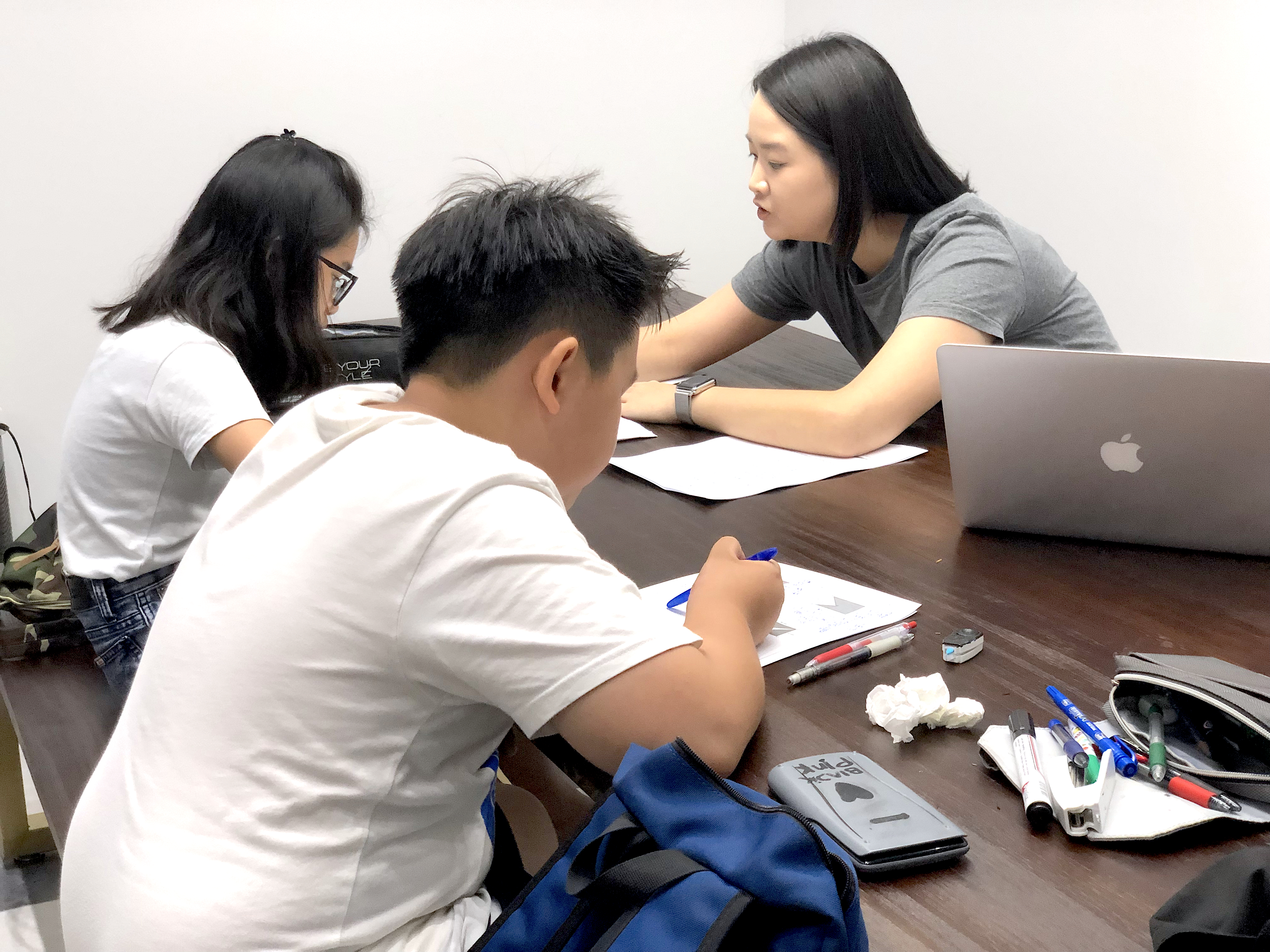














Pri3 Yishun The best Pri 3 English Tuition in Yishun with SEAB MOE PSLE syllabus English. Pri3 Yishun Primary English Tutor for Pri1 Pri2 Pri3 Pri4 Pri5 Pri6 PSLE English Paper 1 and Paper 2.
Call Yuet Ling +65 82226327 for our Pri3 Yishun English classes.


Learn English and make it useful.
Working closely with parents are part of our teaching culture to create the desired effect to get our English students positive changes in their studies. Our Yishun PSLE English tutors teach from scratch, making sure our English students master their language, and we do all the necessary practices from basic easy to complex advanced questions with our students, including past exam papers that helps them to understand and appreciate English as lingua franca in Singapore and use it to further their studies.
Class Culture
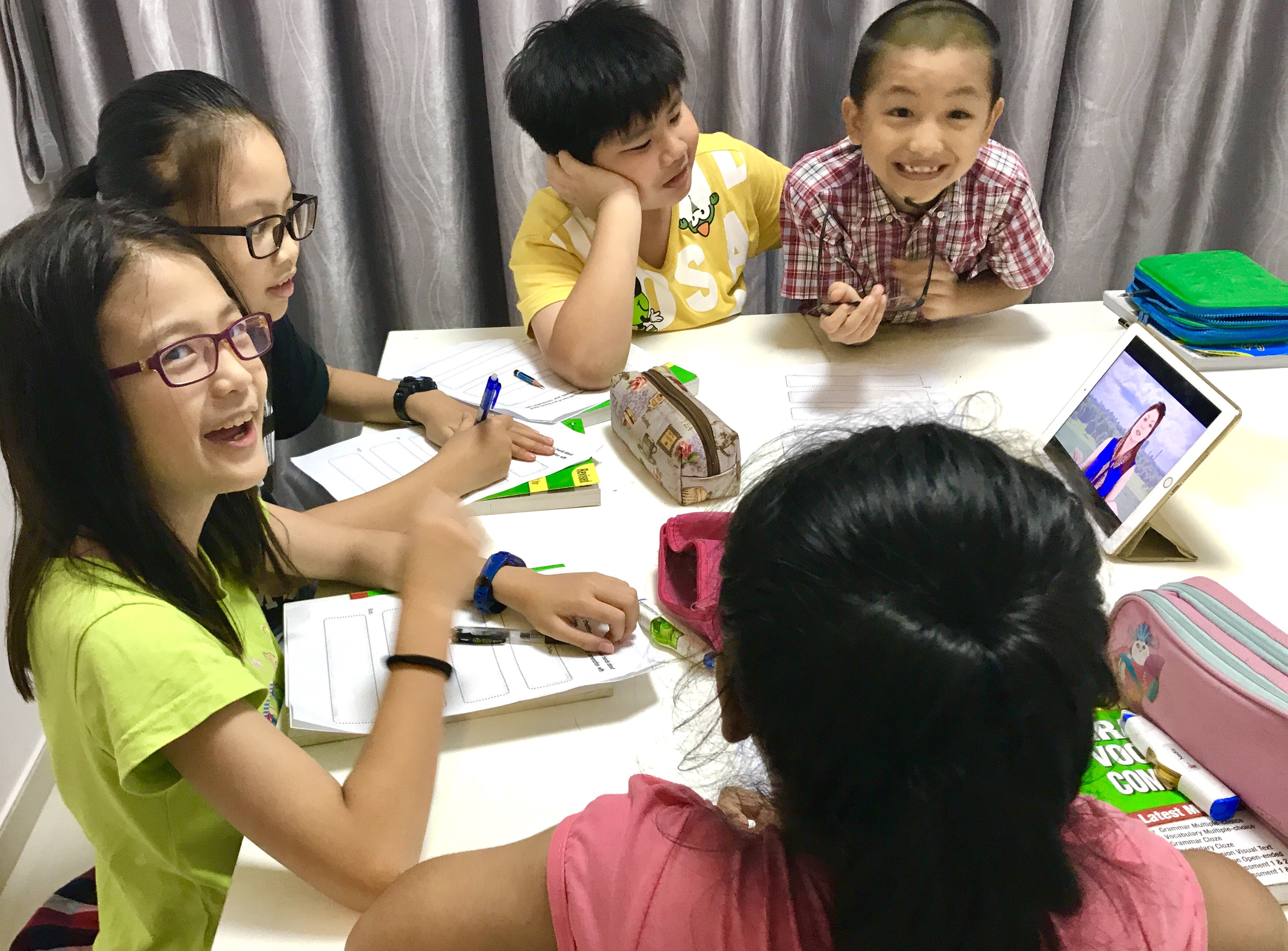
At eduKate Yishun, we work hard to have an affirmative class culture that empowers our students to do more, learn more, and develop a love for their own education by creating a class culture with great friends and tutors. Our positive classes also creates a constructive environment that teaches them the relevance of what they study to their everyday lives. With relevance creates the true reason for a proper education. That is our trademark that differentiates our teaching to others, but don’t just take our words for it, let these photos show you how much our passion and love for our Yishun student’s English lessons.




Leave a Reply