

Ownership note: this retained eduKateYishun URL keeps its historical Sembawang Primary 2 English search role. eduKateYishun does not use this legacy title as proof of a current Sembawang branch or class. For the English language system, literature and examination depth, use the SETC English Atlas; use Yishun for diagnosis, recovery, transfer and return-to-learning. Current local service arrangements must be confirmed separately rather than inferred from this archive URL.
Parents looking for Sembawang Primary 2 English tuition are often trying to solve a very specific puzzle: a child can recognise familiar words on Monday, hesitate over a similar sentence on Tuesday, and give a one-word answer even when the idea is clearly in their head. Useful Primary 2 English support should connect phonics and decoding, reading fluency, comprehension, vocabulary, complete sentences, punctuation and confident speaking instead of sending each skill to a different corner of the room.
A Sembawang English tutor may use readers, comprehension passages, grammar exercises, vocabulary work and oral practice. Current Singapore tuition and enrichment pages use those terms often because families recognise them. The more important question is how the parts travel together. When a child decodes floated, reads the sentence smoothly, explains what floated, infers why someone watched it, and writes a punctuated answer, one small reading event has become a complete language lesson.
This guide gives Primary 2 families a realistic bridge from decoding to meaning and expression. It uses brief rereading, literal questions, gentle inference, sentence building, punctuation, vocabulary in context and low-pressure oral rehearsal. It does not assume that every school teaches topics or assesses pupils in the same order. The child’s current school instructions and teacher feedback remain the immediate guide; the routines here help make those lessons usable between school and tuition.
The Primary 2 job: make words carry meaning
At this stage, reading is neither a race through a word list nor a hunt for difficult vocabulary. The child must coordinate several actions: notice letters and spelling patterns, blend sounds where appropriate, recognise familiar words quickly, group words into meaningful phrases, monitor whether the sentence makes sense and connect one sentence with the next. If too much attention is spent solving individual words, little attention remains for the story.
The Ministry of Education’s current primary English syllabus treats listening and viewing, reading and viewing, speaking and representing, and writing and representing as connected areas, supported by grammar and vocabulary. That is a helpful boundary for home practice. A child may begin with print, but the learning should move into spoken explanation and written expression. Grammar and punctuation are then tools for making meaning clear, not loose parts rattling in a worksheet drawer.
Primary 2 is also a year of unevenness. A pupil may read an animal story fluently because the words are familiar, then stumble through a simple information text with new topic words. Another may speak in lively detail but write fragments. A third may decode accurately and still miss a character’s reason. These are observable patterns, not labels. The useful response is to locate the step where meaning stops travelling.
For wider level-specific resources, families can visit the English Tuition and Learning Hub and the Primary English directory. This article has a narrower reader job: build a repeatable read–say–show–write–check routine that a seven- or eight-year-old can actually use.
Start by observing where the reading breaks
Choose a short passage that is appropriate for the child and ask for one natural reading. Do not interrupt every error. Listen for four things: whether unfamiliar words are attempted, whether familiar words are recognised without laborious sounding, whether punctuation affects phrasing, and whether the child can explain what happened. A recording of forty to sixty seconds, used with the child’s comfort and kept private, can help an adult notice patterns.
Mark only enough evidence to choose the next step. Three repeated decoding hesitations may matter more than one unusual name. A child who reads every word accurately but cannot answer “Who carried the box?” needs meaning work, not a harder phonics list. A child who understands the story when it is read aloud but cannot access it independently may need word-reading support. The contrast between conditions is valuable evidence.
The five-pass bridge
The core routine uses one short text five ways. Pass 1: read the text and solve unfamiliar words. Pass 2: say the central event in the child’s own words. Pass 3: show the exact clue for a literal or inferential answer. Pass 4: write one or two complete, punctuated sentences. Pass 5: check whether the writing matches the text and whether the reading sounds more secure.
The passes are short and connected. They do not require five worksheets. A seventy-word passage may supply ten minutes of focused practice because each return has a different purpose. Repetition becomes useful when attention changes: first the word, then the event, then the evidence, then the sentence, then the improvement. Reading the same text five times without a purpose can feel like a malfunctioning lift.
Pass 1: decode without losing the sentence
When a child meets an unfamiliar word, first ask them to look through the whole word. They can identify a known chunk, try the sounds or syllables, and then place the attempt back into the sentence. The final meaning check matters. If a child reads “The boat floated beside the bank” as “folded”, the letters and sentence meaning both signal that another attempt is needed.
Do not turn every word into a long lesson. Select one or two patterns that are teachable from the passage. In floated, a child may recognise float and the ending -ed. In carefully, the useful chunks may be care, -ful and -ly. The point is flexible word solving, followed by immediate return to the sentence’s message.
Some words are not efficiently solved by sounding every letter during connected reading. High-frequency words, irregular spellings, names and topic words may need a quick model. Give the word, let the child repeat it, point out one memorable feature and reread the full sentence. Help should reduce interruption. A three-minute lecture on one spelling can leave the character standing beside the same unopened door.
Move from accurate reading to gentle fluency
Fluency is accurate, reasonably smooth and meaningful reading. It is not simply speed. A very fast reading that ignores punctuation and changes words is not a stronger reading. Ask the child to make the sentence sound like spoken language. Full stops need a clear finish; commas often need a light pause; question marks should signal that somebody is asking; speech marks help reveal a speaker.
Model one sentence, then read it together, and finally let the child read it alone. This “hear, join, try” sequence supplies an attainable sound without asking for imitation of a whole page. Compare the first and final reading for one feature only: perhaps fewer hesitations, clearer phrase groups or attention to the question mark. One visible improvement keeps the check honest and encouraging.
Phrase marking can help when a sentence feels crowded. Draw temporary slashes between meaning groups: “After the rain / two snails crept / across the path.” Read each group smoothly, then remove the support. The child learns that fluent readers do not give every word equal isolation. They carry small bundles of meaning across the sentence.
Pass 2: retell before answering
Before asking several questions, invite a brief retell: “Tell me what happened in this part.” A retell reveals whether the child has built a coherent situation. If the response lists disconnected objects, use three prompts: who or what was this about, what happened, and what changed or happened next? The child can look back after an initial attempt.
Accept everyday spoken language first, then refine one part. A child might say, “The girl saw the wet bird and put it in a box.” The adult can ask, “Can we make the order clearer?” A stronger retell might be, “The girl found a wet bird under the bench, so she placed it gently in a box.” The added location and connector make the event easier to follow.
Pass 3: begin with literal comprehension
Literal questions ask for information stated in the text. They are not automatically easy. The child must understand the question, find the relevant sentence, distinguish the needed detail from nearby information and answer the exact question. “Where did Amir leave the parcel?” needs a place. “Why did Amir return?” needs a reason. Underline the question word before hunting for an answer.
Teach a simple sequence: read the question, say what kind of answer is needed, scan for a matching idea, read the whole sentence, and answer in the child’s own complete sentence when required. Copying a long line can hide uncertainty. A short precise answer shows that the child has selected the right information.
Add gentle inference: clue plus sensible idea
An inference uses a clue and relevant knowledge to reach an idea the text suggests. At Primary 2, begin close to the page. If Noah checks the clock, puts on his shoes without being asked and waits beside the door, the child may infer that he is eager to leave. The actions are visible; the feeling is the sensible idea they support.
Use the frame: “I think ___ because the text says or shows ___.” The frame prevents guessing and teaches evidence. It should later become flexible, but it is useful while the reasoning habit forms. If the child says Noah is angry, ask which clue supports anger. A confident answer without a matching clue is still a guess wearing a bright hat.
Keep early inferences gentle: feelings, simple reasons, likely next actions and relationships between nearby events. Avoid questions requiring distant background knowledge that the passage does not provide. When more than one answer is possible, compare which clue supports each idea. The purpose is thoughtful reading, not discovering the adult’s secret password.
Pass 4: turn spoken meaning into a complete sentence
A child may understand a question and still write “Because rain.” Treat the fragment as an unfinished delivery rather than evidence of no understanding. Ask the child to say the full answer: “Maya opened the umbrella because it started to rain.” Then identify who or what the sentence is about, what happened, and whether the thought feels complete.
Use oral rehearsal before writing. The child says the sentence once, improves it if needed, counts the main word groups on fingers, and writes from the spoken plan. This reduces the burden of inventing and spelling at the same instant. After writing, the child reads the sentence aloud exactly as written. Missing words often become audible.
Teach expansion with useful questions, not decoration for its own sake. “The dog barked” is complete. “The small dog barked loudly at the delivery cart” adds which dog, how and at what. “The small dog barked loudly at the delivery cart because the rattling wheels surprised it” adds a reason. The best version depends on the task and evidence.
Connectors should express real relationships. Because gives a reason; so gives a result; but signals contrast; when links events in time. Ask the child to explain the relationship before choosing the connector. Filling every blank with and can create a sentence train with no stationmaster.
Make punctuation serve the reader
Begin with a compact checking routine: capital letter, complete thought, end mark. Then add punctuation that appears in the child’s current work, such as commas in simple lists, apostrophes in familiar contractions and speech punctuation when the school introduces it. Too many symbols at once can turn editing into visual dust.
Read the unpunctuated sentence aloud: “where did you find the kitten asked Farah”. Ask what the voice needs. A question mark belongs after the spoken question because Farah is asking; a full stop closes the reporting statement. Depending on the conventions currently taught, the school may expect speech marks and a comma. Follow the child’s school model while preserving the meaning of each mark.
Editing works best after meaning is settled. First ask, “Does the sentence answer the question?” Then check completeness and punctuation. Finally review one current spelling pattern. If an adult corrects ten spellings, three commas and the handwriting while the child is still deciding what happened, the original idea may quietly leave through the nearest window.
Grow vocabulary from the passage outward
Choose two or three useful words from the text. Discuss the word in its sentence, a child-friendly meaning, a useful partner and a new example. If the word is glanced, the context may show a quick look. Useful combinations include “glanced at the clock” and “glanced over her shoulder”. The child can act it out and compare it with stared.
Word families can connect reading and writing. From care, explore careful, carefully and careless only if the distinctions are manageable. Place each in a sentence: “Sam carried the bowl carefully.” Ask what changes when the ending changes. This builds grammatical awareness without requiring technical terminology to lead every conversation.
Build oral confidence with preparation, not pressure
Oral confidence grows when the child knows what to do with an idea. Use a simple response path: answer, reason, example. For “Would you like to visit this garden?”, the child might say, “Yes, I would like to visit it because the story describes many butterflies. I would try to spot the blue one near the pond.” The response is brief, connected and personal.
Give thinking time and permit one quiet rehearsal. Ask one follow-up, such as “What makes you think that?” or “Can you tell me one more detail?” Do not interrupt every grammar slip while the child is building a response. Choose one improvement after the attempt: clearer volume, a complete opening, a specific example or a stronger ending.
Pictures can support oral practice, but ask beyond naming. Move from “What can you see?” to “What may have happened just before this?” and “What should the person do next?” The child should point to visible evidence when appropriate. Picture talk then becomes observation, sequence, vocabulary and gentle inference rather than a census of objects.
Worked example 1: the paper boat
Original passage: “After the rain stopped, Lina placed her paper boat in a shallow stream. The boat floated past two leaves, then turned beside a stone. Lina hurried along the path. She smiled when the boat reached the small bridge.” This short text supports decoding, sequence, literal meaning, inference, vocabulary, oral retell and writing without needing a separate text for each skill.
Read: The child hesitates at shallow and reads floated as folded. The adult gives the first word after a reasonable attempt, briefly explains that shallow water is not deep, and helps the child notice float plus -ed. They reread “floated past two leaves” as one phrase and check that it makes sense for a boat.
Say and show: The child retells, “Lina put a boat in the stream and followed it to the bridge.” For the literal question “What did the boat pass?”, the child points to “two leaves” and answers, “The boat passed two leaves.” For “How did Lina probably feel at the end?”, the child answers, “She felt pleased because she smiled when it reached the bridge.”
Write and check: The child writes, “Lina was happy her boat go to the bridge”. After reading it aloud, she adds because, changes go to reached, and supplies the full stop: “Lina was happy because her boat reached the bridge.” The revision improves grammar, vocabulary and reasoning while keeping the child’s original idea.
Worked example 2: the missing lunch box
Original passage: “Ravi opened his school bag and frowned. His lunch box was not inside. He looked under his desk, beside the bookshelf and near the classroom door. Then Mei pointed to the art table. Ravi sighed and thanked her.” The scene supports place words, action sequence, pronoun reference, emotion and a simple inferred reason.
Read: The child groups the search locations into phrases and notices the commas in the list. The adult asks who her refers to in the final sentence. Looking back, the child identifies Mei. This is a small but important cohesion check: pronouns must connect to the right person for the scene to remain clear.
Say and show: The child retells the problem, search and solution. For “Why did Ravi sigh?”, two ideas are discussed. The child chooses relief rather than annoyance because Mei points to the missing lunch box and Ravi thanks her. The clue and sequence support the inference even though the passage does not use the word relieved.
Write and check: The first answer is “Because Mei find it.” Oral rehearsal produces, “Ravi sighed because Mei found his lunch box.” The child checks the capital letter, past-tense verb, clear noun and full stop. A second sentence extends the response: “He thanked her for helping him.” The pronouns now have clear references.
A realistic ten-minute home routine
Minutes 1–3: The child reads a short passage while the adult notes one pattern. Minutes 4–5: Solve one or two words and reread the affected phrases. Minutes 6–7: Give a brief retell and answer one literal question. Minute 8: Answer one gentle inference with a clue. Minutes 9–10: Write and check one complete sentence.
Twelve practice tasks with answers and rationales
Task 1 — Meaning check while decoding: In “The puppy splashed through the puddle”, a child reads splashed as sleeped. What should the child check? Answer: Look again at the letters and ask which word fits a puppy moving through water; splashed fits. Rationale: Accurate decoding uses print and sentence meaning together. Sleeped neither matches the spelling nor makes sense in the action.
Task 2 — Word chunks: Break carefully into useful parts and use it in a new sentence. Answer: care + ful + ly; “Nadia carefully carried the full cup.” Rationale: Recognising the base and endings can make a longer word manageable. The new sentence shows that carefully describes how an action is done.
Task 3 — Fluency: Add phrase breaks: “Before the bell rang the children packed their books.” Answer: “Before the bell rang / the children packed their books.” Rationale: The first group sets the time and the second gives the main action. Reading the groups smoothly makes the relationship easier to hear.
Task 4 — Literal detail: Read: “Salma left her blue umbrella beside the library counter.” Where did Salma leave the umbrella? Answer: She left it beside the library counter. Rationale: Where asks for the location. The colour is stated but does not answer this particular question.
Task 5 — Sequence: Read: “Ken washed the apple. Next, he sliced it. Finally, he shared the pieces.” What happened immediately before he shared the pieces? Answer: He sliced the apple. Rationale: Immediately before asks for the action directly preceding the sharing, not the first action in the sequence.
Task 6 — Gentle inference: “Ana hugged her library book to her chest when raindrops began to fall.” What is Ana probably trying to do? Answer: She is probably trying to keep the book dry. Rationale: Holding the book close protects it from the rain. The answer connects an observable action with a sensible purpose.
Task 7 — Complete sentence: Improve the fragment “Because the gate was locked.” Answer: “The children waited outside because the gate was locked.” Rationale: The original group gives a reason but leaves the reader asking what happened. The revision adds a complete main idea.
Task 8 — Connector: Choose because, but or so: “The path was muddy, ___ we walked slowly.” Answer: so. Rationale: Walking slowly is a result of the muddy path. Because would reverse the relationship in this sentence position, while but would signal contrast.
Task 9 — Punctuation: Correct “can we feed the fish asked Iman”. Answer: “Can we feed the fish?” asked Iman. Rationale: The spoken words form a question, so they begin with a capital and end with a question mark. The reporting words identify the speaker. Follow the school’s current convention if speech marks are also required.
Task 10 — Vocabulary: Which word fits: “Leah ___ at the clock, then returned to her drawing”—glanced or stared? Answer: glanced. Rationale: Returning quickly to the drawing suggests a brief look. Stared would suggest looking for a longer time.
Task 11 — Oral response: Answer “Would you help at a class book corner?” with an answer, reason and example. Answer: “Yes, I would help because I enjoy arranging books. I could sort the books by topic and return loose pages to the teacher.” Rationale: The response answers directly, explains the choice and gives a concrete action.
Task 12 — Read–write transfer: Read: “Mira pulled the curtain aside so the plant could receive sunlight.” Write why Mira moved the curtain. Answer: “Mira moved the curtain so that the plant could receive sunlight.” Rationale: The answer preserves the cause-and-purpose relationship, replaces an unclear pronoun with the subject’s name and ends with correct punctuation.
What parents can watch without becoming the examiner
Look for changes in control: the child attempts an unfamiliar word, checks whether it makes sense, respects a full stop, retells the main event, finds a clue, says a complete answer and notices a missing capital. These small behaviours are more informative than counting how many pages were completed. They show whether the child has a process that can operate on a new text.
Ask process questions: “Which part helped you solve that word?”, “Where is your clue?”, “Can you say the whole answer before writing?”, and “What will you check?” Avoid supplying the answer after the first pause. A little wait time lets the child assemble language and learn that hesitation can lead to thinking rather than immediate rescue.
If reading remains unusually effortful, progress stalls despite suitable practice, or concerns affect the child’s confidence and school participation, share concrete observations with the school teacher. The teacher can explain classroom expectations and advise whether further support or professional assessment is appropriate. A general article cannot diagnose an individual child.
How to assess tuition or extra support
Ask how the tutor identifies the child’s starting pattern. Does the lesson distinguish word-reading difficulty from a comprehension or sentence-expression difficulty? Is a child allowed to explain thinking aloud? Does correction lead to a fresh attempt? Can the tutor show how reading, vocabulary, grammar, writing and oral language connect across a lesson?
Look at the level of text and support. Material should offer some challenge while leaving enough attention for meaning. If every line contains several unsolved words, comprehension may collapse under the load. If every text is already memorised, smooth reading may conceal weak transfer. A useful lesson adjusts the text, modelling and independence from actual evidence.
Ask what parents should practise between lessons. The answer should be specific and manageable: reread one short passage for phrasing, practise one word pattern, retell in sequence, or write two complete answers with a punctuation check. A large undifferentiated homework pack can measure endurance while leaving the underlying break untouched.
Common traps and useful repairs
Trap: speed becomes the goal. Repair by checking accuracy, phrasing and meaning. Trap: every mistake stops the reading. Note patterns and intervene selectively. Trap: phonics sits apart from comprehension. Return every solved word to its phrase and sentence. Trap: inference becomes guessing. Require a nearby clue.
Trap: the adult rewrites the answer. Let the child rehearse, then guide one improvement. Trap: punctuation is corrected before the thought exists. Settle meaning first. Trap: vocabulary means copying definitions. Use the word in context, with partners and in speech. Trap: oral practice begins without thinking time. Allow a brief plan.
Trap: home practice expands whenever progress feels slow. More volume is not always more learning. Keep the passage short, choose one active pattern and retest it on fresh material. A child who can explain one improvement is building independence; a child who has completed thirty pages may simply have become excellent at turning pages.
Frequently asked questions
How long should Primary 2 English practice take?
Ten focused minutes can be useful when the task is clear. Some reading or writing activities need longer, but attention and consistency matter more than an impressive clock total. Stop before fatigue turns every sentence into a negotiation.
Should my child sound out every unfamiliar word?
Use sound and spelling knowledge when it is efficient, but also notice chunks, meaningful word parts and sentence sense. Some irregular or topic words need a quick model. Always return the solved word to the phrase and message.
Is rereading useful?
Yes, when each rereading has a purpose: accuracy, phrase grouping, punctuation, expression or meaning. Repeating a passage mechanically is less useful than comparing one specific feature between attempts.
How many comprehension questions should we ask?
A few well-chosen questions are enough for a short session. Include a literal detail, a sequence or reference check, and a gentle inference when the text supports one. Ask the child to show the clue.
What if my child answers orally but writes a fragment?
Use the spoken answer as the plan. Ask the child to say it slowly, identify who or what it is about and what happened, then write and read it back exactly. Practise one complete sentence before adding more.
Should we correct every spelling error?
Correct words connected to the current pattern and high-use words the child is ready to learn. Preserve the message and let the school programme guide spelling expectations. Too many simultaneous corrections can hide the most useful next step.
Can picture books still help at Primary 2?
Yes. Rich read-alouds build vocabulary, ideas, listening and discussion beyond what a child can yet read independently. Pair them with texts the child can read, so language growth and independent decoding both receive attention.
How will we know the routine is working?
Look for fewer repeated hesitations, better self-correction, smoother phrases, accurate literal answers, clues attached to inferences, more complete sentences, clearer punctuation and a willingness to speak. Check the same skill on an unfamiliar passage before calling it secure.
Teaching Guide
Select one short, age-appropriate text and decide the lesson’s main bridge before teaching. If the child can decode but loses meaning, move quickly into retell and literal questions. If the child understands when listening but cannot access the print, reduce text difficulty and teach one word-solving pattern. If oral answers are clear but writing is fragmented, spend more time on sentence rehearsal and readback.
Use gradual release. Model one decision aloud: “I see float inside floated, and a boat can float, so I will try that word.” Read a phrase together. Ask the child to try a parallel example. Then remove the prompt on a fresh sentence. Feedback should name the successful decision as well as the error.
For comprehension, separate finding from explaining. Literal answers need precise selection. Inferences need a clue and a sensible link. Let the child point, say, refine and only then write. For vocabulary, keep words inside phrases and varied examples. For punctuation, connect the mark to the reader’s voice and meaning rather than presenting it as a decorative rule.
End with a tiny transfer check using unfamiliar material. Ask for one decoded phrase, one retell, one literal answer, one close inference and one complete sentence, scaled to the child’s current need. Record what became independent and choose only one next target. The lesson succeeds when the child carries a useful decision into the next text, not when every available exercise has been completed.



Singapore English tuition with Tutor Yuet Ling. With Singapore school’s requirement for English as a First language, our primary aim in teaching English are highly focussed on tasking English student’s communication skills to be competent as well as to be an effective, accurate and efficient tool to absorb and relay information to others.
English is Singapore’s main language of communication and it is imperative that our student’s English Language skills are on parity with the requirements set forth by the Ministry of Education to study well in school. It is the main skill that will help students to perform consistently across their other subjects as their ability to understand and use English effectively will help them to comprehend what is taught in class and asked in tests.
English Tuition Centre with English tutor of 20 years in the business helping English students to improve their ability to communicate. An improvement of their linguistic competence in both the passive reading/listening and active speaking/writing process of the English Language are part of our course curriculum.
With that in mind, our English classes are geared to teach and train our students to be able to understand the media that they read or hear, and to have the ability to express and communicate their complex thoughts and ideas to others naturally. Any improvements in information absorption and dissemination will automatically translate to cognitive skills and ultimately, help students to do well in their studies.
English should be treated as our native language, to be the main Lingua franca for a cosmopolitan Singapore where over generations, English has been integrated well into our everyday life. As a first language, the focus of our tuition will be to task our Yishun students to learn the skills needed to communicate proficiently for both their studies in school as well as for their everyday life.
Local English Tutor for English tuition are the dependable, trustworthy tutor that delivers the results. Join our English tutorials and have our English Teacher get you on track. Small groups of 3.
increase general knowledge and all necessary skills needed for the PSLE
score maximum marks by understanding the marking scheme of the examination
in a safe, comfortable air con environment with properly equipped classes
by discerning tutors that can detect weaknesses, solve student’s problems during class
by qualified female tutors with experience in improving students for the crucial PSLE
This historical Sembawang-titled Yishun page does not supply a current contact number, branch, class or enrolment offer. For specialist English learning and examination resources, use the SETC English Atlas. Use eduKateYishun for diagnosis, recovery and transfer, and confirm any present-day local service arrangement separately.
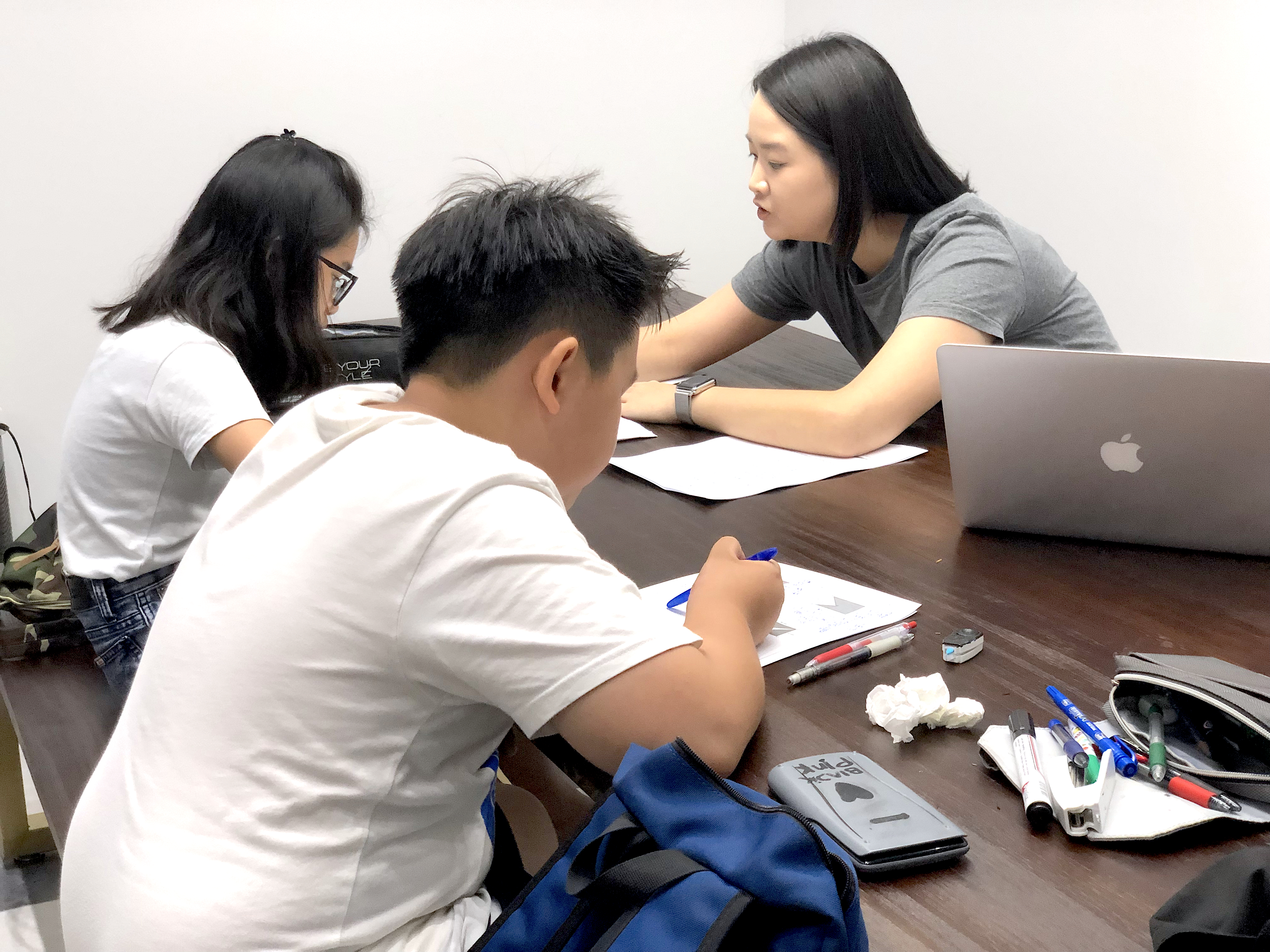














Pri3 Yishun The best Pri 3 English Tuition in Yishun with SEAB MOE PSLE syllabus English. Pri3 Yishun Primary English Tutor for Pri1 Pri2 Pri3 Pri4 Pri5 Pri6 PSLE English Paper 1 and Paper 2.
This historical Sembawang-titled Yishun page does not supply a current contact number, branch, class or enrolment offer. For specialist English learning and examination resources, use the SETC English Atlas. Use eduKateYishun for diagnosis, recovery and transfer, and confirm any present-day local service arrangement separately.


Learn English and make it useful.
Working closely with parents are part of our teaching culture to create the desired effect to get our English students positive changes in their studies. Our Yishun PSLE English tutors teach from scratch, making sure our English students master their language, and we do all the necessary practices from basic easy to complex advanced questions with our students, including past exam papers that helps them to understand and appreciate English as lingua franca in Singapore and use it to further their studies.
Class Culture
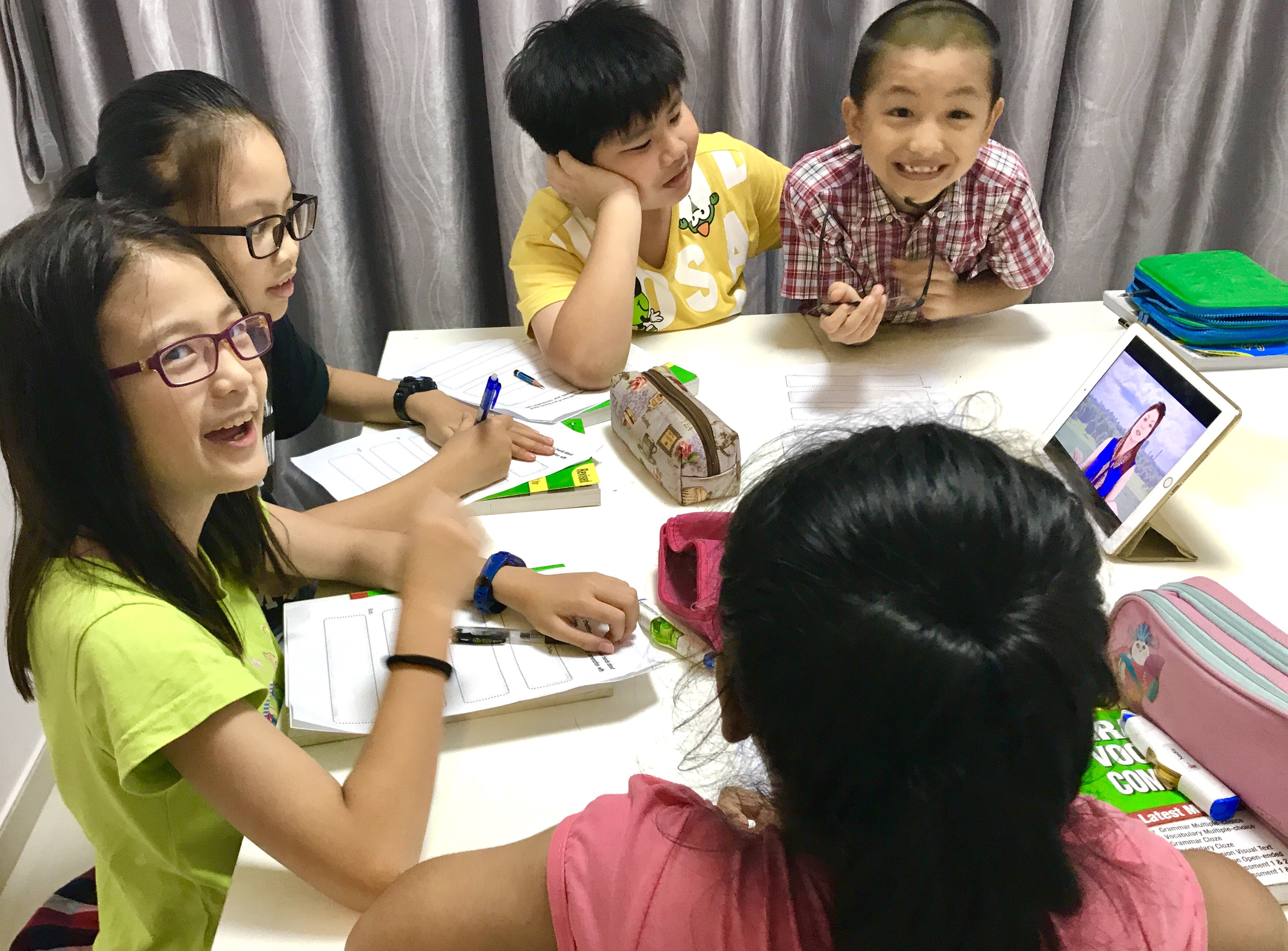
At eduKate Yishun, we work hard to have an affirmative class culture that empowers our students to do more, learn more, and develop a love for their own education by creating a class culture with great friends and tutors. Our positive classes also creates a constructive environment that teaches them the relevance of what they study to their everyday lives. With relevance creates the true reason for a proper education. That is our trademark that differentiates our teaching to others, but don’t just take our words for it, let these photos show you how much our passion and love for our Yishun student’s English lessons.




Primary 2 learning route: Continue to the English learning hub · Student Diagnostics. For a current tuition-service decision rather than this learning guide, use the Yishun Tuition Centre Hub and confirm current arrangements separately.
Continue through Primary 2 English: Primary 1–3 article index · Primary English directory · English by area & school · Diagnostics · Examinations · Library
Leave a Reply