
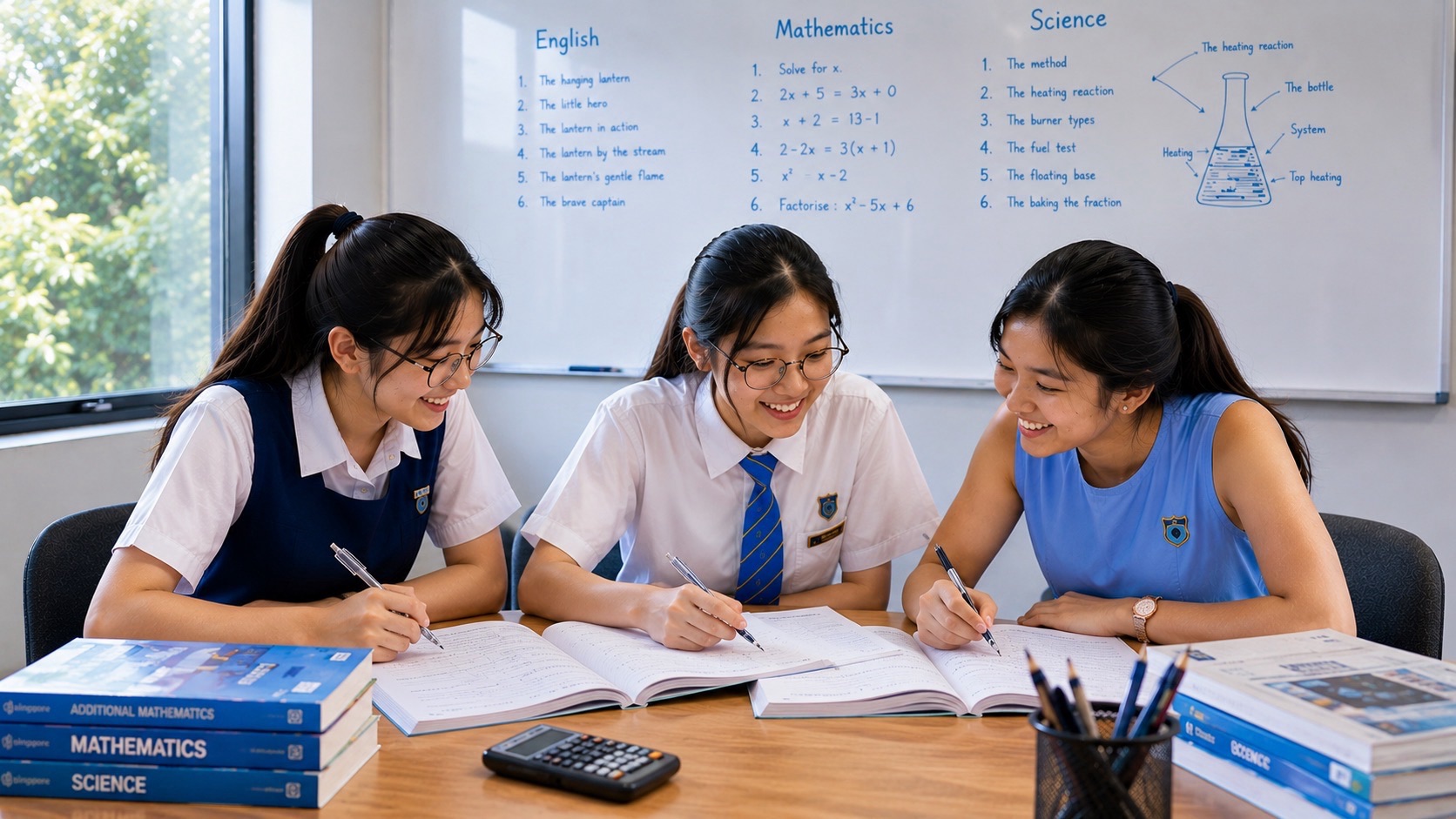
Tampines Tuition Centre (IP Year 4 English Tutors) keeps its original 2019 title, but this page is rebuilt for families searching for IP Year 4 English tuition in Tampines, Year 4 Language Arts tutor, critical reading, comparative analysis, argumentative writing, research and source evaluation, synthesis, academic vocabulary, oral discussion and senior IP readiness. This page owns one specific learning job: the Year 4 synthesis-and-research transition.
A strong IP Year 4 English tutor in Tampines should help students move beyond analysing one text or writing one isolated essay. Upper-IP work increasingly rewards the ability to connect sources, compare perspectives, evaluate reasoning, use examples responsibly, synthesise information and write sustained responses under school-specific conditions. Current Singapore IP English programmes commonly emphasise critical response, discursive and argumentative writing, literary and non-literary analysis, summary, synthesis and timed practice because Year 4 sits close to the transition into more senior academic English pathways.
There is no single national Year 4 IP English syllabus shared by every school. Some programmes are more literature-centred, some more language-and-argument-centred, and some prepare students for different post-Year-4 pathways. A useful tuition programme should therefore anchor itself in the student’s actual assignments while building transferable academic habits: source evaluation, synthesis, close reading, comparative reasoning, qualification, citation discipline, oral defence and independent revision.
The IP Year 4 synthesis map
| Capability | Year 4 question | Target |
| Critical reading | What claim is being made and how? | Evaluate reasoning and rhetoric |
| Source use | How reliable and relevant is this evidence? | Source judgement |
| Synthesis | How do ideas across texts connect? | Integrated understanding |
| Comparison | What shared axis matters? | Significant similarities/differences |
| Argument | What position can survive challenge? | Scoped, qualified thesis |
| Research | What information is worth keeping? | Independent note-making |
| Timed response | Can depth survive pressure? | Efficient academic control |
Why Year 4 should emphasise synthesis
Earlier years may focus on close reading and paragraph control. By Year 4, students should increasingly connect ideas across texts, issues and perspectives. Synthesis asks what two or more sources contribute to one larger understanding rather than treating each source separately.
This capability supports comparative analysis, research-based assignments, discursive writing and senior-stage academic work.
Critical reading of claims
Students should identify a writer’s main claim, evidence, assumptions, qualification and rhetorical strategy. A sophisticated text may sound confident while relying on weak evidence or narrow framing.
The tutor should ask students to evaluate not only what is persuasive but why, and where the argument’s limits appear.
Source evaluation
When school tasks use external information, students should distinguish authority, relevance, evidence quality, recency, purpose and possible bias. The strongest source is not always the most famous or longest.
Students should be able to justify why a source deserves a place in the argument and what it cannot prove.
Note-making for research
Research notes should capture ideas, evidence and questions in the student’s own words. Copying full sentences makes later synthesis harder and increases dependence on source phrasing.
A useful note can be sorted by theme or claim rather than by source, which makes comparison and integration easier.
Synthesis across sources
Students should look for agreement, tension, different assumptions, causal links and complementary evidence across texts. Synthesis is not a list of Source A, Source B and Source C.
The writing should organise around the idea or relationship, bringing in sources as evidence rather than as separate mini-sections.
Comparative analysis
Strong comparison begins with a shared analytical axis: perspective, purpose, method, value, theme, structure or reader effect.
Students should move between texts inside the paragraph and explain why the similarity or difference matters rather than simply listing it.
Argument architecture
A Year 4 thesis should be specific enough to defend, broad enough to matter and qualified enough to survive reasonable counterexamples. Paragraphs should develop the line of reasoning rather than function as disconnected examples.
The tutor should make the sequence visible: claim, mechanism, evidence, interpretation, limitation and link back to the thesis.
Counterargument
Counterarguments should represent a serious alternative fairly. A weak straw man teaches little. The student should acknowledge what the opposing view gets right, then define where it becomes less convincing.
This improves both writing and oral discussion because the student learns to refine rather than merely repeat a position.
Literary synthesis
Where literary texts are part of the school programme, Year 4 students should connect local language choices to larger questions of character, theme, voice, form and context.
Comparative literary work becomes stronger when the student moves between texts or moments around one interpretive question rather than retelling each separately.
Non-literary synthesis
Articles, speeches, campaigns, visual texts and opinion pieces can be compared through audience, framing, evidence, rhetoric and intended response.
Students should analyse how verbal and visual modes work together, especially when credibility or persuasion depends on design.
Summary and précis habits
Summary teaches hierarchy and economy. Students should identify central ideas, preserve qualification and remove illustrations without flattening the argument.
These habits strengthen synthesis because the student can represent a source accurately before comparing or critiquing it.
Academic vocabulary
Year 4 students need precise language for certainty, evaluation, causation and comparison. Terms such as plausible, tenuous, compelling, reductive, contingent and disproportionate require collocation and context.
The goal is not to sound academic. The goal is to make the reasoning more exact.
Sentence architecture
Complex academic thinking sometimes needs complex sentences, but hierarchy must remain visible. Subordination can express concession, condition and cause; parallelism can clarify comparison.
The tutor should value readable logic over ornamental complexity and teach students to split sentences when the main claim disappears.
Timed critical response
Timed work should compress a stable method. Students can practise thesis generation, source selection, paragraph planning and one analytical paragraph separately before completing longer responses.
Timing becomes useful only when the reasoning process is already understood.
Oral defence of an argument
Students should be able to explain why a source is credible, why an example is relevant and how a counterargument affects the thesis.
A short oral defence exposes gaps quickly because the tutor can challenge assumptions and ask for clarification in real time.
Discussion and intellectual flexibility
Year 4 discussion should reward refinement, not just confidence. A student who changes a claim after hearing better evidence demonstrates stronger reasoning than one who repeats the original position more loudly.
The tutor can require students to summarise a peer’s argument accurately before challenging it.
Revision of reasoning
Year 4 students should revise thesis, evidence selection and paragraph architecture before polishing grammar and vocabulary.
A beautifully worded paragraph with weak evidence is still weak academic writing. Revision order should reflect the hierarchy of quality.
Feedback calibration
Students should predict where their argument may be vulnerable before tutor feedback. Over time, stronger self-prediction shows that academic criteria are becoming internal.
The tutor can compare student and teacher diagnoses and use disagreements as material for the next lesson.
Senior-stage readiness
Year 4 should produce a student who can handle denser material, research independently, build sustained arguments, discuss ideas flexibly and learn from feedback without constant external direction.
The next stage may differ by school pathway, so portable reasoning is more valuable than one school-specific template.
The Year 4 handoff
At year-end, students should be able to compare early and later work and explain which routines now belong to them: source evaluation, synthesis, qualification, revision, timed planning or oral defence.
A target that only works after tutor prompting remains active; a target that survives unfamiliar tasks can move to monitoring.
IP Year 4 synthesis-and-research clinics
Source chosen because it is famous
What it looks like: The student assumes brand or popularity equals usefulness. Why it happens: Source evaluation is shallow. Repair: Compare authority, evidence, relevance and purpose. Transfer check: Choose between two unfamiliar sources and justify the better fit. The final check should remove the original task surface so the student has to reconstruct the same analytical move on unfamiliar material. That is especially important in IP English and Language Arts because formats vary across schools and years; durable learning must travel beyond one worksheet or model response.
Research notes copy sentences
What it looks like: The notebook reproduces source wording. Why it happens: Ideas have not been internalised. Repair: Close the source and record claim, evidence and question in own words. Transfer check: Use another source and repeat. The final check should remove the original task surface so the student has to reconstruct the same analytical move on unfamiliar material. That is especially important in IP English and Language Arts because formats vary across schools and years; durable learning must travel beyond one worksheet or model response.
Too many sources
What it looks like: The essay contains many references but little reasoning. Why it happens: Quantity is mistaken for research quality. Repair: Keep only sources that change or support the argument. Transfer check: Remove two weak sources and deepen the remaining evidence. The final check should remove the original task surface so the student has to reconstruct the same analytical move on unfamiliar material. That is especially important in IP English and Language Arts because formats vary across schools and years; durable learning must travel beyond one worksheet or model response.
One source dominates
What it looks like: The response repeats one perspective. Why it happens: Synthesis is missing. Repair: Find a complementary or conflicting source and compare assumptions. Transfer check: Write a new paragraph around the relationship, not the source names. The final check should remove the original task surface so the student has to reconstruct the same analytical move on unfamiliar material. That is especially important in IP English and Language Arts because formats vary across schools and years; durable learning must travel beyond one worksheet or model response.
Synthesis becomes source list
What it looks like: Paragraph moves Source A, then B, then C. Why it happens: Organisation is source-led. Repair: Use a shared idea or tension as the paragraph topic. Transfer check: Integrate two new sources inside one idea-led paragraph. The final check should remove the original task surface so the student has to reconstruct the same analytical move on unfamiliar material. That is especially important in IP English and Language Arts because formats vary across schools and years; durable learning must travel beyond one worksheet or model response.
Comparison becomes two mini-essays
What it looks like: Each text is discussed separately. Why it happens: No shared analytical axis exists. Repair: Choose one common dimension and move between texts. Transfer check: Write a fresh integrated comparison paragraph. The final check should remove the original task surface so the student has to reconstruct the same analytical move on unfamiliar material. That is especially important in IP English and Language Arts because formats vary across schools and years; durable learning must travel beyond one worksheet or model response.
Comparison lists similarities
What it looks like: The student says both use imagery or both persuade. Why it happens: Significance is missing. Repair: Ask why the similarity or difference matters. Transfer check: Compare another pair around purpose or effect. The final check should remove the original task surface so the student has to reconstruct the same analytical move on unfamiliar material. That is especially important in IP English and Language Arts because formats vary across schools and years; durable learning must travel beyond one worksheet or model response.
Thesis is broad
What it looks like: The introduction sounds sophisticated but unfocused. Why it happens: Commitment is delayed. Repair: Use the prompt’s tension to build a scoped claim. Transfer check: Write another thesis under a short time limit. The final check should remove the original task surface so the student has to reconstruct the same analytical move on unfamiliar material. That is especially important in IP English and Language Arts because formats vary across schools and years; durable learning must travel beyond one worksheet or model response.
Thesis is absolute
What it looks like: The claim cannot survive counterexamples. Why it happens: Qualification is weak. Repair: Add conditions or limits. Transfer check: Refine a fresh claim after hearing a counterexample. The final check should remove the original task surface so the student has to reconstruct the same analytical move on unfamiliar material. That is especially important in IP English and Language Arts because formats vary across schools and years; durable learning must travel beyond one worksheet or model response.
Examples are name-dropped
What it looks like: Famous cases appear without interpretation. Why it happens: Evidence is decorative. Repair: Explain mechanism, relevance and limitation. Transfer check: Replace with a less famous but better-explained example. The final check should remove the original task surface so the student has to reconstruct the same analytical move on unfamiliar material. That is especially important in IP English and Language Arts because formats vary across schools and years; durable learning must travel beyond one worksheet or model response.
Counterargument is weak
What it looks like: The opposing view is simplified. Why it happens: Student is avoiding real challenge. Repair: State the strongest fair alternative first. Transfer check: Use a new issue and rebut respectfully. The final check should remove the original task surface so the student has to reconstruct the same analytical move on unfamiliar material. That is especially important in IP English and Language Arts because formats vary across schools and years; durable learning must travel beyond one worksheet or model response.
Counterargument overwhelms thesis
What it looks like: The paragraph loses the main position. Why it happens: Response is underdeveloped. Repair: Acknowledge validity, define scope and return to main mechanism. Transfer check: Practise another counter-view in fewer sentences. The final check should remove the original task surface so the student has to reconstruct the same analytical move on unfamiliar material. That is especially important in IP English and Language Arts because formats vary across schools and years; durable learning must travel beyond one worksheet or model response.
Literary analysis stays local
What it looks like: The student explains one word but not larger meaning. Why it happens: Significance stops too early. Repair: Connect local choice to character, theme or form. Transfer check: Use another passage and build the wider link. The final check should remove the original task surface so the student has to reconstruct the same analytical move on unfamiliar material. That is especially important in IP English and Language Arts because formats vary across schools and years; durable learning must travel beyond one worksheet or model response.
Literary comparison becomes plot comparison
What it looks like: Events are compared instead of interpretation. Why it happens: Analytical axis is weak. Repair: Compare how each text constructs a shared idea. Transfer check: Use another pair and minimise plot summary. The final check should remove the original task surface so the student has to reconstruct the same analytical move on unfamiliar material. That is especially important in IP English and Language Arts because formats vary across schools and years; durable learning must travel beyond one worksheet or model response.
Non-literary analysis ignores evidence quality
What it looks like: Persuasive language is analysed but factual support is not. Why it happens: Rhetoric and reasoning are separated. Repair: Evaluate both presentation and evidence. Transfer check: Use a new article with strong style but weak evidence. The final check should remove the original task surface so the student has to reconstruct the same analytical move on unfamiliar material. That is especially important in IP English and Language Arts because formats vary across schools and years; durable learning must travel beyond one worksheet or model response.
Visual design is ignored
What it looks like: Only written words are analysed. Why it happens: Multimodal meaning is underread. Repair: Explain how layout, image and text frame the audience. Transfer check: Use a new visual campaign. The final check should remove the original task surface so the student has to reconstruct the same analytical move on unfamiliar material. That is especially important in IP English and Language Arts because formats vary across schools and years; durable learning must travel beyond one worksheet or model response.
Summary removes qualification
What it looks like: The compressed version sounds more certain. Why it happens: Small words are treated as expendable. Repair: Preserve may, often, some and conditions. Transfer check: Compress another qualified source accurately. The final check should remove the original task surface so the student has to reconstruct the same analytical move on unfamiliar material. That is especially important in IP English and Language Arts because formats vary across schools and years; durable learning must travel beyond one worksheet or model response.
Paraphrase distorts relationship
What it looks like: Cause, contrast or condition changes in new wording. Why it happens: Synonym replacement is mechanical. Repair: State the relationship before rewriting. Transfer check: Paraphrase another complex sentence. The final check should remove the original task surface so the student has to reconstruct the same analytical move on unfamiliar material. That is especially important in IP English and Language Arts because formats vary across schools and years; durable learning must travel beyond one worksheet or model response.
Academic vocabulary is vague
What it looks like: Words such as significant or nuanced appear without precision. Why it happens: Prestige is valued over meaning. Repair: Replace with a specific claim about effect or reasoning. Transfer check: Revise another paragraph. The final check should remove the original task surface so the student has to reconstruct the same analytical move on unfamiliar material. That is especially important in IP English and Language Arts because formats vary across schools and years; durable learning must travel beyond one worksheet or model response.
Sentence complexity hides thesis
What it looks like: Long clauses bury the main claim. Why it happens: Complexity is being equated with academic style. Repair: Identify main clause and subordinate only support. Transfer check: Rewrite another dense sentence. The final check should remove the original task surface so the student has to reconstruct the same analytical move on unfamiliar material. That is especially important in IP English and Language Arts because formats vary across schools and years; durable learning must travel beyond one worksheet or model response.
Timed planning consumes too long
What it looks like: Student researches mentally before committing. Why it happens: Decision rules are weak. Repair: Set a thesis-and-paragraph-job planning window. Transfer check: Plan another response within the same limit. The final check should remove the original task surface so the student has to reconstruct the same analytical move on unfamiliar material. That is especially important in IP English and Language Arts because formats vary across schools and years; durable learning must travel beyond one worksheet or model response.
Timed writing becomes shallow
What it looks like: Depth collapses under the clock. Why it happens: Reasoning is not automatic. Repair: Time one analytical paragraph before full responses. Transfer check: Recombine after quality stabilises. The final check should remove the original task surface so the student has to reconstruct the same analytical move on unfamiliar material. That is especially important in IP English and Language Arts because formats vary across schools and years; durable learning must travel beyond one worksheet or model response.
Oral defence is vague
What it looks like: Student cannot explain why a source was used. Why it happens: Source decisions were not conscious. Repair: Require a one-sentence relevance justification. Transfer check: Defend another source choice orally. The final check should remove the original task surface so the student has to reconstruct the same analytical move on unfamiliar material. That is especially important in IP English and Language Arts because formats vary across schools and years; durable learning must travel beyond one worksheet or model response.
Discussion becomes performance
What it looks like: Students use polished language without changing ideas. Why it happens: Status replaces inquiry. Repair: Reward clarification and revision of claims. Transfer check: Run another discussion where changing position is required once. The final check should remove the original task surface so the student has to reconstruct the same analytical move on unfamiliar material. That is especially important in IP English and Language Arts because formats vary across schools and years; durable learning must travel beyond one worksheet or model response.
Student cannot summarise peer fairly
What it looks like: Counterargument starts from a distorted view. Why it happens: Listening is weak. Repair: Restate peer position before responding. Transfer check: Repeat with another argument and check accuracy. The final check should remove the original task surface so the student has to reconstruct the same analytical move on unfamiliar material. That is especially important in IP English and Language Arts because formats vary across schools and years; durable learning must travel beyond one worksheet or model response.
Feedback is treated as editing only
What it looks like: Grammar changes but thesis and evidence do not. Why it happens: Revision hierarchy is wrong. Repair: Revise reasoning and structure before language. Transfer check: Use another draft and keep grammar untouched until the end. The final check should remove the original task surface so the student has to reconstruct the same analytical move on unfamiliar material. That is especially important in IP English and Language Arts because formats vary across schools and years; durable learning must travel beyond one worksheet or model response.
Model essays dominate
What it looks like: Student waits for an example response. Why it happens: Architecture is not internal. Repair: Analyse model decisions, then change sources and topic. Transfer check: Plan a new response before seeing any model. The final check should remove the original task surface so the student has to reconstruct the same analytical move on unfamiliar material. That is especially important in IP English and Language Arts because formats vary across schools and years; durable learning must travel beyond one worksheet or model response.
Research becomes procrastination
What it looks like: Reading expands but drafting never begins. Why it happens: No stopping rule exists. Repair: Set a source threshold and move to claim building. Transfer check: Use another task with a fixed research window. The final check should remove the original task surface so the student has to reconstruct the same analytical move on unfamiliar material. That is especially important in IP English and Language Arts because formats vary across schools and years; durable learning must travel beyond one worksheet or model response.
Student cannot separate fact from interpretation
What it looks like: Notes mix source claim and personal judgement. Why it happens: Source representation is unclear. Repair: Label fact, source inference and own evaluation separately. Transfer check: Use a fresh article and repeat. The final check should remove the original task surface so the student has to reconstruct the same analytical move on unfamiliar material. That is especially important in IP English and Language Arts because formats vary across schools and years; durable learning must travel beyond one worksheet or model response.
Year 4 ends without senior-stage handoff
What it looks like: Student has good grades but cannot explain reusable routines. Why it happens: Progress is surface-level. Repair: Create a personal academic-English toolkit. Transfer check: Use one unseen task to demonstrate each core routine. The final check should remove the original task surface so the student has to reconstruct the same analytical move on unfamiliar material. That is especially important in IP English and Language Arts because formats vary across schools and years; durable learning must travel beyond one worksheet or model response.
IP Year 4 synthesis-and-research practice bank
Practice 1
Evaluate two sources for authority, relevance and evidence quality. Then change the text, topic, genre or audience and repeat the underlying analytical move without reopening the original response. The second application is the transfer test: it shows whether the student owns a principle rather than a memorised answer.
Practice 2
Take notes from a source after closing it. Then change the text, topic, genre or audience and repeat the underlying analytical move without reopening the original response. The second application is the transfer test: it shows whether the student owns a principle rather than a memorised answer.
Practice 3
Organise notes by theme rather than source. Then change the text, topic, genre or audience and repeat the underlying analytical move without reopening the original response. The second application is the transfer test: it shows whether the student owns a principle rather than a memorised answer.
Practice 4
Write one synthesis paragraph using two sources. Then change the text, topic, genre or audience and repeat the underlying analytical move without reopening the original response. The second application is the transfer test: it shows whether the student owns a principle rather than a memorised answer.
Practice 5
Build one comparison around a shared analytical axis. Then change the text, topic, genre or audience and repeat the underlying analytical move without reopening the original response. The second application is the transfer test: it shows whether the student owns a principle rather than a memorised answer.
Practice 6
Explain why one similarity or difference matters. Then change the text, topic, genre or audience and repeat the underlying analytical move without reopening the original response. The second application is the transfer test: it shows whether the student owns a principle rather than a memorised answer.
Practice 7
Write a scoped thesis from an unfamiliar prompt. Then change the text, topic, genre or audience and repeat the underlying analytical move without reopening the original response. The second application is the transfer test: it shows whether the student owns a principle rather than a memorised answer.
Practice 8
Add one meaningful qualification to the thesis. Then change the text, topic, genre or audience and repeat the underlying analytical move without reopening the original response. The second application is the transfer test: it shows whether the student owns a principle rather than a memorised answer.
Practice 9
Develop one argument paragraph from mechanism to evidence. Then change the text, topic, genre or audience and repeat the underlying analytical move without reopening the original response. The second application is the transfer test: it shows whether the student owns a principle rather than a memorised answer.
Practice 10
Replace one famous example with a deeper relevant example. Then change the text, topic, genre or audience and repeat the underlying analytical move without reopening the original response. The second application is the transfer test: it shows whether the student owns a principle rather than a memorised answer.
Practice 11
Write one fair counterargument and response. Then change the text, topic, genre or audience and repeat the underlying analytical move without reopening the original response. The second application is the transfer test: it shows whether the student owns a principle rather than a memorised answer.
Practice 12
Analyse one literary choice and connect it to larger meaning. Then change the text, topic, genre or audience and repeat the underlying analytical move without reopening the original response. The second application is the transfer test: it shows whether the student owns a principle rather than a memorised answer.
Practice 13
Compare two literary moments around one theme. Then change the text, topic, genre or audience and repeat the underlying analytical move without reopening the original response. The second application is the transfer test: it shows whether the student owns a principle rather than a memorised answer.
Practice 14
Analyse a non-literary text for rhetoric and evidence. Then change the text, topic, genre or audience and repeat the underlying analytical move without reopening the original response. The second application is the transfer test: it shows whether the student owns a principle rather than a memorised answer.
Practice 15
Explain how visual and verbal modes work together. Then change the text, topic, genre or audience and repeat the underlying analytical move without reopening the original response. The second application is the transfer test: it shows whether the student owns a principle rather than a memorised answer.
Practice 16
Compress one source while preserving qualification. Then change the text, topic, genre or audience and repeat the underlying analytical move without reopening the original response. The second application is the transfer test: it shows whether the student owns a principle rather than a memorised answer.
Practice 17
Paraphrase a complex relationship accurately. Then change the text, topic, genre or audience and repeat the underlying analytical move without reopening the original response. The second application is the transfer test: it shows whether the student owns a principle rather than a memorised answer.
Practice 18
Rewrite one overloaded academic sentence for clarity. Then change the text, topic, genre or audience and repeat the underlying analytical move without reopening the original response. The second application is the transfer test: it shows whether the student owns a principle rather than a memorised answer.
Practice 19
Defend one source choice orally. Then change the text, topic, genre or audience and repeat the underlying analytical move without reopening the original response. The second application is the transfer test: it shows whether the student owns a principle rather than a memorised answer.
Practice 20
Complete one timed critical paragraph using only established routines. Then change the text, topic, genre or audience and repeat the underlying analytical move without reopening the original response. The second application is the transfer test: it shows whether the student owns a principle rather than a memorised answer.
Frequently asked questions
Is IP Year 4 English the same across schools?
No. School tasks and pathways vary. Tuition should start from the student’s actual assignments while building transferable synthesis, argument and research habits.
Should Year 4 students prepare directly for GP or IB English?
The exact next-stage pathway depends on the school. Portable critical reading, evidence, synthesis, argument and independent revision are useful regardless of the eventual route.
How many sources should a student use?
Only as many as the task needs. Relevance and evidence quality matter more than source count.
What is synthesis?
Organising several sources around ideas or relationships so they contribute to one larger understanding, rather than summarising them separately.
How important is current affairs?
Useful for examples and argument when context, mechanism and limitation are understood. Headline collection alone is weak preparation.
How should timed writing be introduced?
Time stable sub-processes first—thesis, planning, one analytical paragraph—then combine them into longer tasks.
What should Year 4 students be able to revise independently?
Thesis scope, evidence relevance, paragraph architecture, qualification and sentence clarity before surface grammar polish.
What is the final Year 4 outcome?
A student who can research, synthesise, compare, argue and revise independently across changing school-specific academic-English tasks.
The IP Year 4 destination
This article preserves its original 2019 title. “Tampines Tuition Centre (IP Year 4 English Tutors)” should not be read as a claim that every IP school uses one syllabus or as an affiliation with any particular school. The body is a school-agnostic guide to Year 4 synthesis, research and academic-English readiness.
For families arriving through this legacy search, the useful benchmark is whether the student can connect sources, defend an argument, evaluate evidence and revise reasoning independently before the next stage of the IP pathway.
Historical image archive














Leave a Reply