

Families looking for Tampines Primary 1 English tuition are usually solving a transition problem, not shopping for the thickest worksheet pack. A child is moving from familiar talk and picture books into a school day that asks for careful listening, clear speaking, early reading, sentence writing, spelling and handwriting. The useful question is therefore not “How far ahead can we rush?” but “Which small language habits will help this child understand, respond and try again with confidence?”
A thoughtful Tampines English tuition centre or Primary 1 English tutor should connect those habits. Phonological awareness helps a child notice sounds in spoken words; phonics links sounds with letters; decoding turns those links into readable words; vocabulary and oral language make the words meaningful; sentence building gives the child something worth writing. When one strand is treated as the whole rope, young learners can look busy while remaining unsure.
This guide is for parents comparing Primary 1 English tuition in Tampines and wondering what sensible support looks like. It explains oral language, sound awareness, decoding, high-frequency words, handwriting, spelling, early comprehension and reading confidence. It also shows how to observe a learner without attaching a diagnosis. At six or seven, progress is often delightfully uneven: a child may tell a magnificent story about a runaway lunchbox, then stare suspiciously at the word said.
Primary 1 English is a connected language transition
Primary 1 changes the conditions under which children use English. They must follow multi-step classroom directions, listen while other people speak, take turns, explain ideas, read print with less picture support, copy accurately, spell unfamiliar words and form sentences that another person can understand. None of these is a single skill. “Write three sentences about recess” requires the child to recall an event, select details, organise them, retrieve words, build grammar, spell and control a pencil.
That is why a useful starting check looks across modes. Can the child retell a short event in order? Hear that sun and sock begin alike? Blend /m/ /a/ /p/ into map? Recognise a few common words automatically? Read a simple sentence and explain it? Say a complete sentence before writing it? Form letters in a consistent direction? Each answer helps the adult choose the next teaching move.
It is neither fair nor accurate to interpret one hesitant performance as a fixed ability. A child may be tired, unfamiliar with the task, shy with a new adult, or still learning the classroom language used in instructions. Observe patterns over several short attempts. Record what support helped: a picture, a spoken model, counters for sounds, extra thinking time or a chance to rehearse with a partner. The response to support is often more informative than the first error.
For the wider language pathway, parents can visit the English Tuition and Learning Hub. The Primary English directory organises guidance by stage. These routes place Primary 1 foundations inside a longer journey rather than treating the first school year as a miniature examination season.
What the current MOE direction means for a young learner
Singapore’s Ministry of Education currently lists the English Language Syllabus 2020 for primary schools. Its broad goals integrate listening, reading and viewing with speaking, writing and representing. The syllabus also emphasises language use for different purposes, audiences, contexts and cultures. For Primary 1, that means English learning should not collapse into isolated grammar blanks. Children need to receive meaning, discuss it, create meaning and reflect on how language works.
Lower-primary lessons commonly use rich texts, talk, shared work, explicit teaching and supported practice. Exact school sequences and assessment arrangements can differ, so no tuition provider should invent a universal weekly checklist or promise a particular result. Good support instead strengthens transferable behaviours: attending to a speaker, asking for clarification, using context and sound-letter knowledge, explaining an answer, rereading a sentence and improving a first attempt.
The practical implication is balance. A learner needs accuracy, but accuracy grows best when it serves communication. A phonics pattern becomes useful when it helps the child read a message. A capital letter matters because it signals a new sentence or a name. A fuller oral response gives the child language to write. Practice can be playful without being vague, and systematic without turning a seven-year-old into a filing cabinet.
Begin with oral language: thought needs somewhere to stand
Oral language supplies much of the vocabulary, grammar and story sense that later appear in reading and writing. Invite the child to describe, compare, predict and explain rather than answer only yes-or-no questions. After a walk, ask, “Which thing did you notice first, and why?” During a story, ask, “What might the character do next?” Wait long enough for an answer. Thoughtful silence is not an emergency requiring an adult rescue helicopter.
Adults can expand a child’s message without making the child repeat a correction as punishment. If the child says, “The dog run fast,” respond naturally: “Yes, the dog ran quickly because it heard the gate open.” The reply preserves meaning while offering accurate tense, a stronger adverb and a reason clause. Then continue the conversation. Language grows through successful exchange, not through interruption after every wobble.
Retelling is especially useful. Use three prompts: first, then, finally. A child who says, “First we mixed the flour. Then the bowl tipped. Finally Dad cleaned the floor while I rescued the spoon,” is practising sequence, verbs, sentence boundaries and humour. A tutor can move from spoken retelling to picture ordering, then to one written sentence for each stage. The oral rehearsal reduces the number of decisions competing during writing.
Listening deserves explicit practice too. Give a short direction such as, “Circle the kite, then underline the word below it.” Ask the child to repeat the instruction before acting. Later, vary the order or add one step. This is not a memory contest. The goal is to teach useful strategies: look at the speaker, hold the key words, repeat them quietly and ask, “Could you say the last step again?” Clarification is a communication skill, not a confession of failure.
Build phonological awareness before print does all the work
Phonological awareness is attention to the sound structure of spoken language. It includes hearing words in sentences, syllables in words, rhyme and individual speech sounds. Because the work is auditory, some activities should happen without printed letters. Clap the two beats in ta-ble, decide whether moon rhymes with spoon, or identify the first sound in fish. These games prepare children to understand what letters represent.
At the phoneme level, blending and segmenting matter greatly. In blending, an adult says /s/ /a/ /t/ and the child combines the sounds to say sat. In segmenting, the child hears ship and identifies /sh/ /i/ /p/. Use counters or bottle caps, one for each sound, so the child can move something while listening. Notice that three sounds do not always mean three letters; ship has four letters but three phonemes.
Keep pronunciation crisp. Stretchable consonants such as /m/ and /s/ can be held, but avoid adding a heavy “uh” after a consonant. /m/ /a/ /p/ blends more cleanly than “muh-a-puh”. Start with two or three sounds and use familiar words. If the child cannot blend orally, placing a page of letter strings in front of the problem usually adds furniture to the obstacle.
Sound play should remain brief and successful. Try “odd one out”: sun, soup, map. Ask which word starts differently and let the child explain. Try sound substitution: “Say mat. Change /m/ to /s/. What is the new word?” The explanation matters because it reveals whether the learner attended to the beginning, middle or end. Praise the process precisely: “You held the sounds and blended them from left to right.”
Teach decoding as a method, not a guessing performance
Decoding uses knowledge of sound-letter relationships to work out written words. Begin with patterns the child has been taught, then practise them in words and short connected text. When reading stamp, the child can identify the letters, blend through the word and check whether the result makes sense in the sentence. Pictures may confirm meaning, but they should not replace attention to print.
A practical prompt sequence is: “Look all the way through the word. Say the sounds. Blend them. Read the sentence again.” If the word is beyond the child’s current code, simply supply it and move on; forcing ten guesses teaches frustration, not independence. After help, return to the sentence so meaning is restored. Reading is language comprehension supported by word recognition, not a parade of detached victories over index cards.
High-frequency words need a similarly honest approach. Some are fully decodable with patterns already known; some contain a regular part and an unusual part; some become decodable later. Instead of asking children to memorise the visual shape of every word, connect sound and spelling where possible. In said, attend to /s/ and /d/, then mark the middle spelling as the part to remember. Revisit the word in sentences.
Automatic recognition grows through accurate encounters, not frantic card flipping. Select a small set that appears in the child’s current reading and writing. Read them, build them with letter tiles, find them in a book, cover and write them, then use them in a sentence. Mix old and new words so recall must be genuine. If accuracy collapses, reduce the set and restore success.
Fluency begins with accuracy and phrasing. Let the child hear an adult read one sentence naturally, then echo it. Reread a short familiar passage on another day, aiming for a smooth voice that respects punctuation. Speed is not the first prize. A learner who races past full stops and cannot explain the sentence has merely arrived at confusion earlier.
Grow comprehension while the text is still short
Even a two-sentence text can support real comprehension. Ask one question whose answer is stated, one that requires a small inference and one that connects ideas. For “Mina packed an umbrella. Dark clouds covered the playground,” ask what Mina packed, why she may have packed it, and what weather the two details suggest. Require the child to point to the words or picture clues that support the answer.
Vocabulary teaching should combine child-friendly meaning, context and reuse. Explain enormous as “very, very big”, compare an enormous elephant with a tiny ant, and ask the child to name something enormous. Later invite the word into speech and writing. A copied definition can look polished while remaining homeless in the learner’s language.
After reading, retell with a simple frame: character, setting, problem, response and ending. For informational text, use topic, two key facts and one question. Do not insist on long answers before oral control is ready. A complete spoken response such as “The crab hid because the shadow frightened it” can become the bridge to an accurate written sentence.
Turn spoken ideas into readable sentences
Young writers benefit from saying a sentence before writing it. Ask the child to count the words on fingers, repeat the sentence, and write one word at a time while rereading from the beginning. The first goal is a complete message. “The bird on the rail” names something but does not yet tell what happened. “The bird on the rail shook its wet wings” gives the reader a whole idea.
Teach expansion through meaningful questions. Start with “The cat slept.” Ask where: “The cat slept under the chair.” Ask when: “After lunch, the cat slept under the chair.” Ask why: “After lunch, the cat slept under the chair because the room was cool.” The longest version is not automatically the best, but the child sees how details answer a reader’s questions.
Sentence combining is another powerful routine. Give “Nora found a seed. The seed was round. She planted it.” A child might produce, “Nora found a round seed and planted it.” Discuss what changed and what stayed. Combining reduces choppy repetition while teaching noun groups, pronouns and conjunctions inside a real communication problem.
Use punctuation as a meaning cue. Read “Stop painting, Ben” and “Stop painting Ben” aloud and enjoy the alarming difference. Then return to age-appropriate essentials: capital letters for sentence beginnings and names, full stops for statements, question marks for questions, and spacing that lets the reader see each word. One carefully edited sentence teaches more than five lines copied without thought.
Support handwriting and spelling without crowding out ideas
Handwriting should become efficient enough that the child can attend to language. Check posture, paper position, pencil grip comfort, letter starting points, direction and relative size. Practise a small family of similarly formed letters, then use them in words or a short sentence. Endless rows can produce tired hands and adventurous new letter species.
For spelling, distinguish what the child can sound out from what must be remembered. When writing frog, segment /f/ /r/ /o/ /g/ and map each sound. When writing an irregular high-frequency word, identify the expected sounds and explicitly mark the unusual spelling. Encourage a first plausible attempt during composition, then select one or two teaching points for revision. Correcting every mark at once can make the page look important and the child feel invisible.
A personal word bank can include names, classroom words and frequently used action words, but it should not replace spelling thought. Ask, “Which part can you hear? Which pattern do you know? Is this one of your special words?” The adult is gradually transferring responsibility. The destination is not a learner who waits for every spelling; it is a learner who has several sensible ways to proceed.
Worked example 1: reading a new word inside a sentence
Text: “The small crab hid in a crack.” The child reads, “The small crab hid in a cave,” using the beach picture rather than the final word. The adult says, “You chose a word that fits the picture. Now look all the way through this word. What sound does cr start with? Blend /cr/ /a/ /ck/.” The child says crack, rereads the full sentence and points to a narrow crack in the picture.
This response acknowledges the child’s meaning-making but redirects attention to print. The adult does not say, “Wrong, try again” five times, because repeated unguided guessing rehearses the wrong strategy. The reread restores fluency and comprehension. A brief follow-up can compare crab and crack: both begin with cr, but their endings change the word.
Worked example 2: building and revising a sentence
Picture: A girl in yellow boots jumps over a puddle while her brother holds an umbrella. The child first says, “Girl jump water.” The adult asks, “Who is jumping? What kind of water is it? What happened to the verb if it already happened?” After oral rehearsal, the child writes, “The girl jumped over the muddy puddle.”
The adult then asks for one useful second sentence. The child says, “Her brother held the umbrella so they stayed dry.” Together they check the capital letter, spaces, past-tense verbs and full stops. The revision retains the child’s idea while modelling standard grammar. It also keeps the writing load proportionate: two strong sentences, understood and improved, rather than a paragraph assembled by an adult.
Twelve short practice tasks with model answers
Practice 1: hear the first sound
Task: Say moon, map, sock. Which word begins with a different sound? Model answer: Sock, because moon and map begin with /m/, while sock begins with /s/. Rationale: The child must identify and compare initial phonemes, not letter names.
Practice 2: blend a word
Task: Blend /f/ /i/ /sh/. Model answer: Fish. Rationale: The task joins three phonemes into one spoken word. The spelling has four letters because sh represents one sound here.
Practice 3: segment for spelling
Task: Push one counter for every sound in sun, then write the letters. Model answer: /s/ /u/ /n/, written sun. Rationale: Moving three counters makes the sound sequence visible before letters are mapped onto it.
Practice 4: change one sound
Task: Say tap. Change the first sound to /m/. Model answer: Map. Rationale: The ending remains stable while the first phoneme changes. This prepares children to compare word families without guessing from overall shape.
Practice 5: read through the word
Task: Read: “The frog sat on a log.” Explain how frog differs from fog. Model answer: Frog has /r/ after /f/; fog does not. Rationale: The comparison directs attention to every letter rather than only the beginning and picture.
Practice 6: notice the unusual part
Task: In the word said, identify the first and last sounds, then name the part to remember. Model answer: It begins /s/ and ends /d/; the middle ai spelling is the surprising part. Rationale: The word is linked to sound instead of memorised as a picture.
Practice 7: follow two steps
Task: “Underline boat, then circle the word that rhymes with it: goat, boot, bat.” Model answer: Underline boat and circle goat. Rationale: The child holds the sequence while also attending to rhyme.
Practice 8: answer with evidence
Task: Read: “Asha zipped her coat and pulled on a hat. Leaves raced along the path.” What might the weather be like? Model answer: It may be cold and windy because Asha wears a coat and hat, and the leaves are moving quickly. Rationale: The inference is supported by two clues.
Practice 9: complete a sentence
Task: Repair the fragment “The noisy bus at the corner.” Model answer: “The noisy bus stopped at the corner.” Rationale: Adding the verb stopped tells what the bus did and completes the thought.
Practice 10: combine two ideas
Task: Combine “Mei opened the box. A tiny bell rang.” Model answer: “When Mei opened the box, a tiny bell rang.” Rationale: When shows the time relationship and removes unnecessary repetition.
Practice 11: edit for the reader
Task: Edit “on monday rafi brings a shell”. Model answer: “On Monday Rafi brings a shell.” Rationale: The sentence needs a capital at the beginning, capitals for the day and name, and a full stop.
Practice 12: write from oral rehearsal
Task: Tell one sentence about losing and finding a pencil. Count its words, then write it. Model answer: “I found my blue pencil under the library table.” Rationale: The child rehearses a complete idea, holds its word order and checks that nine spoken words appear as nine separated written words.
Reading confidence is built from honest success
Confidence does not mean telling a child that every attempt is perfect. It means creating conditions in which effort leads to visible improvement. Choose text that contains enough known patterns for the child to use a method successfully. Offer one clear prompt, celebrate the useful strategy, and revisit the same skill later. “You checked the ending and fixed the word yourself” gives the learner a repeatable reason to feel capable.
Protect reading from becoming a public speed trial. Shared reading, echo reading, partner rehearsal and quiet preview can help a hesitant child participate. Let the learner choose between two suitable books sometimes. Finish while energy remains. A five-minute session that ends with “Again tomorrow?” is often more productive than twenty-five minutes ending with both parties negotiating an international peace treaty.
Track specific change: the child now blends three-sound words without counters, rereads after a correction, or writes a full sentence with spaces. Avoid ranking the learner against siblings or classmates. Development is not a queue at Tampines MRT in which everyone must stand in one exact order. The relevant comparison is between the child’s earlier and current strategies.
How parents can observe without diagnosing
Parents can keep a simple observation note with four columns: date and task, what the child did independently, where support was needed, and what support helped. Write “blended sat and map; guessed fish from picture; read it after sounds were prompted,” rather than “weak reader”. Observable descriptions lead to teachable next steps. Labels made from one home session do not.
Look for patterns across settings and time. Does difficulty appear only with unfamiliar vocabulary, only in writing, or also when following spoken instructions? Is the child more successful after oral rehearsal or with larger print? Share concise examples with the school teacher or tutor. If concerns persist, the appropriate professional can advise on next steps; an article or tuition lesson should not diagnose a learning, language, hearing or developmental condition.
Also record strengths. A child may have excellent ideas, lively oral vocabulary, strong listening comprehension, careful letter formation or notable persistence. Teaching should use those assets. The talkative storyteller can rehearse a composition aloud; the careful artist can notice letter details; the child who loves facts can read short informational texts. Support feels more humane and often works better when it starts from capability.
Questions families can ask a Primary 1 English provider
A helpful home routine can fit inside an ordinary evening. Begin with two minutes of conversation about one real event. Ask the child to give a beginning, middle and end, then choose one interesting word together. Spend three minutes on a sound or spelling pattern already being taught. Read a short book or passage for five minutes, taking turns if needed. Finish by writing one sentence connected to the talk or text.
Keep the adult role predictable. Before helping, ask, “What could you try?” If the child has a workable strategy, wait. If not, give a prompt that points to the relevant information: “Look at the first two letters,” “Say your sentence again,” or “Which word tells when?” Supply an answer when the knowledge is genuinely new. Productive independence includes accepting timely instruction; it does not require a small child to rediscover the English spelling system before bedtime.
Use books for pleasure as well as instruction. Read stories that are beyond the child’s independent decoding level, discuss funny details, wonder about characters and enjoy memorable language. The child can join repeated phrases, find a familiar word or retell a favourite scene. This richer listening experience grows vocabulary and sentence sense while easier books provide decoding practice. Both belong in a healthy reading life.
End with a tiny record: title read, pattern practised and one thing that became easier. If a routine repeatedly causes distress, shorten it and discuss the pattern with the teacher or tutor. Consistency should mean a dependable invitation to learn, not a nightly endurance event.
Current Tampines-area providers describe a range of approaches: phonics and P1 preparation, guided reading, lower-primary foundations, tuition linked with student care, and broader English programmes. These are useful search categories, but a programme label does not reveal the lesson. Ask how the tutor checks the child’s starting point, connects oral language with print, teaches decoding, selects text difficulty, responds to errors and communicates progress.
Request an example of progression. What happens after a child can blend simple consonant-vowel-consonant words? How are high-frequency words taught? How does a reading activity feed into sentence writing? What does feedback sound like when a child guesses? Strong answers should describe observable teaching, practice and review rather than guarantees, rankings or a sprint through higher-level worksheets.
Fit matters as much as a glossy curriculum map. Consider travel, lesson length, the child’s energy after school, group demands and the amount of home practice expected. No article can confirm current places, fees, schedules or class arrangements; families should verify those details directly and avoid assuming that any online description guarantees availability.
Frequently asked questions
Should a Primary 1 child know how to read before school starts?
Children enter Primary 1 with varied experiences. Familiarity with books, spoken language, sounds, letters and simple words can help, but support should begin from the learner’s actual knowledge. Avoid turning readiness into a race. The useful aim is a child who can listen, participate, notice print, attempt a method and accept help.
Is phonics enough for Primary 1 English?
No. Phonics is an important way to connect sounds and spellings, but reading also requires oral language, vocabulary, fluent word recognition, sentence understanding, background knowledge and comprehension. Writing adds idea generation, grammar, spelling, handwriting and revision. A balanced lesson connects these strands rather than abandoning phonics or presenting it as the entire language.
How long should home practice take?
Short, regular practice is often more useful than an occasional marathon. Ten calm minutes might include sound play, reading a brief familiar text and writing one sentence. Adjust to the child’s stamina and school load. Stop before accuracy and goodwill collapse. Quality, attention and a clear purpose matter more than accumulating minutes.
Should parents correct every spelling mistake?
No. Choose errors that match current teaching and preserve the child’s willingness to compose. During a spelling task, accuracy may be the main focus. During story writing, let the child record ideas, then revise one or two useful patterns and important high-frequency words. Always help the child read back the final sentence so correction serves meaning.
What if my child guesses words from pictures?
Pictures support comprehension, but guide the child back to the letters: look through the word, say known sounds, blend, then check the sentence. If the spelling pattern has not been taught, provide the word rather than demanding repeated guesses. Reread the sentence afterwards. The aim is to coordinate print and meaning.
When should I raise a concern?
Discuss persistent concerns with the school teacher and share concrete observations across several attempts. Ask what the teacher sees in class and what support is already being used. If further review is appropriate, follow professional guidance. Do not diagnose from a checklist, compare one child harshly with another, or wait for confidence to disappear before starting a calm conversation.
Teaching Guide
Teach in a simple cycle: observe, model, practise, apply, review. Observe one narrow behaviour, such as blending three sounds. Model the thinking aloud: “I see m-a-p; I will hold the sounds and blend map.” Practise with two or three similar words. Apply the pattern in a sentence or tiny book. Review later in a mixed set so the child must retrieve the method.
Keep each lesson connected. Begin with oral talk about a picture or experience. Play a brief sound game using words from the coming text. Teach or review one sound-spelling pattern. Read a short passage containing it, discuss meaning, then orally rehearse and write one related sentence. End by naming the strategy the learner used and giving one manageable next step.
Respond to errors with the least help that allows success. Pause; prompt attention to the relevant part; model if the knowledge is not yet secure; then return responsibility quickly. Preserve meaning by rereading after a correction. Keep dated examples of reading and writing, but interpret them as evidence for instruction, not a verdict on the child.
For parents, the best follow-up is ordinary and repeatable: talk during daily routines, read together, notice sounds and words, invite one useful sentence, and finish with warmth. Primary 1 English grows through thousands of small acts of attention. When those acts are coherent, a learner does more than complete a page; the child begins to understand how language can carry curiosity, precision and a rather splendid runaway-lunchbox story.



Singapore English tuition with Tutor Yuet Ling. With Singapore school’s requirement for English as a First language, our primary aim in teaching English are highly focussed on tasking English student’s communication skills to be competent as well as to be an effective, accurate and efficient tool to absorb and relay information to others.
English is Singapore’s main language of communication and it is imperative that our student’s English Language skills are on parity with the requirements set forth by the Ministry of Education to study well in school. It is the main skill that will help students to perform consistently across their other subjects as their ability to understand and use English effectively will help them to comprehend what is taught in class and asked in tests.
English Tuition Centre with English tutor of 20 years in the business helping English students to improve their ability to communicate. An improvement of their linguistic competence in both the passive reading/listening and active speaking/writing process of the English Language are part of our course curriculum.
With that in mind, our English classes are geared to teach and train our students to be able to understand the media that they read or hear, and to have the ability to express and communicate their complex thoughts and ideas to others naturally. Any improvements in information absorption and dissemination will automatically translate to cognitive skills and ultimately, help students to do well in their studies.
English should be treated as our native language, to be the main Lingua franca for a cosmopolitan Singapore where over generations, English has been integrated well into our everyday life. As a first language, the focus of our tuition will be to task our Yishun students to learn the skills needed to communicate proficiently for both their studies in school as well as for their everyday life.
Local English Tutor for English tuition are the dependable, trustworthy tutor that delivers the results. Join our English tutorials and have our English Teacher get you on track. Small groups of 3.
increase general knowledge and all necessary skills needed for the PSLE
score maximum marks by understanding the marking scheme of the examination
in a safe, comfortable air con environment with properly equipped classes
by discerning tutors that can detect weaknesses, solve student’s problems during class
by qualified female tutors with experience in improving students for the crucial PSLE
Give us a call at +65 82226327 for more information on our Singapore English classes.














Pri3 Yishun The best Pri 3 English Tuition in Yishun with SEAB MOE PSLE syllabus English. Pri3 Yishun Primary English Tutor for Pri1 Pri2 Pri3 Pri4 Pri5 Pri6 PSLE English Paper 1 and Paper 2.
Call Yuet Ling +65 82226327 for our Pri3 Yishun English classes.


Learn English and make it useful.
Working closely with parents are part of our teaching culture to create the desired effect to get our English students positive changes in their studies. Our Yishun PSLE English tutors teach from scratch, making sure our English students master their language, and we do all the necessary practices from basic easy to complex advanced questions with our students, including past exam papers that helps them to understand and appreciate English as lingua franca in Singapore and use it to further their studies.
Class Culture
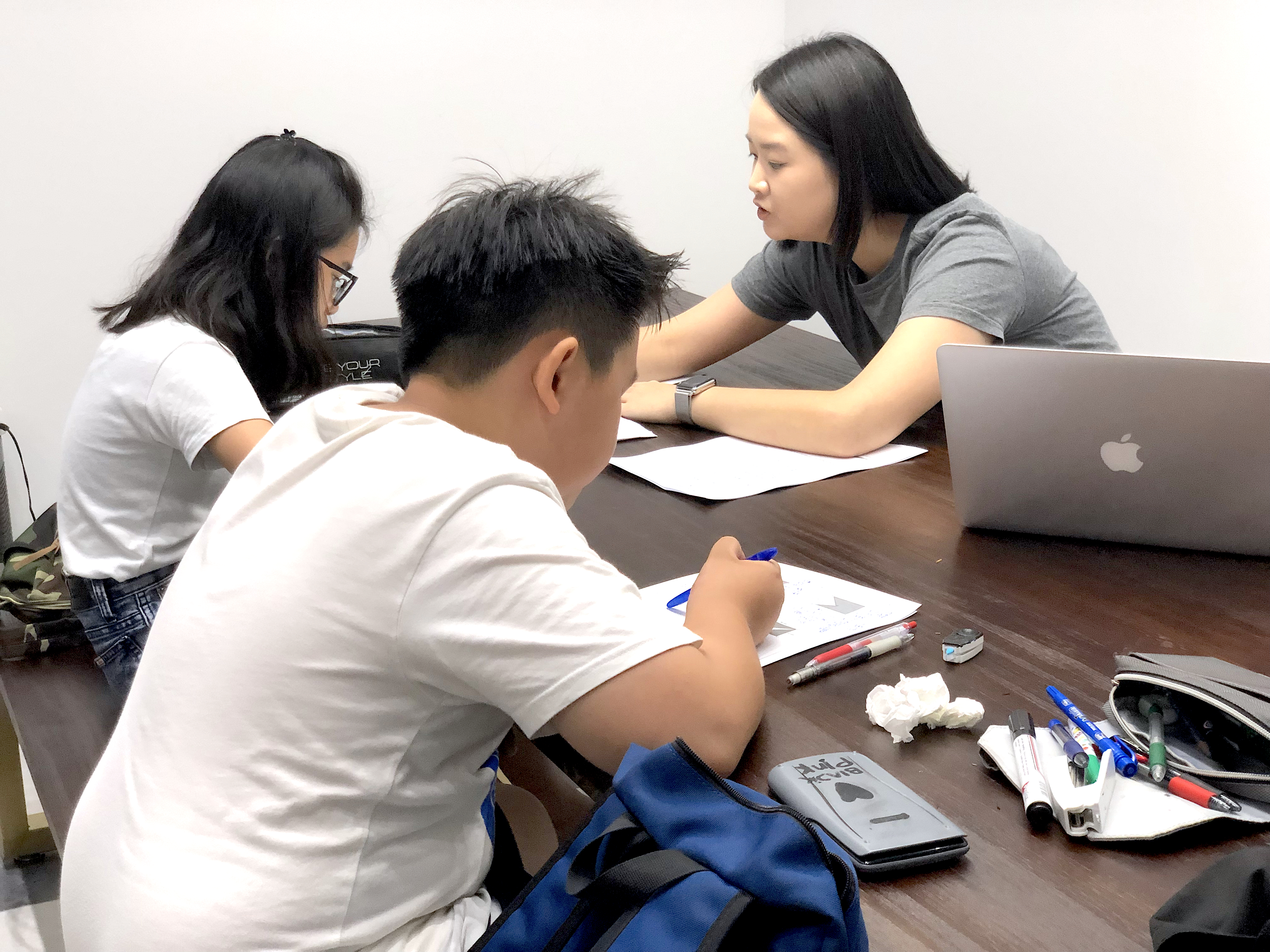
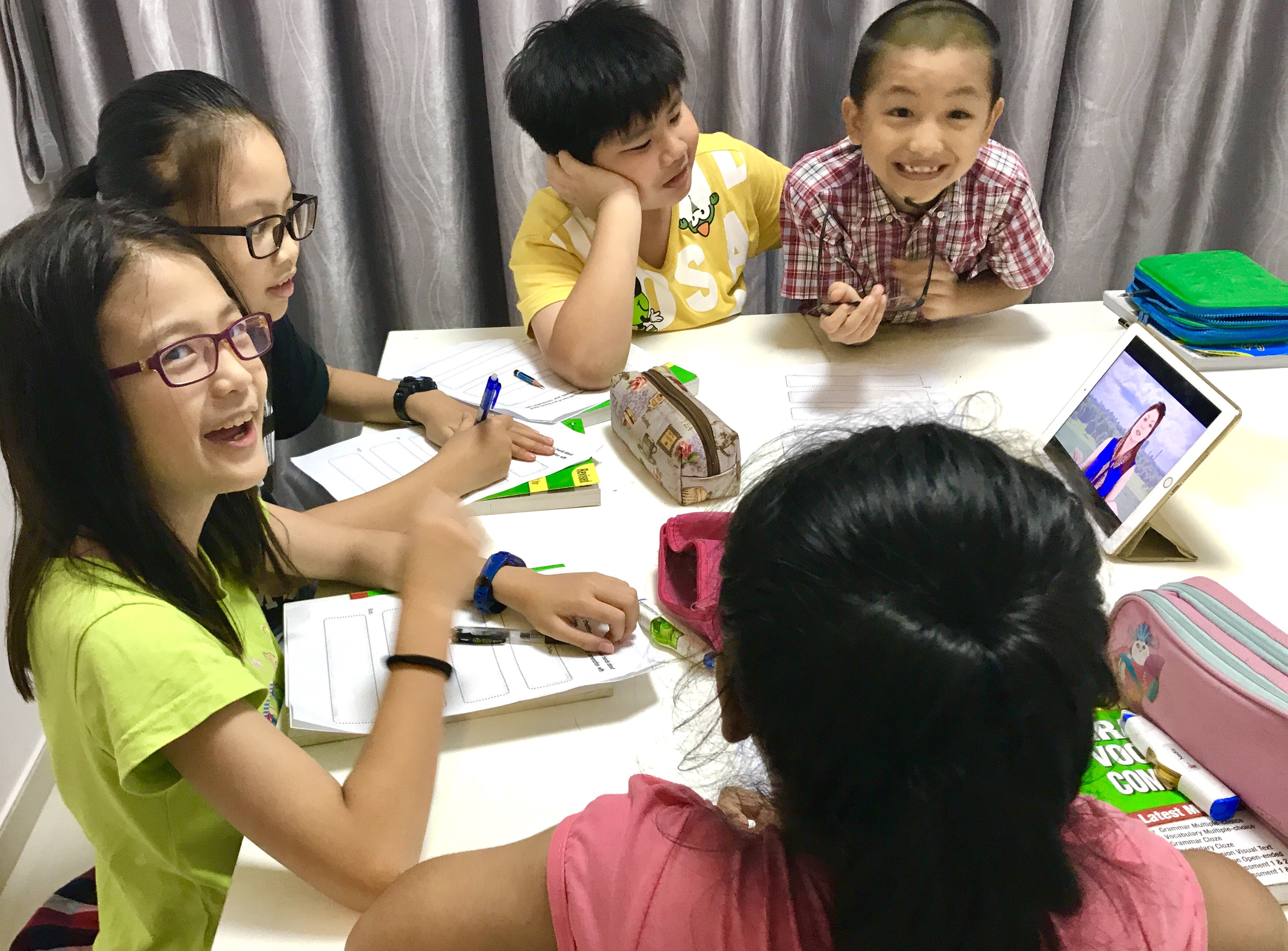
At eduKate Yishun, we work hard to have an affirmative class culture that empowers our students to do more, learn more, and develop a love for their own education by creating a class culture with great friends and tutors. Our positive classes also creates a constructive environment that teaches them the relevance of what they study to their everyday lives. With relevance creates the true reason for a proper education. That is our trademark that differentiates our teaching to others, but don’t just take our words for it, let these photos show you how much our passion and love for our Yishun student’s English lessons.




Continue through Primary 1 English: Primary 1–3 article index · Primary English directory · English by area & school · Diagnostics · Examinations · Library
Leave a Reply