
Secondary English Tuition Centre Punggol keeps its original 2019 title, but this page is rebuilt for families searching for Secondary English tuition in Punggol, Sec 1 Sec 2 Sec 3 Sec 4 English tuition centre, comprehension, writing, grammar, vocabulary, oral communication, listening, summary and examination preparation. This page owns one specific learning job: the secondary English progression dashboard—how a tuition centre should track a student from transition through upper-secondary performance without teaching every year as the same worksheet course.
A strong Secondary English tuition centre in Punggol should know what changes from Secondary 1 to Secondary 4. Sec 1 needs transition and task recognition. Sec 2 needs transfer, interpretation and self-revision. Sec 3 needs stronger argument, summary, timing and examination awareness. Sec 4 needs selective repair, mock calibration and stable execution under pressure. Current Singapore search results for secondary English tuition repeatedly emphasise writing, comprehension, oral, vocabulary, summary and exam skills; the more useful question is whether those components are organised into a progression rather than repeated annually.
This article therefore treats secondary English as a four-year developmental system. A centre should be able to explain what the student is learning now, which capabilities should already be automatic, which weaknesses remain active, and how the amount of tutor prompting is changing. The dashboard is not a marks spreadsheet. It is a map of mechanisms: reading architecture, evidence, inference, paragraph development, vocabulary precision, grammar transfer, oral reasoning, listening, timing and independence.
The four-year progression dashboard
| Level | Main developmental job | Leading indicator |
| Secondary 1 | Transition into secondary English | Can start unfamiliar tasks with a known routine |
| Secondary 2 | Transfer and self-revision | Can detect and repair recurring weaknesses |
| Secondary 3 | Upper-secondary integration | Can argue, summarise and work under light timing |
| Secondary 4 | Examination stability | Can reproduce strong decisions under realistic conditions |
Why a progression dashboard matters
Without a progression model, tuition can become a sequence of worksheets that change in difficulty but not in teaching logic. A Secondary 1 learner may still be receiving the same type of correction in Secondary 4, which suggests the responsibility never transferred from tutor to student.
A dashboard keeps the long-term job visible. It asks what should be introduced, what should be consolidated, what should be transferred and what should eventually operate automatically under examination conditions.
Secondary 1: establish the operating system
The first secondary year should teach students how to enter a passage, interpret a question, build a paragraph, use vocabulary precisely and revise a sentence. The tutor models the hidden decisions that primary-school familiarity may have masked.
The key indicator is reduced helplessness. The student begins asking what the task requires rather than waiting for the tutor to announce the first move.
Secondary 2: stabilise transfer
Secondary 2 should deliberately change topic, genre and surface wording while preserving the underlying skill. Evidence habits from comprehension should transfer into writing; reference tracking should transfer into editing; oral reasoning should transfer into paragraph development.
The student should begin predicting feedback and correcting some recurring weaknesses before the tutor marks them.
Secondary 3: integrate upper-secondary demands
Secondary 3 brings denser texts, broader writing tasks, summary, stronger argument and increasing time pressure. The student should already possess the lower-secondary routines and now learn to combine them efficiently.
The tutor should time components after the method is reliable, using the year to bridge into examination execution rather than replacing language growth with endless simulation.
Secondary 4: narrow from evidence
In the final year, scripts and prelims should produce a short mark-loss map. Strong components receive maintenance; repeated high-value weaknesses receive repair, immediate retry and fresh transfer.
The programme should become narrower as the examination approaches. A student should carry fewer, stronger routines rather than accumulate a larger collection of last-minute techniques.
Reading architecture across four years
Students should learn to see texts as organised meaning. Paragraphs introduce, explain, exemplify, contrast, qualify and conclude. Signal words reveal relationships; reference phrases connect ideas; structure shapes reader expectations.
As students mature, the tutor should move from explicitly labelling these features to expecting the student to recognise them independently on unseen texts.
Evidence and inference
Secondary English increasingly depends on the ability to select evidence and explain what it proves. A student can understand a passage generally yet lose marks because the final answer is too broad, too vague or unsupported.
The progression should move from evidence finding, to evidence interpretation, to precise answer construction under time.
Writing development
Writing should progress from sentence and paragraph control toward whole-response architecture. Situational Writing requires reader-centred communication; Continuous Writing requires a coherent central movement; argumentative writing requires claim, reasoning, evidence and qualification.
The dashboard should track whether paragraph relevance and development improve across fresh prompts, not merely whether one corrected composition looks polished.
Vocabulary depth
Vocabulary growth should move from definition recognition toward collocation, connotation, register and flexible retrieval. Students should learn words in phrases and compare near-synonyms rather than collect isolated “powerful words”.
A useful dashboard measure is whether older vocabulary appears naturally on unrelated topics after a delay.
Grammar transfer
Grammar should not remain a separate exercise category. Focused drills can clarify a relationship, but the student must later recognise and control the same feature inside authentic writing.
The active grammar list should become shorter as recurring error families stabilise. Old targets should be retired to monitoring rather than repeated forever.
Oral communication
Oral development should move from complete responses to supported and adaptive reasoning. Students learn to state a point, explain it, use an example, consider consequences and respond to follow-up questions.
The tutor should measure whether speech becomes less repetitive and whether examples are selected for relevance rather than memorised by topic.
Listening
Listening should train hierarchy, changes of mind, speaker position and paraphrase rather than keyword matching. These habits reinforce reading because both require the student to track relationships across time or text.
A student’s error map can distinguish missed detail, speaker confusion, keyword trap and final-state error, producing much more useful practice than a generic “listen more carefully” instruction.
Self-revision
By Secondary 2 and Secondary 3, students should increasingly predict and act on feedback. They should check relevance, paragraph purpose, evidence, reference and active grammar families before external marking.
Self-revision is a leading indicator of upper-secondary readiness because it reduces the amount of correction that must be supplied from outside.
Timing
Timing should be introduced as compression of a stable process. The tutor can time planning, one comprehension section, one summary, one paragraph or one review pass before relying on whole-paper simulation.
This reveals where decisions are slow and prevents repeated full papers from hiding the actual bottleneck.
Prompt dependence
The same quality produced with fewer tutor prompts represents real progress. A centre should track how often it supplies the first idea, points to evidence, reminds the student to check scope or cues the next paragraph.
Prompt fading is one of the clearest ways to see whether the learning system is moving into the student.
How parents should read the dashboard
Parents do not need a complicated analytics report. They need a clear explanation of what is strong, what is active, what evidence shows improvement and what the next target is.
This keeps the conversation focused on learning mechanisms rather than worksheet volume or vague labels such as “careless” and “weak in English”.
What should be measured across a term
A useful term review can compare four things: repeated error frequency, success on fresh tasks, the amount of tutor prompting and the stability of performance under light timing. These indicators explain why a mark moved or why it did not move yet.
A student may show meaningful progress before a dramatic score jump if paragraph planning becomes independent, over-inference decreases and self-editing begins catching old grammar patterns. Those changes are worth protecting because they are the mechanisms from which later marks can become more stable.
What should not be measured as progress
Worksheet count, notebook thickness and the number of full papers completed are weak measures when they are disconnected from transfer. A student can finish enormous amounts of material while repeating the same reasoning errors.
The centre should therefore resist activity metrics that look impressive but do not answer the core question: can the student now perform the useful decision on unfamiliar work with less help?
Secondary progression repair clinics
Sec 1 reads fluently but cannot map the text
What it looks like: Details are remembered but the passage feels like one long block. Why it happens: Paragraph hierarchy is weak. Repair: Label paragraph jobs and connect them with signal words. Transfer check: Map a fresh article before answering questions. The correction should then be revisited on unfamiliar material after the original example has been removed. The dashboard only counts a target as improving when the student can recognise and initiate the useful routine with progressively less prompting.
Sec 1 writes correct sentences but weak paragraphs
What it looks like: Sentence accuracy is adequate yet the writing drifts. Why it happens: Paragraph purpose is unclear. Repair: Give each paragraph one job before drafting. Transfer check: Plan another response using job labels. The correction should then be revisited on unfamiliar material after the original example has been removed. The dashboard only counts a target as improving when the student can recognise and initiate the useful routine with progressively less prompting.
Sec 1 depends on models
What it looks like: New prompts trigger model hunting. Why it happens: Surface structures have not been abstracted. Repair: Analyse what the model is doing rather than copying wording. Transfer check: Plan a fresh prompt before seeing any model. The correction should then be revisited on unfamiliar material after the original example has been removed. The dashboard only counts a target as improving when the student can recognise and initiate the useful routine with progressively less prompting.
Sec 2 knows rules but cannot self-edit
What it looks like: Corrections make sense after marking but are not predicted. Why it happens: Quality criteria remain external. Repair: Use a short personalised revision order. Transfer check: Revise a fresh paragraph before tutor feedback. The correction should then be revisited on unfamiliar material after the original example has been removed. The dashboard only counts a target as improving when the student can recognise and initiate the useful routine with progressively less prompting.
Sec 2 comprehension answers are too long
What it looks like: The student includes every nearby detail. Why it happens: Scope control is weak. Repair: Count the ideas requested and remove unsupported extras. Transfer check: Use a new question with the same command demand. The correction should then be revisited on unfamiliar material after the original example has been removed. The dashboard only counts a target as improving when the student can recognise and initiate the useful routine with progressively less prompting.
Sec 2 vocabulary stays passive
What it looks like: Definitions are known but words rarely appear in writing. Why it happens: Retrieval and collocation are weak. Repair: Practise phrase families and delayed use. Transfer check: Use the word later on an unrelated topic. The correction should then be revisited on unfamiliar material after the original example has been removed. The dashboard only counts a target as improving when the student can recognise and initiate the useful routine with progressively less prompting.
Sec 3 arguments list examples
What it looks like: The essay sounds informed but reasoning is shallow. Why it happens: Evidence is mistaken for argument. Repair: State claim and mechanism before evidence. Transfer check: Replace the example while preserving reasoning. The correction should then be revisited on unfamiliar material after the original example has been removed. The dashboard only counts a target as improving when the student can recognise and initiate the useful routine with progressively less prompting.
Sec 3 claims are absolute
What it looks like: Always, never and everyone appear frequently. Why it happens: Qualification is underdeveloped. Repair: Add condition, scope or alternative perspective. Transfer check: Write a new qualified claim. The correction should then be revisited on unfamiliar material after the original example has been removed. The dashboard only counts a target as improving when the student can recognise and initiate the useful routine with progressively less prompting.
Sec 3 summary includes examples
What it looks like: The response is bloated. Why it happens: Selection happens too late. Repair: Mark main points before paraphrasing. Transfer check: Select from a fresh passage under time. The correction should then be revisited on unfamiliar material after the original example has been removed. The dashboard only counts a target as improving when the student can recognise and initiate the useful routine with progressively less prompting.
Sec 3 timed work collapses
What it looks like: Quality drops sharply with a clock. Why it happens: Routines are not automatic. Repair: Time smaller sub-processes first. Transfer check: Recombine after stable accuracy. The correction should then be revisited on unfamiliar material after the original example has been removed. The dashboard only counts a target as improving when the student can recognise and initiate the useful routine with progressively less prompting.
Sec 4 prelim score causes panic
What it looks like: Workload expands immediately. Why it happens: Anxiety drives revision allocation. Repair: Classify lost marks by mechanism before choosing tasks. Transfer check: Match every new task to a named active weakness. The correction should then be revisited on unfamiliar material after the original example has been removed. The dashboard only counts a target as improving when the student can recognise and initiate the useful routine with progressively less prompting.
Sec 4 full papers plateau
What it looks like: Volume is high but recurring errors stay unchanged. Why it happens: Simulation has replaced repair. Repair: Pause full papers and isolate repeated mechanisms. Transfer check: Compare the next simulation by error category. The correction should then be revisited on unfamiliar material after the original example has been removed. The dashboard only counts a target as improving when the student can recognise and initiate the useful routine with progressively less prompting.
Sec 4 review time disappears
What it looks like: The student writes until the end. Why it happens: No stopping rules exist. Repair: Set personal checkpoints for drafting and review. Transfer check: Run a fresh timed section and protect review minutes. The correction should then be revisited on unfamiliar material after the original example has been removed. The dashboard only counts a target as improving when the student can recognise and initiate the useful routine with progressively less prompting.
Comprehension over-inference across levels
What it looks like: Answers add plausible but unsupported claims. Why it happens: Inference is confused with imagination. Repair: Require evidence for every part of the answer. Transfer check: Use a fresh passage and justify the boundary. The correction should then be revisited on unfamiliar material after the original example has been removed. The dashboard only counts a target as improving when the student can recognise and initiate the useful routine with progressively less prompting.
Language effect stays generic
What it looks like: The student writes vivid or imagery without analysis. Why it happens: Technique labels replace meaning. Repair: Compare the writer’s choice with a neutral alternative. Transfer check: Analyse another choice in a different text. The correction should then be revisited on unfamiliar material after the original example has been removed. The dashboard only counts a target as improving when the student can recognise and initiate the useful routine with progressively less prompting.
Grammar stays isolated
What it looks like: Worksheet accuracy is high but writing remains error-prone. Why it happens: Transfer under load is weak. Repair: Use authentic student paragraphs as grammar material. Transfer check: Hide the same error family inside fresh writing. The correction should then be revisited on unfamiliar material after the original example has been removed. The dashboard only counts a target as improving when the student can recognise and initiate the useful routine with progressively less prompting.
Vocabulary is forced
What it looks like: Rare words appear in unnatural collocations. Why it happens: Prestige is valued over precision. Repair: Compare with a plain alternative and check register. Transfer check: Use the advanced word later only where it fits naturally. The correction should then be revisited on unfamiliar material after the original example has been removed. The dashboard only counts a target as improving when the student can recognise and initiate the useful routine with progressively less prompting.
Oral answer is fluent but circular
What it looks like: The student speaks at length without development. Why it happens: Fluency is mistaken for reasoning. Repair: Use reason, example, consequence and perspective moves. Transfer check: Record another response with distinct development steps. The correction should then be revisited on unfamiliar material after the original example has been removed. The dashboard only counts a target as improving when the student can recognise and initiate the useful routine with progressively less prompting.
Listening follows keywords
What it looks like: Wrong options repeat exact audio wording. Why it happens: Lexical matching replaces meaning. Repair: Track speaker intention and final position. Transfer check: Use audio where the correct answer is paraphrased. The correction should then be revisited on unfamiliar material after the original example has been removed. The dashboard only counts a target as improving when the student can recognise and initiate the useful routine with progressively less prompting.
Student performs well only at tuition
What it looks like: School results remain unstable. Why it happens: Tutor prompts and context cues are carrying performance. Repair: Use school-like silence and timing for fresh transfer. Transfer check: Compare with later school scripts. The correction should then be revisited on unfamiliar material after the original example has been removed. The dashboard only counts a target as improving when the student can recognise and initiate the useful routine with progressively less prompting.
Parent sees many worksheets as progress
What it looks like: Activity is visible but learning mechanism is not. Why it happens: Quantity is easier to measure than transfer. Repair: Report repeated error decline and prompt reduction. Transfer check: Show one before/after fresh-task example. The correction should then be revisited on unfamiliar material after the original example has been removed. The dashboard only counts a target as improving when the student can recognise and initiate the useful routine with progressively less prompting.
Tutor keeps every old weakness active
What it looks like: The student revises too many targets. Why it happens: There are no exit criteria. Repair: Define stability as repeated fresh success with low prompts. Transfer check: Retire stable targets to monitoring. The correction should then be revisited on unfamiliar material after the original example has been removed. The dashboard only counts a target as improving when the student can recognise and initiate the useful routine with progressively less prompting.
Student cannot name current target
What it looks like: Lessons feel disconnected. Why it happens: Programme memory is weak. Repair: Keep one active and one maintenance target visible. Transfer check: Ask the student to state both at lesson start. The correction should then be revisited on unfamiliar material after the original example has been removed. The dashboard only counts a target as improving when the student can recognise and initiate the useful routine with progressively less prompting.
Student changes strategy too often
What it looks like: New methods are adopted after every weak score. Why it happens: Novelty prevents automaticity. Repair: Keep a small number of routines long enough to gather evidence. Transfer check: Change only when fresh-task data justifies it. The correction should then be revisited on unfamiliar material after the original example has been removed. The dashboard only counts a target as improving when the student can recognise and initiate the useful routine with progressively less prompting.
Strong marks hide prompt dependence
What it looks like: Scores look good but the tutor still cues every step. Why it happens: Outcome masks process weakness. Repair: Track prompts separately from marks. Transfer check: Run an unaided task and compare quality. The correction should then be revisited on unfamiliar material after the original example has been removed. The dashboard only counts a target as improving when the student can recognise and initiate the useful routine with progressively less prompting.
Weak marks hide process improvement
What it looks like: Score has not risen yet but answer scope and planning are better. Why it happens: Leading indicators are ignored. Repair: Track mechanisms alongside marks. Transfer check: Check whether new routines persist on later tasks. The correction should then be revisited on unfamiliar material after the original example has been removed. The dashboard only counts a target as improving when the student can recognise and initiate the useful routine with progressively less prompting.
Student avoids difficult texts
What it looks like: Practice stays comfortable. Why it happens: Confidence is tied to familiarity. Repair: Use short stretch texts with a known recovery routine. Transfer check: Transfer the same strategy to another difficult text. The correction should then be revisited on unfamiliar material after the original example has been removed. The dashboard only counts a target as improving when the student can recognise and initiate the useful routine with progressively less prompting.
Student cannot recover after a hard item
What it looks like: One problem affects later work. Why it happens: Recovery is not trained. Repair: Use a reset and planned return routine. Transfer check: Build one difficult item into a fresh timed set. The correction should then be revisited on unfamiliar material after the original example has been removed. The dashboard only counts a target as improving when the student can recognise and initiate the useful routine with progressively less prompting.
Reading and writing remain separate
What it looks like: Strong comprehension does not improve essays. Why it happens: Transfer is not explicit. Repair: Borrow evidence and paragraph habits from reading into writing. Transfer check: Apply the same move on a new writing task. The correction should then be revisited on unfamiliar material after the original example has been removed. The dashboard only counts a target as improving when the student can recognise and initiate the useful routine with progressively less prompting.
Final-year revision becomes broad again
What it looks like: The plan grows near the exam. Why it happens: Anxiety creates expansion. Repair: Narrow to active mechanisms and familiar routines. Transfer check: Use one final fresh task to confirm stability. The correction should then be revisited on unfamiliar material after the original example has been removed. The dashboard only counts a target as improving when the student can recognise and initiate the useful routine with progressively less prompting.
Secondary progression practice bank
Practice 1
Map paragraph jobs in an unseen article. Then change the topic, passage, audience or task surface and repeat the same underlying decision without reopening the original answer. The second application shows whether the learner owns a portable English method rather than a remembered worksheet solution.
Practice 2
Write the smallest defensible inference from textual clues. Then change the topic, passage, audience or task surface and repeat the same underlying decision without reopening the original answer. The second application shows whether the learner owns a portable English method rather than a remembered worksheet solution.
Practice 3
Reduce an overlong answer to exact scope. Then change the topic, passage, audience or task surface and repeat the same underlying decision without reopening the original answer. The second application shows whether the learner owns a portable English method rather than a remembered worksheet solution.
Practice 4
Explain one writer choice through neutral-word comparison. Then change the topic, passage, audience or task surface and repeat the same underlying decision without reopening the original answer. The second application shows whether the learner owns a portable English method rather than a remembered worksheet solution.
Practice 5
Plan one paragraph with a clear job before drafting. Then change the topic, passage, audience or task surface and repeat the same underlying decision without reopening the original answer. The second application shows whether the learner owns a portable English method rather than a remembered worksheet solution.
Practice 6
Qualify one absolute claim. Then change the topic, passage, audience or task surface and repeat the same underlying decision without reopening the original answer. The second application shows whether the learner owns a portable English method rather than a remembered worksheet solution.
Practice 7
Interpret one example rather than merely name it. Then change the topic, passage, audience or task surface and repeat the same underlying decision without reopening the original answer. The second application shows whether the learner owns a portable English method rather than a remembered worksheet solution.
Practice 8
Retrieve five old vocabulary phrases on a new topic. Then change the topic, passage, audience or task surface and repeat the same underlying decision without reopening the original answer. The second application shows whether the learner owns a portable English method rather than a remembered worksheet solution.
Practice 9
Self-edit one paragraph for a recurring grammar family. Then change the topic, passage, audience or task surface and repeat the same underlying decision without reopening the original answer. The second application shows whether the learner owns a portable English method rather than a remembered worksheet solution.
Practice 10
Turn one oral response into written paragraph structure. Then change the topic, passage, audience or task surface and repeat the same underlying decision without reopening the original answer. The second application shows whether the learner owns a portable English method rather than a remembered worksheet solution.
Practice 11
Listen for initial, changed and final speaker positions. Then change the topic, passage, audience or task surface and repeat the same underlying decision without reopening the original answer. The second application shows whether the learner owns a portable English method rather than a remembered worksheet solution.
Practice 12
Predict one tutor comment before marking. Then change the topic, passage, audience or task surface and repeat the same underlying decision without reopening the original answer. The second application shows whether the learner owns a portable English method rather than a remembered worksheet solution.
Practice 13
Recall one correction after a one-week delay. Then change the topic, passage, audience or task surface and repeat the same underlying decision without reopening the original answer. The second application shows whether the learner owns a portable English method rather than a remembered worksheet solution.
Practice 14
Time one planning or summary sub-process. Then change the topic, passage, audience or task surface and repeat the same underlying decision without reopening the original answer. The second application shows whether the learner owns a portable English method rather than a remembered worksheet solution.
Practice 15
Complete one school-like task without tutor prompts. Then change the topic, passage, audience or task surface and repeat the same underlying decision without reopening the original answer. The second application shows whether the learner owns a portable English method rather than a remembered worksheet solution.
Practice 16
Name the current active English target. Then change the topic, passage, audience or task surface and repeat the same underlying decision without reopening the original answer. The second application shows whether the learner owns a portable English method rather than a remembered worksheet solution.
Practice 17
Retire one target that has become stable. Then change the topic, passage, audience or task surface and repeat the same underlying decision without reopening the original answer. The second application shows whether the learner owns a portable English method rather than a remembered worksheet solution.
Practice 18
Compare an old and new piece by mechanism rather than score. Then change the topic, passage, audience or task surface and repeat the same underlying decision without reopening the original answer. The second application shows whether the learner owns a portable English method rather than a remembered worksheet solution.
Practice 19
Run one reset routine after a difficult item. Then change the topic, passage, audience or task surface and repeat the same underlying decision without reopening the original answer. The second application shows whether the learner owns a portable English method rather than a remembered worksheet solution.
Practice 20
Explain the next learning target to a parent in plain language. Then change the topic, passage, audience or task surface and repeat the same underlying decision without reopening the original answer. The second application shows whether the learner owns a portable English method rather than a remembered worksheet solution.
Frequently asked questions
Should a Sec 1 and Sec 4 programme look the same?
No. The principles can remain coherent, but the developmental job shifts from transition and scaffolding toward integration, timing and independent examination execution.
How should parents judge progress?
Use marks together with leading indicators such as fewer repeated errors, better fresh-task transfer, stronger self-revision and lower prompt dependence.
When should full-paper practice begin?
After the relevant component routines are reasonably stable. Timing a weak process merely produces faster mistakes.
Should vocabulary lists remain part of every year?
Vocabulary growth remains important, but list length matters less than collocation, nuance, retrieval and natural use across contexts.
How should grammar be tracked?
Keep a short active error profile based on recurring authentic mistakes and retire targets once they stabilise on fresh writing.
What should a centre do after prelims?
Classify mark leaks, prioritise high-leverage mechanisms, repair them and re-test on fresh material before increasing full-paper volume.
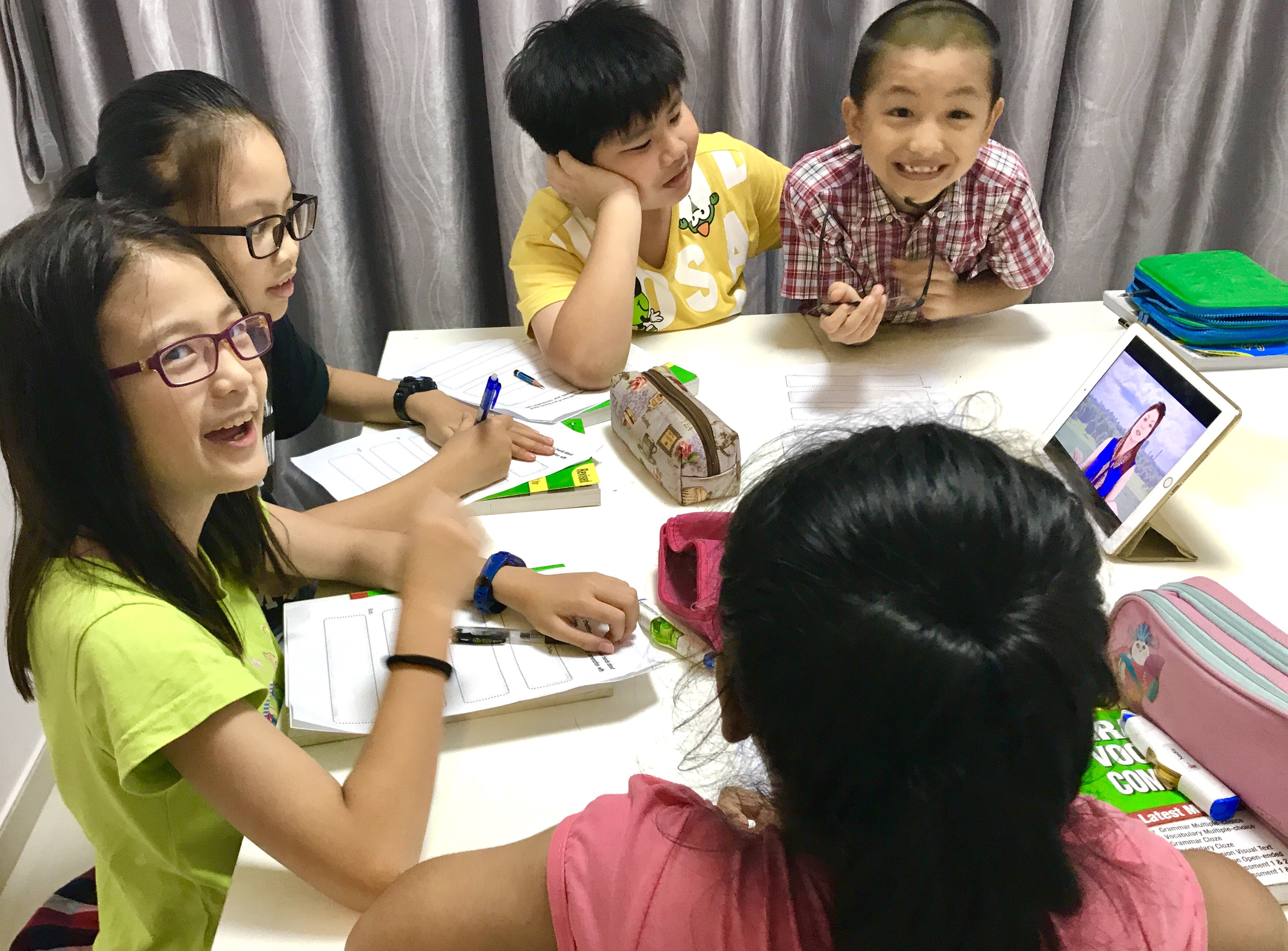
What is the value of small groups?
They can make reasoning visible through comparison and discussion while still preserving individual cold attempts and fresh solo transfer.
What is the final four-year outcome?
A student who can enter unfamiliar English tasks, choose an appropriate process, monitor performance and recover with progressively less external support.
Legacy-title note and destination
This article preserves its original 2019 title. Its current educational purpose is a Sec 1-to-Sec 4 progression dashboard; the location wording should not be read as a claim of a current physical tuition-centre venue.
For families arriving through Secondary English Tuition Centre Punggol, the useful benchmark is whether the programme changes with the learner and whether responsibility is steadily moving from tutor to student across the secondary years.
Historical image archive

















Leave a Reply