

Current-status note: the “small group tuition” wording in this legacy title describes the page’s historical/search context and teaching model; it does not establish current class availability, timetable, fee or enrolment. Use Primary 6 English Tuition Yishun for the current year-level route and PSLE English 2026 for examination preparation.
Families searching for Primary 6 English Tutor Yishun Small Group Tuition, Primary 6 English tuition Yishun, PSLE English tutor, small-group PSLE English tuition, composition writing, situational writing, comprehension, grammar, vocabulary, oral communication and listening support are in the final primary-school year, where the teaching problem changes. There is no longer enough time to treat every weakness equally, and generic worksheet volume can hide the exact decisions that still cost marks.
A strong Primary 6 English tutor in Yishun working with a small group should therefore make each learner highly visible. SEAB’s 2026 PSLE English Language framework assesses Writing, Language Use and Comprehension, Listening Comprehension and Oral Communication. Paper 1 gives pupils one hour and ten minutes across Situational Writing and Continuous Writing, which makes planning, task fulfilment and time management real performance concerns. The small-group advantage is not simply fewer students; it is the ability to diagnose individual error patterns while using peer reasoning to sharpen judgment.
This page keeps its exact 2019 title, URL and full embedded-image sequence while replacing the old body with a current small-group tutor playbook. Its owner job is distinct from the broader P6 English and PSLE-centre pages: how a tutor can use a group of around three students to run personal error maps, active explanation, timed transfer, prelim analysis, revision taper and final-week retrieval without allowing any learner to hide behind the others.
50-Second Router: What Does This P6 Student Need Today?

If writing is weak, separate task reading, planning, paragraph control, language and timing. If comprehension is weak, separate scope, evidence, inference, vocabulary and expression. If grammar is strong in drills and weak in Paper 2, test transfer and retrieval. If oral is fluent but repetitive, train development and follow-up. If the student performs strongly untimed but drops under pressure, train pacing, stop rules and recovery.
The router keeps a small-group lesson focused before shared material begins.
Small Groups Must Increase Visibility, Not Reduce Attention

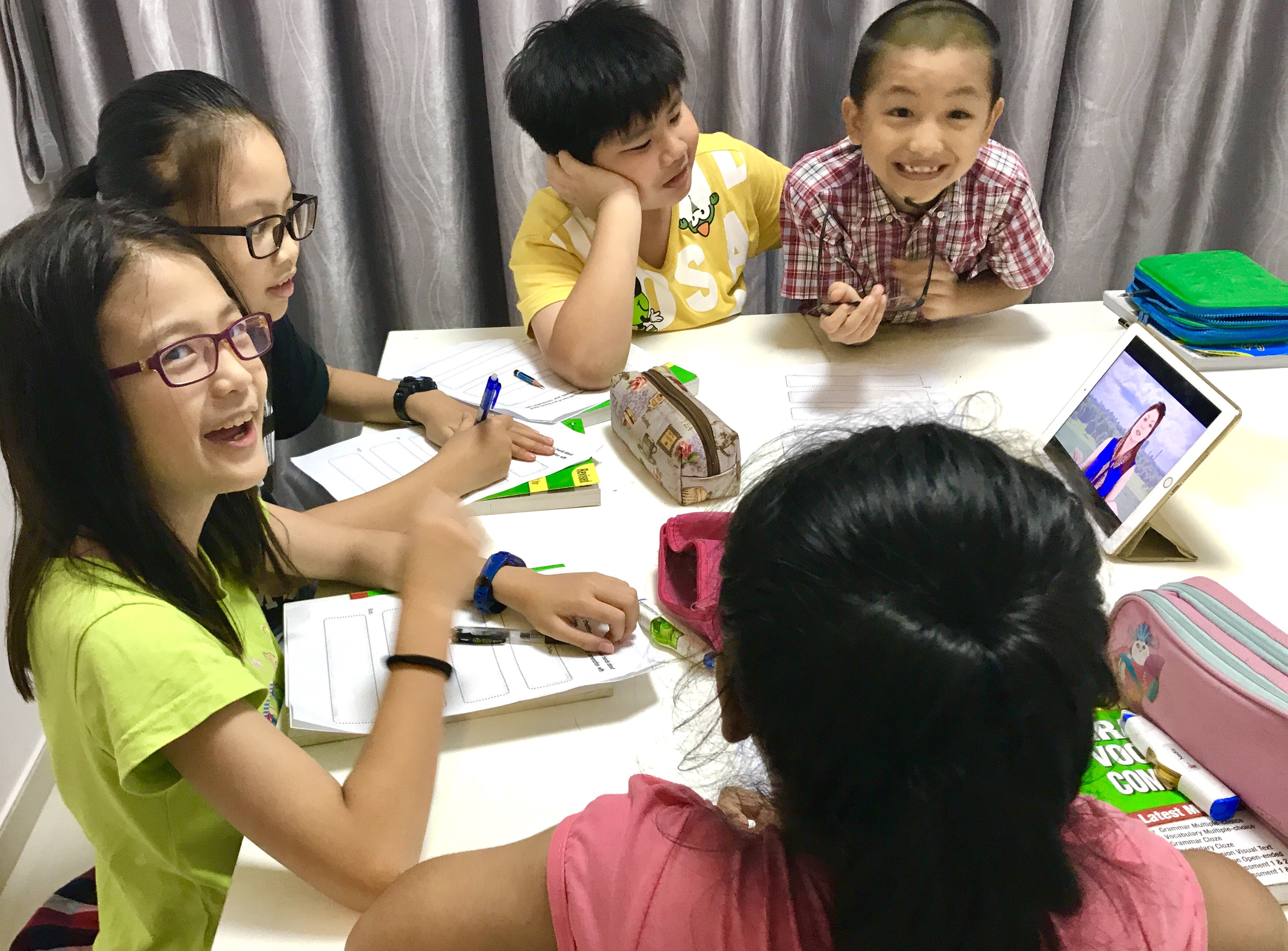
A three-student group works when every student must read, explain, write and speak. One child should not answer for the group while two listen.
The tutor can rotate roles so individual thinking is always visible: answerer, evidence-checker, expression-editor, planner or oral responder.
Individual Error Maps Remain Separate
Students may share the same passage and still have different targets. One pupil may over-copy evidence, another may under-explain inference and another may lose tense under speed.

The tutor should preserve a personal error map for each learner even when teaching a shared method.
Peer Reasoning Should Be Narrow and Useful
Ask students to compare one feature at a time: which comprehension answer is more precise, which writing plan is more coherent, which example better supports a point.

Do not ask children to “mark each other’s entire paper”. Narrow comparison builds judgment without creating confusion.
The P6 Year Should Start With an Error Audit
Use recent school work, P5 end-of-year performance and early P6 tasks. Identify the few mechanisms that produce the largest losses.

The audit should separate knowledge, transfer and performance. A student who does not know the method needs teaching; a student who knows it but forgets it under pressure needs a different intervention.
Build a P6 Mark-Loss Map
- Task reading — question, audience or qualifier misunderstood.
- Evidence — support missing, excessive or irrelevant.
- Reasoning — inference or explanation did not follow.
- Structure — writing ideas poorly organised.
- Language — grammar, vocabulary, spelling or punctuation reduced clarity.
- Transfer — taught method not recognised in a new task.
- Performance — timing, stamina or anxiety disrupted execution.
The map gives the tutor a language for deciding what the next lesson should actually do.
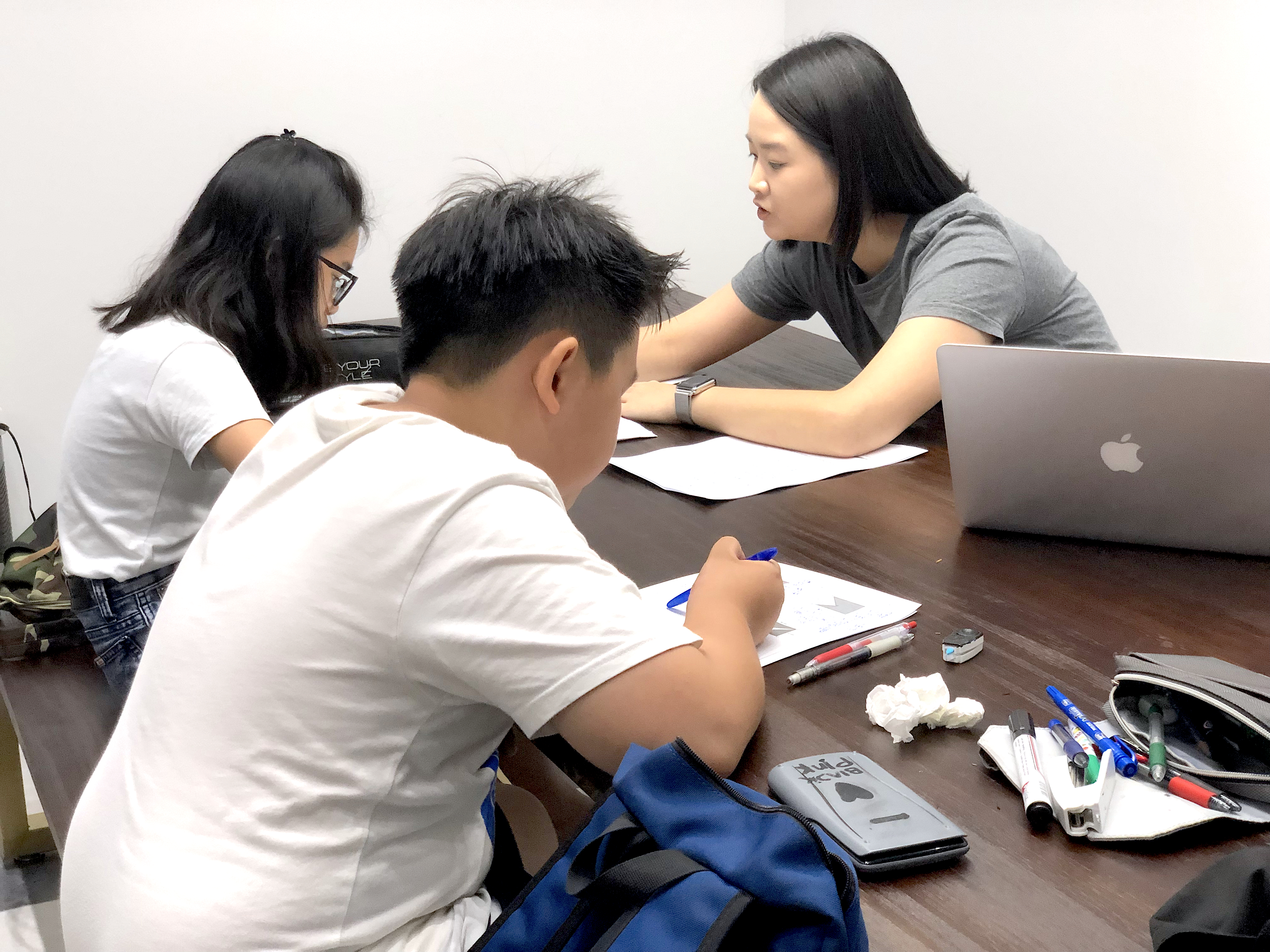
Paper 1 Coaching Starts With Task Reading
For Situational Writing, role, audience, purpose, context and required content must be identified before drafting.
For Continuous Writing, the student identifies the topic, chooses a viable story or response and protects time for planning, development and checking.

Paper 1 Time Must Be Managed as a Whole
SEAB states that pupils have one hour and ten minutes for the full Writing paper. Students therefore need a personal allocation that is tested in practice rather than invented on examination day.
The tutor should observe where time is actually lost: overlong planning, slow introductions, excessive rewriting or weak endings.

Situational Writing Needs a Task Matrix
- Role — who am I?
- Reader — who needs to understand or act?
- Purpose — what outcome is required?
- Required information — what must appear?
- Tone — what relationship should the language create?
The student checks content fulfilment before polishing vocabulary.
Continuous Writing Needs a Causal Plan

A useful narrative plan is situation, trigger, response, complication, turning point, consequence and resolution.
The tutor should protect the middle of the story because many rushed compositions have polished openings and weak causal development.
Task Fit Comes Before Story Quality

Ask the child to explain how the planned story answers the topic. If the connection is weak, repair the plan before drafting.
A strong story that misses the prompt is still a weak examination response.
Paragraph Jobs Make Writing Easier to Control

One paragraph may establish the situation, another build the complication, another slow the turning point and another resolve the outcome.
Students should know the job of each paragraph before adding decorative detail.
Description Must Earn Its Place
Details should reveal atmosphere, emotion, movement or significance.

In the PSLE year, students need selectivity. Long descriptive passages that delay the story can damage pacing.
Dialogue Should Change the Situation
A useful line reveals information, creates conflict or forces a decision.

If the conversation changes nothing, it may be consuming precious time without strengthening the story.
Sentence Control Must Survive Writing Pressure
A P6 student may know grammar but lose it while managing plot, vocabulary and time.

The tutor should use authentic sentences from compositions and build a personal editing order around repeated errors.
Paper 2 Coaching Begins With Scope
Students should identify exactly what the comprehension question requires before choosing evidence.
Why, how, what does this suggest, what is the effect and reference questions all demand different answer relationships.

Evidence Should Be Minimum and Sufficient
Over-copying wastes time and can make answers vague. Students should select only the clue or clues needed to prove the answer.
The tutor can compare two plausible evidence choices and ask which one does more explanatory work.

Inference Must Stay Within the Text
The student identifies the clue, states the bridge and writes the conclusion.
When the conclusion becomes broader than the clues support, the tutor should teach calibrated language rather than accept imaginative guessing.

Vocabulary in Context Needs a Wider Reading Window
The answer may depend on tone, contrast, behaviour or paragraph topic rather than the nearest word.
Students should infer a working meaning first, then check whether it fits the whole passage.
Cloze Requires Grammar, Vocabulary and Coherence

A word may fit one sentence and fail the paragraph. Students should identify the grammatical job, common collocation and overall meaning.
The tutor can ask students to predict the kind of answer before seeing options where appropriate.
Synthesis and Transformation Need Meaning Preservation

Identify the relationship first, then apply the sentence pattern.
After rewriting, check that every original fact remains and the new sentence is grammatically complete.
Editing Should Use a Personal Search Order

A student should not reread vaguely. The tutor ranks high-frequency personal risks such as tense, agreement, articles, pronouns or spelling.
The list should shrink as errors become stable.
Paper 3 Listening Requires Selective Attention
Students listen for main ideas, sequence, speaker attitude and relevant detail rather than every word.

The tutor should also train recovery so one missed answer does not consume attention needed for the rest of the audio.
Paper 4 Oral Communication Needs Flexible Thought
Reading aloud requires accuracy, phrasing, pace and expression.

Stimulus-based conversation requires the student to express opinions, ideas and experiences clearly and respond naturally to follow-up.
Reading Aloud Should Start at a Controlled Pace
Nervous students may accelerate. The tutor can practise phrase grouping and a slightly slower opening pace.

A difficult word is corrected, then the student returns to the whole sentence so connected meaning remains central.
Stimulus-Based Conversation Should Develop
A useful internal structure is point, reason, example, connection.
The tutor should vary follow-up questions so the student learns to adapt rather than memorise one response.
Use Oral Peer Listening
One student responds while another summarises the strongest point and a third suggests a useful follow-up.
The group learns that oral communication includes listening and evaluating, not only speaking.

Use Timed Micro-Tasks Before Full Simulations
Time the exact process that is weak: writing planning, comprehension evidence selection, cloze completion or editing detection.
This reveals where the student loses time without the noise of an entire paper.

Use a Stop Rule
When a question produces no new progress after a reasonable attempt, mark it and move on. Return later if time allows.
The rule protects the rest of the paper and reduces panic.
Stamina Means Preserving the Method

A student may finish a full paper and still lose question-scope and checking routines near the end.
Review errors by position. If late mistakes increase, train the routine that disappears under fatigue.
Prelim Papers Should Reshape the Plan

Prelims provide a large diagnostic sample. Classify the losses instead of reacting only to the total score.
The post-prelim plan should become narrower: persistent high-value errors receive attention; stable components move to maintenance.
Small-Group Prelim Review Can Be Powerful
Students can compare how three different errors arose from the same question. One may misread scope, another choose weak evidence and another express the correct idea vaguely.
The group learns that the same question can fail for different mechanisms.
Build a One-Page Final Error List
Each active risk gets one prevention action. “Over-copying — identify the answer type first.” “Rushed ending — know the resolution before drafting.”

The list is useful only if it stays small enough to retrieve.
Build a One-Page Final Playbook
Include Paper 1 task scans, Paper 2 comprehension checks, cloze and editing reminders, oral-development cues, listening recovery and timing rules.

The playbook should become smaller as the exam approaches, not larger.
Retrieve the Playbook Without Notes
Students should be able to state their main routines from memory before timed practice.
If the playbook exists only on paper, it may not be available under examination pressure.

Use Success Analysis
When a student performs well, ask why. Which plan worked? Which evidence choice was precise? Which checking routine caught an error?
Success becomes reproducible instead of mysterious.

Use Correction Followed by Retry
After feedback, the student rewrites the answer, sentence or paragraph.
A fresh question then tests transfer. The correction is not complete until the learner can use the method elsewhere.

Use Prompt Fading Even in the Final Year
- Modelled — tutor demonstrates.
- Guided — tutor asks structured questions.
- Prompted — one short cue remains.
- Independent — student activates the routine alone.
The aim is to enter the examination without relying on the tutor’s voice.
A 90-Minute P6 Small-Group Lesson in Repair Mode

- 10 minutes — retrieval of personal errors and vocabulary.
- 20 minutes — targeted Paper 2 repair or language-use work.
- 25 minutes — writing plan, paragraph revision or Paper 1 coaching.
- 15 minutes — oral/listening practice.
- 15 minutes — unseen transfer or timed micro-task.
- 5 minutes — individual error-map update.
Shared material should still produce individual decisions.
A 90-Minute P6 Lesson in Performance Mode

- 10 minutes — warm retrieval and pacing target.
- 35 minutes — realistic timed component.
- 20 minutes — mark-loss analysis.
- 15 minutes — focused repair of the dominant mechanism.
- 10 minutes — fresh transfer and recovery rehearsal.
Performance mode should test the whole operating system, not simply produce a score.
Term 1: Diagnose and Repair

Use P5 history and early P6 work to identify the biggest constraints.
Repair foundational gaps before examination volume increases.
Term 2: Integrate and Time
Mix components, reduce tutor prompts and introduce more realistic timing where methods are stable.

Students should increasingly choose methods without being told which one applies.
Term 3: Prelim and Simulation Phase
Use full and partial simulations strategically, review mark-loss mechanisms and sharpen pacing.

Prelims should narrow the plan rather than cause random extra volume.
Final Phase: Taper and Retrieve
Compress revision into the personal error list and playbook. Use representative practice, retrieval and freshness.

The final weeks are for reliable access to proven methods, not collecting many new techniques.
Four Weeks Out
Complete the last major diagnostic cycle and identify the final active risks.
Use selected timed sections and one or two realistic simulations.
Three Weeks Out
Repair the mechanisms revealed by simulation and keep successful components warm.
Avoid reopening every grammar or vocabulary topic equally.

Two Weeks Out
Use shorter mixed practice, oral retrieval and personal checking routines.
Protect sleep and school commitments so cognitive freshness remains high.

Final Week
Review the one-page playbook, retrieve key methods and complete light representative practice.
The goal is familiarity and control, not exhaustion.
For Strong P6 Students

Challenge judgment: compare plausible comprehension answers, cut weak writing, refine evidence and qualify oral views.
High-performing students often need precision more than additional volume.
For Students Whose Marks Are Falling

Compare several scripts and classify the change. Is it one component, timing, vocabulary load, transfer or fatigue?
The tutor should repair the mechanism before assigning more full papers.
For Students Who Are Inconsistent

If the method appears after a reminder, the problem is retrieval or transfer.
Use mixed practice, delayed retrieval and fewer cues rather than repeating the same explanation.
For Students Who Work Slowly
Measure where time goes: planning, drafting, rereading, evidence selection or checking.

Train the slow stage separately before demanding faster full-paper performance.
For Students Who Panic After One Hard Question
Rehearse the stop rule and recovery routine in practice.
The learner should know that one difficult item is allowed to remain unresolved temporarily while the rest of the paper stays protected.
Questions Families Often Ask About Primary 6 English Tutor Yishun Small Group Tuition
Why choose a small group in P6? A very small group can make every learner’s reasoning visible while allowing useful peer comparison. The benefit depends on active participation and individual error maps, not class size alone.

Should P6 tuition mainly be full papers? Full papers are useful for integration, stamina and pacing, but targeted repair remains essential when a specific mechanism is causing repeated losses.
How should prelims be used? As diagnostic evidence. Classify mark losses, narrow the final priorities and avoid random volume increases.
What should happen in the final month? The programme should compress toward proven methods, active risks, representative timing and sufficient rest.
What is the strongest sign of readiness? The student can meet unfamiliar work, choose the right method, manage time, check strategically and recover without waiting for the tutor to direct every step.
P6 Small-Group Tutor Checklist
- Every learner is active and visible.
- Individual error maps are maintained.
- Peer comparison is narrow and purposeful.
- Current SEAB requirements are used accurately.
- Writing includes planning, task fulfilment and revision.
- Comprehension teaches scope, evidence and inference.
- Listening and oral remain regular, not last-minute.
- Timing is introduced based on need.
- Prelims reshape the final plan.
- The final playbook becomes smaller and student-owned.
The Deeper P6 Tutor Goal: Independent Performance Under Pressure
The most valuable outcome of Primary 6 English Tutor Yishun Small Group Tuition is not the largest stack of completed PSLE papers. It is a student who knows personal error patterns, can use a compact set of methods under time and can recover when one question or paragraph goes badly.
SEAB’s 2026 PSLE format page lists English Language 0001, while the official 2026 English syllabus sets the assessment objectives across Writing, Language Use and Comprehension, Listening Comprehension and Oral Communication. Students should always work from the current official format for their examination year.
For families comparing Primary 6 English tuition in Yishun, ask how the tutor keeps every student visible, uses individual error maps, turns prelims into targeted repair and changes revision as the examination approaches. Strong small-group coaching should make the learner more independent precisely when the stakes become highest.

Worked P6 Small-Group Case: Three Students Miss the Same Question for Different Reasons
A small group becomes especially useful when the tutor compares mechanisms rather than marks. Imagine three students missing the same comprehension question. Student A misreads “why” as “what happened”. Student B finds the correct line but copies too much. Student C understands the evidence but writes an incomplete explanation. The final score is identical; the repair is not.
The tutor can let each student explain what went wrong and then compare the three failures. The group learns that English errors are diagnosable. One question can test task reading, evidence selection and expression at the same time. This kind of shared diagnosis makes peer learning useful without flattening individual needs.
Worked P6 Small-Group Case: Three Writing Plans, One Topic
Give all three students the same Continuous Writing topic and five minutes to plan. One plan may have a strong turning point but a weak ending, another may fit the topic only loosely, and the third may contain too many events. The group compares structure rather than prose.
This teaches planning judgment efficiently. Students see that a workable plan is not the most dramatic plan; it is the one that fits the topic, creates a clear causal sequence and can be completed within the available time.
Worked P6 Small-Group Case: Situational Writing Content Audit
Each student receives the same situational task and marks role, reader, purpose and required content. The group then compares whether every content point has been captured before anyone drafts. This separates task fulfilment from sentence style.
The tutor can deliberately show a polished sample that omits one required point. Students learn that good English is not enough if the communication task is incomplete.
Worked P6 Small-Group Case: Oral Follow-Up Under Pressure
One student answers a stimulus-based conversation question while the other two listen for reasoning and evidence. The tutor then asks an unexpected follow-up. The listener students summarise which part of the original response helped or hurt flexibility.
This makes oral preparation analytical. Students learn from one another’s choices instead of waiting passively for their own turn.
Prelim Triage Should Be Immediate and Specific
After prelims, every student should receive a small triage map rather than a vague instruction to practise more. Which component lost the most marks? Which errors repeated? Which appeared only under time? Which strong areas can move to maintenance?
The tutor can then separate class-wide needs from individual needs. Perhaps all three students need better Paper 1 pacing, while only one has a grammar-transfer problem. Shared lessons can address the common issue; short individual tasks address the personal one.
Build a Post-Prelim Two-Week Repair Cycle
- Days 1–3: classify the prelim losses and choose the top two mechanisms.
- Days 4–6: repair those mechanisms with short, focused practice.
- Days 7–9: transfer the repaired method to unfamiliar tasks.
- Days 10–12: add realistic timing or mixed conditions.
- Days 13–14: review whether the error rate actually declined.
This keeps the response to prelims evidence-based. The student does not spend two weeks doing random papers because one score caused panic.
Peer Comparison Should Improve Judgment, Not Competition
Small groups can become unhelpful if every discussion turns into who scored higher. The tutor should compare decisions instead: which evidence is more precise, which paragraph has a clearer causal link, which oral example actually supports the point.
This keeps the group intellectually useful and reduces the emotional noise of constant mark comparison.
Quiet Students Need Structured Visibility
A quiet P6 student can be given brief preparation time, then asked a specific role-based question. The aim is not to force performance personality; it is to make reasoning observable so the tutor can diagnose it.
Repeated successful contributions also help oral confidence. Small-group visibility should feel safe but real.
Confident Students Need Listening Responsibilities
A confident speaker can be asked to summarise another student’s answer before responding. This prevents dominance and builds active listening.
Strong communication includes the ability to understand another viewpoint accurately, not simply to speak first.
Individual Homework Should Follow Individual Error Maps
Three students do not always need identical homework. One may need a short inference set, another a writing-plan drill and another an editing passage focused on personal grammar risks.
Shared homework can still exist, but a small-group model earns its value when it can add a small personalised layer without creating unnecessary volume.
Use One-Minute Student Briefings
At the start of class, each student can state one current risk and one goal for the lesson. “I am checking scope today.” “I need to finish planning faster.” “I am watching tense when dialogue appears.”
This makes the lesson student-owned and helps the tutor see whether self-diagnosis is becoming accurate.
Use One-Minute Exit Reports
At the end, each student states what changed and what should happen next time. The exit report is short enough to sustain and useful enough to reveal whether the main lesson was understood.
The tutor can record one line from each learner and use it to shape the next session.
Track Prompt Level Individually
One student may already identify scope independently while another still needs a short cue. The tutor should not keep both at the same support level simply because they share a table.
Prompt fading is personal. The goal is for every learner to reach independent activation, even if they move at different speeds.
Track Timing Loss Individually
One student may lose time planning, another may reread too much, and another may over-edit while drafting. The tutor should measure where time goes rather than telling the whole group to work faster.
Once the bottleneck is known, the relevant micro-task can be timed separately.
Track Recovery Individually
Some students can move on after a difficult question; others remain mentally stuck. The tutor should rehearse the stop rule and recovery routine until the learner can contain one uncertainty.
Recovery is one of the most valuable examination behaviours because it protects the rest of the paper.
A Final-Month Small-Group Rhythm
- One shared timed task: to test pacing and stamina.
- One personal repair block: different for each learner.
- One writing or comprehension comparison: to sharpen judgment.
- One oral/listening retrieval: to keep those components fresh.
- One playbook review: to compress the system.
The rhythm balances common examination demands with individual weaknesses.
The Final Two Weeks Should Protect Freshness
Large new content dumps become less useful late in the year. The tutor should maintain successful methods, revisit active risks and keep practice representative.
Students need enough cognitive freshness to retrieve vocabulary, plan writing, infer accurately and check calmly. More work is not automatically better work.
The Final Week Should Feel Familiar
The student should recognise the routines: task scan, evidence check, writing plan, editing order, oral development, listening recovery and stop rule.
Familiarity reduces unnecessary decision load. The child enters the examination knowing what to do even when the exact topic is new.
Exam-Day Recovery Is a Learned Skill
The tutor can rehearse a script without making it robotic: if one item is difficult, breathe, reread the task, check the evidence, use the stop rule if necessary and continue. If a paragraph feels weak, protect the next paragraph instead of replaying the mistake.
This is not generic confidence advice. It is a practical method for containing one imperfect moment.
The Small-Group Quality Test
After several months, each student should be able to name personal error patterns, explain the prevention routines and show improved transfer on unfamiliar work. The tutor should also be using fewer prompts on already-taught skills.
If the group is merely completing the same worksheets side by side, the small-group format is not being fully used. The educational value comes from visibility, comparison, personalised repair and independent performance.
The Final Parent Check for P6 Small-Group Tuition
Parents can ask whether the tutor can name the child’s top two active risks, show which repeated error has declined, explain what happens under time and describe how revision is changing as PSLE approaches. Clear answers indicate that the programme is responding to evidence.
The student should increasingly be able to give the same account. “I over-copy when I am unsure, so I identify the answer type first.” “My writing plan is faster, but I still rush the ending.” This self-knowledge is part of examination readiness.
The Final P6 Small-Group Tutor Standard
A strong small-group tutor should leave the Primary 6 student with a compact operating system: read the task, choose evidence, explain, plan, manage time, check personal risks and recover when uncertain. The learner should know which components are stable and which still need attention.
Most importantly, the tutor’s visible support should become smaller as PSLE approaches. The student enters the examination carrying the methods internally. That is the point of small-group coaching in the final primary year: not dependence on a smaller class, but stronger independent performance because every learner’s decisions have been seen, corrected, transferred and retrieved.
The Final Independence Audit Before PSLE
Near the examination, the tutor can run one last audit using unfamiliar material. Does the student read the task accurately before acting? Can the learner select evidence without over-copying, plan a writing response within the chosen time, apply a personal editing order, recover after a difficult question and explain which error risk is still active? The audit tests the operating system, not familiarity with one paper.
A strong result does not mean every item is perfect. It means the student still has a sensible next move when something is uncertain. That is the form of readiness most likely to survive an unfamiliar topic or difficult question on the actual day.
The Small Group Should Become Quieter as the Student Becomes Stronger
Early in the year, the tutor may model, question and correct frequently. By the final phase, strong students should spend more time performing and reviewing independently while the tutor intervenes only where evidence shows a real need. This quieter classroom is not lower teaching intensity; it is a sign that the methods have transferred.
When every student can name the current risks, activate the playbook and make a serious independent attempt before seeking help, the small group has done its job. The final advantage is not simply close supervision. It is that close supervision has been converted into student-owned control.
For parents, the closing benchmark is equally practical: the tutor should be able to show which repeated errors have declined, which routines now appear without prompting and how the final revision load is being reduced rather than expanded. When those answers are clear, P6 tuition has become targeted preparation rather than generic busyness.
That is the durable small-group outcome: every learner is visible, every major weakness has a named response, and the student enters PSLE able to carry the system independently.
The student can now enter PSLE with a compact, familiar English system that remains usable even when the task becomes unfamiliar.
Ready for PSLE with independent control.
Ready.
Continue through Primary 6 and PSLE English: Primary 4–6 article index · PSLE article index · Primary English directory · English by area & school · Diagnostics · Examinations · Library
Leave a Reply