

Secondary English Tuition Sembawang is a historical 2019 title retained on eduKateYishun. The old page carried address-era promotional copy linking Sembawang, Sengkang and Yishun. That operational information is no longer useful. This rebuilt guide now has one disciplined purpose: explain how diagnostic-first tuition can identify the first broken link in Secondary English before families add more lessons, more worksheets or more pressure. It does not claim that eduKateYishun operates a current Sembawang branch and it is not affiliated with any school.
A weak English result can come from very different causes. A student may misunderstand the question, read too slowly, miss reference words, over-infer, lack vocabulary, organise ideas poorly, make recurring grammar errors, run out of time or know the method but fail under fatigue. These problems can produce similar marks while requiring different repairs. The useful ideas in this guide are diagnostic first tuition, repair loop learning, feedback loop learning, retest probes, transfer of learning, learning loss recovery tuition, learner state and effort-to-capability conversion.
The principle is simple: do not prescribe a larger treatment than the evidence supports. Start with the learner’s real work. Find the earliest recurring failure. Teach the missing relationship or routine. Retest it immediately. Retest it again after a delay. Change the context. Then check whether the repair appears in schoolwork. A good diagnostic system moves from uncertainty to a specific next action and then verifies whether that action worked.

At a glance
- Low English marks are symptoms, not diagnoses.
- Marked schoolwork is often the best starting evidence.
- The first weak link matters because later errors may be downstream effects.
- One clear repair is usually more useful than ten simultaneous corrections.
- Important corrections need delayed retests, not only immediate understanding.
- Transfer into schoolwork is stronger evidence than success on familiar tuition worksheets.
- Learner state, timing and workload should be checked before concluding that knowledge is weak.
1. Why diagnosis must come before tuition volume
When results fall, action feels reassuring. Parents buy books, add lessons, print papers and search for tutors. The speed of the response can be emotionally understandable, but educationally it can create noise. If nobody knows what failed, more activity may simply reproduce the same failure more often. A student can complete ten passages and still misunderstand question scope. Another can write three essays and still fail to explain examples. The quantity of work does not tell us whether the underlying decision has changed.
Diagnosis changes the question. Instead of asking how much English the student should do, ask what decision is currently unstable. Does the learner understand the passage but misread the command? Does the student know grammar rules but fail to detect errors in authentic writing? Does a composition have good ideas but no paragraph architecture? Does a strong untimed student collapse under pacing? Each explanation leads to a different practice design.
A useful tutor therefore begins with evidence rather than assumptions. The first phase should not become an endless test battery. It should be a focused attempt to locate the highest-cost weakness. Once the bottleneck is visible, practice becomes smaller, feedback becomes clearer and progress becomes easier to measure. This is one of the central reasons diagnostic-first tuition can reduce workload even while improving rigour.
2. Symptoms and causes are not the same
A symptom is what we can see: low comprehension marks, short oral answers, weak vocabulary, unfinished writing, poor grammar or inconsistent grades. A cause explains why the symptom appears. The distinction matters because one cause can create several symptoms, and one symptom can arise from several causes. If tuition reacts only to symptoms, the learner may receive more work without receiving a better explanation.
Consider an overlong comprehension answer. The cause might be weak scope control. It might be fear of leaving information out. It might be poor understanding of the command word. It might even be a timing habit where the student writes everything quickly because there is no checking routine. Correcting only the final wording leaves the actual cause untouched.
Diagnosis asks for the mechanism underneath the visible error. When the mechanism is repaired, several surface problems may improve at once. This is why high-leverage diagnosis matters: it helps the tutor repair the smallest important cause rather than treating every visible mistake as a separate subject to teach.
3. Start with school evidence
School scripts, assignments and teacher comments show how the learner performs without the tuition environment. They contain timing pressure, unfamiliar wording and real school expectations. That makes them unusually valuable diagnostic material. Tuition-only work can hide dependence because the tutor may already be shaping the task, reminding the student what to do or choosing material that fits the current lesson.
Look beyond the total mark. Which question types lost marks repeatedly? Which paragraphs were left incomplete? Where did teacher feedback cluster? Did the student misunderstand the same command in several places? Did grammar errors increase near the end of the paper? Did oral feedback mention development, clarity or confidence? Patterns matter more than isolated mistakes.
The tutor can then design a short confirmation task. If schoolwork suggests weak evidence explanation, use a fresh passage and ask for two answers. If the same problem appears again, the hypothesis becomes stronger. Diagnosis becomes a testable claim rather than a guess. If the fresh task does not reproduce the weakness, the tutor should be willing to revise the diagnosis rather than forcing the student into an unnecessary programme.
4. Build a component map
Secondary English is connected, but it is still useful to map components. Reading feeds comprehension. Vocabulary affects both reading and writing. Grammar affects clarity. Writing reveals organisation and reasoning. Oral communication requires retrieval and audience awareness. Listening tests attention, sequence and update. Timing and self-checking influence all of them.
The map prevents tunnel vision. A student who struggles with writing may actually have a reading problem: limited exposure to sentence patterns and ideas. A student who performs poorly in comprehension may have a vocabulary bottleneck rather than weak reasoning. A student who sounds vague orally may understand the topic but retrieve words too slowly. A student with grammar errors may know the rule but fail to notice the error when attention is divided.
The goal is not to score every component separately forever. The map simply helps the tutor locate where the learning system is losing information. Once the weak link is found, the components should reconnect. Vocabulary learned in reading should appear in speaking and writing. Grammar repaired in exercises should reappear in authentic composition. Comprehension reasoning should strengthen argument writing.
5. Diagnose task interpretation first
Many errors begin before the student uses English knowledge. The learner recognises the topic and starts answering without identifying the operation. A question about a character could ask what happened, why it happened, what it suggests or how the writer shows it. Topic recognition is not task understanding.
Ask the student to translate the command into plain language before answering. “I need a cause.” “I need an inference supported by behaviour.” “I need to compare two viewpoints.” If the learner cannot state the operation, the later answer is unlikely to be reliable. This is particularly important for students who write relevant but unscored material: the answer is about the right topic, but it is doing the wrong intellectual job.
Task interpretation is a threshold skill because it affects comprehension, writing and oral response. Repairing it early can improve several components simultaneously. A tutor who diagnoses this correctly may reduce a large amount of unnecessary practice because the student does not need more content knowledge; the learner needs a more reliable start routine.
6. Diagnose reading structure
Some students read every sentence but lose the passage. They do not know which idea is central, where the writer changes direction or what an example is supporting. Their local reading may be accurate while global structure is weak. These students often say, “I understand the words but I do not know what the passage is saying.”
Use paragraph maps. After each paragraph, ask for a short job label: introduce problem, give example, challenge earlier claim, explain cause, offer solution. The learner should eventually see how paragraphs connect. If the student cannot create the map, rereading individual sentences may not solve the real problem.
Structure diagnosis is especially useful when students say a passage “made sense” but cannot summarise it or answer questions about the writer’s purpose. The tutor can also compare two versions of the same passage with paragraph order changed. If the learner cannot explain why one sequence is easier to follow, text architecture may be an important developmental target.
7. Diagnose evidence selection and inference
Inference errors are often blamed on “weak thinking,” but the diagnostic detail matters. Some students choose irrelevant evidence. Some choose strong evidence but make a claim that is too broad. Some refuse to infer at all because they expect the answer to be stated directly. Others invent possibilities that are interesting but not anchored to the passage.
A clean test separates the steps. First ask the student to select the evidence only. Then ask what the evidence guarantees. Then ask what reasonable unstated meaning follows. This reveals whether the failure lies in evidence, logical distance or wording. The tutor can then repair exactly the missing stage instead of teaching “inference” as one large mysterious skill.
The tutor should also test over-inference. Give two plausible interpretations and ask which requires fewer unsupported assumptions. The learner learns that inference is disciplined judgement, not imagination. Over time the student should be able to explain not only why one answer works, but why a tempting alternative goes too far.
8. Diagnose summary and hierarchy
Summary weakness often comes from poor hierarchy. The student cannot distinguish main point from example, qualification from decoration, or two overlapping ideas from two separate ones. The final summary then becomes long, repetitive or inaccurate.
Before asking for paraphrase, test selection. Give a paragraph and ask the learner to mark what must survive if the text is reduced by half. Discuss why examples can disappear while an important condition must remain. This reveals whether the problem is hierarchy or simply wording.
Once selection is stable, paraphrase and compression become easier. The order of diagnosis matters because polishing sentences cannot repair a student who has chosen the wrong information. A student with strong paraphrase but weak selection will produce elegant summaries of the wrong details.
9. Diagnose writing architecture
A weak composition can contain strong sentences. A good diagnosis therefore separates architecture from language. Ask whether the response actually answers the task, whether paragraphs have distinct jobs and whether examples are followed by explanation. The tutor should be able to remove the surface polish and still see a coherent route underneath.
Use a skeleton test. Remove most sentence-level detail and ask the student to state the thesis, paragraph claims and evidence route. If the skeleton is weak, vocabulary work is premature. If the skeleton is strong but the prose is unclear, sentence control becomes the better target.
This distinction prevents the common pattern where tutors improve every sentence while the underlying argument remains badly organised. It also saves time. A student with a structural problem benefits from planning and paragraph work more than from another list of descriptive phrases.
10. Diagnose sentence control and grammar
Grammar errors can come from missing knowledge, unstable knowledge or weak detection. These require different teaching. A student who does not understand subject–verb agreement needs explanation. A student who understands it in exercises but misses it in essays needs detection practice. A student who can detect the error but makes it under time pressure needs execution practice.
Test these stages separately. Ask for the rule. Ask the student to find the error in someone else’s sentence. Ask the learner to edit their own paragraph. Then retest under more realistic conditions. The point of diagnosis is to locate the stage where the chain breaks.
Personal error profiles are useful because grammar is too large to carry as one checklist. Track only recurring patterns that materially affect current writing. Once an error becomes stable, remove it from active checking. A diagnostic system should simplify over time, not accumulate every past warning forever.
11. Diagnose vocabulary depth, not list size
A student can “know” many words superficially and still struggle to use them. Vocabulary diagnosis should test meaning, contrast, collocation, register and retrieval. Can the learner explain the word without the list? Can they choose between near-synonyms? Can they use the word naturally in a new sentence?
Recognition-only vocabulary often creates false confidence. The word looks familiar in notes, but it is not available during writing. A delayed cold retrieval gives better evidence. If the student can understand the word in reading but cannot produce it, the repair should focus on active use rather than another definition list.
Vocabulary diagnosis also reveals whether the deeper problem is knowledge exposure. Some students need wider reading, not simply more memorisation. If a learner struggles because the topic itself is unfamiliar, world knowledge and reading breadth may be part of the long-term solution.
12. Diagnose oral communication
A short oral answer can reflect several different weaknesses. The learner may lack ideas, struggle to organise them, retrieve vocabulary slowly, fear making mistakes or fail to listen carefully to the question. Treating all hesitation as “low confidence” is too vague.
Separate planning from delivery. Give the student thirty seconds to prepare. If the answer becomes substantially stronger, real-time organisation may be the bottleneck. Give a familiar topic. If fluency improves, background knowledge may matter. Use a follow-up question. If the student ignores it and repeats a memorised point, listening and responsiveness need work.
A useful oral diagnosis therefore examines thinking, retrieval and interaction separately before prescribing speaking drills. The tutor should also observe whether the student becomes more fluent when speaking to one person than in a group, because social load can affect performance without changing underlying knowledge.
13. Diagnose listening
Listening difficulty can come from vocabulary, attention, sequence tracking, speaker confusion or failure to update when information changes. Students often describe all of these as “I missed it.”
Use short audio segments and ask what disappeared. Did the learner miss a name, a change of plan, a causal relationship or the speaker’s attitude? Teach the relevant structure. A student who always remembers the first time mentioned but misses later corrections needs update tracking, not simply more listening volume.
Recovery is also diagnostic. If one missed detail causes the learner to stop hearing the next minute, the problem includes attention control under uncertainty. Train the student to mark the missed item mentally and rejoin the current sentence. A single lost detail should not consume the rest of the task.

14. Diagnose timing and execution
Untimed success does not guarantee timed performance. Some students know the method but allocate time poorly, overcheck familiar answers or become trapped on one difficult question. Diagnosis must therefore include execution.
Compare untimed and timed versions of the same type of task. If accuracy is similar but completion falls, pacing is the primary issue. If accuracy collapses under time, the method may not yet be automatic. If the student finishes but loses marks through rushed endings, time allocation rather than total speed may need repair.
Timed work should be introduced only when the underlying method is reasonably understood. Timing confusion is not useful evidence if the learner never had the skill in the first place. A tutor should not diagnose “slow” when the student is actually rebuilding a method from scratch on every question.
15. Diagnose learner state before labelling ability
A poor performance after a long school day may not represent the learner’s best available capability. Fatigue, stress and overload can increase minor errors, reduce persistence and weaken retrieval. The tutor should compare across conditions before concluding that a new gap has appeared.
This does not mean low-state work should be ignored. Examinations also occur under imperfect conditions. The point is to identify whether the repair is academic, logistical or both. A student who can perform on rested days but not after repeated late nights may need schedule repair as much as English repair.
Person-first diagnosis asks what conditions surround performance before reducing the student to “weak,” “careless” or “unmotivated.” This keeps the analysis accurate and keeps the learner’s identity larger than one bad paper.
16. Error clustering: find the family, not the pile
A marked script can produce twenty red marks. Treating them as twenty separate problems overwhelms the learner. Group them by mechanism. Several errors may reflect weak scope. Several may come from poor hierarchy. Several may come from one tense misconception.
Clustering reduces feedback load and raises leverage. Instead of a long list of corrections, the student receives one root principle and practises it across several contexts. If the cluster shrinks across components, the diagnosis was probably useful.
Do not force every error into one family. Some are genuinely independent. The tutor should cluster only when the shared cause explains the pattern. The purpose is to simplify accurately, not to make the data look neat.
17. Find the earliest weak link
Errors often form chains. Misread question leads to wrong evidence. Wrong evidence leads to vague inference. Vague inference leads to overlong wording. Correcting the final sentence cannot repair the first failure.
Ask what happened first. In writing, did the student misinterpret the prompt before planning? In summary, did selection fail before paraphrase? In grammar, did detection fail before correction? Repair the earliest recurring failure that causes downstream loss.
This is the central logic of recovery work: repair the first break that matters, then see how much of the system improves before adding more interventions. The best diagnostic move often reduces the number of things the student has to think about.
18. Build a clean diagnostic baseline
A baseline should be small enough to analyse deeply. One comprehension passage, one paragraph or short writing task, a vocabulary retrieval probe and selected school evidence may be enough to begin. The tutor does not need to reproduce a national examination before teaching anything.
Record only useful facts: current strengths, highest-cost weakness, prompt level, timing, learner confidence and one transfer target. Avoid turning the student into a spreadsheet. The baseline exists to guide the next action.
After several weeks, repeat a comparable task under similar conditions. The question is whether the mechanism changed, not whether the learner remembers the exact old answer. Baselines are useful only when they lead to a later comparison.
19. Avoid overtesting
Diagnostics can become their own form of overload. A student who joins tuition because English is weak should not spend three weeks completing batteries of tests while receiving no useful teaching. Good diagnosis is iterative: test enough to form a hypothesis, teach, observe the response, then refine.
The learner’s response to instruction is itself evidence. If a misconception disappears after one contrast example, the gap was probably narrow. If the error returns immediately, the mental model may be deeper. Teaching and diagnosis should inform each other.
This approach also protects motivation. Students need to experience repair, not only measurement. The best diagnostic process makes the next task feel more understandable because the learner can see what is being changed.
20. The repair protocol
- Name the exact failure.
- State the more useful rule or method.
- Model once if necessary.
- Require an immediate independent attempt.
- Give precise feedback on the target only.
- Retest after a delay.
- Change the surface context.
- Check school transfer.
- Remove the repair from the active list when it becomes stable.
The protocol is deliberately closed-loop. Every repair has a test. Every successful test reduces the need for continued intervention. Every failed retest sends the tutor back to the diagnosis rather than simply increasing volume.
21. Immediate retesting
After teaching a repair, use it quickly. This confirms that the student understood the explanation and can execute the basic move. Immediate retesting is especially useful for misconceptions because the new rule should replace the old one before the lesson moves on.
Keep the retest small. One or two fresh questions can be enough. A full paper may obscure whether the specific repair worked. If the learner cannot succeed immediately after explanation, either the explanation was insufficient or the target was too large.
Immediate success is encouraging but not sufficient. The learner still has the explanation fresh in mind. Durable learning requires distance.
22. Delayed retesting
Return after several days or the next lesson without announcing the exact method in advance. Delayed retesting asks whether the learner can retrieve the repair rather than merely recognise it.
If the student succeeds, change the context. If the learner fails, inspect why. Did the rule disappear from memory? Did the student fail to recognise when it applied? Was the new context too different? Each failure suggests a different next step.
Delayed probes are one of the simplest ways to separate real learning from temporary lesson fluency. They also prevent tuition from moving too quickly through a sequence of topics that were understood only in the moment.
23. Transfer: the repair must travel
A method learned in tuition is not finished until it appears elsewhere. Transfer may mean the same comprehension routine on an unfamiliar passage, the same paragraph logic in a school assignment or the same grammar detection under timed conditions.
Change surface features gradually. Topic first. Then wording. Then timing. Then integration with other skills. If everything changes at once and performance collapses, the tutor learns very little about where the boundary lies.
Schoolwork is especially valuable because the tutor is absent. The learner must recognise and execute the method independently. A polished tuition page is not the strongest evidence of recovery; a repaired school script is.
24. Learning loss recovery
Students sometimes return after illness, disruption, school transition or a period of weak continuity with multiple gaps. Catch-up should not mean replaying every missed worksheet. The diagnostic question is which missing pieces current schoolwork depends on.
Find the minimum viable bridge. If argumentative writing is now required, the learner may need task interpretation, claim development and evidence explanation before anything else. Rejoin current work as early as possible, then repair secondary gaps behind it.
This protects confidence. The student sees a route back into the present rather than an endless backlog stretching into the past. Recovery becomes forward-facing rather than a punishment for what was missed.
25. Confidence after diagnosis
Accurate diagnosis can be emotionally useful because it makes difficulty smaller and more specific. “I am bad at English” is hard to act on. “I over-infer when evidence is weak” is a repairable problem.
Tutors should therefore describe mechanisms rather than identities. Show the student what is already stable and what remains fragile. After repair, point to independent evidence. Confidence becomes grounded in a clearer internal model of capability.
Diagnosis should reduce shame, not increase it. The learner is being located, not labelled. A clear location is useful because it tells the student where to move next.
26. Common false diagnoses
- “Careless” when the real issue is overload or weak checking structure.
- “Weak vocabulary” when the main problem is idea organisation.
- “Poor comprehension” when task interpretation is failing.
- “No confidence” when the learner lacks a usable method.
- “Lazy” when effort repeatedly produces little progress.
- “Bad grammar” when the learner knows rules but cannot detect errors in authentic writing.
- “Needs more practice” when the same practice has already reached diminishing returns.
These labels are tempting because they are quick. Good tutoring replaces them with testable hypotheses. The label should become a question: what evidence would prove or disprove this explanation?
27. The six-week diagnostic cycle
Week one establishes the baseline and selects one high-leverage target. Weeks two and three teach and practise the repair. Week four adds delayed retrieval and context variation. Week five looks for transfer in schoolwork. Week six reviews the evidence and either retires, revises or continues the target.
Not every problem will be solved in six weeks. The value of the cycle is decision quality. The family should know whether the mechanism is moving and why the next phase looks the way it does.
If the target is static, change something: diagnosis, task design, feedback, frequency or learner load. Do not simply rename persistence as progress.
28. Four diagnostic case studies
Case A: the long comprehension answer
The student writes too much. Initial assumption: weak concision. Diagnosis shows the learner cannot identify question scope. Repair scope first. Answer length improves without teaching “shorter sentences.”
Case B: the weak essay with advanced vocabulary
The student uses impressive words but paragraphs drift. Diagnosis shows weak architecture. Repair paragraph jobs and explanation before vocabulary. The writing becomes clearer with simpler language.
Case C: the grammar worksheet expert
The student scores highly on grammar drills but makes errors in compositions. Diagnosis shows detection failure. Move from rule exercises to self-editing and fading cues.
Case D: the inconsistent reader
The learner performs well on weekends and poorly after long school days. Diagnosis shows a mixture of real reading weakness and state sensitivity. Repair the skill, but also move the hardest practice away from the lowest-energy slot.
29. Diagnostic roles in a small group
Small groups can improve diagnosis because students reveal different reasoning routes. One learner’s explanation exposes a misconception another student shares. Peer answers provide contrast cases. The tutor can see whether an error is individual or common.
But diagnosis must remain personal. Students with the same wrong answer may have reached it for different reasons. Require individual first attempts before group discussion. Ask each learner to explain the decision. The group supplies evidence; it should not erase individual patterns.
Handled well, the group becomes a diagnostic laboratory rather than a ranking table. Learners see that mistakes can have different causes and that correction is about mechanisms, not intelligence.
30. Parents as evidence partners, not substitute tutors
Parents can contribute valuable observations: when homework stalls, whether travel causes fatigue, which school comments repeat and how much prompting is needed at home. They do not need to become English specialists.
The most useful parent report is concrete. “She needed three reminders to start.” “He could explain the rule but could not use it in writing.” “The full paper took ninety minutes longer than expected.” These observations help diagnosis.
Parents should avoid solving every stuck point before the tutor sees it. A visible difficulty is data. Record it and let the learning system address it. A perfect homework page created through heavy adult support may erase the evidence needed for a good diagnosis.
31. A diagnostic dashboard that stays human
- Current target
- Evidence that created the diagnosis
- Repair rule
- Prompt level
- Immediate retest result
- Delayed retest result
- School transfer evidence
- Learner confidence and state
- Next review date
This is enough. The dashboard should clarify action, not turn the student into a performance machine. eduKateYishun’s person-first approach keeps the learner larger than the data.
32. Diagnostic depth: let the learner explain the error
A student who can explain why an answer failed is in a different position from a student who can only accept the correction. Explanation turns an external judgement into an internal rule. “I chose evidence that was about the topic but not the question.” “I repeated the example instead of explaining it.” “I knew the grammar rule but did not notice the long subject.” These statements reveal a usable mental model.
The explanation should predict a future action. If the learner says the problem was scope, the next answer should begin by defining scope. If the problem was evidence selection, the next task should require evidence before wording. Diagnosis becomes powerful when it changes the next attempt rather than merely describing the previous one.
The tutor should listen carefully to the learner’s explanation because it can also reveal misconceptions the marked answer hides. Two students can produce the same wrong sentence for entirely different reasons. Their own account of the decision may be the fastest route to the real repair.
33. Diagnostic economy: use the smallest test that answers the question
Good diagnosis is economical. If the tutor wants to know whether vocabulary retrieval is weak, a short cold recall can answer the question. If the issue is paragraph development, one paragraph may be enough. If the concern is transfer, a fresh school-style task is more informative than repeating the original worksheet. The minimum useful test protects time and reduces unnecessary student load.
This economy also improves clarity. Large tasks contain many variables. A full paper may show that performance is weak but not why. Small probes isolate mechanisms. Once the mechanism is stable, larger tasks return to test integration. Diagnosis alternates between zooming in and zooming out.
Families often equate seriousness with large assessments. But a ten-minute probe that cleanly distinguishes two hypotheses can be more intellectually rigorous than another two-hour paper whose errors cannot be interpreted clearly.
34. Trace misconceptions, not just wrong answers
Some errors come from a stable but incorrect rule. These are more persistent than random mistakes because the learner is confidently applying a model that feels logical. Ask the student to explain the rule behind the answer. The explanation may reveal that the learner believes inference means imagination, that longer answers earn more marks, or that sophisticated vocabulary automatically improves writing.
Repair requires contrast. Show where the old rule appears to work and where it fails. State the more accurate principle. Use an immediate example, then retest after delay. The goal is to change the learner’s internal explanation, because correcting the final answer alone leaves the misconception available for future tasks.
A useful tutor treats recurrence as information. If the same mistake returns after several corrections, do not simply repeat the correction louder. Investigate the rule the learner is using. Persistent error often signals a persistent model.
35. Sequence recovery from prerequisite to current work
When several gaps are present, families often want a complete catch-up plan. The more useful sequence begins with prerequisites for current work. If the learner is studying argumentative writing now, repair task interpretation, claim development and evidence explanation before revisiting every earlier worksheet. If summary is failing because hierarchy is weak, repair hierarchy before polishing paraphrase.
This sequence reduces backlog anxiety. The learner can rejoin present school demands sooner while secondary gaps are repaired behind the front line. Recovery becomes a bridge rather than an archaeological excavation of every missed lesson.
The tutor should keep asking: what does the student need next Monday? That question prevents a recovery programme from becoming so backward-looking that the student never reconnects with current classroom learning.
36. Tutor-parent communication after diagnosis
A useful update should be understandable without educational jargon. It might sound like this: “The main issue is not vocabulary. Your child understands the passage but answers before identifying the command. We are repairing task interpretation. Today the student succeeded with support; next week I will retest it without the cue.” That update contains a problem, a method and a verification plan.
Less useful updates list activities: “We did comprehension, grammar and writing.” Activity tells the family what happened during the hour but not what changed. Diagnostic communication keeps everyone focused on the learner’s capability rather than the amount of material covered.
Parents can then make better decisions about workload. If the tutor is repairing one precise issue successfully, there may be no reason to add another class. If no mechanism is moving, the family knows it is time to review the programme rather than simply wait.
37. When diagnosis changes the tuition format itself
Sometimes the diagnosis is not only about English skill. A student may need a smaller group because social pressure is masking knowledge. Another may need more independent work because one-to-one prompting has become excessive. A learner with strong foundations may need less frequent diagnostic sessions rather than weekly general tuition. Format is part of the intervention.
The correct format should follow the learning job. Recovery, maintenance, advanced challenge and examination integration do not automatically require the same frequency, group size or homework pattern. A programme becomes more efficient when its structure reflects the diagnosed need rather than habit.
This is also where cost becomes educationally relevant. Families should not pay for the maximum quantity of support if a smaller format better serves the current learning problem. A useful programme is proportionate to the job.
38. Diagnosis across a term
A term-level diagnostic plan can prevent repeated crisis responses. Begin with one or two development priorities. Use school assessments as checkpoints rather than as isolated verdicts. If a target improves, move it to maintenance. If another weakness emerges, add it only when the first target no longer requires intensive attention.
This sequencing matters because student attention is finite. A programme that treats every new teacher comment as an equal emergency will fragment practice. A better system places feedback into a queue based on frequency, cost and prerequisite value.
By the end of the term, the family should be able to describe what changed: not only “the score went up,” but “task interpretation stabilised, writing became more complete and prompt dependence fell.” That is a more durable account of progress.
39. Frequently asked questions
What should a tutor assess first?
Start with recent school evidence and the most expensive recurring weakness. Confirm with a short fresh task rather than testing everything equally.
How long should diagnosis take?
Long enough to form a useful hypothesis, short enough that teaching begins quickly. Diagnosis continues through response to instruction.
Can two students with the same mark need different tuition?
Absolutely. The same total score can hide different error patterns, timing problems and levels of independence.
Should parents buy more assessment books after a weak result?
Only if the material serves a defined repair. More resources are not a substitute for diagnosis.
What is a retest probe?
A short fresh task designed to check whether a specific repair still works after time has passed.
Why test after a delay?
Because immediate success may depend on recent explanation. Delay tests retrieval and durability.
How do we know a repair transferred?
The learner uses it on unfamiliar material or in schoolwork without being reminded which method applies.
What if several problems are equally serious?
Choose the most foundational or highest-cost one first, then reassess after a short cycle.
Can diagnosis reduce workload?
Yes. Precise diagnosis often replaces broad repetitive practice with smaller high-value tasks.
What is the strongest evidence that tuition is working?
A specific weakness becomes more stable across delay, context and independent school use.
40. Parent checklist for diagnostic-first tuition
- The tutor can describe the weakness more precisely than “English is weak.”
- School evidence is reviewed.
- The first weak link is identified before large volumes of work are assigned.
- Practice targets the diagnosed mechanism.
- Feedback explains what changed.
- Immediate and delayed retests are used.
- Fresh contexts test transfer.
- Learner state and workload are considered.
- Repeated errors are clustered rather than dumped into one long correction list.
- Targets are retired when stable.
- The family knows what evidence will determine the next decision.
Conclusion: diagnosis should make the next action smaller
Secondary English Tuition Sembawang is now a diagnostic-first guide rather than an address-era tuition advertisement. Its central claim is modest but powerful: before adding more support, understand what support is supposed to repair.
Strong tuition does not begin with a mountain of material. It begins with evidence. It locates the first recurring failure, teaches the missing mechanism, retests it after delay and checks transfer. Every step is designed to reduce uncertainty.
That is the wider eduKateYishun mission: move from uncertainty to an evidence-informed next action, then check whether that action worked. For English recovery, diagnosis is not an administrative preface to teaching. It is the first act of good teaching.
Well Being · Recovery Atlas · English Tuition & Learning Hub · The Library
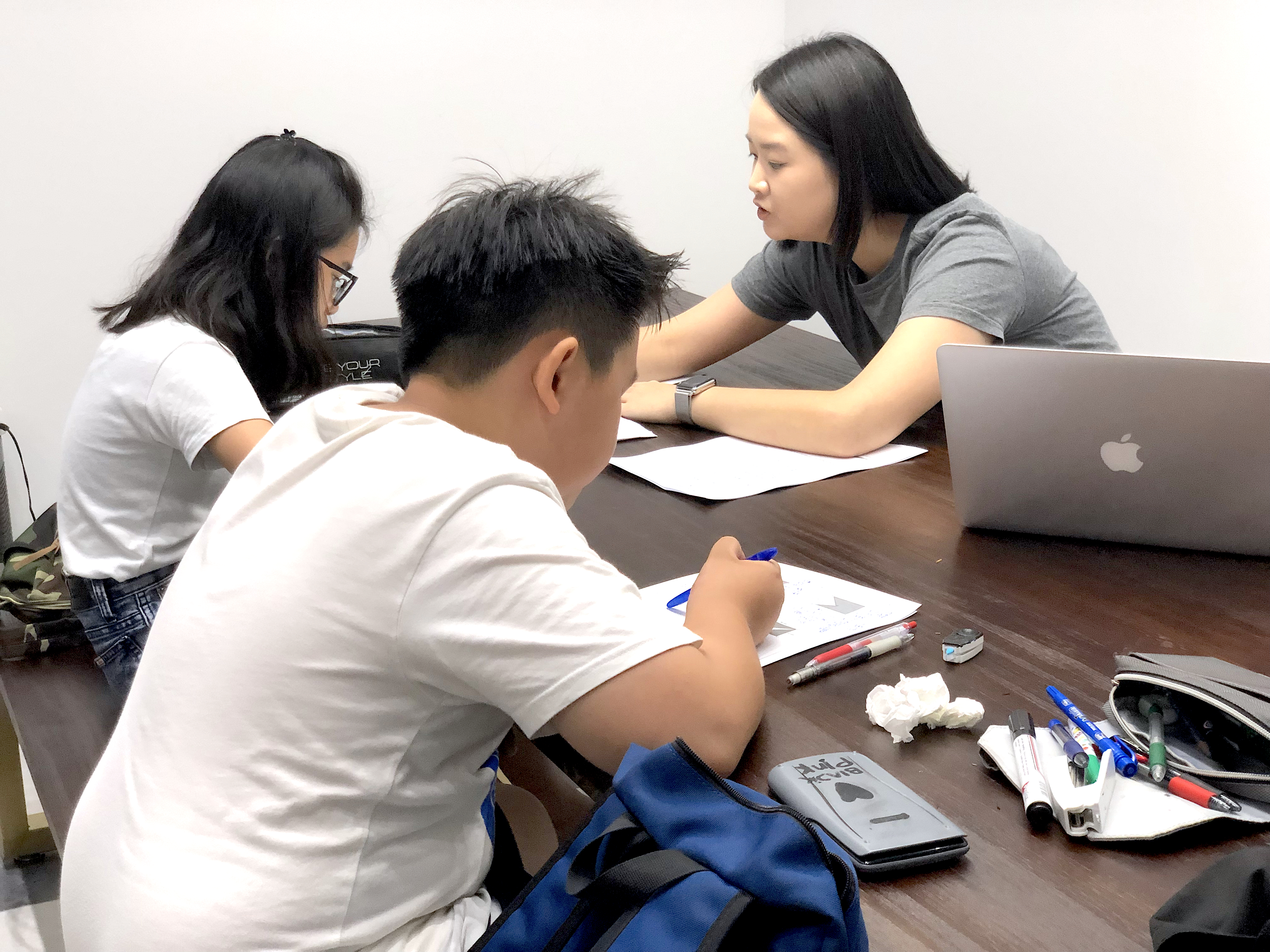
Historical classroom image archive
The original page’s 2019 classroom images are preserved below in their original sequence as archive material. They do not establish current locations, tutor assignments, timetables or programme availability.




















Leave a Reply