

Yishun English Tuition for Admiralty Secondary School is a historical-title guide for families searching for Admiralty Secondary School English tuition, Secondary English tuition in Yishun, English tutor support, small group tuition, comprehension, writing, vocabulary, grammar, oral communication and listening. This page is not affiliated with Admiralty Secondary School and does not represent current school or centre arrangements. Its present role inside eduKateYishun is to explain how correction becomes useful learning rather than repeated red ink.
Students improve when feedback changes the next performance. That sounds obvious, but many learners understand a correction, nod, rewrite the answer and then repeat the same mistake two weeks later. The relevant ideas are feedback loop learning, repair loop learning, calibration, retest probes, diagnostic first tuition, transfer of learning and tuition for confidence.
Correction should therefore do more than identify failure. It should help the student understand the wrong decision, repair it, test whether the repair remains and update their own judgement.
Correction is not complete when the answer is fixed
A corrected answer can look perfect while the learner remains unchanged. The tutor may have supplied the wording, pointed to the clue or explained the rule.
Learning becomes more convincing when the student can reproduce the correction later without the original solution visible.
That is why retesting matters.
Feedback should identify the wrong decision
“Wrong” tells the student the outcome. “You chose evidence before checking what the question asked” identifies the decision.
The more precisely the learner understands the failure, the easier it becomes to notice the same pattern later.
This is especially important in English because the visible error may be several steps downstream of the original mistake.
Calibration means knowing what you know
Some students are too confident and rush. Others are underconfident and change correct answers.
Calibration is the match between actual capability and the learner’s belief about that capability.
A well-calibrated student knows which skills are secure, which are fragile and when checking is genuinely necessary.
Comprehension correction should preserve the reasoning trail
When an answer is wrong, do not erase the route too quickly. Ask what the student thought the question required, which evidence was chosen and why.
That reasoning trail reveals whether the error came from task reading, evidence, inference or expression.
The repair should target the earliest broken step.
Writing feedback needs hierarchy
A composition can have problems in task fit, structure, development, cohesion, vocabulary, grammar and spelling at the same time.
Correcting everything equally can overwhelm the learner.
Fix the most expensive layer first. Structural weakness often deserves attention before sentence polish.
Grammar correction should become self-detection
A tutor can circle every tense error. The student may correct all of them and still learn little.
A stronger process is to identify the recurring pattern, then ask the student to detect the next occurrence independently.
The goal is not only correct grammar. It is an internal alarm that notices the error before submission.
Vocabulary feedback should explain fit
A word can be grammatically correct and still feel wrong because of register, collocation or nuance.
Instead of replacing the word silently, explain why another choice fits better. Compare the two meanings and contexts.
The learner becomes better at choosing, not merely copying.
Retest probes should be small and fast
A retest does not always need another full paper. It can be one fresh inference question, one paragraph, one grammar sentence or one oral prompt.
The purpose is to check whether the repair remained after the immediate correction disappeared.
Small retests make feedback loops practical.
Delayed retesting is more informative than instant repetition alone
Immediate repetition can show that the student understood the explanation. Delayed repetition tests memory and retrieval.
Use both. First repair the skill while feedback is fresh. Then revisit it after days or weeks.
If the skill survives, confidence becomes more evidence-based.
Feedback can strengthen confidence when it becomes specific
Students who receive large amounts of red correction may begin to believe they are weak everywhere.
Specific feedback reveals a different picture: “Your ideas are strong; your paragraph links are weak.” “Your reading is accurate; you over-answer why questions.”
The learner can see both capability and repair target.
Small groups can improve calibration
In a group, students hear alternative answers and see that reasonable people can make different mistakes.
The tutor can compare why one answer is better supported without ranking the students themselves.
This helps learners judge quality against evidence rather than social status.
Worked feedback lab: wrong answer, useful repair
Question: “Why did the writer pause before replying?” A student answers, “Because the writer was speaking.”
Step 1 — reconstruct
The learner found the correct sentence but copied an action rather than identifying the reason.
Step 2 — repair
Return to the clue that shows hesitation, uncertainty or concern. Build the cause explicitly.
Step 3 — retest
Give a fresh “why” question with a different surface context.
Step 4 — update
The student records: “Why questions need the cause, not just the event.”
Worked writing calibration lab
A student believes vocabulary is the main weakness because the essay sounds ordinary.
The tutor compares two paragraphs and shows that the bigger problem is undeveloped reasoning. Once the paragraph structure improves, ordinary vocabulary already sounds more effective.
The learner updates the diagnosis. Practice becomes more efficient.
An error ledger should stay selective
- record repeated errors, not every error
- name the mechanism
- write the repair rule in the student’s own words
- schedule a retest
- remove the item once transfer is stable
A long permanent list becomes another burden. The ledger should reflect the current frontier.
Parents can ask what the correction changed
Instead of asking how many mistakes were made, ask which error is no longer repeating.
This shifts attention from fault-counting to capability growth.
It also helps families judge whether tuition feedback is actually transferring.
Frequently asked questions
Why does my child keep repeating corrected mistakes?
The correction may have been understood but not retrieved later. Use delayed retesting and require the student to explain the repair rule.
Should every mistake be corrected?
Not with equal intensity. Prioritise errors that are frequent, expensive or reveal an important misconception.
How can feedback avoid damaging confidence?
Make it specific, balanced and actionable. Separate what is already strong from what needs repair.
What is calibration in learning?
It is the learner’s ability to judge their own understanding and performance accurately enough to decide when to proceed, check or seek help.
Teaching Guide | Close the feedback loop
Preserve the student’s reasoning trail. Identify the wrong decision. Repair the mechanism. Retest after delay. Transfer to a fresh task. Update the learner’s own error model.
The strongest correction is not the neat answer on the old page. It is the better decision the student makes next time before anyone points out the mistake.
Explore the eduKateYishun Well Being library · Open the Recovery Atlas · Return to The Library
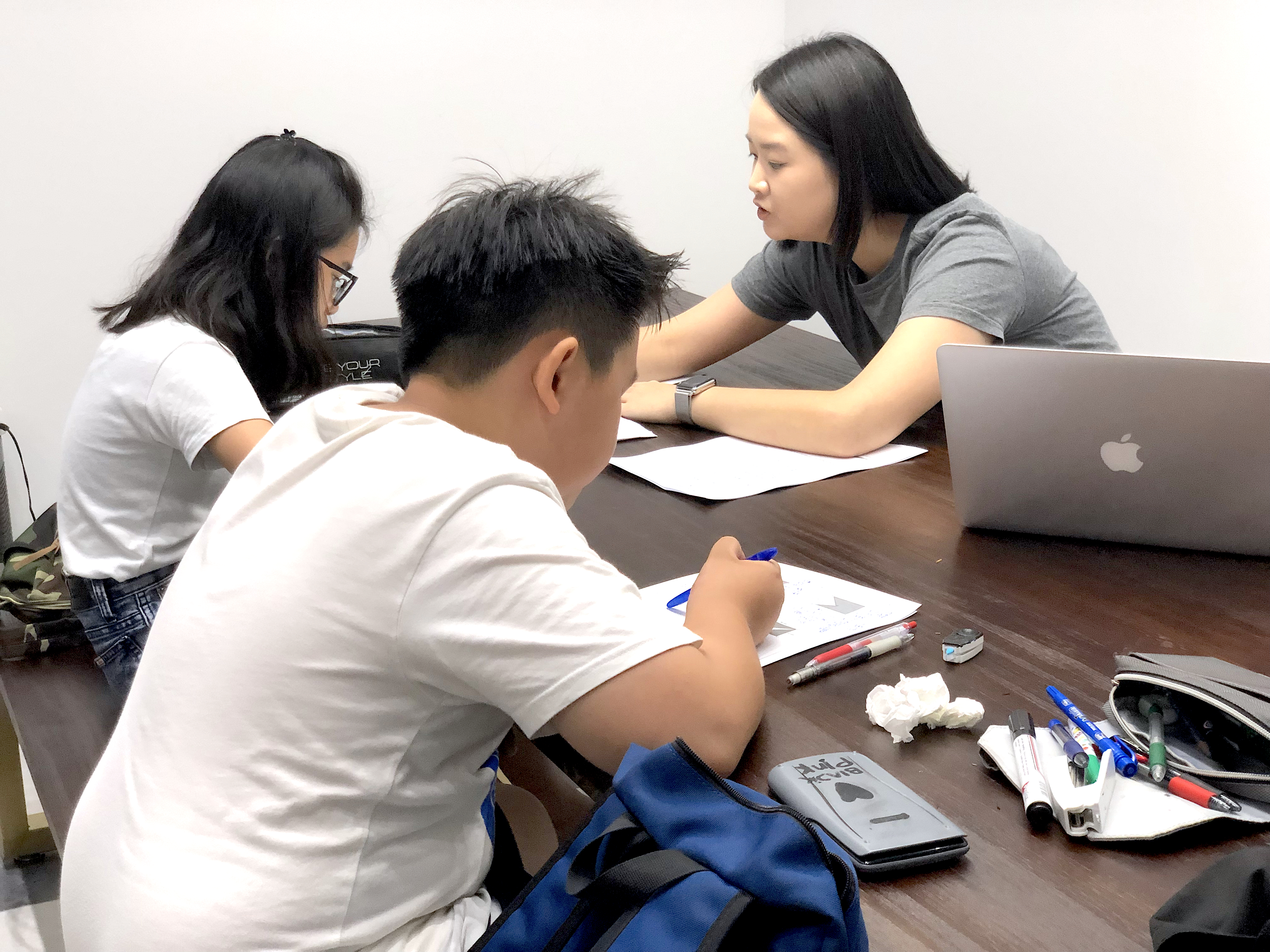
Historical classroom image archive
The original page’s embedded classroom images are preserved below in their original sequence as part of the eduKateYishun archive.




















Leave a Reply