

Sengkang English Tuition for Yishun Town Secondary School is a historical-title guide for families searching for Yishun Town Secondary School English tuition, Secondary English tuition in Yishun, English tutor support, small group tuition, comprehension, writing, oral communication and listening. This page is not affiliated with Yishun Town Secondary School and should not be read as current centre-location information. Its present role is to explore a different part of secondary-school learning: how friendship, belonging and peer comparison affect participation in English.
English is unusually social. Students speak in class, share opinions, read other people’s writing, receive public feedback and often compare their vocabulary or writing with peers. That is why belonging, friendship, tuition and motivation, tuition for confidence, small group tuition benefits and self-directed learning belong inside an English tuition conversation.
The aim is not to turn tuition into therapy. It is to recognise that participation, confidence and language development are connected, especially during adolescence.
English performance is partly a participation problem
A student can know more than the written work reveals. The learner may have a good idea but hesitate to speak, avoid unfamiliar vocabulary or write safe sentences because public error feels costly.
That means a tutor should observe not only whether the answer is correct, but whether the student is willing to attempt.
Participation is not personality. It can change when the environment becomes more predictable and respectful.
Belonging makes intellectual risk easier
Students learn when they test ideas that are not yet fully formed. If every mistake feels socially dangerous, they protect themselves by staying quiet or copying safe answers.
A strong learning environment separates belonging from performance. The student remains part of the group while the work is corrected honestly.
This is the wider principle in Belonging Without Having to Perform.
Friendship difficulty can consume academic attention
A teenager in conflict with a friend may sit in class while mentally replaying a conversation. The English task has not become harder, but the attention available for it has changed.
Tutors should not diagnose every change in mood. They can, however, notice sudden withdrawal, unusually weak participation or a student who was previously confident becoming silent.
The useful response may be a little more preparation time, a quieter first attempt or a conversation with the family rather than immediate academic escalation.
Peer comparison should become strategy comparison
Students naturally compare themselves with classmates. Comparison becomes harmful when it turns into fixed identity: “She is the English person; I am not.”
Convert the comparison into information. What did the stronger paragraph do? Did it use clearer evidence? Better paragraph structure? More precise vocabulary?
Borrow the strategy without borrowing the identity.
Small groups can make language social without making it competitive
A well-run small group gives students a reason to listen and respond. They hear different interpretations and learn that one prompt can support several defensible answers.
The tutor should compare reasoning, not rank children. “Which answer is better supported?” creates learning. “Who is best at English?” creates hierarchy.
Oral communication should sound like thinking
Teenagers sometimes believe oral success means speaking fast or sounding polished. Strong spoken communication depends more on substance.
Use a simple structure: view, reason, example, qualification. Then add one social move: respond to someone else’s idea.
The goal is not a memorised monologue. It is flexible participation.
Listening is also a relationship skill
Listening comprehension has an examination form, but the deeper skill is broader: track what another person means, notice change, distinguish main point from example and respond appropriately.
In a group, students can practise summarising another person’s view before giving their own. This improves both language and conversational discipline.
Writing also has an audience
A student who writes only for a mark may focus on pleasing a rubric without thinking about whether the meaning reaches a reader.
Ask peers to read one paragraph and answer one narrow question: What is the writer trying to say? Which sentence makes that clearest? Where did you become unsure?
This makes communication visible without turning peers into markers.
Vocabulary can create inclusion or distance
Sophisticated vocabulary is useful when it improves precision. It becomes unhelpful when students use difficult words mainly to sound superior or when the word choice obscures meaning.
Teach register and audience. A good word fits the situation, not just the vocabulary list.
Precision allows the student to sound intelligent without sounding artificial.
Confidence should not require constant praise
A teenager can detect generic encouragement. Evidence is more persuasive.
“You explained your disagreement clearly and used an example.” “Your paragraph now makes one claim instead of three half-claims.” These observations connect confidence to performance.
The student knows what to repeat.
Quiet students need entry routes, not forced exposure
Some learners need time to formulate an answer. Calling on them without preparation can make speaking feel punitive.
Use think time, notes, pair rehearsal or a choice between two prompts. Then reduce the support over time.
Participation grows when the learner can enter safely and still face real expectations.
Confident students need to learn restraint
A strong speaker can accidentally dominate a group. That student has another skill to learn: making space for others.
Ask the student to summarise another person’s point before adding a new idea. Require evidence that the other speaker was actually heard.
Communication quality includes listening and timing, not only fluency.
Friendship and disagreement can become English material
English lessons can use ordinary social situations to practise reasoning. What should someone do when a friend shares a private message? When is loyalty helpful, and when can it become silence that harms another person?
These topics create genuine reasons for argument, qualification and perspective-taking.
The broader Yishun discussion appears in Friendship | Listening, Misunderstanding and Making Space for Difference.
Worked oral lab
Prompt: “Should friends always tell each other the truth?”
First response
“Yes, because honesty is important.”
Developed response
“Friends should usually be honest because trust depends on accurate information, but honesty still needs timing and care. Telling a painful truth publicly, for example, may be less helpful than discussing it privately.”
Social extension
Another student must agree, qualify or challenge one part without repeating the same point.
Worked writing lab
Topic: “A misunderstanding between friends.” Rather than writing a dramatic betrayal, build an ordinary situation: a message is read out of context.
The writer can explore assumption, silence, confrontation and clarification. The story becomes strong because relationships create consequences.
A socially healthy small-group lesson
- independent first thought
- structured sharing
- evidence or example
- response to another view
- revision after discussion
- fresh individual transfer
- no public ranking
The group adds perspective while the individual remains responsible for the final learning.
Parents can notice participation changes
A child who suddenly stops discussing school, becomes highly sensitive to comparison or refuses group activities may be dealing with more than an English skill gap.
Ask without interrogation. “Has something changed in class?” can reveal more than “Why are your marks down?”
If the difficulty is significant or persistent, appropriate support may extend beyond tuition.
Frequently asked questions
Is a small group suitable for a quiet teenager?
Yes, if the tutor creates structured entry routes and does not use public pressure as motivation.
Can peer discussion really improve writing?
Yes, when the discussion focuses on meaning, evidence and paragraph purpose, followed by independent revision.
What if comparison is making the student anxious?
Shift the comparison from people to strategies and track the learner’s own progress over time.
Should tuition address friendship problems?
Academic tuition should not become counselling, but tutors can maintain a respectful environment, notice major changes and communicate concerns appropriately.
Teaching Guide | Use language to widen participation
Make English a place where students can think in public without every imperfect answer becoming a social event. Protect belonging, insist on evidence, teach respectful disagreement and make listening part of the lesson.
The strongest outcome is a student who can read, write and speak more effectively while also becoming more able to participate among other people without shrinking or dominating.
Explore the eduKateYishun Well Being library · Return to The Library
Historical classroom image archive
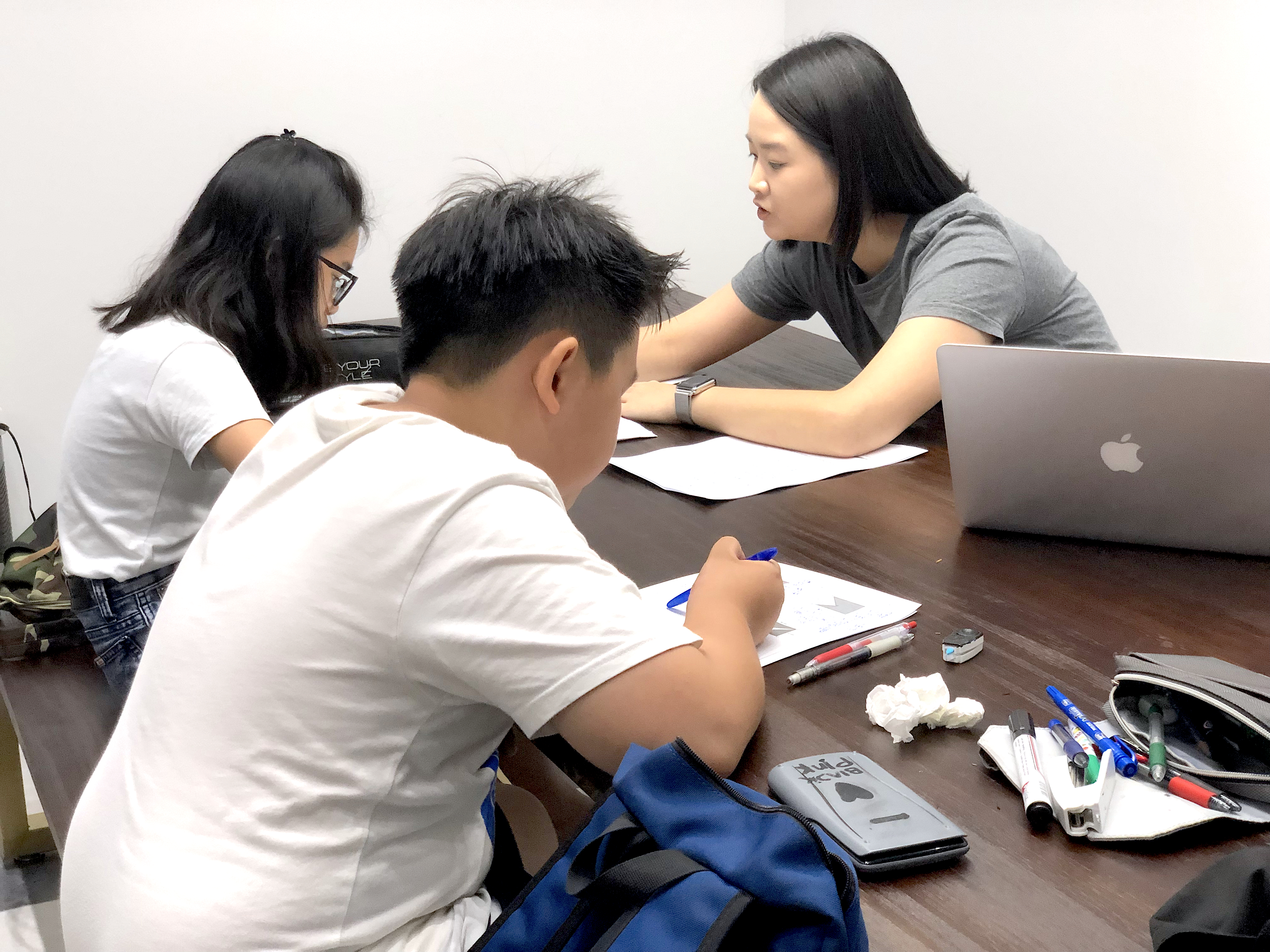
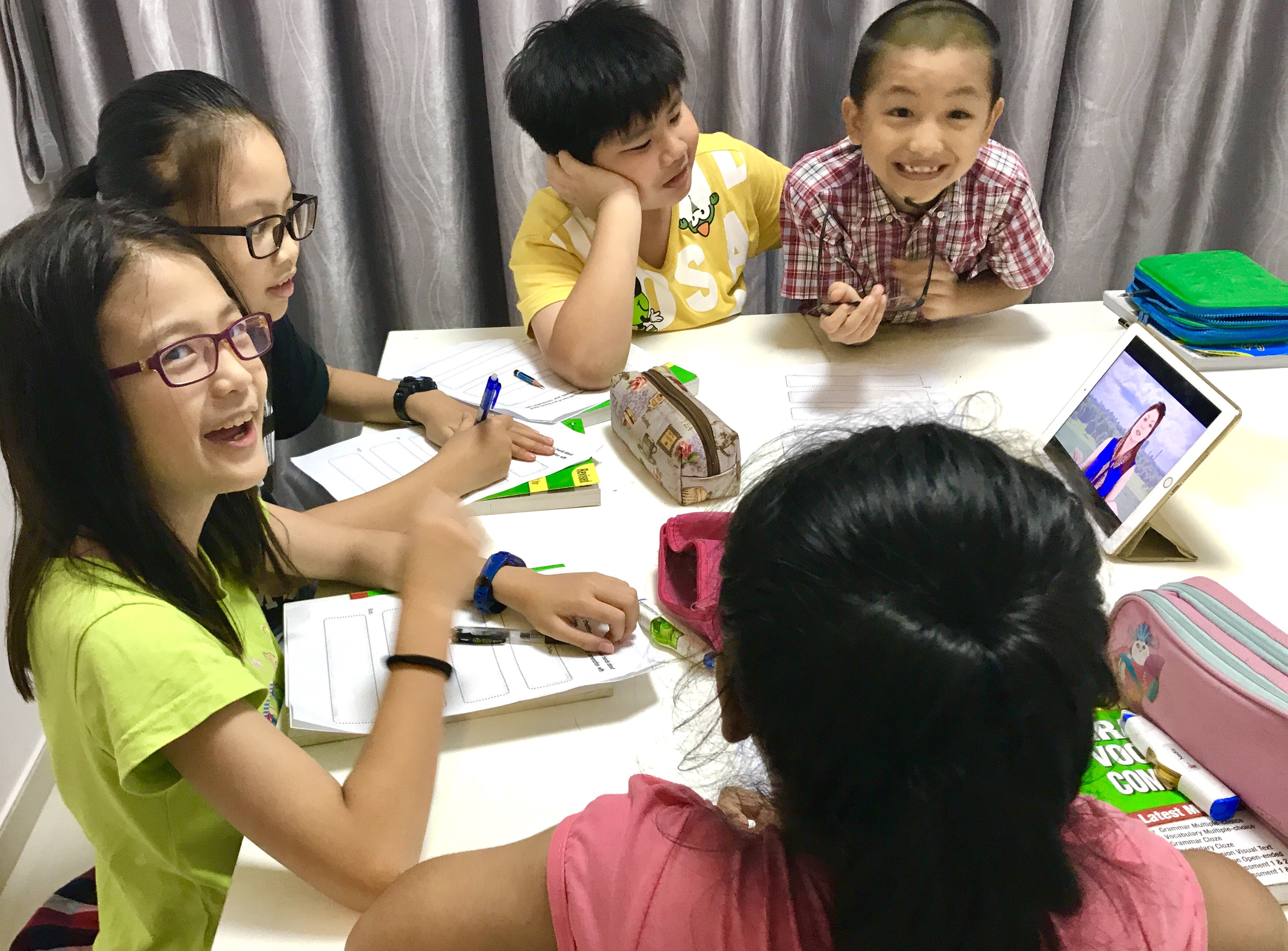
The original page’s embedded classroom images are preserved below in their original sequence as part of the eduKateYishun archive.



















Leave a Reply