

Secondary English Tuition Yishun St. Margaret’s Secondary School is a historical-title guide for families searching for St. Margaret’s Secondary School English tuition, Secondary English tuition in Yishun, English tutor support, small group tuition, comprehension, writing, vocabulary, grammar, oral communication and listening. This page is not affiliated with St. Margaret’s Secondary School and does not represent current school or centre arrangements. Its present role inside eduKateYishun is to examine audience, voice and self-expression under evaluation.
Students often learn that writing and speaking must be adapted to audience and purpose. That is correct. The difficulty begins when adaptation turns into erasure: the learner becomes so focused on sounding “exam-ready” that every response becomes generic. The useful ideas here are audience awareness, voice, tuition for confidence, oral communication, situational writing, self-expression, calibration and transfer of learning.
The aim is to help students communicate appropriately without losing the ability to sound like a real person who is thinking.
Audience awareness is not performance theatre
A student should adapt tone, detail and formality to the reader or listener. That does not require artificial sophistication.
The best response feels appropriate because the choices fit the situation, not because the student has inserted impressive phrases.
Purpose comes before polish
Before choosing vocabulary, ask what the communication must achieve: inform, persuade, request, explain, reassure, challenge or reflect.
Purpose creates a filter. Language can then be selected because it helps the task.
Situational writing needs a real reader
Students sometimes treat situational writing as a checklist exercise. The required points are present, but the message does not sound as though anyone will actually read it.
Ask what the recipient knows, what they need to know and what response the writer wants from them.
Voice is consistency between thought and language
Voice does not mean being casual or highly personal. It means the language reflects a coherent point of view.
A student whose argument is cautious should not suddenly use extreme claims because a memorised phrase sounds impressive.
Oral communication should remain responsive
A prepared framework can help, but real spoken interaction requires listening and adjustment.
The student should be able to clarify, qualify and extend an answer when the follow-up question changes direction.
Confidence grows when the learner can adapt without pretending
Students often become anxious when they believe there is one correct “smart” way to sound.
Show them several effective responses with different voices. The common features should be clarity, relevance, evidence and audience fit—not imitation of a single model.
Vocabulary should serve tone
A word can be impressive and still be wrong for the audience. Teach register explicitly.
Compare how the same idea would be expressed to a friend, a teacher, a public audience and an examination marker.
Worked situational-writing lab
Task: write to a school leader proposing a change to a student space.
Weak approach
Use a generic formal opening, list all points mechanically and end with a memorised sentence.
Stronger approach
Identify the reader’s likely concerns, explain the proposal clearly, organise benefits around those concerns and use a respectful but direct tone.
The writing becomes purposeful rather than ceremonial.
Worked oral lab
Prompt: “Should schools restrict phone use?”
A student gives a strong first answer. The follow-up asks about emergencies. Instead of repeating the prepared view, the learner qualifies it: restrictions can remain while emergency access is preserved through clear exceptions.
Adaptation shows genuine thinking.
Model answers should reveal principles, not identities
A model can show structure, evidence and tone. Students should not be asked to sound exactly like the model writer.
After analysing a model, change the topic and require the learner to carry only the principles across.
A practical audience-and-voice routine
- Who is receiving this?
- What do they already know?
- What do I need them to understand or do?
- What tone fits the relationship?
- Which details matter to this audience?
- Does the language sound natural for the purpose?
- Can I adapt if the response changes?
Parents can support voice by asking for reasons
When teenagers express an opinion, ask why they think it rather than immediately correcting the wording.
Thought comes first. Language can then be refined without teaching the learner that only polished opinions are worth hearing.
Frequently asked questions
Should students memorise good phrases?
A small repertoire can help, but phrases should be chosen because they fit the task. Memorised language should not replace judgement.
Can strong voice hurt examination writing?
Not when voice remains appropriate to task and audience. Clear thinking, relevance and control remain central.
How do we stop writing from sounding generic?
Build from a genuine claim, select specific examples and adapt tone to the reader instead of beginning with decorative language.
Teaching Guide | Adapt without disappearing
Teach audience, purpose and register explicitly. Use models to extract principles, not identities. Require students to adapt language when the reader or context changes.
The goal is a learner who can communicate appropriately under examination conditions while still sounding like a person who understands what they are saying.
Explore the eduKateYishun Well Being library · Return to The Library
Historical classroom image archive
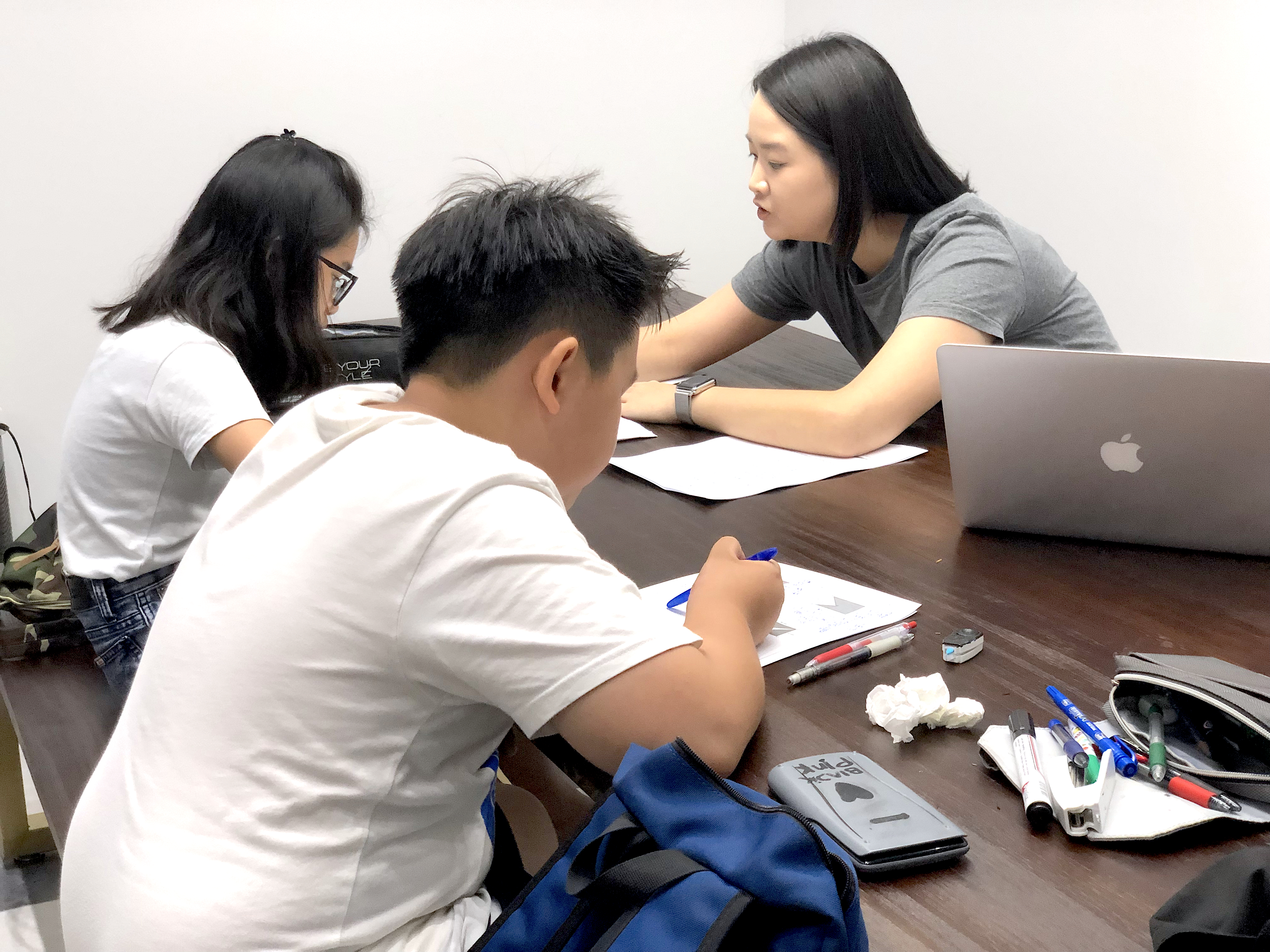
The original page’s embedded classroom images are preserved below in their original sequence as part of the eduKateYishun archive.




















Leave a Reply