

Secondary English Tuition Yishun Naval Base Secondary School is a historical-title guide for families searching for Naval Base Secondary School English tuition, Secondary English tuition in Yishun, English tutor support, small group tuition, comprehension, writing, vocabulary, grammar, oral communication and listening. This page is not affiliated with Naval Base Secondary School and does not represent current school or centre arrangements. Its current role is to explain how routines and self-directed learning keep Secondary English stable when school demands become more complex.
Many students do not fail because they never understood the lesson. They fail because learning is not maintained. Notes are not revisited. Corrections are not retested. Vocabulary is recognised but not retrieved. Writing feedback is read once and forgotten. This is why self-directed learning, retrieval practice, spacing effect, repair loop learning, transfer of learning, tuition dependency and feedback loop learning matter.
A good tuition system should eventually move some of its control inside the learner. The student becomes better at deciding what to revisit, how to start, what to check and when help is genuinely needed.
Secondary English becomes harder when routines remain Primary-sized
Secondary students handle longer texts, more varied writing, denser school weeks and greater independence. A routine that worked when a parent packed the bag and checked every worksheet may no longer be enough.
The learner needs an internal system: a way to capture feedback, revisit weak skills and begin tasks without waiting for another adult to organise every step.
Self-directed learning is not personality. It is a set of learnable routines.
Start with an error ledger
An error ledger is a short record of mistakes that deserve to be remembered. It should not become a complete archive of every wrong answer.
- what the task was
- what went wrong
- why it went wrong
- what rule or method repairs it
- when to retest it
The ledger makes feedback portable across lessons.
Retrieval is stronger than rereading alone
Rereading notes creates familiarity. Retrieval asks whether the knowledge can be produced without the page.
Close the notes. Explain the rule. Rebuild the vocabulary set. Rewrite the paragraph plan. Answer a fresh question.
The difficulty of retrieval is useful information because it shows what is actually available in memory.
Spacing protects learning from disappearing
A correction understood today may still be forgotten next week. Revisiting after delay strengthens continuity.
Instead of doing ten similar questions in one sitting, do fewer now, revisit the same skill later and then use it in a different context.
The learning has to survive time before it can be considered stable.
Comprehension routines should be brief enough to use
A routine only helps if the student can remember it under pressure.
For comprehension: read the command, identify focus, choose evidence, explain the relationship, check scope.
The routine should eventually become internal rather than another worksheet printed beside the student.
Writing routines should separate planning from polishing
Students often revise randomly because they do not know which layer to inspect first.
- task fit
- paragraph purpose
- development
- cohesion
- sentence control
- grammar and spelling
This order prevents the student from polishing sentences inside a paragraph that should have been restructured.
Vocabulary needs repeated retrieval across contexts
A word list is useful only if words travel into reading, speaking and writing.
Choose a small set. Define the distinctions. Use the words orally. Retrieve them after a delay. Then use them in a fresh paragraph.
The student should gradually need less prompting to remember them.
Self-checking is a skill, not a final instruction
“Check your work” is too vague. Students need to know what checking means.
A learner might check question scope in comprehension, paragraph jobs in writing and two personal grammar errors during editing.
The checklist should remain short enough to use consistently.
Tuition dependency often grows from helpful tutors
A tutor who responds immediately to every hesitation can accidentally remove the learner’s opportunity to think.
Require an independent first move: underline the question, choose one possible answer, identify the relevant paragraph or write a rough plan.
Help becomes more valuable after the student has exposed the point of uncertainty.
Prompt fading should be deliberate
First the tutor may model the full process. Later the learner uses a checklist. Then only a short reminder remains. Finally, the student identifies the method alone.
This is one of the clearest signs that tuition is producing independence rather than permanent assistance.
Routines reduce stress because they reduce decisions
A student facing an unfamiliar task can become overwhelmed by the number of possible moves.
A stable routine lowers decision load. The learner knows what to do first, what to do if stuck and how to check before finishing.
The task can remain difficult while feeling more manageable.
A routine should flex when evidence changes
Self-directed learning is not blindly repeating the same schedule. It includes deciding when a method is no longer working.
If a student has mastered one grammar issue, remove it from the checklist. If comprehension timing remains weak, increase timed practice. If school workload spikes, reduce redundant tuition homework.
A good system adapts without collapsing.
Worked self-directed lab: after a marked paper
A student receives a paper with six different mistakes.
Weak routine
Redo the entire paper immediately.
Stronger routine
Classify the errors. Identify two recurring patterns. Repair those patterns with short practice. Schedule a delayed retest. Use one fresh question to check transfer.
The paper becomes a planning tool rather than a punishment.
Worked writing routine
Before writing, the student spends three minutes naming the task, thesis or story route and paragraph jobs.
After writing, the student checks only two personal grammar patterns and whether each paragraph still serves the plan.
The routine is brief enough to repeat until it becomes automatic.
A stable independent week
- one review of school feedback
- one substantial reading session
- one writing or comprehension practice
- two short retrieval sessions
- one delayed retest
- one fresh transfer task
- time protected from academic work
The exact schedule can change. The existence of a repeatable cycle matters more than perfect uniformity.
Parents can hand over responsibility gradually
A parent may begin by helping the teenager organise the week. Over time, ask the student to propose the plan first.
The parent can still protect sleep, logistics and boundaries without choosing every academic task.
Independence grows through transferred responsibility, not sudden withdrawal.
When routines become rigid
A student can also become over-dependent on routines. If every unfamiliar task causes panic because it does not match the checklist, the routine has become too narrow.
Use transfer tasks that change the surface form while preserving the underlying skill. The learner should recognise principles, not just templates.
Frequently asked questions
How do we teach a teenager to study independently?
Break independence into actions: choose a task, attempt before help, mark uncertainty, check, classify errors, schedule a retest and review the result.
Should parents stop checking work completely?
Not suddenly. Reduce involvement as the student demonstrates reliable routines.
What if the student keeps forgetting corrections?
Use an error ledger, retrieval and spaced retesting rather than relying on rereading.
How do we know tuition dependency is reducing?
The student starts tasks alone, asks more precise questions and applies corrections without being reminded.
Teaching Guide | Build routines that survive the tutor
Teach a small number of repeatable routines. Make the student use them before receiving help. Record recurring errors. Retest after delay. Transfer to unfamiliar work. Remove supports that are no longer needed.
The strongest tuition outcome is not a student who becomes excellent at following the tutor. It is a student who increasingly knows how to continue learning when the tutor is absent.
Explore the eduKateYishun Well Being library · Open the Recovery Atlas · Return to The Library
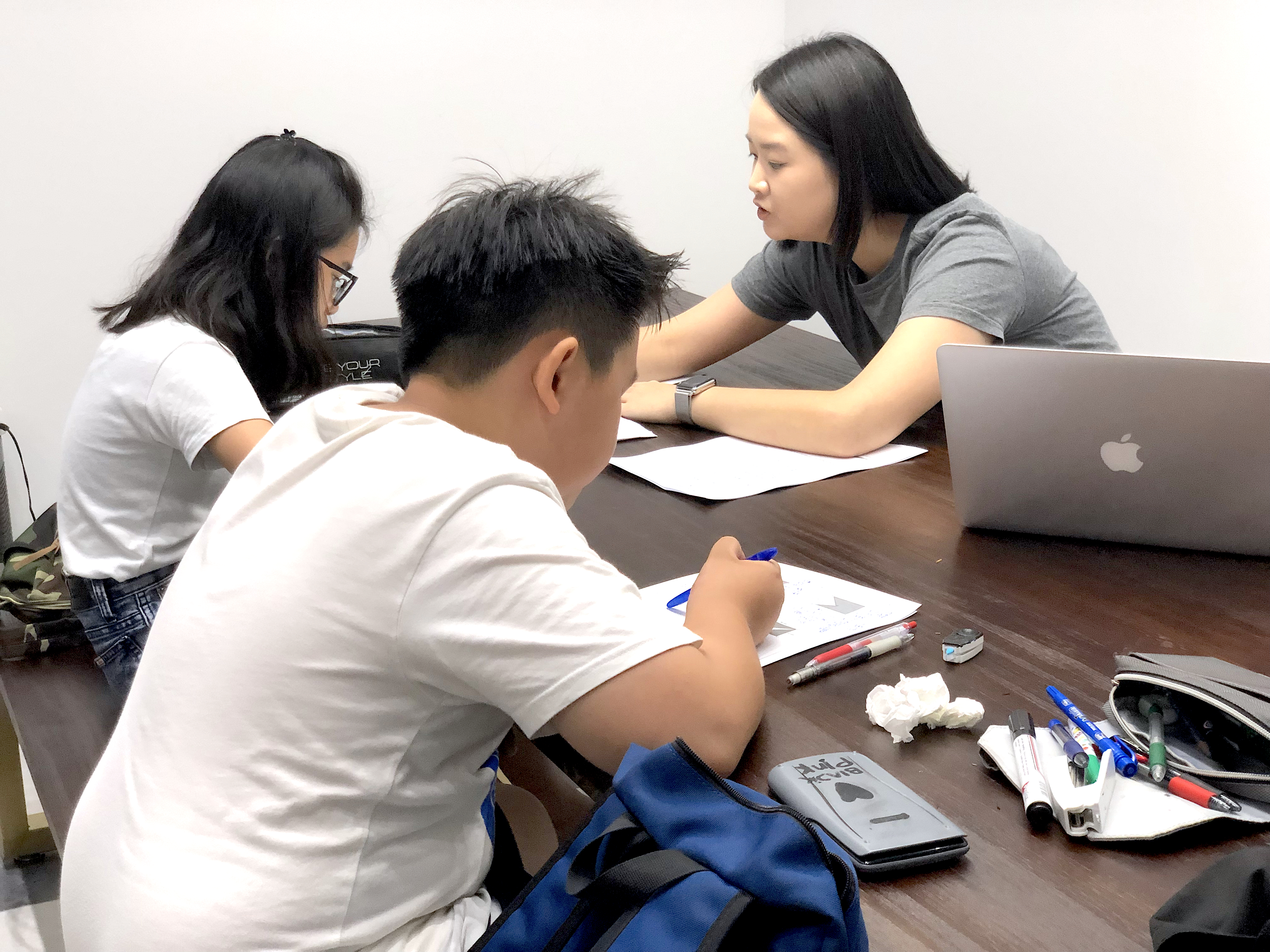
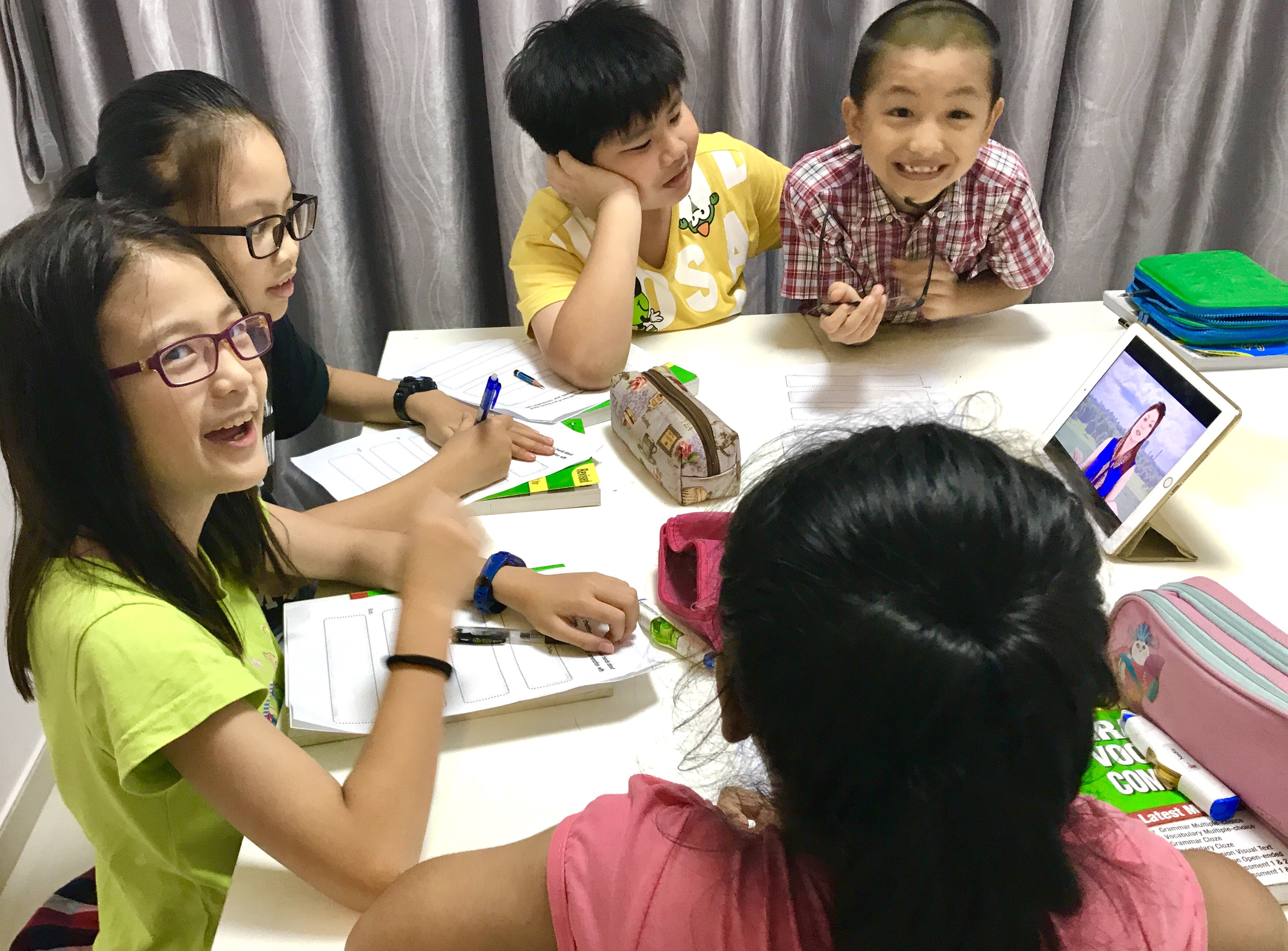
Historical classroom image archive
The original page’s embedded classroom images are preserved below in their original sequence as part of the eduKateYishun archive.



















Leave a Reply