

English Tuition Punggol Secondary GCE O levels is a historical-title page preserved on eduKateYishun. It reflects an older examination-era naming convention and does not represent a current centre location or current examination claim. Its present role inside eduKateYishun is to examine practice-to-exam conversion: why a student can know a skill in practice yet fail to produce it under assessment conditions.
The gap between practice and performance is often treated as nerves alone. Sometimes the real problem is that practice was too supported, too familiar or never trained under time and uncertainty. The useful ideas here are transfer of learning, retrieval under pressure, timed practice, calibration, prompt fading, exam strategy and tuition dependency.
The goal is not endless full-paper drilling. It is to make the conditions of practice progressively closer to the conditions in which the skill must finally operate.
Practice success can be misleading
A student who performs well with notes, hints and familiar question types may not yet own the skill independently.
The final stage of preparation should reveal whether support can be removed.
Cold starts matter
Occasionally give a fresh task before explanation.
The first attempt shows what the learner can retrieve and organise without the tutor preparing the route.
Timed practice should have a reason
Timing is useful when the skill is already understood and the next question is whether it survives under limited time.
Timing a poorly understood method simply creates faster confusion.
Familiarity should gradually decrease
Change passage topic, question wording and writing prompt.
The learner should recognise the underlying method despite surface change.
Worked practice-to-performance lab
The student can write strong paragraphs after discussing ideas with the tutor.
The next step is a fresh prompt with independent planning, then a timed paragraph, then a longer integrated task.
Support is removed in stages rather than disappearing only on examination day.
Checking under pressure
A student needs a short check routine that can survive time limits.
Focus on high-risk items: task fit, scope, one or two recurring grammar errors. Long checklists collapse under pressure.
A practical conversion ladder
- learn with explanation
- practise with guidance
- attempt without hints
- retest after delay
- change context
- add time pressure
- integrate into a longer task
- review what broke
Confidence should follow independent evidence
The most useful confidence comes from seeing that the method works when the tutor is no longer directing every move.
Independent success is stronger reassurance than encouragement alone.
Frequently asked questions
Should students do full papers every week?
Not necessarily. Full papers are useful for integration and timing, but targeted practice is often better for repairing one weakness.
Why does performance drop under time pressure?
The method may not yet be automatic, checking may be inefficient or anxiety may increase cognitive load.
How do we prepare without creating burnout?
Use selective timed integration rather than constant full-paper volume and protect recovery between demanding sessions.
Teaching Guide | Remove support before the real test does
Move from guided practice to cold starts, delayed retrieval, changed contexts and selective timing.
The goal is a learner whose examination performance reflects genuine capability rather than the absence of the tutor being a sudden shock.
Explore the eduKateYishun Well Being library · Open the Recovery Atlas · Return to The Library
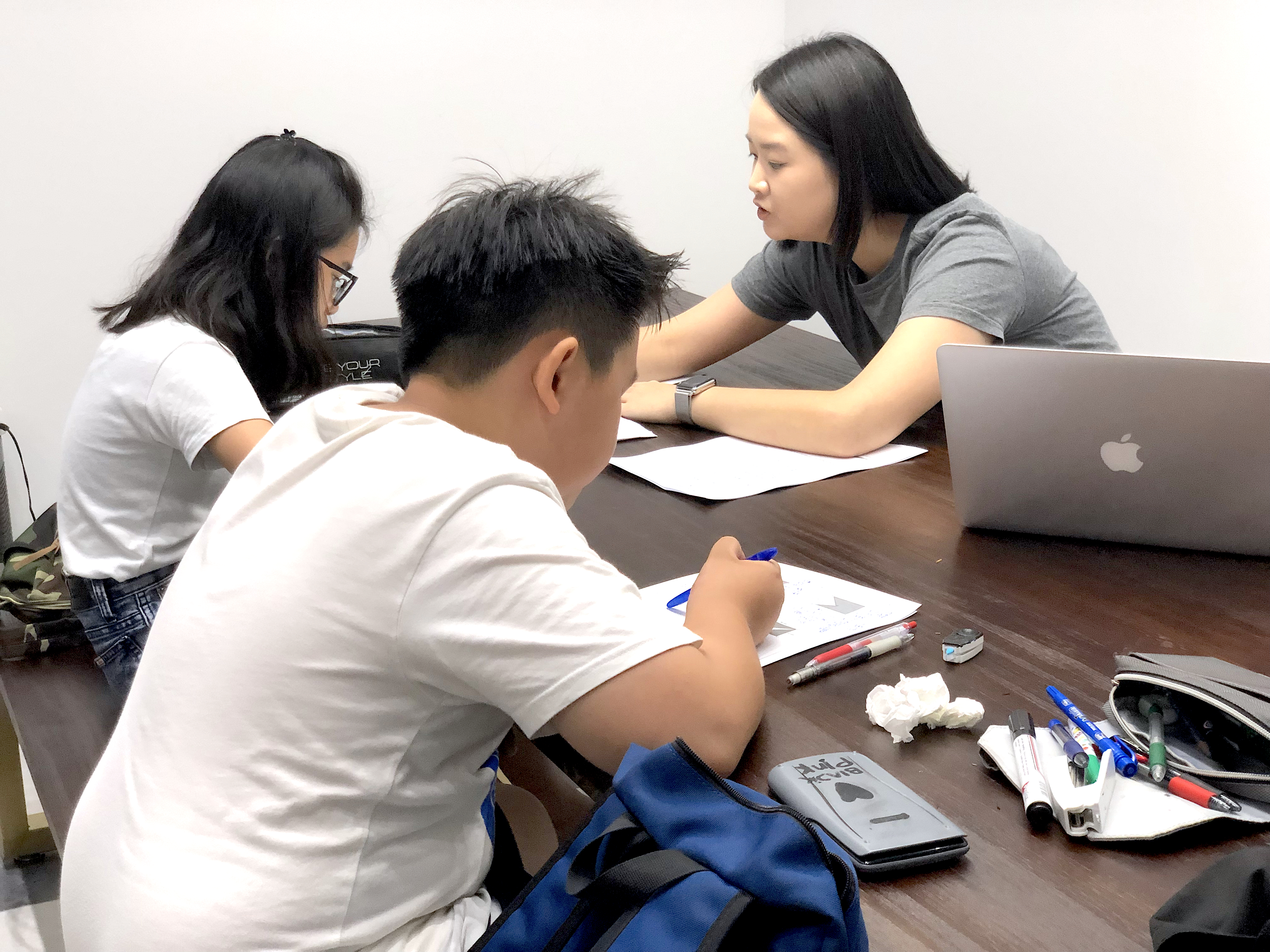
Historical classroom image archive
The original page’s embedded classroom images are preserved below in their original sequence as part of the eduKateYishun archive.

















Leave a Reply