
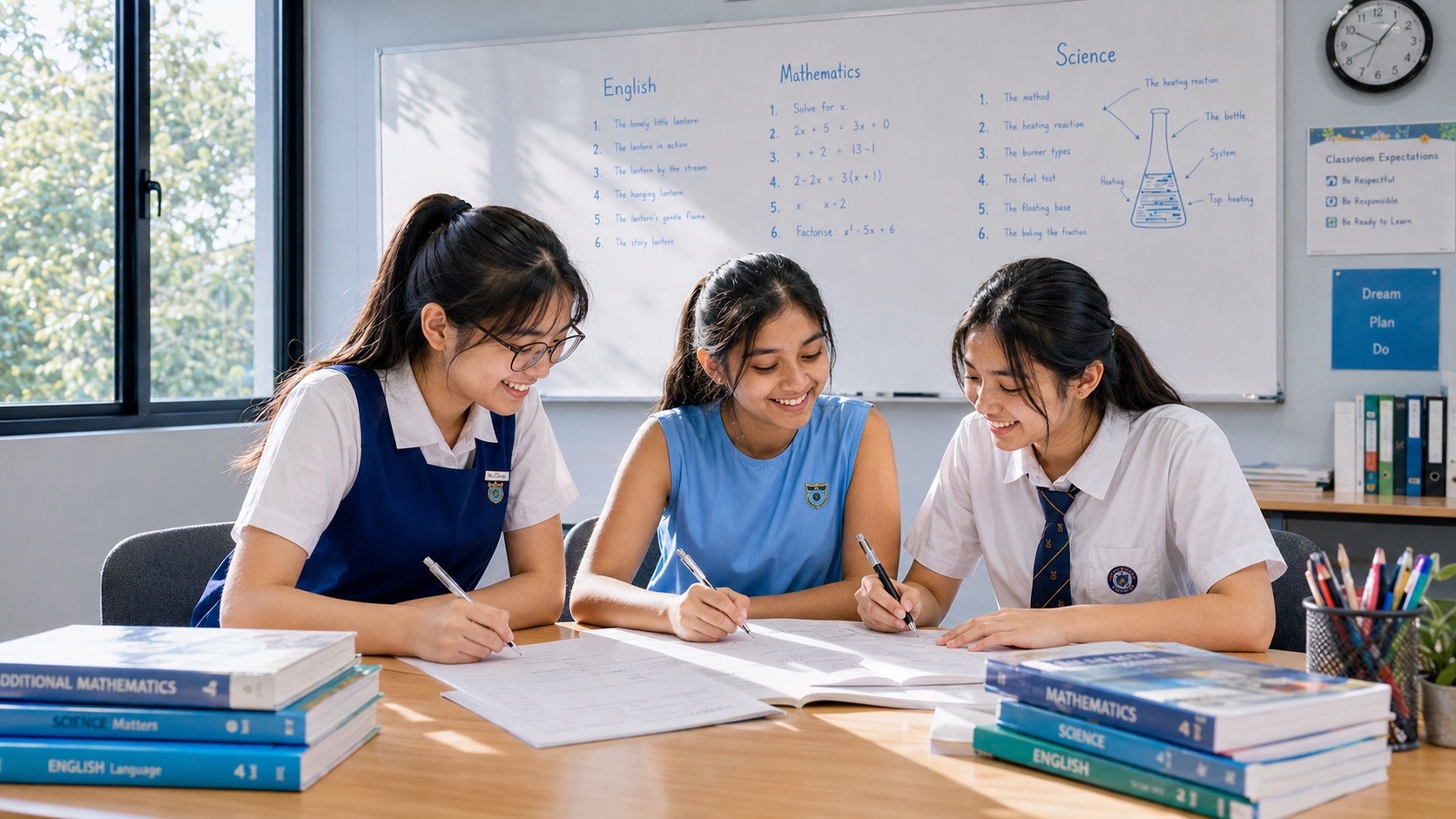
Yishun English Tuition for West Spring Secondary School is a historical-title guide for families searching for West Spring Secondary School English tuition, Secondary English tuition in Yishun, English tutor support, small group tuition, comprehension, writing, vocabulary, grammar, oral communication and listening. This page is not affiliated with West Spring Secondary School and does not represent current school or centre arrangements. Its present role inside eduKateYishun is to protect something that examination preparation can quietly narrow: curiosity and reading breadth.
Students often read less widely as assessment pressure increases. Reading becomes a comprehension exercise, writing becomes a mark-producing task and vocabulary becomes a list. Yet English grows from contact with ideas, people, places, arguments, stories and ordinary language. The relevant ideas here are tuition and play, tuition and motivation, reading for pleasure, curiosity, transfer of learning, vocabulary growth, self-directed learning and ordinary enjoyment.
The goal is not to choose between examination preparation and genuine reading. It is to keep the language system wide enough that exam skills have something rich to operate on.
English becomes fragile when every text is only a test
A student who reads only for questions begins to treat every paragraph as something to mine for marks.
Examination reading is important, but wider reading builds background knowledge, vocabulary, sentence awareness and familiarity with different voices.
Those gains often appear indirectly rather than as a single worksheet score.
Curiosity increases the number of things language can attach to
Vocabulary is easier to remember when it belongs to an idea the learner cares about.
A student interested in aviation, football, design, medicine, history or games has a reason to meet specialised words and new forms of explanation.
Interest creates contexts. Context creates memory routes.
Reading breadth is not the same as reading difficulty
A useful reading diet can include fiction, journalism, essays, biography, science writing, history, interviews and well-made longform explanations.
Not every text needs to be difficult. Variety matters because different genres make different language moves visible.
A learner can study argument in an opinion essay and narrative pacing in fiction without calling either activity an exam drill.
Reading for pleasure and academic reading can coexist
A student can have one text chosen for school skill and another chosen for interest.
The interest text does not need a worksheet attached. A short conversation about what was surprising, confusing or memorable may be enough.
Not every useful reading event needs to generate marks.
Vocabulary grows through repeated encounters
Wide reading exposes students to words in natural settings. One encounter rarely creates mastery, but repeated encounters build familiarity.
Tuition can help by noticing useful words, comparing meanings and asking the student to retrieve them later in speech or writing.
The text supplies life to the vocabulary; retrieval supplies durability.
World knowledge supports comprehension
Comprehension is easier when the reader knows something about the topic, genre or situation.
Background knowledge helps the learner interpret reference, implication and cause because fewer ideas are completely unfamiliar.
Wide reading therefore supports examination comprehension indirectly by expanding the knowledge available to make sense of texts.
Writing improves when students have something to say
Students sometimes struggle with essays because the language is weak. Other times the language is adequate but the idea bank is empty.
Reading across subjects gives the writer examples, perspectives and distinctions. It helps arguments move beyond generic claims.
Better content can make ordinary vocabulary sound more intelligent because the thought itself is more precise.
Curiosity should not become another productivity project
Families can accidentally turn “read more” into another quota.
A healthier approach gives the student some choice. Follow a topic, abandon a book that is a poor fit, try another genre and discuss ideas without turning every conversation into a test.
Curiosity weakens when every interest is immediately converted into performance.
Small groups can widen the reading world
Students can bring different interests into a small group. One may read about sport, another technology, another fiction.
Short sharing sessions expose peers to new topics and vocabulary without requiring everyone to read the same text.
The group becomes a small exchange of worlds.
Oral communication benefits from real interests
Students speak more naturally when they have something genuine to explain.
Ask a learner to describe a recent article, story, game mechanic or event, then require reasons and examples.
The tutor can refine organisation and language after the thought is present.
Listening can also be curiosity-driven
Interviews, documentaries and talks can expose students to spoken structure, tone and vocabulary.
The learner can practise identifying the main point, change in position or evidence used without every listening task looking like an examination paper.
Worked reading-breadth lab
A student is interested in urban transport. Choose one accessible article explaining a transport problem.
First conversation
What problem is the article trying to solve? What surprised you?
Language layer
Notice three useful words and one sentence that explains cause clearly.
Transfer
Later, use one of the ideas as an example in an argumentative paragraph about cities or technology.
The reading has travelled into vocabulary, oral explanation and writing.
Worked fiction lab
After reading a short story, do not begin with “What is the moral?” Ask which decision changed the direction of the story and why the character made it.
This develops causal reading and character inference without turning the text immediately into a formal comprehension exercise.
A balanced English week can include unscored reading
- one school-focused comprehension or writing task
- short vocabulary retrieval
- one reading chosen for interest
- one conversation about an idea from that reading
- one transfer into writing or oral work when useful
- some reading that remains purely enjoyable
The exact balance changes during examination periods, but the wider reading system should not disappear permanently.
Parents can model interest without assigning it
Share an article, story or idea because it is interesting, not because a worksheet will follow.
Ask what the child thinks rather than whether the child remembers every detail.
This keeps language connected to family conversation and ordinary life.
When exam preparation narrows too far
Warning signs include a student who refuses all non-assessed reading, believes every paragraph needs a model answer, or can perform question types but has little vocabulary or background knowledge outside familiar themes.
The remedy is not abandoning exam practice. It is restoring some breadth.
Frequently asked questions
Does reading for pleasure improve English?
It can support vocabulary, fluency, background knowledge and familiarity with language, especially when reading is sustained and varied.
Should every book match the student’s school level?
No. Some reading can be easier and enjoyable; some can stretch the learner. The mix matters more than constant difficulty.
What if my teenager says they do not like reading?
Start from interests and formats rather than insisting on one kind of book. Articles, essays, graphic narratives, biographies and high-quality non-fiction can all build language.
Can wide reading replace exam practice?
No. Examination tasks still require direct practice. Wide reading supports the language and knowledge system underneath them.
Teaching Guide | Keep English connected to the world
Teach examination skills directly, but keep a corridor open to curiosity. Let students read beyond question types, bring interests into discussion and carry new ideas into writing.
The strongest English learner is not only a student who can answer a paper. It is a person who can keep reading, noticing, explaining and learning after the paper is over.
Explore the eduKateYishun Well Being library · Curiosity and Play Without a Score · Return to The Library
Historical classroom image archive
The original page’s embedded images are preserved below in their original sequence as part of the eduKateYishun archive.


Leave a Reply