
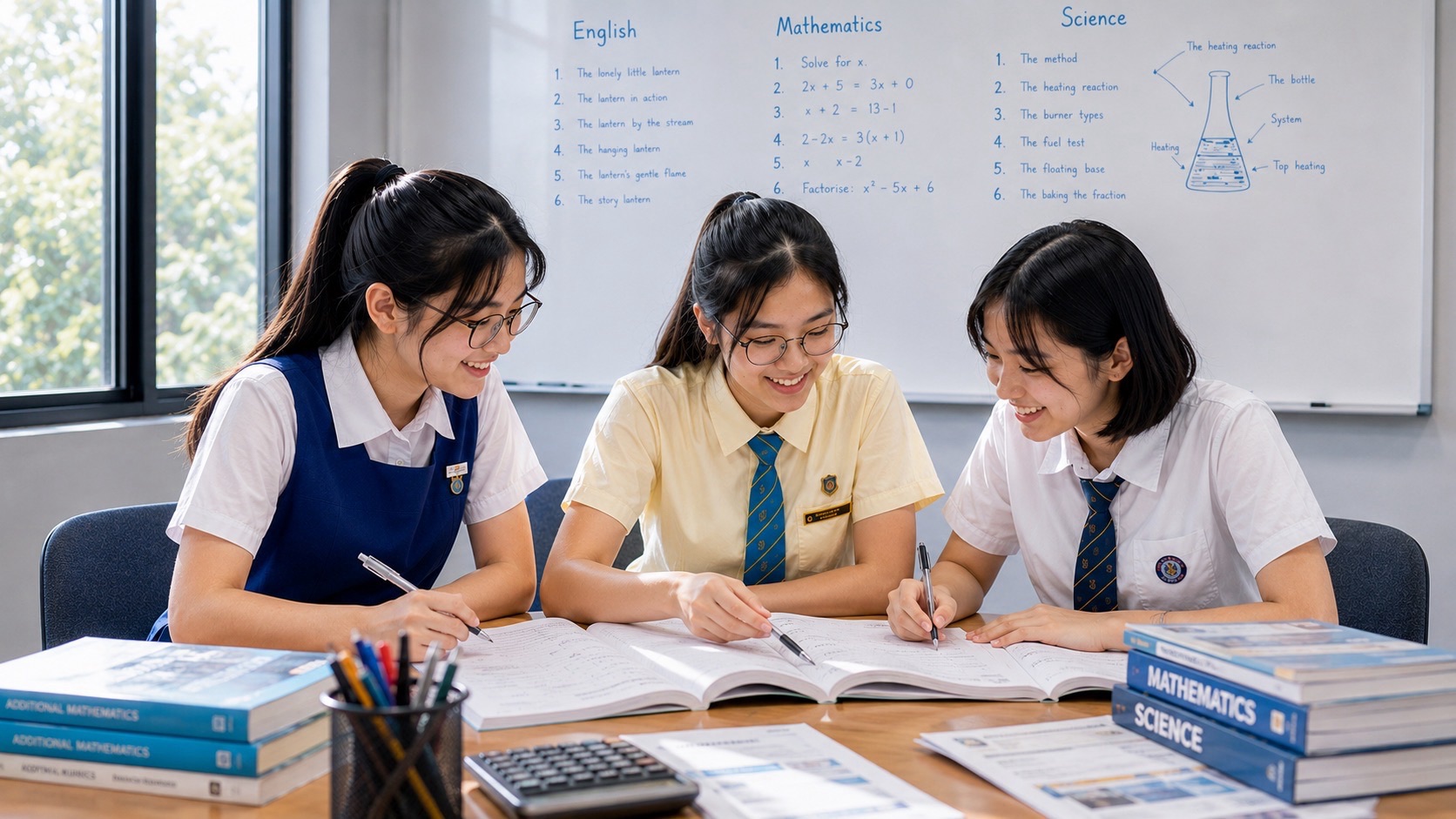
Yishun English Tuition for Bedok South Secondary School is a historical-title guide for families searching for Bedok South Secondary School English tuition, Secondary English tuition in Yishun, English tutor support, small group tuition, comprehension, writing, vocabulary, grammar, oral communication and listening. This page is not affiliated with Bedok South Secondary School and does not represent current school or centre arrangements. Its present role inside eduKateYishun is to examine reading stamina: the ability to remain accurate and thoughtful as texts become longer and more demanding.
Students sometimes appear to have a comprehension problem when the deeper issue is endurance. The first paragraphs are read carefully, then attention thins, reference words are missed and later answers become vague. The useful ideas here are attention, reading stamina, learner state, tuition and stress, retrieval practice, comprehension strategy and self-regulation.
The goal is not to force longer reading for its own sake. It is to build enough endurance that the quality of thought remains stable from the beginning of a task to the end.
Reading stamina is not simply reading speed
A fast reader can still lose accuracy over a long passage. A slower reader can remain highly controlled.
Stamina means preserving attention, meaning and judgement across the whole task.
Long texts create cumulative load
Every paragraph adds names, claims, references and relationships that must remain connected.
If the student reads passively, the mental model becomes blurred as the text grows.
Build a paragraph map
After each paragraph, identify its job in a few words: introduce the issue, give an example, show a contrast, explain a cause, shift the argument.
This creates landmarks that reduce the need to reread the whole passage later.
Use purposeful pauses
A brief pause after a demanding section can protect comprehension better than rushing continuously.
The pause should have a job: summarise, identify a relationship or predict what the next section must resolve.
Vocabulary should not derail the entire passage
An unfamiliar word matters only if it blocks the sentence’s function.
Use context first. Decide whether an approximate meaning is enough to continue. Return later if the exact meaning is necessary.
Question order can reveal where attention failed
If early answers are strong and later answers weaken, inspect stamina rather than assuming the final questions are always harder.
Timing data and error location can show where reading quality begins to decay.
Worked stamina lab
Give the student a text slightly longer than usual. After each paragraph, require a five-word map rather than full notes.
At the end, ask for the structure before answering questions. The student learns to preserve the text as an organised whole.
Train duration gradually
Do not jump from short passages to full examination loads immediately.
Increase duration while keeping accuracy visible. If quality collapses sharply, reduce the load, repair the method and rebuild.
Reading stamina and confidence
Students often call themselves “bad at comprehension” when they are actually losing control late in the task.
A precise diagnosis protects confidence because the problem becomes trainable: maintain mapping, pacing and evidence habits for longer.
A practical stamina routine
- preview the task
- read one paragraph at a time
- name each paragraph’s job
- mark only essential evidence
- pause at major shifts
- check whether meaning is still coherent
- use questions to target rereading rather than restarting
Parents can build stamina without turning reading into punishment
Regular reading in manageable amounts is usually more sustainable than sudden marathon sessions before tests.
Some reading should remain chosen for interest so endurance grows around real language, not only exam passages.
Frequently asked questions
Should students read faster?
Only when speed can increase without sacrificing meaning. Accuracy and control come first.
How long should reading practice be?
Long enough to stretch the learner slightly while preserving useful attention. Duration can increase gradually.
What if concentration drops quickly?
Check text difficulty, sleep, interruptions and whether the student has an active reading method rather than simply staring longer.
Teaching Guide | Build endurance without losing precision
Teach students to map structure, pause with purpose and target rereading. Increase duration gradually while tracking accuracy.
The goal is not a student who can sit with a text for the longest time. It is a reader whose judgement remains intact as the text gets longer.
Explore the eduKateYishun Well Being library · Open the Recovery Atlas · Return to The Library
Historical classroom image archive
The original page’s embedded images are preserved below in their original sequence as part of the eduKateYishun archive.


Leave a Reply