
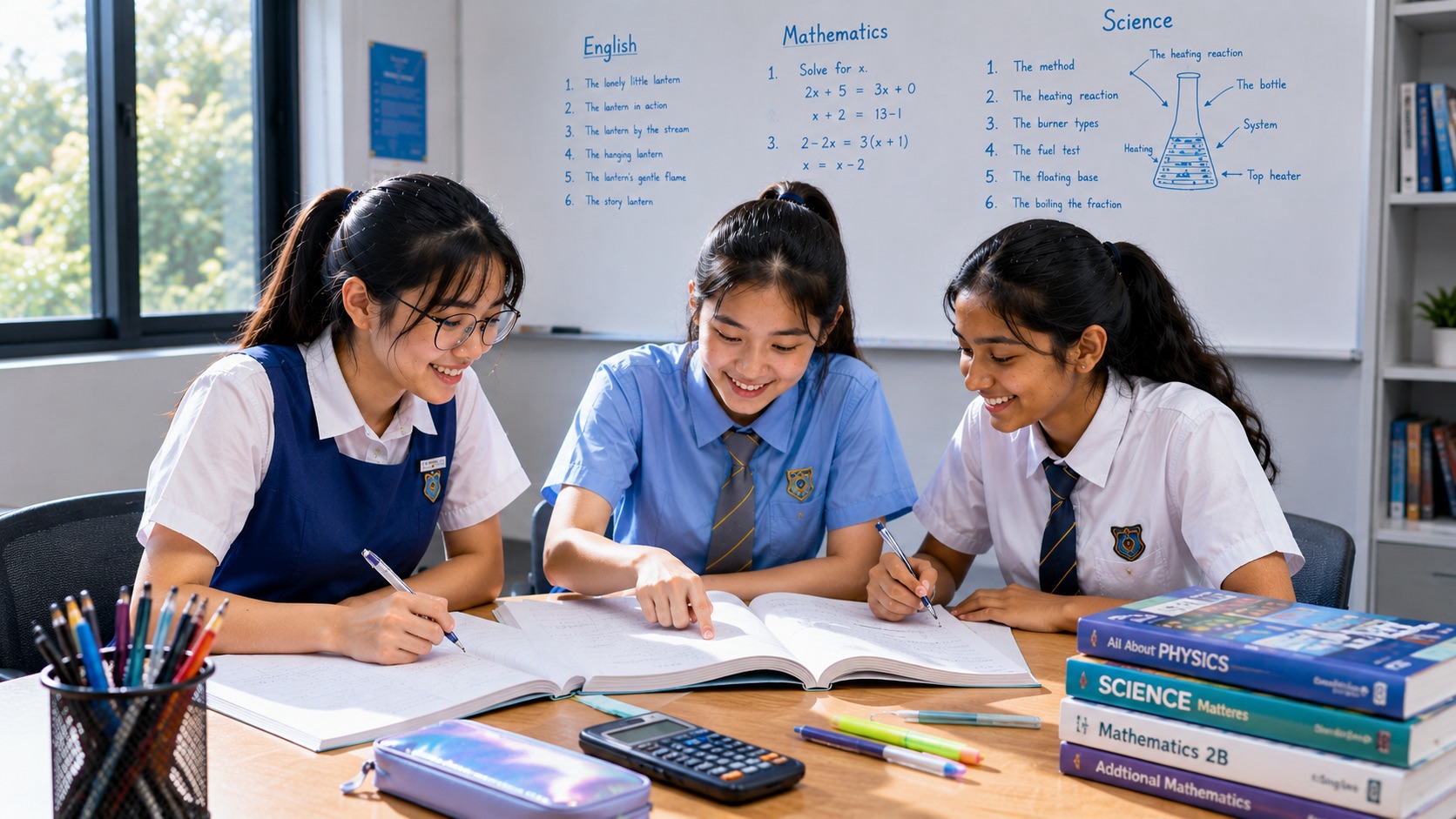
Families searching for Serangoon English tuition for Primary and Secondary students, small-group English tuition, PSLE English tuition, Secondary English tuition, comprehension, composition writing, grammar, vocabulary and oral communication often meet a learner who is comfortable with one familiar kind of task but becomes uncertain when the genre changes. A child may write narratives confidently yet struggle with explanatory writing; a Secondary student may understand an issue but not know how to organise an argument. This legacy Serangoon page is rebuilt around a central language skill: genre switching.
Strong English teaching should help pupils understand that structure follows purpose. A story needs character, causality and change. An explanation needs logical sequence and clear relationships. A persuasive response needs a claim, reasons and evidence. A situational message needs audience awareness and task fulfilment. The learner should not carry one writing formula into every task.
For upper-primary, PSLE and Secondary English, the goal is flexible control. The pupil reads the task, identifies what kind of communication is required, chooses an appropriate structure, writes with relevant language and checks whether the final piece achieves its purpose.
This article retains a historical location title for archive continuity. It does not claim a current eduKate venue in Serangoon.
Genre Is a Communication Decision
Genre is not simply a school label. It describes how language is organised to achieve a particular purpose.
A narrative tells and develops events. An explanation makes a process or relationship understandable. A persuasive text attempts to influence judgement. A reflection explores significance. A situational message helps a real reader act on information.
Ask Purpose Before Structure
Before writing, pupils should answer: What am I trying to make the reader understand, feel, believe or do?
The answer determines the most useful organisation.
Narrative Writing Needs Causality
Stories become coherent when one event changes the next.
Teach pupils to plan trigger, complication, decision, consequence and resolution rather than a list of incidents.
Explanatory Writing Needs Relationships
An explanation should show how or why.
Cause, effect, sequence, comparison and example become the organising tools.
Persuasive Writing Needs a Defensible Claim
A persuasive paragraph should not begin with volume. It should begin with a claim that can be supported.
Reasons need evidence or examples, and the scope of the claim should remain realistic.
Reflective Writing Needs Significance
Reflection is not merely retelling an event. It asks what changed, what was learned, what assumption was challenged or why the experience mattered.
Situational Writing Needs Audience Fit
Who is the reader? Why is the message being written? Which details are required? What tone is appropriate?
These questions should come before memorised openings.
Genre Changes Vocabulary
A narrative may use sensory or action vocabulary. An explanation may need words such as cause, process, consequence. A persuasive response may need evidence, benefit, limitation, therefore.
Vocabulary should serve the communication job.
Genre Changes Sentence Architecture
Narratives may vary pace through short and long sentences. Explanations often benefit from explicit cause-and-effect clauses. Persuasive writing may use contrast and concession.
Grammar becomes functional rather than decorative.
Genre Changes Paragraph Jobs
In a story, a paragraph might trigger conflict. In an explanation, a paragraph might define or compare. In persuasion, a paragraph might develop one reason.
Pupils should be able to label the job of each paragraph.
Genre Switching Is a Transfer Test
After teaching one idea, change the genre.
For example, take a topic such as screen time. Explain it, discuss it orally, then write a persuasive paragraph. The underlying knowledge stays; the language organisation changes.
Reading Supports Genre Awareness
Compare two texts on the same topic written for different purposes. Which details are included? Which words change? How is the reader guided?
This makes genre visible through examples.
Primary 3 and Primary 4: Build Simple Contrast
At these levels, pupils can learn the difference between telling an event, explaining an idea and writing a practical message.
Primary 5 and Primary 6: Increase Flexibility
Upper-primary pupils should learn to switch between narrative, situational and explanatory language while maintaining grammar and relevance.
Secondary 1 and 2: Broaden Genre Control
Secondary pupils increasingly need to explain, argue, reflect and adapt tone. The focus should be purpose-driven structure rather than memorised templates.
Secondary 3 and 4: Strengthen Evidence and Judgement
Older Secondary students should be able to qualify claims, engage another perspective, select evidence and revise for audience.
A Fictional Learner: Marcus and the Story Formula
Imagine Marcus, a fictional Secondary 1 student. He was successful in Primary school because he wrote vivid narratives. When asked for a reasoned response, he still opens with a dramatic scene and delays the actual point.
The tutor teaches Marcus to identify purpose before writing. Once he recognises that explanation and argument require different architectures, his writing becomes more direct without losing fluency.
Small Groups Make Genre Comparison Useful
Three pupils can respond to the same topic in three forms: a story paragraph, an explanation and a persuasive paragraph. The group compares how structure and vocabulary change.
Then each pupil completes a fresh independent task.
A 90-Minute Genre-Switching Lesson
- Cold task: fresh prompt.
- Purpose: identify communication job.
- Model: compare two genre structures.
- Plan: choose paragraph jobs.
- Write: independent response.
- Switch: same topic, new genre.
- Reflect: explain what had to change.
What Parents Can Look For
- The child identifies purpose before writing.
- Structure changes appropriately across tasks.
- Vocabulary fits genre and audience.
- Paragraph jobs are clear.
- The pupil does not force one memorised template onto every task.
- Fresh tasks show independent transfer.
The Larger Goal: Flexible English
Strong English is not the ability to perform one familiar format. It is the ability to recognise a communication problem and choose language that solves it.
Genre flexibility is therefore one of the clearest signs that the learner is moving from formula to control.
Related eduKate Yishun Reading
Official References
Ministry of Education: English Language Syllabus 2020 Primary
Leave a Reply